The Design Process
Author: Leicester College
Date created:
Date revised: 2009

Abstract: This presentation looks at the design Process as applied to practical Engineering
situations. An overview of design considerations and the basic methodology is given. Each stage of
the process is explained and its relevance to modern engineering practice is discussed.


  © Leicester College 2009. This work is licensed under                HNC In Engineering – Design for manufacture
  a Creative Commons Attribution 2.0 License.                        Edexcel HN Unit: Engineering Science (NQF L4)
•   Engineering Design
                                      •   What Makes Good Design?
                                      •   Factors Affecting Design
                                      •   The Design Process
                                      •   The Design Process 1
                                      •   The Design Process 2
                                      •   The Design Process 3
                                      •   The Design Process- An Iterative Model
                                      •   The Design Process- A Linear Model
                                      •   Credits

                     This presentation supports the Edexcel HN unit – Engineering design.

                            Unit          Key words
                            outcome
The Design Process          1             Design, Process, Problem, Brief, stages,
Material selection          1.3           Materials, design, cost, selection, service requirements, processing
The Task                    1.1-1.4       Design, specification, customer requirements, service needs, product, task list
Spec. Phase                 1.2, 1.4,     PDS, specifications, performance, environment, factors
                            2.1
User needs                  1.1, 2.1,     Specification, service requirements, performance, user
                            2.4
Design intro                1             Concepts, design, ergonomics, fit for purpose

               For further information regarding unit outcomes go to Edexcel.org.uk/ HN/ Engineering / Specifications
Engineering Design

          Engineering definition;
 The application of science, knowledge
and skills to solve problems and provide
   solutions in general beneficial to
                humankind


               The Design Process
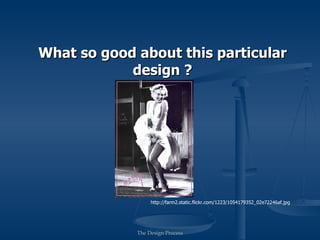
What so good about this particular
            design ?


                          © Elvisrocks59 2008. Sourced from
          picasaweb.google.com/.../sCrbeWGv2eec0jyZ7LJePw
                   available under Creative Commons licence.


                       The Design Process
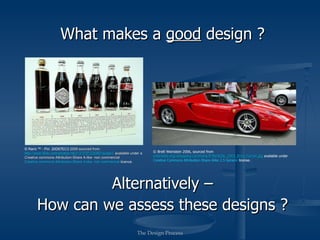
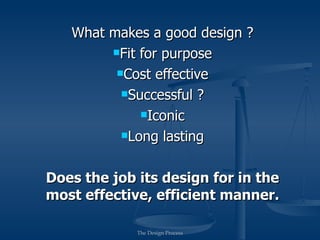
What makes a good design ?


          © Rami ™ - Pin: 20D67EC3 2009 sourced from                                                     © Brett Weinstein 2006, sourced from
 http://www.flickr.com/photos/rhk313/3757220561/sizes/l/                  wikimedia.org/wikipedia/commons/9/96/SC06_2003_Enzo_Ferrari.jpg
             available under a Creative Commons licence.                                            available under Creative Commons licence.


         Alternatively –
How can we assess these designs ?
                                                     The Design Process
What makes a good design ?
        Fit for purpose

         Cost effective

          Successful ?

             Iconic

          Long lasting


Does the job its design for in the
most effective, efficient manner.

             The Design Process
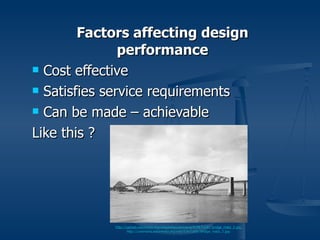
Factors affecting design
               performance
 Cost effective

 Satisfies service requirements

 Can be made – achievable

Like this ?
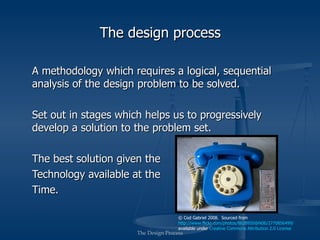
The design process

A methodology which requires a logical, sequential
analysis of the design problem to be solved.

Set out in stages which helps us to progressively
develop a solution to the problem set.

The best solution given the
Technology available at the
Time.

                                                                  © Cod Gabriel 2008. Sourced from
                                           http://www.flickr.com/photos/8628950@N06/2770856499/
                                                          available under Creative Commons licence.

                      The Design Process
The design process 1 – Recognition of
        the problem to be solved
BRIEF
         Recognition of problem
         Identification of needs
         Recognition of situation

INVESTIGATION
      Research in topic – what exists already

      Collation of relevant information

      Analysis of topic

      Specification of requirements


                       The Design Process
The design process 2 – Creative phase
IDEAS
   Generation of realistic ideas to satisfy product
  design brief and functional requirements

EVALUATION
   Evaluation of ideas against the specification

   Identification of proposed solution


DEVELOPING
   Sketching, modeling refining proposed solutions


                      The Design Process
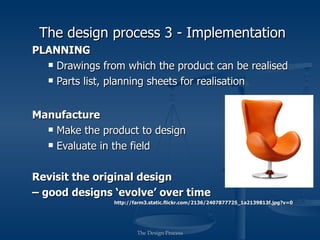
The design process 3 - Implementation
PLANNING
   Drawings from which the product can be realised

   Parts list, planning sheets for realisation


Manufacture
   Make the product to design

   Evaluate in the field


Revisit the original design
– good designs ‘evolve’ over time
                                                                       © moguphotos 2008. Sourced from
                                         http://www.flickr.com/photos/bygenejackson/3113238256/sizes/l/
                                                available for download under a Creative Commons licence.


                    The Design Process
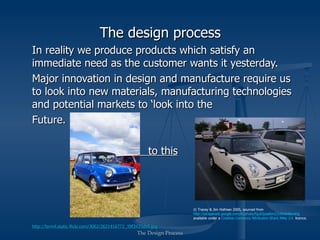
The design process
In reality we produce products which satisfy an
immediate need as the customer wants it yesterday.
Major innovation in design and manufacture require us
to look into new materials, manufacturing technologies
and potential markets to ‘look into the
Future.

                                                                 to this


                               © Kenjonbro 2009, sourced from
 http://www.flickr.com/photos/kenjonbro/3796523562/sizes/m/                                            © Tracey & Jim Hofman 2005, sourced from
                   available under a Creative Commons licence.                   http://picasaweb.google.com/lh/photo/fguEIpssRmIZ2dWahBomDg
                                                                                                      available under a Creative Commons licence.


                                                            The Design Process
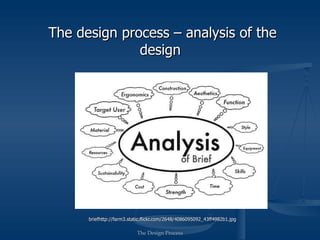
The design process – analysis of the
              design


                                         © Design and Technology Student 2009, sourced from
             http://www.flickr.com/photos/designandtechnologydepartment/4086095092/sizes/l/
                                     available for download under a Creative Commons licence.

              The Design Process
The design process
In engineering we use the design
process to provide solutions to problems
– by applying a logical set of stages. In
reality these are usually reduced in
length because of;
 Previous experience / knowledge

 Custom and practice

 What the competition are doing


                The Design Process
This resource was created Leicester College and released as an open educational resource through the Open
Engineering Resources project of the Higher Education Academy Engineering Subject Centre. The Open
Engineering Resources project was funded by HEFCE and part of the JISC/HE Academy UKOER programme.


© 2009 Leicester College


Except where other wise stated, this work is licensed under a Creative Commons Attribution 2.0 License.

The JISC logo is licensed under the terms of the Creative Commons Attribution-Non-Commercial-No Derivative Works 2.0 UK:
England & Wales Licence. All reproductions must comply with the terms of that licence.

The HEA logo is owned by the Higher Education Academy Limited may be freely distributed and copied for educational purposes
only, provided that appropriate acknowledgement is given to the Higher Education Academy as the copyright holder and original
publisher.

The Leicester College name and logo is owned by the College and should not be produced without the express permission of the
College.

                                                      The Design Process

The Design Process

  • 1.
    The Design Process Author:Leicester College Date created: Date revised: 2009 Abstract: This presentation looks at the design Process as applied to practical Engineering situations. An overview of design considerations and the basic methodology is given. Each stage of the process is explained and its relevance to modern engineering practice is discussed. © Leicester College 2009. This work is licensed under HNC In Engineering – Design for manufacture a Creative Commons Attribution 2.0 License. Edexcel HN Unit: Engineering Science (NQF L4)
  • 2.
    Engineering Design • What Makes Good Design? • Factors Affecting Design • The Design Process • The Design Process 1 • The Design Process 2 • The Design Process 3 • The Design Process- An Iterative Model • The Design Process- A Linear Model • Credits This presentation supports the Edexcel HN unit – Engineering design. Unit Key words outcome The Design Process 1 Design, Process, Problem, Brief, stages, Material selection 1.3 Materials, design, cost, selection, service requirements, processing The Task 1.1-1.4 Design, specification, customer requirements, service needs, product, task list Spec. Phase 1.2, 1.4, PDS, specifications, performance, environment, factors 2.1 User needs 1.1, 2.1, Specification, service requirements, performance, user 2.4 Design intro 1 Concepts, design, ergonomics, fit for purpose For further information regarding unit outcomes go to Edexcel.org.uk/ HN/ Engineering / Specifications
  • 3.
    Engineering Design Engineering definition; The application of science, knowledge and skills to solve problems and provide solutions in general beneficial to humankind The Design Process
  • 4.
    What so goodabout this particular design ? © Elvisrocks59 2008. Sourced from picasaweb.google.com/.../sCrbeWGv2eec0jyZ7LJePw available under Creative Commons licence. The Design Process
  • 5.
    What makes agood design ? © Rami ™ - Pin: 20D67EC3 2009 sourced from © Brett Weinstein 2006, sourced from http://www.flickr.com/photos/rhk313/3757220561/sizes/l/ wikimedia.org/wikipedia/commons/9/96/SC06_2003_Enzo_Ferrari.jpg available under a Creative Commons licence. available under Creative Commons licence. Alternatively – How can we assess these designs ? The Design Process
  • 6.
    What makes agood design ? Fit for purpose Cost effective Successful ? Iconic Long lasting Does the job its design for in the most effective, efficient manner. The Design Process
  • 7.
    Factors affecting design performance  Cost effective  Satisfies service requirements  Can be made – achievable Like this ?
  • 8.
    The design process Amethodology which requires a logical, sequential analysis of the design problem to be solved. Set out in stages which helps us to progressively develop a solution to the problem set. The best solution given the Technology available at the Time. © Cod Gabriel 2008. Sourced from http://www.flickr.com/photos/8628950@N06/2770856499/ available under Creative Commons licence. The Design Process
  • 9.
    The design process1 – Recognition of the problem to be solved BRIEF  Recognition of problem  Identification of needs  Recognition of situation INVESTIGATION  Research in topic – what exists already  Collation of relevant information  Analysis of topic  Specification of requirements The Design Process
  • 10.
    The design process2 – Creative phase IDEAS  Generation of realistic ideas to satisfy product design brief and functional requirements EVALUATION  Evaluation of ideas against the specification  Identification of proposed solution DEVELOPING  Sketching, modeling refining proposed solutions The Design Process
  • 11.
    The design process3 - Implementation PLANNING  Drawings from which the product can be realised  Parts list, planning sheets for realisation Manufacture  Make the product to design  Evaluate in the field Revisit the original design – good designs ‘evolve’ over time © moguphotos 2008. Sourced from http://www.flickr.com/photos/bygenejackson/3113238256/sizes/l/ available for download under a Creative Commons licence. The Design Process
  • 12.
    The design process Inreality we produce products which satisfy an immediate need as the customer wants it yesterday. Major innovation in design and manufacture require us to look into new materials, manufacturing technologies and potential markets to ‘look into the Future. to this © Kenjonbro 2009, sourced from http://www.flickr.com/photos/kenjonbro/3796523562/sizes/m/ © Tracey & Jim Hofman 2005, sourced from available under a Creative Commons licence. http://picasaweb.google.com/lh/photo/fguEIpssRmIZ2dWahBomDg available under a Creative Commons licence. The Design Process
  • 13.
    The design process– analysis of the design © Design and Technology Student 2009, sourced from http://www.flickr.com/photos/designandtechnologydepartment/4086095092/sizes/l/ available for download under a Creative Commons licence. The Design Process
  • 14.
    The design process Inengineering we use the design process to provide solutions to problems – by applying a logical set of stages. In reality these are usually reduced in length because of;  Previous experience / knowledge  Custom and practice  What the competition are doing The Design Process
  • 15.
    This resource wascreated Leicester College and released as an open educational resource through the Open Engineering Resources project of the Higher Education Academy Engineering Subject Centre. The Open Engineering Resources project was funded by HEFCE and part of the JISC/HE Academy UKOER programme. © 2009 Leicester College Except where other wise stated, this work is licensed under a Creative Commons Attribution 2.0 License. The JISC logo is licensed under the terms of the Creative Commons Attribution-Non-Commercial-No Derivative Works 2.0 UK: England & Wales Licence. All reproductions must comply with the terms of that licence. The HEA logo is owned by the Higher Education Academy Limited may be freely distributed and copied for educational purposes only, provided that appropriate acknowledgement is given to the Higher Education Academy as the copyright holder and original publisher. The Leicester College name and logo is owned by the College and should not be produced without the express permission of the College. The Design Process