ENGINEERING
ETHICS
Sumber Utama: Charles E. Haris, Michael S. Pritchard,
Michael J. Rabins
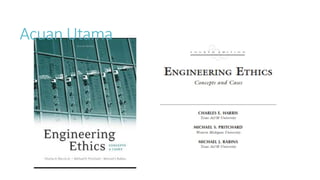
Acuan Utama
CHAPTER 1
Why Professional Ethics?
Oleh:
Firda Dwi S.
Gobi Regio K.A
Supervisor: M. Arman
WHY SHOULD I STUDY ETHICS?
WHAT IS A PROFESSION?(1of3)
according to the Oxford Shorter Dictionary, “professing” has come to mean
the occupation which one professes to be skilled in and to follow. . . . A vocation in
which professed knowledge of some branch of learning is used in its application to the
affairs of others, or in the practice of an art based upon it.
We can gain deeper insight if we look at the account of professionalism given by
sociologists and philosophers.
1. A Sociological Analysis of Professionalism
2. Professions as Social Practices
3. A Socratic Account of Professionalism
WHAT IS A PROFESSION?(2of3)
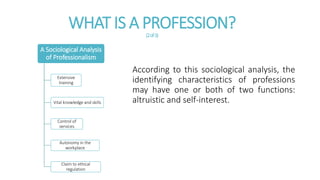
A Sociological Analysis
of Professionalism
Extensive
training
Vital knowledge and skills
Control of
services
Autonomy in the
workplace
Claim to ethical
regulation
According to this sociological analysis, the
identifying characteristics of professions
may have one or both of two functions:
altruistic and self-interest.
WHAT IS A PROFESSION?(3of3)
Professions as Social Practices
 A profession is an example of a social practice.
 Without following the ideas of MacIntyre or others completely, perhaps we can say the following
about a social practice. First, every social practice has one or more aims or goods that are especially
associated with it or ‘‘internal’’ to it.
A Socratic Account of Professionalism
A profession is a number of individuals in the same occupation voluntarily organized to earn a living by
openly serving a moral ideal in a morally permissible way beyond what law, market, morality, and public
opinion would otherwise require.
ENGINEERING AND
PROFESSIONALISM
Engineering is a group activity, which openly professes special knowledge, skill, and judgment. Engineering has a
goal of producing technology for the welfare of society.
Definition of professionalism also leaves engineering with a questionable professional status. Taking a cue from
engineering codes, one might define the goal of engineering as holding paramount the health, safety, and welfare
of the public.
The occupations that clearly are professions include medicine, law, veterinary medicine, architecture, accounting
(at least certified public accountancy), and dentistry.
Looking at the sociological or economic analysis of professionals, engineering seems to qualify only as a borderline
profession. Engineers have extensive training and possess knowledge and skills that are vital to the public. However,
engineers do not have anything like complete control of engineering services, at least in the United States, because
a license is not required to practice many types of engineering.
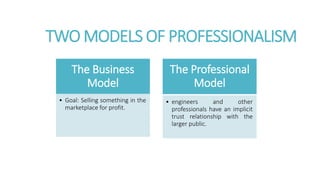
TWO MODELS OF PROFESSIONALISM
The Business
Model
• Goal: Selling something in the
marketplace for profit.
The Professional
Model
• engineers and other
professionals have an implicit
trust relationship with the
larger public.
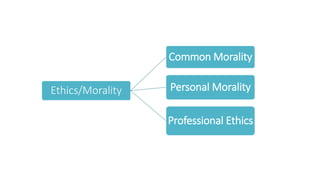
Ethics/Morality
Common Morality
Personal Morality
Professional Ethics
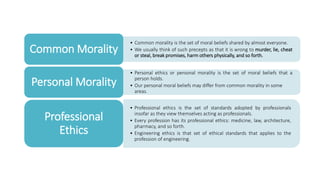
• Common morality is the set of moral beliefs shared by almost everyone.
• We usually think of such precepts as that it is wrong to murder, lie, cheat
or steal, break promises, harm others physically, and so forth.
Common Morality
• Personal ethics or personal morality is the set of moral beliefs that a
person holds.
• Our personal moral beliefs may differ from common morality in some
areas.
Personal Morality
• Professional ethics is the set of standards adopted by professionals
insofar as they view themselves acting as professionals.
• Every profession has its professional ethics: medicine, law, architecture,
pharmacy, and so forth.
• Engineering ethics is that set of ethical standards that applies to the
profession of engineering.
Professional
Ethics
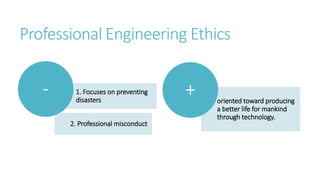
Professional Engineering Ethics
1. Focuses on preventing
disasters
2. Professional misconduct
- oriented toward producing
a better life for mankind
through technology.
+
THE NEGATIVE FACE OF ENGINEERING
ETHICS:
PREVENTIVE ETHICS
Preventive ethics is commonly formulated in rules, and these rules are usually stated
in codes of ethics.
For example, code of the National Society of Professional Engineers (NSPE), 1c
‘‘engineers shall not reveal facts, data, or information without the prior consent of the
client or employer except as authorized by law or this Code.’’
Before engineers have an obligation to do good, they have an obligation to do no
harm.
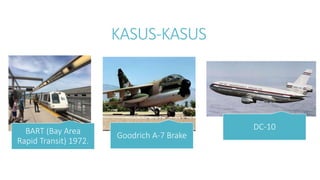
KASUS-KASUS
BART (Bay Area
Rapid Transit) 1972.
Goodrich A-7 Brake
DC-10
THE POSITIVE FACE OF ENGINEERING ETHICS:
Aspirational
Ethics
Good Works
Ordinary
Positive
Engineering
Aspirational
ethics and
professional
Character: The
good engineer
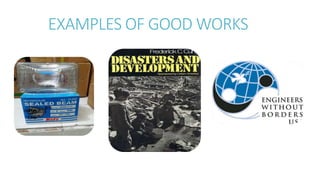
EXAMPLES OF GOOD WORKS
Ordinary Positive Engineering
1. An Experimental Automobile.
2. An Auditory Visual Tracker.
3. Reducing Emissions.
The ‘‘good engineer’’ is the engineer who has those
traits of professional character that make him or her
the best or ideal engineer.
TERIMAKASIH 

Engineering Ethics (Concept and Case), Chapter 1

  • 1.
    ENGINEERING ETHICS Sumber Utama: CharlesE. Haris, Michael S. Pritchard, Michael J. Rabins
  • 2.
  • 3.
    CHAPTER 1 Why ProfessionalEthics? Oleh: Firda Dwi S. Gobi Regio K.A Supervisor: M. Arman
  • 4.
    WHY SHOULD ISTUDY ETHICS?
  • 5.
    WHAT IS APROFESSION?(1of3) according to the Oxford Shorter Dictionary, “professing” has come to mean the occupation which one professes to be skilled in and to follow. . . . A vocation in which professed knowledge of some branch of learning is used in its application to the affairs of others, or in the practice of an art based upon it. We can gain deeper insight if we look at the account of professionalism given by sociologists and philosophers. 1. A Sociological Analysis of Professionalism 2. Professions as Social Practices 3. A Socratic Account of Professionalism
  • 6.
    WHAT IS APROFESSION?(2of3) A Sociological Analysis of Professionalism Extensive training Vital knowledge and skills Control of services Autonomy in the workplace Claim to ethical regulation According to this sociological analysis, the identifying characteristics of professions may have one or both of two functions: altruistic and self-interest.
  • 7.
    WHAT IS APROFESSION?(3of3) Professions as Social Practices  A profession is an example of a social practice.  Without following the ideas of MacIntyre or others completely, perhaps we can say the following about a social practice. First, every social practice has one or more aims or goods that are especially associated with it or ‘‘internal’’ to it. A Socratic Account of Professionalism A profession is a number of individuals in the same occupation voluntarily organized to earn a living by openly serving a moral ideal in a morally permissible way beyond what law, market, morality, and public opinion would otherwise require.
  • 8.
    ENGINEERING AND PROFESSIONALISM Engineering isa group activity, which openly professes special knowledge, skill, and judgment. Engineering has a goal of producing technology for the welfare of society. Definition of professionalism also leaves engineering with a questionable professional status. Taking a cue from engineering codes, one might define the goal of engineering as holding paramount the health, safety, and welfare of the public. The occupations that clearly are professions include medicine, law, veterinary medicine, architecture, accounting (at least certified public accountancy), and dentistry. Looking at the sociological or economic analysis of professionals, engineering seems to qualify only as a borderline profession. Engineers have extensive training and possess knowledge and skills that are vital to the public. However, engineers do not have anything like complete control of engineering services, at least in the United States, because a license is not required to practice many types of engineering.
  • 9.
    TWO MODELS OFPROFESSIONALISM The Business Model • Goal: Selling something in the marketplace for profit. The Professional Model • engineers and other professionals have an implicit trust relationship with the larger public.
  • 10.
  • 11.
    • Common moralityis the set of moral beliefs shared by almost everyone. • We usually think of such precepts as that it is wrong to murder, lie, cheat or steal, break promises, harm others physically, and so forth. Common Morality • Personal ethics or personal morality is the set of moral beliefs that a person holds. • Our personal moral beliefs may differ from common morality in some areas. Personal Morality • Professional ethics is the set of standards adopted by professionals insofar as they view themselves acting as professionals. • Every profession has its professional ethics: medicine, law, architecture, pharmacy, and so forth. • Engineering ethics is that set of ethical standards that applies to the profession of engineering. Professional Ethics
  • 12.
    Professional Engineering Ethics 1.Focuses on preventing disasters 2. Professional misconduct - oriented toward producing a better life for mankind through technology. +
  • 13.
    THE NEGATIVE FACEOF ENGINEERING ETHICS: PREVENTIVE ETHICS Preventive ethics is commonly formulated in rules, and these rules are usually stated in codes of ethics. For example, code of the National Society of Professional Engineers (NSPE), 1c ‘‘engineers shall not reveal facts, data, or information without the prior consent of the client or employer except as authorized by law or this Code.’’ Before engineers have an obligation to do good, they have an obligation to do no harm.
  • 14.
    KASUS-KASUS BART (Bay Area RapidTransit) 1972. Goodrich A-7 Brake DC-10
  • 15.
    THE POSITIVE FACEOF ENGINEERING ETHICS: Aspirational Ethics Good Works Ordinary Positive Engineering Aspirational ethics and professional Character: The good engineer
  • 16.
  • 17.
    Ordinary Positive Engineering 1.An Experimental Automobile. 2. An Auditory Visual Tracker. 3. Reducing Emissions.
  • 18.
    The ‘‘good engineer’’is the engineer who has those traits of professional character that make him or her the best or ideal engineer.
  • 19.