The
Circulatory
System
Premedical Biology 102
Lecturer: Mr. Thomas S. Peters
At the end of this lesson, students will be
able to:
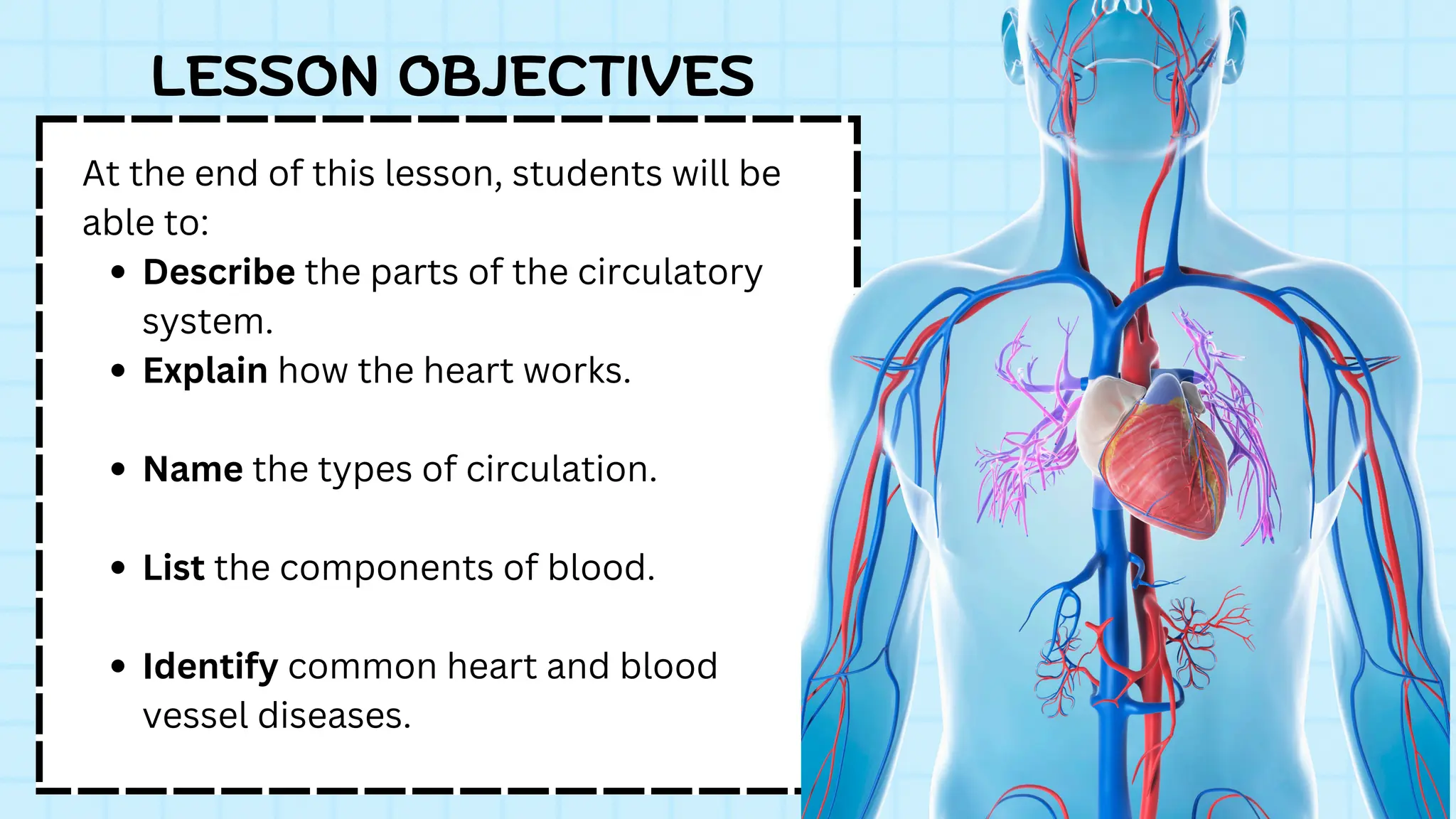
Describe the parts of the circulatory
system.
Explain how the heart works.
Name the types of circulation.
List the components of blood.
Identify common heart and blood
vessel diseases.
LESSON OBJECTIVES
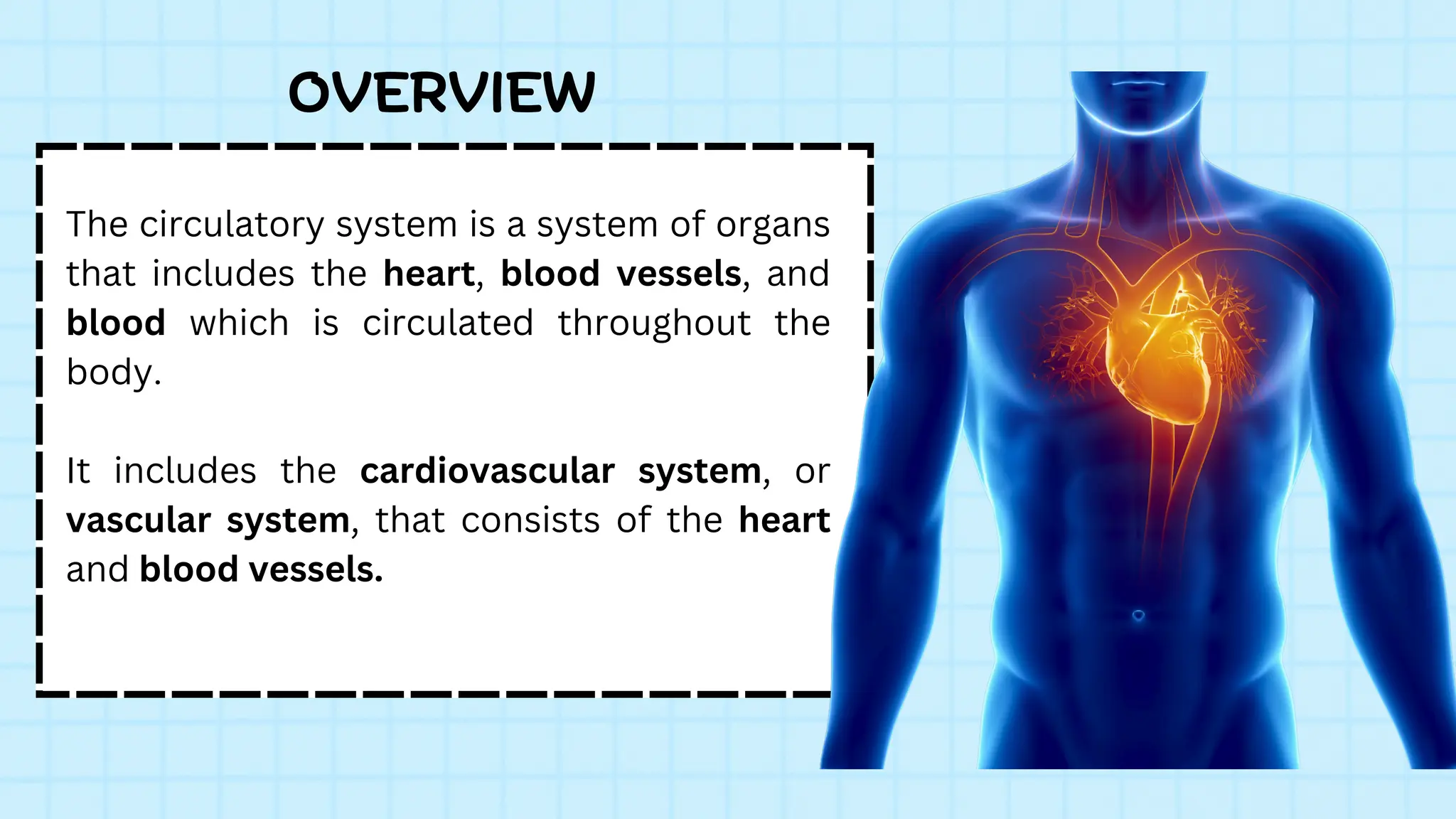
The circulatory system is a system of organs
that includes the heart, blood vessels, and
blood which is circulated throughout the
body.
It includes the cardiovascular system, or
vascular system, that consists of the heart
and blood vessels.
OVERVIEW
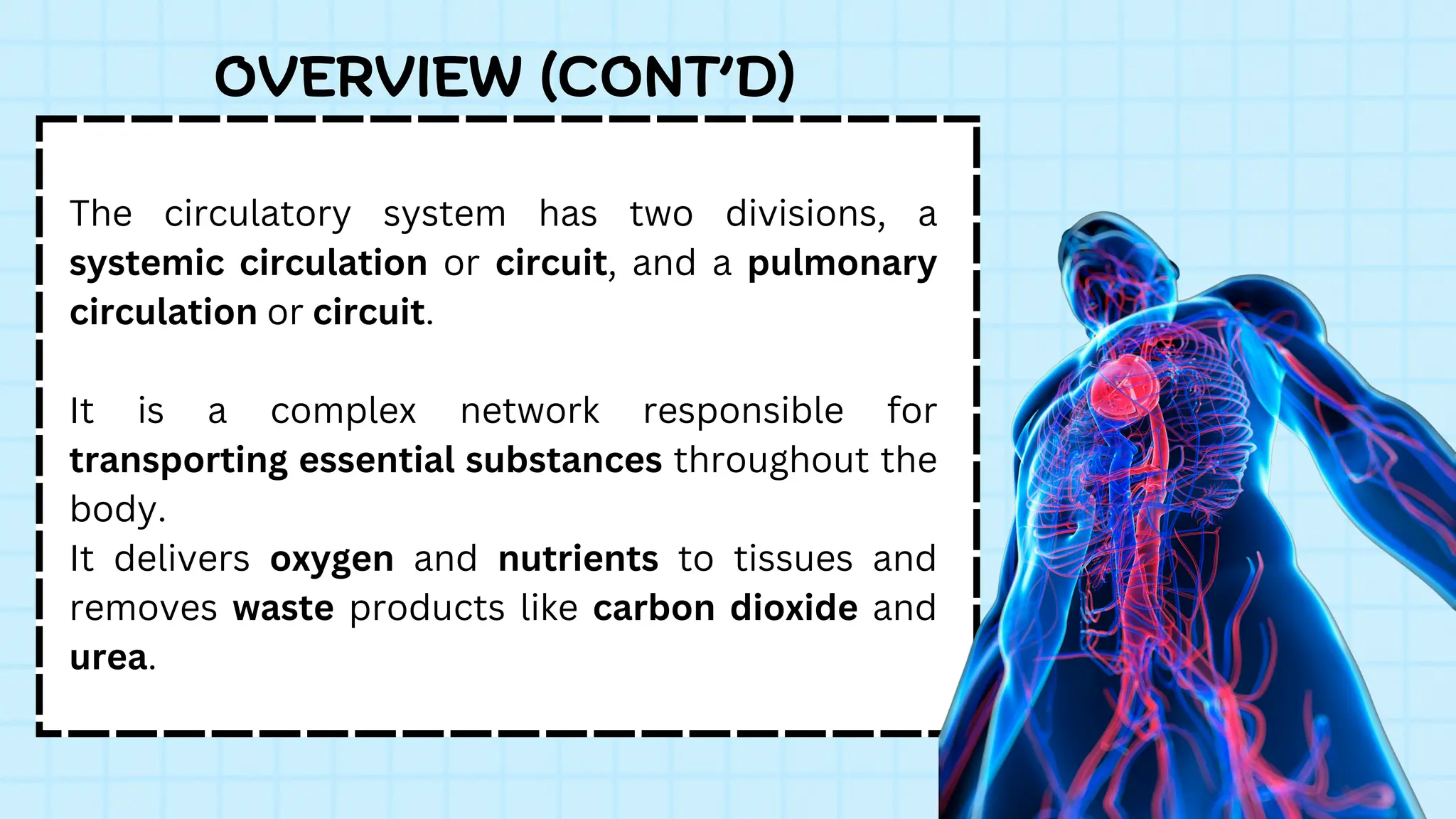
The circulatory system has two divisions, a
systemic circulation or circuit, and a pulmonary
circulation or circuit.
It is a complex network responsible for
transporting essential substances throughout the
body.
It delivers oxygen and nutrients to tissues and
removes waste products like carbon dioxide and
urea.
OVERVIEW (CONT’D)
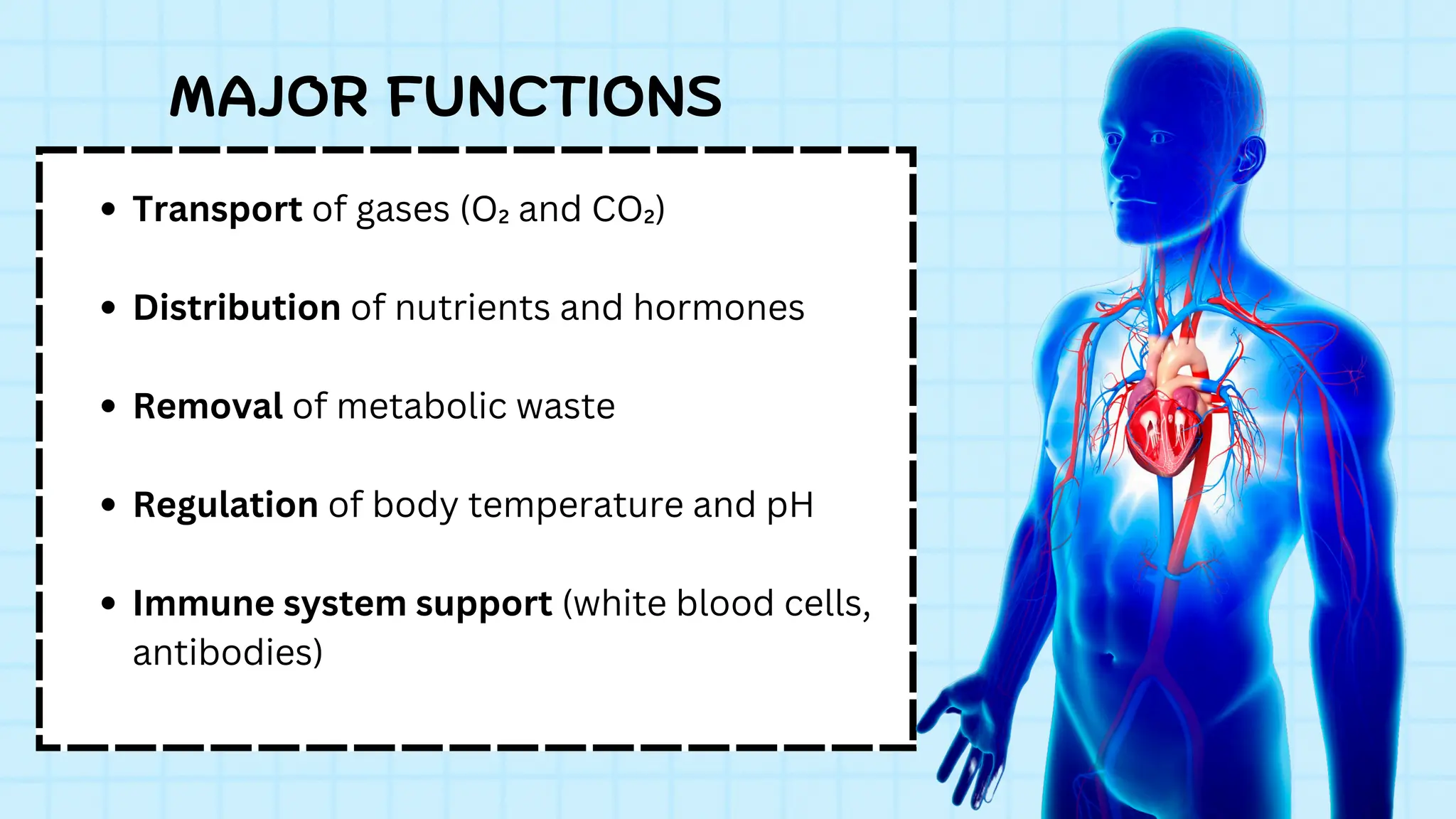
Transport of gases (O₂ and CO₂)
Distribution of nutrients and hormones
Removal of metabolic waste
Regulation of body temperature and pH
Immune system support (white blood cells,
antibodies)
MAJOR FUNCTIONS
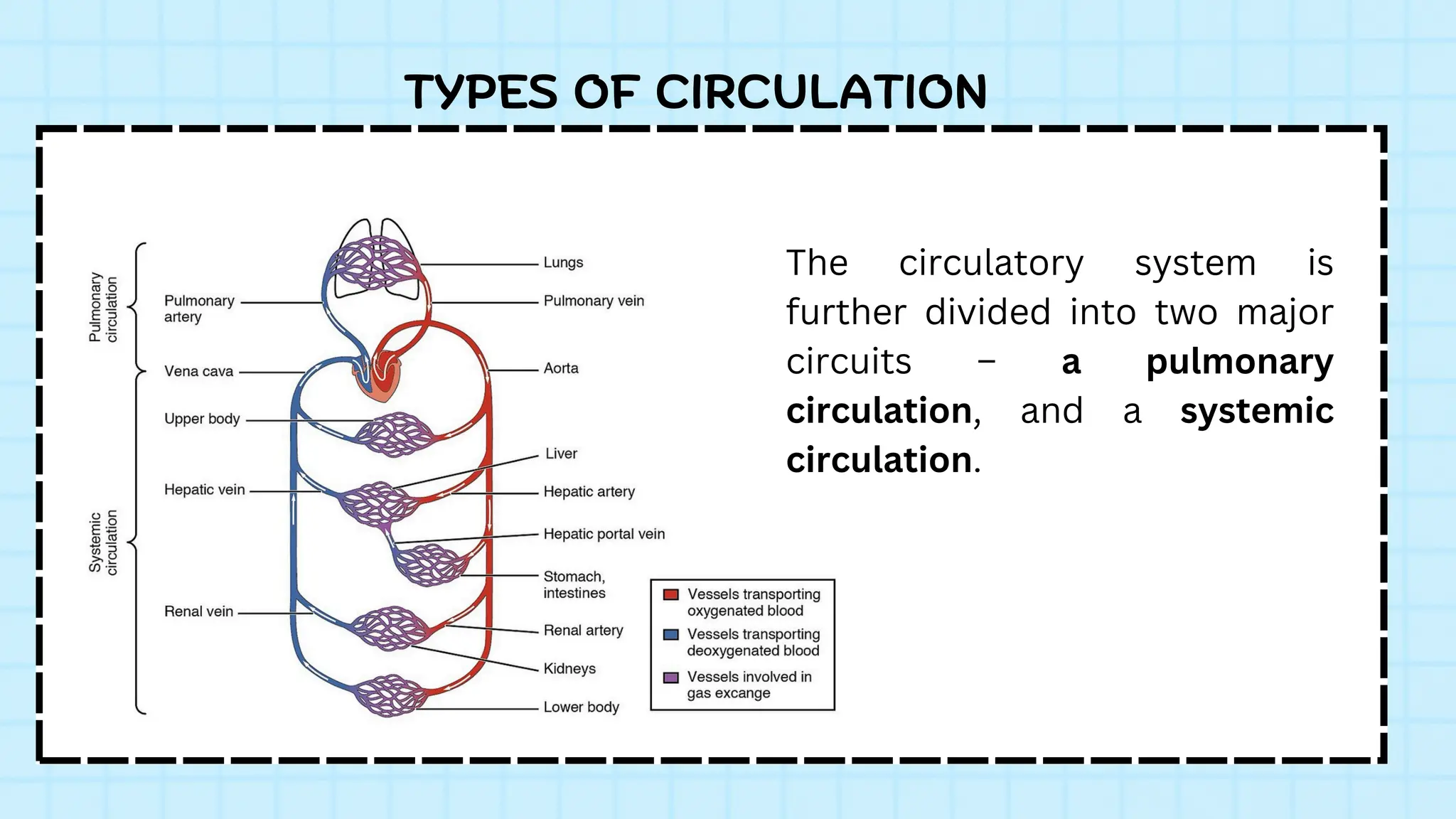
The circulatory system is
further divided into two major
circuits – a pulmonary
circulation, and a systemic
circulation.
TYPES OF CIRCULATION
The pulmonary circulation is the part of the circulatory system in
which oxygen-depleted blood is pumped away from the heart, via
the pulmonary artery, to the lungs and returned, oxygenated, to
the heart via the pulmonary vein.
Oxygen-deprived blood from the superior and inferior vena cava
enters the right atrium of the heart and flows through the
tricuspid valve (right atrioventricular valve) into the right
ventricle, from which it is then pumped through the pulmonary
semilunar valve into the pulmonary artery to the lungs.
PULMONARY CIRCULATION
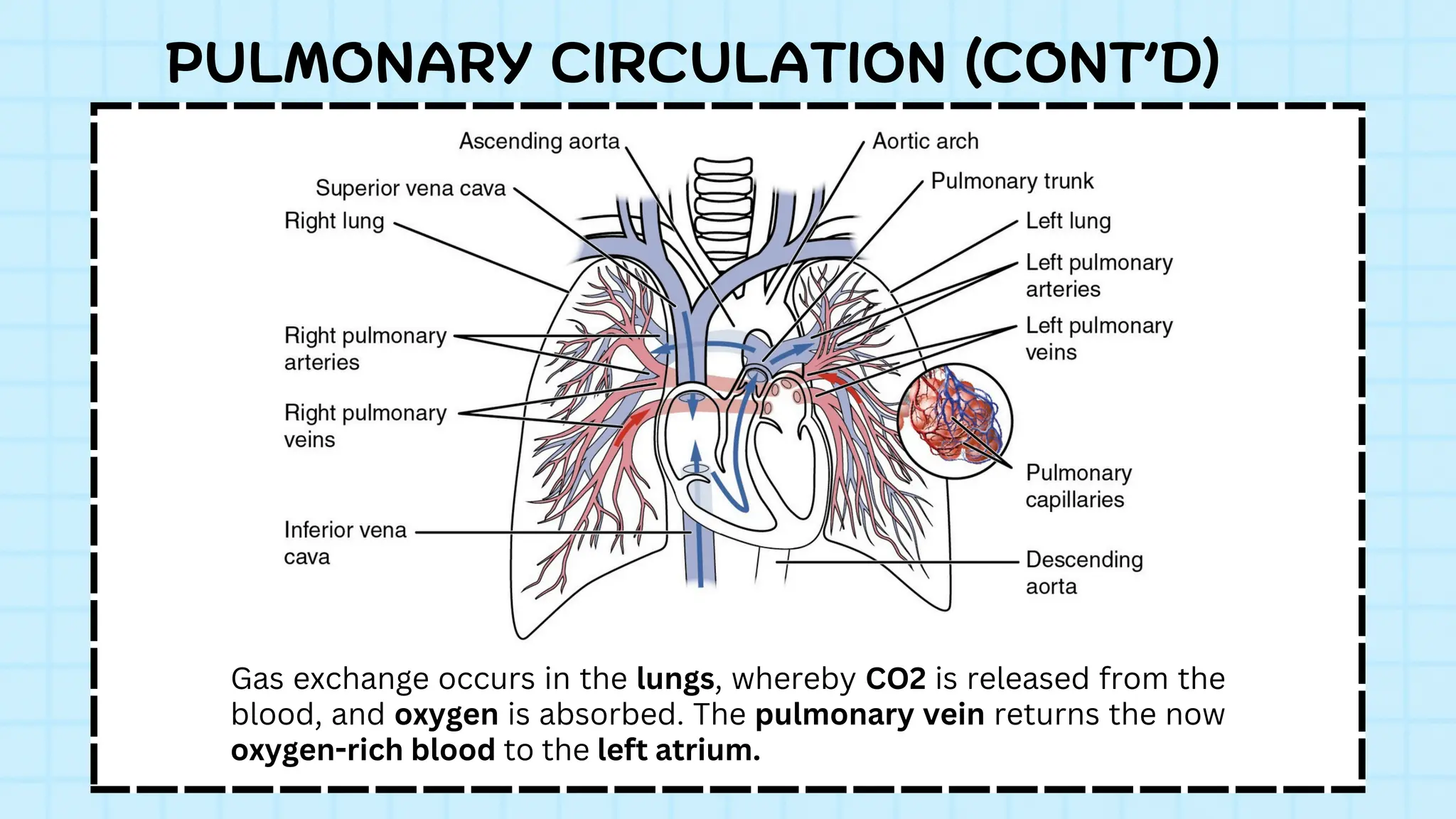
Gas exchange occurs in the lungs, whereby CO2 is released from the
blood, and oxygen is absorbed. The pulmonary vein returns the now
oxygen-rich blood to the left atrium.
PULMONARY CIRCULATION (CONT’D)
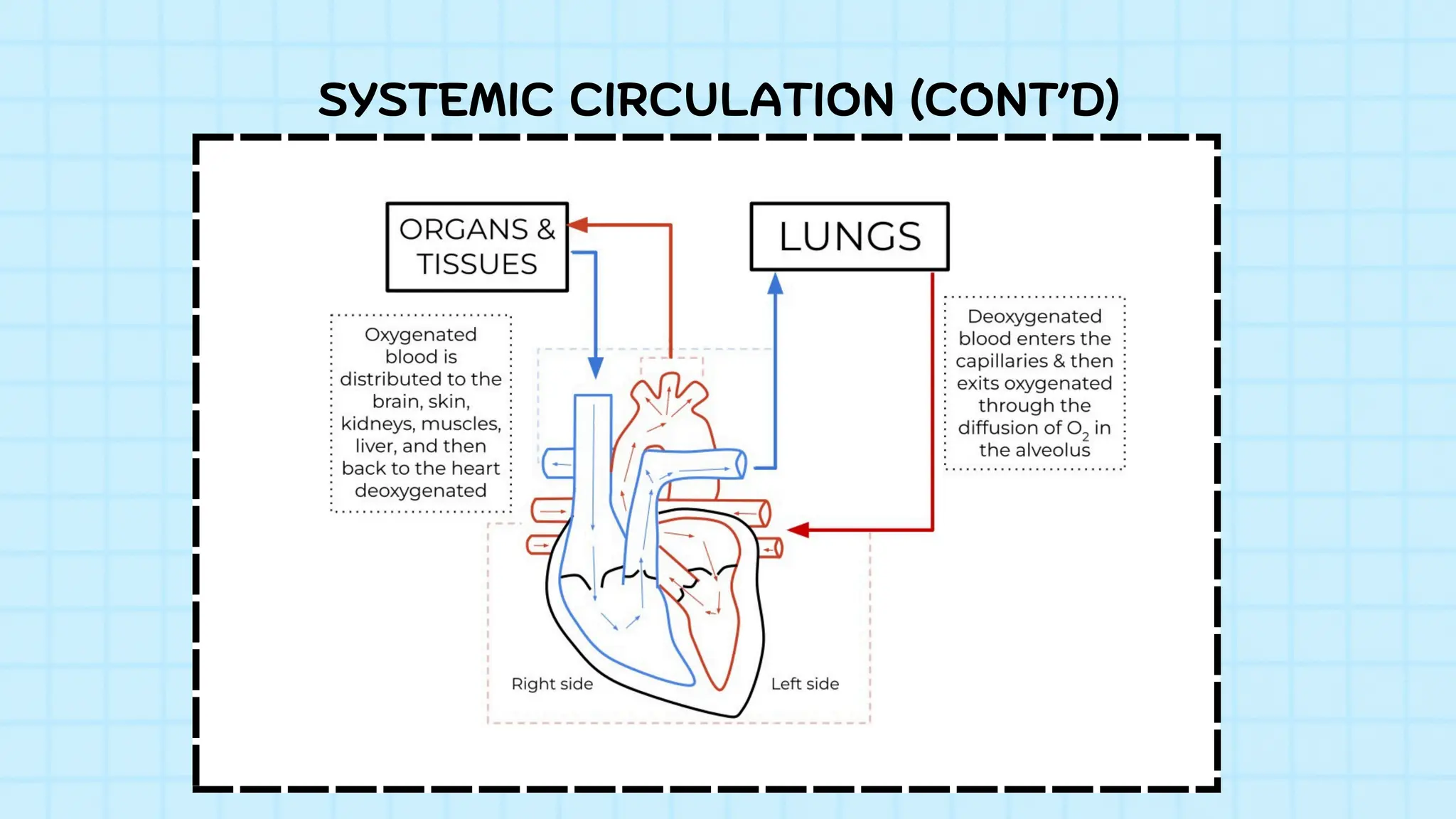
The systemic circulation is a circuit loop that
delivers oxygenated blood from the left heart to
the rest of the body through the aorta.
Deoxygenated blood is returned in the systemic
circulation to the right heart via two large veins, the
inferior vena cava and superior vena cava, where it
is pumped from the right atrium into the pulmonary
circulation for oxygenation.
SYSTEMIC CIRCULATION
SYSTEMIC CIRCULATION (CONT’D)
Coronary circulation is the circulation of
blood in the arteries and veins that
supply the heart muscle (myocardium).
Coronary arteries supply oxygenated
blood to the heart muscle.
Cardiac veins then drain away the blood
after it has been deoxygenated.
CORONARY CIRCULATION
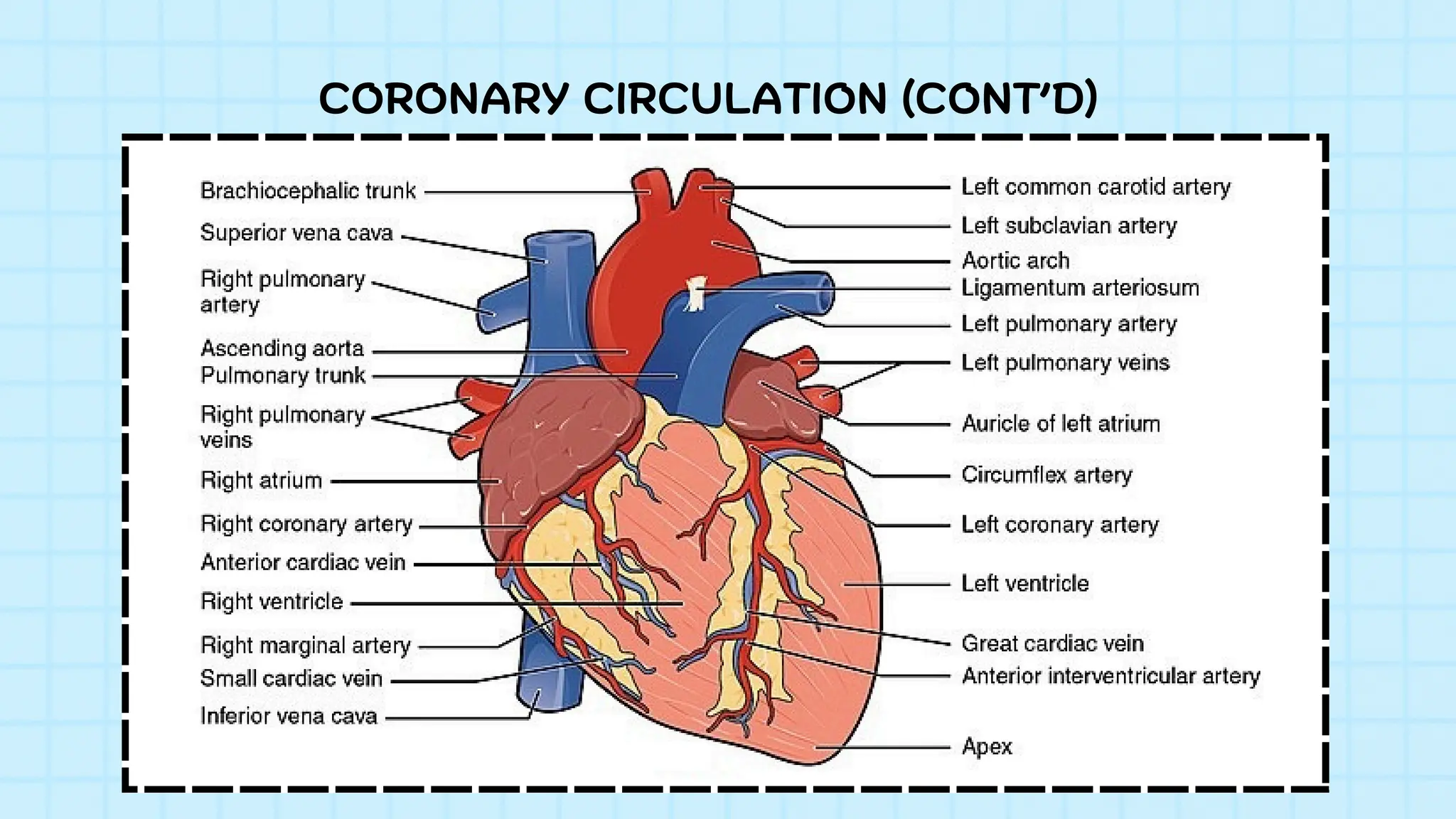
CORONARY CIRCULATION (CONT’D)
The circulatory system consists of three main components:
The heart
Blood vessels
Blood
COMPONENTS OF THE CIRCULATORY SYSTEM
The heart pumps blood to all parts of the body
providing nutrients and oxygen to every cell, and
removing waste products. The left heart pumps
oxygenated blood returned from the lungs to the rest
of the body in the systemic circulation.
THE HEART
The blood that is returned to the right atrium is deoxygenated
(poor in oxygen) and passed into the right ventricle to be pumped
through the pulmonary artery to the lungs for re-oxygenation and
removal of carbon dioxide.
The left atrium receives newly oxygenated blood from the lungs
as well as the pulmonary vein which is passed into the strong left
ventricle to be pumped through the aorta to the different organs
of the body.
COMPONENTS OF THE CIRCULATORY SYSTEM (CONT’D)
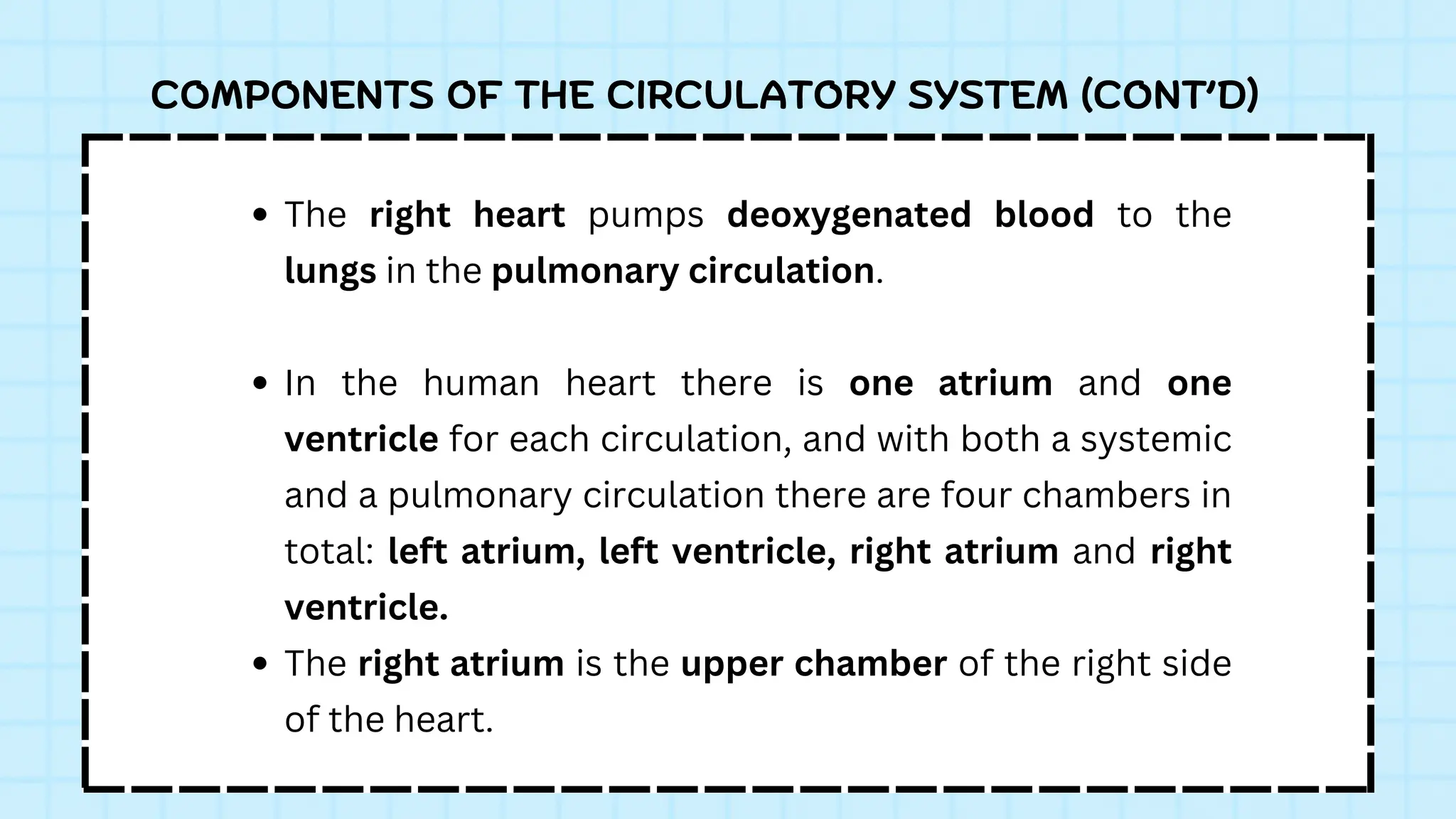
The right heart pumps deoxygenated blood to the
lungs in the pulmonary circulation.
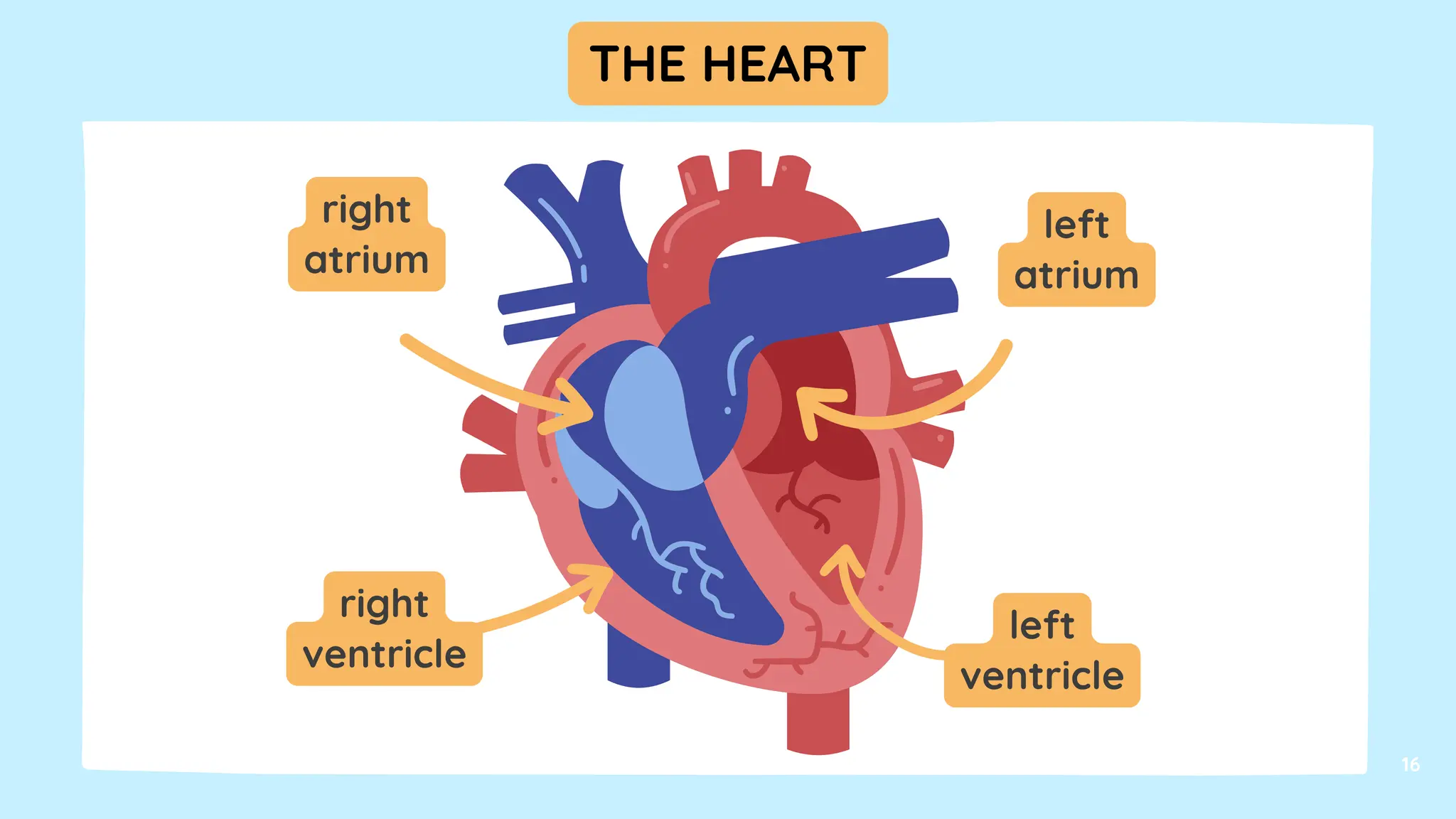
In the human heart there is one atrium and one
ventricle for each circulation, and with both a systemic
and a pulmonary circulation there are four chambers in
total: left atrium, left ventricle, right atrium and right
ventricle.
The right atrium is the upper chamber of the right side
of the heart.
left
atrium
right
atrium
right
ventricle
left
ventricle
16
THE HEART
17
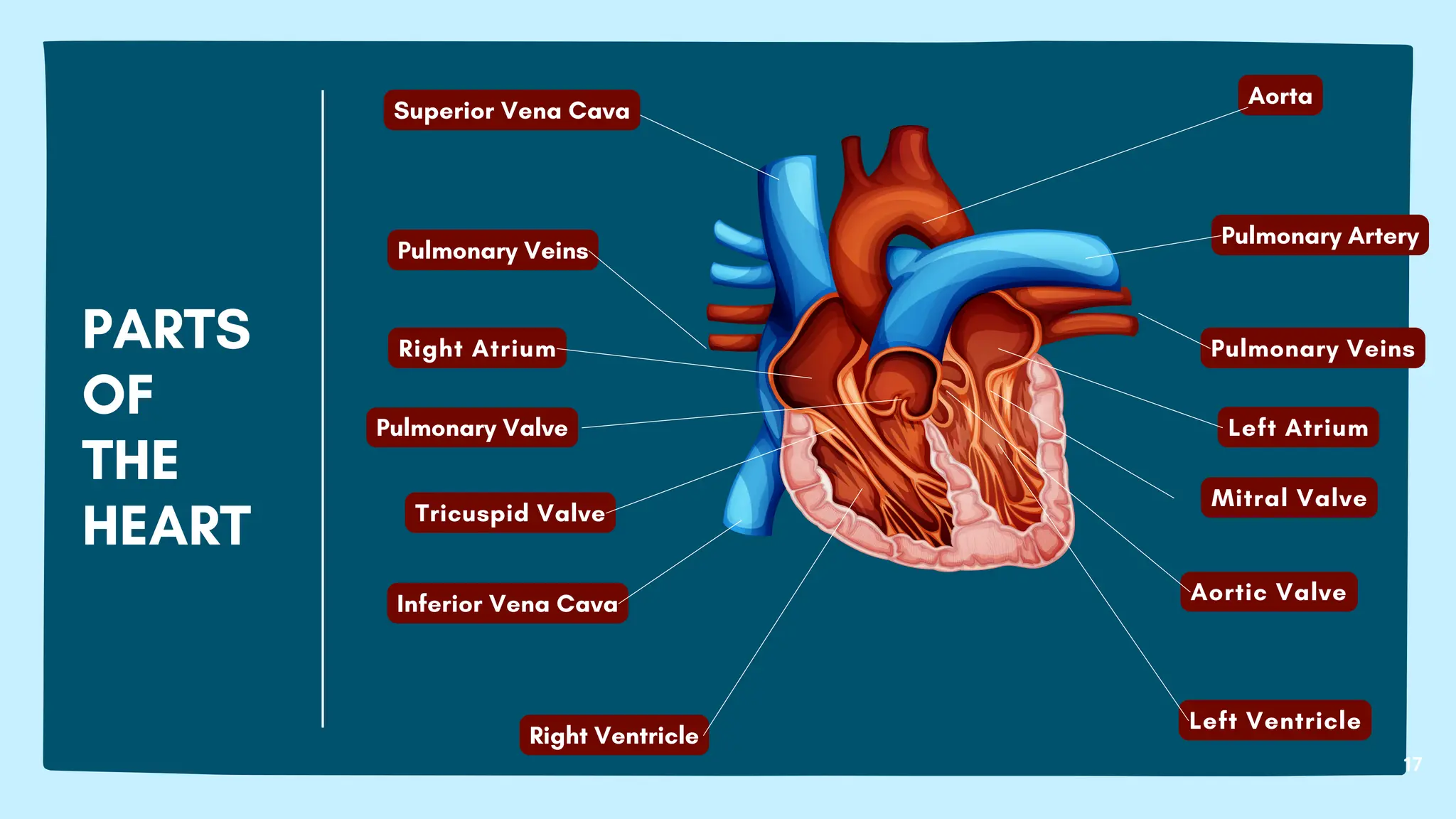
PARTS
OF
THE
HEART
Pulmonary Veins
Right Atrium
Tricuspid Valve
Right Ventricle
Inferior Vena Cava
Left Ventricle
Pulmonary Veins
Pulmonary Artery
Aorta
Left Atrium
Superior Vena Cava
Mitral Valve
Pulmonary Valve
Aortic Valve
Can you explain how blood flows
through the heart with a partner,
even without the diagram of the heart?
Try explaining the process to your peer
without referring to your notes.
Lesson Check:
The Heart
18
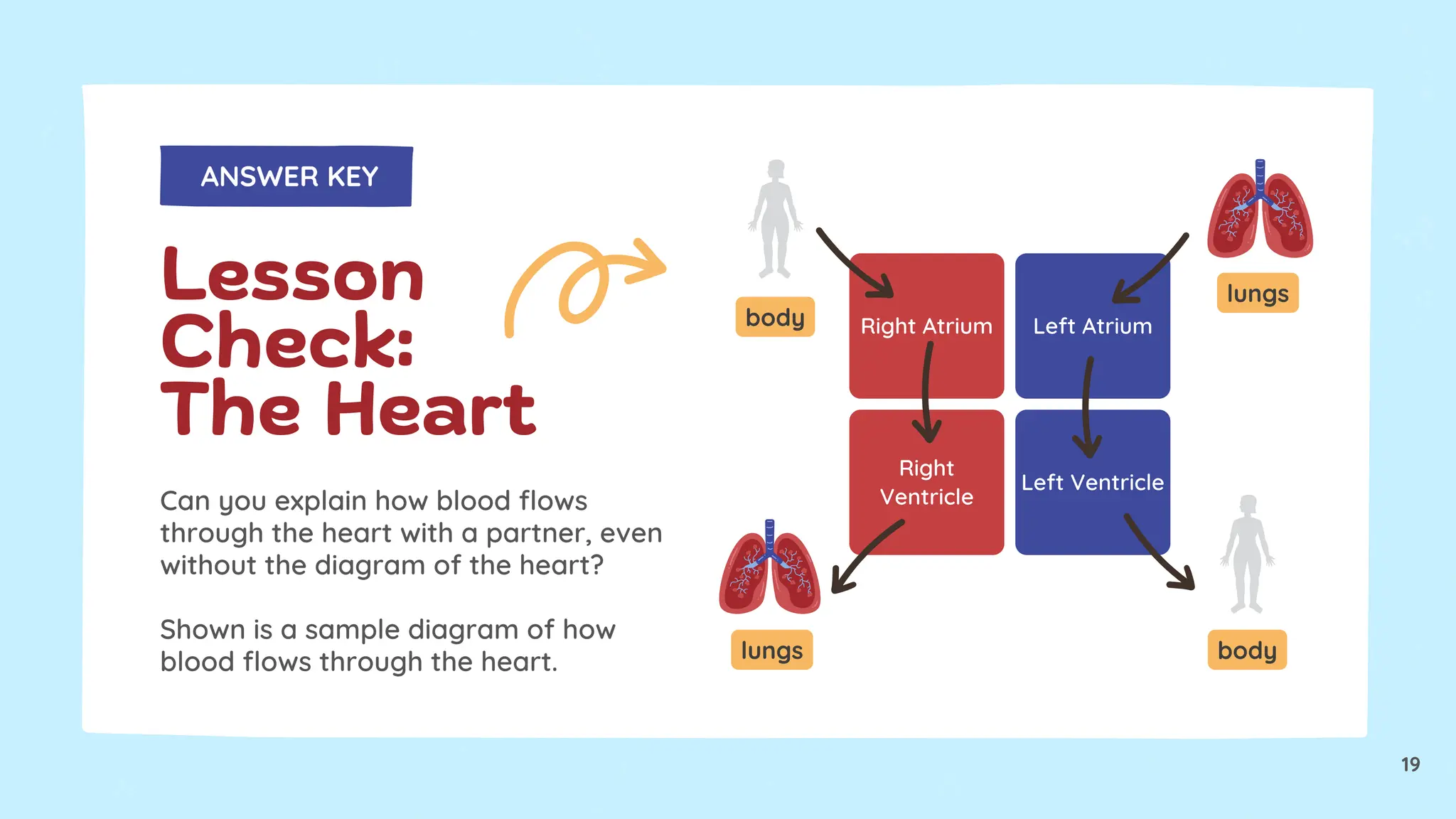
Can you explain how blood flows
through the heart with a partner, even
without the diagram of the heart?
Shown is a sample diagram of how
blood flows through the heart.
Lesson
Check:
The Heart
ANSWER KEY
Right Atrium Left Atrium
Right
Ventricle
Left Ventricle
body
lungs
lungs
body
19
COMPONENTS OF THE CIRCULATORY SYSTEM (CONT’D)
Blood vessels
The blood vessels of the circulatory system are the
arteries, veins, and capillaries.
The large arteries and veins that take blood to, and away
from the heart are known as the great vessels.
Arteries: Oxygenated blood enters the systemic circulation
when leaving the left ventricle, via the aortic semilunar
valve.
COMPONENTS OF THE CIRCULATORY SYSTEM (CONT’D)
The first part of the systemic circulation is the aorta, a massive and
thick-walled artery.
The aorta arches and gives branches supplying the upper part of
the body after passing through the aortic opening of the diaphragm
at the level of thoracic ten vertebra, it enters the abdomen.
Later, it descends down and supplies branches to abdomen, pelvis,
perineum and the lower limbs.
COMPONENTS OF THE CIRCULATORY SYSTEM (CONT’D)
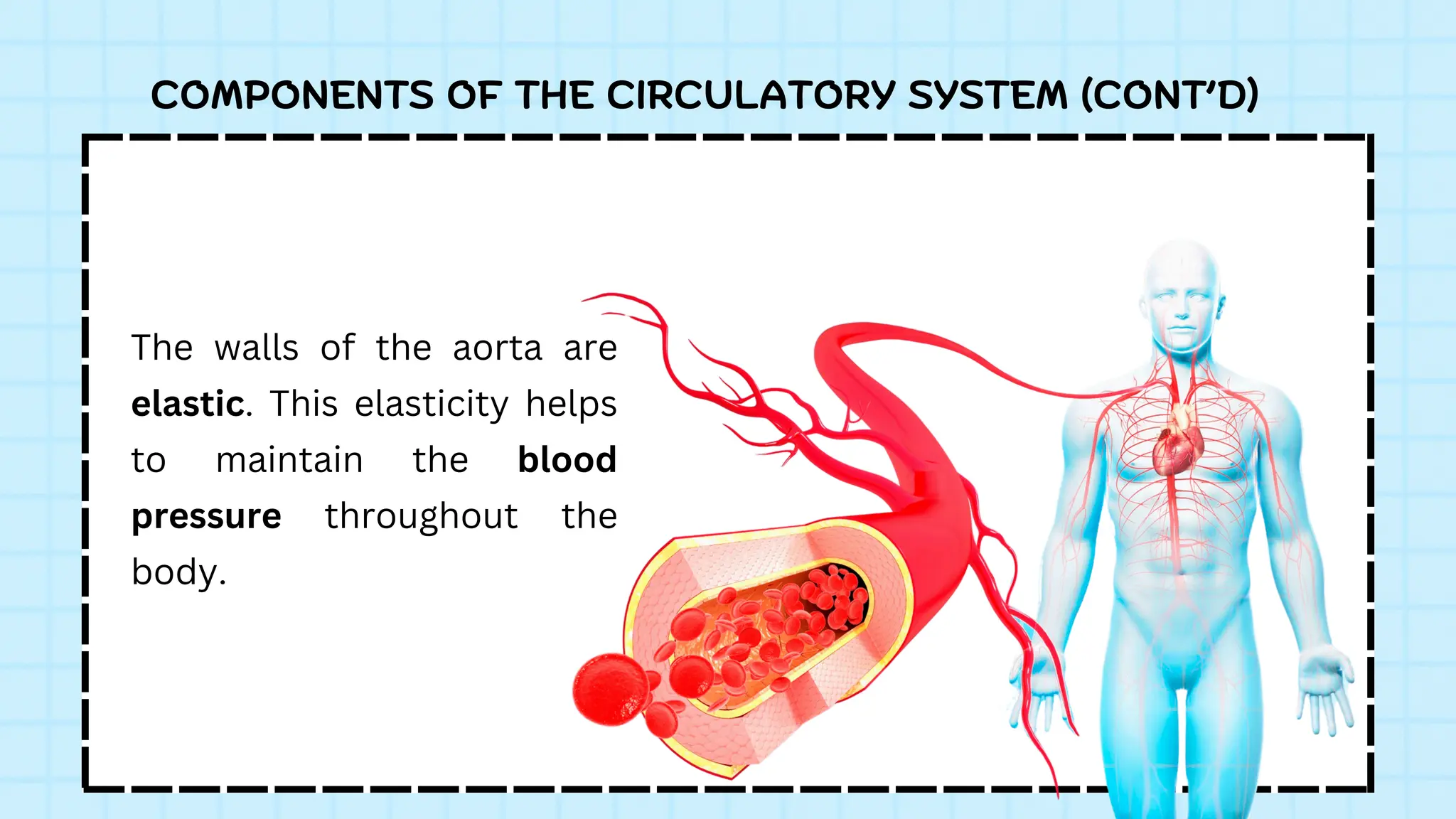
The walls of the aorta are
elastic. This elasticity helps
to maintain the blood
pressure throughout the
body.
COMPONENTS OF THE CIRCULATORY SYSTEM (CONT’D)
Veins
Capillaries merge into venules, which merge into veins.
The venous system feeds into the two major veins: the
superior vena cava – which mainly drains tissues above the
heart – and the inferior vena cava – which mainly drains
tissues below the heart.
These two large veins empty into the right atrium of the
heart.
COMPONENTS OF THE CIRCULATORY SYSTEM (CONT’D)
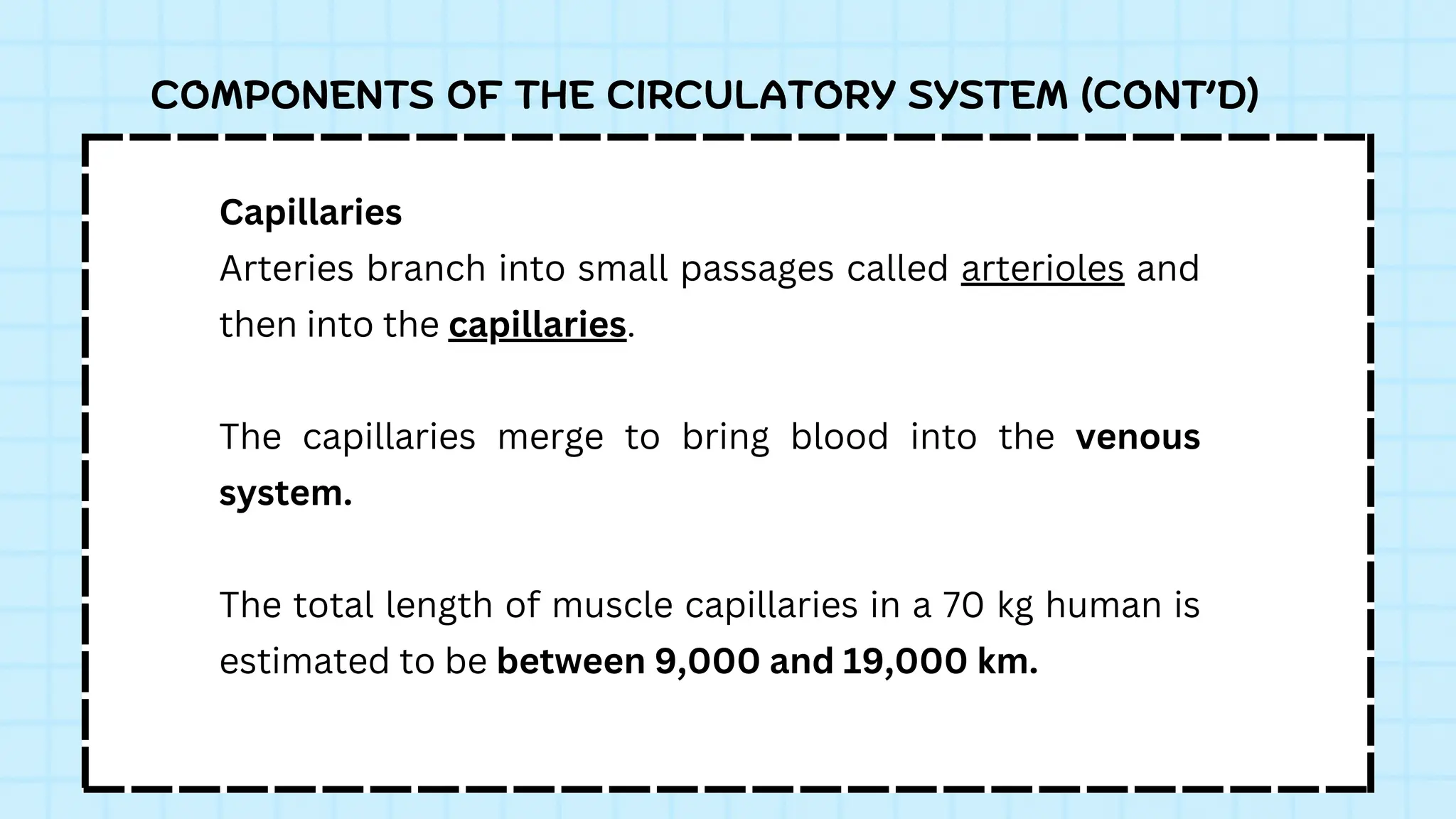
Capillaries
Arteries branch into small passages called arterioles and
then into the capillaries.
The capillaries merge to bring blood into the venous
system.
The total length of muscle capillaries in a 70 kg human is
estimated to be between 9,000 and 19,000 km.
BLOOD
25
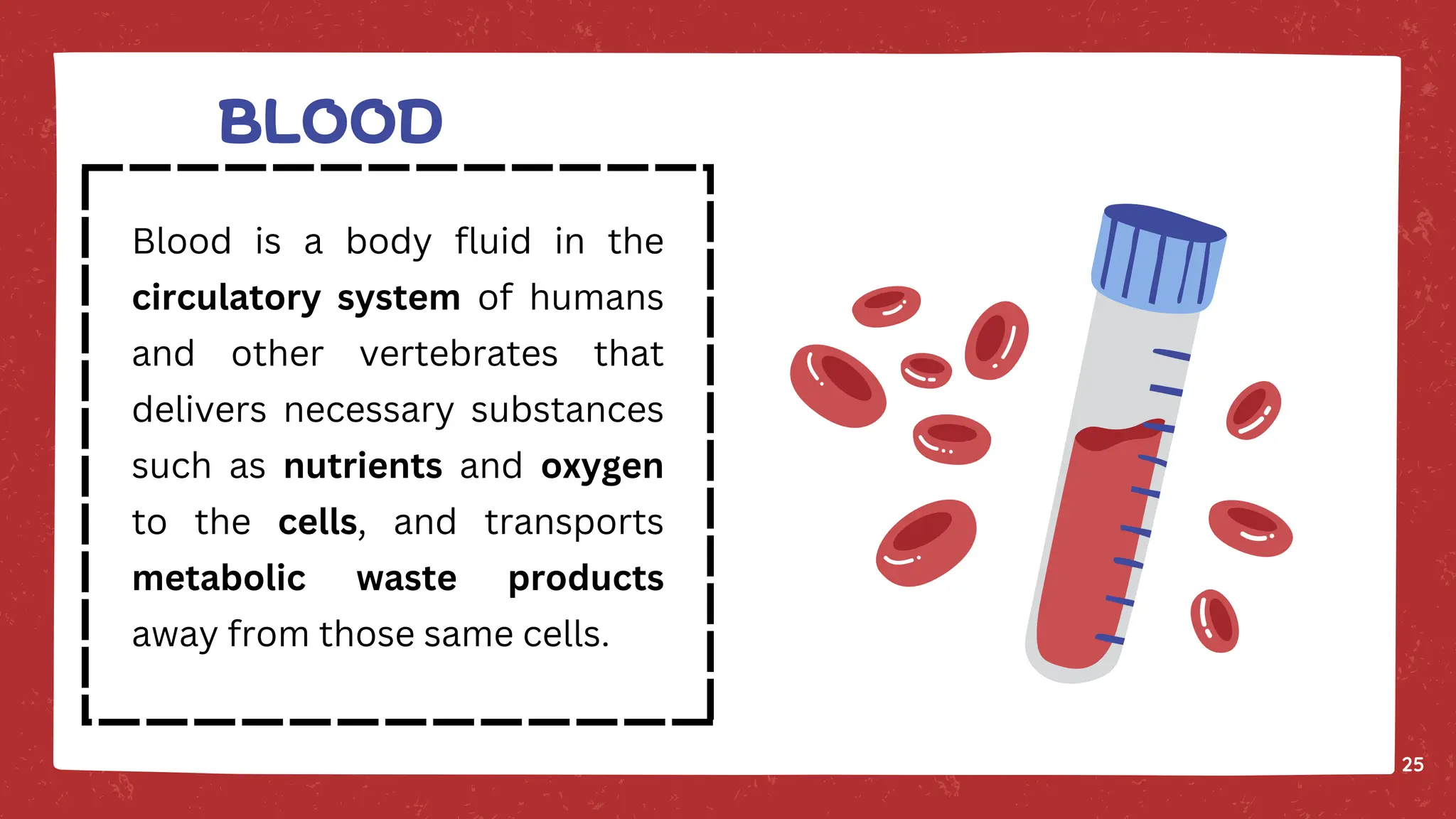
Blood is a body fluid in the
circulatory system of humans
and other vertebrates that
delivers necessary substances
such as nutrients and oxygen
to the cells, and transports
metabolic waste products
away from those same cells.
BLOOD
26
Blood is composed of blood cells suspended in blood
plasma. Plasma, which constitutes 55% of blood fluid, is
mostly water (92% by volume), and contains proteins,
glucose, mineral ions, and hormones.
The blood cells are mainly red blood cells (erythrocytes),
white blood cells (leukocytes), and platelets
(thrombocytes).
BLOOD
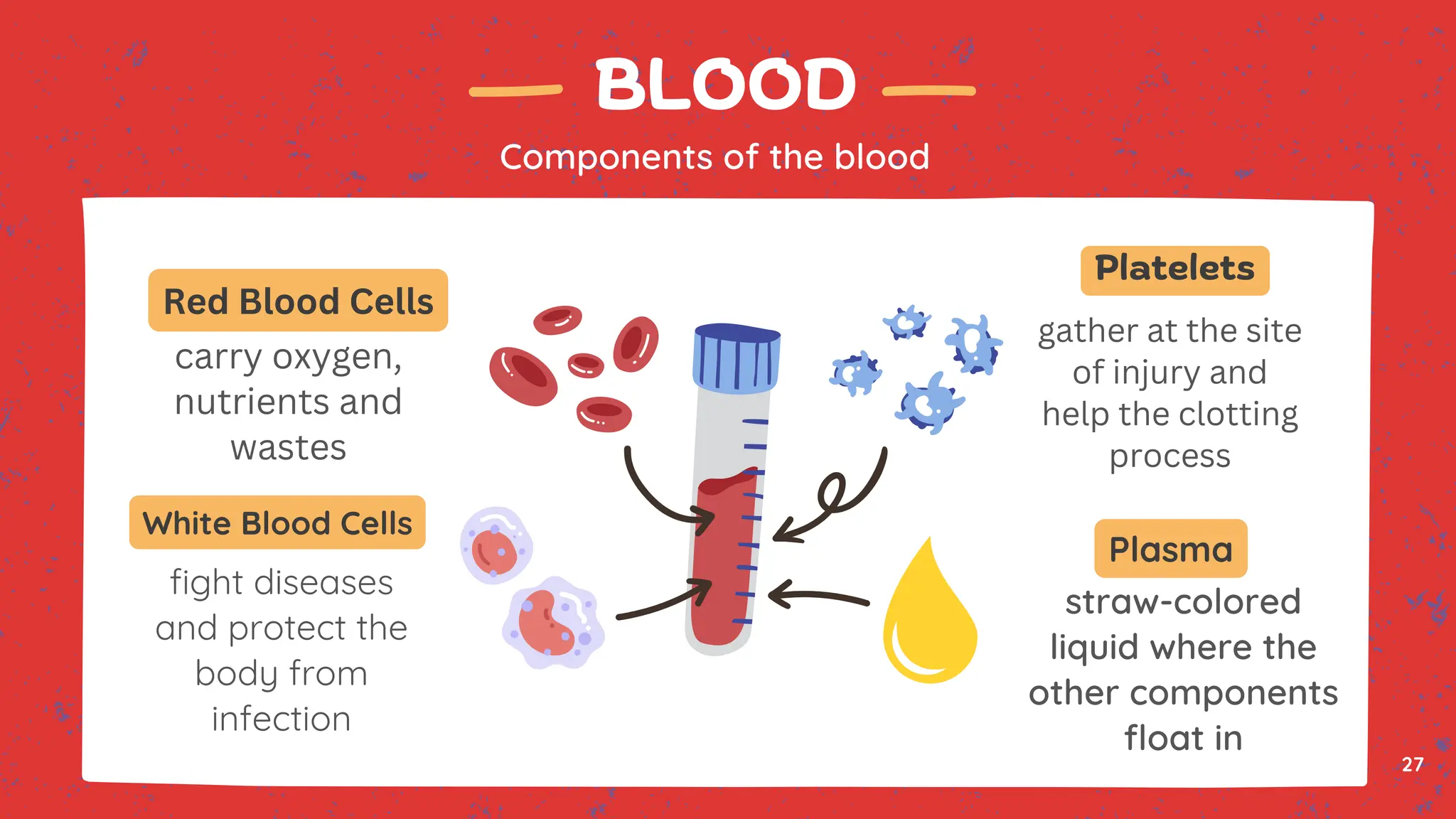
Components of the blood
carry oxygen,
nutrients and
wastes
fight diseases
and protect the
body from
infection
straw-colored
liquid where the
other components
float in
gather at the site
of injury and
help the clotting
process
Red Blood Cells
White Blood Cells
Platelets
Plasma
27
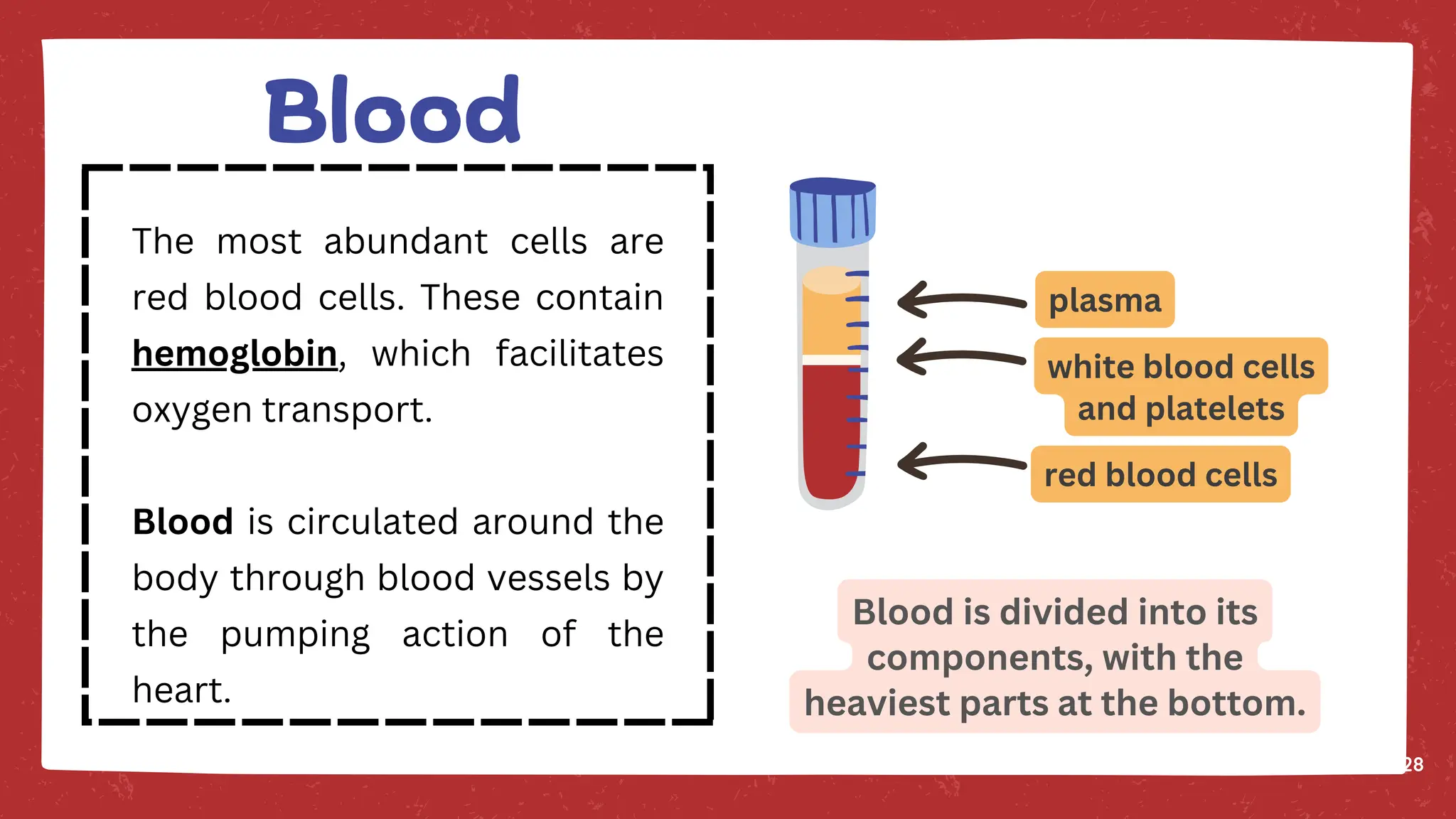
Blood is divided into its
components, with the
heaviest parts at the bottom.
plasma
white blood cells
and platelets
red blood cells
28
The most abundant cells are
red blood cells. These contain
hemoglobin, which facilitates
oxygen transport.
Blood is circulated around the
body through blood vessels by
the pumping action of the
heart.
Blood
29
Blood performs many important functions within the body,
including:
Supply of oxygen to tissues (bound to hemoglobin, which is
carried in red cells)
Supply of nutrients such as glucose, amino acids, and fatty
acids (dissolved in the blood or bound to plasma proteins
(e.g., blood lipids))
Removal of waste such as carbon dioxide, urea, and lactic
acid.
Function of the blood
30
Immunological functions, including circulation of white
blood cells, and detection of foreign material by antibodies
Coagulation, the response to a broken blood vessel, the
conversion of blood from a liquid to a semisolid gel to stop
bleeding
Messenger functions, including the transport of hormones
and the signaling of tissue damage
Regulation of core body temperature
Hydraulic functions
Function of the blood
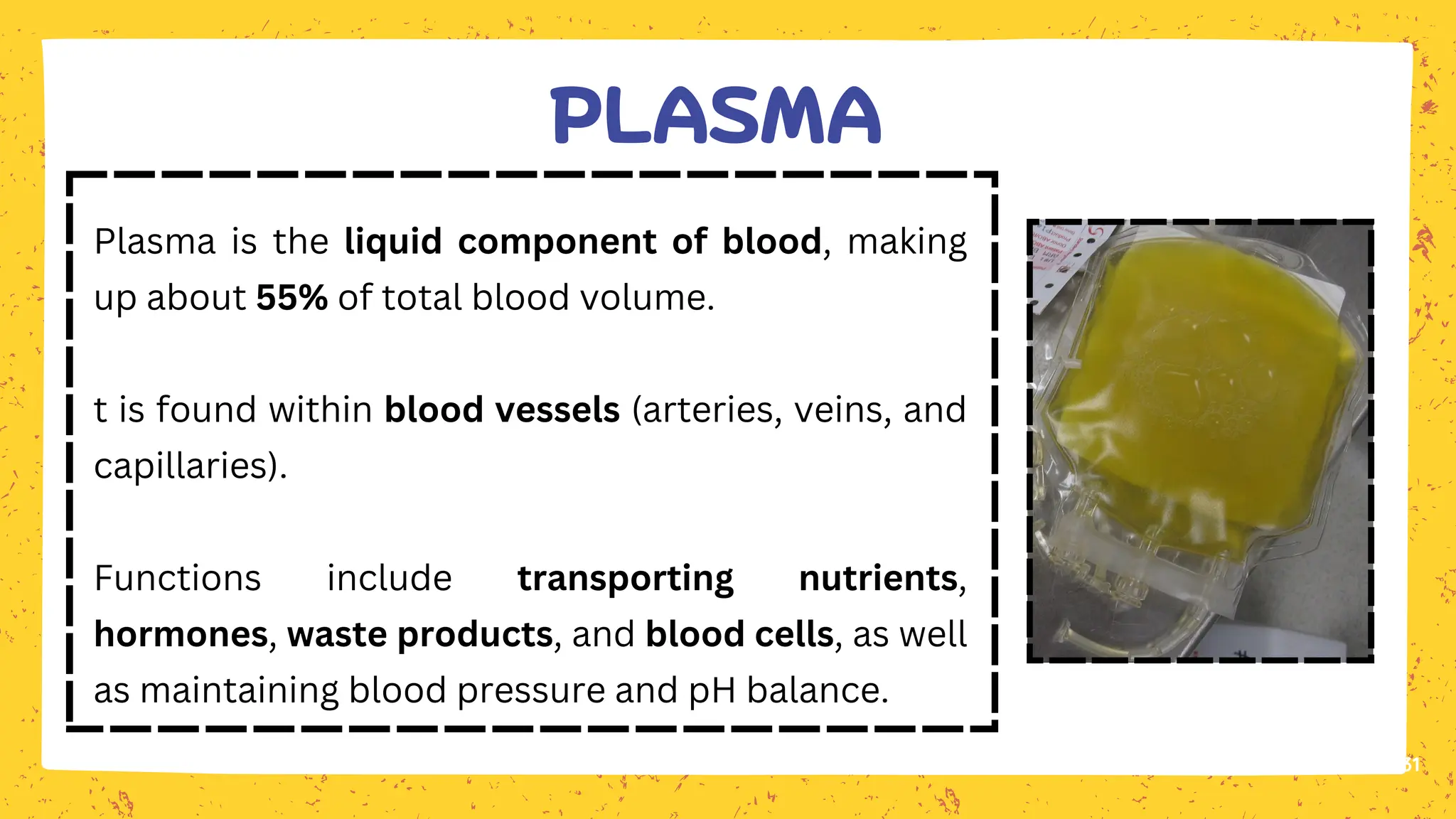
Plasma is the liquid component of blood, making
up about 55% of total blood volume.
t is found within blood vessels (arteries, veins, and
capillaries).
Functions include transporting nutrients,
hormones, waste products, and blood cells, as well
as maintaining blood pressure and pH balance.
31
PLASMA
32
Interstitial fluid is the fluid that surrounds and bathes the cells
in tissues.
It is found in the interstitial spaces (spaces between cells)
outside blood vessels.
Functions include facilitating the exchange of nutrients, gases,
and waste products between blood and cells.
Interstitial Fluid
33
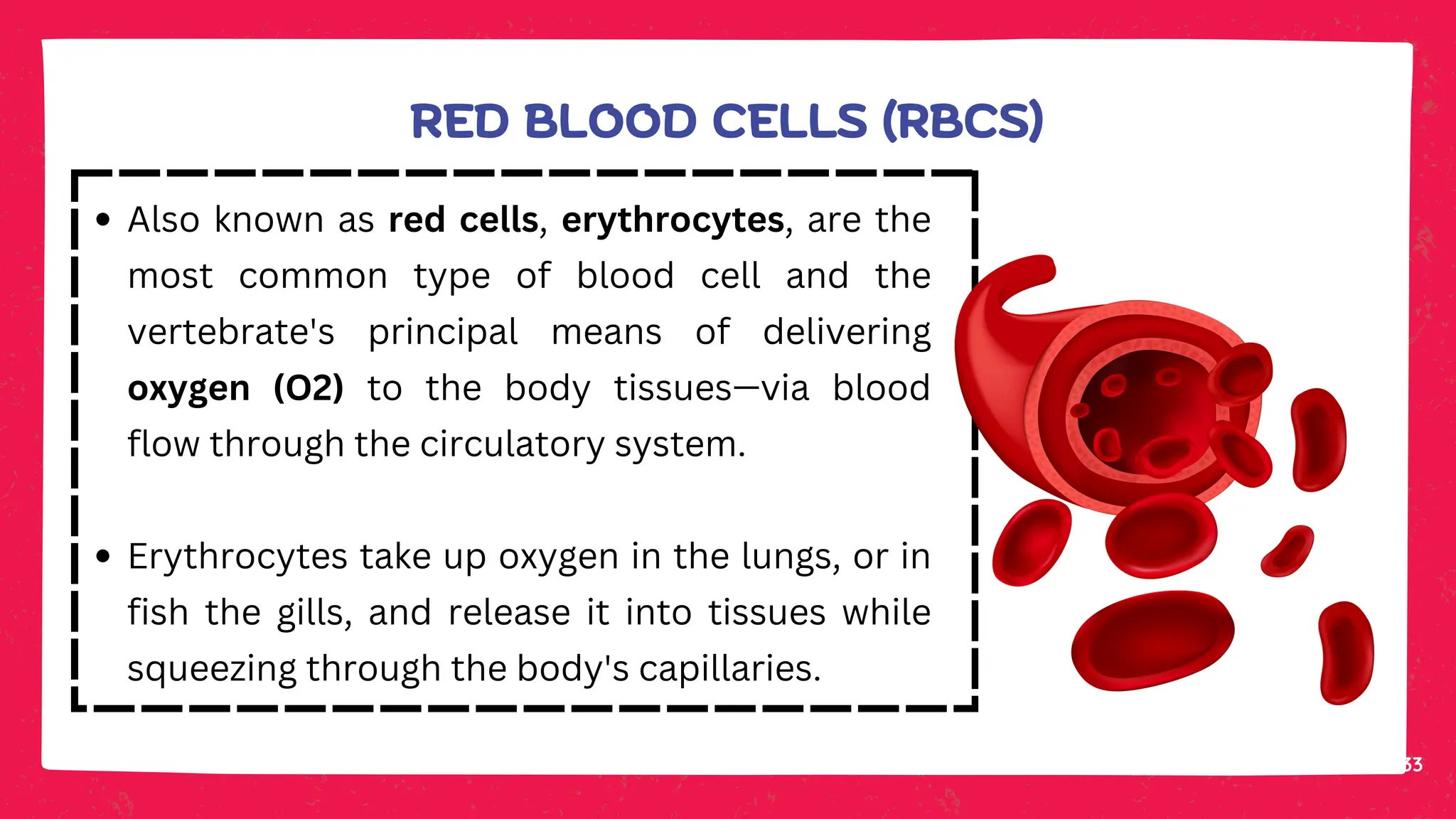
Also known as red cells, erythrocytes, are the
most common type of blood cell and the
vertebrate's principal means of delivering
oxygen (O2) to the body tissues—via blood
flow through the circulatory system.
Erythrocytes take up oxygen in the lungs, or in
fish the gills, and release it into tissues while
squeezing through the body's capillaries.
RED BLOOD CELLS (RBCS)
34
The cytoplasm of a red blood cell is rich in hemoglobin
(Hb), an iron-containing biomolecule that can bind
oxygen and is responsible for the red color of the cells
and the blood.
In humans, mature red blood cells are flexible biconcave
disks. They lack a cell nucleus (which is expelled during
development) and organelles, to accommodate maximum
space for hemoglobin.
RED BLOOD CELLS (RBCS) -CONT’D
35
Approximately 2.4 million new erythrocytes are produced
per second in human adults.
The cells develop in the bone marrow and circulate for
about 100–120 days in the body before their components
are recycled by macrophages.
Nearly half of the blood's volume (40% to 45%) is red
blood cells.
RED BLOOD CELLS (RBCS) -CONT’D
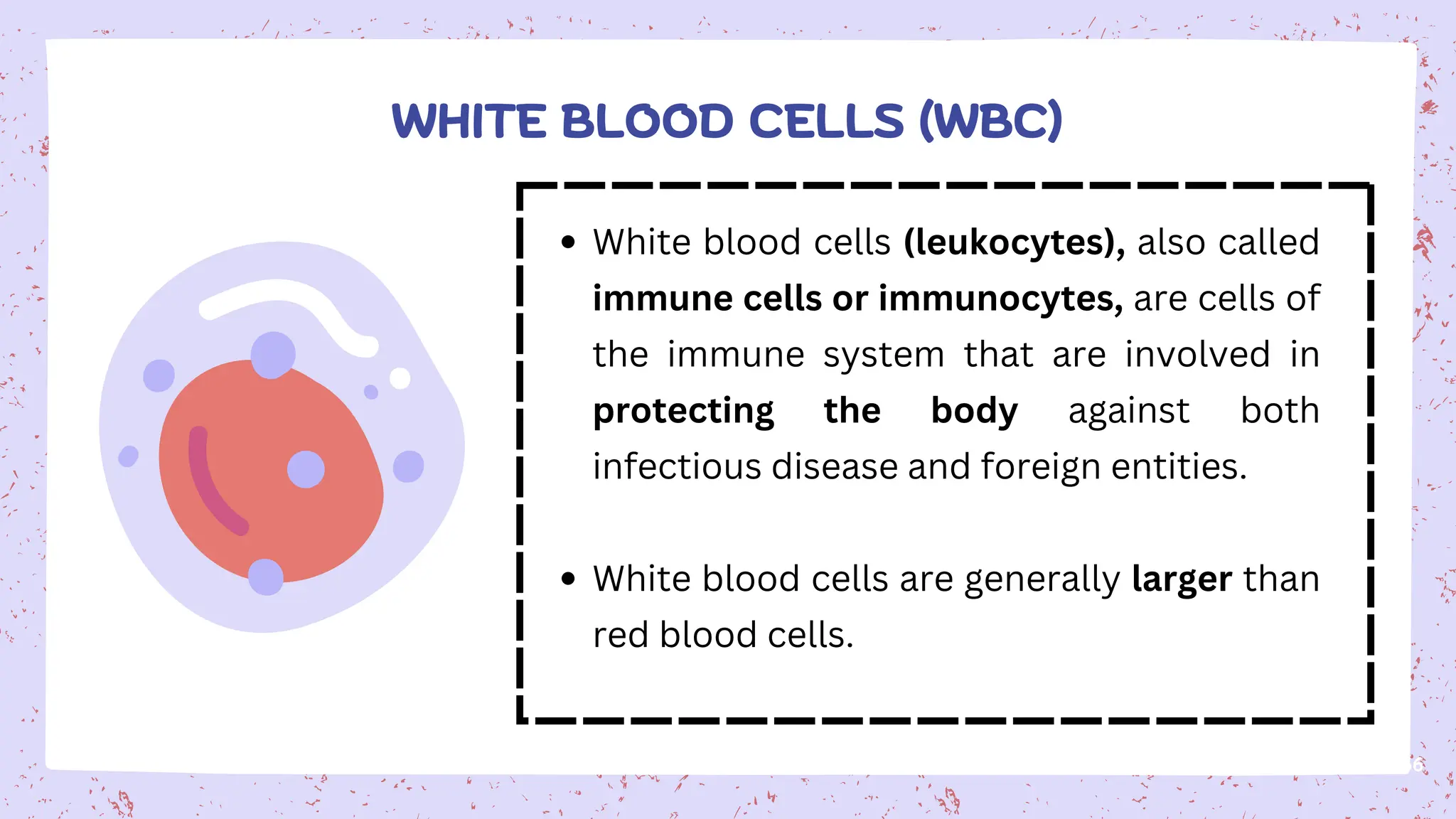
White blood cells (leukocytes), also called
immune cells or immunocytes, are cells of
the immune system that are involved in
protecting the body against both
infectious disease and foreign entities.
White blood cells are generally larger than
red blood cells.
36
WHITE BLOOD CELLS (WBC)
37
All white blood cells are produced and derived from
multipotent cells in the bone marrow known as
hematopoietic stem cells.
Leukocytes are found throughout the body, including the
blood and lymphatic system.
All white blood cells have nuclei, which distinguishes
them from the other blood cells.
WHITE BLOOD CELLS (WBC) - CONT’D
38
White blood cells are classified into Granulocytes and
Agranulocytes based on the presence of granules in the
cytoplasm.
Granulocytes (Contain granules; have lobed nuclei)
Neutrophils (55–70%): First responders to infection, perform
phagocytosis, short-lived (1–2 days).
Eosinophils (1–4%): Combat parasites, involved in allergic
reactions, regulate histamine activity.
Basophils (<1%): Release histamine and heparin, important in
inflammation and allergic responses.
TYPES OF WHITE BLOOD CELLS
39
Agranulocytes (No visible granules; large nuclei)
Lymphocytes (20–40%): Key players in adaptive
immunity. B cells produce antibodies, T cells kill
infected cells, NK cells kill virus-infected and tumor
cells.
Monocytes (2–8%): Largest WBC, migrate to tissues
to become macrophages, perform phagocytosis and
antigen presentation.
TYPES OF WHITE BLOOD CELLS - CONT’D
40
FUNCTIONS OF WHITE BLOOD CELLS
Defense against bacteria, viruses, fungi,
parasites.
Phagocytosis of foreign particles.
Antibody production by B lymphocytes.
Immune regulation by T cells.
Mediation of inflammation and allergy.
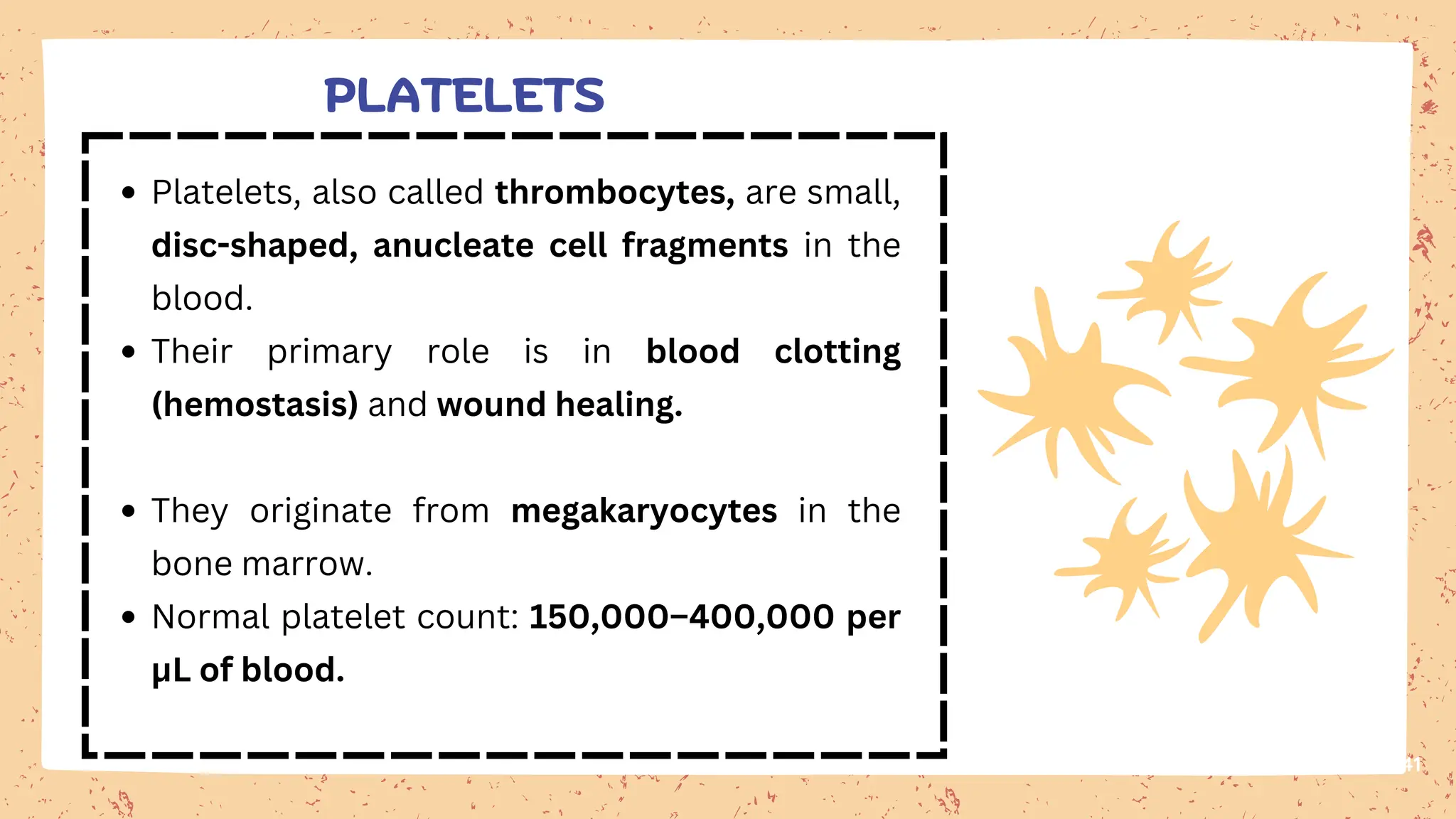
Platelets, also called thrombocytes, are small,
disc-shaped, anucleate cell fragments in the
blood.
Their primary role is in blood clotting
(hemostasis) and wound healing.
They originate from megakaryocytes in the
bone marrow.
Normal platelet count: 150,000–400,000 per
μL of blood.
41
PLATELETS
42
PLATELETS - CONT’D
Development (Thrombopoiesis)
Derived from megakaryocytes, which are large bone
marrow cells.
Controlled by the hormone thrombopoietin (TPO)
(produced by liver and kidneys).
Megakaryocytes extend proplatelets into blood
vessels, which break into individual platelets.
43
Hemostasis – Form platelet plugs at sites of injury.
Coagulation support – Provide a surface for
coagulation factors to form fibrin.
Vasoconstriction – Release serotonin and
thromboxane A2 to constrict blood vessels.
Wound healing – Release growth factors for tissue
repair.
Clot retraction – Contract to shrink the clot and close
the wound.
FUNCTIONS OF PLATELETS
THANK YOU...

The Circulatory System - The complete notes.pdf

  • 1.
  • 2.
    At the endof this lesson, students will be able to: Describe the parts of the circulatory system. Explain how the heart works. Name the types of circulation. List the components of blood. Identify common heart and blood vessel diseases. LESSON OBJECTIVES
  • 3.
    The circulatory systemis a system of organs that includes the heart, blood vessels, and blood which is circulated throughout the body. It includes the cardiovascular system, or vascular system, that consists of the heart and blood vessels. OVERVIEW
  • 4.
    The circulatory systemhas two divisions, a systemic circulation or circuit, and a pulmonary circulation or circuit. It is a complex network responsible for transporting essential substances throughout the body. It delivers oxygen and nutrients to tissues and removes waste products like carbon dioxide and urea. OVERVIEW (CONT’D)
  • 5.
    Transport of gases(O₂ and CO₂) Distribution of nutrients and hormones Removal of metabolic waste Regulation of body temperature and pH Immune system support (white blood cells, antibodies) MAJOR FUNCTIONS
  • 6.
    The circulatory systemis further divided into two major circuits – a pulmonary circulation, and a systemic circulation. TYPES OF CIRCULATION
  • 7.
    The pulmonary circulationis the part of the circulatory system in which oxygen-depleted blood is pumped away from the heart, via the pulmonary artery, to the lungs and returned, oxygenated, to the heart via the pulmonary vein. Oxygen-deprived blood from the superior and inferior vena cava enters the right atrium of the heart and flows through the tricuspid valve (right atrioventricular valve) into the right ventricle, from which it is then pumped through the pulmonary semilunar valve into the pulmonary artery to the lungs. PULMONARY CIRCULATION
  • 8.
    Gas exchange occursin the lungs, whereby CO2 is released from the blood, and oxygen is absorbed. The pulmonary vein returns the now oxygen-rich blood to the left atrium. PULMONARY CIRCULATION (CONT’D)
  • 9.
    The systemic circulationis a circuit loop that delivers oxygenated blood from the left heart to the rest of the body through the aorta. Deoxygenated blood is returned in the systemic circulation to the right heart via two large veins, the inferior vena cava and superior vena cava, where it is pumped from the right atrium into the pulmonary circulation for oxygenation. SYSTEMIC CIRCULATION
  • 10.
  • 11.
    Coronary circulation isthe circulation of blood in the arteries and veins that supply the heart muscle (myocardium). Coronary arteries supply oxygenated blood to the heart muscle. Cardiac veins then drain away the blood after it has been deoxygenated. CORONARY CIRCULATION
  • 12.
  • 13.
    The circulatory systemconsists of three main components: The heart Blood vessels Blood COMPONENTS OF THE CIRCULATORY SYSTEM The heart pumps blood to all parts of the body providing nutrients and oxygen to every cell, and removing waste products. The left heart pumps oxygenated blood returned from the lungs to the rest of the body in the systemic circulation.
  • 14.
    THE HEART The bloodthat is returned to the right atrium is deoxygenated (poor in oxygen) and passed into the right ventricle to be pumped through the pulmonary artery to the lungs for re-oxygenation and removal of carbon dioxide. The left atrium receives newly oxygenated blood from the lungs as well as the pulmonary vein which is passed into the strong left ventricle to be pumped through the aorta to the different organs of the body.
  • 15.
    COMPONENTS OF THECIRCULATORY SYSTEM (CONT’D) The right heart pumps deoxygenated blood to the lungs in the pulmonary circulation. In the human heart there is one atrium and one ventricle for each circulation, and with both a systemic and a pulmonary circulation there are four chambers in total: left atrium, left ventricle, right atrium and right ventricle. The right atrium is the upper chamber of the right side of the heart.
  • 16.
  • 17.
    17 PARTS OF THE HEART Pulmonary Veins Right Atrium TricuspidValve Right Ventricle Inferior Vena Cava Left Ventricle Pulmonary Veins Pulmonary Artery Aorta Left Atrium Superior Vena Cava Mitral Valve Pulmonary Valve Aortic Valve
  • 18.
    Can you explainhow blood flows through the heart with a partner, even without the diagram of the heart? Try explaining the process to your peer without referring to your notes. Lesson Check: The Heart 18
  • 19.
    Can you explainhow blood flows through the heart with a partner, even without the diagram of the heart? Shown is a sample diagram of how blood flows through the heart. Lesson Check: The Heart ANSWER KEY Right Atrium Left Atrium Right Ventricle Left Ventricle body lungs lungs body 19
  • 20.
    COMPONENTS OF THECIRCULATORY SYSTEM (CONT’D) Blood vessels The blood vessels of the circulatory system are the arteries, veins, and capillaries. The large arteries and veins that take blood to, and away from the heart are known as the great vessels. Arteries: Oxygenated blood enters the systemic circulation when leaving the left ventricle, via the aortic semilunar valve.
  • 21.
    COMPONENTS OF THECIRCULATORY SYSTEM (CONT’D) The first part of the systemic circulation is the aorta, a massive and thick-walled artery. The aorta arches and gives branches supplying the upper part of the body after passing through the aortic opening of the diaphragm at the level of thoracic ten vertebra, it enters the abdomen. Later, it descends down and supplies branches to abdomen, pelvis, perineum and the lower limbs.
  • 22.
    COMPONENTS OF THECIRCULATORY SYSTEM (CONT’D) The walls of the aorta are elastic. This elasticity helps to maintain the blood pressure throughout the body.
  • 23.
    COMPONENTS OF THECIRCULATORY SYSTEM (CONT’D) Veins Capillaries merge into venules, which merge into veins. The venous system feeds into the two major veins: the superior vena cava – which mainly drains tissues above the heart – and the inferior vena cava – which mainly drains tissues below the heart. These two large veins empty into the right atrium of the heart.
  • 24.
    COMPONENTS OF THECIRCULATORY SYSTEM (CONT’D) Capillaries Arteries branch into small passages called arterioles and then into the capillaries. The capillaries merge to bring blood into the venous system. The total length of muscle capillaries in a 70 kg human is estimated to be between 9,000 and 19,000 km.
  • 25.
    BLOOD 25 Blood is abody fluid in the circulatory system of humans and other vertebrates that delivers necessary substances such as nutrients and oxygen to the cells, and transports metabolic waste products away from those same cells.
  • 26.
    BLOOD 26 Blood is composedof blood cells suspended in blood plasma. Plasma, which constitutes 55% of blood fluid, is mostly water (92% by volume), and contains proteins, glucose, mineral ions, and hormones. The blood cells are mainly red blood cells (erythrocytes), white blood cells (leukocytes), and platelets (thrombocytes).
  • 27.
    BLOOD Components of theblood carry oxygen, nutrients and wastes fight diseases and protect the body from infection straw-colored liquid where the other components float in gather at the site of injury and help the clotting process Red Blood Cells White Blood Cells Platelets Plasma 27
  • 28.
    Blood is dividedinto its components, with the heaviest parts at the bottom. plasma white blood cells and platelets red blood cells 28 The most abundant cells are red blood cells. These contain hemoglobin, which facilitates oxygen transport. Blood is circulated around the body through blood vessels by the pumping action of the heart. Blood
  • 29.
    29 Blood performs manyimportant functions within the body, including: Supply of oxygen to tissues (bound to hemoglobin, which is carried in red cells) Supply of nutrients such as glucose, amino acids, and fatty acids (dissolved in the blood or bound to plasma proteins (e.g., blood lipids)) Removal of waste such as carbon dioxide, urea, and lactic acid. Function of the blood
  • 30.
    30 Immunological functions, includingcirculation of white blood cells, and detection of foreign material by antibodies Coagulation, the response to a broken blood vessel, the conversion of blood from a liquid to a semisolid gel to stop bleeding Messenger functions, including the transport of hormones and the signaling of tissue damage Regulation of core body temperature Hydraulic functions Function of the blood
  • 31.
    Plasma is theliquid component of blood, making up about 55% of total blood volume. t is found within blood vessels (arteries, veins, and capillaries). Functions include transporting nutrients, hormones, waste products, and blood cells, as well as maintaining blood pressure and pH balance. 31 PLASMA
  • 32.
    32 Interstitial fluid isthe fluid that surrounds and bathes the cells in tissues. It is found in the interstitial spaces (spaces between cells) outside blood vessels. Functions include facilitating the exchange of nutrients, gases, and waste products between blood and cells. Interstitial Fluid
  • 33.
    33 Also known asred cells, erythrocytes, are the most common type of blood cell and the vertebrate's principal means of delivering oxygen (O2) to the body tissues—via blood flow through the circulatory system. Erythrocytes take up oxygen in the lungs, or in fish the gills, and release it into tissues while squeezing through the body's capillaries. RED BLOOD CELLS (RBCS)
  • 34.
    34 The cytoplasm ofa red blood cell is rich in hemoglobin (Hb), an iron-containing biomolecule that can bind oxygen and is responsible for the red color of the cells and the blood. In humans, mature red blood cells are flexible biconcave disks. They lack a cell nucleus (which is expelled during development) and organelles, to accommodate maximum space for hemoglobin. RED BLOOD CELLS (RBCS) -CONT’D
  • 35.
    35 Approximately 2.4 millionnew erythrocytes are produced per second in human adults. The cells develop in the bone marrow and circulate for about 100–120 days in the body before their components are recycled by macrophages. Nearly half of the blood's volume (40% to 45%) is red blood cells. RED BLOOD CELLS (RBCS) -CONT’D
  • 36.
    White blood cells(leukocytes), also called immune cells or immunocytes, are cells of the immune system that are involved in protecting the body against both infectious disease and foreign entities. White blood cells are generally larger than red blood cells. 36 WHITE BLOOD CELLS (WBC)
  • 37.
    37 All white bloodcells are produced and derived from multipotent cells in the bone marrow known as hematopoietic stem cells. Leukocytes are found throughout the body, including the blood and lymphatic system. All white blood cells have nuclei, which distinguishes them from the other blood cells. WHITE BLOOD CELLS (WBC) - CONT’D
  • 38.
    38 White blood cellsare classified into Granulocytes and Agranulocytes based on the presence of granules in the cytoplasm. Granulocytes (Contain granules; have lobed nuclei) Neutrophils (55–70%): First responders to infection, perform phagocytosis, short-lived (1–2 days). Eosinophils (1–4%): Combat parasites, involved in allergic reactions, regulate histamine activity. Basophils (<1%): Release histamine and heparin, important in inflammation and allergic responses. TYPES OF WHITE BLOOD CELLS
  • 39.
    39 Agranulocytes (No visiblegranules; large nuclei) Lymphocytes (20–40%): Key players in adaptive immunity. B cells produce antibodies, T cells kill infected cells, NK cells kill virus-infected and tumor cells. Monocytes (2–8%): Largest WBC, migrate to tissues to become macrophages, perform phagocytosis and antigen presentation. TYPES OF WHITE BLOOD CELLS - CONT’D
  • 40.
    40 FUNCTIONS OF WHITEBLOOD CELLS Defense against bacteria, viruses, fungi, parasites. Phagocytosis of foreign particles. Antibody production by B lymphocytes. Immune regulation by T cells. Mediation of inflammation and allergy.
  • 41.
    Platelets, also calledthrombocytes, are small, disc-shaped, anucleate cell fragments in the blood. Their primary role is in blood clotting (hemostasis) and wound healing. They originate from megakaryocytes in the bone marrow. Normal platelet count: 150,000–400,000 per μL of blood. 41 PLATELETS
  • 42.
    42 PLATELETS - CONT’D Development(Thrombopoiesis) Derived from megakaryocytes, which are large bone marrow cells. Controlled by the hormone thrombopoietin (TPO) (produced by liver and kidneys). Megakaryocytes extend proplatelets into blood vessels, which break into individual platelets.
  • 43.
    43 Hemostasis – Formplatelet plugs at sites of injury. Coagulation support – Provide a surface for coagulation factors to form fibrin. Vasoconstriction – Release serotonin and thromboxane A2 to constrict blood vessels. Wound healing – Release growth factors for tissue repair. Clot retraction – Contract to shrink the clot and close the wound. FUNCTIONS OF PLATELETS
  • 44.