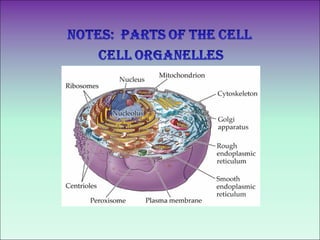
PARTS OF THE CELL – CELL ORGANELLES
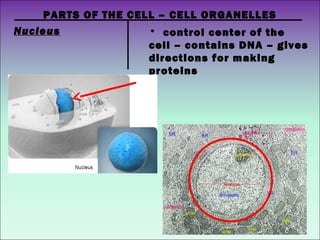
Nucleus • control center of the
cell – contains DNA – gives
directions for making
proteins
Nucleolus • inside nucleus – makes
ribosomes
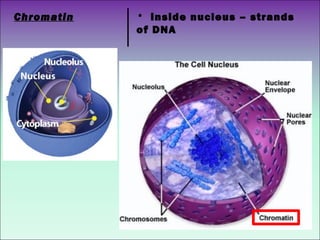
Chromatin • inside nucleus – strands
of DNA
Cytoplasm • clear, gelatinous fluid
inside the cell
• gives the cell its shape
• holds or “suspends” the
cell’s organelles
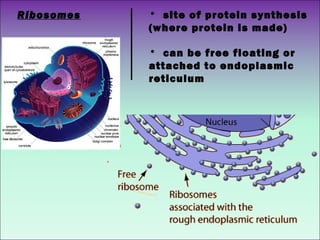
Ribosomes • site of protein synthesis
(where protein is made)
• can be free floating or
attached to endoplasmic
reticulum
Endoplasmic
Reticulum
• large “workspace” inside
cell – has “folds” for
greater surface area
2 kinds of ER 1. Rough ER: has
ribosomes attached to
make protein
2. Smooth ER: no
ribosomes attached –
other biochemical
activities here
Golgi Apparatus
• sorts proteins to be sent
to correct destination
• flattened system of
membranes – (look like
pancakes)
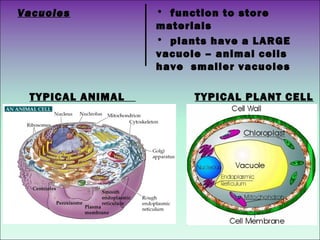
Vacuoles • function to store
materials
• plants have a LARGE
vacuole – animal cells
have smaller vacuoles
TYPICAL ANIMAL
CELL
TYPICAL PLANT CELL
Lysosome • contains digestive
enzymes
• digests/destroys
excess food, viruses,
bacteria
• also can destroy the
cell itself if needed
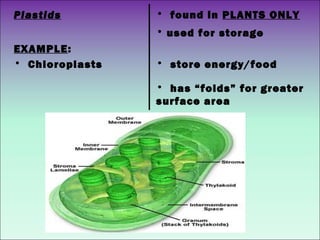
Plastids • found in PLANTS ONLY
• used for storage
EXAMPLE:
• Chloroplasts • store energy/food
• has “folds” for greater
surface area
Mitochondria • produces energy for the
cell
• has “folds” for greater
surface area
• each type of cell has a
different amount of these
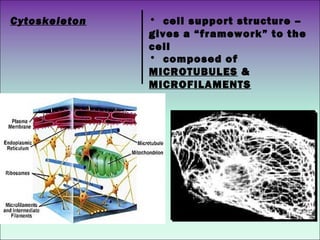
Cytoskeleton • cell support structure –
gives a “framework” to the
cell
• composed of
MICROTUBULES &
MICROFILAMENTS
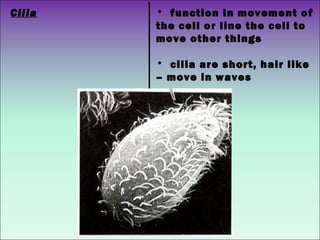
Cilia • function in movement of
the cell or line the cell to
move other things
• cilia are short, hair like
– move in waves
Flagella • functions in movement
of the cell
• flagella are longer –
move like a whip
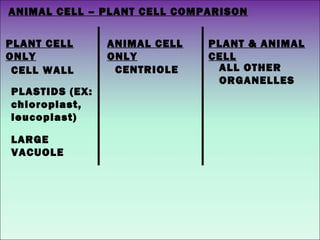
ANIMAL CELL – PLANT CELL COMPARISON
PLANT CELL
ONLY
PLANT & ANIMAL
CELL
ANIMAL CELL
ONLY
CELL WALL
PLASTIDS (EX:
chloroplast,
leucoplast)
LARGE
VACUOLE
CENTRIOLE ALL OTHER
ORGANELLES

Cell Organelle PowerPoint Presentation

  • 2.
    PARTS OF THECELL – CELL ORGANELLES Nucleus • control center of the cell – contains DNA – gives directions for making proteins
  • 3.
    Nucleolus • insidenucleus – makes ribosomes
  • 4.
    Chromatin • insidenucleus – strands of DNA
  • 5.
    Cytoplasm • clear,gelatinous fluid inside the cell • gives the cell its shape • holds or “suspends” the cell’s organelles
  • 6.
    Ribosomes • siteof protein synthesis (where protein is made) • can be free floating or attached to endoplasmic reticulum
  • 7.
    Endoplasmic Reticulum • large “workspace”inside cell – has “folds” for greater surface area 2 kinds of ER 1. Rough ER: has ribosomes attached to make protein 2. Smooth ER: no ribosomes attached – other biochemical activities here
  • 8.
    Golgi Apparatus • sortsproteins to be sent to correct destination • flattened system of membranes – (look like pancakes)
  • 9.
    Vacuoles • functionto store materials • plants have a LARGE vacuole – animal cells have smaller vacuoles TYPICAL ANIMAL CELL TYPICAL PLANT CELL
  • 10.
    Lysosome • containsdigestive enzymes • digests/destroys excess food, viruses, bacteria • also can destroy the cell itself if needed
  • 11.
    Plastids • foundin PLANTS ONLY • used for storage EXAMPLE: • Chloroplasts • store energy/food • has “folds” for greater surface area
  • 12.
    Mitochondria • producesenergy for the cell • has “folds” for greater surface area • each type of cell has a different amount of these
  • 13.
    Cytoskeleton • cellsupport structure – gives a “framework” to the cell • composed of MICROTUBULES & MICROFILAMENTS
  • 14.
    Cilia • functionin movement of the cell or line the cell to move other things • cilia are short, hair like – move in waves
  • 15.
    Flagella • functionsin movement of the cell • flagella are longer – move like a whip
  • 16.
    ANIMAL CELL –PLANT CELL COMPARISON PLANT CELL ONLY PLANT & ANIMAL CELL ANIMAL CELL ONLY CELL WALL PLASTIDS (EX: chloroplast, leucoplast) LARGE VACUOLE CENTRIOLE ALL OTHER ORGANELLES