Political Setting
Economic Life
Socio-cultural Status
Contributions to the World
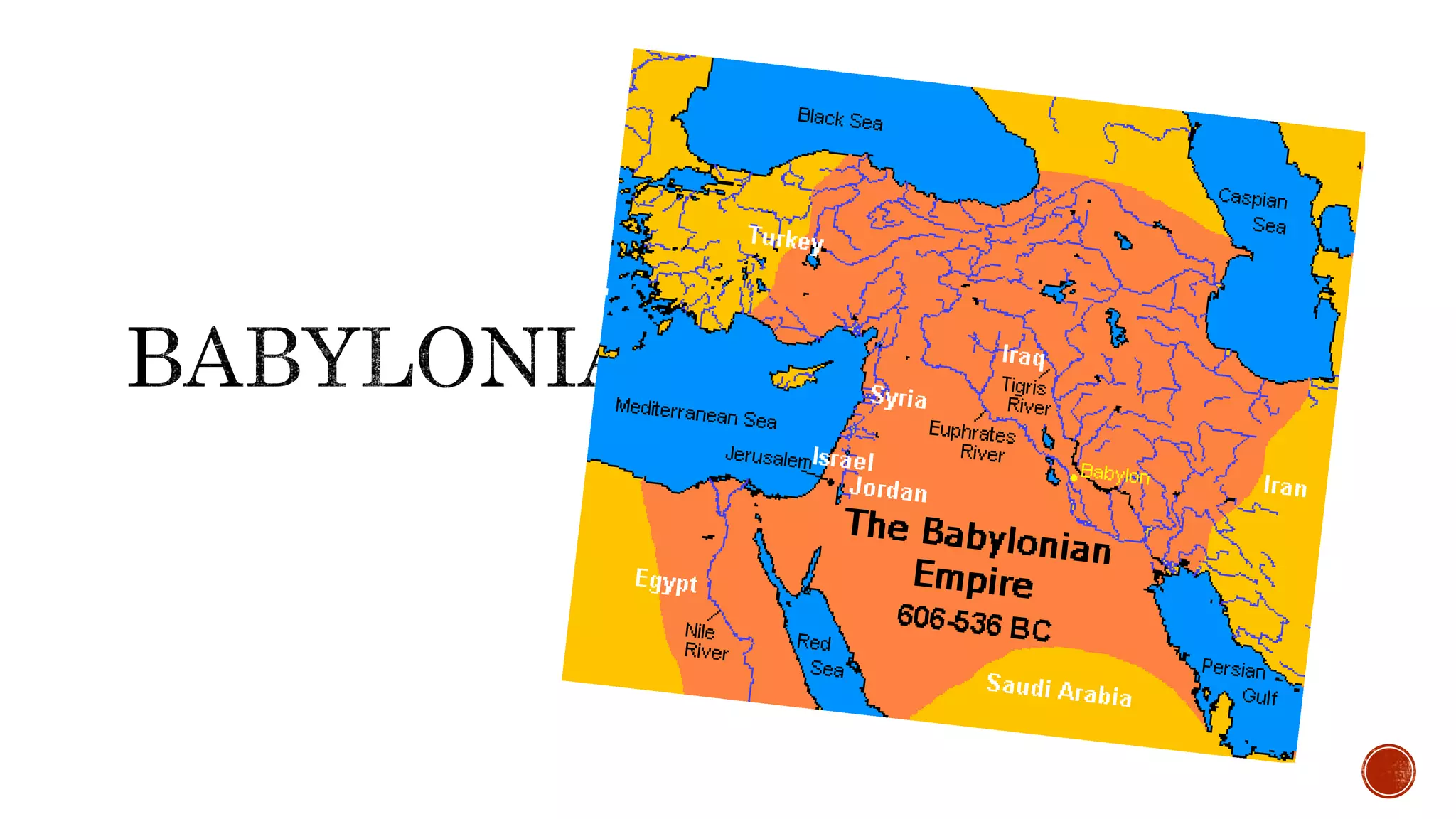
Babylonia (Babylonian Bâbili,"gate of God"; Old Persian
Babirush),Was the ancient country of Mesopotamia,
known originally as Sumer and later as Sumer and Akkad,
lying between the Tigris and Euphrates rivers, south of
modern Baghdâd, Iraq.
Babylonia was consisted of many cities, which it was
surrounded by villages. The ruler of Babylonia was
the king, so it was an absolute monarch who
exercised legislative and judicial as well as executive
powers. Under the king were governors and
administrators, there were also city elders that was
in charge of the local administration.
Babylonian Economy was based on Agriculture.
Barter System
They raised cattle and sheep
Main crop was barley
3 Main Classes
Awilu – free person of upper class
Mushkenu – free person of low estate
Wardu - slaves
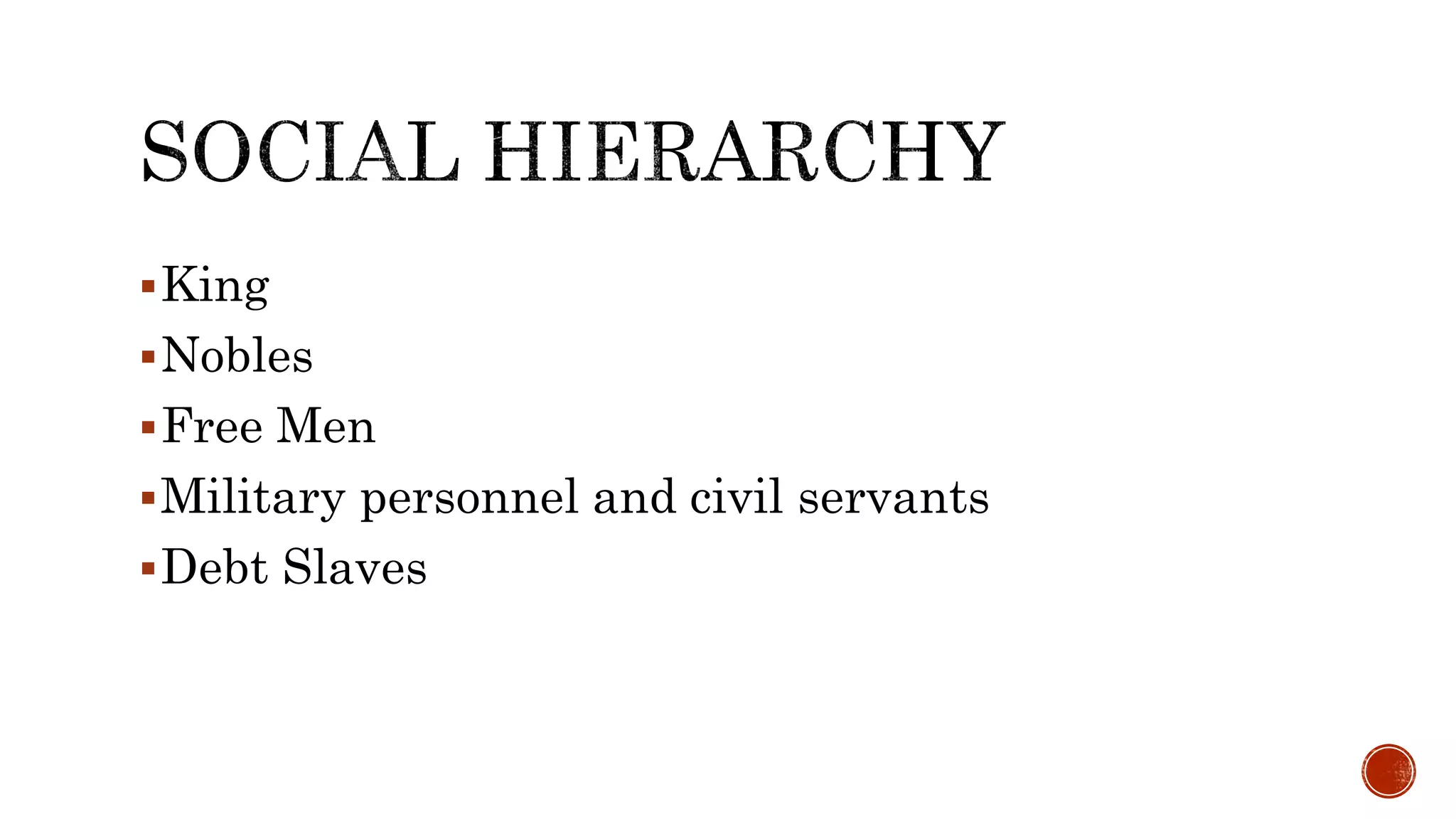
King
Nobles
Free Men
Military personnel and civil servants
Debt Slaves
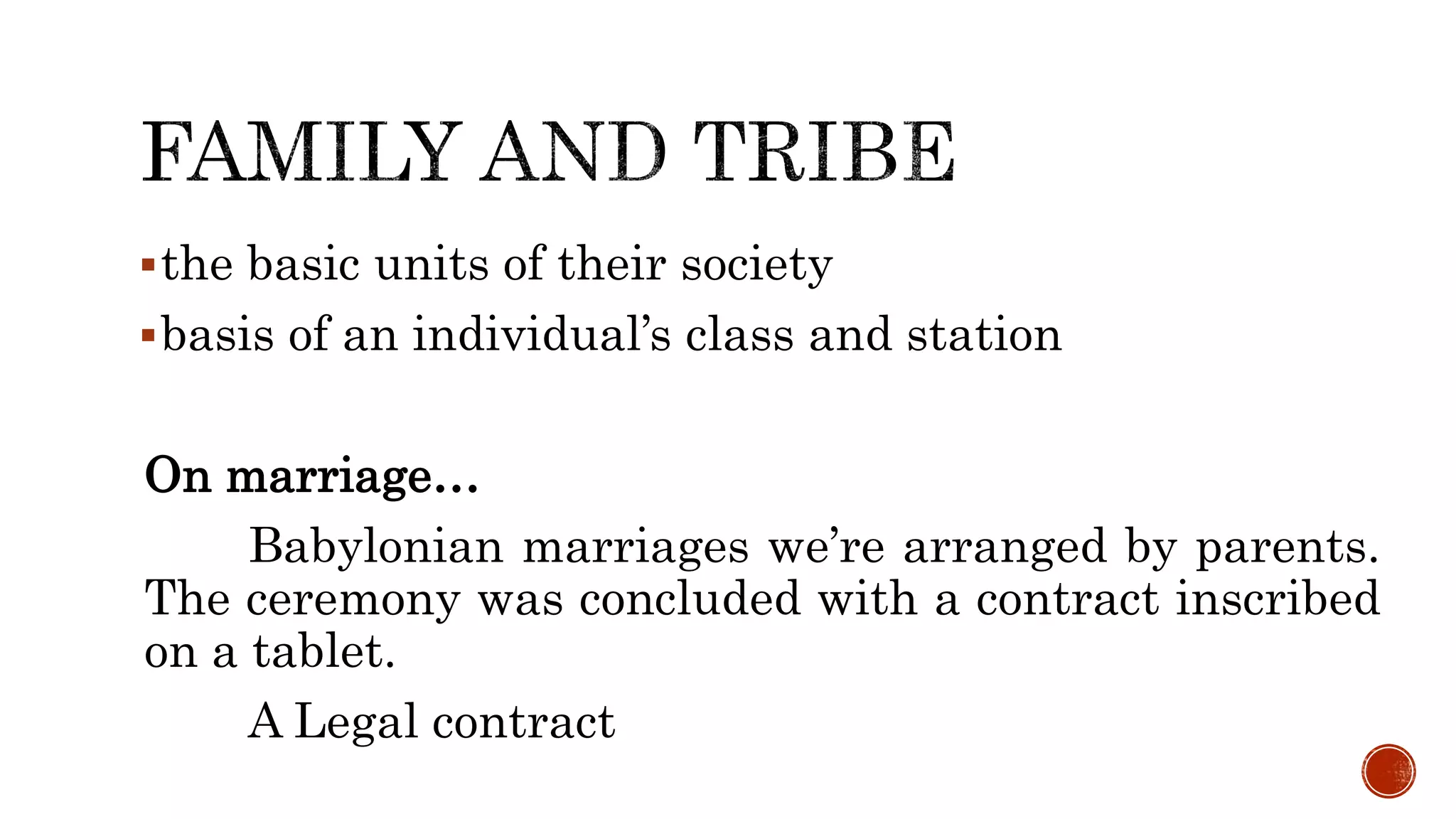
the basic units of their society
basis of an individual’s class and station
On marriage…
Babylonian marriages we’re arranged by parents.
The ceremony was concluded with a contract inscribed
on a tablet.
A Legal contract
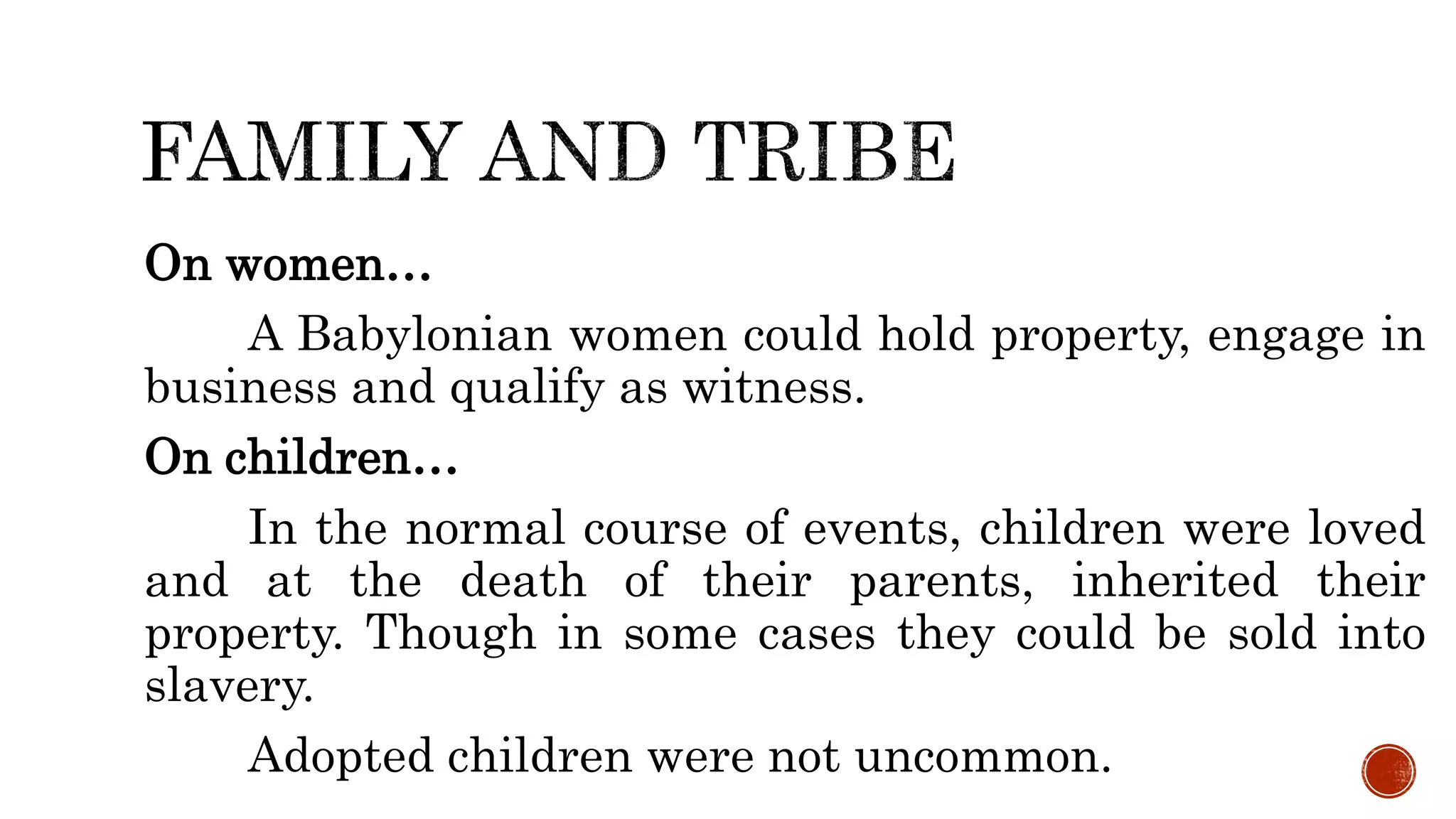
On women…
A Babylonian women could hold property, engage in
business and qualify as witness.
On children…
In the normal course of events, children were loved
and at the death of their parents, inherited their
property. Though in some cases they could be sold into
slavery.
Adopted children were not uncommon.
Babylonian education starts at the age of eight.
Education is exclusive for children of wealthy
families. They were taught in so called “tablet
house”. There they were trained to exercise
knowledge over scripts, cuneiform and language.
If a student passes final examinations he/she will
become a scribe.
Polytheistic
Babylonians worshipped many gods. One is Marduk, the
chief god, god of the city of Babylon.
Festivals were held throughout the year for each specific god
to assure their favor.
The new year festival for Marduk was to assure fertility in the
fields.
The interior of the Temple of Marduk was reportedly covered
with gold.
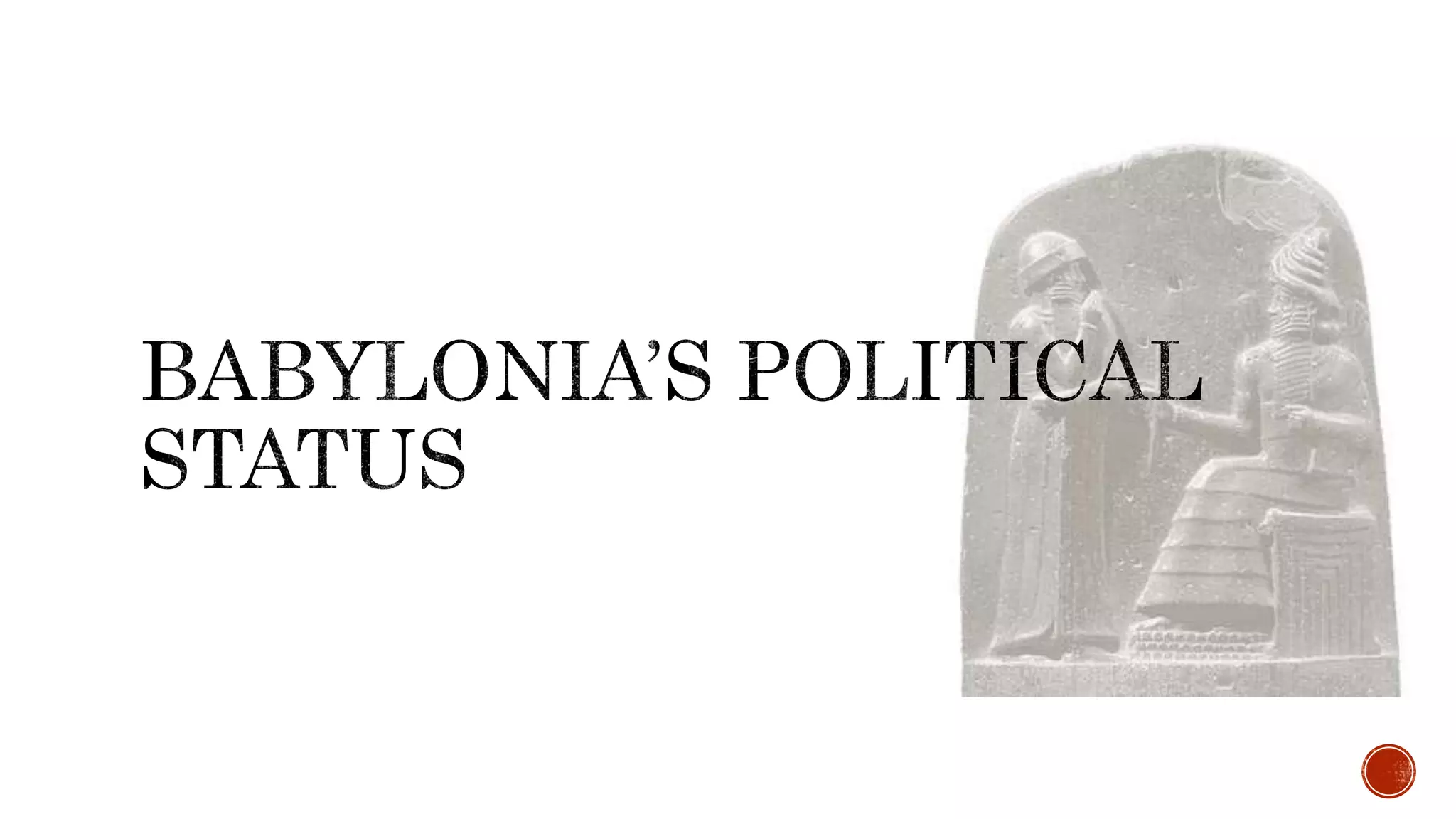
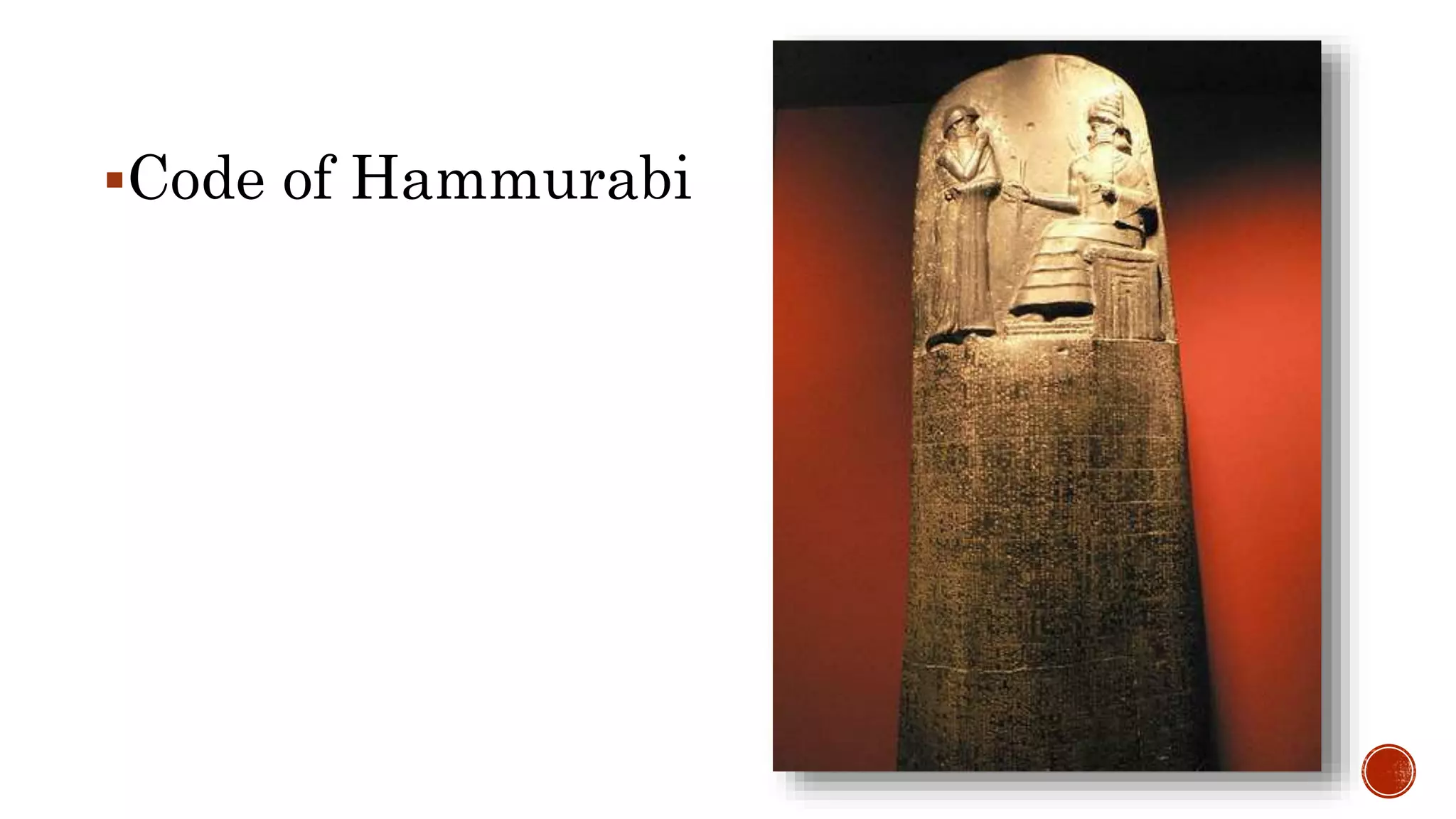
The first Babylonian empire is best known for the Law
Code of King Hammurabi, circa 1750 BC, purportedly handed
down by the god Shamah.
The New Empire of Babylon was noted especially for its
wealth and grandeur. This was reported in Old Testament
accounts from the period of the Hebrew Babylonian Captivity
and by the Greek historian Herodotus who visited the city.
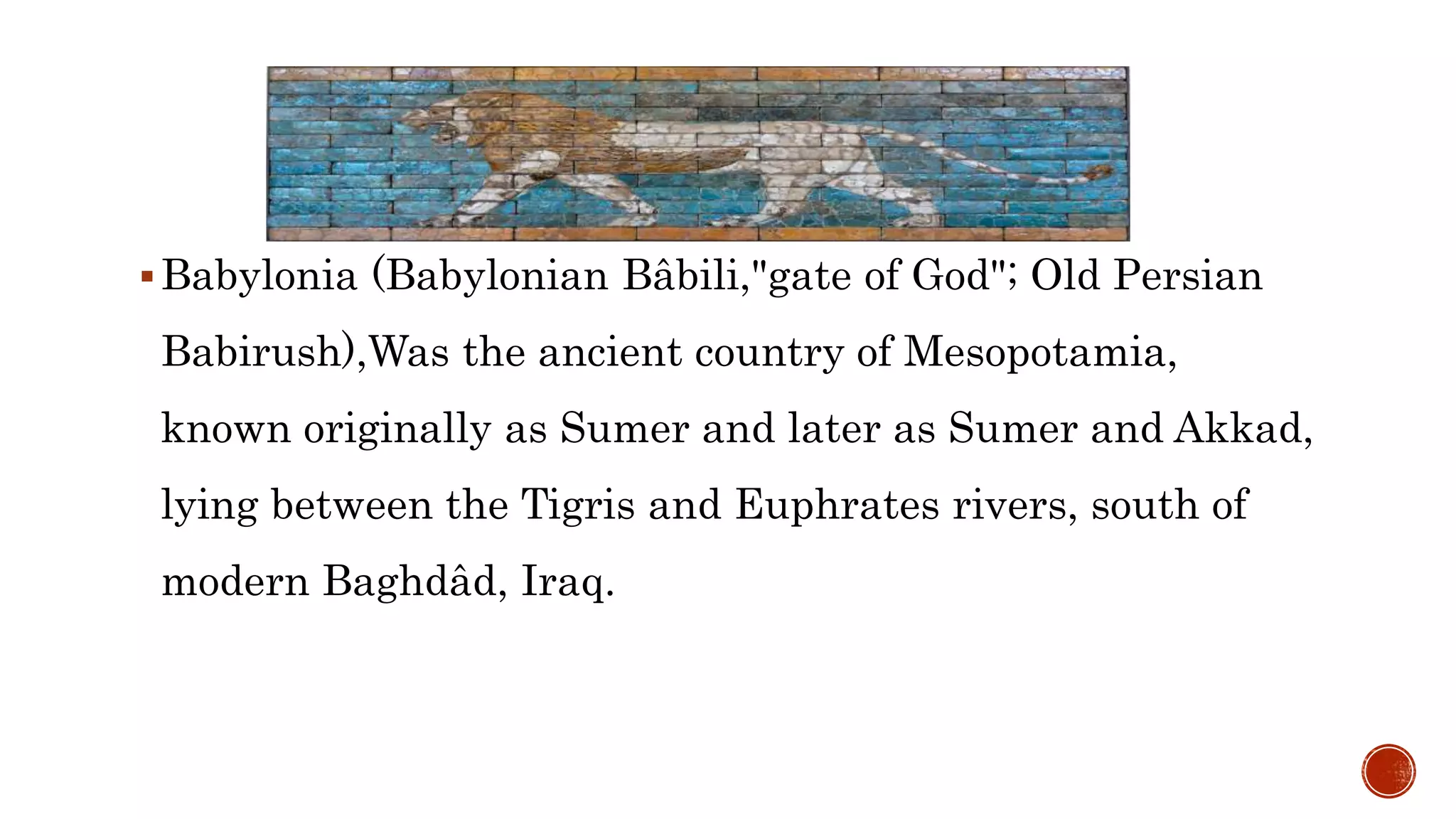
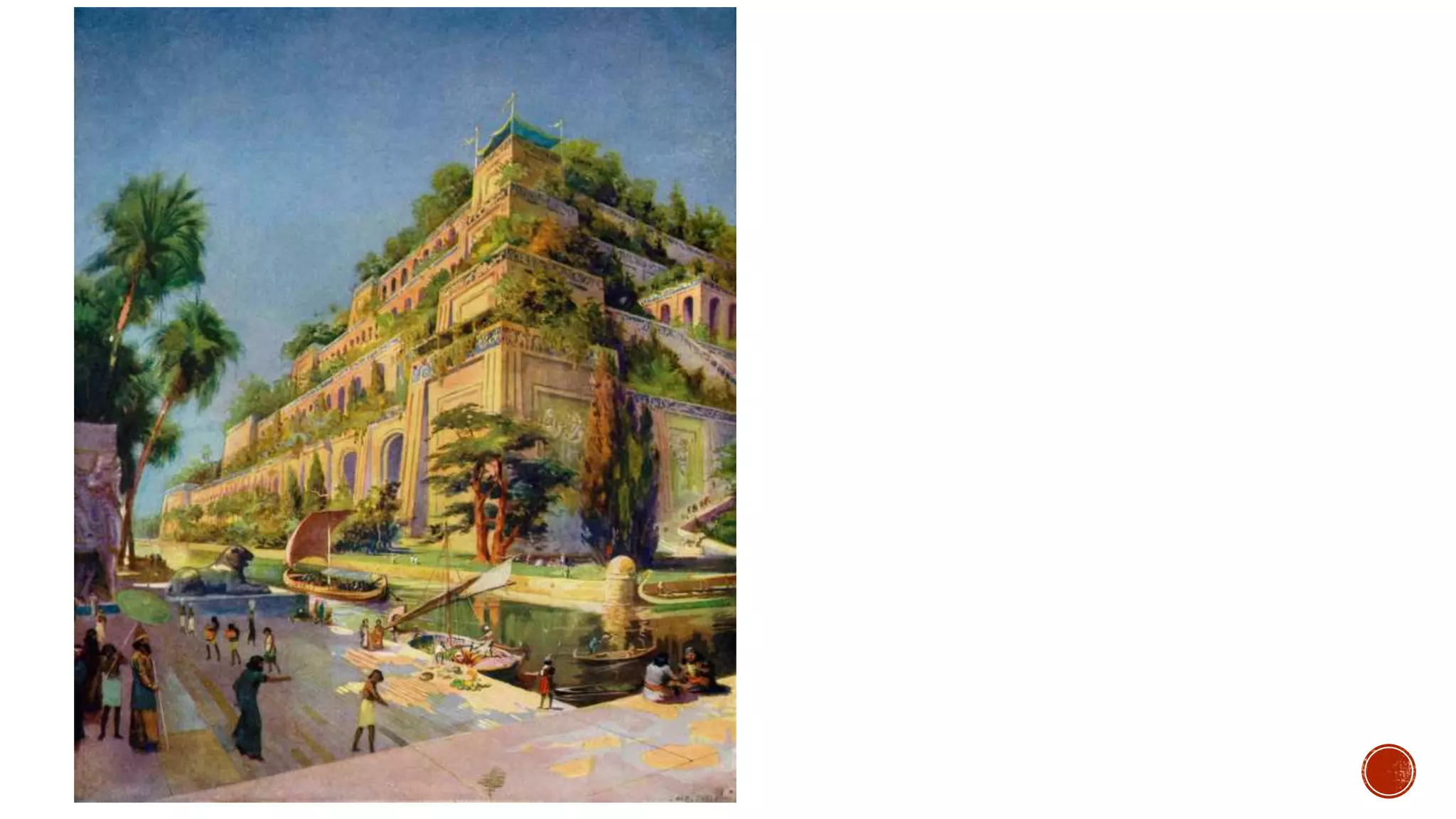
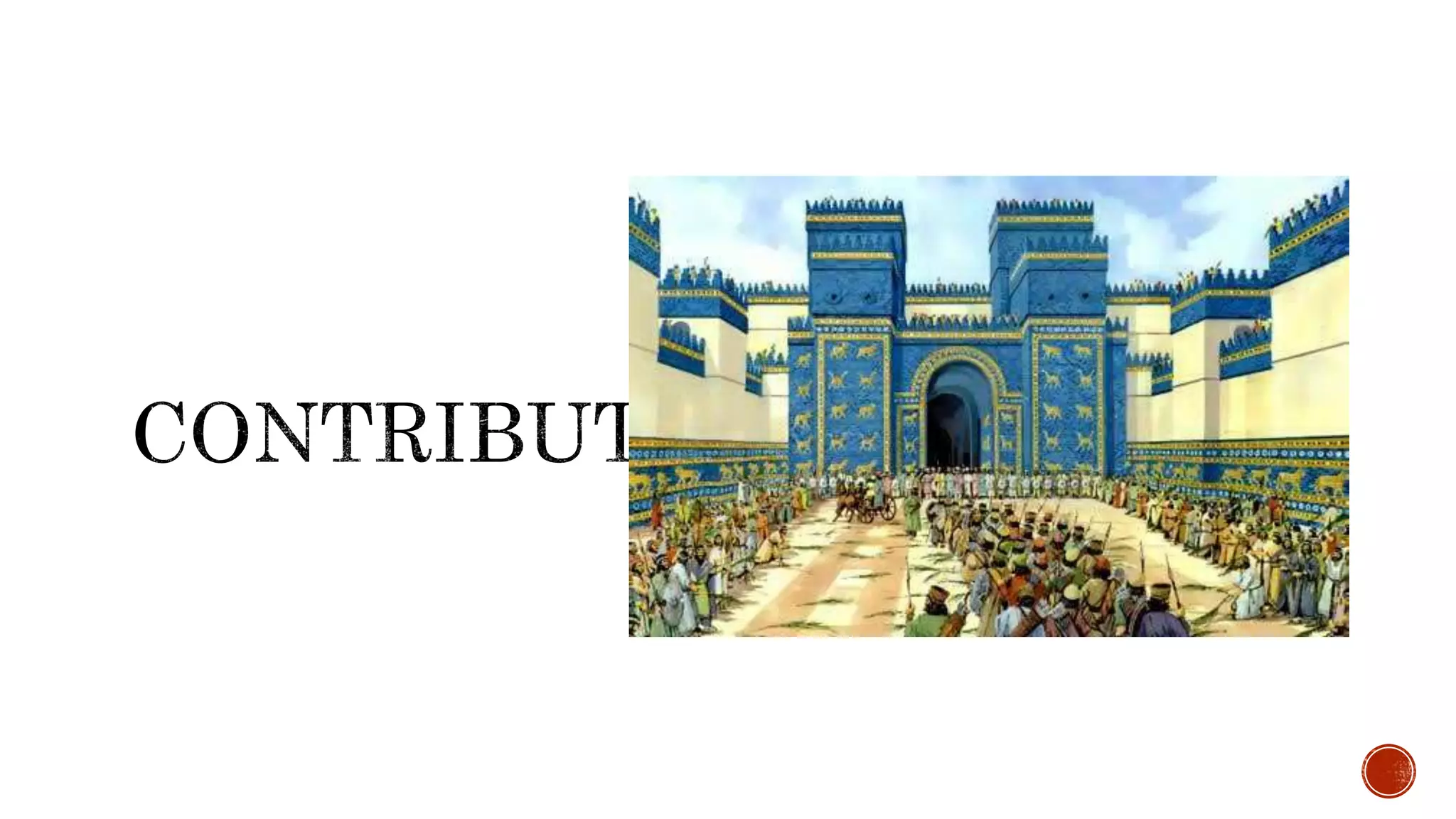
The most impressive features of the city were its walls,
the Ishtar Gate, the ziggurat and temple to Marduk, the
Processional Way, and the Hanging Gardens.
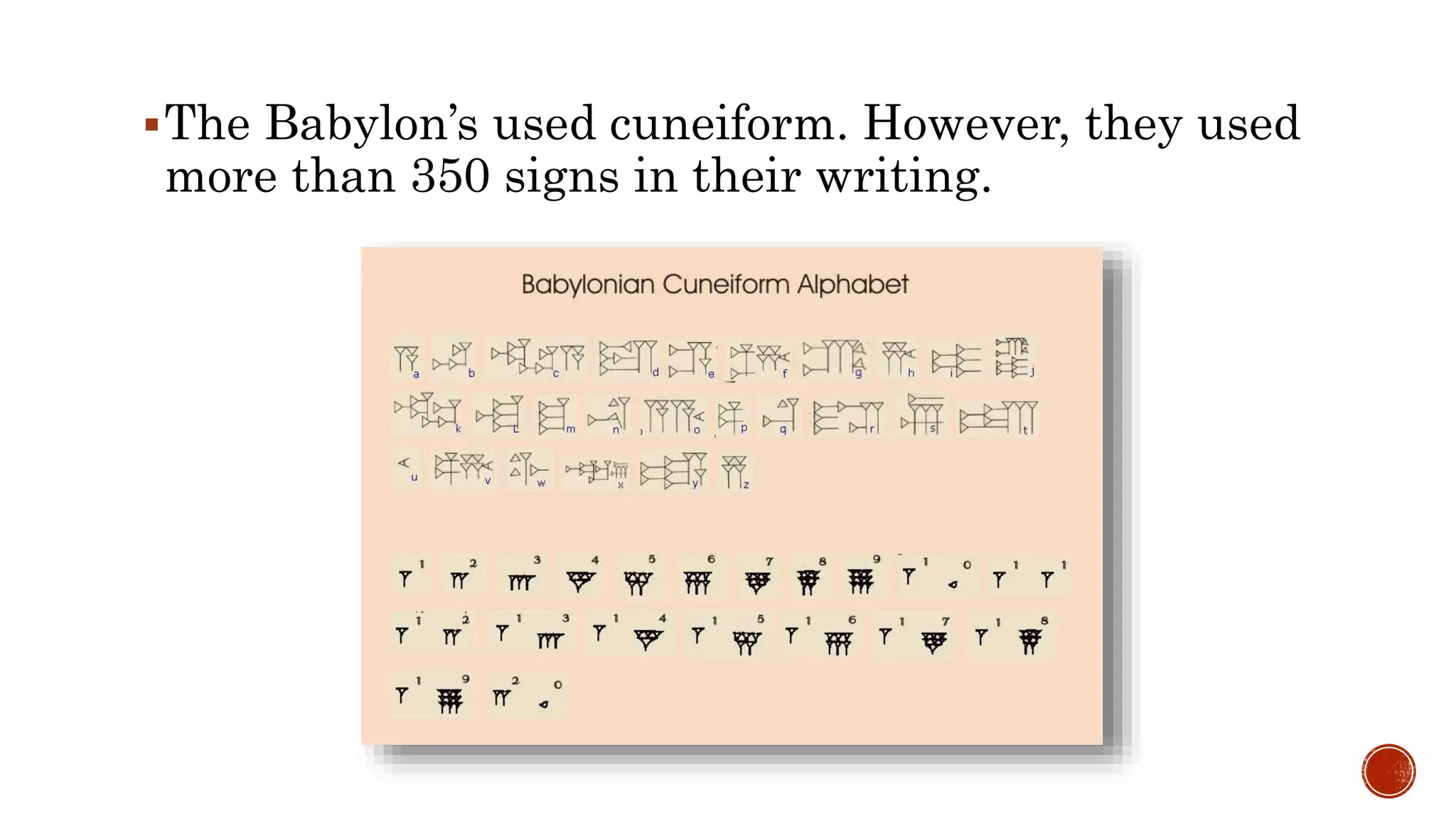
The Babylon’s used cuneiform. However, they used
more than 350 signs in their writing.
The literature of Babylon was very rich. They wrote
around 2000 books. They composed books on religion,
science, mathematics, and astrology.
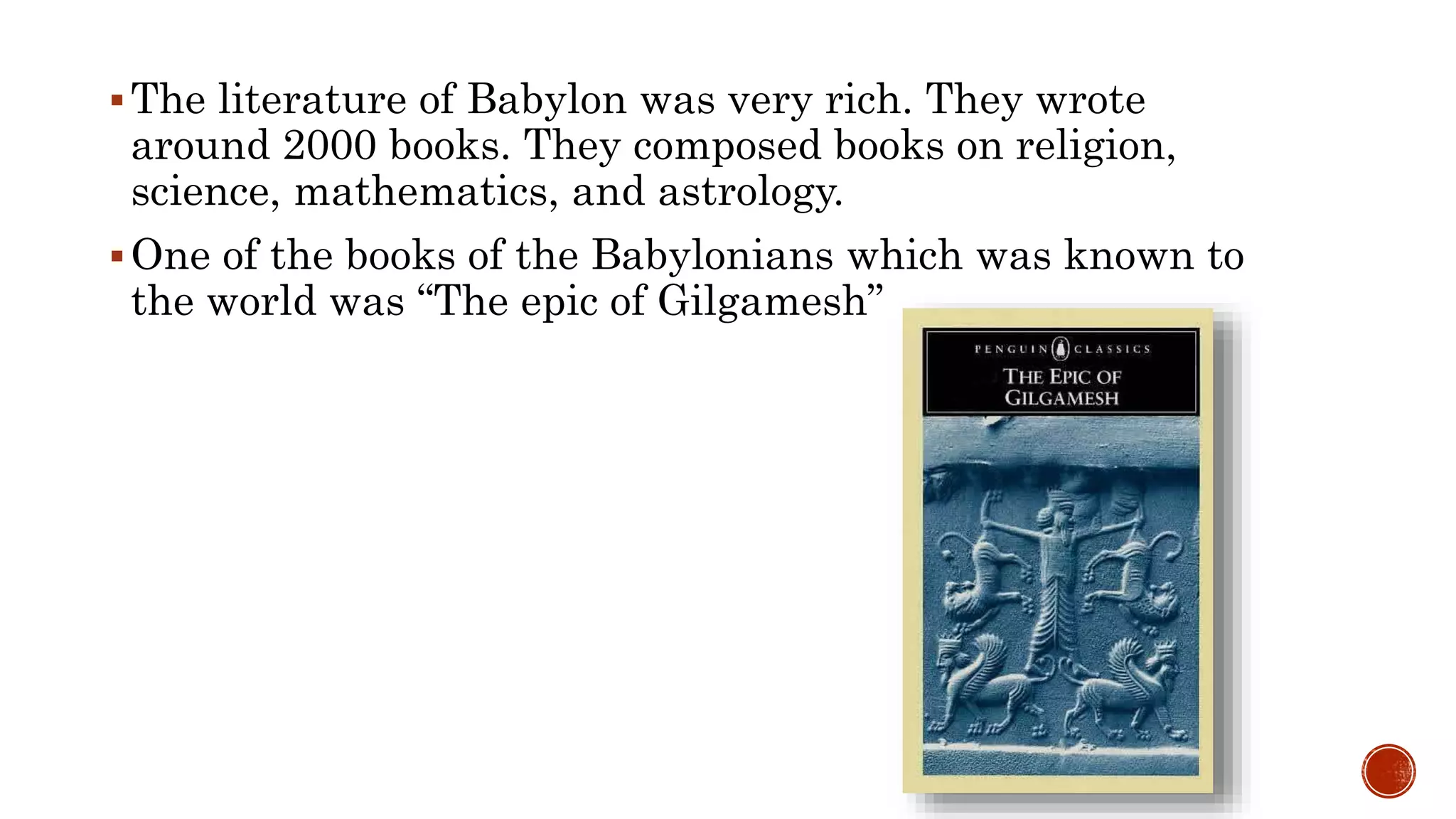
One of the books of the Babylonians which was known to
the world was “The epic of Gilgamesh”
Code of Hammurabi
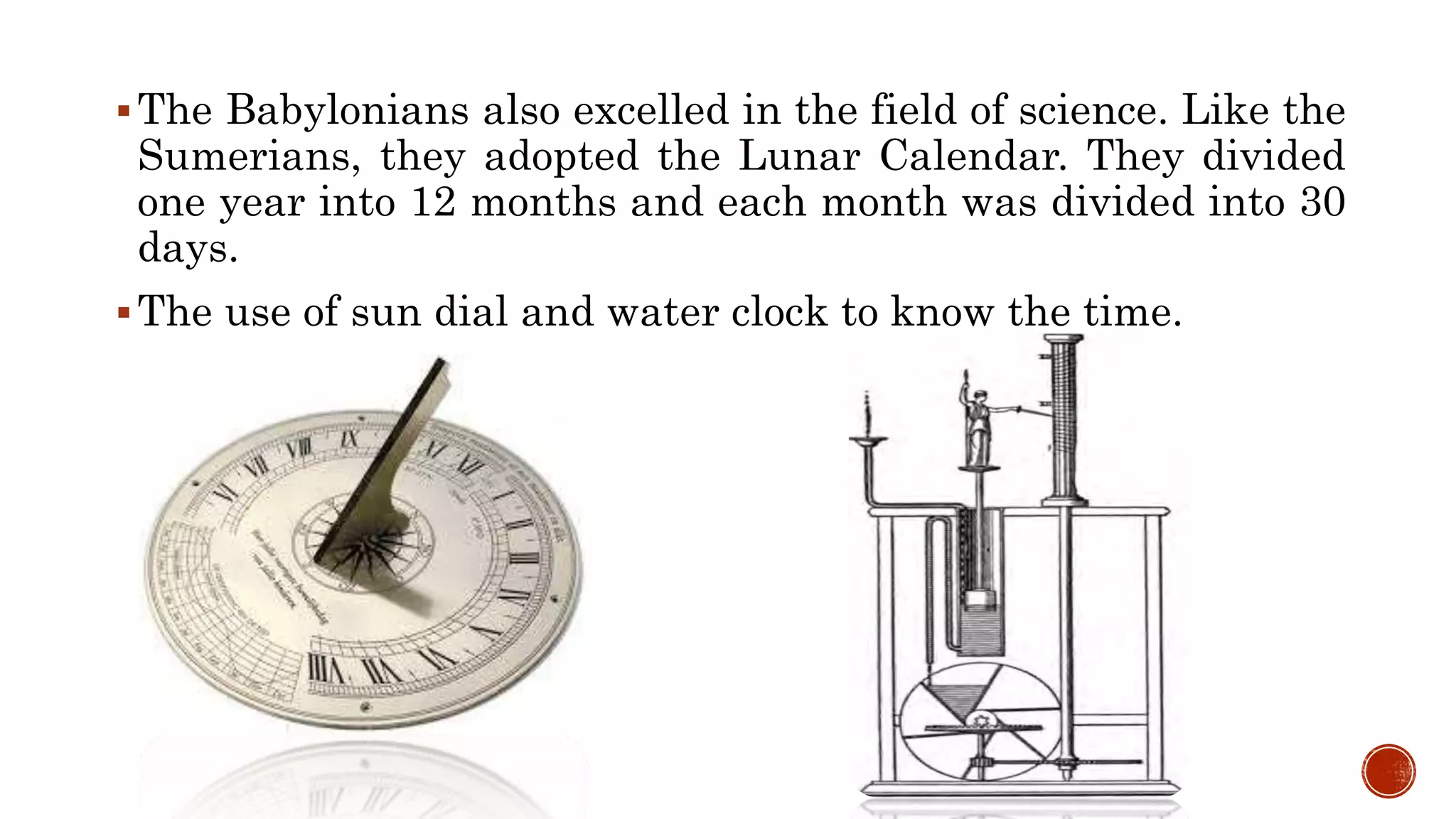
The Babylonians also excelled in the field of science. Like the
Sumerians, they adopted the Lunar Calendar. They divided
one year into 12 months and each month was divided into 30
days.
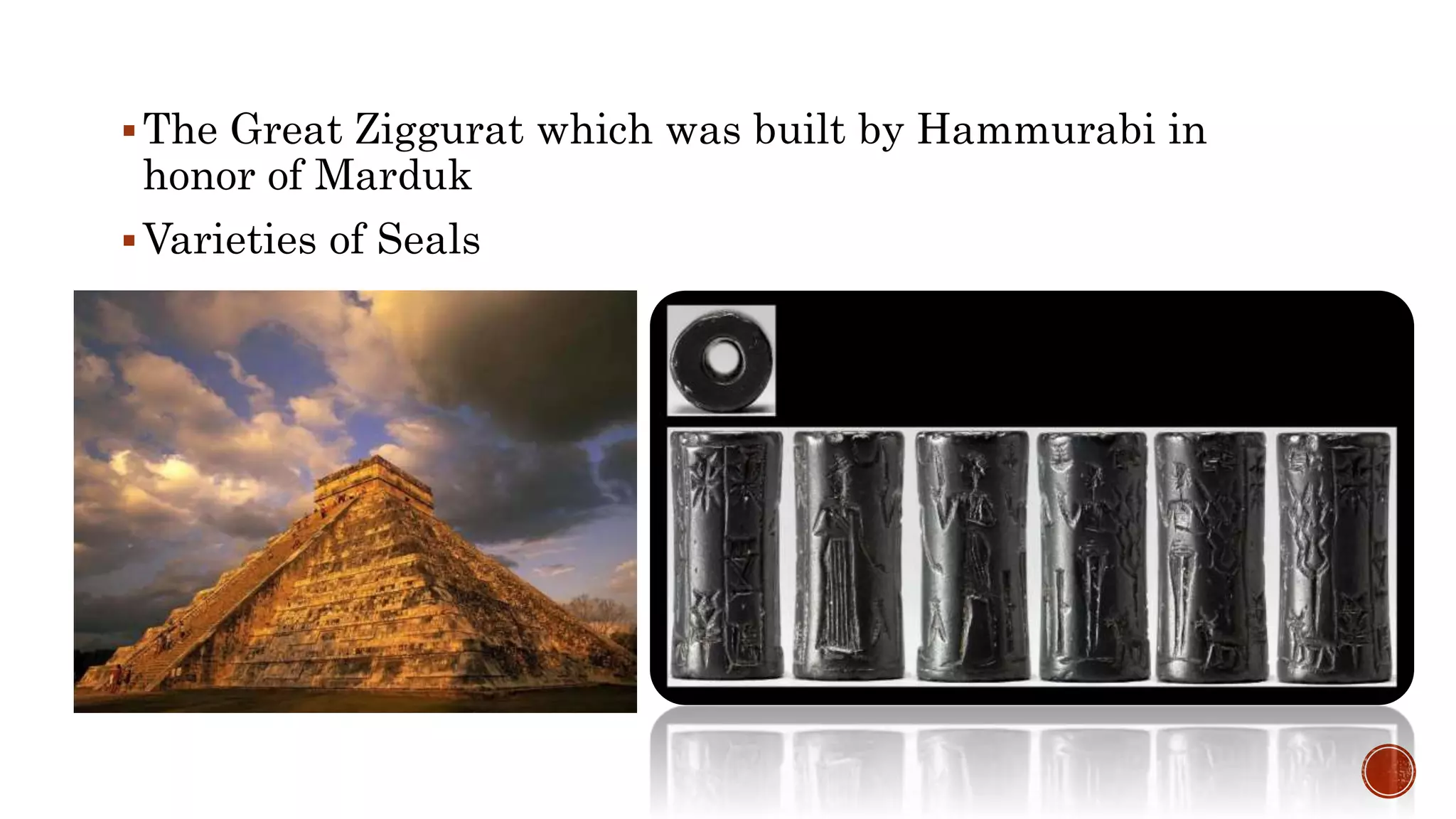
The use of sun dial and water clock to know the time.
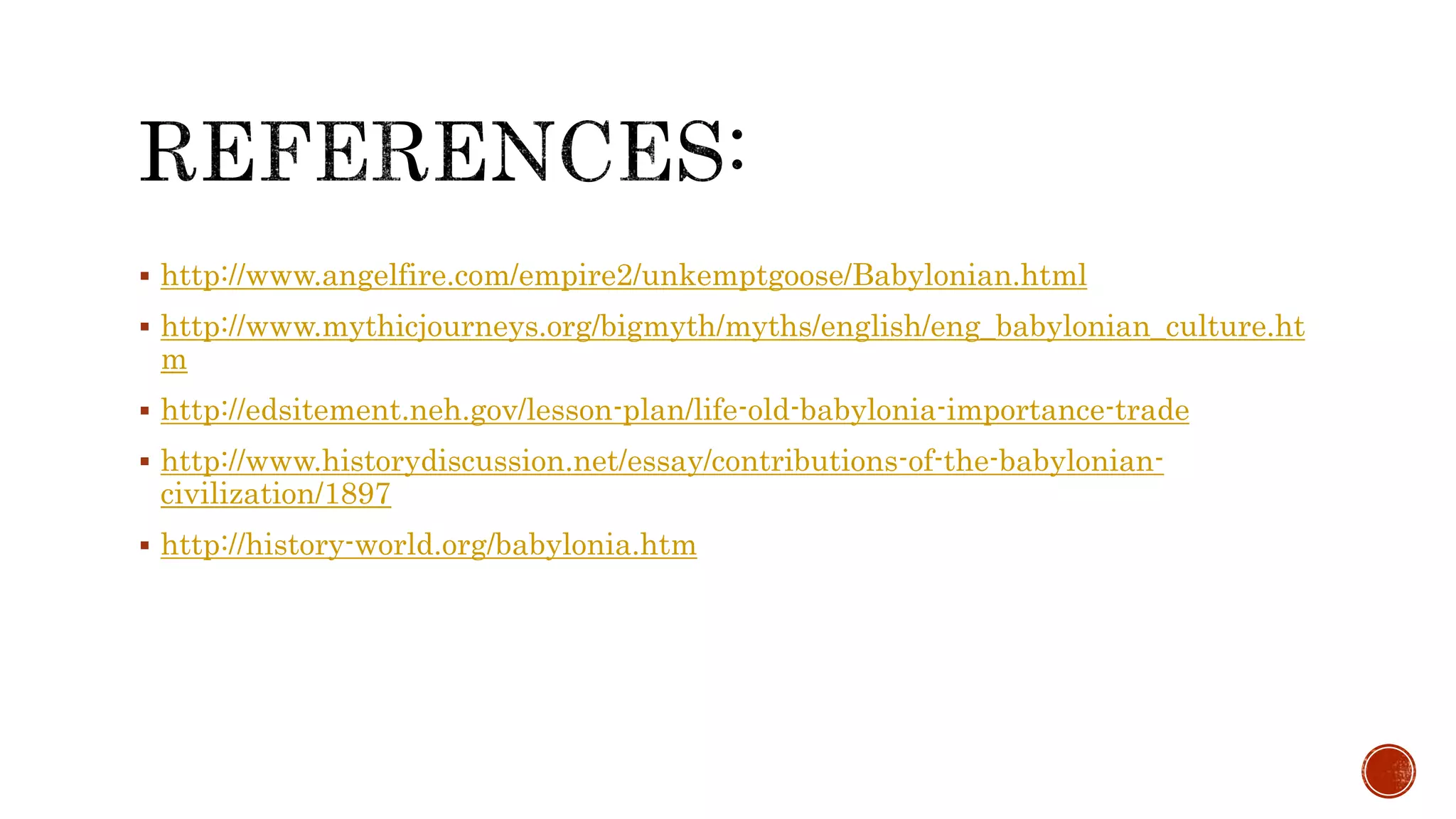
The Great Ziggurat which was built by Hammurabi in
honor of Marduk
Varieties of Seals
 http://www.angelfire.com/empire2/unkemptgoose/Babylonian.html
 http://www.mythicjourneys.org/bigmyth/myths/english/eng_babylonian_culture.ht
m
 http://edsitement.neh.gov/lesson-plan/life-old-babylonia-importance-trade
 http://www.historydiscussion.net/essay/contributions-of-the-babylonian-
civilization/1897
 http://history-world.org/babylonia.htm
The Babylonians

The Babylonians

  • 1.
    Political Setting Economic Life Socio-culturalStatus Contributions to the World
  • 4.
    Babylonia (Babylonian Bâbili,"gateof God"; Old Persian Babirush),Was the ancient country of Mesopotamia, known originally as Sumer and later as Sumer and Akkad, lying between the Tigris and Euphrates rivers, south of modern Baghdâd, Iraq.
  • 6.
    Babylonia was consistedof many cities, which it was surrounded by villages. The ruler of Babylonia was the king, so it was an absolute monarch who exercised legislative and judicial as well as executive powers. Under the king were governors and administrators, there were also city elders that was in charge of the local administration.
  • 8.
    Babylonian Economy wasbased on Agriculture. Barter System They raised cattle and sheep Main crop was barley
  • 10.
    3 Main Classes Awilu– free person of upper class Mushkenu – free person of low estate Wardu - slaves
  • 11.
    King Nobles Free Men Military personneland civil servants Debt Slaves
  • 12.
    the basic unitsof their society basis of an individual’s class and station On marriage… Babylonian marriages we’re arranged by parents. The ceremony was concluded with a contract inscribed on a tablet. A Legal contract
  • 13.
    On women… A Babylonianwomen could hold property, engage in business and qualify as witness. On children… In the normal course of events, children were loved and at the death of their parents, inherited their property. Though in some cases they could be sold into slavery. Adopted children were not uncommon.
  • 14.
    Babylonian education startsat the age of eight. Education is exclusive for children of wealthy families. They were taught in so called “tablet house”. There they were trained to exercise knowledge over scripts, cuneiform and language. If a student passes final examinations he/she will become a scribe.
  • 15.
    Polytheistic Babylonians worshipped manygods. One is Marduk, the chief god, god of the city of Babylon. Festivals were held throughout the year for each specific god to assure their favor. The new year festival for Marduk was to assure fertility in the fields. The interior of the Temple of Marduk was reportedly covered with gold.
  • 16.
    The first Babylonianempire is best known for the Law Code of King Hammurabi, circa 1750 BC, purportedly handed down by the god Shamah. The New Empire of Babylon was noted especially for its wealth and grandeur. This was reported in Old Testament accounts from the period of the Hebrew Babylonian Captivity and by the Greek historian Herodotus who visited the city. The most impressive features of the city were its walls, the Ishtar Gate, the ziggurat and temple to Marduk, the Processional Way, and the Hanging Gardens.
  • 19.
    The Babylon’s usedcuneiform. However, they used more than 350 signs in their writing.
  • 20.
    The literature ofBabylon was very rich. They wrote around 2000 books. They composed books on religion, science, mathematics, and astrology. One of the books of the Babylonians which was known to the world was “The epic of Gilgamesh”
  • 21.
  • 22.
    The Babylonians alsoexcelled in the field of science. Like the Sumerians, they adopted the Lunar Calendar. They divided one year into 12 months and each month was divided into 30 days. The use of sun dial and water clock to know the time.
  • 23.
    The Great Zigguratwhich was built by Hammurabi in honor of Marduk Varieties of Seals
  • 24.
     http://www.angelfire.com/empire2/unkemptgoose/Babylonian.html  http://www.mythicjourneys.org/bigmyth/myths/english/eng_babylonian_culture.ht m http://edsitement.neh.gov/lesson-plan/life-old-babylonia-importance-trade  http://www.historydiscussion.net/essay/contributions-of-the-babylonian- civilization/1897  http://history-world.org/babylonia.htm

Editor's Notes

  • #9 Babylonian economy was based on agriculture. Goods are exchange on a barter system with silver as the standard of exchange. Houses were made of Sun-dried Brick. They raised cattle and sheep. The main crop was barley. It is a traditional market economy. Trade was critical to Old Babylonia, where many highly prized natural resources were scarce but agricultural goods were in surplus. A vibrant trading system developed, bringing manufactured goods and raw materials from as far as Turkey, and even India, 1500 miles away. Trade became integral to the economy and the culture. In this lesson, students explore the trade industry in Old Babylonia and its far-flung influence. The basic economy of Babylonia was typical for Mesopotamia at the time. Irrigation and dikes controlled the waters of the Euphrates River, providing bountiful harvests of grain, vegetables, and fruit in normal years. These foods were supplemented by herds of sheep and some cattle. The Babylonians traded food surpluses for raw materials like copper, gold, and wood, which they used to manufacture weapons, household objects, jewelry, and other items that could be traded. The fabulous wealth of the New Empire (629-539 BC) derived from controlling the east-west and north-south trade, primarily thanks to control of Phoenicia, Syria and other Levant ports. This area had been the nexus of civilized trade for over a thousand years, and, for that reason, the prize for every empire and pseudo-empire of the age. Not long after the end of the Babylonian New Empire, the shift of much trade to the central and western Mediterranean reduced the importance of this area.
  • #21 This epic describes about king Gilgamesh, the legendary hero of Babylon. Once, god sent flood to teach sinner Babylonians a lesson. A sage knew about this and left Babylon with others. King Gilgamesh with the help of God Enlil defeated the flood. His heroic deeds have been described in ‘Gilgamesh’.
  • #22 Hammurabi was the First Law Giver of the world. He was the leader of the Amorites and a brave fighter. There were different sets of laws in ancient Babylon concerning religion, agriculture, administration and business. Hammurabi codified all these laws in a simple form which became famous as the ‘Code of Hammurabi’. These laws were engraved on a diorite stone of 8 feet high and that stone was erected in the temple of the great Babylonian god Marduk. On the top of the stone the picture of Hammurabi receiving laws from the Sun god Samas was engraved. There were four parts in the code of Hammurabi, viz.—civil code, penal code, code of procedure and commercial code. Hammurabi’s code was a flat fledged law book. It contained laws relating to marriage, divorce, property, contract, trade and commerce, mortgage of land, religion etc. It contained criminal laws concerning murder, theft, treachery, dishonesty, negligence in duty etc. The basic aim of this code was—”An eye for an eye and a tooth for a tooth”. A murderer was awarded death penalty. If the roof or a wall of a house fell down, the mason who had built it was punished. If a thief was caught while steeling away an animal from a temple, he had to return triple price of that animal. If a trader charged more than the fixed price of an article, he was given a death sentence. The code of Hammurabi empowered women right over property. For the first time, this code protected the widows, slaves and orphans. The Code of Hammurabi is treated as the ‘First law book of the world.”
  • #23 Sundial first pic then second pic water clock
  • #24 The Babylonian Kings were famous builders