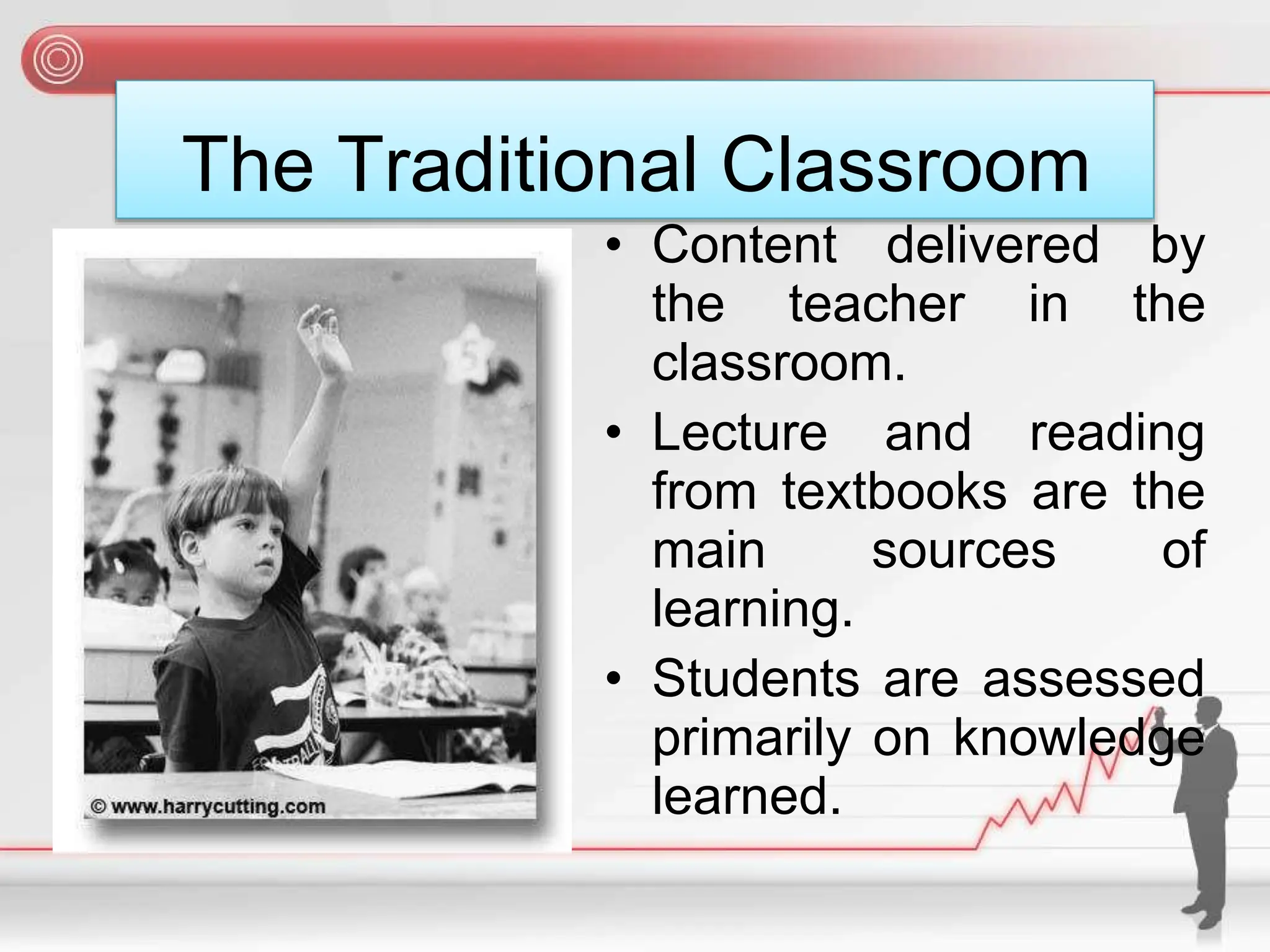
The Traditional Classroom
•Content delivered by
the teacher in the
classroom.
• Lecture and reading
from textbooks are the
main sources of
learning.
• Students are assessed
primarily on knowledge
learned.
3.
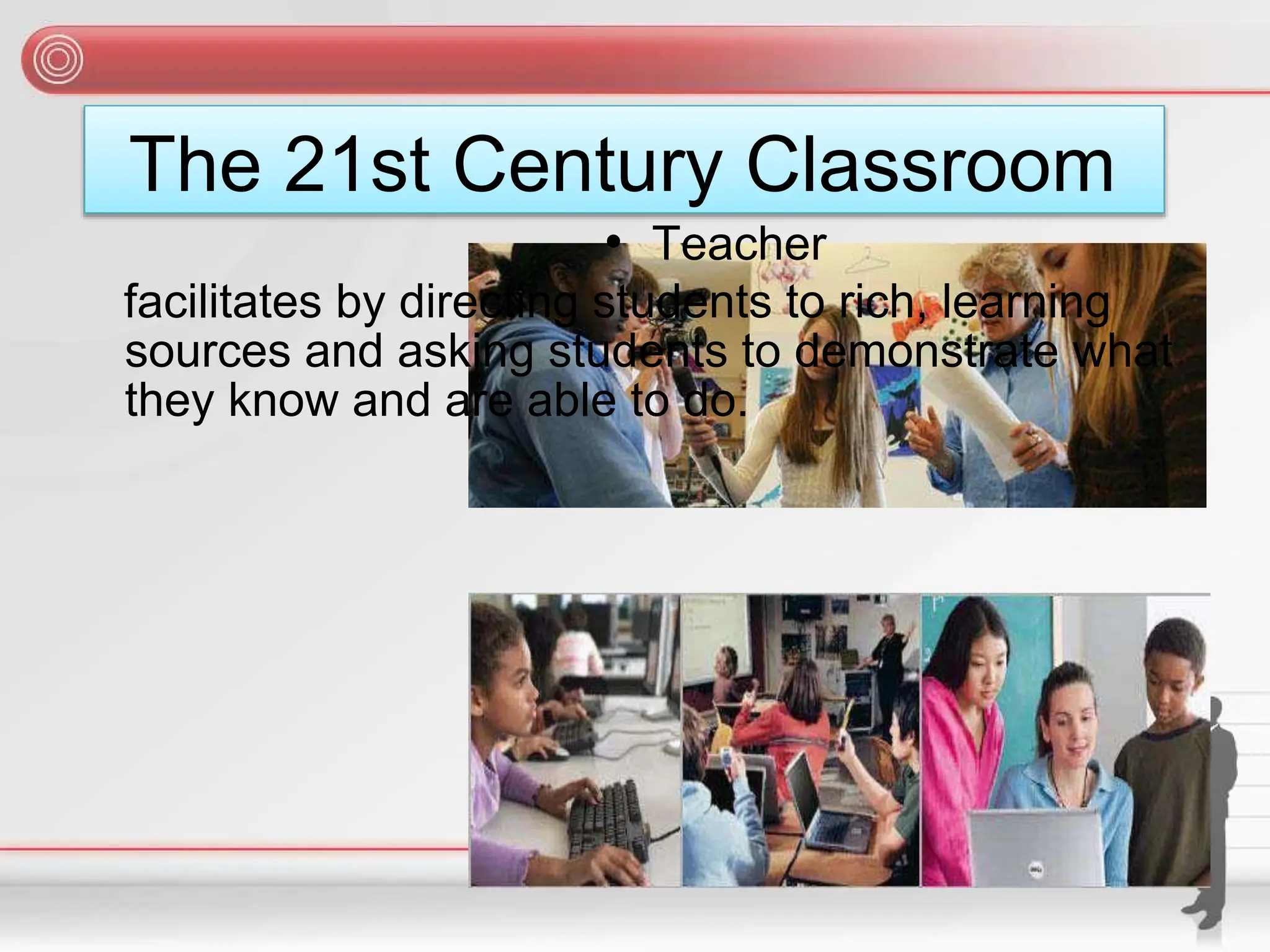
The 21st CenturyClassroom
• Teacher
facilitates by directing students to rich, learning
sources and asking students to demonstrate what
they know and are able to do.
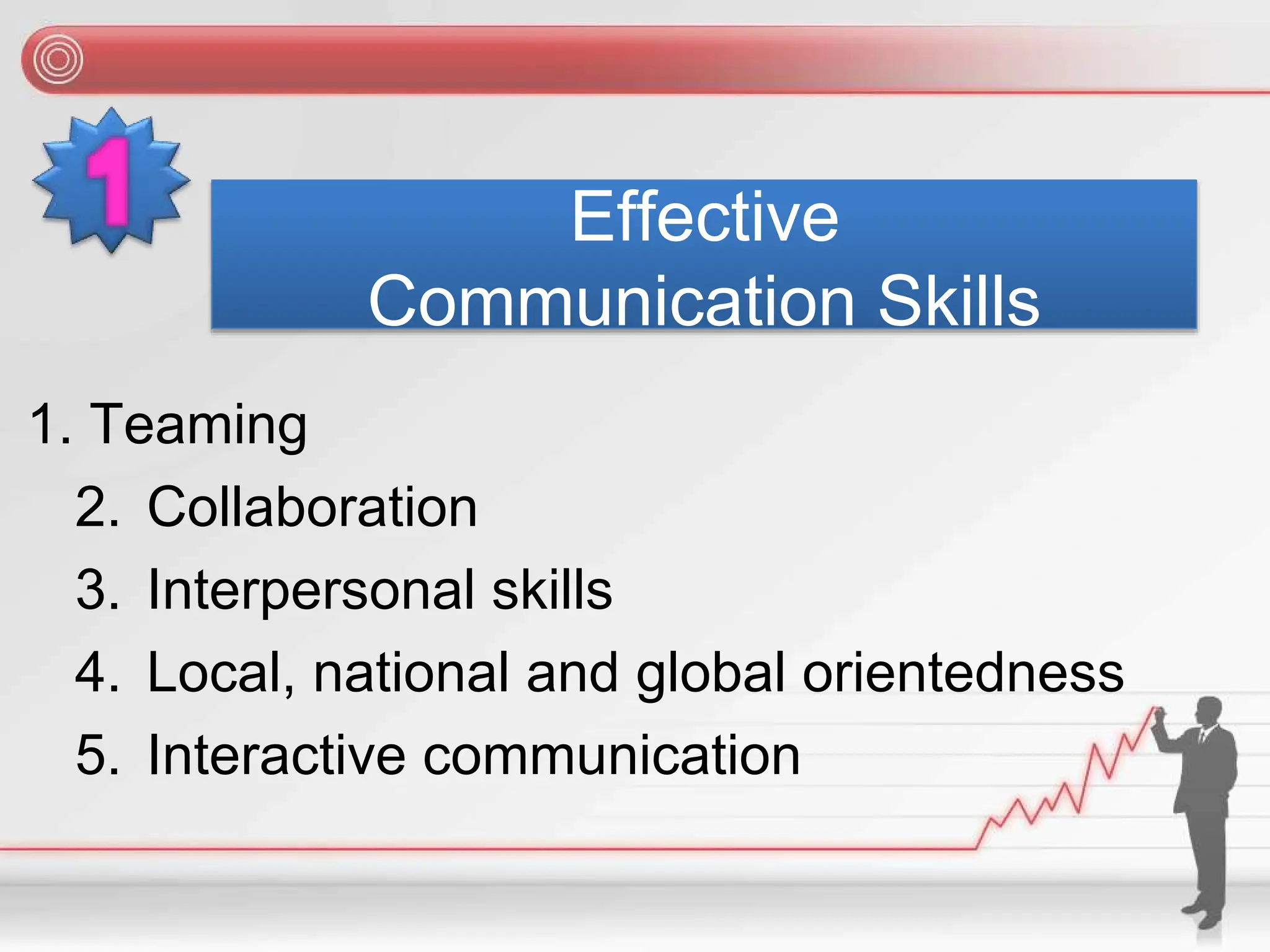
1. Teaming
2. Collaboration
3.Interpersonal skills
4. Local, national and global orientedness
5. Interactive communication
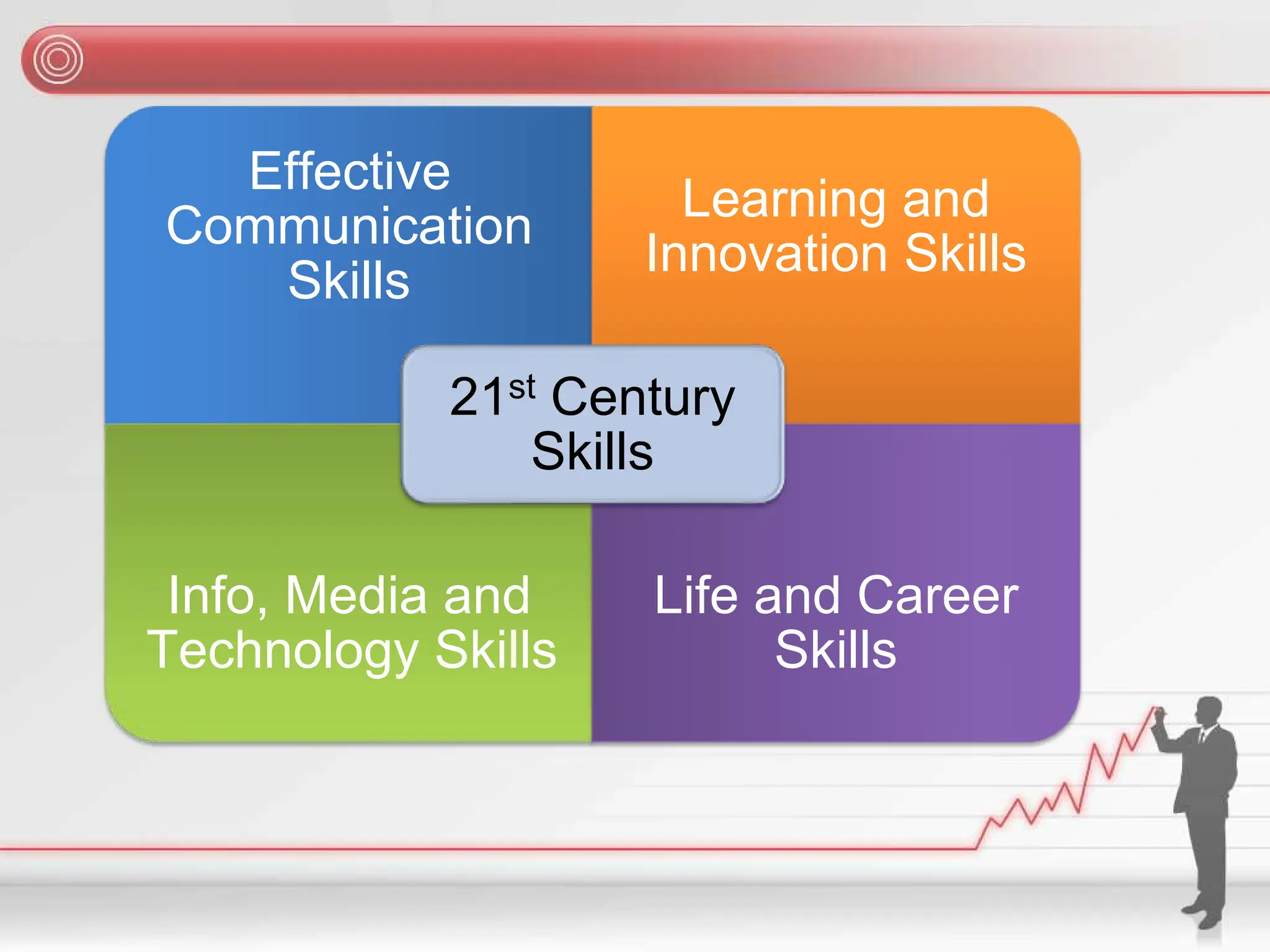
Effective
Communication Skills
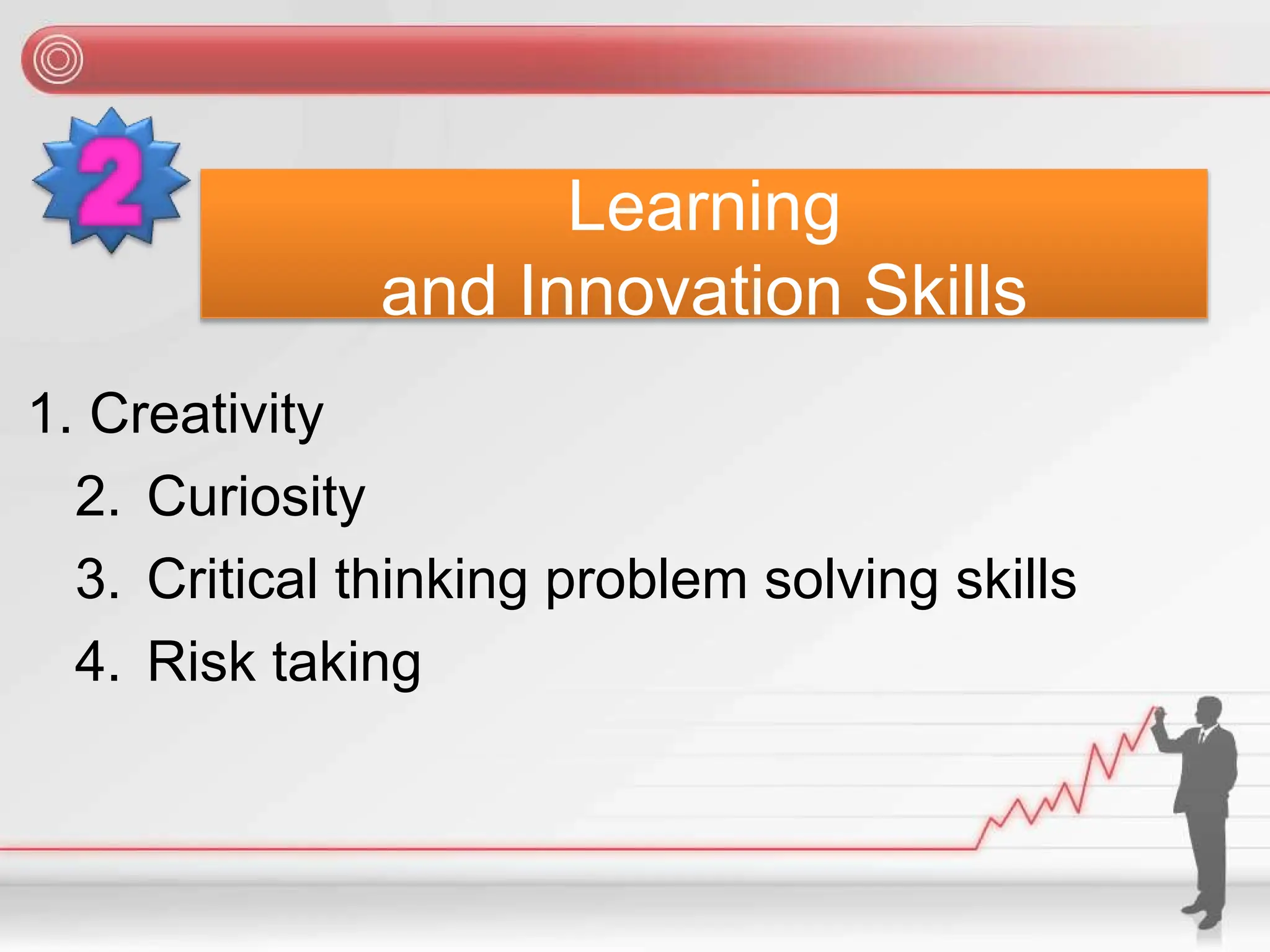
Learning and InnovationSkills
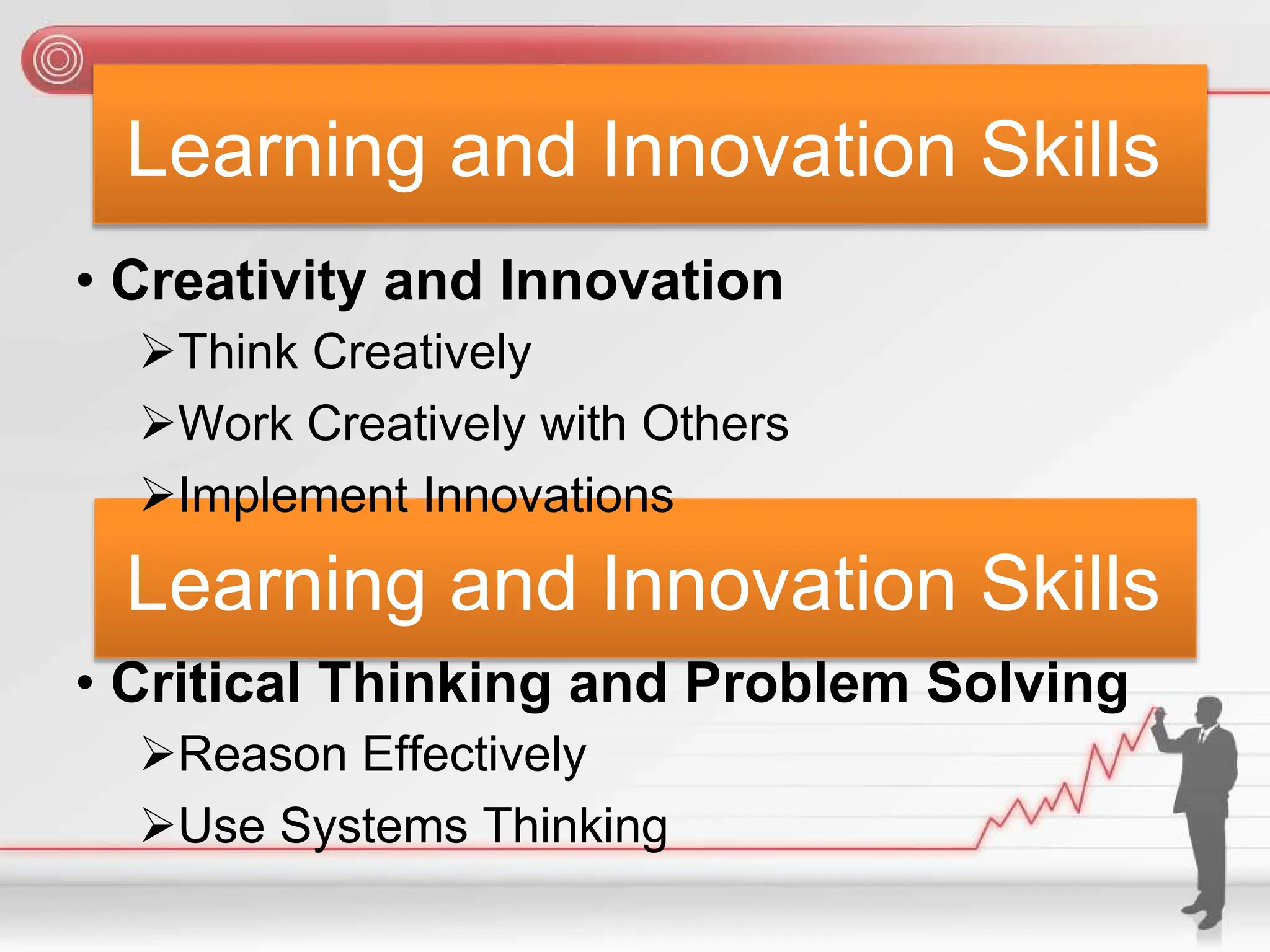
• Creativity and Innovation
➢Think Creatively
➢Work Creatively with Others
➢Implement Innovations
Learning and Innovation Skills
• Critical Thinking and Problem Solving
➢Reason Effectively
➢Use Systems Thinking
9.
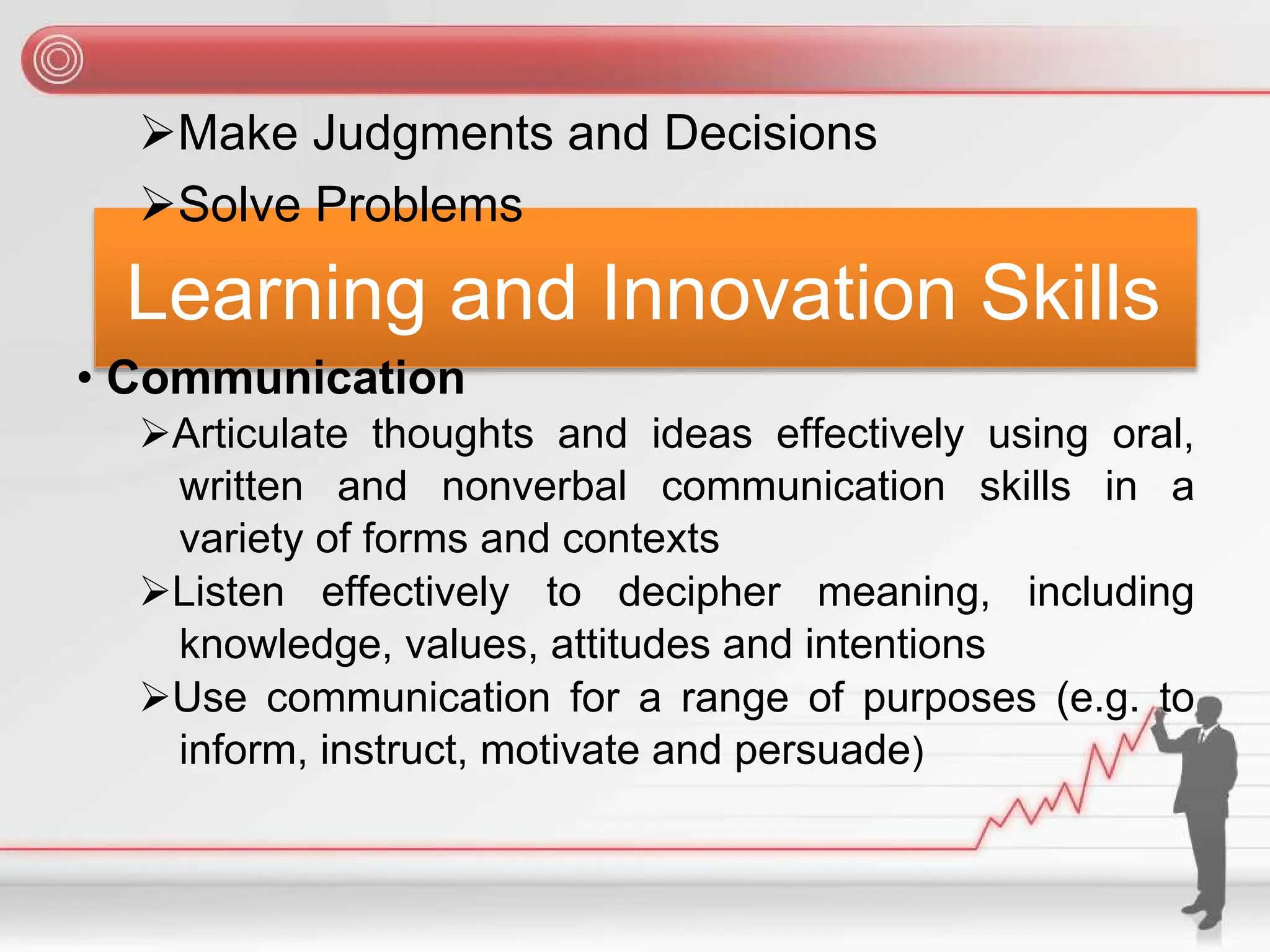
➢Make Judgments andDecisions
➢Solve Problems
Learning and Innovation Skills
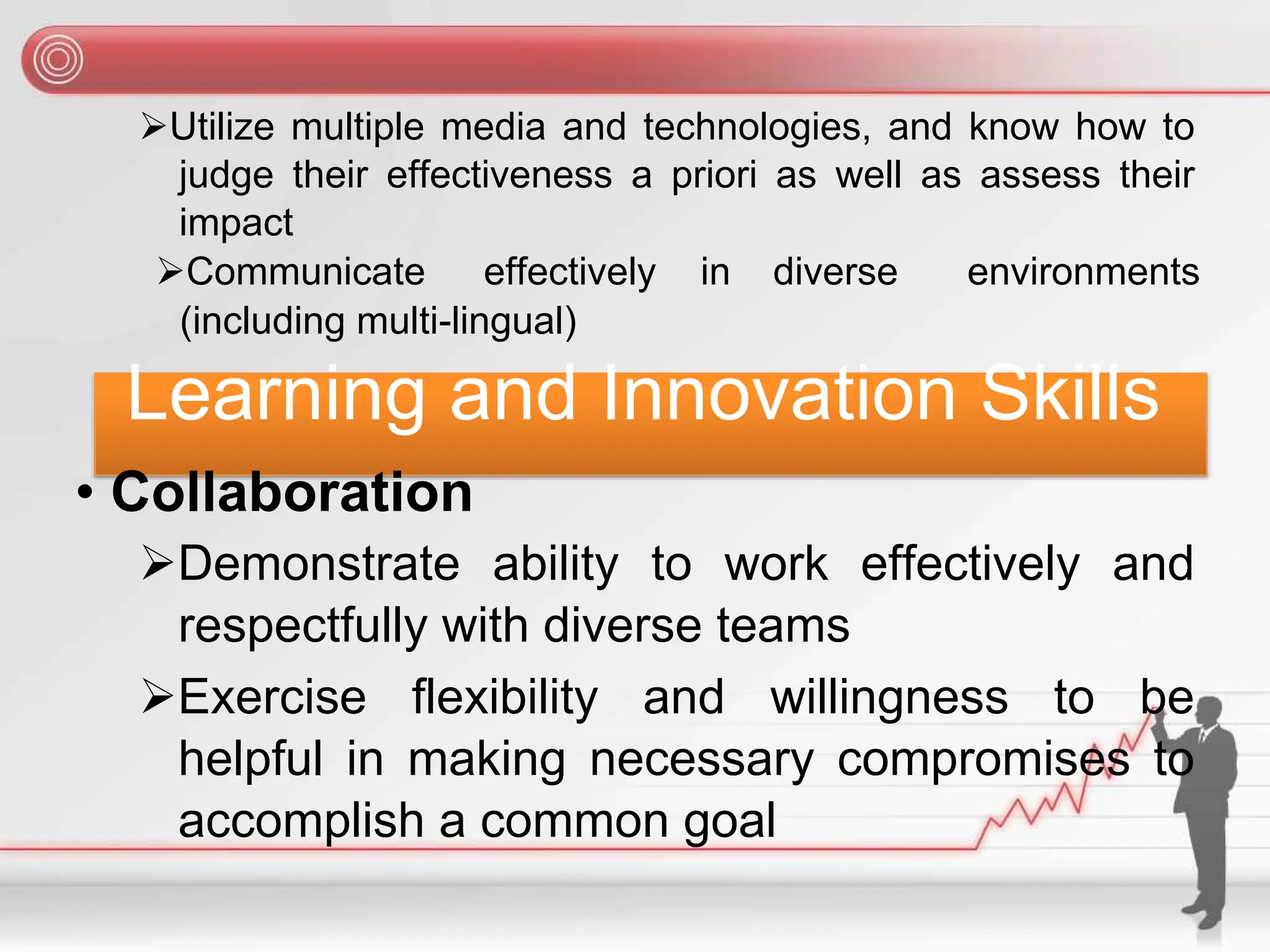
• Communication
➢Articulate thoughts and ideas effectively using oral,
written and nonverbal communication skills in a
variety of forms and contexts
➢Listen effectively to decipher meaning, including
knowledge, values, attitudes and intentions
➢Use communication for a range of purposes (e.g. to
inform, instruct, motivate and persuade)
10.
➢Utilize multiple mediaand technologies, and know how to
judge their effectiveness a priori as well as assess their
impact
➢Communicate effectively in diverse environments
(including multi-lingual)
Learning and Innovation Skills
• Collaboration
➢Demonstrate ability to work effectively and
respectfully with diverse teams
➢Exercise flexibility and willingness to be
helpful in making necessary compromises to
accomplish a common goal
11.
➢Assume shared responsibilityfor collaborative
work, and value the individual contributions
made by each team member
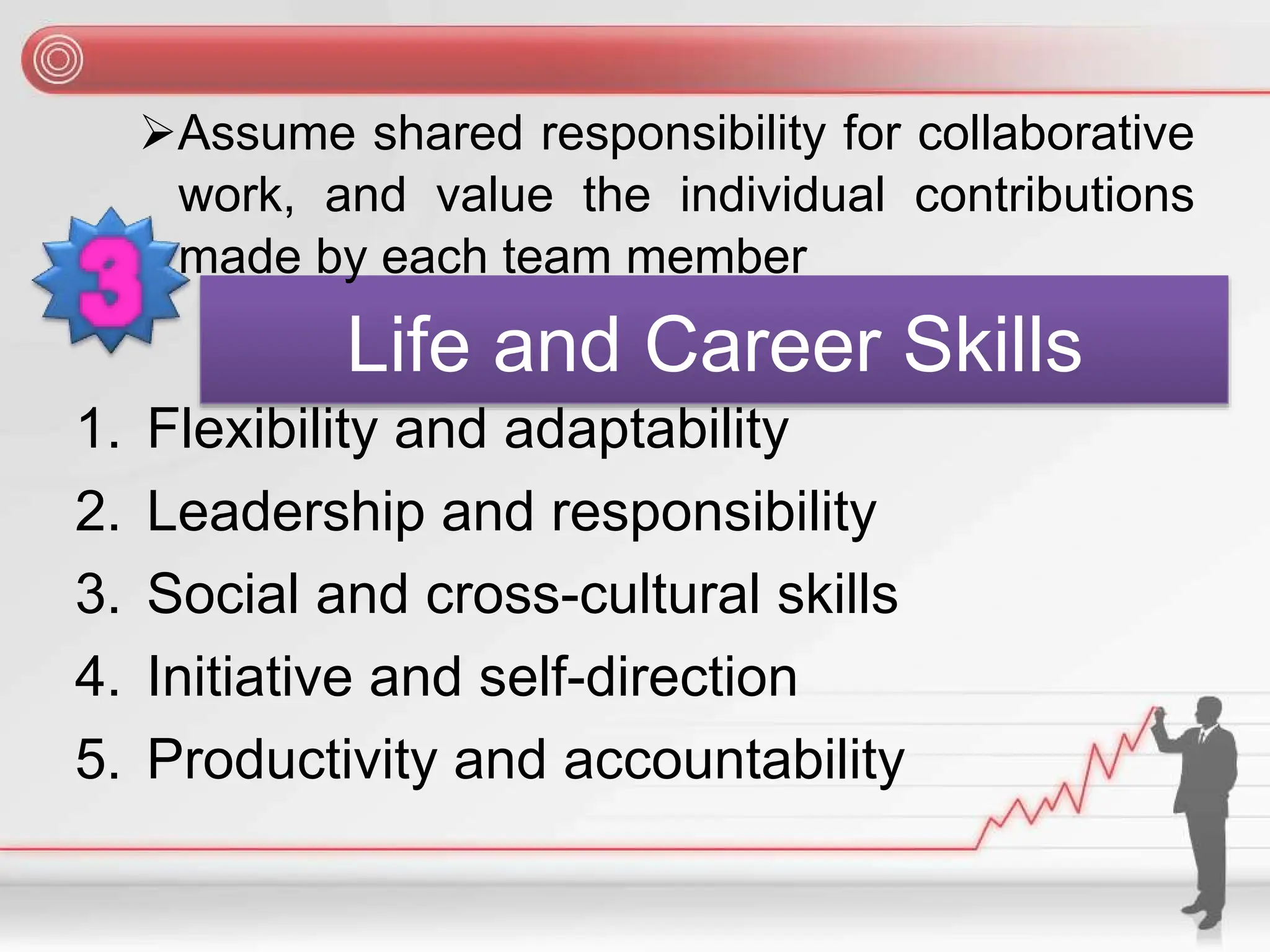
Life and Career Skills
1. Flexibility and adaptability
2. Leadership and responsibility
3. Social and cross-cultural skills
4. Initiative and self-direction
5. Productivity and accountability
12.
6. Ethical, moraland spiritual values
Life and Career Skills
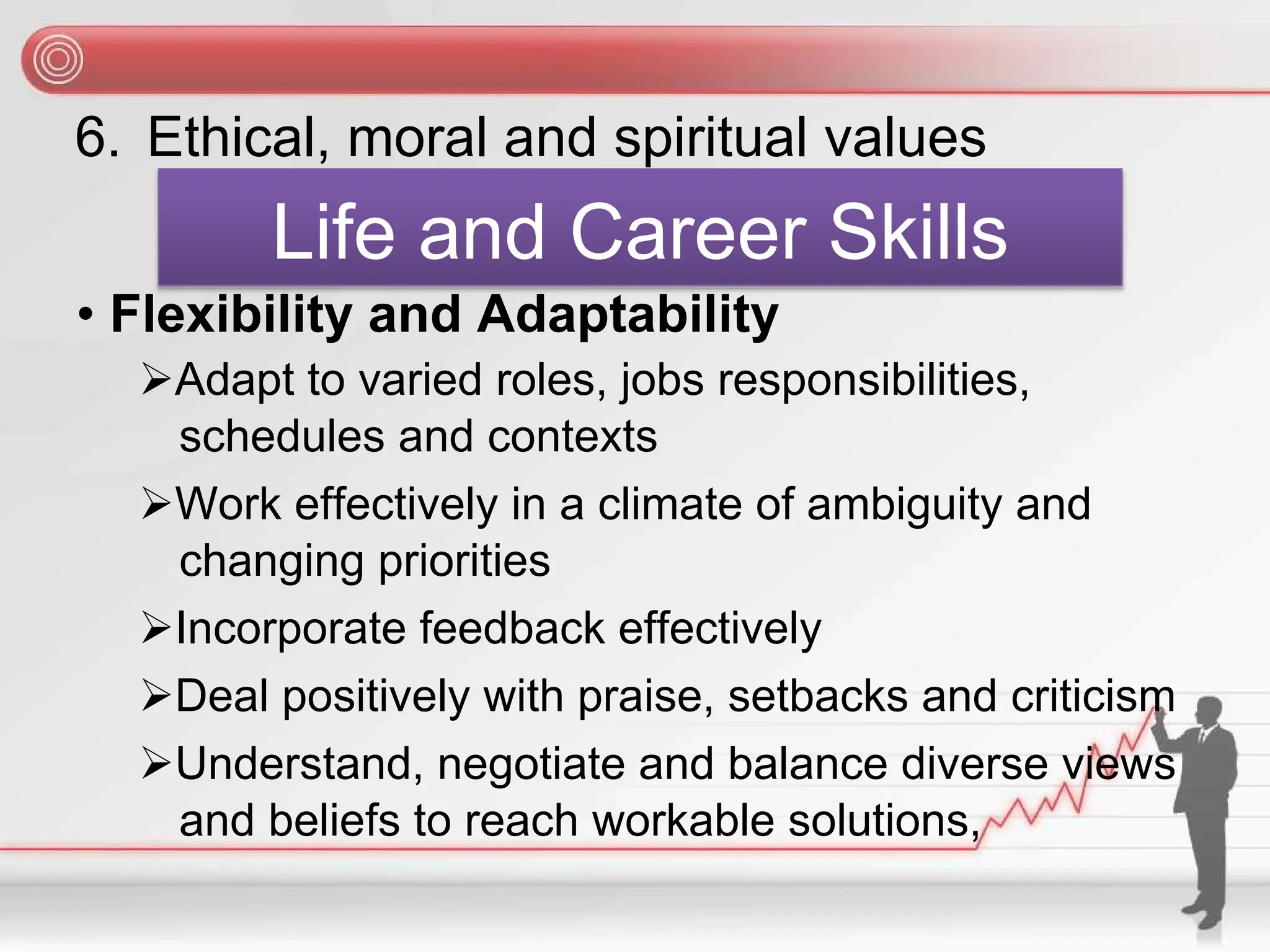
• Flexibility and Adaptability
➢Adapt to varied roles, jobs responsibilities,
schedules and contexts
➢Work effectively in a climate of ambiguity and
changing priorities
➢Incorporate feedback effectively
➢Deal positively with praise, setbacks and criticism
➢Understand, negotiate and balance diverse views
and beliefs to reach workable solutions,
13.
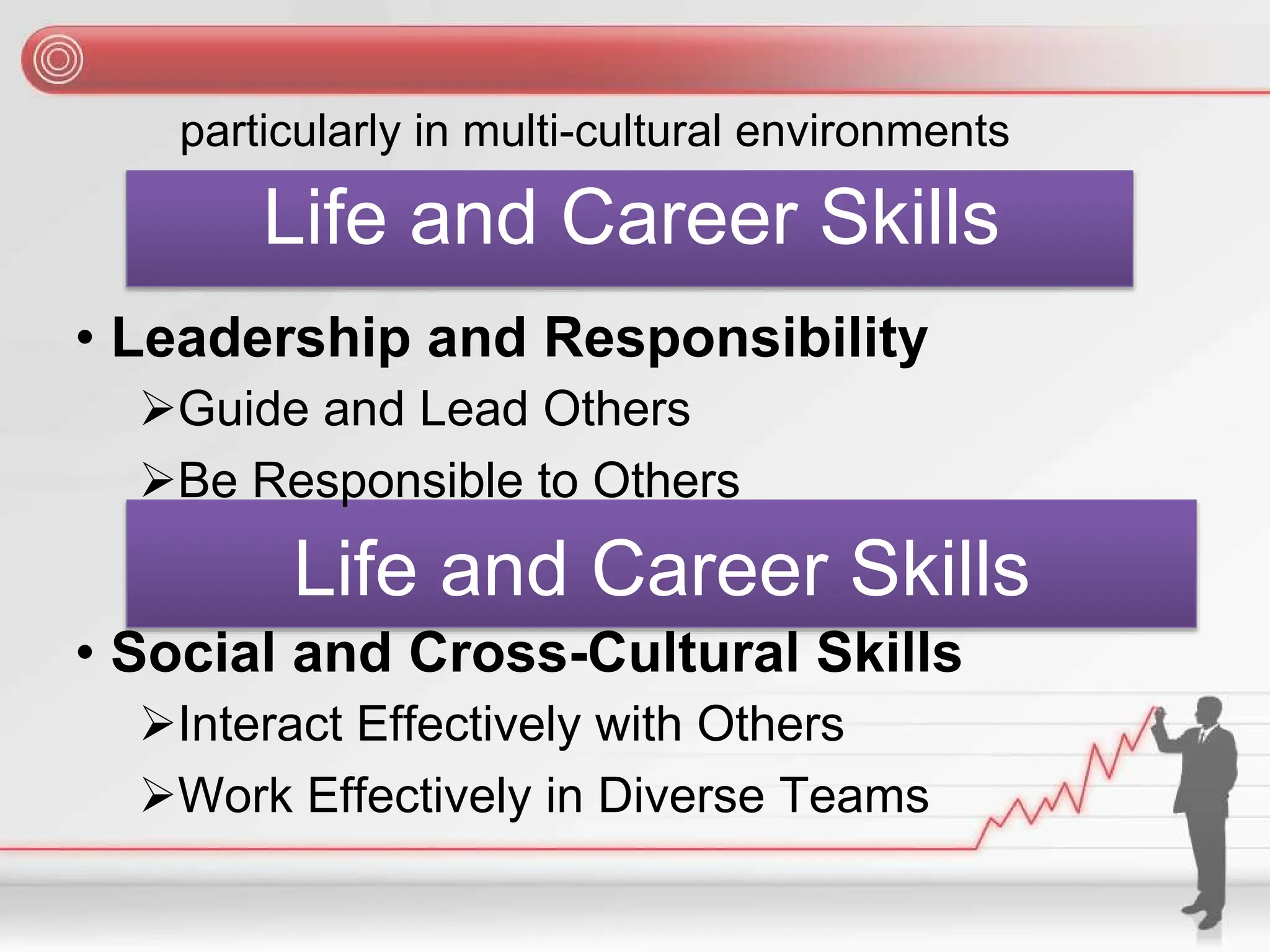
particularly in multi-culturalenvironments
Life and Career Skills
• Leadership and Responsibility
➢Guide and Lead Others
➢Be Responsible to Others
Life and Career Skills
• Social and Cross-Cultural Skills
➢Interact Effectively with Others
➢Work Effectively in Diverse Teams
14.
Life and CareerSkills
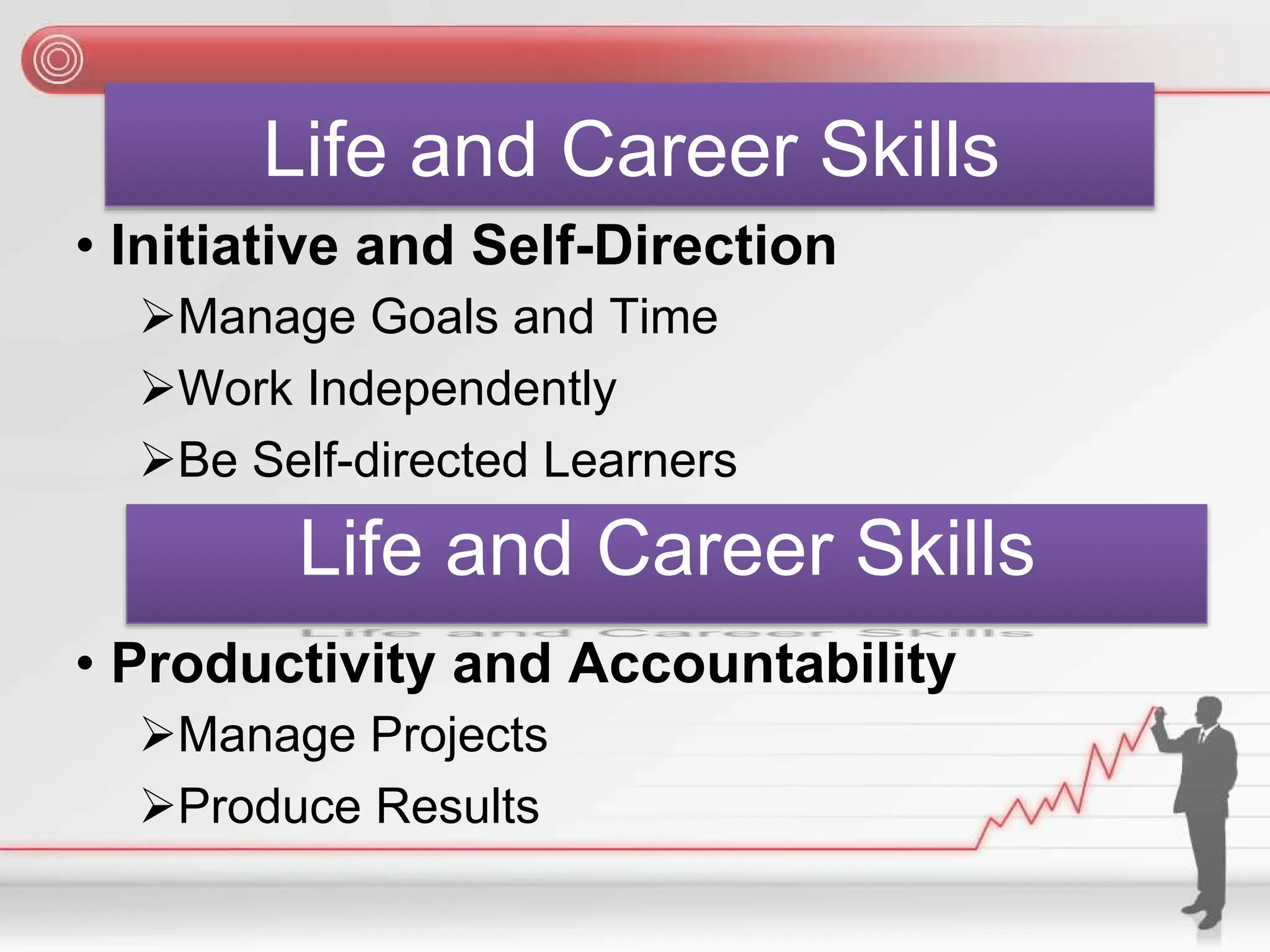
• Initiative and Self-Direction
➢Manage Goals and Time
➢Work Independently
➢Be Self-directed Learners
Life and Career Skills
• Productivity and Accountability
➢Manage Projects
➢Produce Results
15.
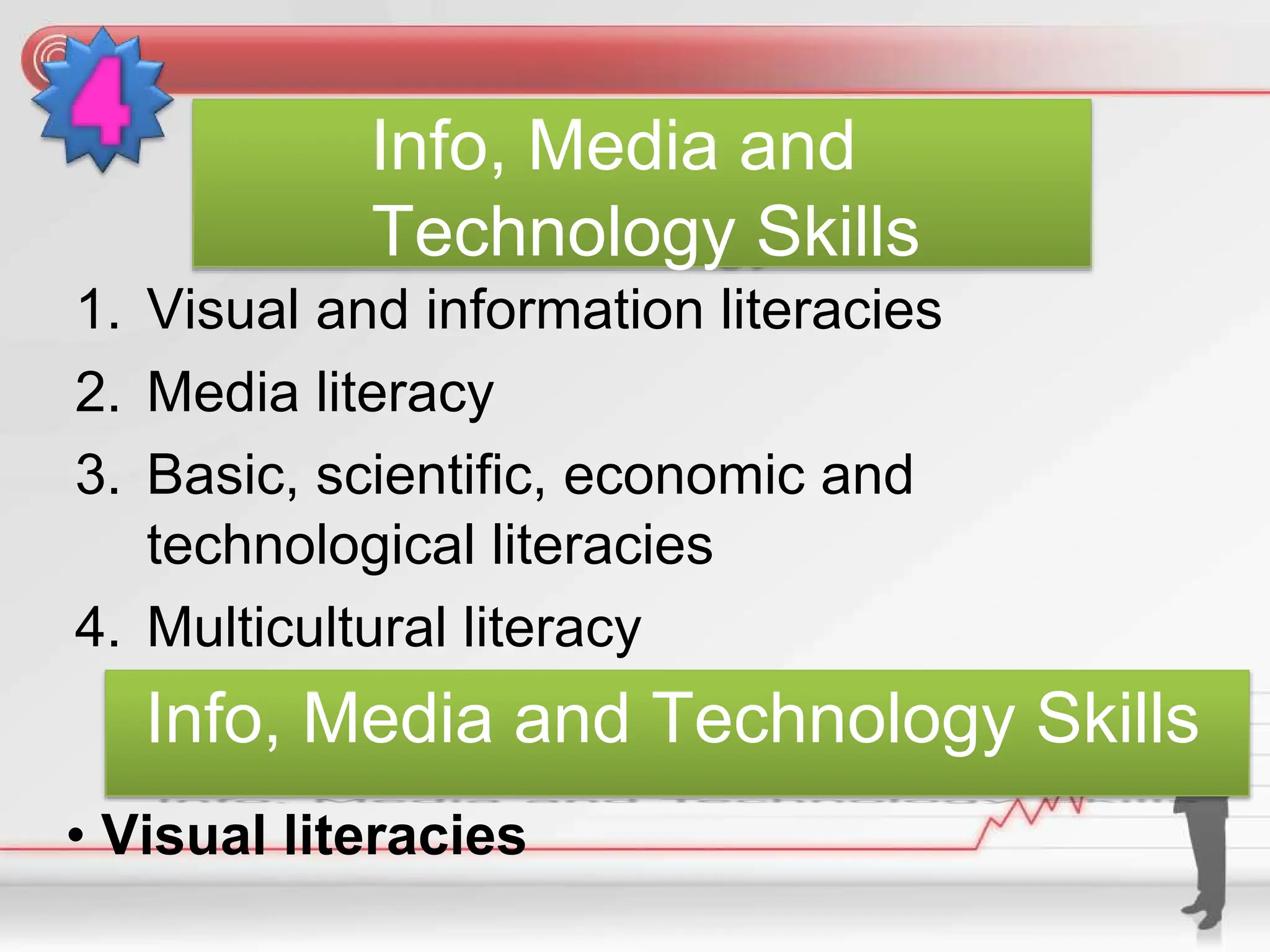
Info, Media and
TechnologySkills
1. Visual and information literacies
2. Media literacy
3. Basic, scientific, economic and
technological literacies
4. Multicultural literacy
Info, Media and Technology Skills
• Visual literacies
16.
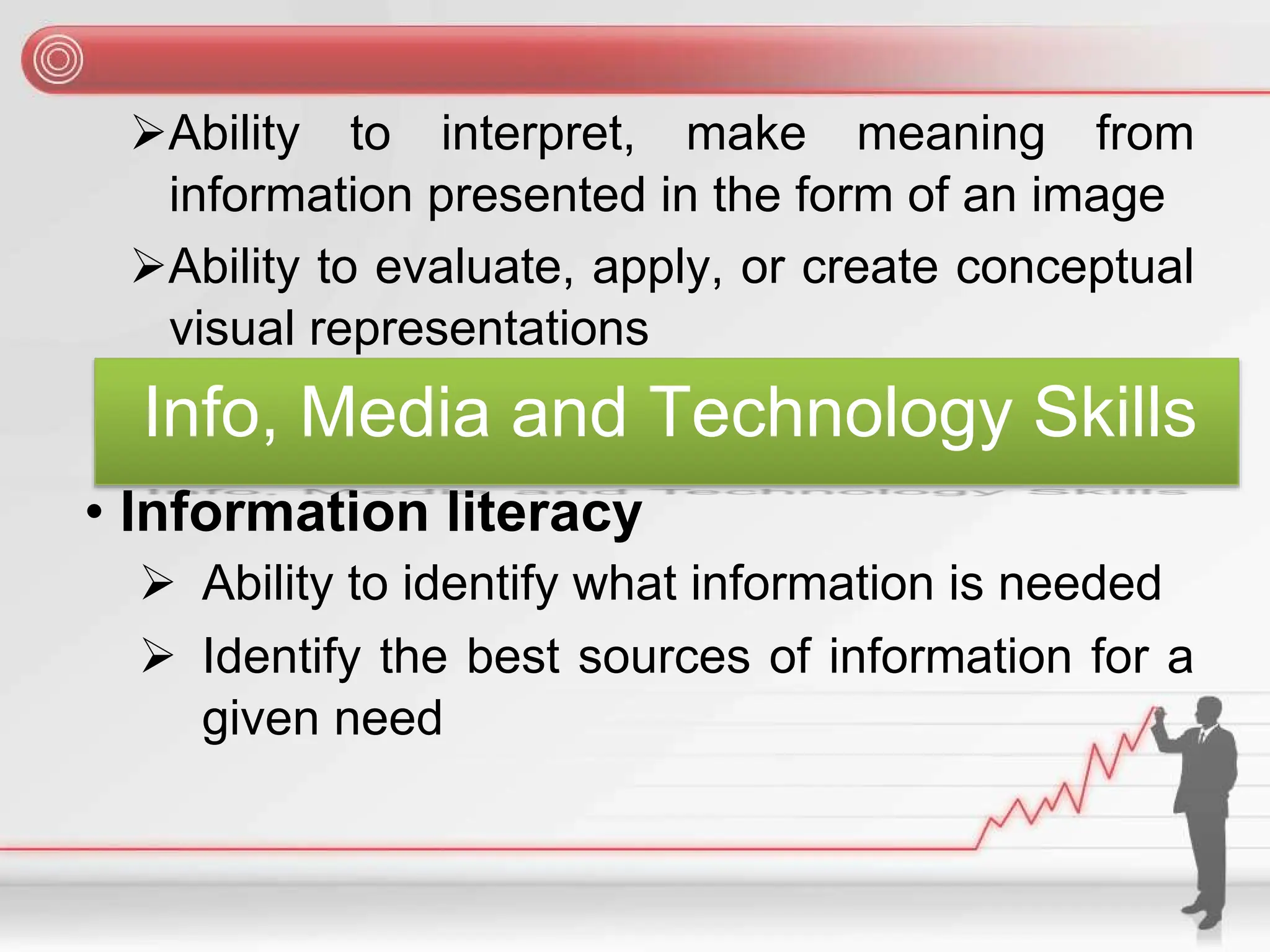
➢Ability to interpret,make meaning from
information presented in the form of an image
➢Ability to evaluate, apply, or create conceptual
visual representations
Info, Media and Technology Skills
• Information literacy
➢ Ability to identify what information is needed
➢ Identify the best sources of information for a
given need
17.
➢ Locate thosesources, evaluate the sources
critically, and share that information
Info, Media and Technology Skills
• Media literacy
➢ Ability to critically analyze the messages that
inform, entertain and sell to us everyday
➢ Ability to bring critical thinking skills to bear
on all forms of media asking pertinent
questions about what is there and noticing
what is not there.
18.
➢ Ability toquestion what lies behind media
production
Info, Media and Technology Skills
• Scientific literacy
➢ Encompasses written, numerical, and digital
literacy as they pertain to understanding
science, its methodology, observations, and
theories
➢ Knowledge and understanding of scientific
concepts and processes required for
personal decision making, participation in
19.
civic and culturalaffairs, and economic
productivity.
Info, Media and Technology Skills
• Economic literacy
➢ Ability to apply basic economic concepts in
situations relevant to one’s life
➢ About cultivating a working knowledge of the
economic way of thinking.
20.
Info, Media andTechnology Skills
• Technological Literacy
➢ Ability to responsibly use appropriate
technology to:
1. Communicate
2. Solve problems
3. Access, manage, integrate, evaluate, design
and create information to improve learning in
all subject areas
4. Acquire lifelong knowledge and skills in the
21st
century `
23.
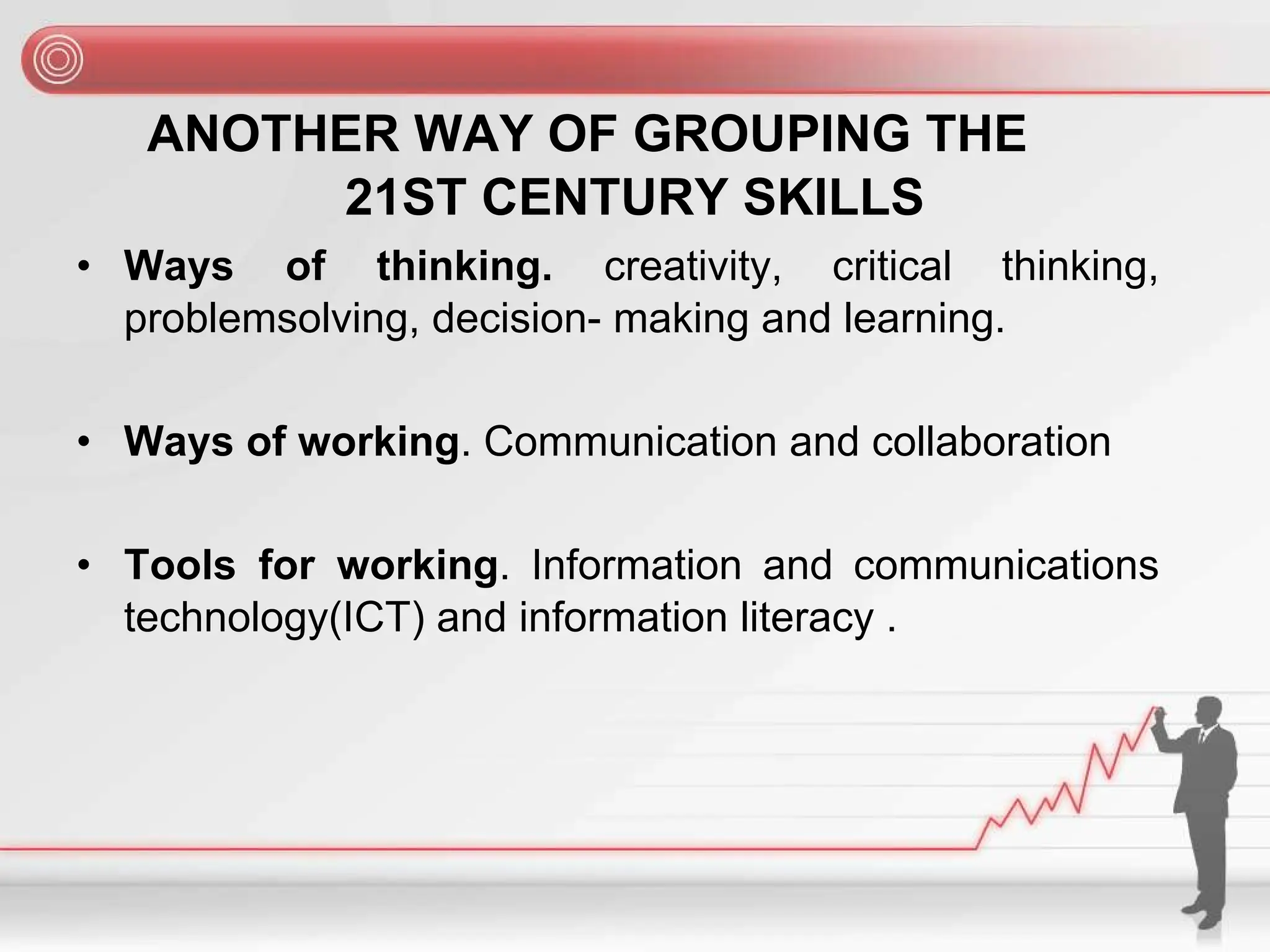
ANOTHER WAY OFGROUPING THE
21ST CENTURY SKILLS
• Ways of thinking. creativity, critical thinking,
problemsolving, decision- making and learning.
• Ways of working. Communication and collaboration
• Tools for working. Information and communications
technology(ICT) and information literacy .
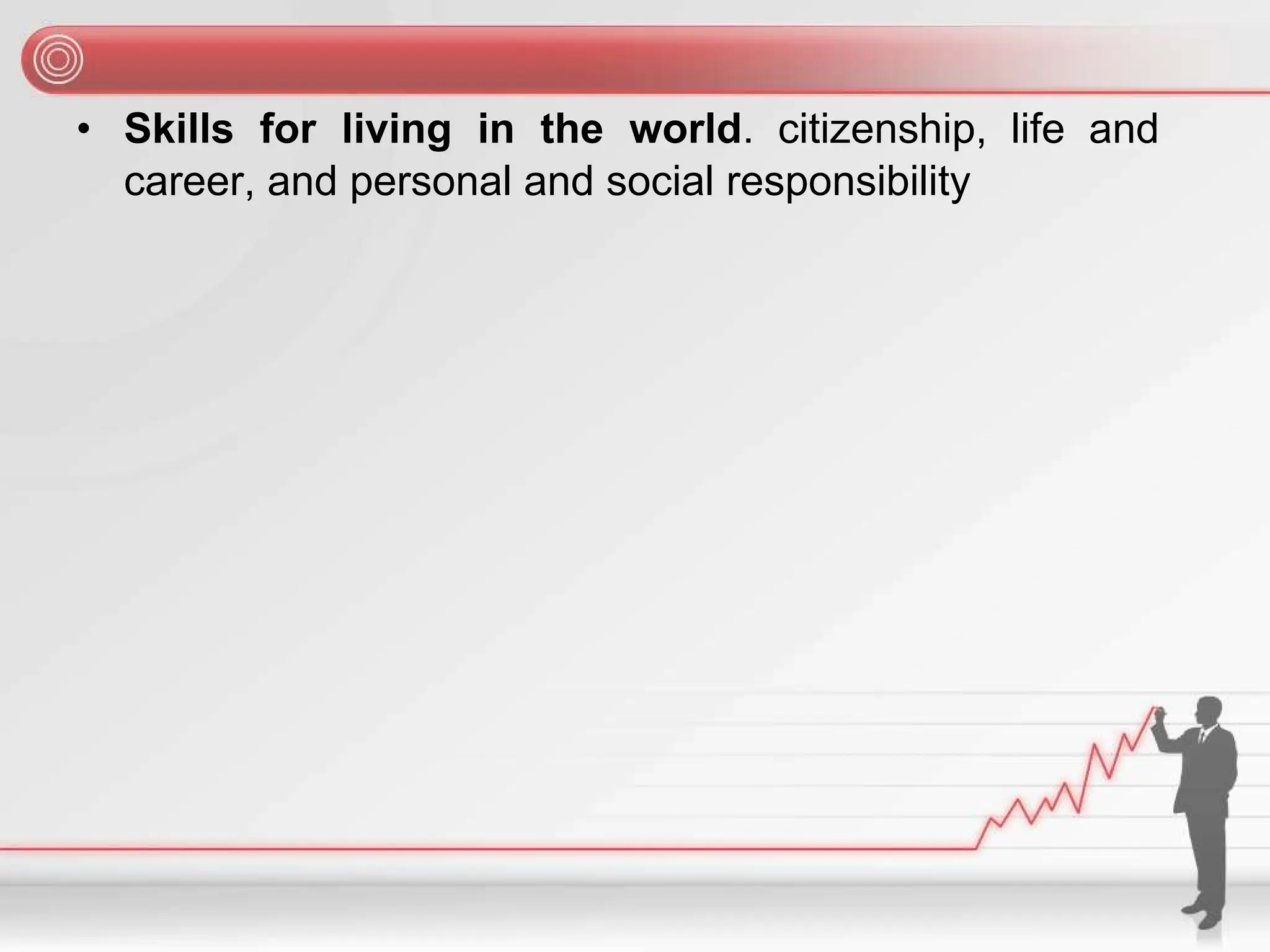
24.
• Skills forliving in the world. citizenship, life and
career, and personal and social responsibility
25.
“If we teachtoday as we taught yesterday,
we rob our children of tomorrow.
- John Dewey
26.
References
• P21 FrameworkDefinitions (2015)
www.p21.org.
• Teaching Profession (2012) The 21st
Century Teacher
27.
Learning Activity Tasks(LAT)
1. Read carefully and reflect on the presentation, YOU AS A YOUNG
PROFESSIONAL.
2. As a young professional, in what way YOU can share skills and service
considering your field of specialization:
a. Creativity
b. Communication skills
c. Innovation
d. Technological skills
e. Collaboration
f. Life skills.
28.
Make a diagramof the services you can render considering each area as part of your
21st
century teaching skills.