CAMERA ANGLES AND
SHOTS PLANNING
For the opening to our horror movie we took in
consideration a range of shots we could use to help
improve our film.
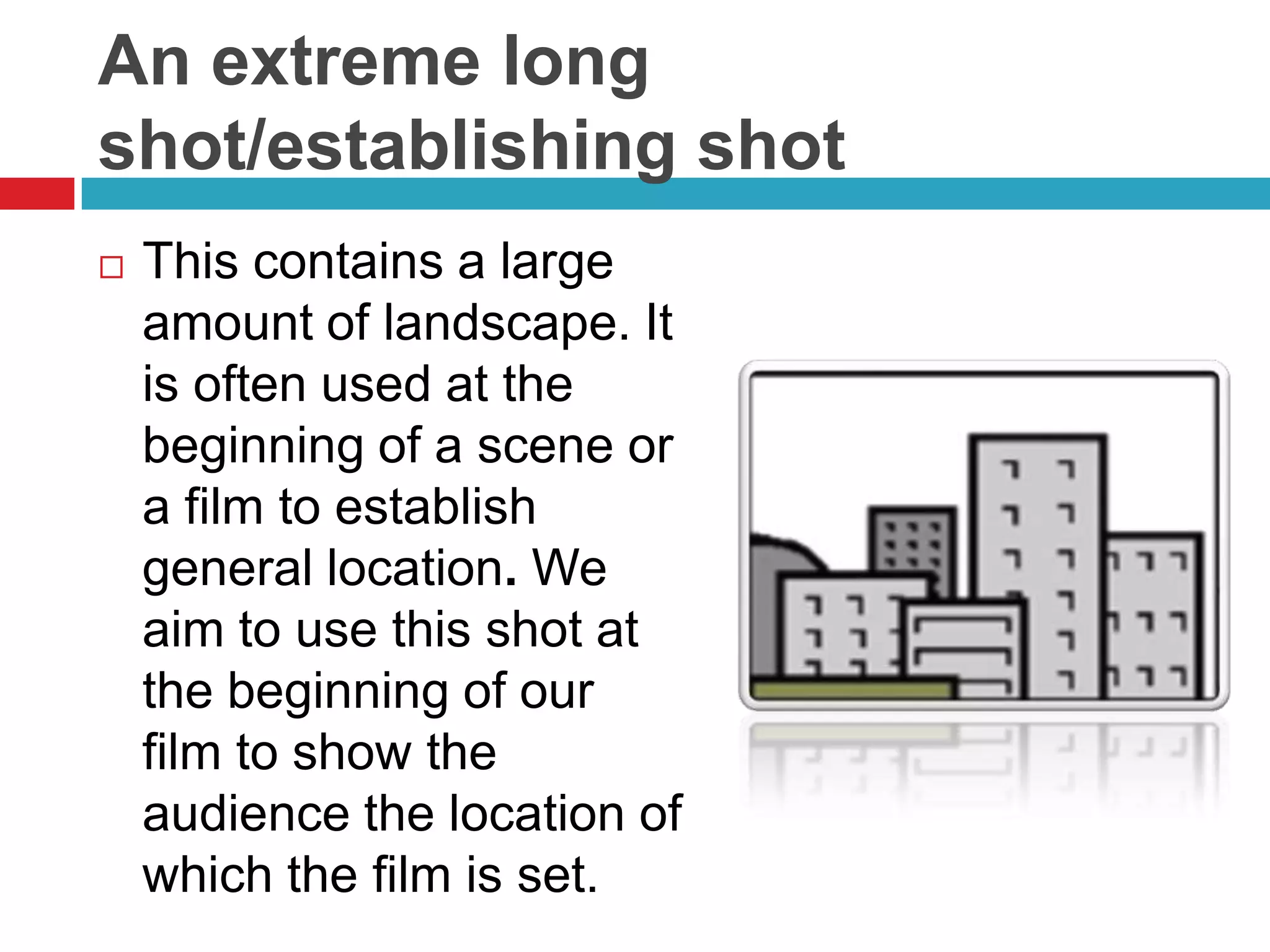
An extreme long
shot/establishing shot
   This contains a large
    amount of landscape. It
    is often used at the
    beginning of a scene or
    a film to establish
    general location. We
    aim to use this shot at
    the beginning of our
    film to show the
    audience the location of
    which the film is set.
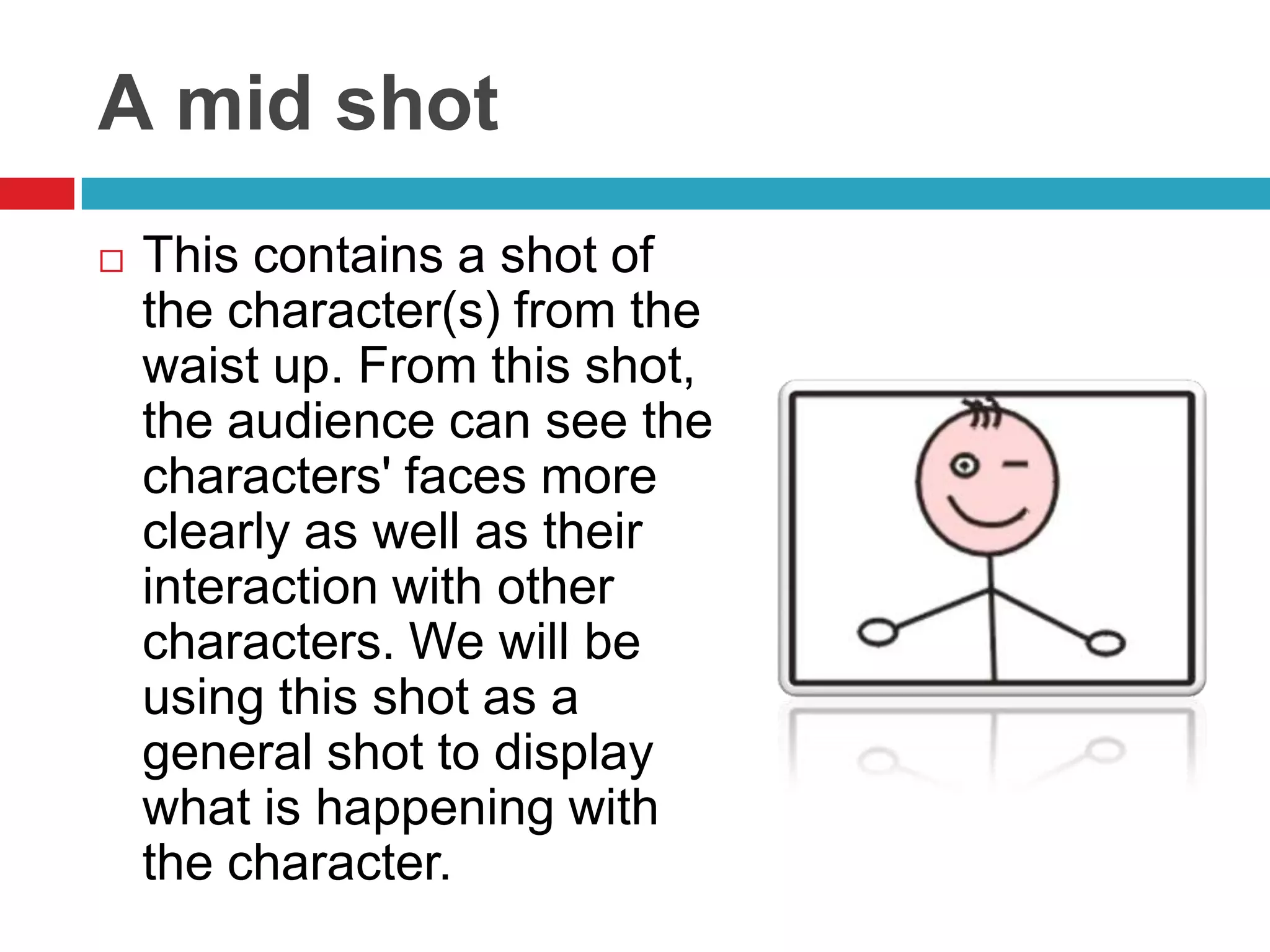
A mid shot
   This contains a shot of
    the character(s) from the
    waist up. From this shot,
    the audience can see the
    characters' faces more
    clearly as well as their
    interaction with other
    characters. We will be
    using this shot as a
    general shot to display
    what is happening with
    the character.
Point of view shot
   This shot is filmed from the point of view of a
    character so the audience can see what the
    character is seeing. We will use this shot to
    help draw in our audience to feel as if they are
    in the house and experiencing what the
    character is. We also plan to use this to show
    a first person view from the unknown being in
    the house, to hopefully create more fear for the
    audience.
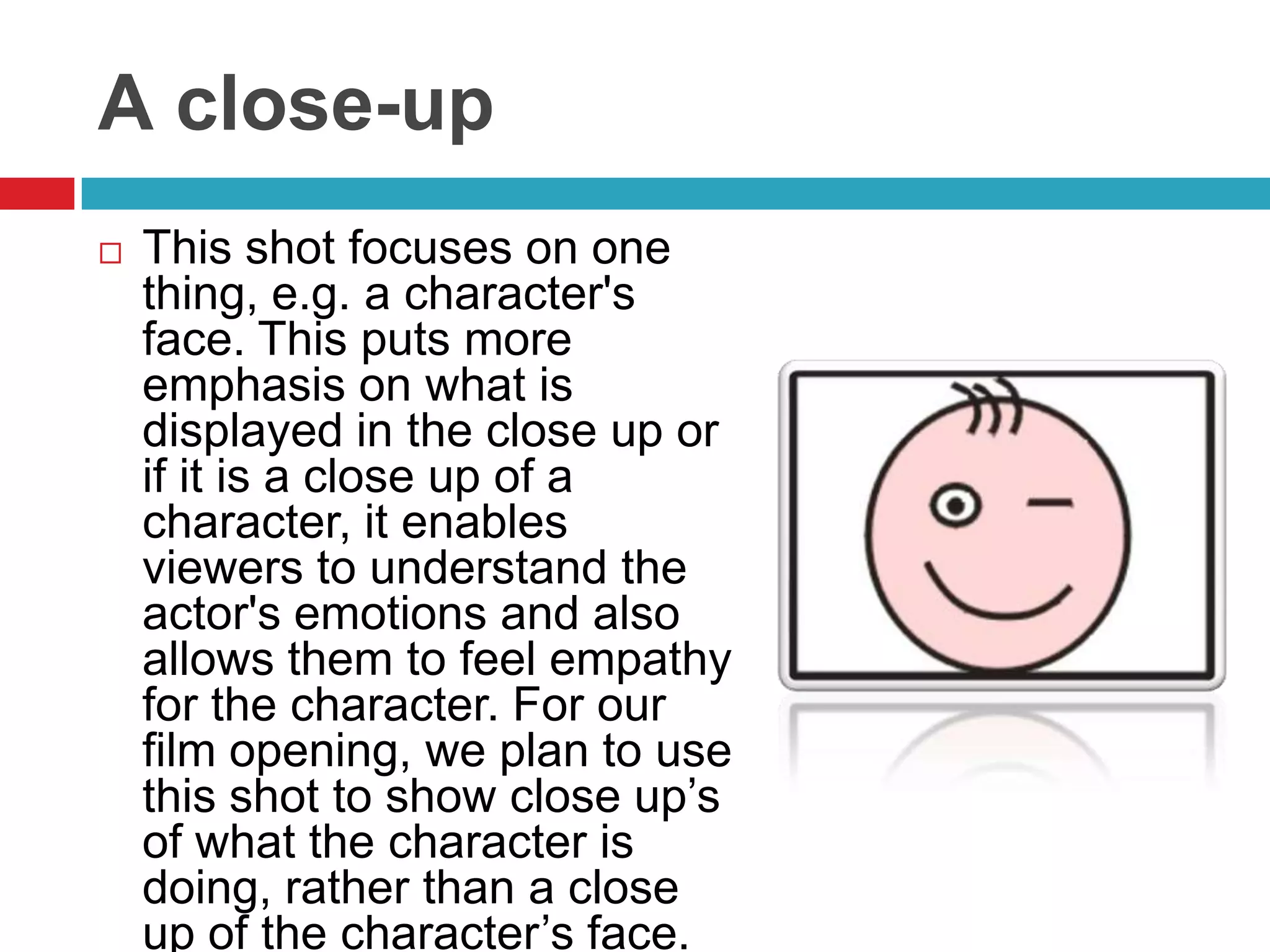
A close-up
   This shot focuses on one
    thing, e.g. a character's
    face. This puts more
    emphasis on what is
    displayed in the close up or
    if it is a close up of a
    character, it enables
    viewers to understand the
    actor's emotions and also
    allows them to feel empathy
    for the character. For our
    film opening, we plan to use
    this shot to show close up’s
    of what the character is
    doing, rather than a close
    up of the character’s face.
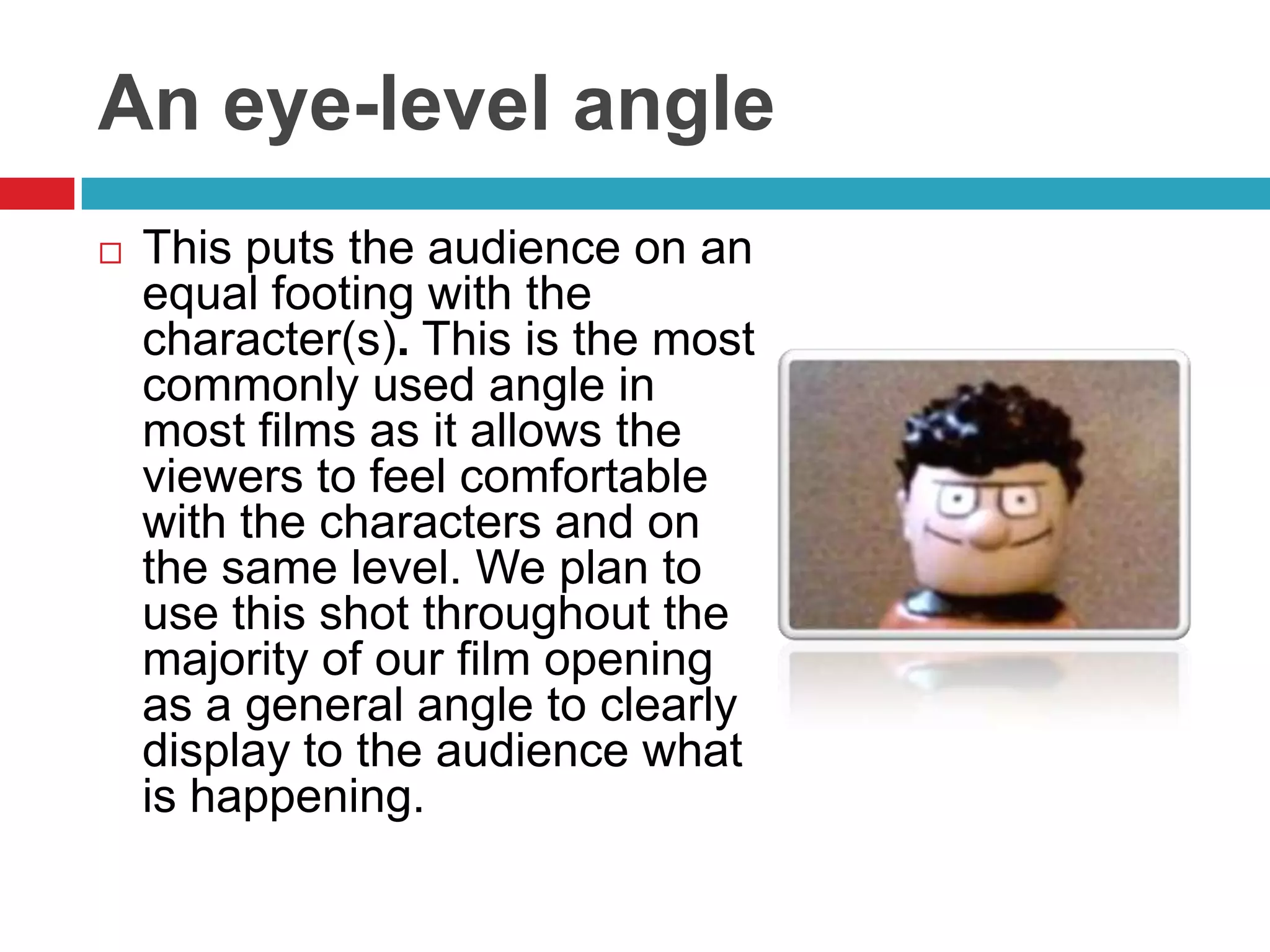
An eye-level angle
   This puts the audience on an
    equal footing with the
    character(s). This is the most
    commonly used angle in
    most films as it allows the
    viewers to feel comfortable
    with the characters and on
    the same level. We plan to
    use this shot throughout the
    majority of our film opening
    as a general angle to clearly
    display to the audience what
    is happening.
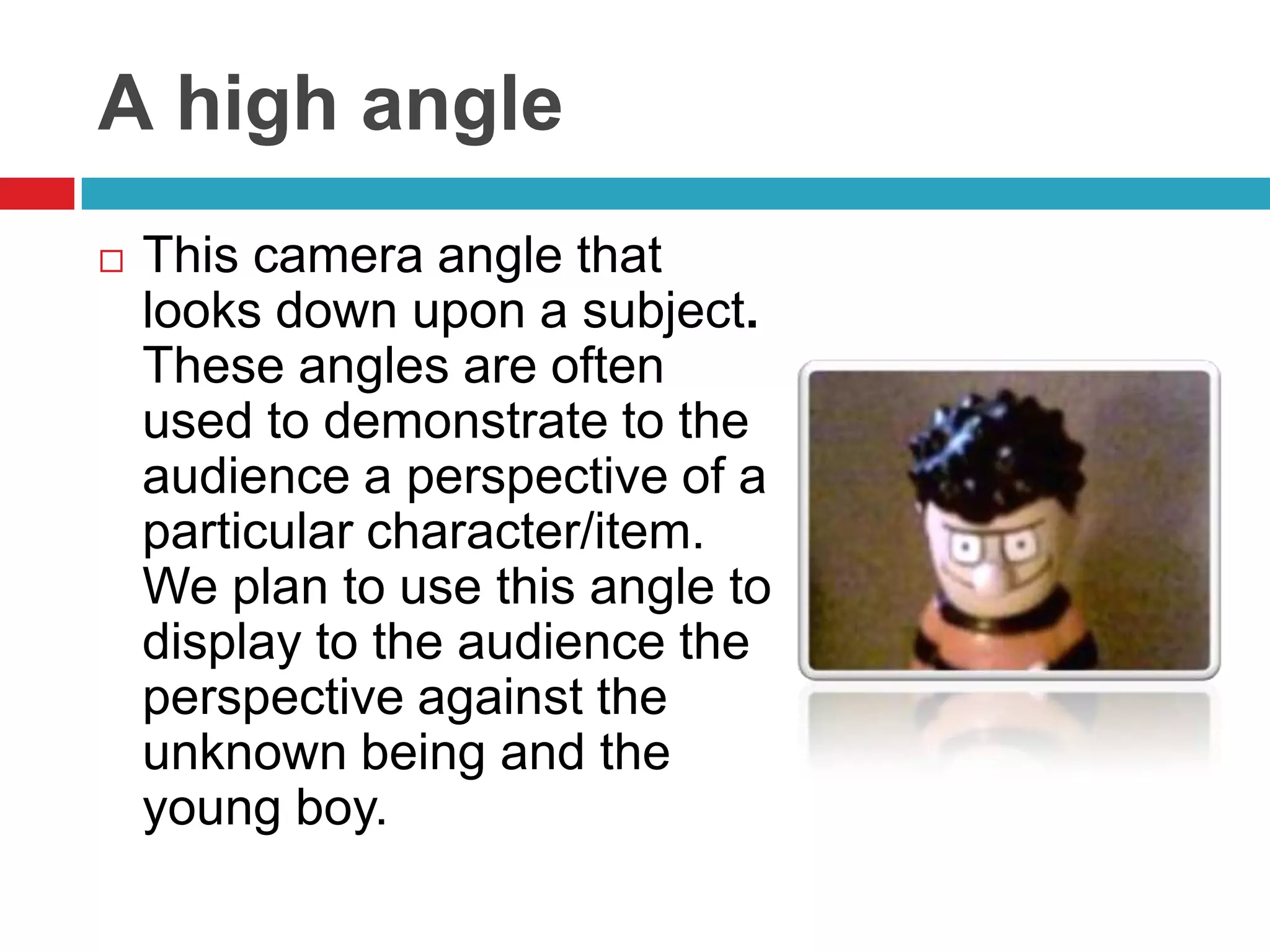
A high angle
   This camera angle that
    looks down upon a subject.
    These angles are often
    used to demonstrate to the
    audience a perspective of a
    particular character/item.
    We plan to use this angle to
    display to the audience the
    perspective against the
    unknown being and the
    young boy.

Camera angles and shots planning

  • 1.
    CAMERA ANGLES AND SHOTSPLANNING For the opening to our horror movie we took in consideration a range of shots we could use to help improve our film.
  • 2.
    An extreme long shot/establishingshot  This contains a large amount of landscape. It is often used at the beginning of a scene or a film to establish general location. We aim to use this shot at the beginning of our film to show the audience the location of which the film is set.
  • 3.
    A mid shot  This contains a shot of the character(s) from the waist up. From this shot, the audience can see the characters' faces more clearly as well as their interaction with other characters. We will be using this shot as a general shot to display what is happening with the character.
  • 4.
    Point of viewshot  This shot is filmed from the point of view of a character so the audience can see what the character is seeing. We will use this shot to help draw in our audience to feel as if they are in the house and experiencing what the character is. We also plan to use this to show a first person view from the unknown being in the house, to hopefully create more fear for the audience.
  • 5.
    A close-up  This shot focuses on one thing, e.g. a character's face. This puts more emphasis on what is displayed in the close up or if it is a close up of a character, it enables viewers to understand the actor's emotions and also allows them to feel empathy for the character. For our film opening, we plan to use this shot to show close up’s of what the character is doing, rather than a close up of the character’s face.
  • 6.
    An eye-level angle  This puts the audience on an equal footing with the character(s). This is the most commonly used angle in most films as it allows the viewers to feel comfortable with the characters and on the same level. We plan to use this shot throughout the majority of our film opening as a general angle to clearly display to the audience what is happening.
  • 7.
    A high angle  This camera angle that looks down upon a subject. These angles are often used to demonstrate to the audience a perspective of a particular character/item. We plan to use this angle to display to the audience the perspective against the unknown being and the young boy.