This document describes various camera shot types and their purposes:
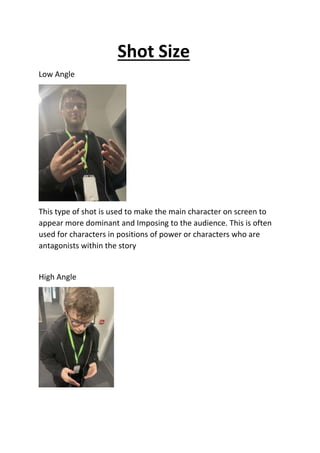
- Low angle shots make characters appear dominant, while high angle shots make them seem submissive. Eye level shots help audiences relate to characters.
- Overhead and long shots provide establishing context, while close ups focus on reactions. Two shots show interactions, and over the shoulder shots convey conversations.
- Tracking shots follow moving subjects, while tilts, pedestals, pans, and arcs draw attention in different ways through camera movement. Medium close ups provide both facial and body context.