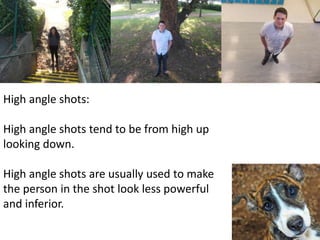
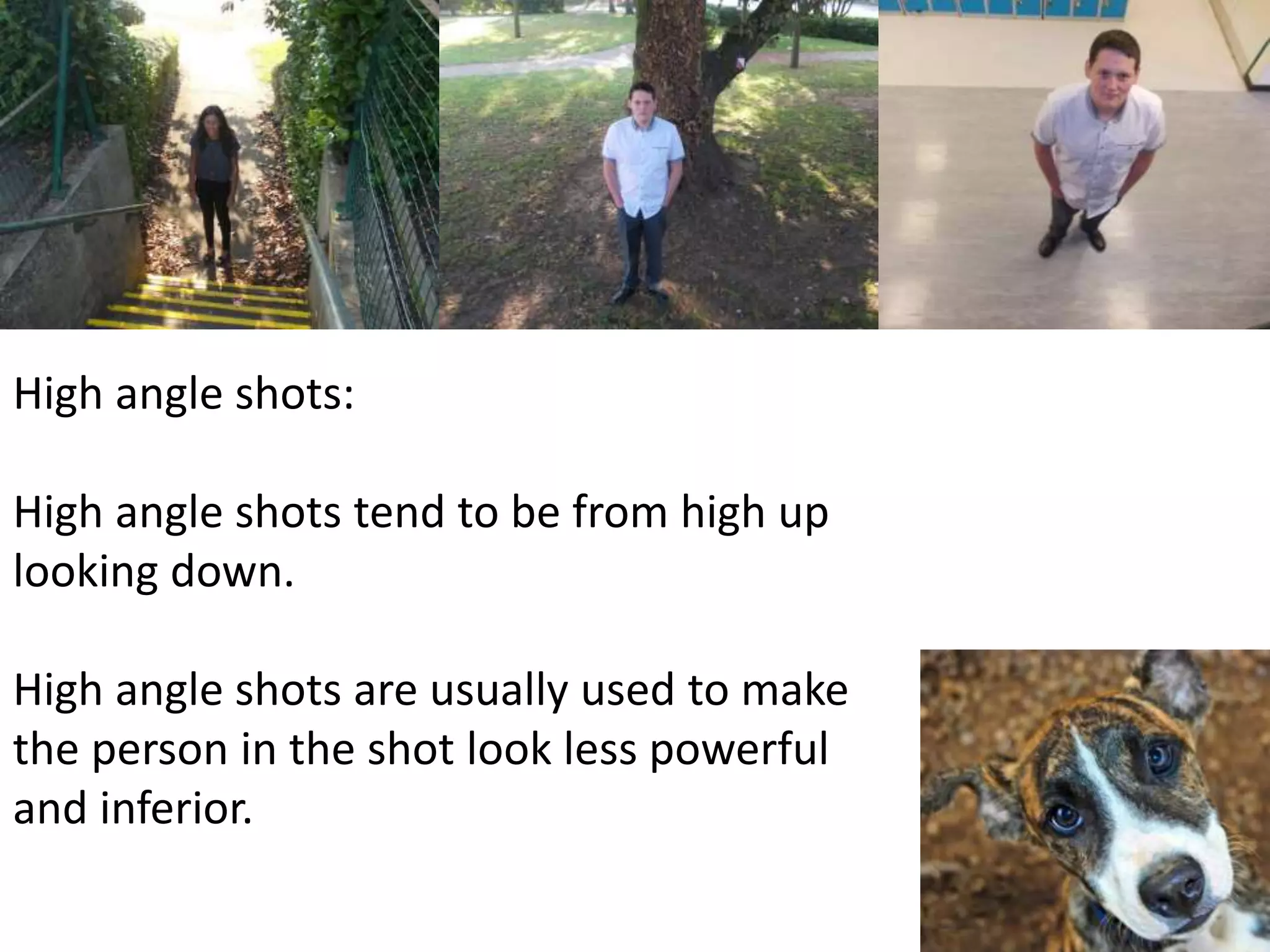
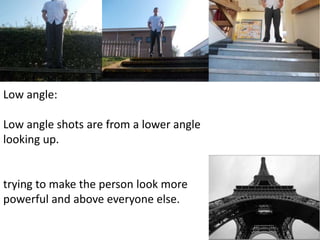
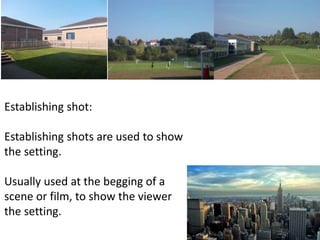
High angle shots: 
High angle shots tend to be from high up 
looking down. 
High angle shots are usually used to make 
the person in the shot look less powerful 
and inferior.
Low angle: 
Low angle shots are from a lower angle 
looking up. 
trying to make the person look more 
powerful and above everyone else.
Establishing shot: 
Establishing shots are used to show 
the setting. 
Usually used at the begging of a 
scene or film, to show the viewer 
the setting.
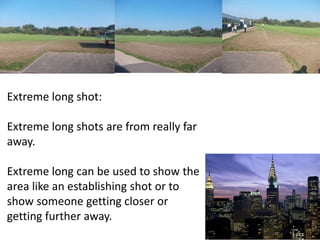
Extreme long shot: 
Extreme long shots are from really far 
away. 
Extreme long can be used to show the 
area like an establishing shot or to 
show someone getting closer or 
getting further away.
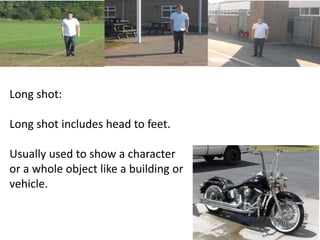
Long shot: 
Long shot includes head to feet. 
Usually used to show a character 
or a whole object like a building or 
vehicle.
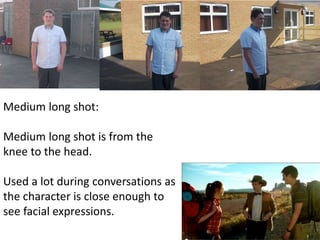
Medium long shot: 
Medium long shot is from the 
knee to the head. 
Used a lot during conversations as 
the character is close enough to 
see facial expressions.
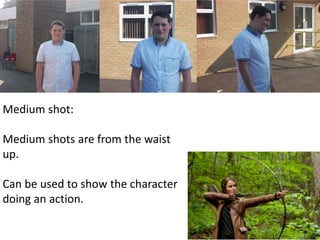
Medium shot: 
Medium shots are from the waist 
up. 
Can be used to show the character 
doing an action.
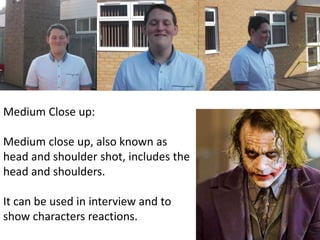
Medium Close up: 
Medium close up, also known as 
head and shoulder shot, includes the 
head and shoulders. 
It can be used in interview and to 
show characters reactions.
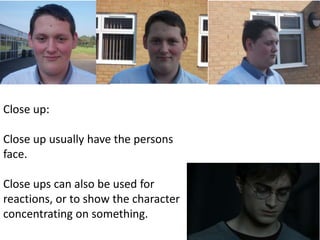
Close up: 
Close up usually have the persons 
face. 
Close ups can also be used for 
reactions, or to show the character 
concentrating on something.
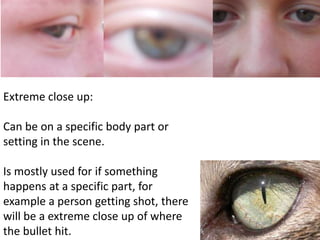
Extreme close up: 
Can be on a specific body part or 
setting in the scene. 
Is mostly used for if something 
happens at a specific part, for 
example a person getting shot, there 
will be a extreme close up of where 
the bullet hit.
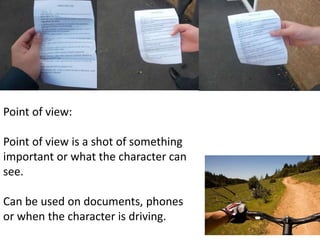
Point of view: 
Point of view is a shot of something 
important or what the character can 
see. 
Can be used on documents, phones 
or when the character is driving.
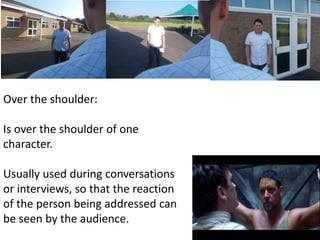
Over the shoulder: 
Is over the shoulder of one 
character. 
Usually used during conversations 
or interviews, so that the reaction 
of the person being addressed can 
be seen by the audience.
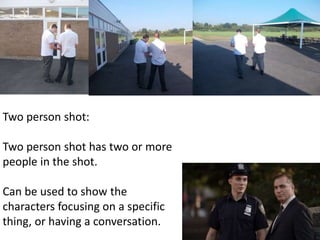
Two person shot: 
Two person shot has two or more 
people in the shot. 
Can be used to show the 
characters focusing on a specific 
thing, or having a conversation.

Shots description

  • 1.
    High angle shots: High angle shots tend to be from high up looking down. High angle shots are usually used to make the person in the shot look less powerful and inferior.
  • 2.
    Low angle: Lowangle shots are from a lower angle looking up. trying to make the person look more powerful and above everyone else.
  • 3.
    Establishing shot: Establishingshots are used to show the setting. Usually used at the begging of a scene or film, to show the viewer the setting.
  • 4.
    Extreme long shot: Extreme long shots are from really far away. Extreme long can be used to show the area like an establishing shot or to show someone getting closer or getting further away.
  • 5.
    Long shot: Longshot includes head to feet. Usually used to show a character or a whole object like a building or vehicle.
  • 6.
    Medium long shot: Medium long shot is from the knee to the head. Used a lot during conversations as the character is close enough to see facial expressions.
  • 7.
    Medium shot: Mediumshots are from the waist up. Can be used to show the character doing an action.
  • 8.
    Medium Close up: Medium close up, also known as head and shoulder shot, includes the head and shoulders. It can be used in interview and to show characters reactions.
  • 9.
    Close up: Closeup usually have the persons face. Close ups can also be used for reactions, or to show the character concentrating on something.
  • 10.
    Extreme close up: Can be on a specific body part or setting in the scene. Is mostly used for if something happens at a specific part, for example a person getting shot, there will be a extreme close up of where the bullet hit.
  • 11.
    Point of view: Point of view is a shot of something important or what the character can see. Can be used on documents, phones or when the character is driving.
  • 12.
    Over the shoulder: Is over the shoulder of one character. Usually used during conversations or interviews, so that the reaction of the person being addressed can be seen by the audience.
  • 13.
    Two person shot: Two person shot has two or more people in the shot. Can be used to show the characters focusing on a specific thing, or having a conversation.