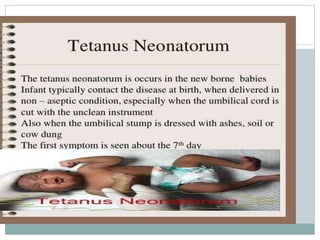



DEFINATION
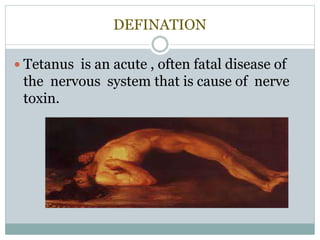
 Tetanus is an acute , often fatal disease of
the nervous system that is cause of nerve
toxin.
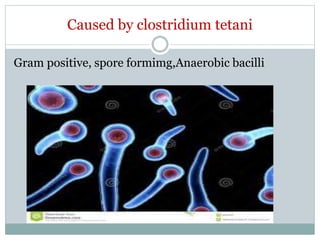
Caused by clostridium tetani
Gram positive, spore formimg,Anaerobic bacilli
Source of infection
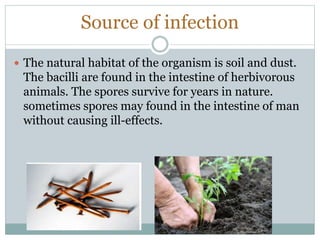
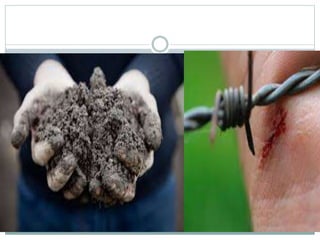
 The natural habitat of the organism is soil and dust.
The bacilli are found in the intestine of herbivorous
animals. The spores survive for years in nature.
sometimes spores may found in the intestine of man
without causing ill-effects.
EXOTOXIN
Tetanus bacilli produces soluble exotoxin. The toxin
acts on 4 areas of nervous system.
a) the motor end plates in skeletal system
b) the spinal cord
c) the brain
d) the sympathetic system
Its principle action is to back inhibition of spinal
reflexes.
Tetanus is not a communicable disease
condition.
Host factors
Age:
commonly, tetanus is a disease of the active age (5
to 40 years) because this period predisposes to all
kind of trauma
Sex:
females are more exposed to the risk of tetanus,
especially during delivery or abortion leading to
pueperal tetanus.
occupation: agricultural workers are at more risk.
Immunity: No age is immune unless protected by
previous immunization. The immunity receiving from
two doses of immunization is highly effective.
Herd immunity does not protect the
individual..
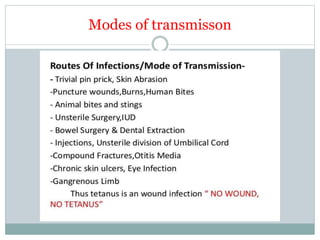
Modes of transmisson
Incubation period
Types of tetanus
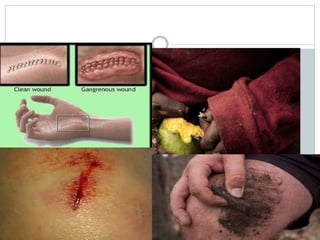
1) Traumatic: Trauma is major and important cause of
tetanus. Sometimes tetanus may results from even
unnoticed wounds.
2) puerperal: Tetanus follows abortion more frequently
than normal labour. A post abortal uterus is a good site
for spore germination.
3) Otogenic: Ear may be rare portal of entry. Otogenic
tetanus is a paediatric problem but cases may occur
in adult also.
4) Idiopathic: In these cases there is no definite history
of sustaining injury.
Signs and symptoms
1. Begins with mild spasms in the jaw muscles-
also known as “lock jaw” or “ trismus”.
2. spasms may affects chest, neck, back, buttocks,
abdominal muscles.
3. spasms may sometime affect muscles that help in
breathing which may lead to brearthing difficulty.
5. Prolonged muscular action causes sudden, powerful
and painful contraction called “TETANY”.
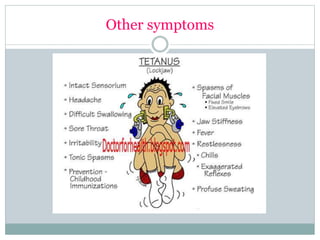
Other symptoms
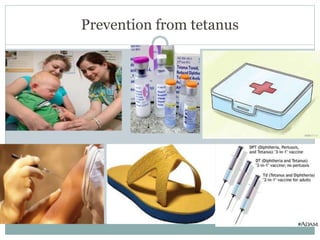
Prevention from tetanus
VACCINATION
1)Active immunization:
Tetanus is best prevented by active immunization with
tetanus toxoid,
Two preparations available for it are;
a) Combined vaccine- DPT
b) Monovalent
i) plain or fluid
ii) Tetanus vaccine,adsorbed
a)combined vaccine:
3 doses of DPT is given at 6, 10 and 14 weeks of
age…booster at 18 months, second booster
(only DT) at 5-6 years and third booster(only TT)
after 10 yrs of age.
b)Monovalent vaccine:
purified TT (adsorbed) has largely supplanted
plain toxoid.
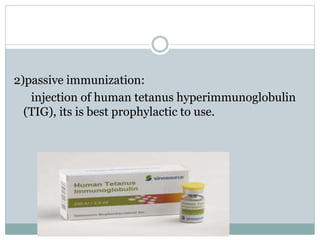
2)passive immunization:
injection of human tetanus hyperimmunoglobulin
(TIG), its is best prophylactic to use.
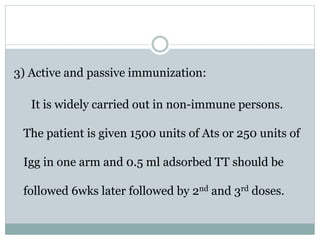
3) Active and passive immunization:
It is widely carried out in non-immune persons.
The patient is given 1500 units of Ats or 250 units of
Igg in one arm and 0.5 ml adsorbed TT should be
followed 6wks later followed by 2nd and 3rd doses.
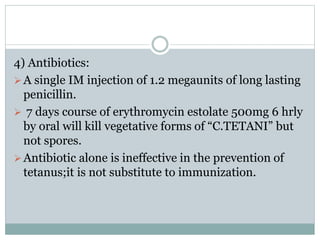
4) Antibiotics:
A single IM injection of 1.2 megaunits of long lasting
penicillin.
 7 days course of erythromycin estolate 500mg 6 hrly
by oral will kill vegetative forms of “C.TETANI” but
not spores.
Antibiotic alone is ineffective in the prevention of
tetanus;it is not substitute to immunization.
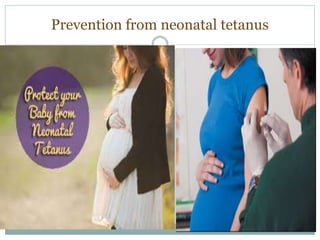
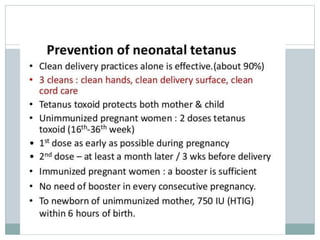
Prevention from neonatal tetanus
Prevention from tetanus after injury
all wounds must be thoroughly cleaned soon after
injury
Removal of foreign bodies, soil, dust, nectrotic tissue
 tetanus toxoids can be given in case of suspected
exposure to tetanus
 tetanus immunoglobulin can be given alon with TT
It can be given IV or IM.
tetanus.pptx

tetanus.pptx

  • 1.
  • 2.
    DEFINATION  Tetanus isan acute , often fatal disease of the nervous system that is cause of nerve toxin.
  • 3.
    Caused by clostridiumtetani Gram positive, spore formimg,Anaerobic bacilli
  • 5.
    Source of infection The natural habitat of the organism is soil and dust. The bacilli are found in the intestine of herbivorous animals. The spores survive for years in nature. sometimes spores may found in the intestine of man without causing ill-effects.
  • 6.
    EXOTOXIN Tetanus bacilli producessoluble exotoxin. The toxin acts on 4 areas of nervous system. a) the motor end plates in skeletal system b) the spinal cord c) the brain d) the sympathetic system
  • 7.
    Its principle actionis to back inhibition of spinal reflexes. Tetanus is not a communicable disease condition.
  • 8.
    Host factors Age: commonly, tetanusis a disease of the active age (5 to 40 years) because this period predisposes to all kind of trauma Sex: females are more exposed to the risk of tetanus, especially during delivery or abortion leading to pueperal tetanus.
  • 9.
    occupation: agricultural workersare at more risk. Immunity: No age is immune unless protected by previous immunization. The immunity receiving from two doses of immunization is highly effective. Herd immunity does not protect the individual..
  • 12.
  • 14.
  • 16.
    Types of tetanus 1)Traumatic: Trauma is major and important cause of tetanus. Sometimes tetanus may results from even unnoticed wounds. 2) puerperal: Tetanus follows abortion more frequently than normal labour. A post abortal uterus is a good site for spore germination.
  • 17.
    3) Otogenic: Earmay be rare portal of entry. Otogenic tetanus is a paediatric problem but cases may occur in adult also. 4) Idiopathic: In these cases there is no definite history of sustaining injury.
  • 19.
    Signs and symptoms 1.Begins with mild spasms in the jaw muscles- also known as “lock jaw” or “ trismus”. 2. spasms may affects chest, neck, back, buttocks, abdominal muscles. 3. spasms may sometime affect muscles that help in breathing which may lead to brearthing difficulty.
  • 20.
    5. Prolonged muscularaction causes sudden, powerful and painful contraction called “TETANY”.
  • 21.
  • 22.
  • 23.
    VACCINATION 1)Active immunization: Tetanus isbest prevented by active immunization with tetanus toxoid, Two preparations available for it are; a) Combined vaccine- DPT b) Monovalent i) plain or fluid ii) Tetanus vaccine,adsorbed
  • 24.
    a)combined vaccine: 3 dosesof DPT is given at 6, 10 and 14 weeks of age…booster at 18 months, second booster (only DT) at 5-6 years and third booster(only TT) after 10 yrs of age. b)Monovalent vaccine: purified TT (adsorbed) has largely supplanted plain toxoid.
  • 25.
    2)passive immunization: injection ofhuman tetanus hyperimmunoglobulin (TIG), its is best prophylactic to use.
  • 26.
    3) Active andpassive immunization: It is widely carried out in non-immune persons. The patient is given 1500 units of Ats or 250 units of Igg in one arm and 0.5 ml adsorbed TT should be followed 6wks later followed by 2nd and 3rd doses.
  • 27.
    4) Antibiotics: A singleIM injection of 1.2 megaunits of long lasting penicillin.  7 days course of erythromycin estolate 500mg 6 hrly by oral will kill vegetative forms of “C.TETANI” but not spores. Antibiotic alone is ineffective in the prevention of tetanus;it is not substitute to immunization.
  • 28.
  • 30.
    Prevention from tetanusafter injury all wounds must be thoroughly cleaned soon after injury Removal of foreign bodies, soil, dust, nectrotic tissue  tetanus toxoids can be given in case of suspected exposure to tetanus  tetanus immunoglobulin can be given alon with TT It can be given IV or IM.