
PRESENTED BY:
MRS. HARMEET KAUR
NURSING TUTOR
UCON, FARIDKOT
 Tendon: A tendon is a tough band of fibrous
connective tissue that usually connects
muscle to bone and is capable of
withstanding tension.
 Ligament: In anatomy, a ligament is the
fibrous connective tissue that connects bone
to other bones and is also known as
articular ligament, articular larua, fibrous
ligament, or true ligament.
ACUTE INJURIES OVERUSE INJURIES
Caused by:
A sudden trauma from a fall or
blow.
Twisting of the tendon and
ligament into an awkward
position.
Example: sprain, strain, and
contusion.
Overuse injuries occur
gradually over time.
When an athletic or other
activity is repeated so often,
areas of the body don't have
enough time to heal between
occurrences.
Weakness in the surrounding
muscles due to a sedentary
lifestyle.
Tendinitis and bursitis are
common soft tissue overuse
injuries.
 Tendon injuries are relatively common,
especially in people who play sports. An
estimated 30-50% of sporting injuries involve
tendon problems.
 The common tendon injuries include:
Strain
Tendinitis
Tendinosis
Subluxation
Tendon rupture
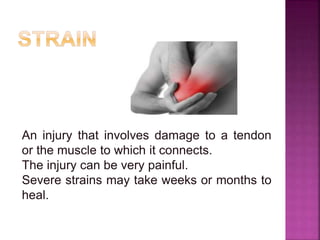
An injury that involves damage to a tendon
or the muscle to which it connects.
The injury can be very painful.
Severe strains may take weeks or months to
heal.
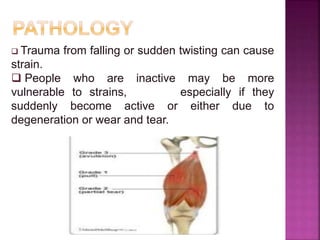
 Trauma from falling or sudden twisting can cause
strain.
 People who are inactive may be more
vulnerable to strains, especially if they
suddenly become active or either due to
degeneration or wear and tear.
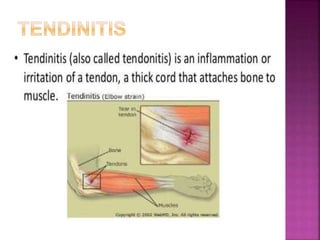
 It may be caused by trauma, such as strain,
but it is most commonly overuse injury.
 There are many activities that may cause
tendinitis, including:
Tennis
Golf
Painting
Carpentry
Throwing and pitching
scrubbing
The symptoms of tendinitis include:
 Pain
 Inflammation (swollen joint)
 Local joint stiffness
 Warm to touch
 Loss of motion
Tendionosis is a type of tear that is
similar to a strain, but it usually happens
over many months or years because of
overuse or incorrect athletic technique.
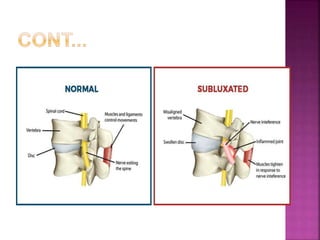
 Subluxation is a tendon disorder where
tendon moves out of place (a partial
dislocation).
 A person may hear a pooping or snapping
sound when it happens and then experience
pain and weakness in the affected joint.
 Sometimes, pain may come and go.
 It is more likely in people with certain genetic
anatomical differences, but can also result
from an injury.
 Tendon rupture is a condition in which a
tendon separates in whole or in part from
tissue to which it is attached, or is itself torn or
otherwise divided in whole or in part.
 Examples include: Achilles, biceps, knees and
quadriceps tendon rupture.
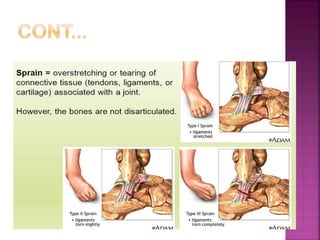
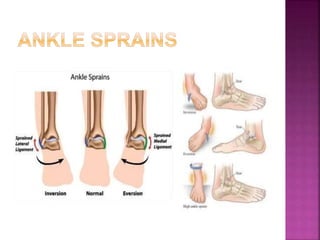
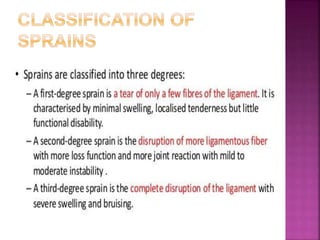
 An injury to the ligament is termed as a
sprain.
 A sprain occurs when a ligament stretches or
tears.
 It can be a temporary, minor inconvenience or
a debilitating injury that takes month to heal.
 The knees, ankles and wrist are highly
vulnerable to sprains from falls.
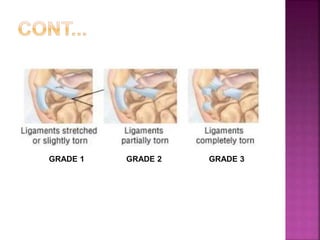
GRADE 1 GRADE 2 GRADE 3
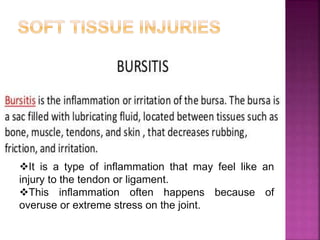
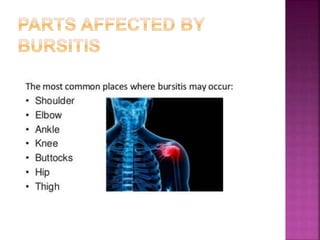
It is a type of inflammation that may feel like an
injury to the tendon or ligament.
This inflammation often happens because of
overuse or extreme stress on the joint.
 Bursitis is caused by:
 Overuse of joint
 Minor impact/stronger impact
 Old age
 Affect from other problem nearby : infection or
arthritis.
 Pain: the pain increases with movement or
pressure;
 Tenderness is often felt without movement;
 Swelling;
 Loss of movement;
If bursitis is caused by infection it is called
Septic Bursitis. The patient may have the
following additional symptoms:
 Fever;
 Redness and warmth over affected area.
 An x-ray to make sure no bones are
fractured.
 Blood tests to check for rheumatoid
arthritis.
 A CT scan or MRI to check if there is a torn
tendon.
PRICEM
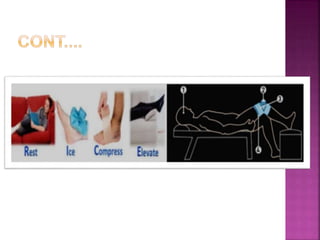
 P: (Protection) immobilize the affected area to
prevent from further injury;
 R: (Rest) splint an injured part, use sling for an
arm or crutches for leg or foot injury to provide
rest to the sprained or strained area.
 I: (Ice) Apply cold compress for 20 minutes every
hour. Never put ice directly against the skin or it
may damage the skin. Use a thin towel for
protection.
 C: (Compression) compress by wrapping an
elastic bandage or sleeve lightly around the joint
or limb to remove swelling.
 E: (Elevate) elevate the area above heart
level if possible.
 M: (Medication) give an over the counter
NSAID (non-steroidal anti inflammatory drugs)
like Ibuprofen (Advil, Mortin), Acetaminophen
(Tylenol), or Aspirin. {Avoid giving Aspirin to
anyone under age 19.}
 Treatment of sprains and strains depend on
the severity of the injury and the joint or
muscle involved.
 In mild to moderate cases of sprains and
strains, rest and ice is sufficient treatment.
 In severe case, immobilization with brace and
splint is necessary. Some people find relief
from physical therapy, especially if they suffer
from chronic or overuse injury.
 In rare case of severely ruptured tendon,
ligament or muscle surgery may needed.
 Bursitis and tendinitis often heal on their own,
but in some case bursa can become infected.
When this happens fluid may be drained or even
infected bursa may be removed.
 Treatment of subluxation depends on its severity
and underlying cause. In many cases a person
need surgery and physiotherapy. In case of
underlying condition doctor may recommend
additional treatment or lifestyle modifications.
 In case of tendinitis if it doesn't heal on its
own corticosteroid injections may provide
relief. In chronic and severe tendinitis doctor
may recommend surgery to remove inflamed
or damaged tissue.
1) Acute pain related to soft tissue injury or
surgical incision.
2) Impaired physical mobility related to pain,
restricted movement or unfamiliarity with the
use of immobilization devices.
3) Self care deficit related to physical
limitations present with cast or immobilizers.
4. Risk for Infection related to Inadequate
primary defenses: broken skin, traumatized
tissues or Invasive procedure.
5. Deficient knowledge related to unfamiliarity
to information resources.
 Exercise regularly to keep your joints and
muscles strong.
 Use protective equipment when playing
sports.
 Wear shoes that fit well. When exercising,
wear shoes that have a soft, even sole.
 Maintain a healthy weight. Extra weight puts
more stress on your muscles and joints. Your
healthcare provider can determine your ideal
body weight.
 Eat a well-balanced diet to keep your muscles
healthy.
 When you pick up something heavy, hold it
close to your body, keep your back straight
and your feet apart, and bend your knees. Lift
using your legs, not your back. Don't twist
your body or reach while you're lifting.
 Doing daily stretching exercises. Yoga is a
good low-impact way to stretch muscles.
 Warming up and stretching before
participating in vigorous sports.
TENDON AND LIGAMENT DISORDERS

TENDON AND LIGAMENT DISORDERS

  • 1.
    PRESENTED BY: MRS. HARMEETKAUR NURSING TUTOR UCON, FARIDKOT
  • 2.
     Tendon: Atendon is a tough band of fibrous connective tissue that usually connects muscle to bone and is capable of withstanding tension.  Ligament: In anatomy, a ligament is the fibrous connective tissue that connects bone to other bones and is also known as articular ligament, articular larua, fibrous ligament, or true ligament.
  • 4.
    ACUTE INJURIES OVERUSEINJURIES Caused by: A sudden trauma from a fall or blow. Twisting of the tendon and ligament into an awkward position. Example: sprain, strain, and contusion. Overuse injuries occur gradually over time. When an athletic or other activity is repeated so often, areas of the body don't have enough time to heal between occurrences. Weakness in the surrounding muscles due to a sedentary lifestyle. Tendinitis and bursitis are common soft tissue overuse injuries.
  • 5.
     Tendon injuriesare relatively common, especially in people who play sports. An estimated 30-50% of sporting injuries involve tendon problems.  The common tendon injuries include: Strain Tendinitis Tendinosis Subluxation Tendon rupture
  • 6.
    An injury thatinvolves damage to a tendon or the muscle to which it connects. The injury can be very painful. Severe strains may take weeks or months to heal.
  • 7.
     Trauma fromfalling or sudden twisting can cause strain.  People who are inactive may be more vulnerable to strains, especially if they suddenly become active or either due to degeneration or wear and tear.
  • 9.
     It maybe caused by trauma, such as strain, but it is most commonly overuse injury.  There are many activities that may cause tendinitis, including: Tennis Golf Painting Carpentry Throwing and pitching scrubbing
  • 10.
    The symptoms oftendinitis include:  Pain  Inflammation (swollen joint)  Local joint stiffness  Warm to touch  Loss of motion
  • 11.
    Tendionosis is atype of tear that is similar to a strain, but it usually happens over many months or years because of overuse or incorrect athletic technique.
  • 12.
     Subluxation isa tendon disorder where tendon moves out of place (a partial dislocation).  A person may hear a pooping or snapping sound when it happens and then experience pain and weakness in the affected joint.  Sometimes, pain may come and go.  It is more likely in people with certain genetic anatomical differences, but can also result from an injury.
  • 14.
     Tendon ruptureis a condition in which a tendon separates in whole or in part from tissue to which it is attached, or is itself torn or otherwise divided in whole or in part.  Examples include: Achilles, biceps, knees and quadriceps tendon rupture.
  • 15.
     An injuryto the ligament is termed as a sprain.  A sprain occurs when a ligament stretches or tears.  It can be a temporary, minor inconvenience or a debilitating injury that takes month to heal.  The knees, ankles and wrist are highly vulnerable to sprains from falls.
  • 19.
    GRADE 1 GRADE2 GRADE 3
  • 20.
    It is atype of inflammation that may feel like an injury to the tendon or ligament. This inflammation often happens because of overuse or extreme stress on the joint.
  • 21.
     Bursitis iscaused by:  Overuse of joint  Minor impact/stronger impact  Old age  Affect from other problem nearby : infection or arthritis.
  • 23.
     Pain: thepain increases with movement or pressure;  Tenderness is often felt without movement;  Swelling;  Loss of movement; If bursitis is caused by infection it is called Septic Bursitis. The patient may have the following additional symptoms:  Fever;  Redness and warmth over affected area.
  • 24.
     An x-rayto make sure no bones are fractured.  Blood tests to check for rheumatoid arthritis.  A CT scan or MRI to check if there is a torn tendon.
  • 25.
    PRICEM  P: (Protection)immobilize the affected area to prevent from further injury;  R: (Rest) splint an injured part, use sling for an arm or crutches for leg or foot injury to provide rest to the sprained or strained area.  I: (Ice) Apply cold compress for 20 minutes every hour. Never put ice directly against the skin or it may damage the skin. Use a thin towel for protection.  C: (Compression) compress by wrapping an elastic bandage or sleeve lightly around the joint or limb to remove swelling.
  • 26.
     E: (Elevate)elevate the area above heart level if possible.  M: (Medication) give an over the counter NSAID (non-steroidal anti inflammatory drugs) like Ibuprofen (Advil, Mortin), Acetaminophen (Tylenol), or Aspirin. {Avoid giving Aspirin to anyone under age 19.}
  • 28.
     Treatment ofsprains and strains depend on the severity of the injury and the joint or muscle involved.  In mild to moderate cases of sprains and strains, rest and ice is sufficient treatment.  In severe case, immobilization with brace and splint is necessary. Some people find relief from physical therapy, especially if they suffer from chronic or overuse injury.  In rare case of severely ruptured tendon, ligament or muscle surgery may needed.
  • 30.
     Bursitis andtendinitis often heal on their own, but in some case bursa can become infected. When this happens fluid may be drained or even infected bursa may be removed.  Treatment of subluxation depends on its severity and underlying cause. In many cases a person need surgery and physiotherapy. In case of underlying condition doctor may recommend additional treatment or lifestyle modifications.
  • 31.
     In caseof tendinitis if it doesn't heal on its own corticosteroid injections may provide relief. In chronic and severe tendinitis doctor may recommend surgery to remove inflamed or damaged tissue.
  • 32.
    1) Acute painrelated to soft tissue injury or surgical incision. 2) Impaired physical mobility related to pain, restricted movement or unfamiliarity with the use of immobilization devices. 3) Self care deficit related to physical limitations present with cast or immobilizers.
  • 33.
    4. Risk forInfection related to Inadequate primary defenses: broken skin, traumatized tissues or Invasive procedure. 5. Deficient knowledge related to unfamiliarity to information resources.
  • 34.
     Exercise regularlyto keep your joints and muscles strong.  Use protective equipment when playing sports.  Wear shoes that fit well. When exercising, wear shoes that have a soft, even sole.  Maintain a healthy weight. Extra weight puts more stress on your muscles and joints. Your healthcare provider can determine your ideal body weight.
  • 35.
     Eat awell-balanced diet to keep your muscles healthy.  When you pick up something heavy, hold it close to your body, keep your back straight and your feet apart, and bend your knees. Lift using your legs, not your back. Don't twist your body or reach while you're lifting.  Doing daily stretching exercises. Yoga is a good low-impact way to stretch muscles.  Warming up and stretching before participating in vigorous sports.