Care of the patient with Soft Tissue Injury
Ghaffar Ahmed
Lecturer INC
Objectives
 Review the normal anatomy & physiology of Musculoskeletal
system.
 Define the soft tissue injury.
 Discuss the different types of soft tissue injuries.
 Identify etiology and clinical manifestations of soft tissue injury.
 Discuss the management of different types of soft tissue injury.
 Provide comprehensive discharge teaching to patient with soft
tissue injury.
Parts of the Musculoskeletal System
 Skeleton
 Muscles
 Cartilage
 Tendons
 Ligaments
 Joints, and
 Other connective tissues are all part of the musculoskeletal system,
which work together to provide the body with support, protection,
and movement.
Musculoskeletal disorders
• Musculoskeletal disorders commonly include:
1. Soft Tissue Injuries (strains and sprains, Dislocations)
2. Fractures (open, closed, long bone, pelvic)
Soft Tissue Injuries
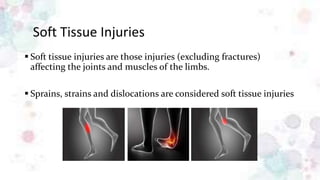
 Soft tissue injuries are those injuries (excluding fractures)
affecting the joints and muscles of the limbs.
 Sprains, strains and dislocations are considered soft tissue injuries
Soft Tissue Injuries
Two classifications when considering soft
tissue injuries:
• – Closed wounds
• – Open wounds
Contusions
 Small blood vessels rupturing
and bleeding into soft tissues
Strains
 An injury or tear to a muscle or tendon is
called a strain.
 Overuse, overstretching of muscle
 Incomplete muscle tear
 Sudden pain
 Local tenderness
Sprain
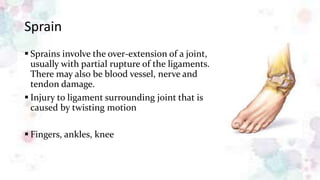
 Sprains involve the over-extension of a joint,
usually with partial rupture of the ligaments.
There may also be blood vessel, nerve and
tendon damage.
 Injury to ligament surrounding joint that is
caused by twisting motion
 Fingers, ankles, knee
Sign and Symptoms
 Sudden pain in the joint
 Loss of power and ability to bear weight
 Bruising
 Swelling
 Site becomes tender, painful to palpate
• If you suspect someone may have a strain or sprain, remember
the acronym RICE
Treatment
 R – Rest
 I – Immobilization
 C – Cold (24-48 hrs)
 E – Elevate
 Elastic compression bandage
 Heat after acute inflammatory stage
 Progressive exercises 2-5 days
 Splinting
 Pain management
 NSAIDS, Narcotics
Subluxation and Dislocation
Subluxation
An incomplete or partial
dislocation of a joint
Examples
 Vertebrae
Dislocation
Bones completely disarticulated.
No parts of articular surfaces are in contact.
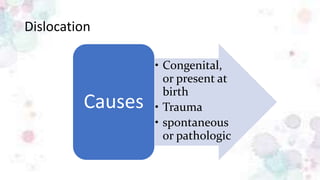
Dislocation
• Congenital,
or present at
birth
• Trauma
• spontaneous
or pathologic
Causes
Signs and Symptoms
 Visibly deformed or out of place
 Swollen or discolored
 Painful
 May have some temporary paralysis of the injured limb
 Change in length of extremity
SPORTS RELATED INJURIES
• Tendinitis
• Prevention
• Inflammation of tendon
• Runners, basketball players
• To help prevent a dislocation
• Take precautions to avoid falls.
• Wear protective gear when you play contact
sports.
Reference
• Brunner, L. S., & Suddarth, D. S. (2004). Text book of Medical-
Surgical nursing (10th e.d). Phi;ladephia: Lippincott.

Soft Tissue Injury.pptx

  • 1.
    Care of thepatient with Soft Tissue Injury Ghaffar Ahmed Lecturer INC
  • 2.
    Objectives  Review thenormal anatomy & physiology of Musculoskeletal system.  Define the soft tissue injury.  Discuss the different types of soft tissue injuries.  Identify etiology and clinical manifestations of soft tissue injury.  Discuss the management of different types of soft tissue injury.  Provide comprehensive discharge teaching to patient with soft tissue injury.
  • 3.
    Parts of theMusculoskeletal System  Skeleton  Muscles  Cartilage  Tendons  Ligaments  Joints, and  Other connective tissues are all part of the musculoskeletal system, which work together to provide the body with support, protection, and movement.
  • 4.
    Musculoskeletal disorders • Musculoskeletaldisorders commonly include: 1. Soft Tissue Injuries (strains and sprains, Dislocations) 2. Fractures (open, closed, long bone, pelvic)
  • 6.
    Soft Tissue Injuries Soft tissue injuries are those injuries (excluding fractures) affecting the joints and muscles of the limbs.  Sprains, strains and dislocations are considered soft tissue injuries
  • 7.
    Soft Tissue Injuries Twoclassifications when considering soft tissue injuries: • – Closed wounds • – Open wounds
  • 8.
    Contusions  Small bloodvessels rupturing and bleeding into soft tissues
  • 9.
    Strains  An injuryor tear to a muscle or tendon is called a strain.  Overuse, overstretching of muscle  Incomplete muscle tear  Sudden pain  Local tenderness
  • 10.
    Sprain  Sprains involvethe over-extension of a joint, usually with partial rupture of the ligaments. There may also be blood vessel, nerve and tendon damage.  Injury to ligament surrounding joint that is caused by twisting motion  Fingers, ankles, knee
  • 11.
    Sign and Symptoms Sudden pain in the joint  Loss of power and ability to bear weight  Bruising  Swelling  Site becomes tender, painful to palpate
  • 12.
    • If yoususpect someone may have a strain or sprain, remember the acronym RICE
  • 13.
    Treatment  R –Rest  I – Immobilization  C – Cold (24-48 hrs)  E – Elevate  Elastic compression bandage  Heat after acute inflammatory stage  Progressive exercises 2-5 days  Splinting  Pain management  NSAIDS, Narcotics
  • 14.
  • 15.
    Subluxation An incomplete orpartial dislocation of a joint Examples  Vertebrae
  • 16.
    Dislocation Bones completely disarticulated. Noparts of articular surfaces are in contact.
  • 17.
    Dislocation • Congenital, or presentat birth • Trauma • spontaneous or pathologic Causes
  • 18.
    Signs and Symptoms Visibly deformed or out of place  Swollen or discolored  Painful  May have some temporary paralysis of the injured limb  Change in length of extremity
  • 19.
    SPORTS RELATED INJURIES •Tendinitis • Prevention • Inflammation of tendon • Runners, basketball players • To help prevent a dislocation • Take precautions to avoid falls. • Wear protective gear when you play contact sports.
  • 23.
    Reference • Brunner, L.S., & Suddarth, D. S. (2004). Text book of Medical- Surgical nursing (10th e.d). Phi;ladephia: Lippincott.