Ahsanullah University of
Science & Technology

Pre-stressed Concrete Sessional
CE 416
Course Teacher:
Munshi Galib Muktadir
Lecturer
Department of Civil Engineering
Presentation on
Presented by:
Mohammed Shakib Rahman
Roll No. : 10.01.03.072
Introduction:
Influence of a different nature cause
concrete, even when free of any
external loading, to undergo
deformations and volume changes. The
most important of these are shrinkage
and the effects of temperature
variations.
Effect of Shrinkage
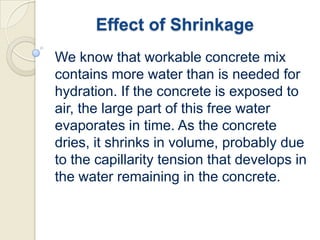
We know that workable concrete mix
contains more water than is needed for
hydration. If the concrete is exposed to
air, the large part of this free water
evaporates in time. As the concrete
dries, it shrinks in volume, probably due
to the capillarity tension that develops in
the water remaining in the concrete.
Effects:
Shrinkage,

which continues at a
decreasing rate for several months,
depending on the configuration of the
member, is a detrimental property of
concrete in several respects.
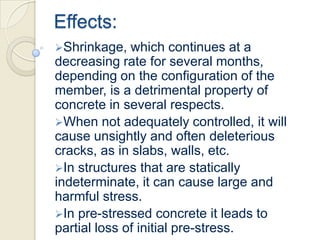
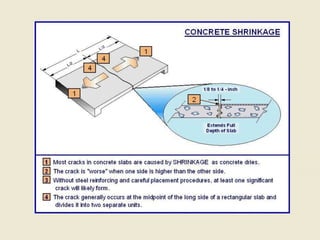
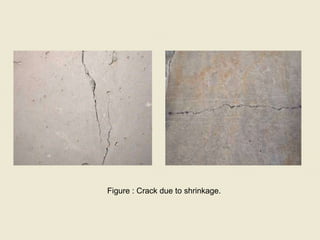
When not adequately controlled, it will
cause unsightly and often deleterious
cracks, as in slabs, walls, etc.
In structures that are statically
indeterminate, it can cause large and
harmful stress.
In pre-stressed concrete it leads to
partial loss of initial pre-stress.
Figure : Crack due to shrinkage.
Determination of the amount of final shrinkage:

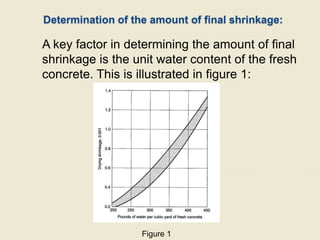
A key factor in determining the amount of final
shrinkage is the unit water content of the fresh
concrete. This is illustrated in figure 1:

Figure 1
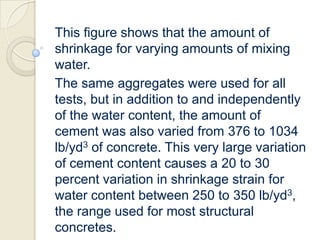
This figure shows that the amount of
shrinkage for varying amounts of mixing
water.
The same aggregates were used for all
tests, but in addition to and independently
of the water content, the amount of
cement was also varied from 376 to 1034
lb/yd3 of concrete. This very large variation
of cement content causes a 20 to 30
percent variation in shrinkage strain for
water content between 250 to 350 lb/yd3,
the range used for most structural
concretes.
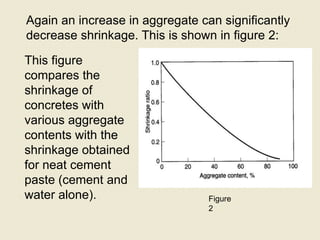
Again an increase in aggregate can significantly
decrease shrinkage. This is shown in figure 2:
This figure
compares the
shrinkage of
concretes with
various aggregate
contents with the
shrinkage obtained
for neat cement
paste (cement and
water alone).

Figure
2
Value of final shrinkage for ordinary cements
are generally on the order of 400*10-6 to
800*10-6, depending on the initial water
content, ambient temperature and humidity
conditions, and the nature of aggregate.
Highly absorptive aggregates, such as some
sandstones and slates, result in shrinkage
values 2 and more times those obtained with
less absorptive materials, such as granites
and some lime-stones. Some light weight
aggregates, in view of their great porosity,
easily result in much large shrinkage values
than ordinary concrete.
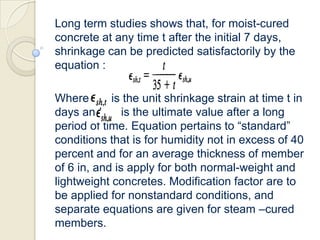
Long term studies shows that, for moist-cured
concrete at any time t after the initial 7 days,
shrinkage can be predicted satisfactorily by the
equation :
Where
is the unit shrinkage strain at time t in
days and
is the ultimate value after a long
period of time. Equation pertains to “standard”
conditions that is for humidity not in excess of 40
percent and for an average thickness of member
of 6 in, and is apply for both normal-weight and
lightweight concretes. Modification factor are to
be applied for nonstandard conditions, and
separate equations are given for steam –cured
members.
Control of shrinkage:
It is evident that an effective means of reducing
shrinkage involves both a reduction in water
content and an increase in aggregate content. In
addition, prolonged and careful curing is
beneficial for shrinkage control.
For structures in which a reduction in cracking is
of particular importance, such as bridge decks,
pavement slabs, and liquid storage tanks, the
use of expansive cement concrete is
appropriate. Of the three types of expansive
cements produced, only type K is commercially
available in the United States, it is about 20
percent more expensive than ordinary Portland
cement.
Effect of temperature change
Like most other materials, concrete expands
with increasing temperature and contracts
with decreasing temperature. The effects of
such volume changes are similar to those
caused by shrinkage that is temperature
contraction can lead to objectionable
cracking, particularly when superimposed on
shrinkage. In indeterminate structures,
deformation due to temperature changes can
cause large and occasionally harmful
stresses.
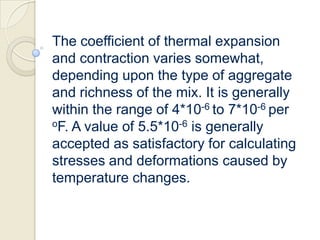
The coefficient of thermal expansion
and contraction varies somewhat,
depending upon the type of aggregate
and richness of the mix. It is generally
within the range of 4*10-6 to 7*10-6 per
oF. A value of 5.5*10-6 is generally
accepted as satisfactory for calculating
stresses and deformations caused by
temperature changes.
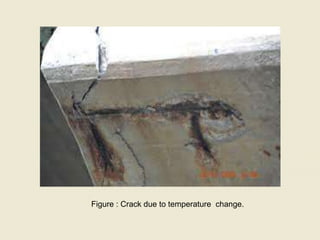
Figure : Crack due to temperature change.

Temperature and shrinkage effect on structural analysis - 10.01.03.072

  • 1.
    Ahsanullah University of Science& Technology Pre-stressed Concrete Sessional CE 416 Course Teacher: Munshi Galib Muktadir Lecturer Department of Civil Engineering
  • 2.
  • 3.
    Presented by: Mohammed ShakibRahman Roll No. : 10.01.03.072
  • 4.
    Introduction: Influence of adifferent nature cause concrete, even when free of any external loading, to undergo deformations and volume changes. The most important of these are shrinkage and the effects of temperature variations.
  • 5.
    Effect of Shrinkage Weknow that workable concrete mix contains more water than is needed for hydration. If the concrete is exposed to air, the large part of this free water evaporates in time. As the concrete dries, it shrinks in volume, probably due to the capillarity tension that develops in the water remaining in the concrete.
  • 6.
    Effects: Shrinkage, which continues ata decreasing rate for several months, depending on the configuration of the member, is a detrimental property of concrete in several respects. When not adequately controlled, it will cause unsightly and often deleterious cracks, as in slabs, walls, etc. In structures that are statically indeterminate, it can cause large and harmful stress. In pre-stressed concrete it leads to partial loss of initial pre-stress.
  • 8.
    Figure : Crackdue to shrinkage.
  • 9.
    Determination of theamount of final shrinkage: A key factor in determining the amount of final shrinkage is the unit water content of the fresh concrete. This is illustrated in figure 1: Figure 1
  • 10.
    This figure showsthat the amount of shrinkage for varying amounts of mixing water. The same aggregates were used for all tests, but in addition to and independently of the water content, the amount of cement was also varied from 376 to 1034 lb/yd3 of concrete. This very large variation of cement content causes a 20 to 30 percent variation in shrinkage strain for water content between 250 to 350 lb/yd3, the range used for most structural concretes.
  • 11.
    Again an increasein aggregate can significantly decrease shrinkage. This is shown in figure 2: This figure compares the shrinkage of concretes with various aggregate contents with the shrinkage obtained for neat cement paste (cement and water alone). Figure 2
  • 12.
    Value of finalshrinkage for ordinary cements are generally on the order of 400*10-6 to 800*10-6, depending on the initial water content, ambient temperature and humidity conditions, and the nature of aggregate. Highly absorptive aggregates, such as some sandstones and slates, result in shrinkage values 2 and more times those obtained with less absorptive materials, such as granites and some lime-stones. Some light weight aggregates, in view of their great porosity, easily result in much large shrinkage values than ordinary concrete.
  • 13.
    Long term studiesshows that, for moist-cured concrete at any time t after the initial 7 days, shrinkage can be predicted satisfactorily by the equation : Where is the unit shrinkage strain at time t in days and is the ultimate value after a long period of time. Equation pertains to “standard” conditions that is for humidity not in excess of 40 percent and for an average thickness of member of 6 in, and is apply for both normal-weight and lightweight concretes. Modification factor are to be applied for nonstandard conditions, and separate equations are given for steam –cured members.
  • 14.
    Control of shrinkage: Itis evident that an effective means of reducing shrinkage involves both a reduction in water content and an increase in aggregate content. In addition, prolonged and careful curing is beneficial for shrinkage control. For structures in which a reduction in cracking is of particular importance, such as bridge decks, pavement slabs, and liquid storage tanks, the use of expansive cement concrete is appropriate. Of the three types of expansive cements produced, only type K is commercially available in the United States, it is about 20 percent more expensive than ordinary Portland cement.
  • 15.
    Effect of temperaturechange Like most other materials, concrete expands with increasing temperature and contracts with decreasing temperature. The effects of such volume changes are similar to those caused by shrinkage that is temperature contraction can lead to objectionable cracking, particularly when superimposed on shrinkage. In indeterminate structures, deformation due to temperature changes can cause large and occasionally harmful stresses.
  • 16.
    The coefficient ofthermal expansion and contraction varies somewhat, depending upon the type of aggregate and richness of the mix. It is generally within the range of 4*10-6 to 7*10-6 per oF. A value of 5.5*10-6 is generally accepted as satisfactory for calculating stresses and deformations caused by temperature changes.
  • 17.
    Figure : Crackdue to temperature change.