BRIEF STUDY OF
TELECOM INDUSTRY
Prepared By:
Abhishek Pachisia
MBA - IT
Brief Introduction
 Second Largest in the world based on number of users.
 Lowest Call Tariff
 Contribute to US$ 400 billion in terms of gross domestic product (GDP).
 Supported by INSAT (Indian National Satellite System)
 World’s Most Competitive and one of the Fasters Growing Telecom Market.
 Top Companies are
 Airtel
 Vodafone
 Idea
 Grew by 10.8% in FY 13-14.
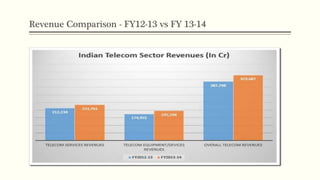
Revenue Comparison - FY12-13 vs FY 13-14
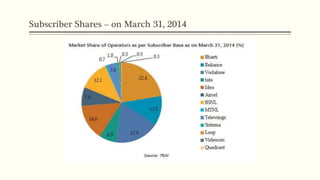
Subscriber Shares – on March 31, 2014
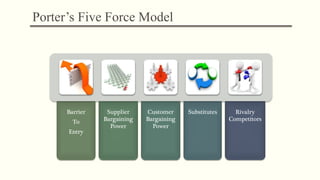
Barrier
To
Entry
Supplier
Bargaining
Power
Customer
Bargaining
Power
Substitutes Rivalry
Competitors
Porter’s Five Force Model
Barrier to Entry
• Capital/ Finance
• Telecommunication
Licenses
• Established Service
Providers
• Operating Skills
• Scarce Management
experience.
• Loyalty to old Service
Providers.
• ARPU Declining
• Access to Optical Fibre
Network
Supplier Bargain Power
• Can be:
• Mobile Tower Companies
• SIM cards
• Mobile Phone Handsets
• Less Power
• Tower Companies
• Telecos
• ITTC
• Limited Talented managers
and engineers
Customer Bargain Power
• More Choices
• Lot of alternatives
• Lack of Interest to switch
• Sensible to Pricing
• No Differentiator as such.
• Competition between
buyers
• Size and concentration of
buyers
Substitutes
• Cable TV’s
• Broadband Internet
Services
• Satellite Links
• Railway and Energy Utility
Companies
• Internet Telephony
• Performance of Substitutes
Rivalry Competitors
• Concentration – Market
Share
• Value Added Services
• Low Profits
• Ex: Airtel, Vodafone,
Reliance, Idea
• Swift Obsolescence
• Global Presence
• Marketing Network
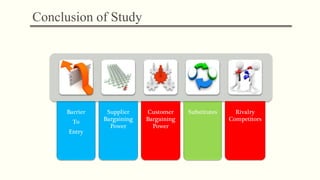
Barrier
To
Entry
Supplier
Bargaining
Power
Customer
Bargaining
Power
Substitutes Rivalry
Competitors
Conclusion of Study
Telecom Industry

Telecom Industry