Strategic Alignment
Model (SAM)
BY:
ABHISHEK PACHISIA
MBA – IT (A)
What is SAM?
“Strategic Alignment between Business and IT occurs when IT is used
dynamically to create and exploit Business opportunities. It can be used
then to transform business processes and also to create business
dislocations in the market place.” – Boar (1994)
• Framework
 Business & IT Strategy
• Venkatraman, Henderson and Oldach – 1993
• Analysing & Undestanding Strategic Alignment.
Assumptions
• Economic Performance Ability of Management
• Strategic fit is inherently dynamic
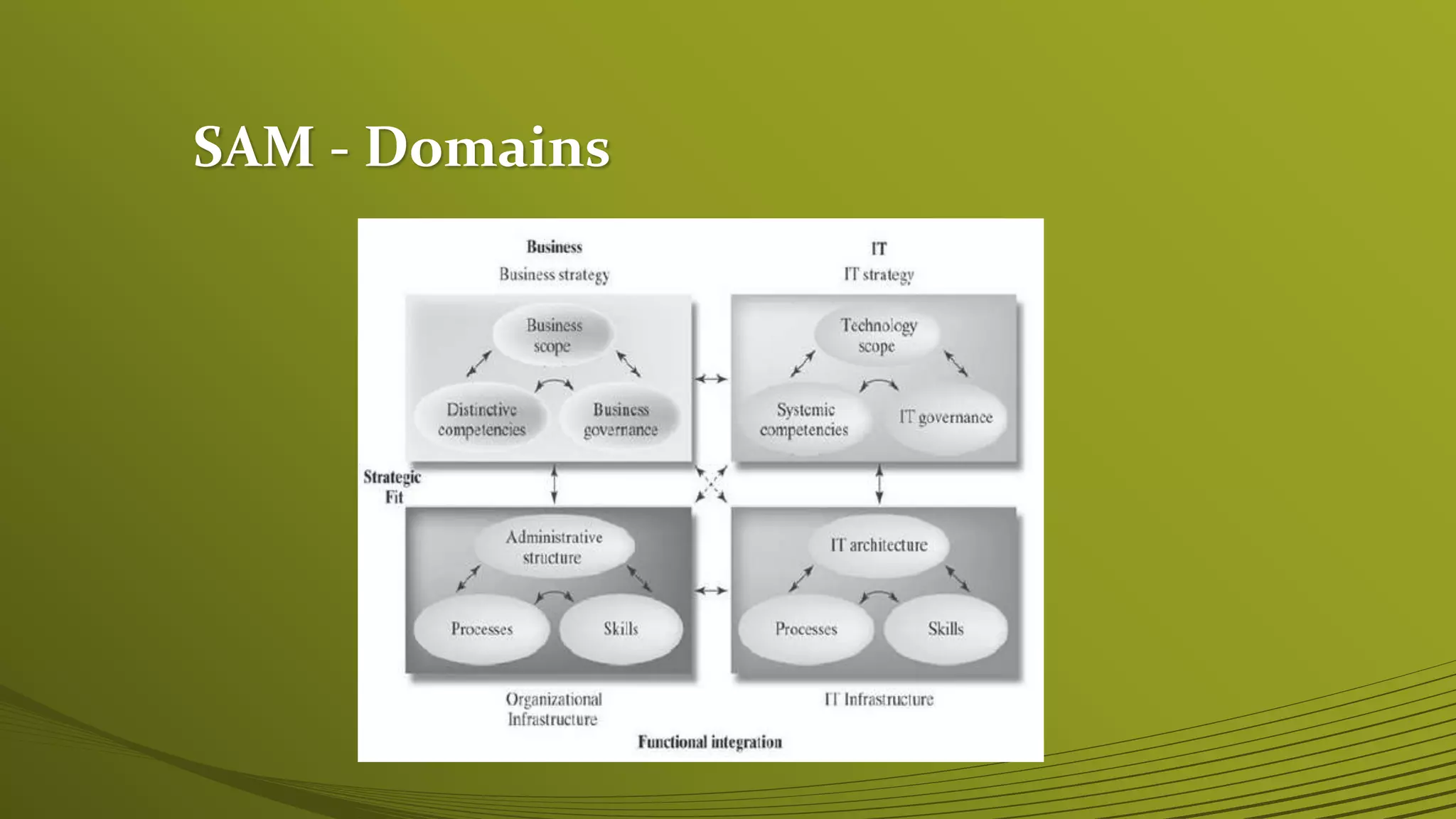
SAM - Domains
Strategic Fit and Functional
Integration
• All Quadrants work as a whole unit
• Strategic Fit
• Determine Infrastructure of Business
• Functional Integration
• Information Technology
• Alignment of the Business
Perspectives of SAM
• Strategy Execution
• Technology Transformation
• Competitive Potential
• Service Level
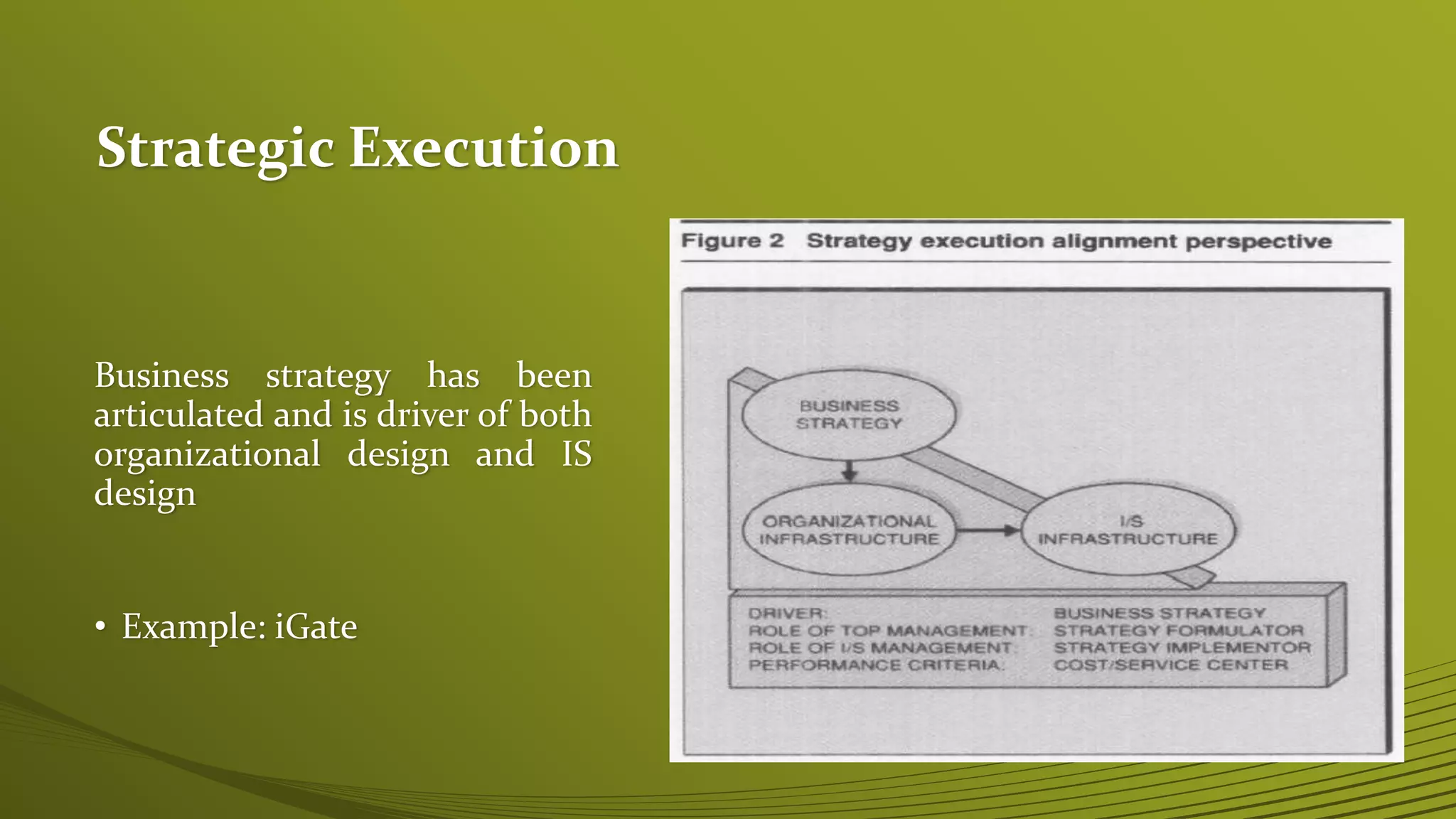
Strategic Execution
Business strategy has been
articulated and is driver of both
organizational design and IS
design
• Example: iGate
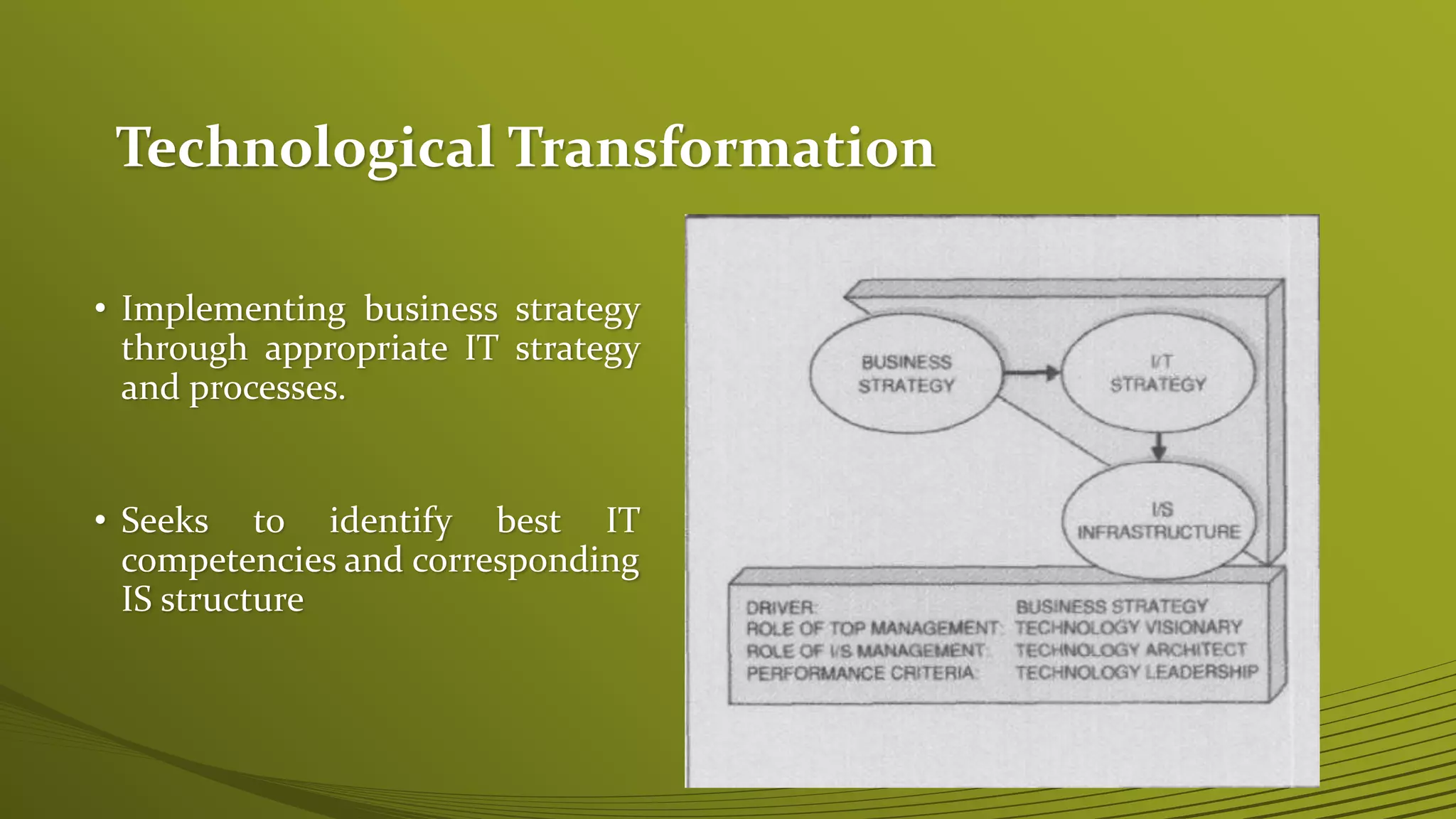
Technological Transformation
• Implementing business strategy
through appropriate IT strategy
and processes.
• Seeks to identify best IT
competencies and corresponding
IS structure
Competitive Potential
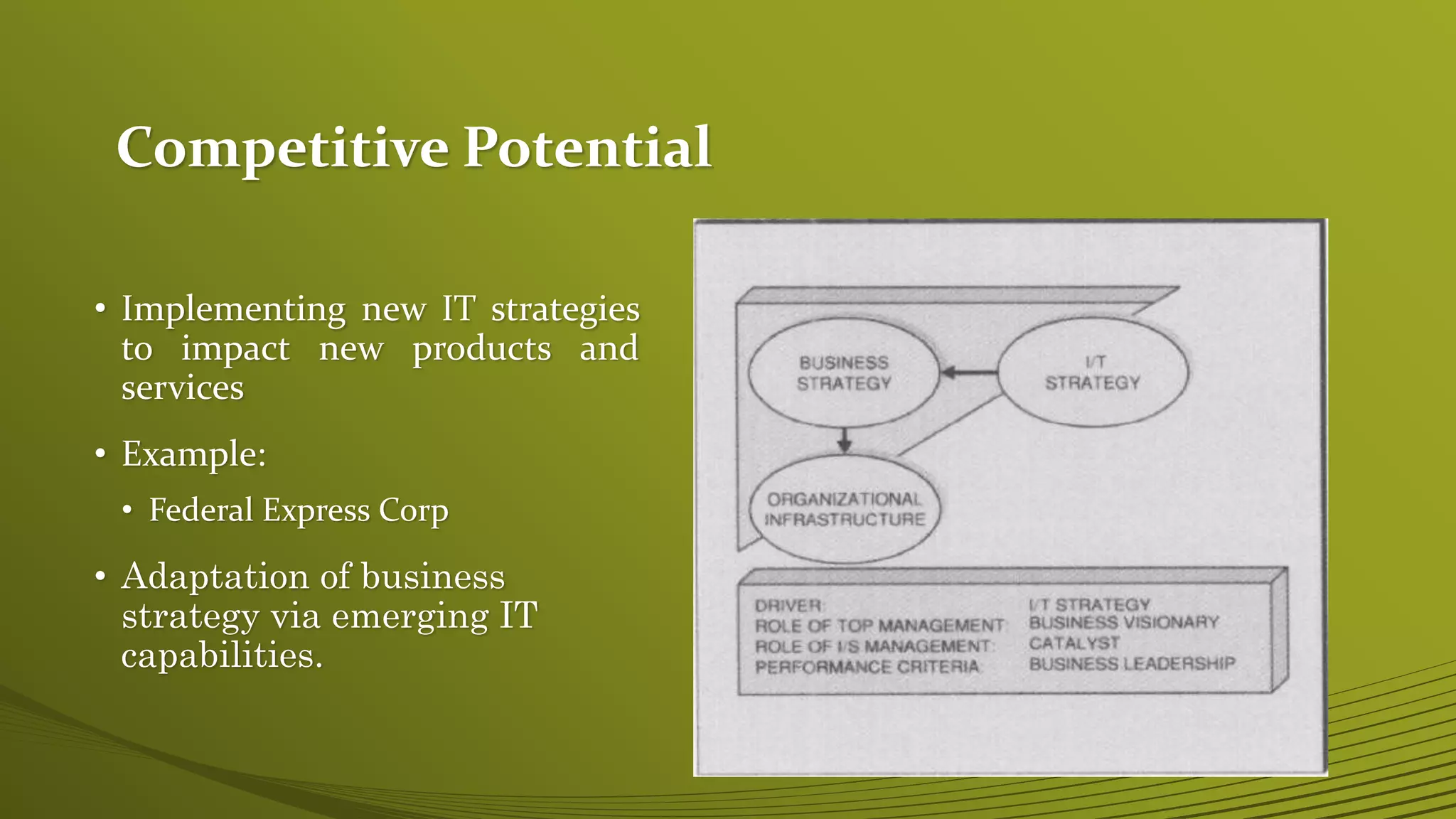
• Implementing new IT strategies
to impact new products and
services
• Example:
• Federal Express Corp
• Adaptation of business
strategy via emerging IT
capabilities.
Service Level
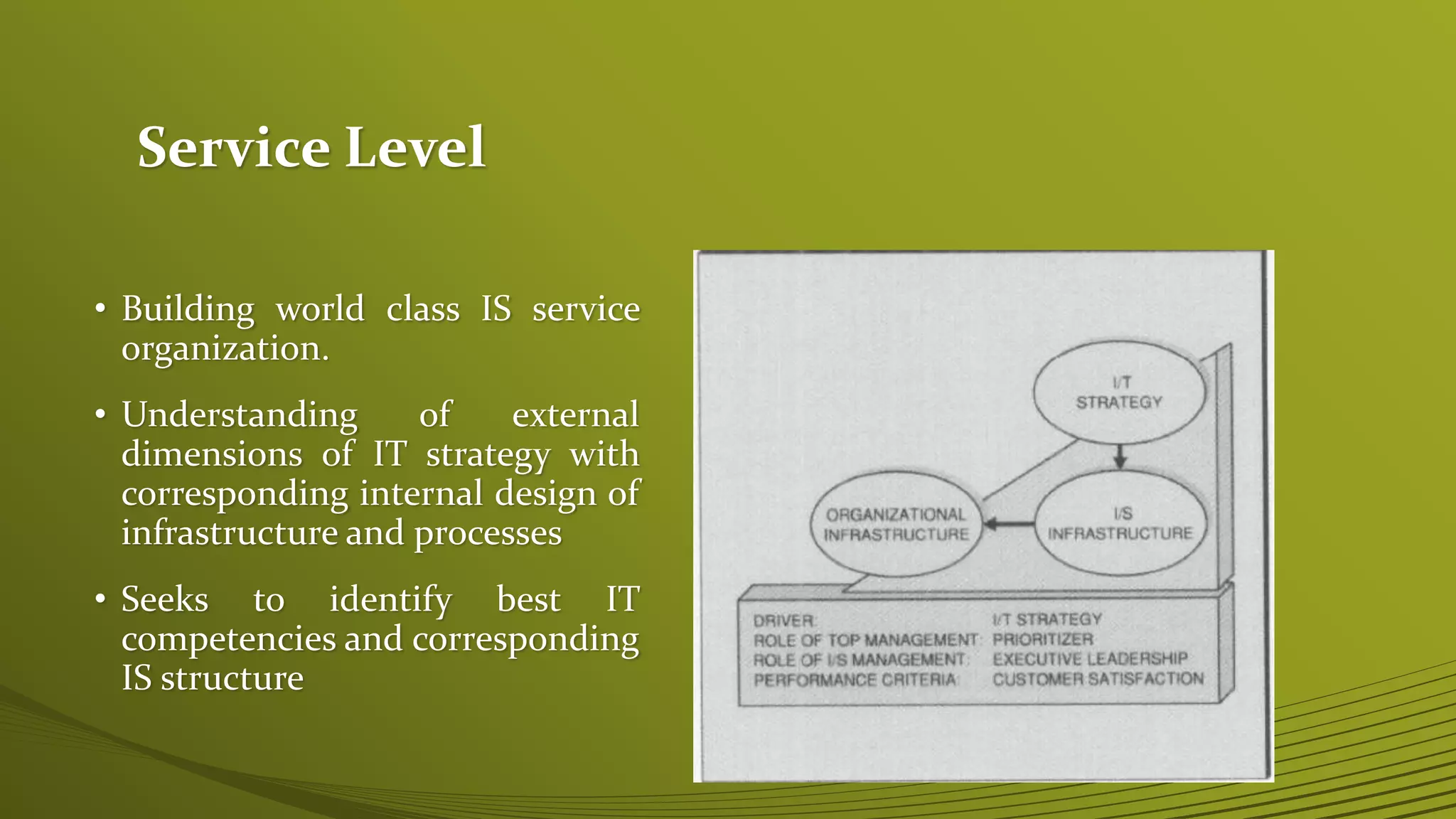
• Building world class IS service
organization.
• Understanding of external
dimensions of IT strategy with
corresponding internal design of
infrastructure and processes
• Seeks to identify best IT
competencies and corresponding
IS structure

Strategic alignment model (SAM)

  • 1.
  • 2.
    What is SAM? “StrategicAlignment between Business and IT occurs when IT is used dynamically to create and exploit Business opportunities. It can be used then to transform business processes and also to create business dislocations in the market place.” – Boar (1994) • Framework  Business & IT Strategy • Venkatraman, Henderson and Oldach – 1993 • Analysing & Undestanding Strategic Alignment.
  • 3.
    Assumptions • Economic PerformanceAbility of Management • Strategic fit is inherently dynamic
  • 4.
  • 5.
    Strategic Fit andFunctional Integration • All Quadrants work as a whole unit • Strategic Fit • Determine Infrastructure of Business • Functional Integration • Information Technology • Alignment of the Business
  • 6.
    Perspectives of SAM •Strategy Execution • Technology Transformation • Competitive Potential • Service Level
  • 7.
    Strategic Execution Business strategyhas been articulated and is driver of both organizational design and IS design • Example: iGate
  • 8.
    Technological Transformation • Implementingbusiness strategy through appropriate IT strategy and processes. • Seeks to identify best IT competencies and corresponding IS structure
  • 9.
    Competitive Potential • Implementingnew IT strategies to impact new products and services • Example: • Federal Express Corp • Adaptation of business strategy via emerging IT capabilities.
  • 10.
    Service Level • Buildingworld class IS service organization. • Understanding of external dimensions of IT strategy with corresponding internal design of infrastructure and processes • Seeks to identify best IT competencies and corresponding IS structure

Editor's Notes

  • #3 Most popular Model.
  • #6 Strategic Fit refers to use of strategy to determine Infrastructure of Business Functional Integration is related to Information Technology and Alignment of the business. How choices are made in IT domain those made impact in Business Domain
  • #10 Overnight delivery services
  • #11 Role of Business Strategy is Indirect. Often viewed as necessary to effective use of IT resources. (but not sufficient ) Operating guidelines from top management. To IS manager