IDEA CELLULAR FOVE FORCE MODEL ANALYSIS

                         Submitted by: Shubhadeep Ghosh
Introduction of Idea Cellular:
       4th largest wireless carrier in India with 100million customers.
       Has 12% of market share all over Indian telecom industry.
       Gained 10,31,380 customers after launching MNP (mobile Number Portability) and before 31st
       August,2011.

Bargaining power of Customers:
   1. As it is offering services at a cheaper rate, buyers bargaining power is very low.
   2. As it is offering internet service (3G and 2G) at a cheaper rate, the customers want to switch to
      idea because of video conferencing (e.g. Skype, Viber), messaging clients (E.g. Whatsapp).
   3. Idea is the only telecom. Company to provide unlimited 3G connection at Rs.949.
   4. Due to launching mobile services at cheaper rate by Airtel, DOCOMO, Uninor and after
      launching MNP (Mobile Number Portability) , buyers have more choice and their bargaining
      powers became high.

Bargaining Power of Suppliers:
   1. For tower making Idea Cellular consumes Irons, aluminum, electric wires in bulk quantities, so
      the suppliers want to supply these materials to Idea cellular.
   2. Idea has a Tie-up with Nokia, so there is less bargain power of Nokia.


Threat of new entrants:
   1. VPN
   2. Satellite phone calls
   3. 4G (upcoming threat as it is not launched in India)


Threat of substitute products:
   1. CDMA mobiles, as they can offer plans at cheaper rate with lower cost.
   2. Wi-Fi : As most of the offices and complexes have Wi-Fi facility, consumers like call from the
      other VOIPs (Voice Over Internet Protocol) like Skype, Google talk, free messaging etc.
   3. BSNL VSAT (very small aperture terminal) technology.
4. MPLS (Multi Protocol Label Switching) gives network operators a great deal of flexibility to divert
      and route traffic around link failures, congestion, and bottlenecks.
   5. BroadBand.
   6.

Competitor Analysis:
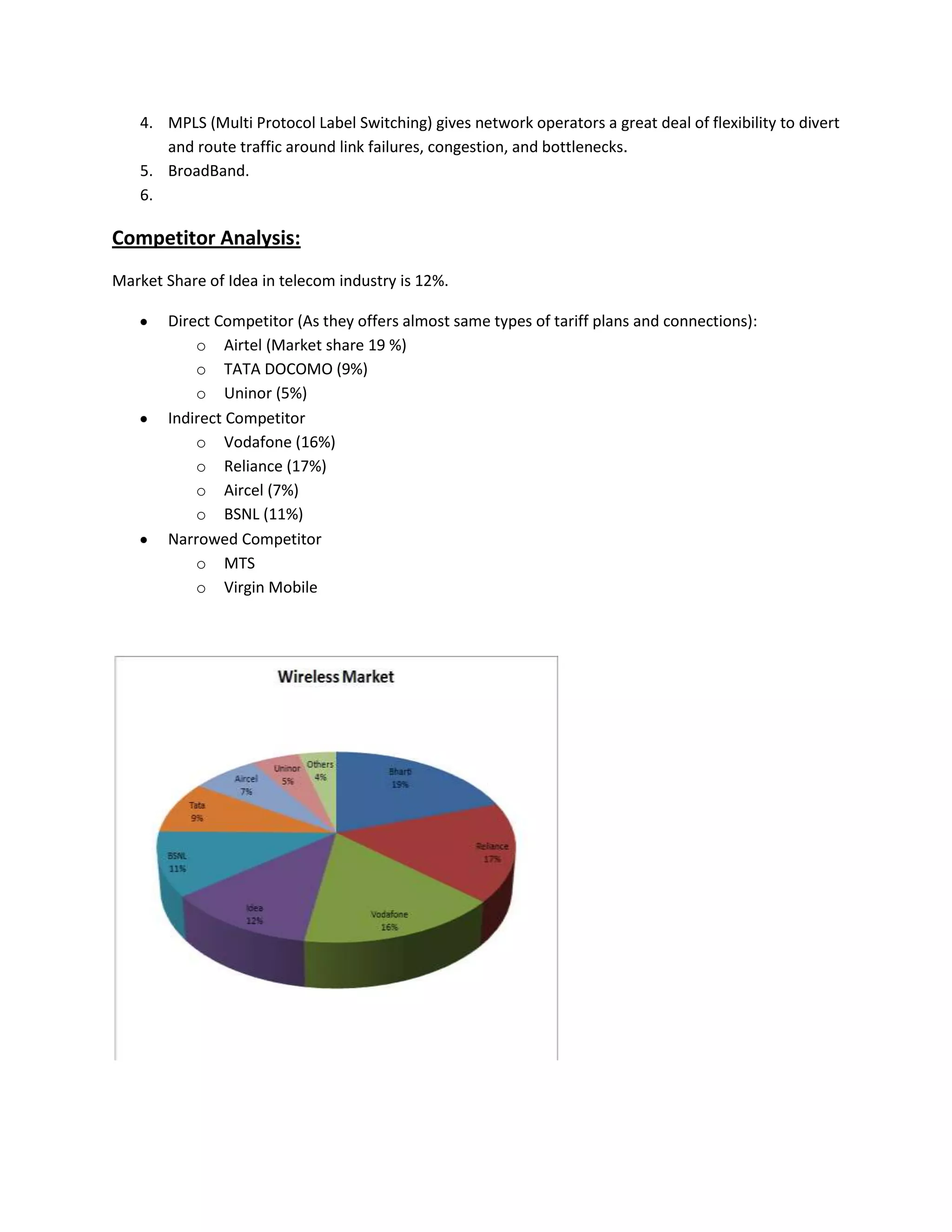
Market Share of Idea in telecom industry is 12%.

       Direct Competitor (As they offers almost same types of tariff plans and connections):
           o Airtel (Market share 19 %)
           o TATA DOCOMO (9%)
           o Uninor (5%)
       Indirect Competitor
           o Vodafone (16%)
           o Reliance (17%)
           o Aircel (7%)
           o BSNL (11%)
       Narrowed Competitor
           o MTS
           o Virgin Mobile

Idea cellular fove force model analysis

  • 1.
    IDEA CELLULAR FOVEFORCE MODEL ANALYSIS Submitted by: Shubhadeep Ghosh Introduction of Idea Cellular: 4th largest wireless carrier in India with 100million customers. Has 12% of market share all over Indian telecom industry. Gained 10,31,380 customers after launching MNP (mobile Number Portability) and before 31st August,2011. Bargaining power of Customers: 1. As it is offering services at a cheaper rate, buyers bargaining power is very low. 2. As it is offering internet service (3G and 2G) at a cheaper rate, the customers want to switch to idea because of video conferencing (e.g. Skype, Viber), messaging clients (E.g. Whatsapp). 3. Idea is the only telecom. Company to provide unlimited 3G connection at Rs.949. 4. Due to launching mobile services at cheaper rate by Airtel, DOCOMO, Uninor and after launching MNP (Mobile Number Portability) , buyers have more choice and their bargaining powers became high. Bargaining Power of Suppliers: 1. For tower making Idea Cellular consumes Irons, aluminum, electric wires in bulk quantities, so the suppliers want to supply these materials to Idea cellular. 2. Idea has a Tie-up with Nokia, so there is less bargain power of Nokia. Threat of new entrants: 1. VPN 2. Satellite phone calls 3. 4G (upcoming threat as it is not launched in India) Threat of substitute products: 1. CDMA mobiles, as they can offer plans at cheaper rate with lower cost. 2. Wi-Fi : As most of the offices and complexes have Wi-Fi facility, consumers like call from the other VOIPs (Voice Over Internet Protocol) like Skype, Google talk, free messaging etc. 3. BSNL VSAT (very small aperture terminal) technology.
  • 2.
    4. MPLS (MultiProtocol Label Switching) gives network operators a great deal of flexibility to divert and route traffic around link failures, congestion, and bottlenecks. 5. BroadBand. 6. Competitor Analysis: Market Share of Idea in telecom industry is 12%. Direct Competitor (As they offers almost same types of tariff plans and connections): o Airtel (Market share 19 %) o TATA DOCOMO (9%) o Uninor (5%) Indirect Competitor o Vodafone (16%) o Reliance (17%) o Aircel (7%) o BSNL (11%) Narrowed Competitor o MTS o Virgin Mobile