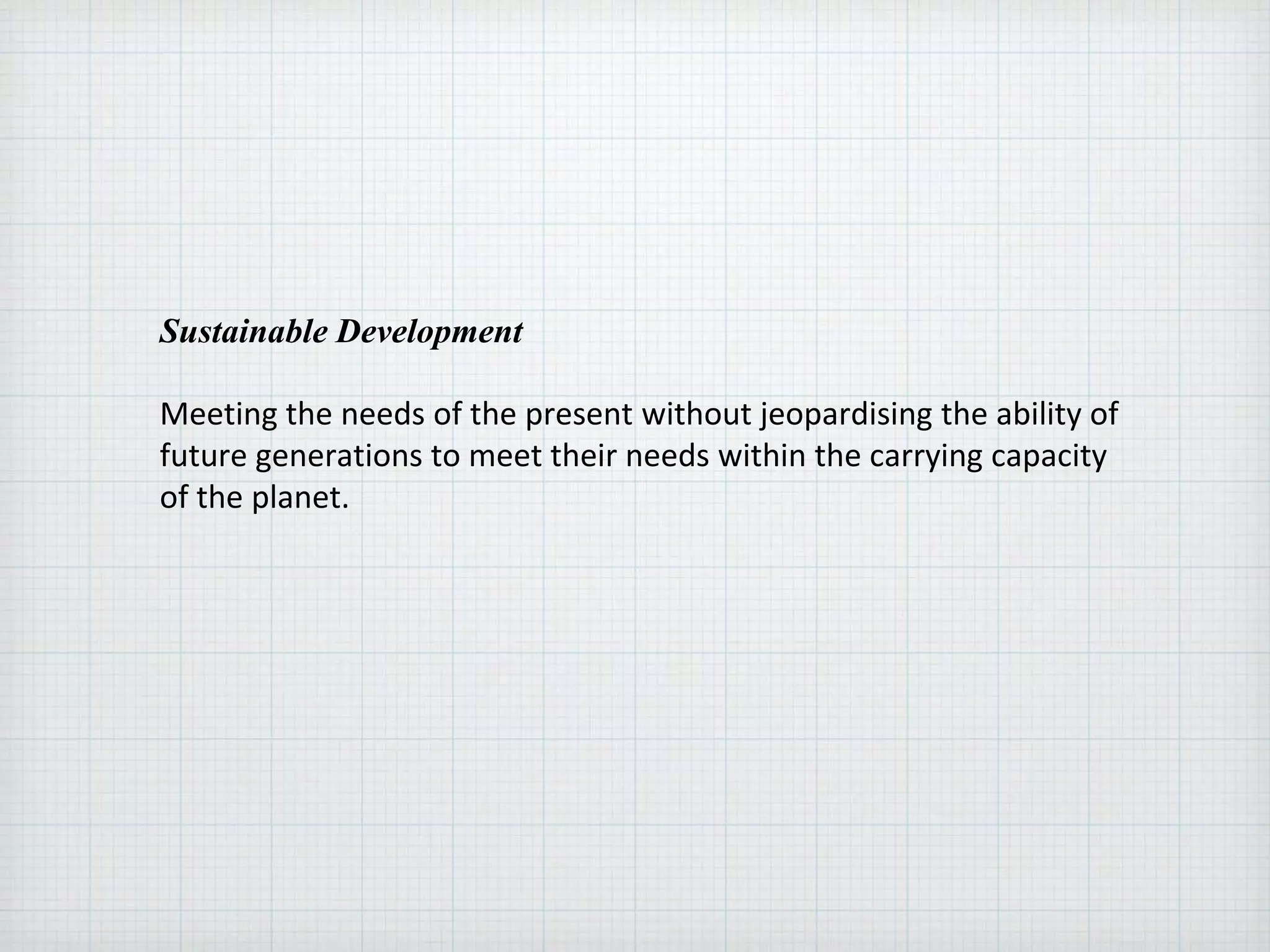
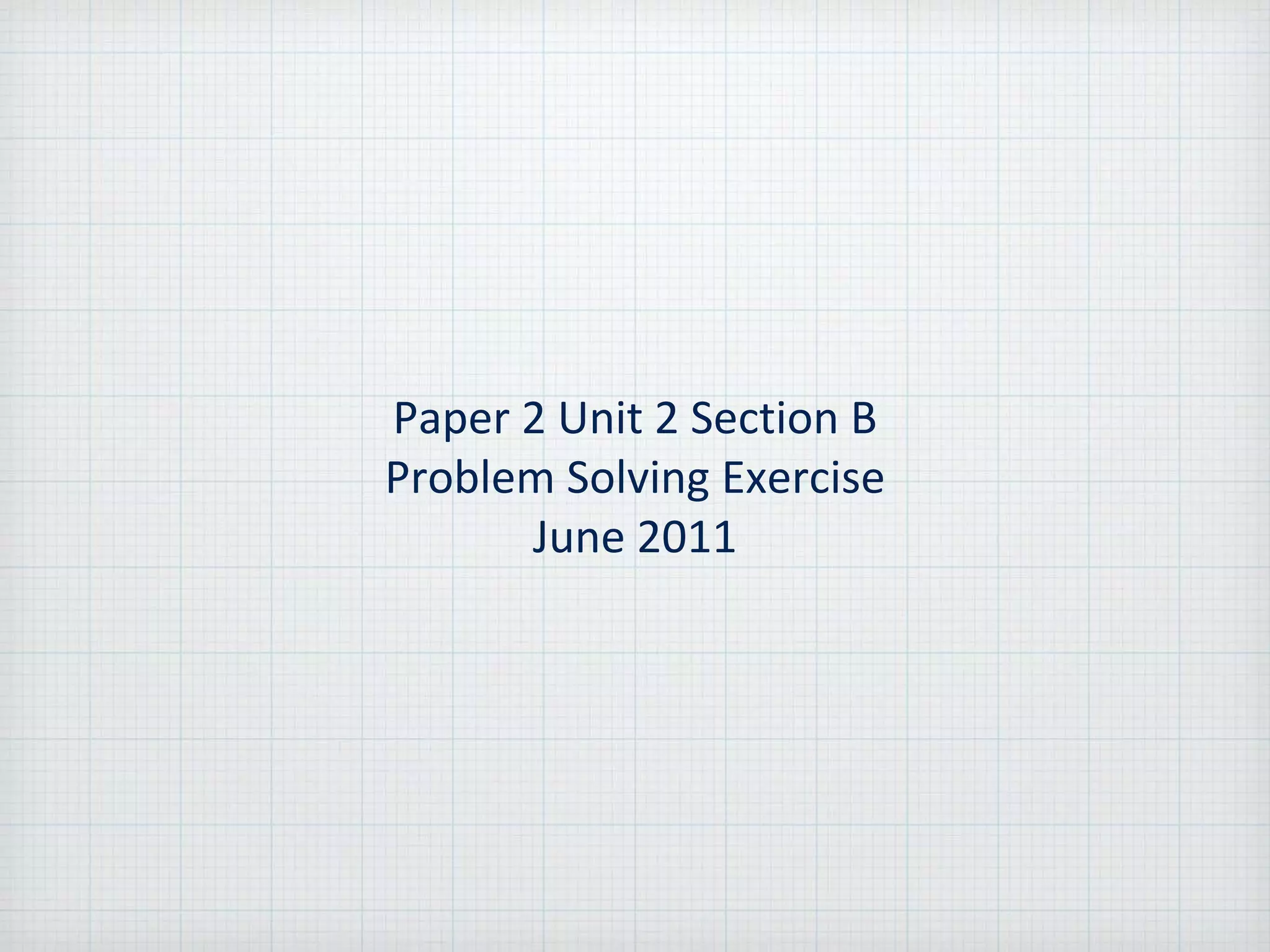
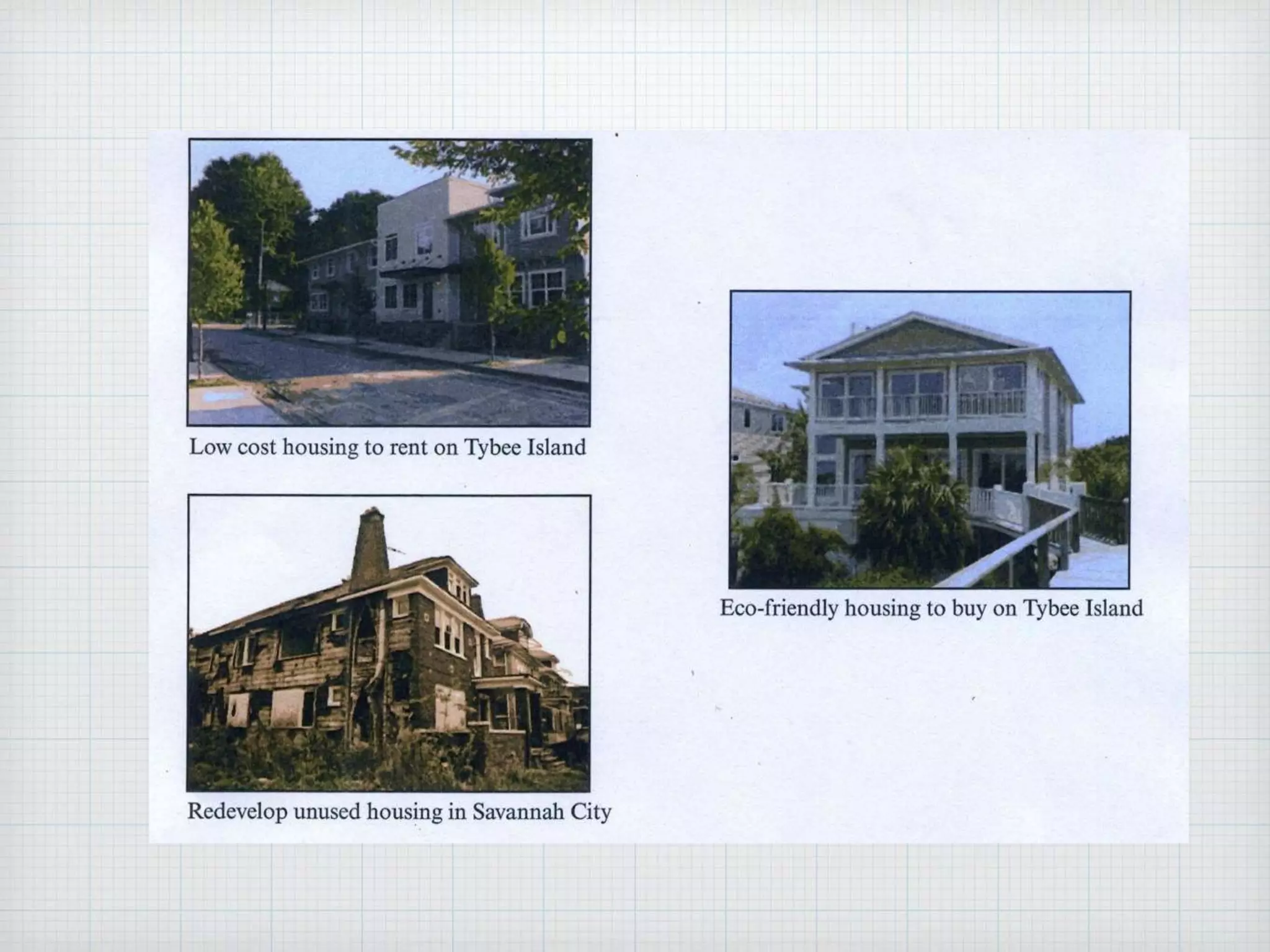
Sustainable Development
Meeting the needs of the present without jeopardising the ability of
future generations to meet their needs within the carrying capacity
of the planet.
Paper 2 Unit 2 Section B
Problem Solving Exercise
June 2011
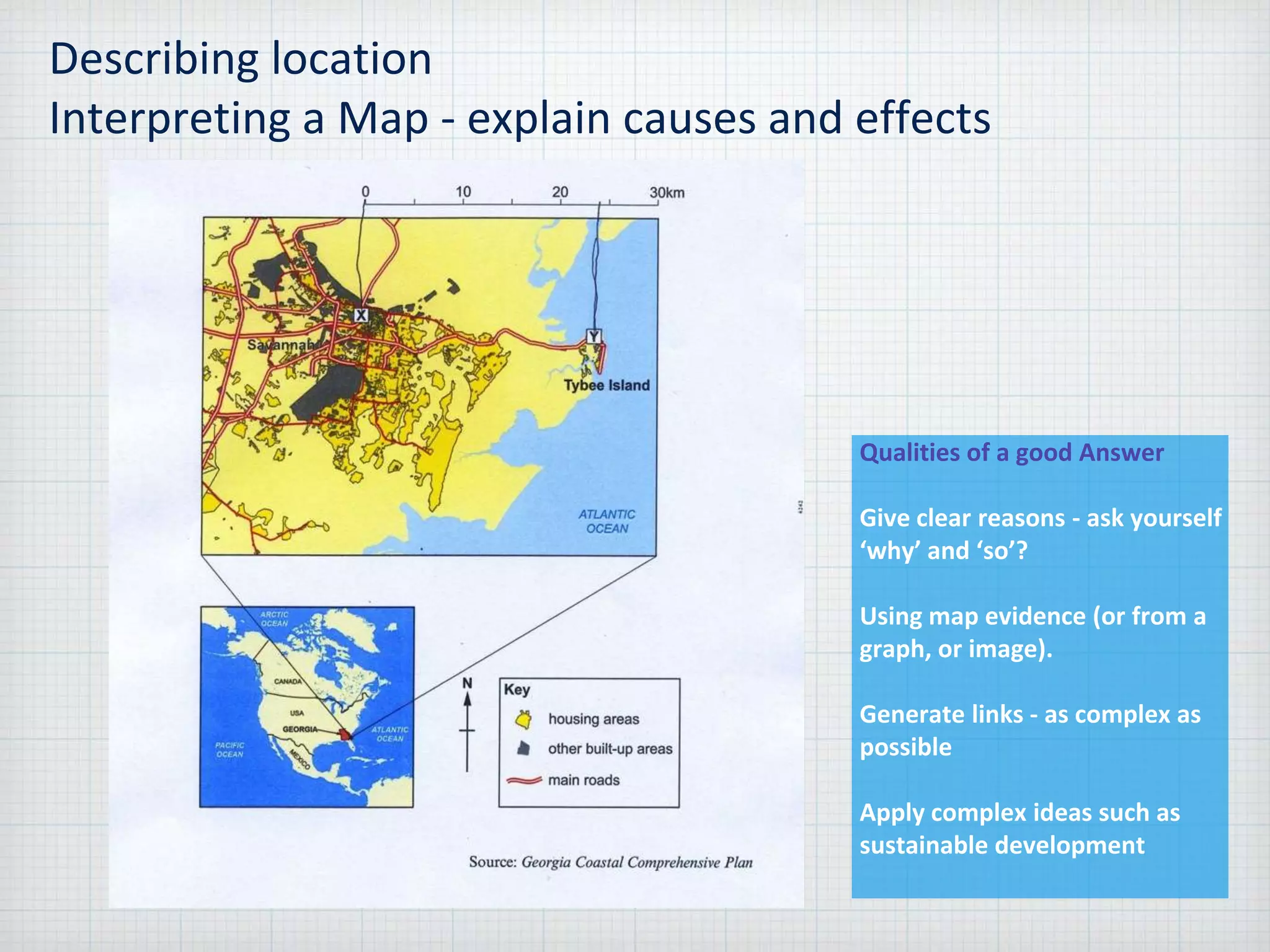
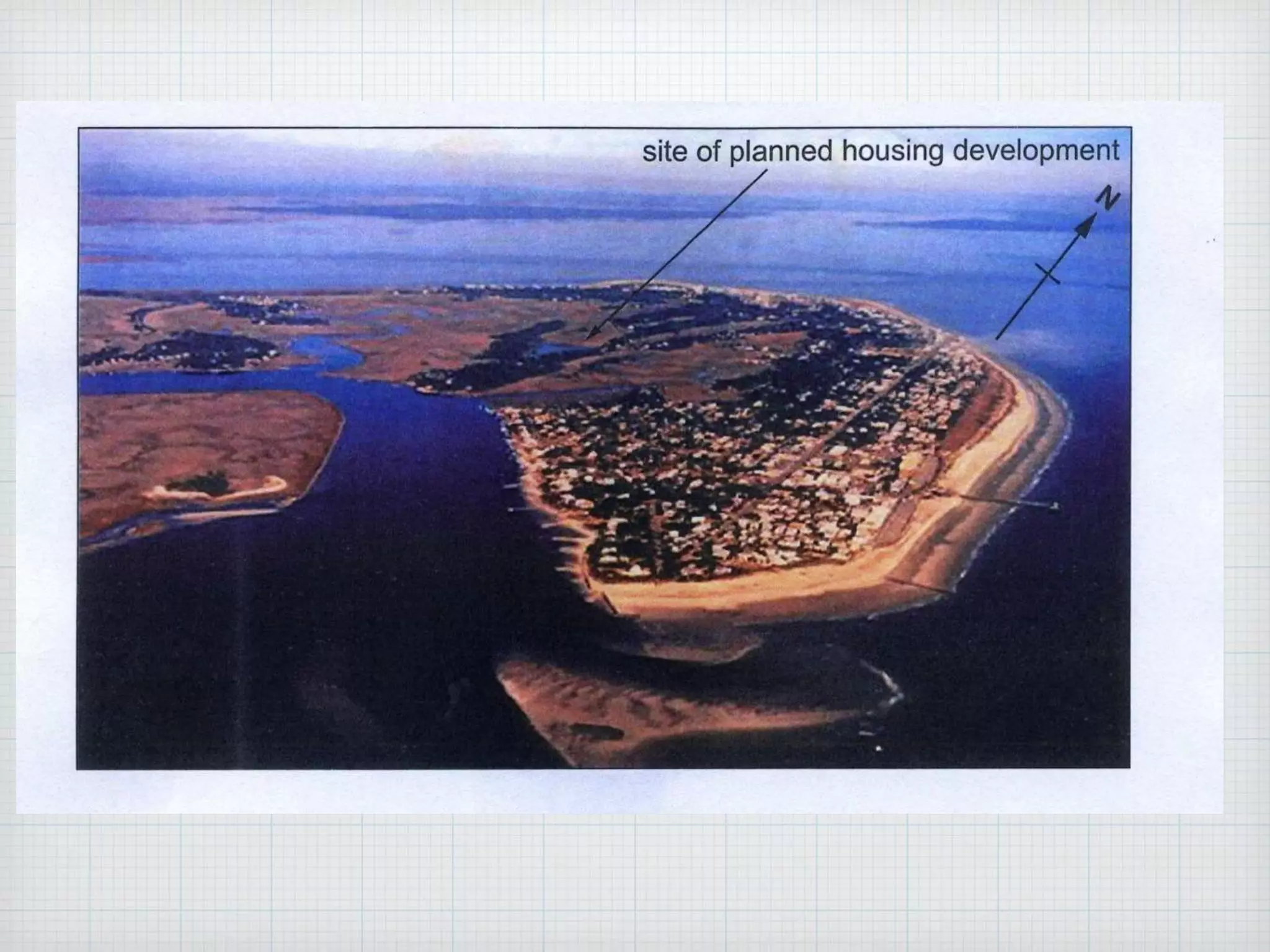
Describing location
Interpreting a Map - explain causes and effects
Qualities of a good Answer
Give clear reasons - ask yourself
‘why’ and ‘so’?
Using map evidence (or from a
graph, or image).
Generate links - as complex as
possible
Apply complex ideas such as
sustainable development
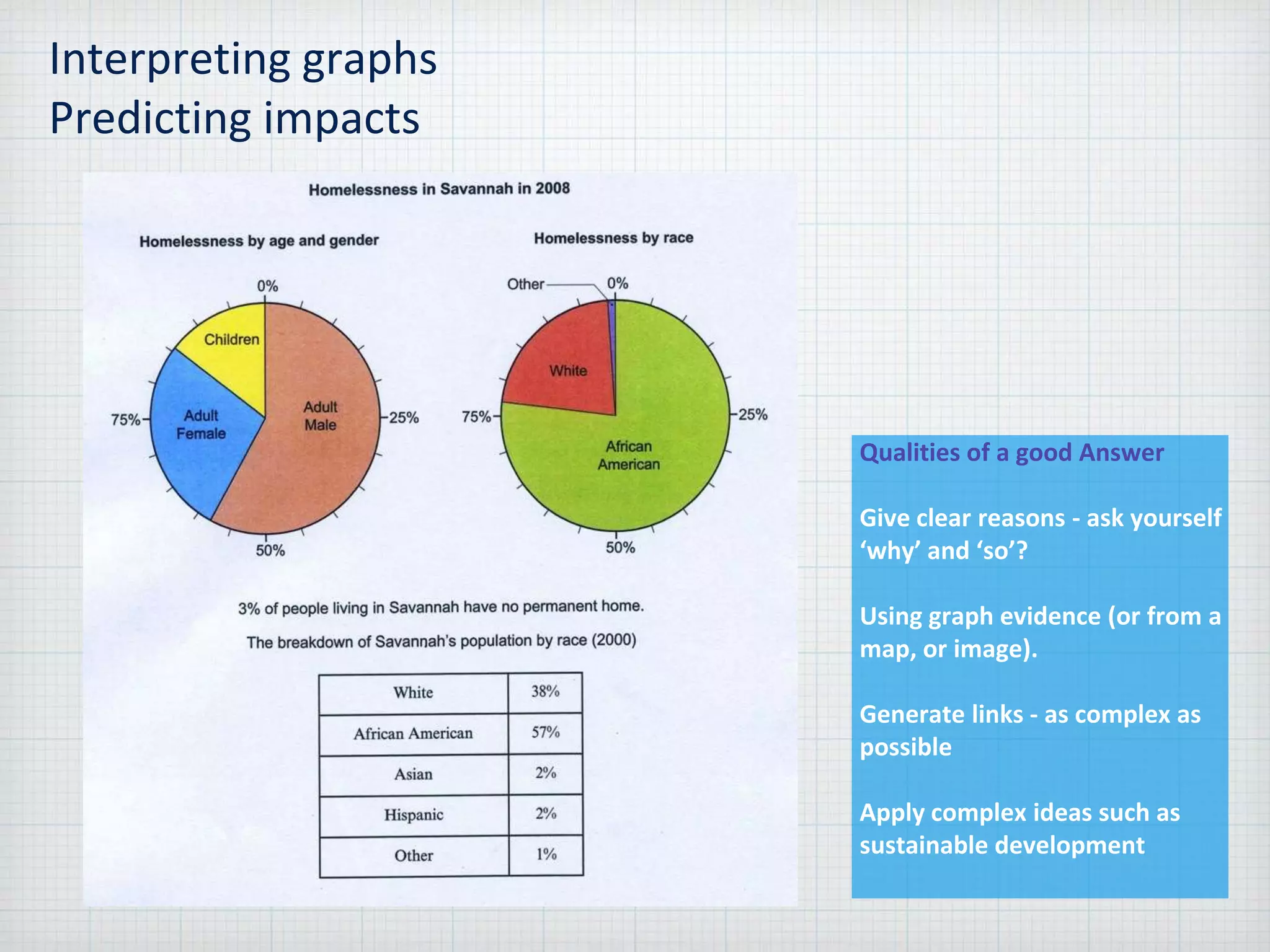
Interpreting graphs
Predicting impacts
Qualities of a good Answer
Give clear reasons - ask yourself
‘why’ and ‘so’?
Using graph evidence (or from a
map, or image).
Generate links - as complex as
possible
Apply complex ideas such as
sustainable development
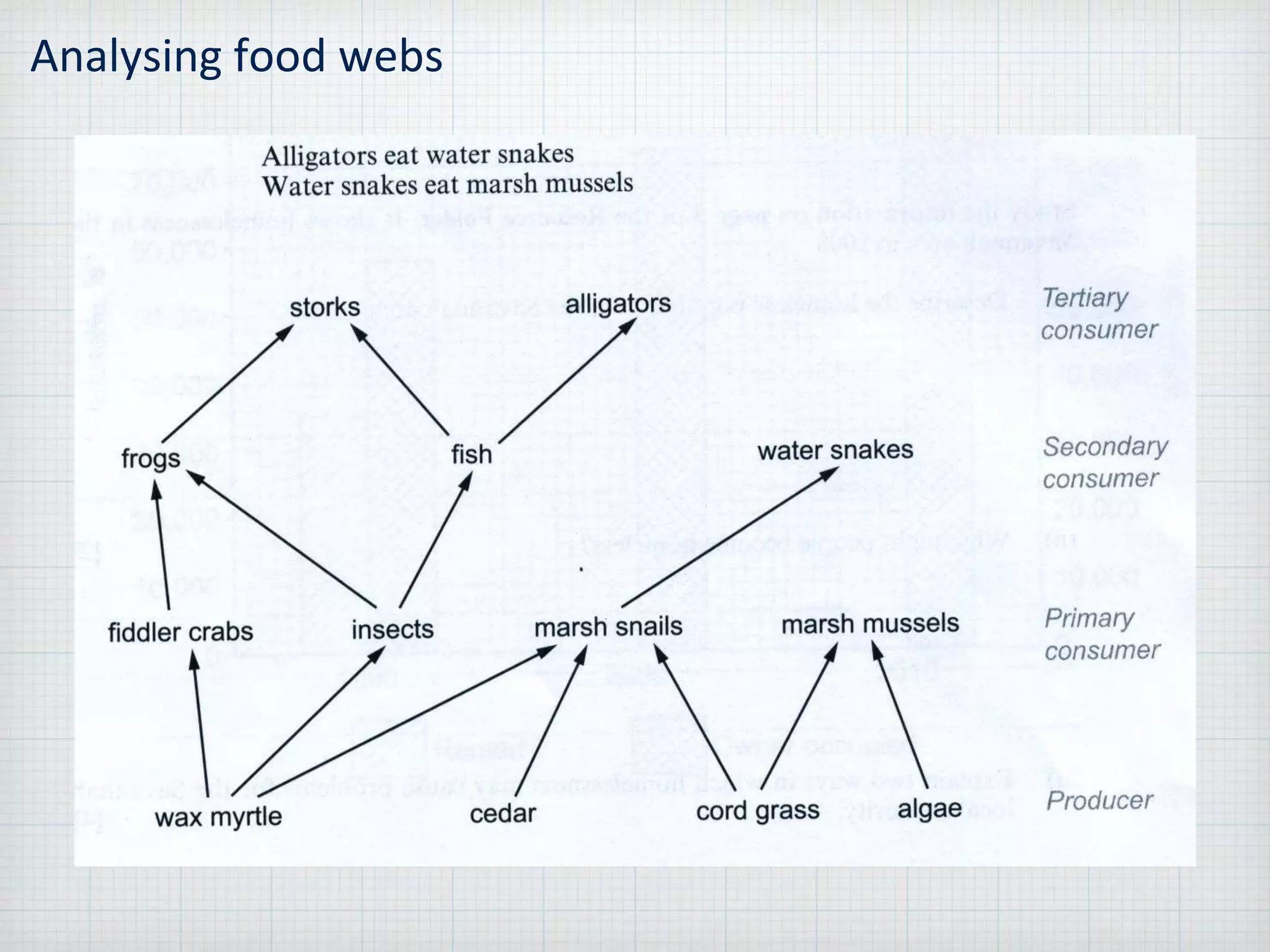
Analysing food webs
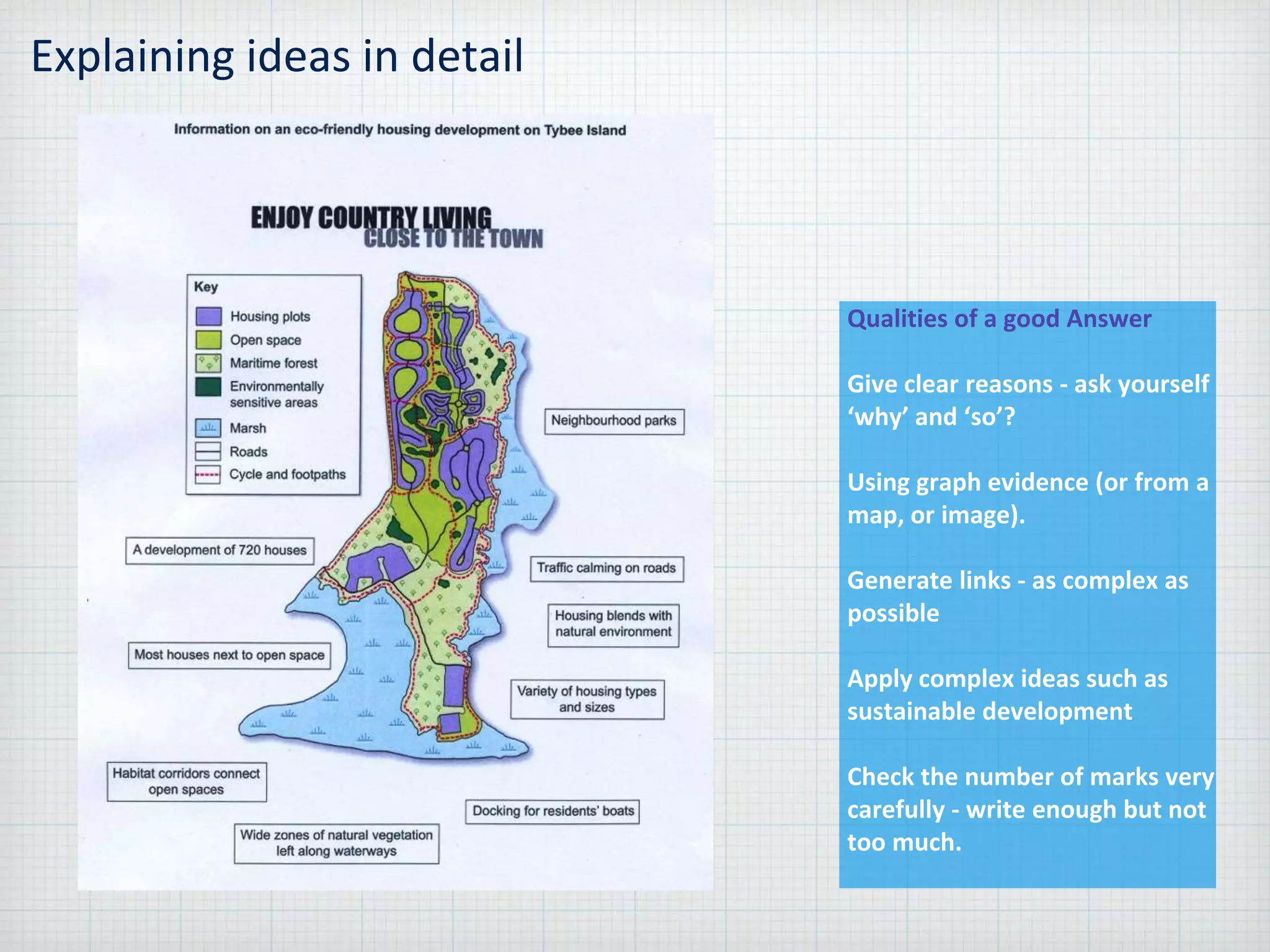
Explaining ideas in detail
Qualities of a good Answer
Give clear reasons - ask yourself
‘why’ and ‘so’?
Using graph evidence (or from a
map, or image).
Generate links - as complex as
possible
Apply complex ideas such as
sustainable development
Check the number of marks very
carefully - write enough but not
too much.
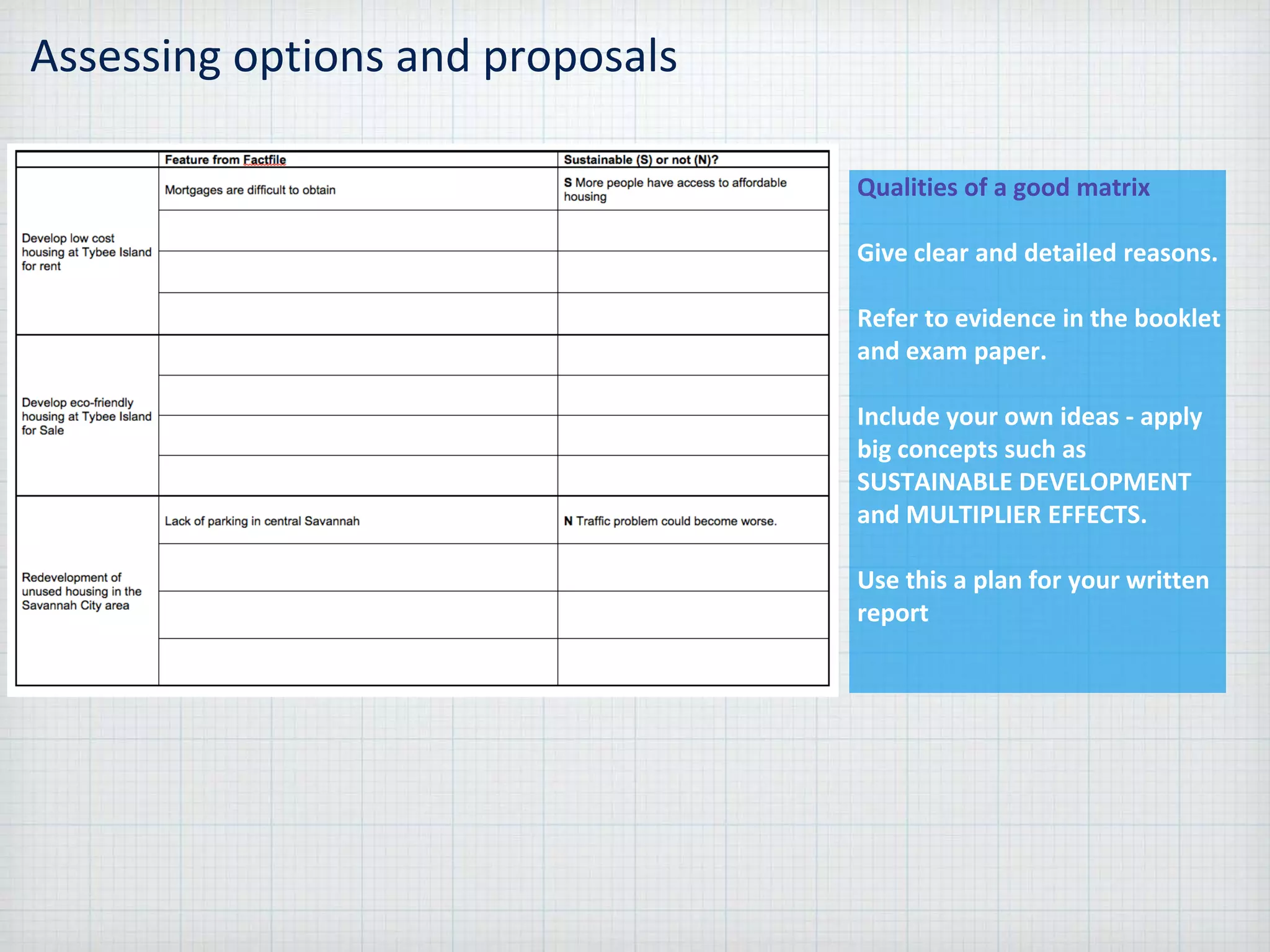
Assessing options and proposals
Qualities of a good matrix
Give clear and detailed reasons.
Refer to evidence in the booklet
and exam paper.
Include your own ideas - apply
big concepts such as
SUSTAINABLE DEVELOPMENT
and MULTIPLIER EFFECTS.
Use this a plan for your written
report
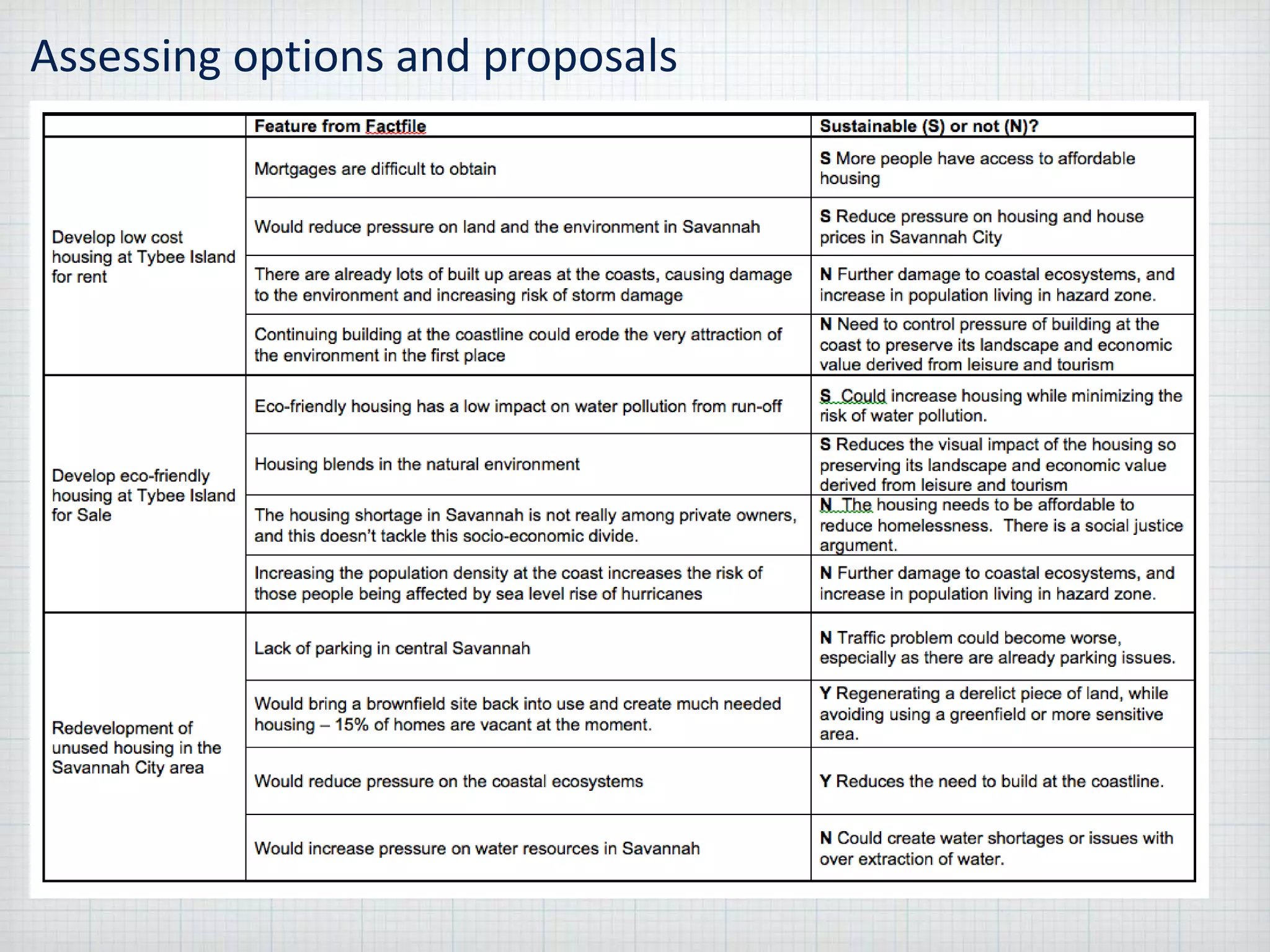
Assessing options and proposals
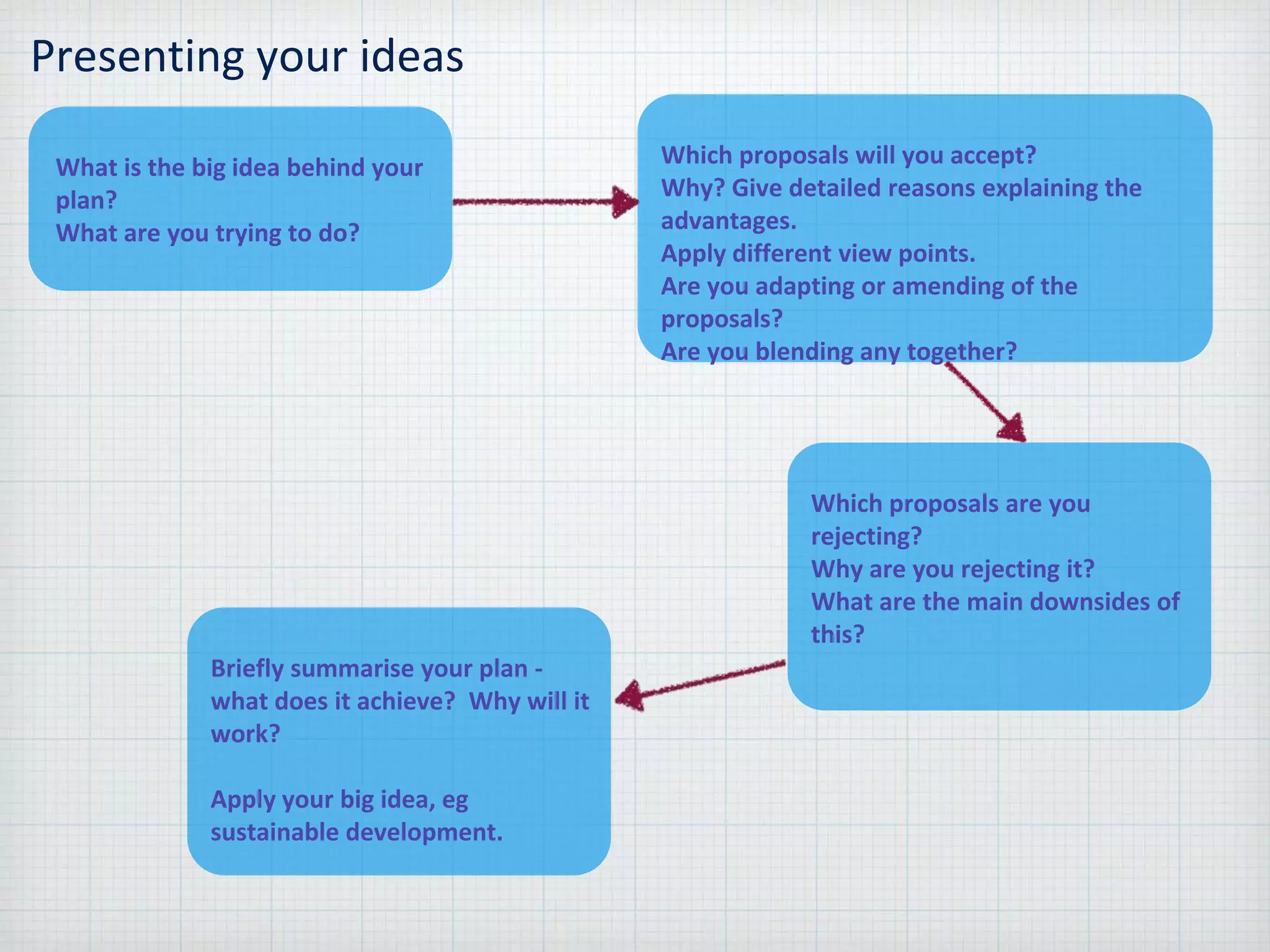
Presenting your ideas
What is the big idea behind your
plan?
What are you trying to do?
Which proposals will you accept?
Why? Give detailed reasons explaining the
advantages.
Apply different view points.
Are you adapting or amending of the
proposals?
Are you blending any together?
Which proposals are you
rejecting?
Why are you rejecting it?
What are the main downsides of
this?
Briefly summarise your plan -
what does it achieve? Why will it
work?
Apply your big idea, eg
sustainable development.

Savannah Problem Solving (Unit 2 2011)

  • 1.
    Sustainable Development Meeting theneeds of the present without jeopardising the ability of future generations to meet their needs within the carrying capacity of the planet.
  • 2.
    Paper 2 Unit2 Section B Problem Solving Exercise June 2011
  • 4.
    Describing location Interpreting aMap - explain causes and effects Qualities of a good Answer Give clear reasons - ask yourself ‘why’ and ‘so’? Using map evidence (or from a graph, or image). Generate links - as complex as possible Apply complex ideas such as sustainable development
  • 6.
    Interpreting graphs Predicting impacts Qualitiesof a good Answer Give clear reasons - ask yourself ‘why’ and ‘so’? Using graph evidence (or from a map, or image). Generate links - as complex as possible Apply complex ideas such as sustainable development
  • 7.
  • 8.
    Explaining ideas indetail Qualities of a good Answer Give clear reasons - ask yourself ‘why’ and ‘so’? Using graph evidence (or from a map, or image). Generate links - as complex as possible Apply complex ideas such as sustainable development Check the number of marks very carefully - write enough but not too much.
  • 9.
    Assessing options andproposals Qualities of a good matrix Give clear and detailed reasons. Refer to evidence in the booklet and exam paper. Include your own ideas - apply big concepts such as SUSTAINABLE DEVELOPMENT and MULTIPLIER EFFECTS. Use this a plan for your written report
  • 11.
  • 12.
    Presenting your ideas Whatis the big idea behind your plan? What are you trying to do? Which proposals will you accept? Why? Give detailed reasons explaining the advantages. Apply different view points. Are you adapting or amending of the proposals? Are you blending any together? Which proposals are you rejecting? Why are you rejecting it? What are the main downsides of this? Briefly summarise your plan - what does it achieve? Why will it work? Apply your big idea, eg sustainable development.