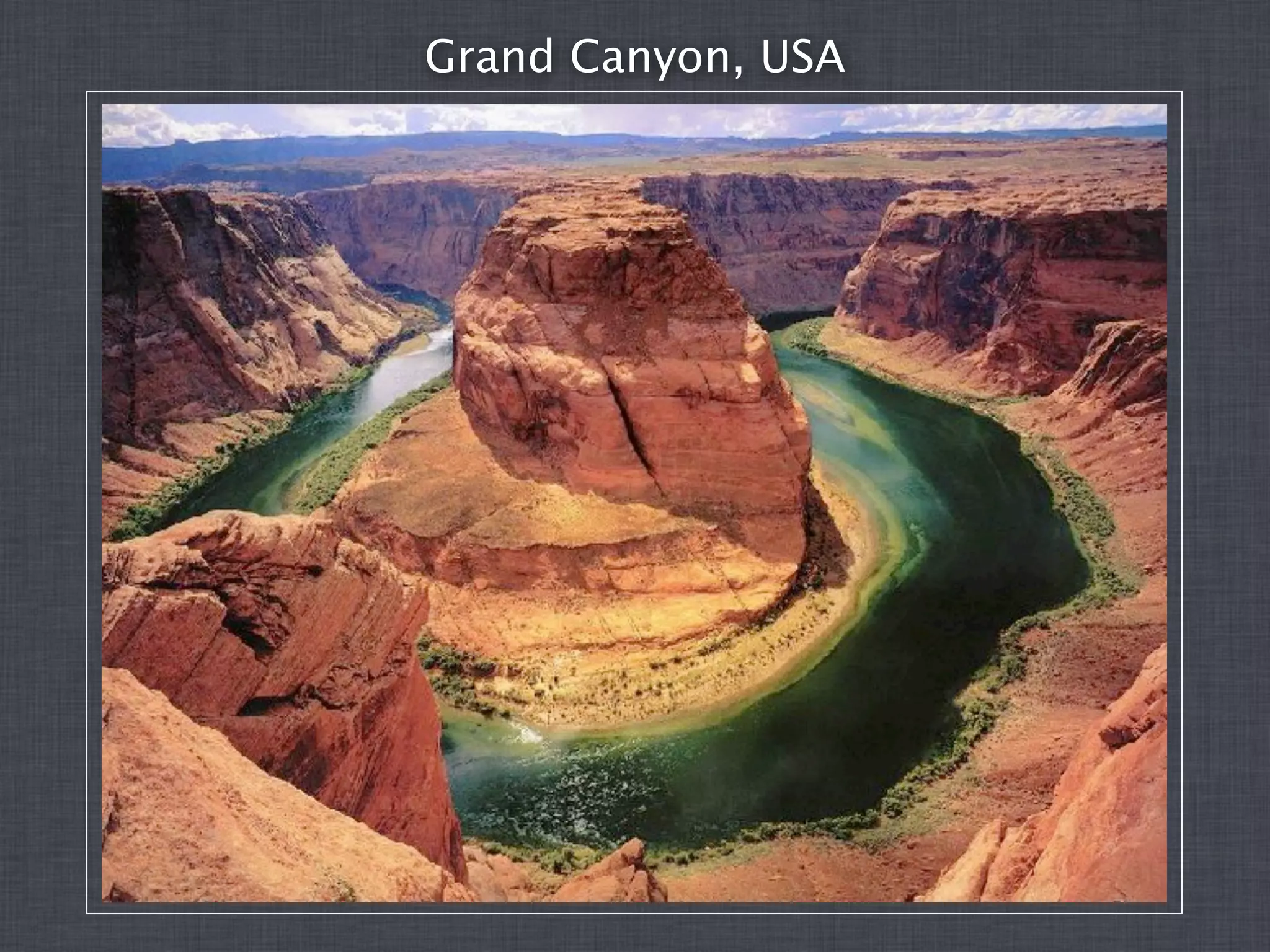
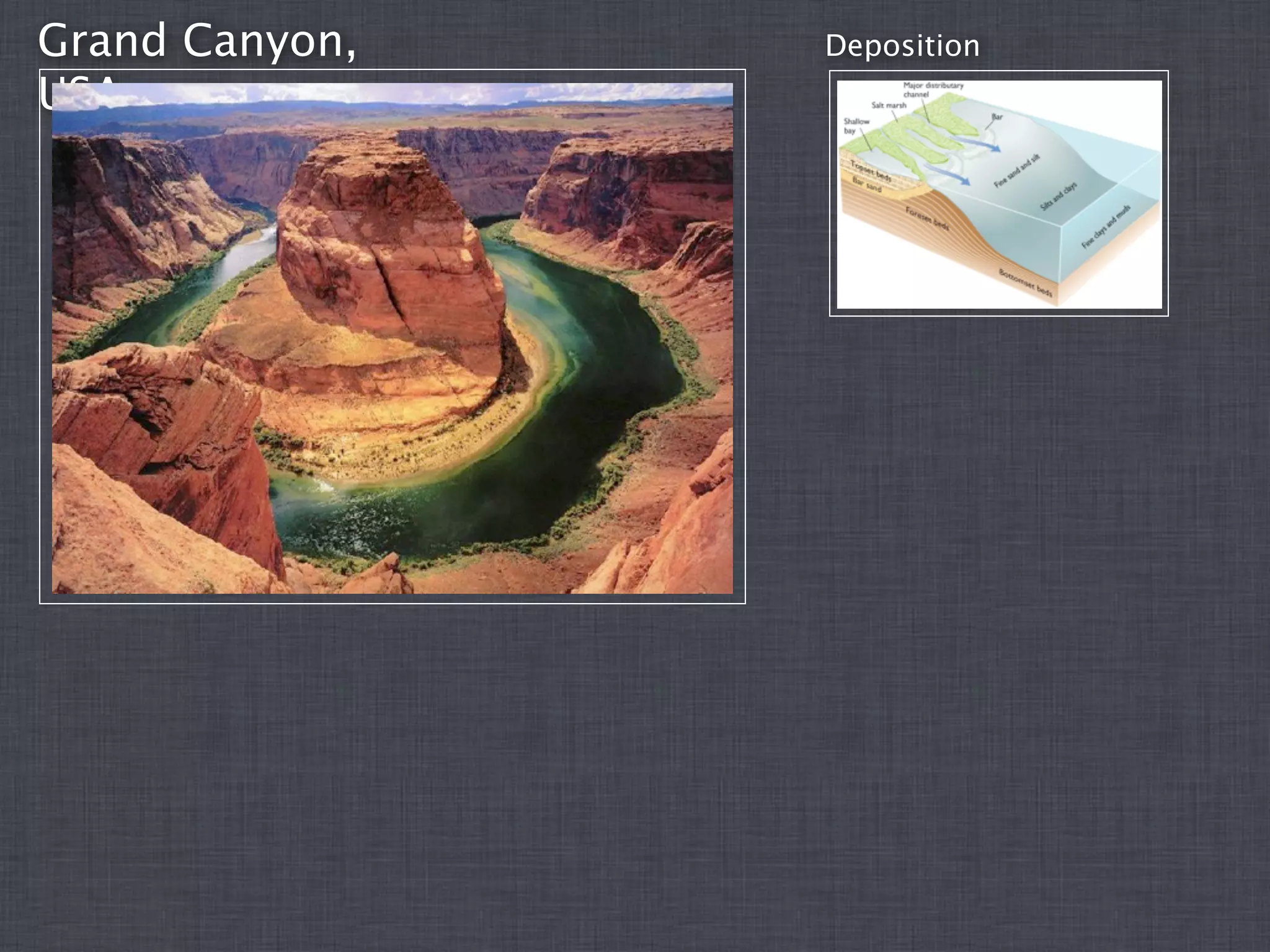
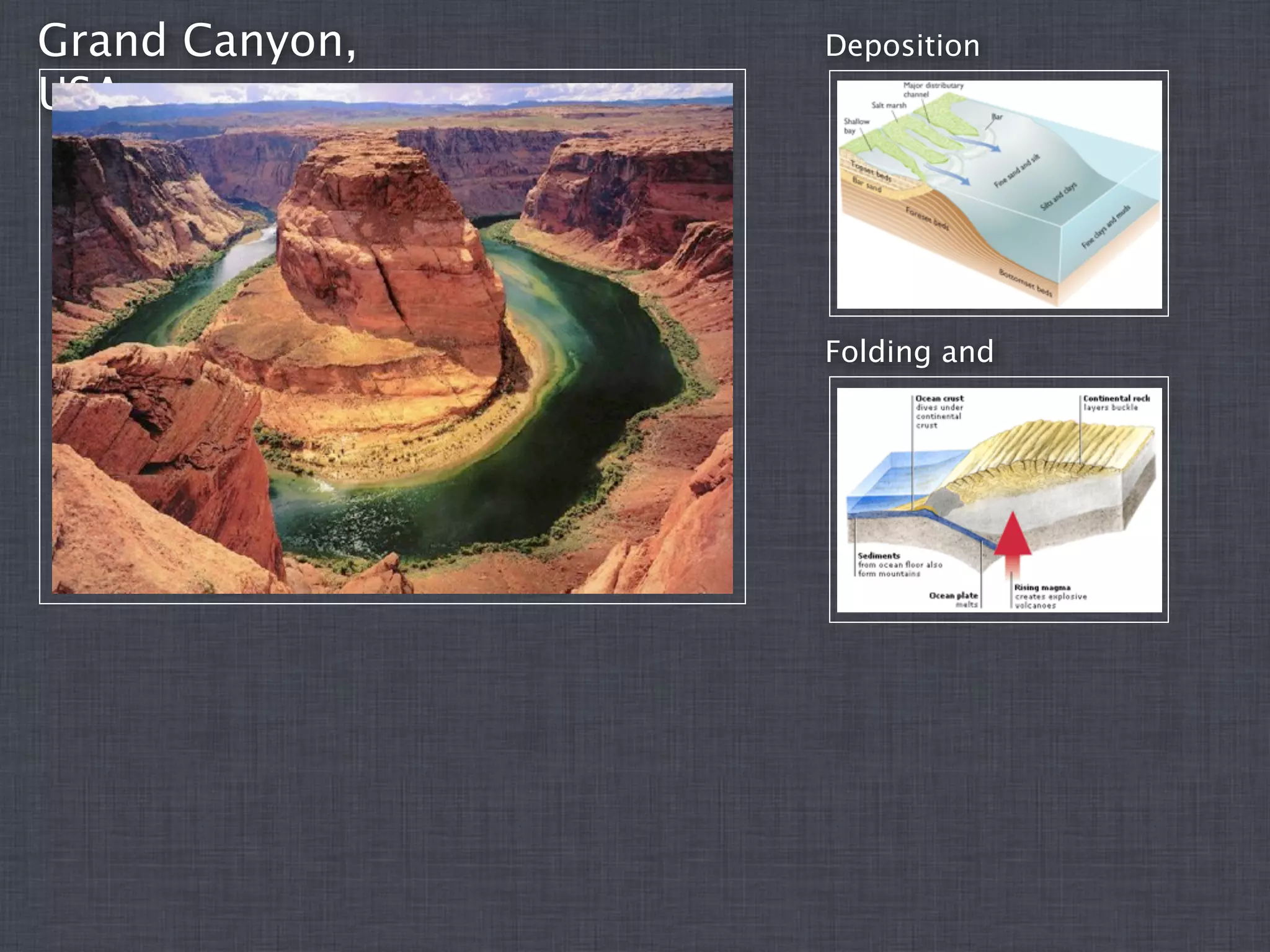
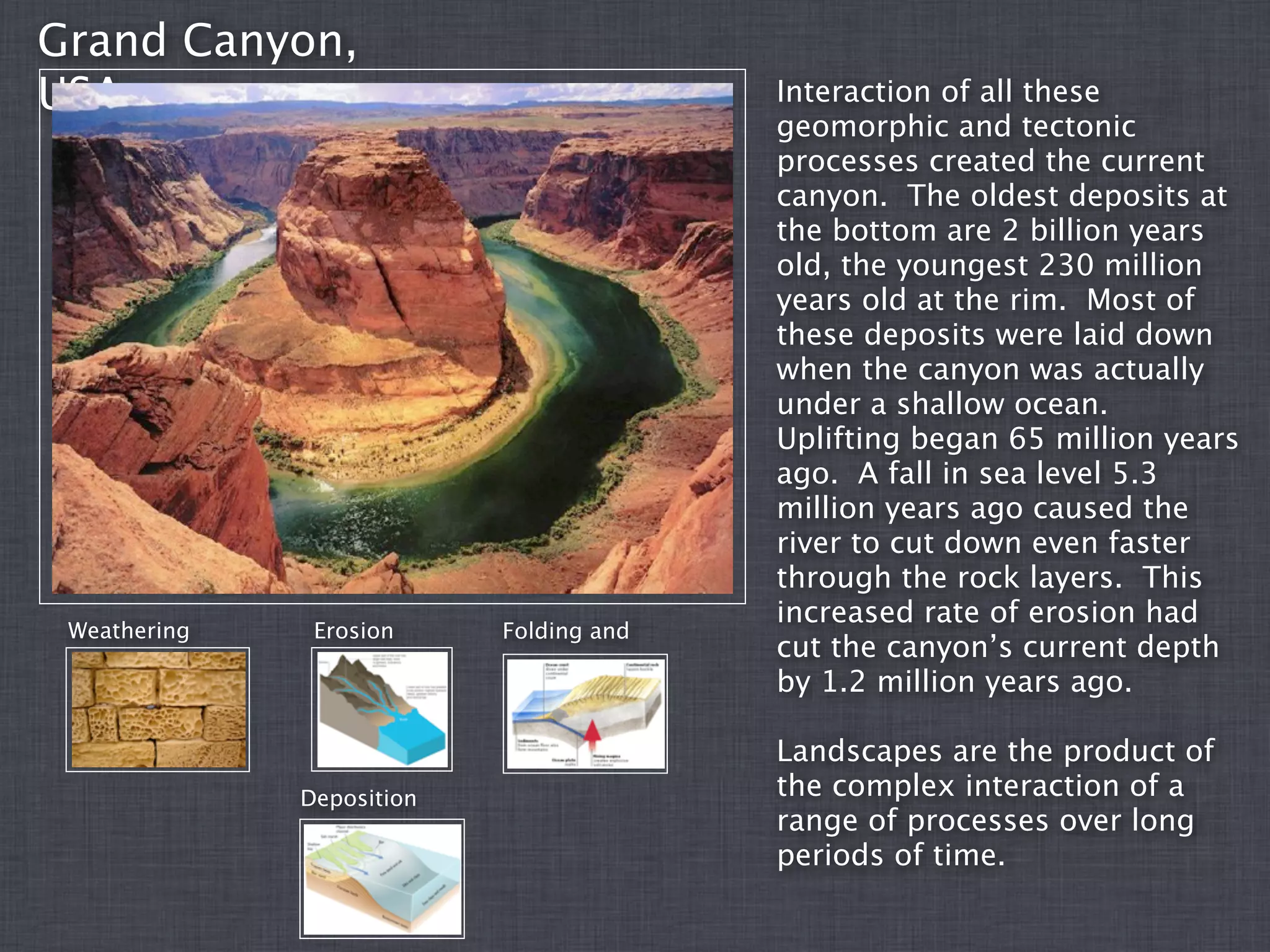
The Grand Canyon in the United States was formed through the interaction of deposition, folding, weathering, erosion, and tectonic uplift over hundreds of millions of years. Sediments were deposited on the canyon floor when it was under a shallow ocean from 2 billion to 230 million years ago. Uplift began 65 million years ago, and a drop in sea level 5.3 million years ago caused the Colorado River to cut deeper through the rock layers, further eroding the canyon to its current depth by 1.2 million years ago. The landscape is the result of these geological and erosional forces acting over hundreds of millions of years.