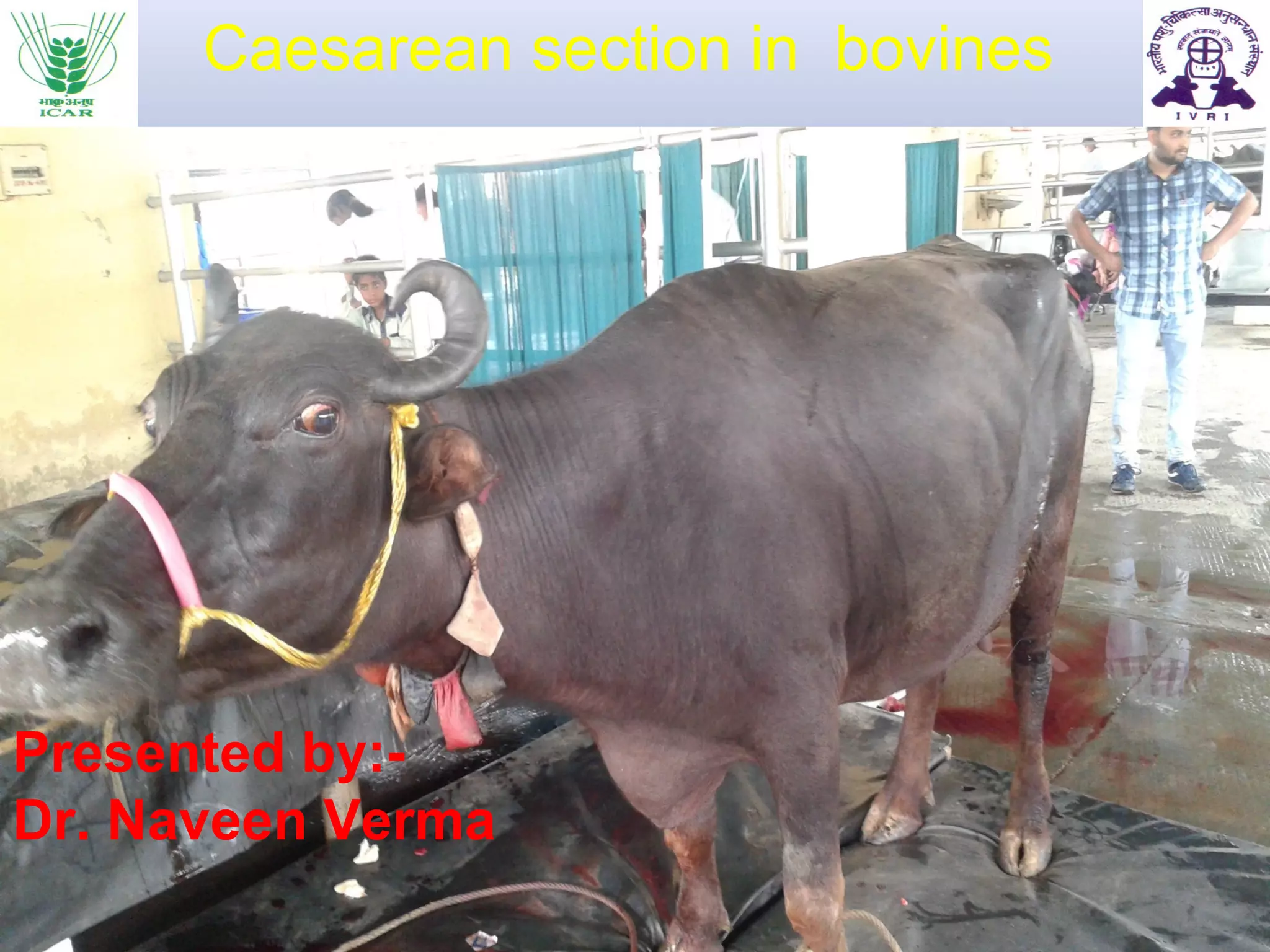
Caesarean section in bovines
Presented by:-
Dr. Naveen Verma
• Caesarean section is also commonly termed as C-Section in
which uterus is exteriorized to take out the young one from
the pregnant dam.
• Uterine inertia
• Various types of obstructive dystocia (for eg:
Emphysematous fetus, Oversized fetus, small pelvic
anal of the dam, difficulty in parturition due to pelvic
fractures, position and posture dystocia etc.)
• Rupture of uterus (may be due to injection or
excessive manipulation of the fetus).
IndicationsIndications
Cont…
• Animal in highly compromised condition like
pregnancy toxemia, weak prostrated dam unable to
show labor etc.
• In the mares twin pregnancy is also an indication for
C-Section.
• Uterine torsion.
• Incomplete Cervical dilatation.
Ideal conditions
• Clean and bright place for the operation.
• Air borne contamination should be strictly
avoided.
• To prevent the post-operative complications
and septicemia.
MATERIALS REQUIRED:
• Appropriate drugs for sedation and local anaesthesia
• Resuscitation facilities including arrangements to dry and warm
the calf. Doxapram hydrochloride (50 mg) may be kept ready in
a syringe with a suitable needle prior to surgery because
sometimes, it is needed urgently when calf is delivered.
• Sterilized calving ropes or chains which may be needed during
removal of the foetus from the uterus.
• Antiseptic solution for skin preparation - 7.5% Povidone-iodine
or 4% Chlorhexidine gluconate and surgical spirit.
• Sterilized drape.
• Surgical kit: Scalpel, rat-toothed forceps, scissors, six haemostats,
needle-holders, round-body and cutting suture needles.
• Suture material.
• Antibiotics: Strepto-penicillin or ampicillin is useful.
Anaesthesia
• Sedation should be avoided as it can cause recumbency detrimental to
fetal survival. If sedation is necessary, xylazine is commonly used (0.05-
0.1 mg/ kg b.w. I/M).
• For flank incision, paravertebral anaesthesia should be given.
• Inverted - L block:
• An inverted - L block of the flank is an alternative to paravertebral
Anaesthesia.
• Epidural anaesthesia:
• Epidural anaesthesia is not essential but is useful to prevent straining
and tail movement during surgery.
Site of operation
 Vertical or oblique incision
 Left lower flank is preferred- the hind limbs are
secured caudally.
Fig. 1: left lower flank incision in cattle
Incision is just in front of stifle and extends
cranioventrally in a slight oblique direction
•In mares, a left paramedian incision (caudal) or
ventral midline incision.
•Take the animals on appropriate recumbency.
•Checked for dehydration and administered the
intravenous fluids rehydration .
•Dexamethasone should be given along with antibiotics
Cattle:
• Structures invaded are
• skin,
• subcutaneous fascia
• combined aponeurosis of the two oblique
muscles which forms the external sheath of the
rectus abdominis
• transverse abdominis
• peritoneum.
• The uterine incision should follow the longitudinal line of
greater curvature of the uterus
• Cow: The gravid uterus may lie directly up on the right
abdominal floor
• Uterus is packed off from the abdominal cavity
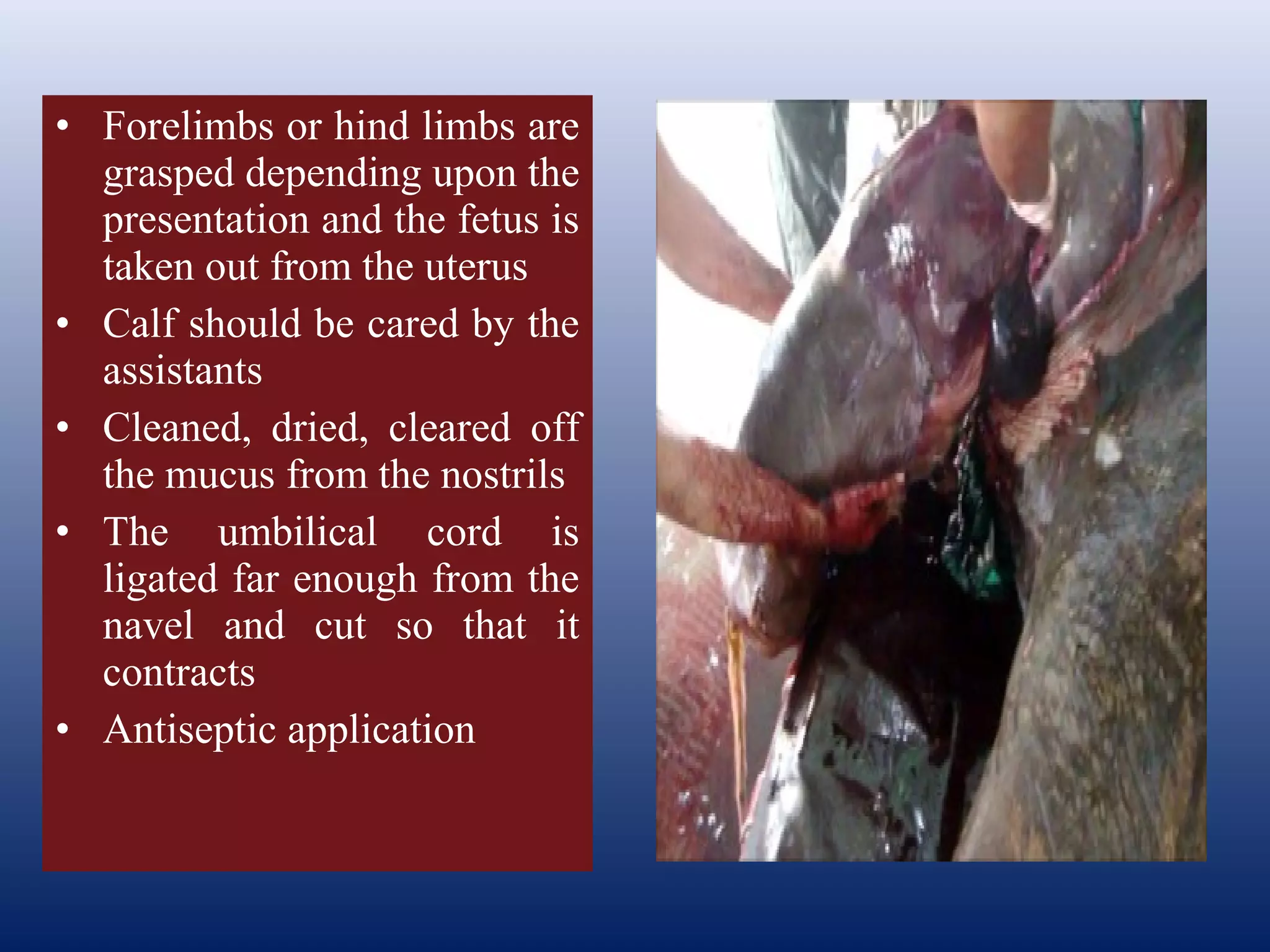
• Forelimbs or hind limbs are
grasped depending upon the
presentation and the fetus is
taken out from the uterus
• Calf should be cared by the
assistants
• Cleaned, dried, cleared off
the mucus from the nostrils
• The umbilical cord is
ligated far enough from the
navel and cut so that it
contracts
• Antiseptic application
Removal of after births
• If it is easily removed by
gentle traction it should be
removed or otherwise, it
should not be pulled with
force since chances of
caruncular bleeding is
strong which may be fatal
to the dam
• If such bleeding is
encountered in the dam,
then we can counteract it by
giving oxytocin which
largely shrinks the uterus
and stops the bleeding
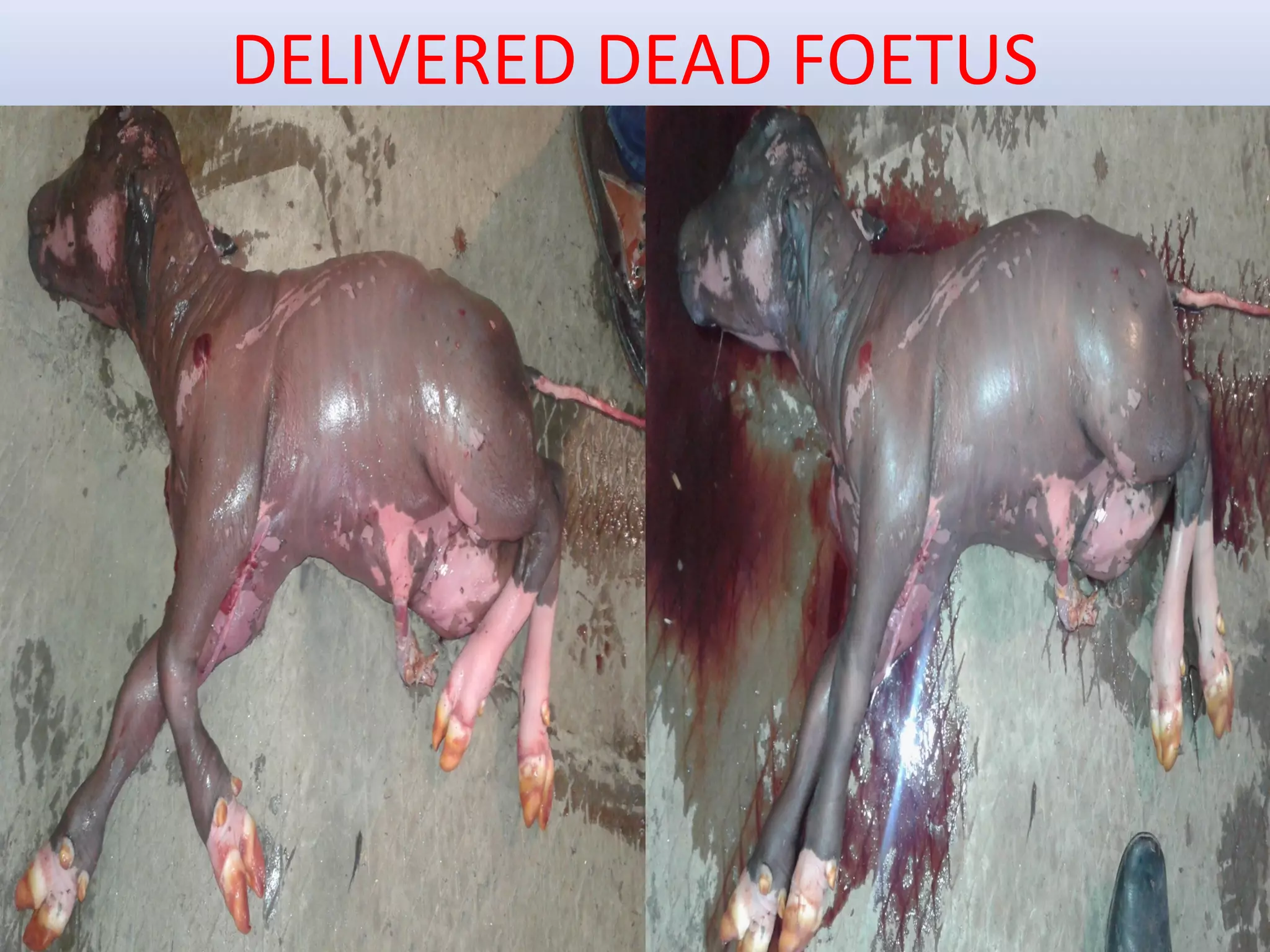
DELIVERED DEAD FOETUS
Closure of uterus
• Antibiotics can be instilled into the uterus as common
procedure for all the species before closure
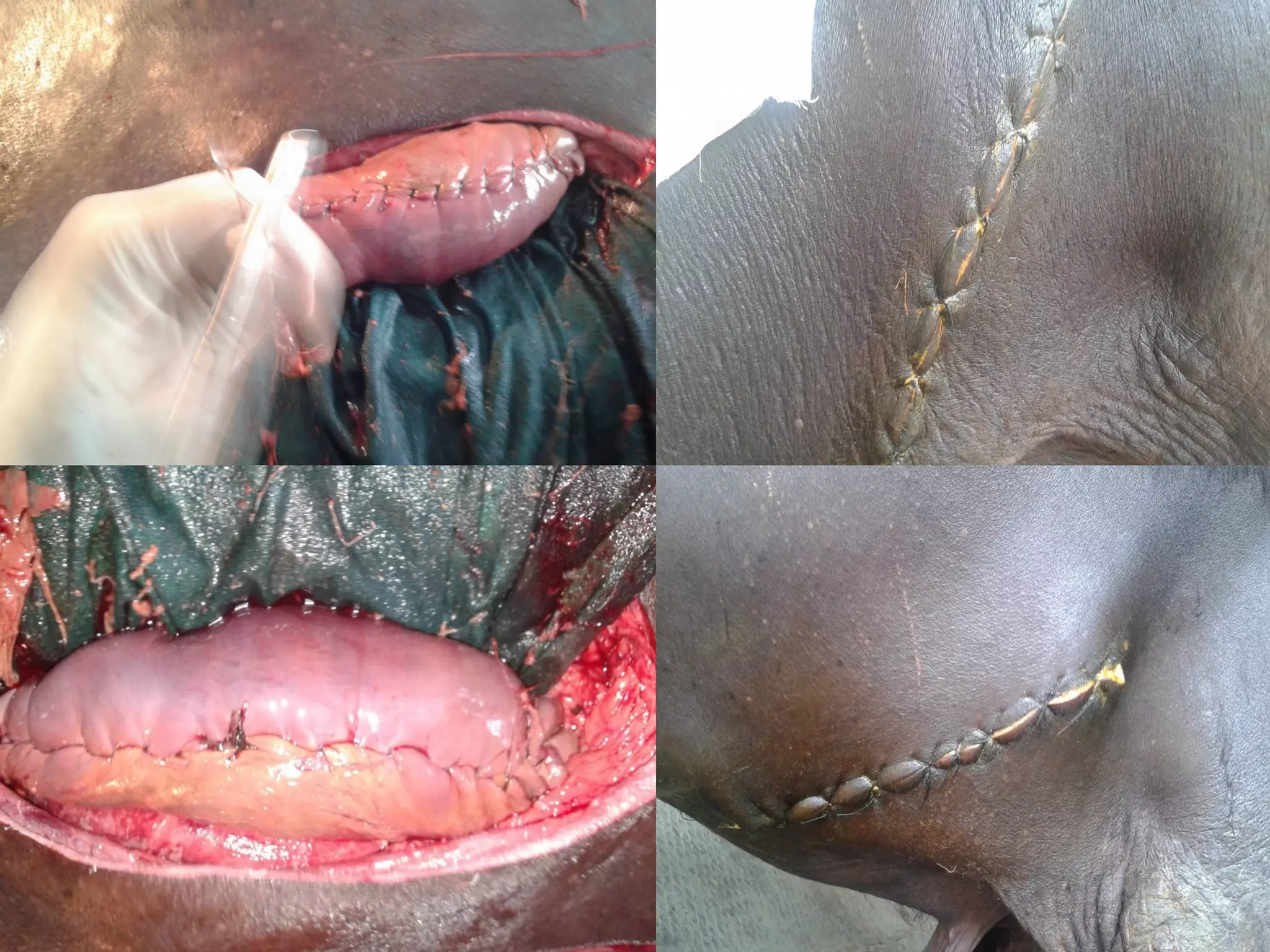
• The uterine incision is cleaned with gauze and closed
by a double row of Lamberts sutures using chromic
catgut size 2-0 or 3-0 in bitch and size 2 in cattle and
buffaloes
• Abdominal incisions are sutured in the usual manner, closing
the peritoneum, muscle in simple continous pattern and
skin in either cross mattress or horizontal mattress pattern.
Abdominal spillage
• Note: utmost care should be taken to avoid the spillage
of uterine contents into the peritoneal / abdominal
cavity
• It should be lavaged with sterile normal saline containing
non- irritant antibiotics to counteract the infection,
reduce the chances of postoperative adhesions and
infection.
• The uterine torsion in case of cattle and buffaloes should
be then corrected. 50-60 units of oxytocin hasten the
uterine involution. A 5% solution of dextrose and normal
saline solution should be invariably included in the
schedule as most deaths have hypoglycemia and
hypochloraemia.
Complications of cesarean section
• Peritonitis
• Wound breakdown
• Seroma formation - A pocket of sterile serous fluid
accumulates between muscle layers or under the skin.
This can be confirmed when a sterile needle is inserted
- serum flow-out.
• Retention of the foetal membranes
• Metritis
• Infertility
• Mastitis (E. coli infection)
• Sudden death.
Caessarean section in bovines

Caessarean section in bovines

  • 1.
    Caesarean section inbovines Presented by:- Dr. Naveen Verma
  • 2.
    • Caesarean sectionis also commonly termed as C-Section in which uterus is exteriorized to take out the young one from the pregnant dam.
  • 3.
    • Uterine inertia •Various types of obstructive dystocia (for eg: Emphysematous fetus, Oversized fetus, small pelvic anal of the dam, difficulty in parturition due to pelvic fractures, position and posture dystocia etc.) • Rupture of uterus (may be due to injection or excessive manipulation of the fetus). IndicationsIndications
  • 4.
    Cont… • Animal inhighly compromised condition like pregnancy toxemia, weak prostrated dam unable to show labor etc. • In the mares twin pregnancy is also an indication for C-Section. • Uterine torsion. • Incomplete Cervical dilatation.
  • 5.
    Ideal conditions • Cleanand bright place for the operation. • Air borne contamination should be strictly avoided. • To prevent the post-operative complications and septicemia.
  • 6.
    MATERIALS REQUIRED: • Appropriatedrugs for sedation and local anaesthesia • Resuscitation facilities including arrangements to dry and warm the calf. Doxapram hydrochloride (50 mg) may be kept ready in a syringe with a suitable needle prior to surgery because sometimes, it is needed urgently when calf is delivered. • Sterilized calving ropes or chains which may be needed during removal of the foetus from the uterus. • Antiseptic solution for skin preparation - 7.5% Povidone-iodine or 4% Chlorhexidine gluconate and surgical spirit. • Sterilized drape. • Surgical kit: Scalpel, rat-toothed forceps, scissors, six haemostats, needle-holders, round-body and cutting suture needles. • Suture material. • Antibiotics: Strepto-penicillin or ampicillin is useful.
  • 7.
    Anaesthesia • Sedation shouldbe avoided as it can cause recumbency detrimental to fetal survival. If sedation is necessary, xylazine is commonly used (0.05- 0.1 mg/ kg b.w. I/M). • For flank incision, paravertebral anaesthesia should be given. • Inverted - L block: • An inverted - L block of the flank is an alternative to paravertebral Anaesthesia. • Epidural anaesthesia: • Epidural anaesthesia is not essential but is useful to prevent straining and tail movement during surgery.
  • 8.
    Site of operation Vertical or oblique incision  Left lower flank is preferred- the hind limbs are secured caudally.
  • 9.
    Fig. 1: leftlower flank incision in cattle Incision is just in front of stifle and extends cranioventrally in a slight oblique direction
  • 10.
    •In mares, aleft paramedian incision (caudal) or ventral midline incision. •Take the animals on appropriate recumbency. •Checked for dehydration and administered the intravenous fluids rehydration . •Dexamethasone should be given along with antibiotics
  • 11.
    Cattle: • Structures invadedare • skin, • subcutaneous fascia • combined aponeurosis of the two oblique muscles which forms the external sheath of the rectus abdominis • transverse abdominis • peritoneum.
  • 13.
    • The uterineincision should follow the longitudinal line of greater curvature of the uterus • Cow: The gravid uterus may lie directly up on the right abdominal floor • Uterus is packed off from the abdominal cavity
  • 14.
    • Forelimbs orhind limbs are grasped depending upon the presentation and the fetus is taken out from the uterus • Calf should be cared by the assistants • Cleaned, dried, cleared off the mucus from the nostrils • The umbilical cord is ligated far enough from the navel and cut so that it contracts • Antiseptic application
  • 15.
    Removal of afterbirths • If it is easily removed by gentle traction it should be removed or otherwise, it should not be pulled with force since chances of caruncular bleeding is strong which may be fatal to the dam • If such bleeding is encountered in the dam, then we can counteract it by giving oxytocin which largely shrinks the uterus and stops the bleeding
  • 16.
  • 17.
    Closure of uterus •Antibiotics can be instilled into the uterus as common procedure for all the species before closure • The uterine incision is cleaned with gauze and closed by a double row of Lamberts sutures using chromic catgut size 2-0 or 3-0 in bitch and size 2 in cattle and buffaloes
  • 18.
    • Abdominal incisionsare sutured in the usual manner, closing the peritoneum, muscle in simple continous pattern and skin in either cross mattress or horizontal mattress pattern.
  • 20.
    Abdominal spillage • Note:utmost care should be taken to avoid the spillage of uterine contents into the peritoneal / abdominal cavity • It should be lavaged with sterile normal saline containing non- irritant antibiotics to counteract the infection, reduce the chances of postoperative adhesions and infection. • The uterine torsion in case of cattle and buffaloes should be then corrected. 50-60 units of oxytocin hasten the uterine involution. A 5% solution of dextrose and normal saline solution should be invariably included in the schedule as most deaths have hypoglycemia and hypochloraemia.
  • 21.
    Complications of cesareansection • Peritonitis • Wound breakdown • Seroma formation - A pocket of sterile serous fluid accumulates between muscle layers or under the skin. This can be confirmed when a sterile needle is inserted - serum flow-out. • Retention of the foetal membranes • Metritis • Infertility • Mastitis (E. coli infection) • Sudden death.