1
2
3
The goal is to raise
productivity while
keeping production costs as
low as possible. It takes a lot
of time to send cooperative
memos of every change in
procedure. It takes even
more time to implement
those changes. With
teamwork you eliminate a lot
of the formalities.
4
Benefits to Organization
Increased productivity
Increased quality
Better morale
Better problem solving
Increased creativity
Better decisions
5
• Work is less stressful
• Responsibility is shared
• Rewards and recognition
shared
• Members can influence each
other
• All experience a sense of
accomplishment
6
Definition
Teams – A small number of
people with complementary
skills who are committed to a
common purpose, performance
goals and approach for which
they hold themselves mutually
accountable.
Usually 7-25 members
7
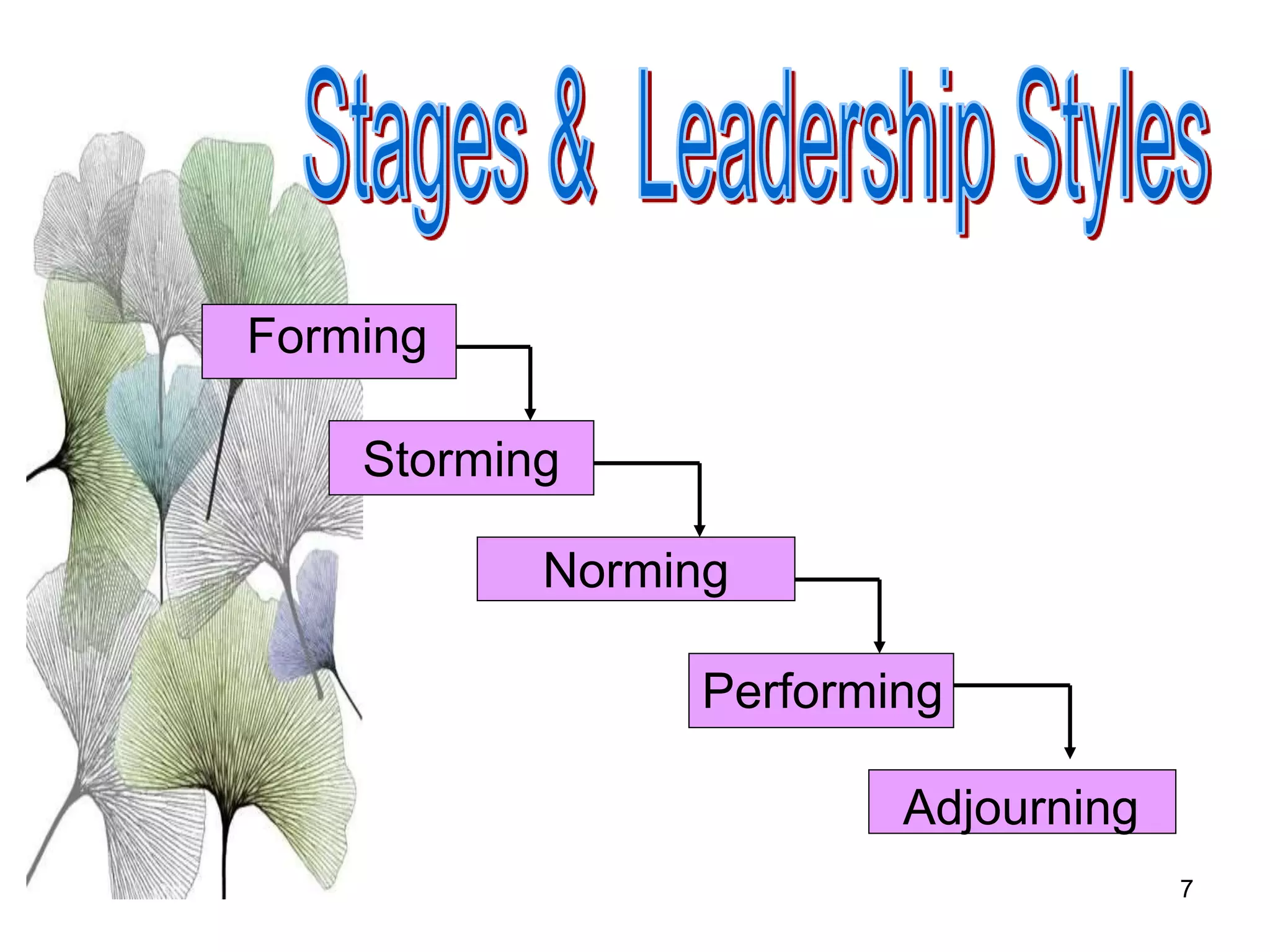
Norming
Storming
Forming
Performing
Adjourning
8
• Feel moderately eager with high
positive expectations about what
the team will accomplish
• Feel concerned about how they will
fit in and what will be expected of
them
• Feel anxious about other team
members
• Are dependent on authority to
provide direction
9
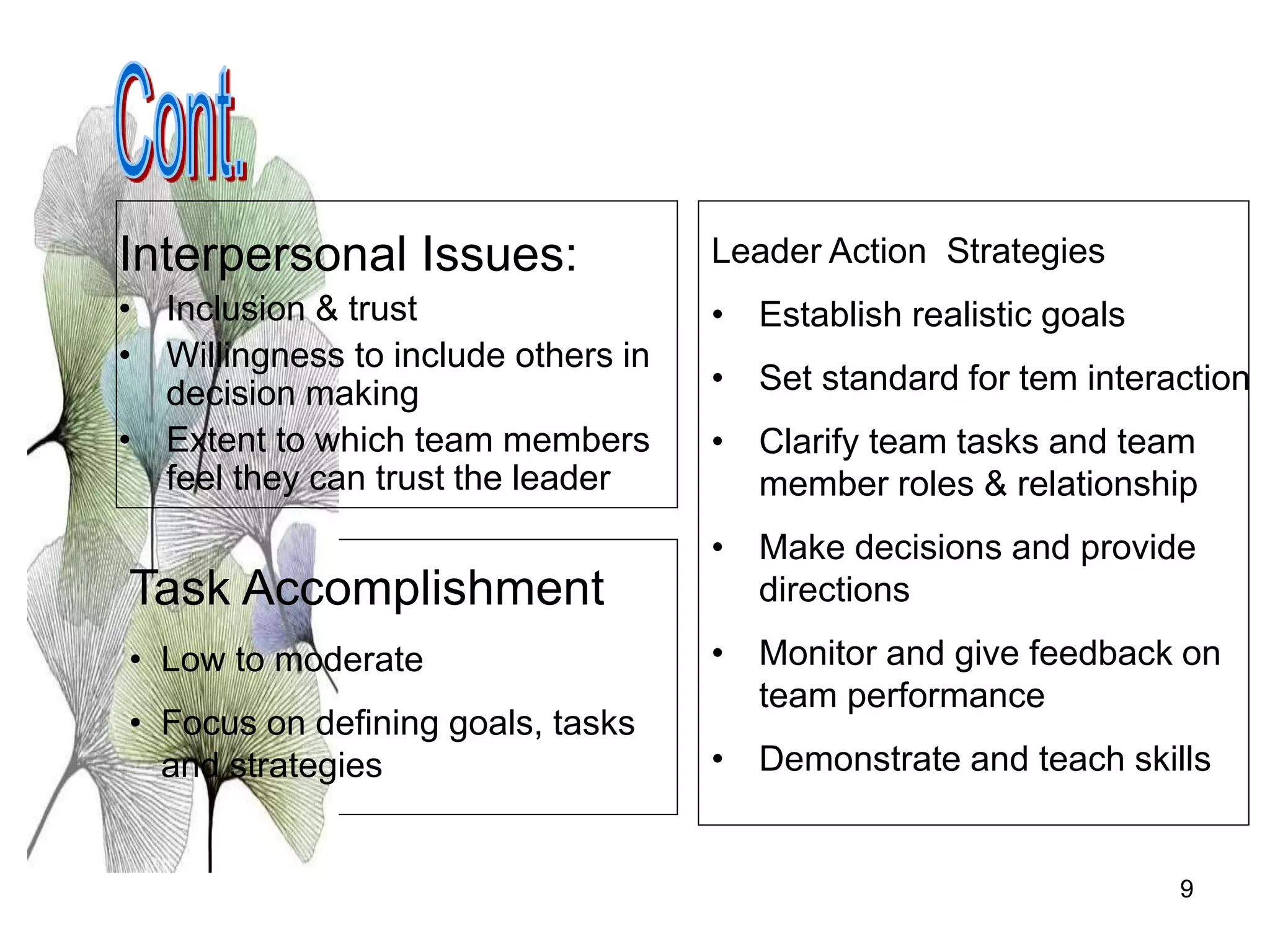
Leader Action Strategies
• Establish realistic goals
• Set standard for tem interaction
• Clarify team tasks and team
member roles & relationship
• Make decisions and provide
directions
• Monitor and give feedback on
team performance
• Demonstrate and teach skills
Task Accomplishment
• Low to moderate
• Focus on defining goals, tasks
and strategies
Interpersonal Issues:
• Inclusion & trust
• Willingness to include others in
decision making
• Extent to which team members
feel they can trust the leader
10
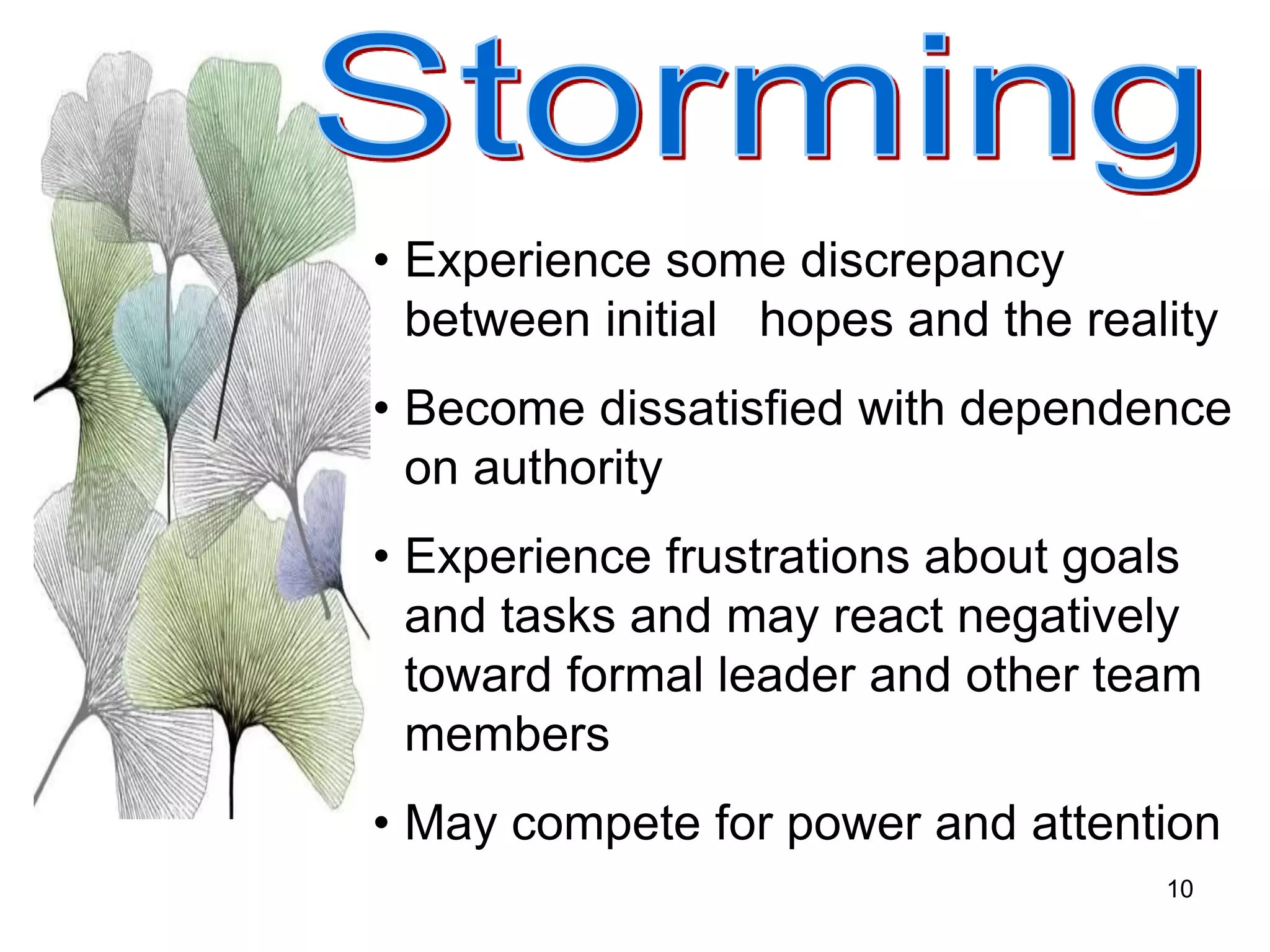
• Experience some discrepancy
between initial hopes and the reality
• Become dissatisfied with dependence
on authority
• Experience frustrations about goals
and tasks and may react negatively
toward formal leader and other team
members
• May compete for power and attention
11
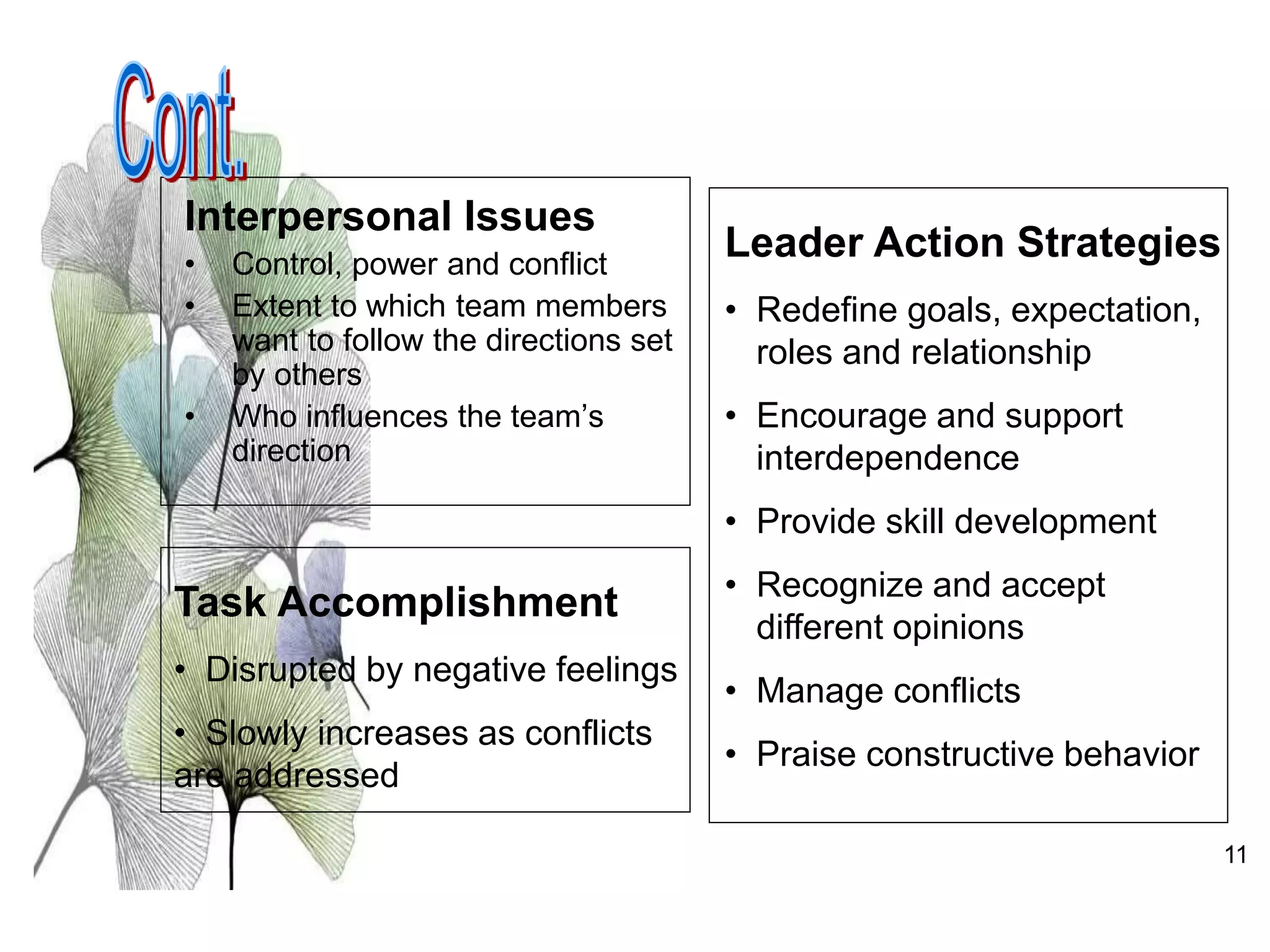
Interpersonal Issues
• Control, power and conflict
• Extent to which team members
want to follow the directions set
by others
• Who influences the team’s
direction
Task Accomplishment
• Disrupted by negative feelings
• Slowly increases as conflicts
are addressed
Leader Action Strategies
• Redefine goals, expectation,
roles and relationship
• Encourage and support
interdependence
• Provide skill development
• Recognize and accept
different opinions
• Manage conflicts
• Praise constructive behavior
12
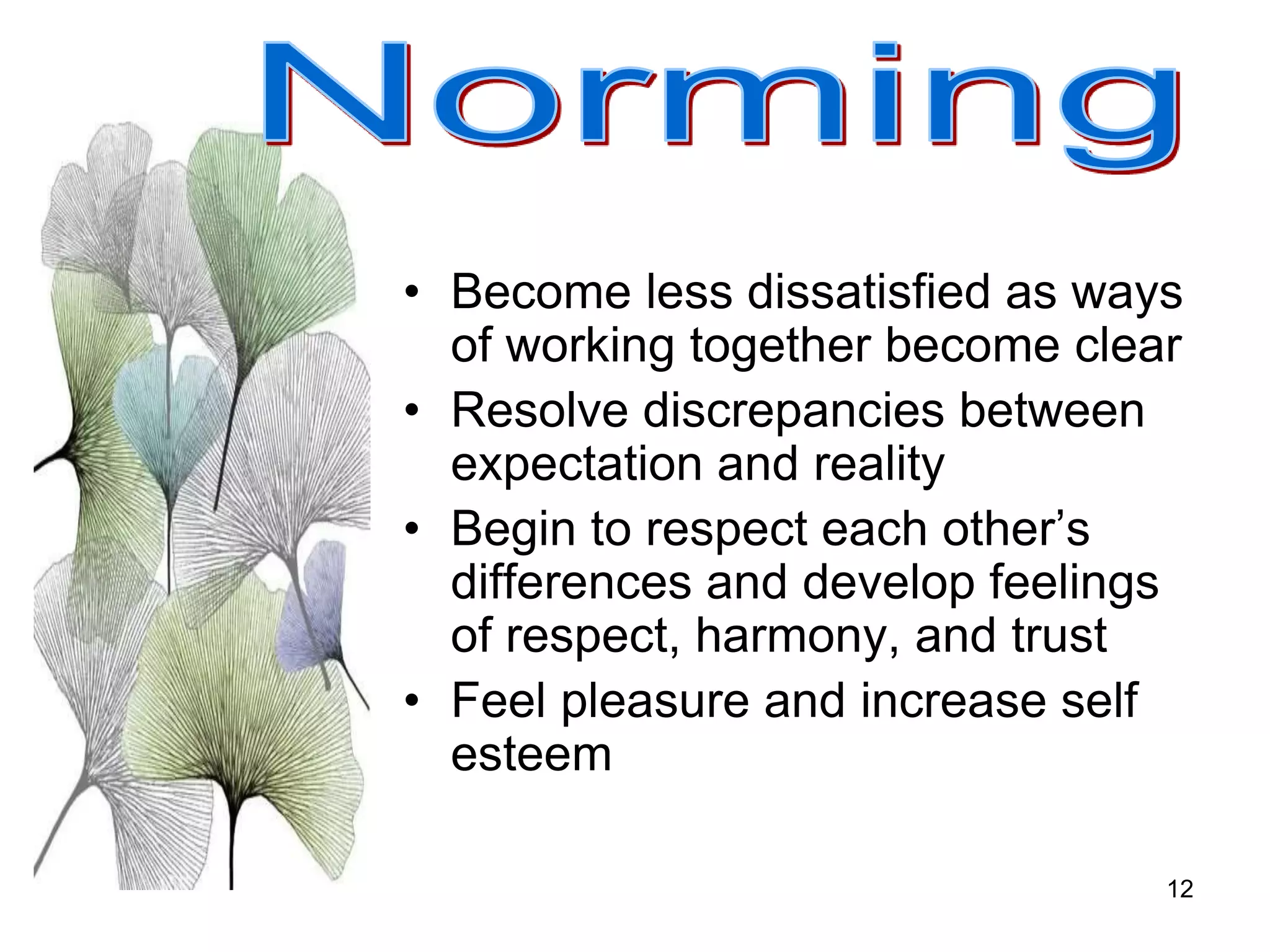
• Become less dissatisfied as ways
of working together become clear
• Resolve discrepancies between
expectation and reality
• Begin to respect each other’s
differences and develop feelings
of respect, harmony, and trust
• Feel pleasure and increase self
esteem
13
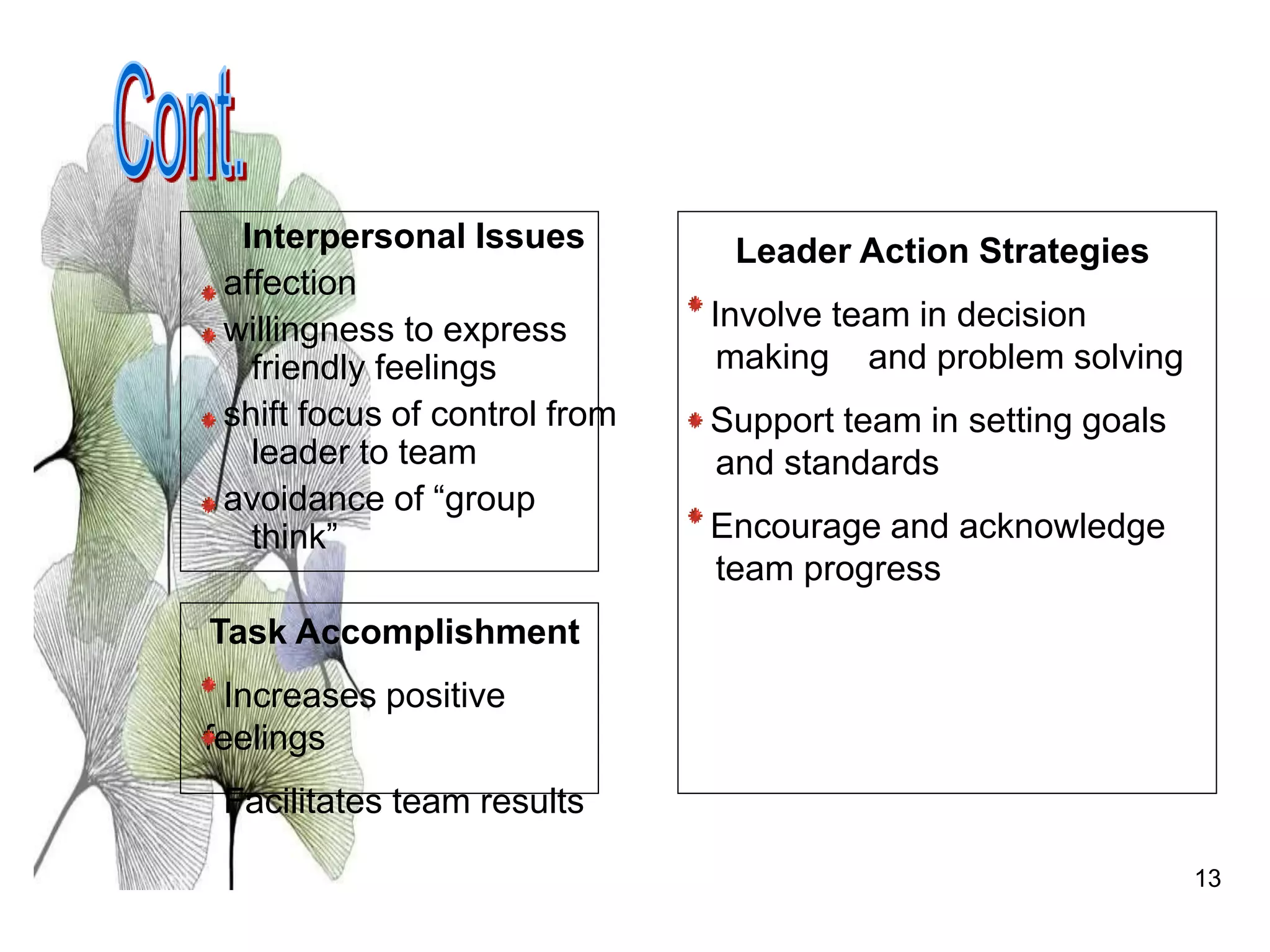
Interpersonal Issues
affection
willingness to express
friendly feelings
shift focus of control from
leader to team
avoidance of “group
think”
Task Accomplishment
Increases positive
feelings
Facilitates team results
Leader Action Strategies
Involve team in decision
making and problem solving
Support team in setting goals
and standards
Encourage and acknowledge
team progress
14
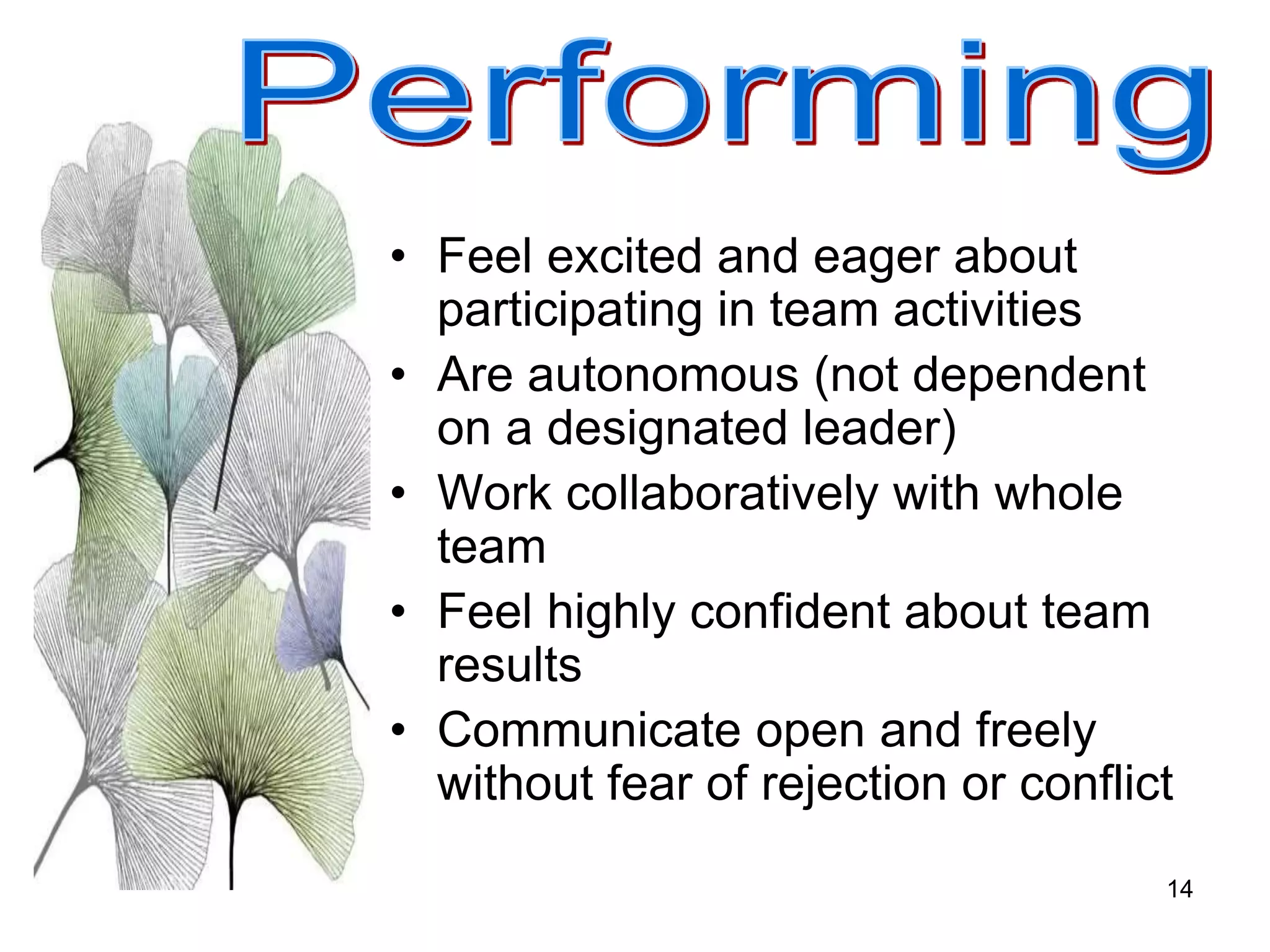
• Feel excited and eager about
participating in team activities
• Are autonomous (not dependent
on a designated leader)
• Work collaboratively with whole
team
• Feel highly confident about team
results
• Communicate open and freely
without fear of rejection or conflict
15
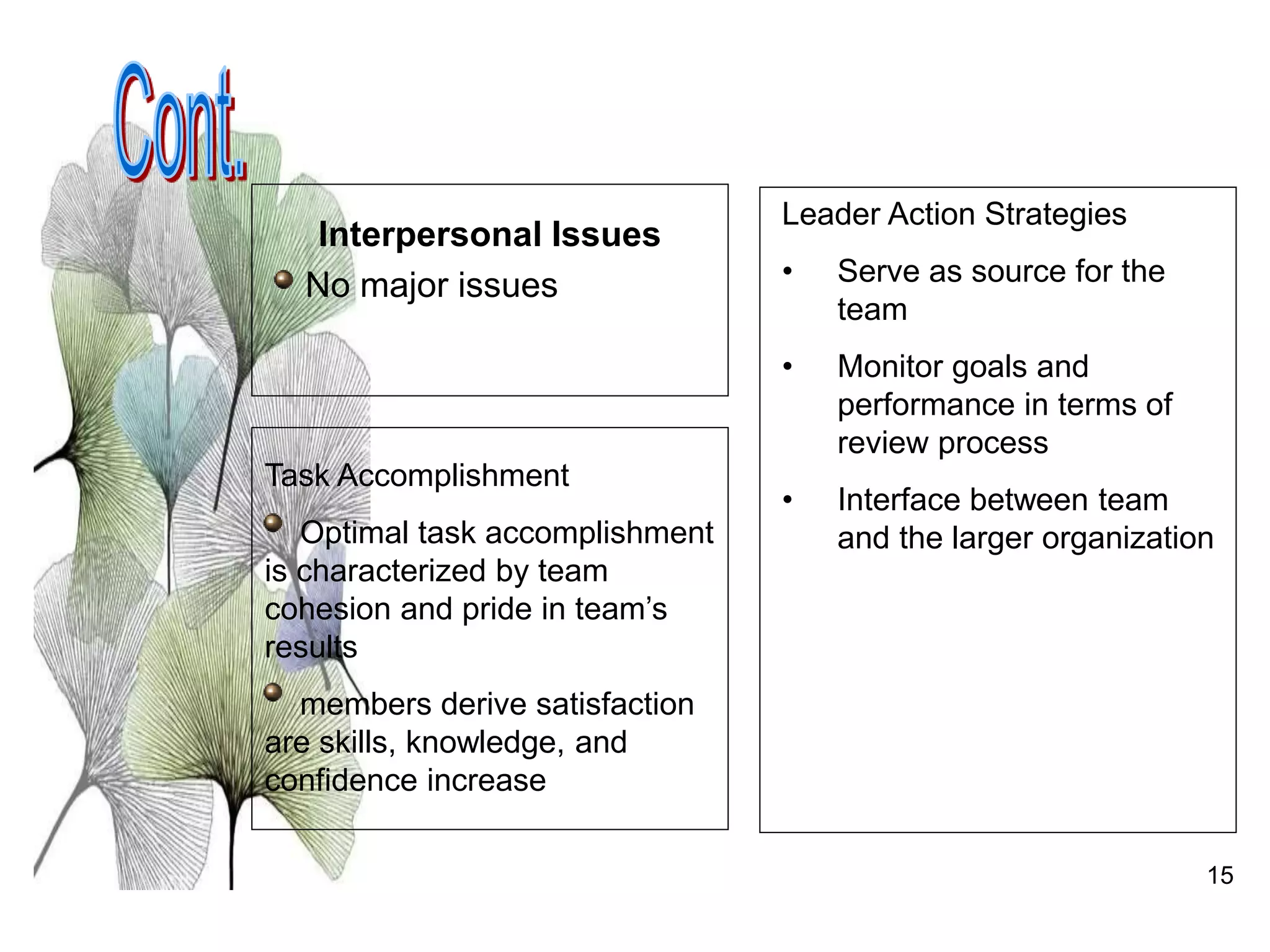
Interpersonal Issues
No major issues
Task Accomplishment
Optimal task accomplishment
is characterized by team
cohesion and pride in team’s
results
members derive satisfaction
are skills, knowledge, and
confidence increase
Leader Action Strategies
• Serve as source for the
team
• Monitor goals and
performance in terms of
review process
• Interface between team
and the larger organization
16
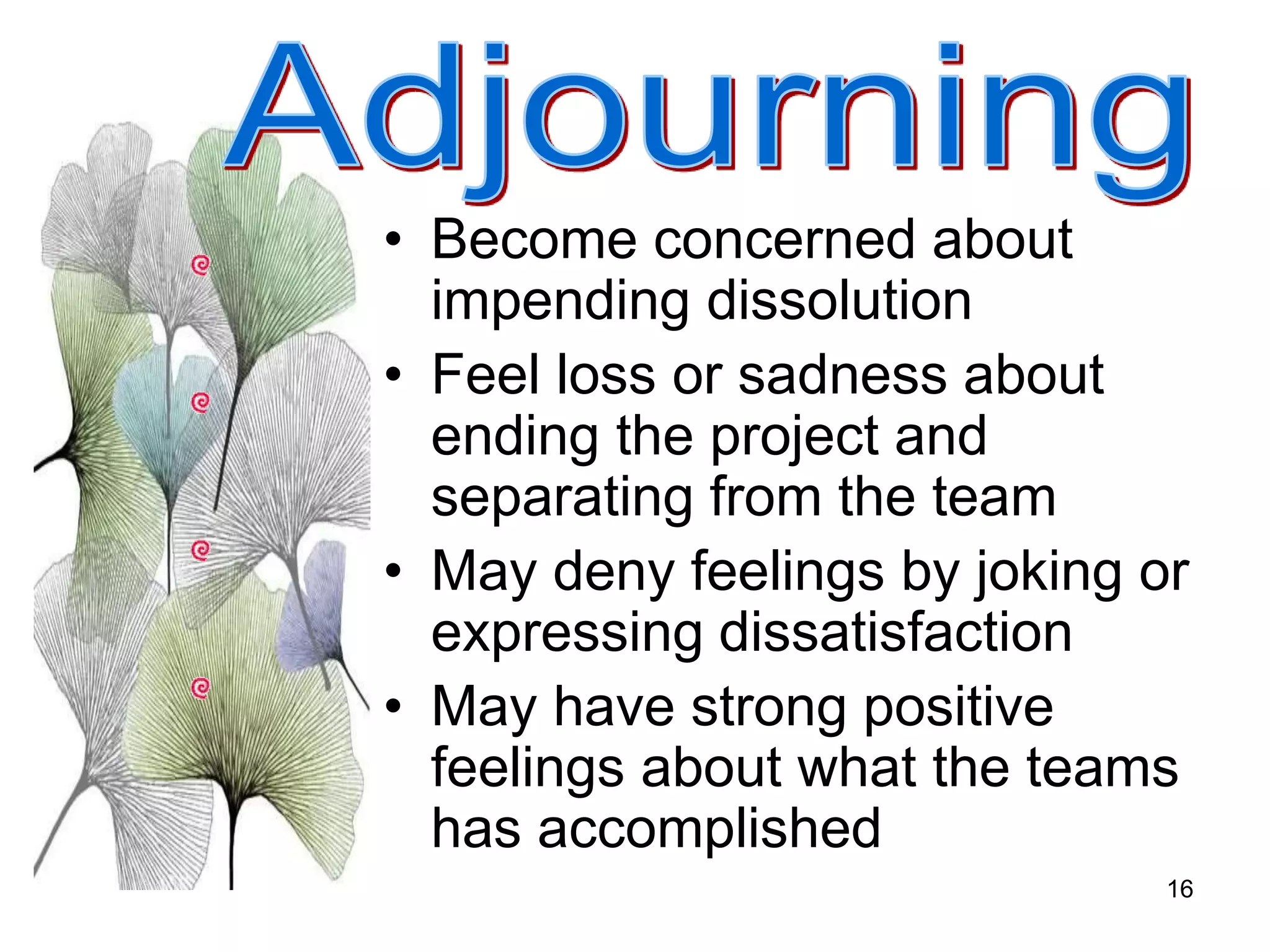
• Become concerned about
impending dissolution
• Feel loss or sadness about
ending the project and
separating from the team
• May deny feelings by joking or
expressing dissatisfaction
• May have strong positive
feelings about what the teams
has accomplished
17
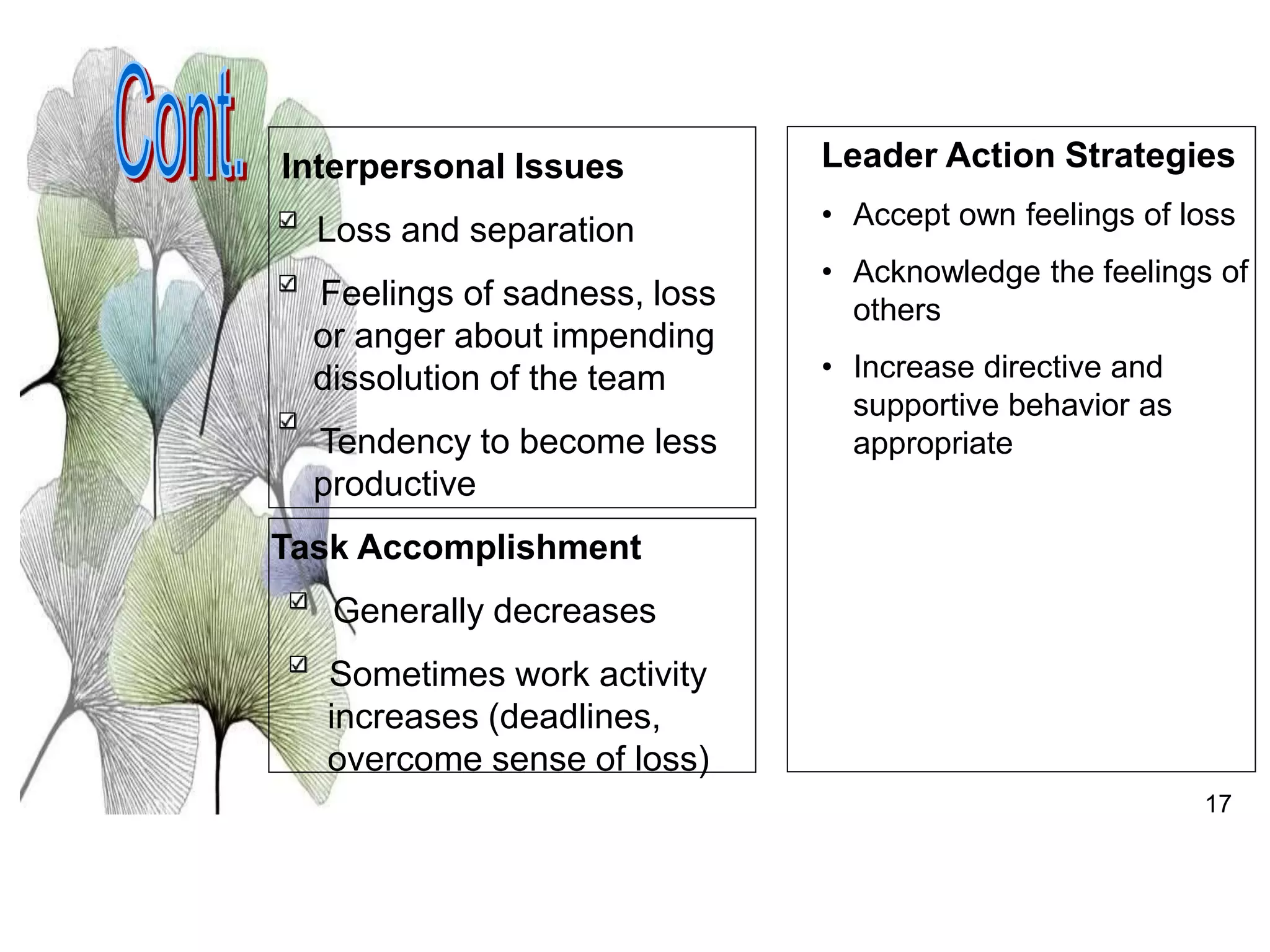
Interpersonal Issues
Loss and separation
Feelings of sadness, loss
or anger about impending
dissolution of the team
Tendency to become less
productive
Task Accomplishment
Generally decreases
Sometimes work activity
increases (deadlines,
overcome sense of loss)
Leader Action Strategies
• Accept own feelings of loss
• Acknowledge the feelings of
others
• Increase directive and
supportive behavior as
appropriate
18
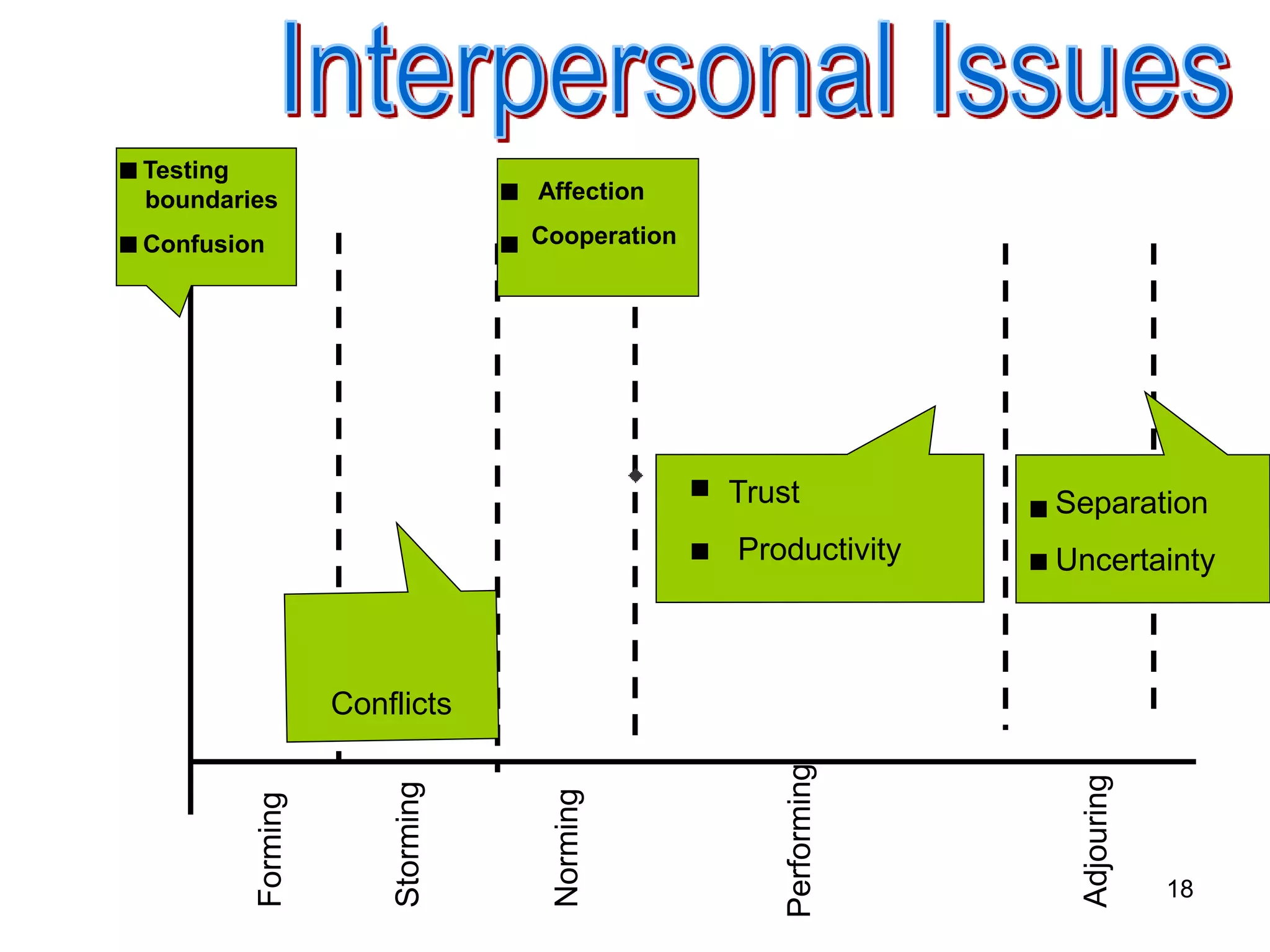
Conflicts
Testing
boundaries
Confusion
Affection
Cooperation
Trust
Productivity
Separation
Uncertainty
Forming
Storming
Norming
Performing
Adjouring
19
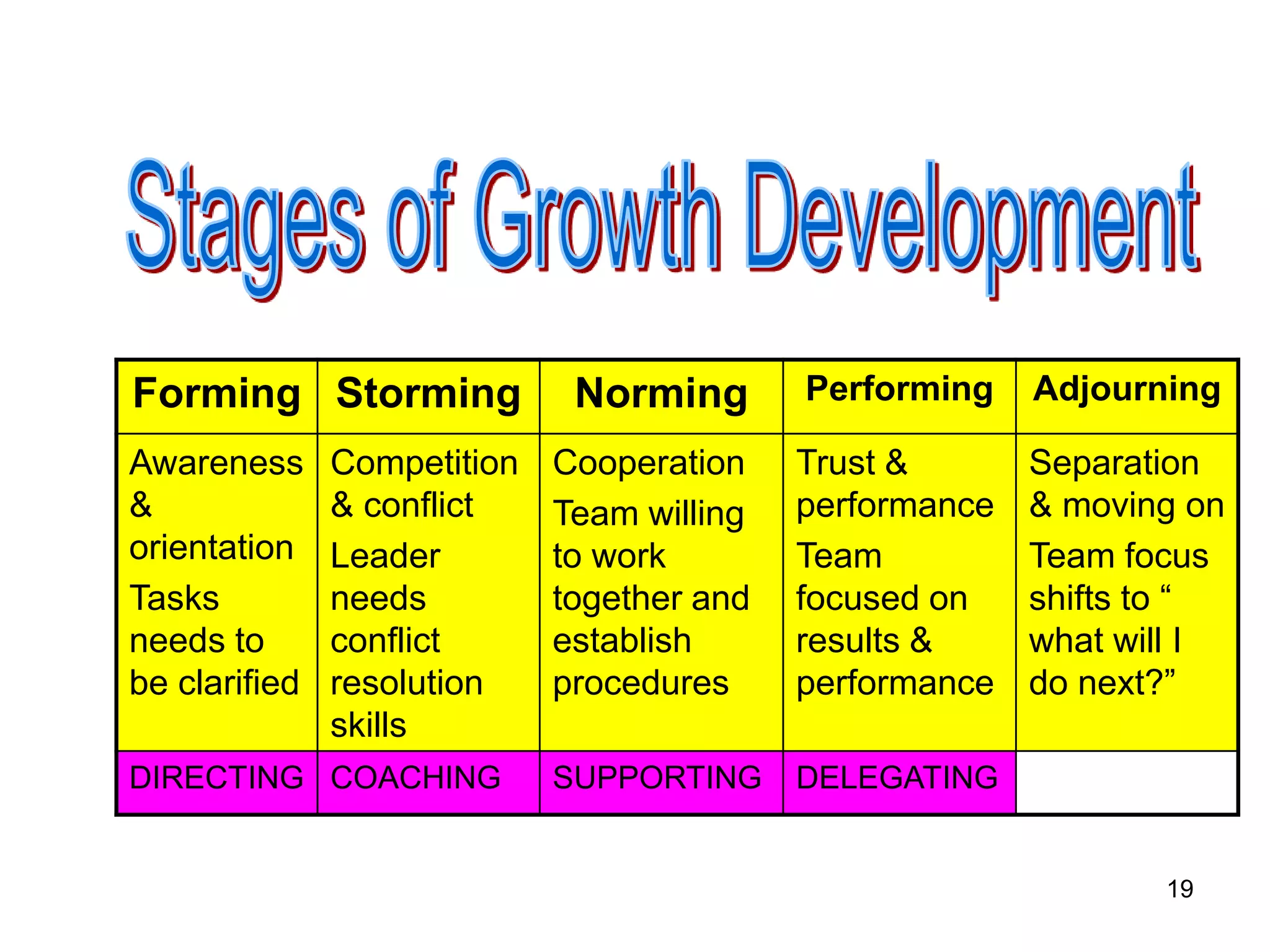
Forming Storming Norming Performing Adjourning
Awareness
&
orientation
Tasks
needs to
be clarified
Competition
& conflict
Leader
needs
conflict
resolution
skills
Cooperation
Team willing
to work
together and
establish
procedures
Trust &
performance
Team
focused on
results &
performance
Separation
& moving on
Team focus
shifts to “
what will I
do next?”
DIRECTING COACHING SUPPORTING DELEGATING
20
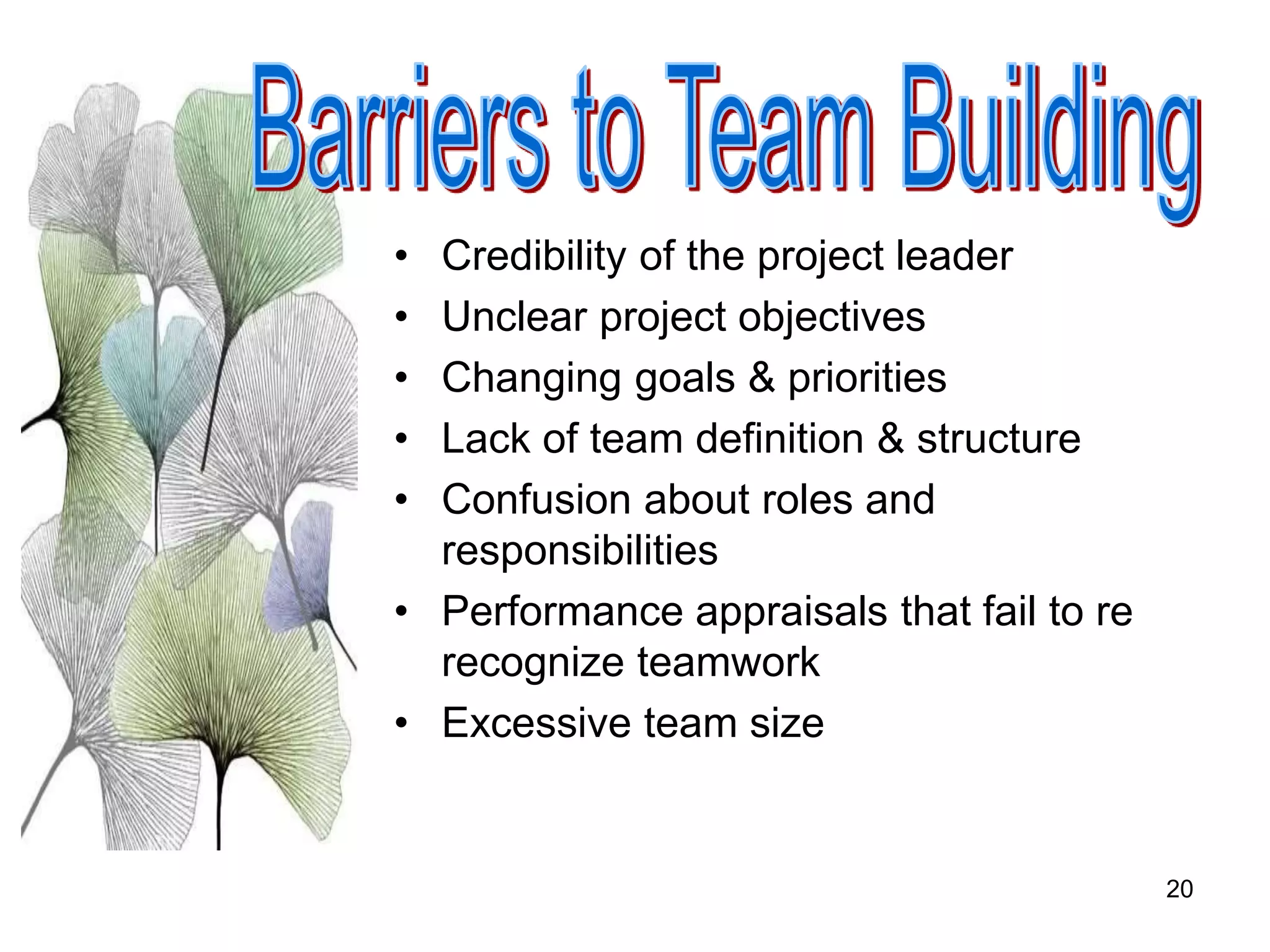
• Credibility of the project leader
• Unclear project objectives
• Changing goals & priorities
• Lack of team definition & structure
• Confusion about roles and
responsibilities
• Performance appraisals that fail to re
recognize teamwork
• Excessive team size
21
22
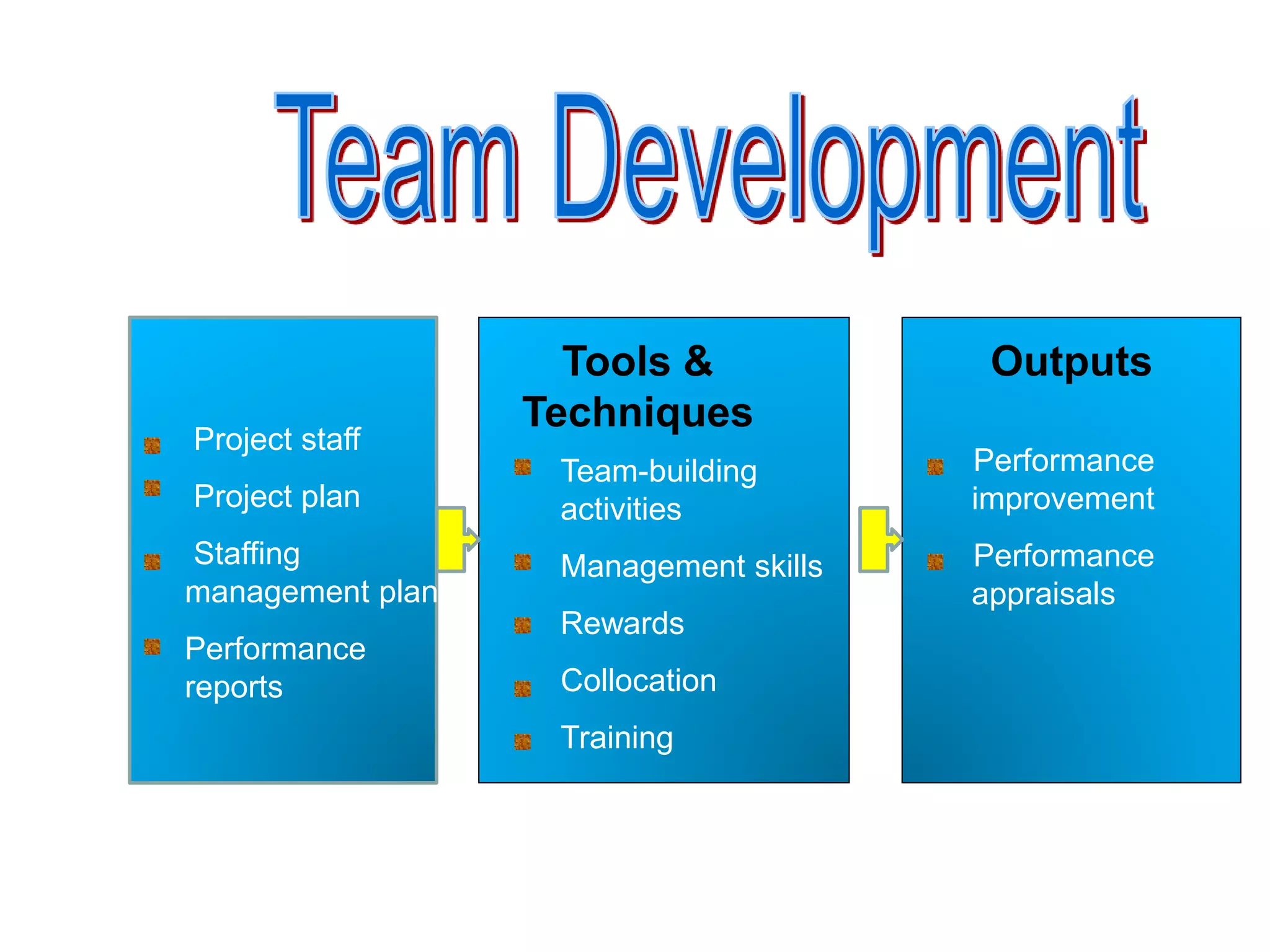
Inputs Tools &
Techniques
Outputs
Project staff
Project plan
Staffing
management plan
Performance
reports
Team-building
activities
Management skills
Rewards
Collocation
Training
Performance
improvement
Performance
appraisals
24
Task oriented behavior
- Focus on what a team
needs to do to get the job
done
- Facilitate and coordinate
decision –making tasks
25
Task oriented behavior
- Focus on what a team
needs to do to get the job
done
- Facilitate and coordinate
decision –making tasks
26
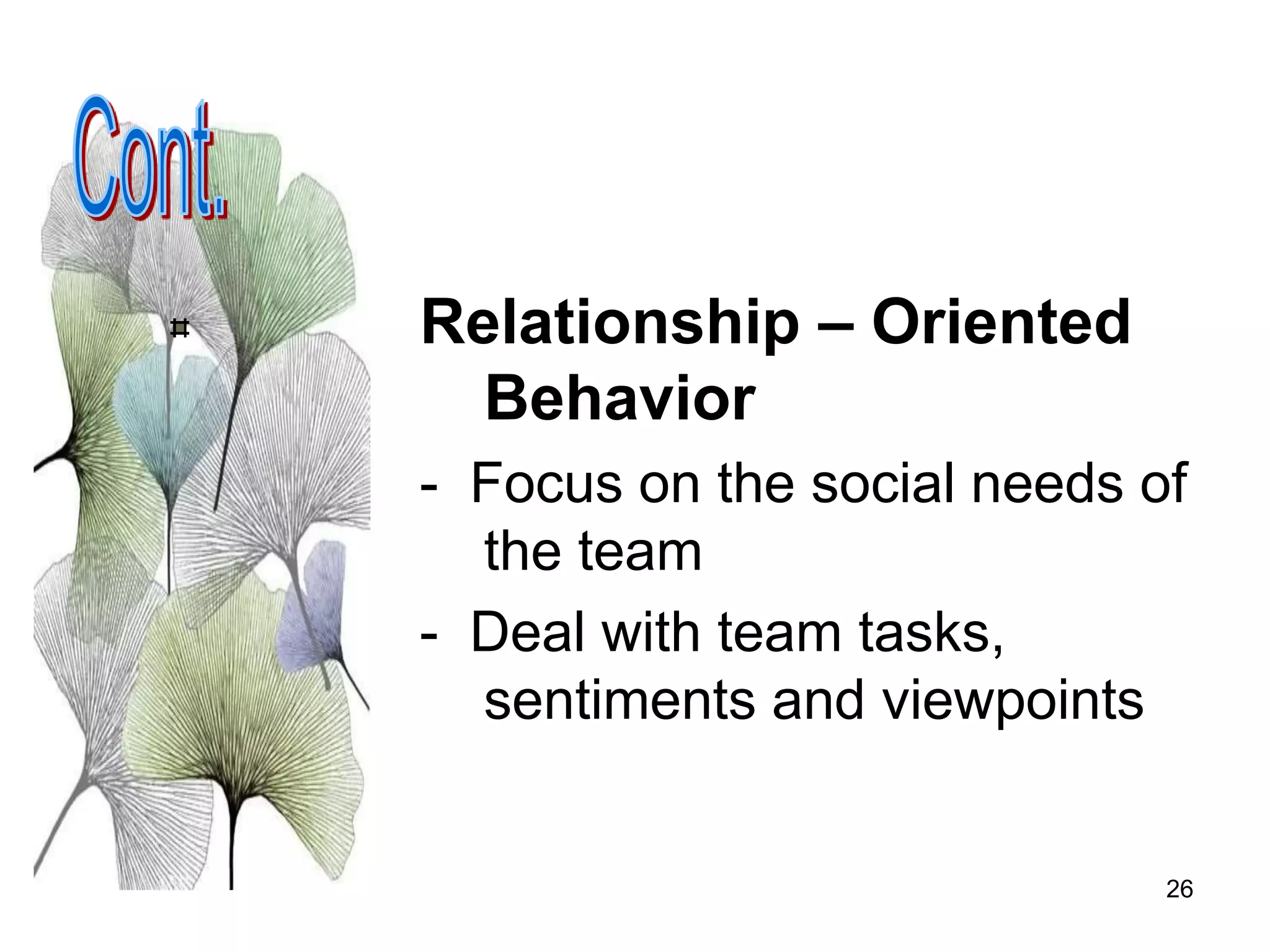
Relationship – Oriented
Behavior
- Focus on the social needs of
the team
- Deal with team tasks,
sentiments and viewpoints
27
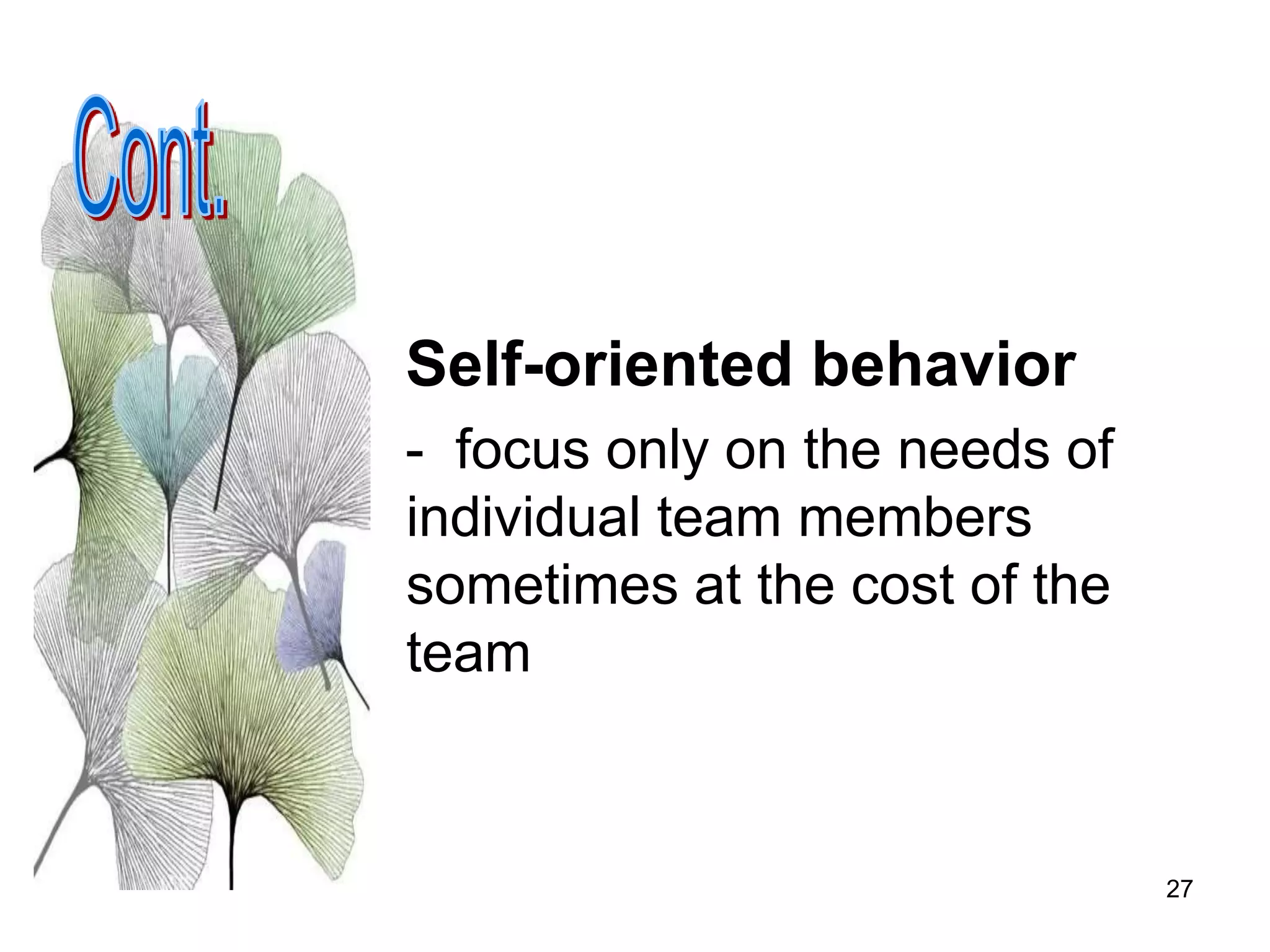
Self-oriented behavior
- focus only on the needs of
individual team members
sometimes at the cost of the
team
28
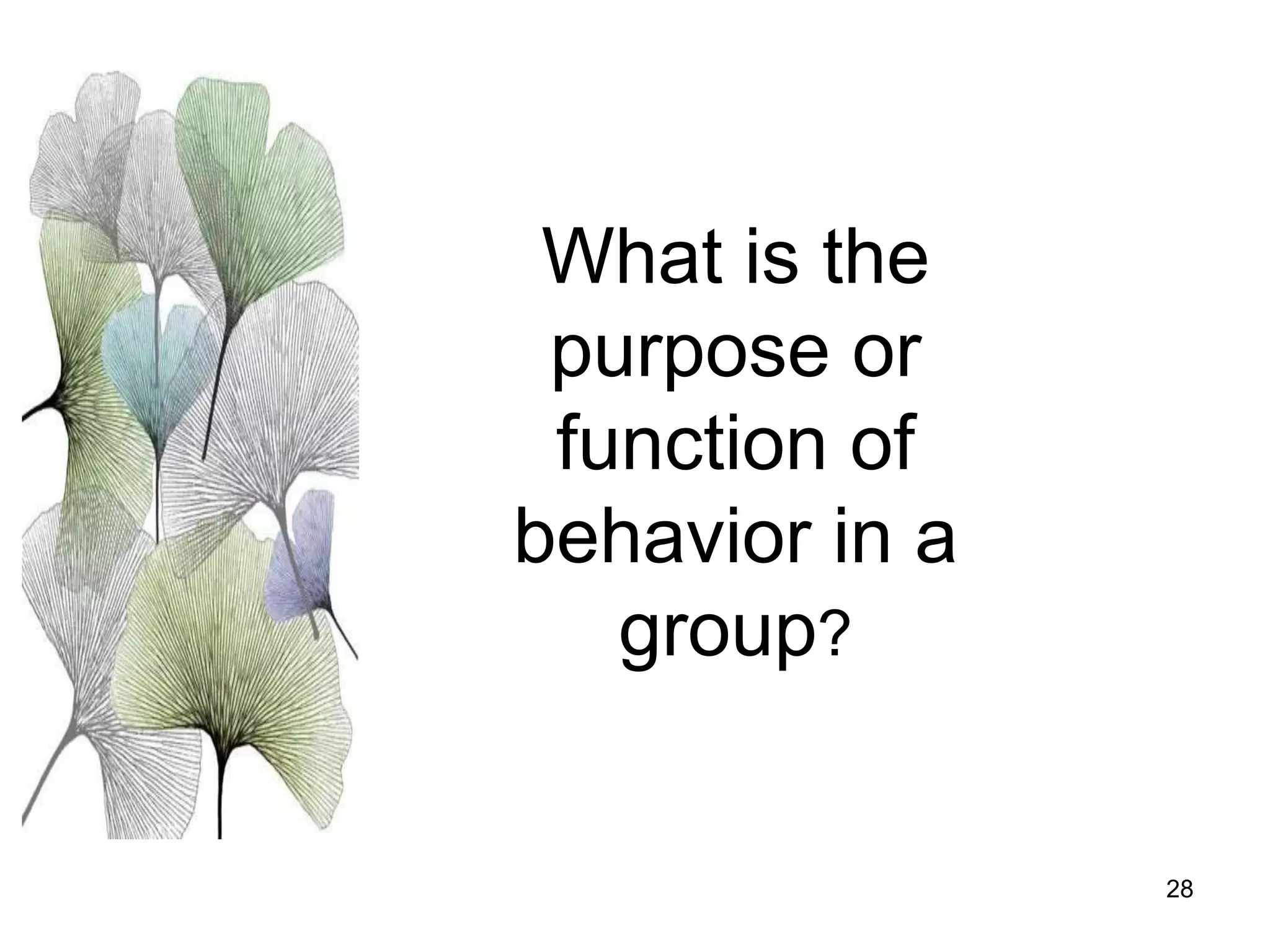
What is the
purpose or
function of
behavior in a
group?
29
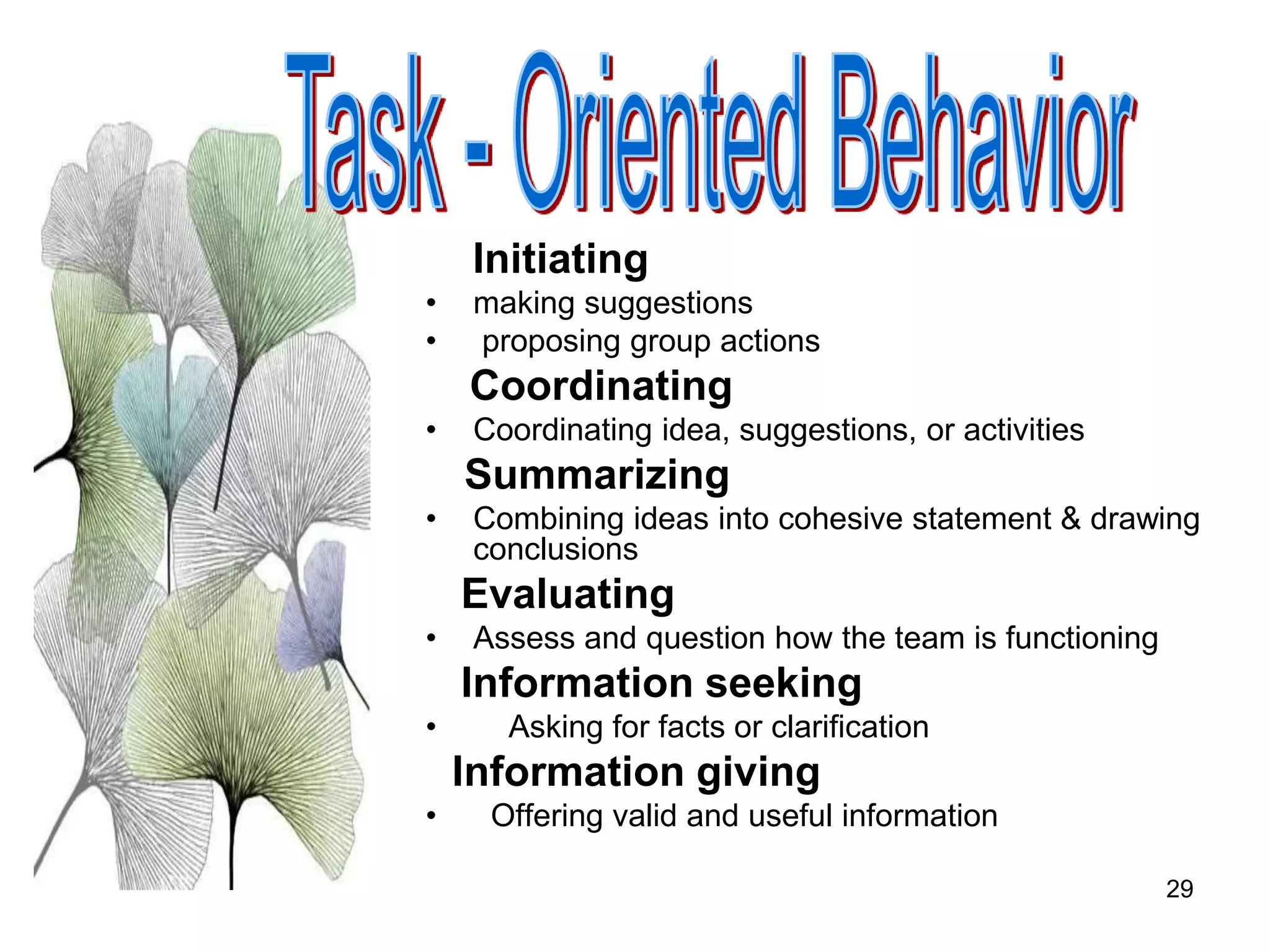
Initiating
• making suggestions
• proposing group actions
Coordinating
• Coordinating idea, suggestions, or activities
Summarizing
• Combining ideas into cohesive statement & drawing
conclusions
Evaluating
• Assess and question how the team is functioning
Information seeking
• Asking for facts or clarification
Information giving
• Offering valid and useful information
30
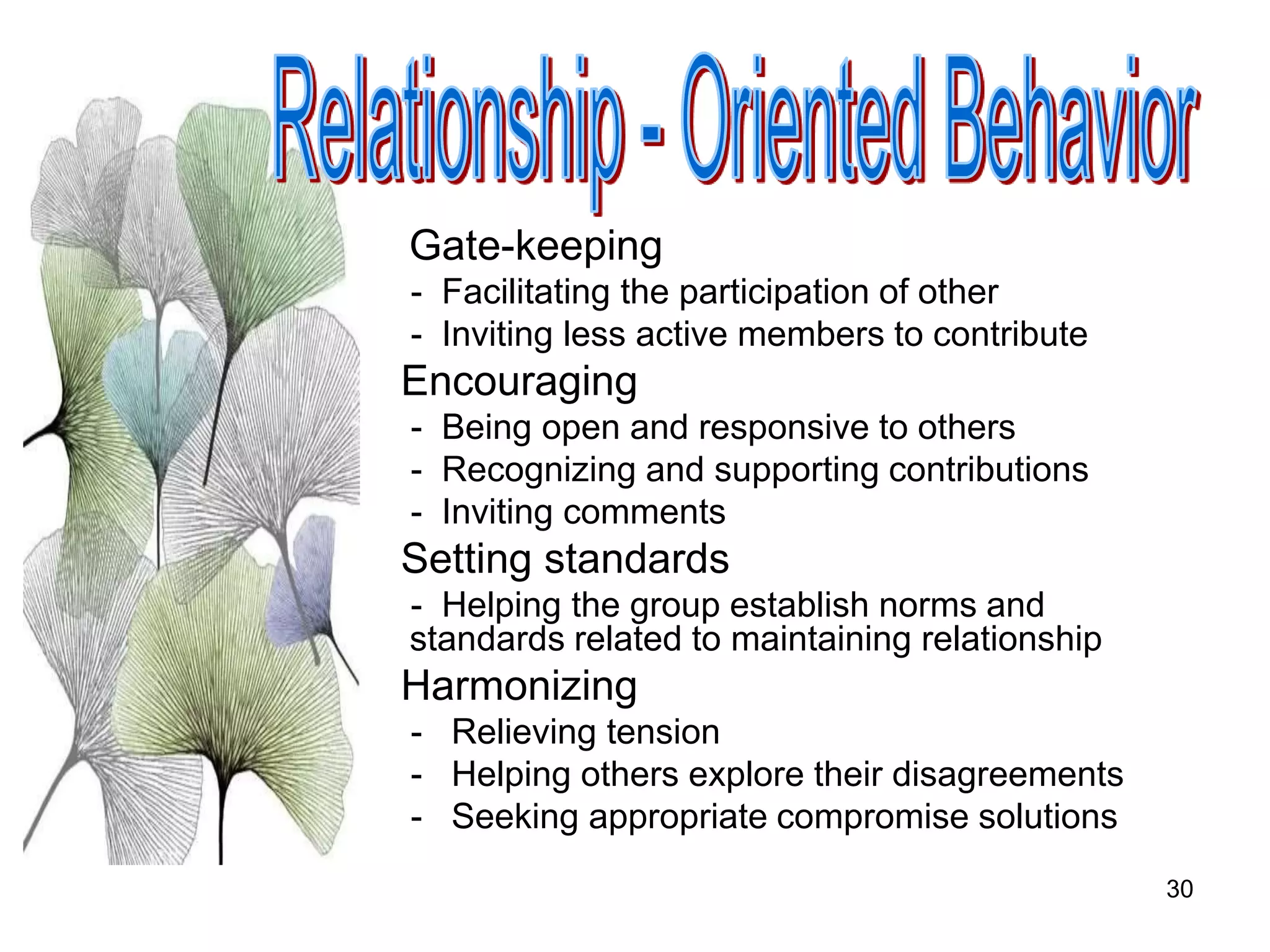
Gate-keeping
- Facilitating the participation of other
- Inviting less active members to contribute
Encouraging
- Being open and responsive to others
- Recognizing and supporting contributions
- Inviting comments
Setting standards
- Helping the group establish norms and
standards related to maintaining relationship
Harmonizing
- Relieving tension
- Helping others explore their disagreements
- Seeking appropriate compromise solutions
31
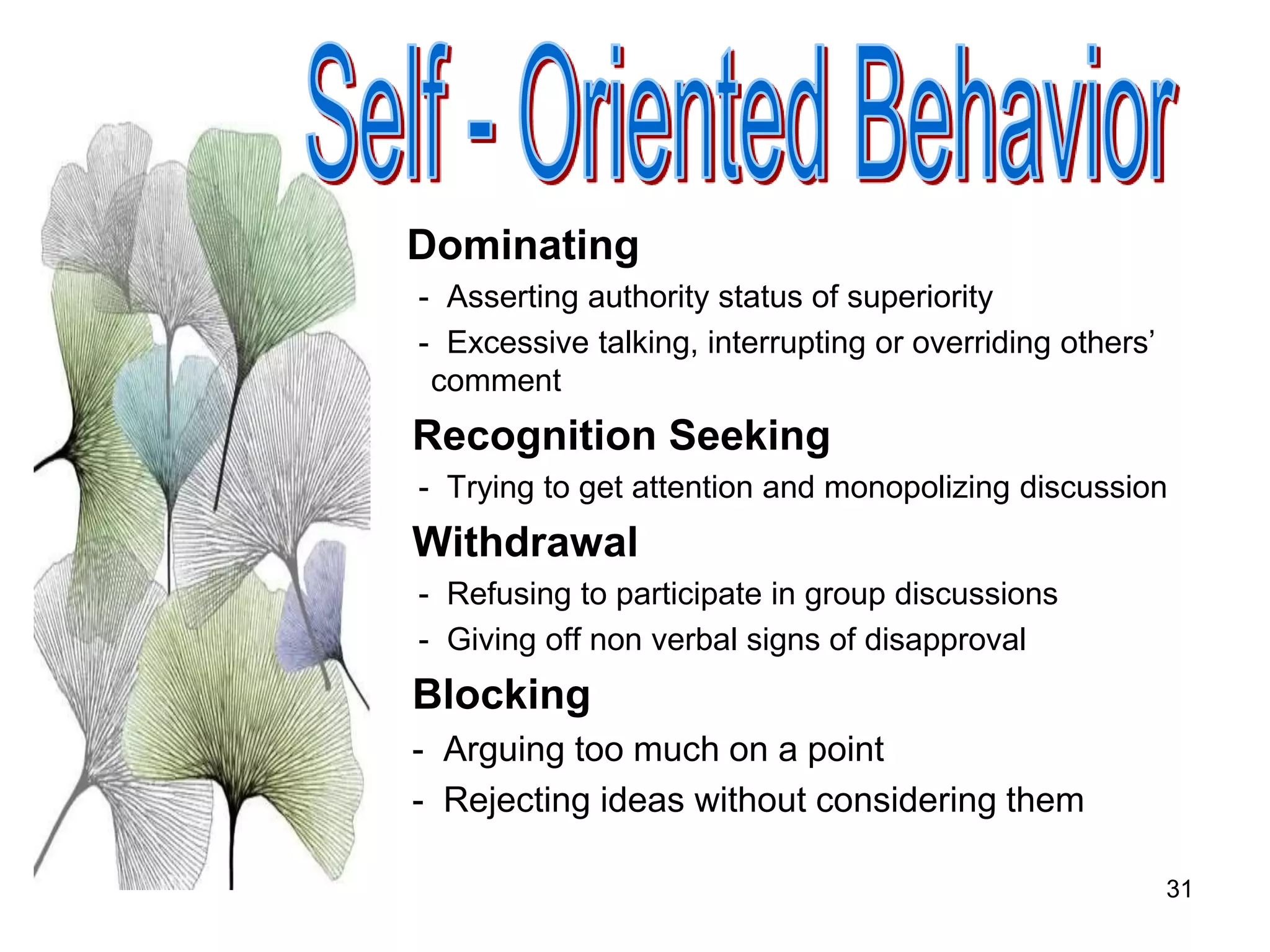
Dominating
- Asserting authority status of superiority
- Excessive talking, interrupting or overriding others’
comment
Recognition Seeking
- Trying to get attention and monopolizing discussion
Withdrawal
- Refusing to participate in group discussions
- Giving off non verbal signs of disapproval
Blocking
- Arguing too much on a point
- Rejecting ideas without considering them
32
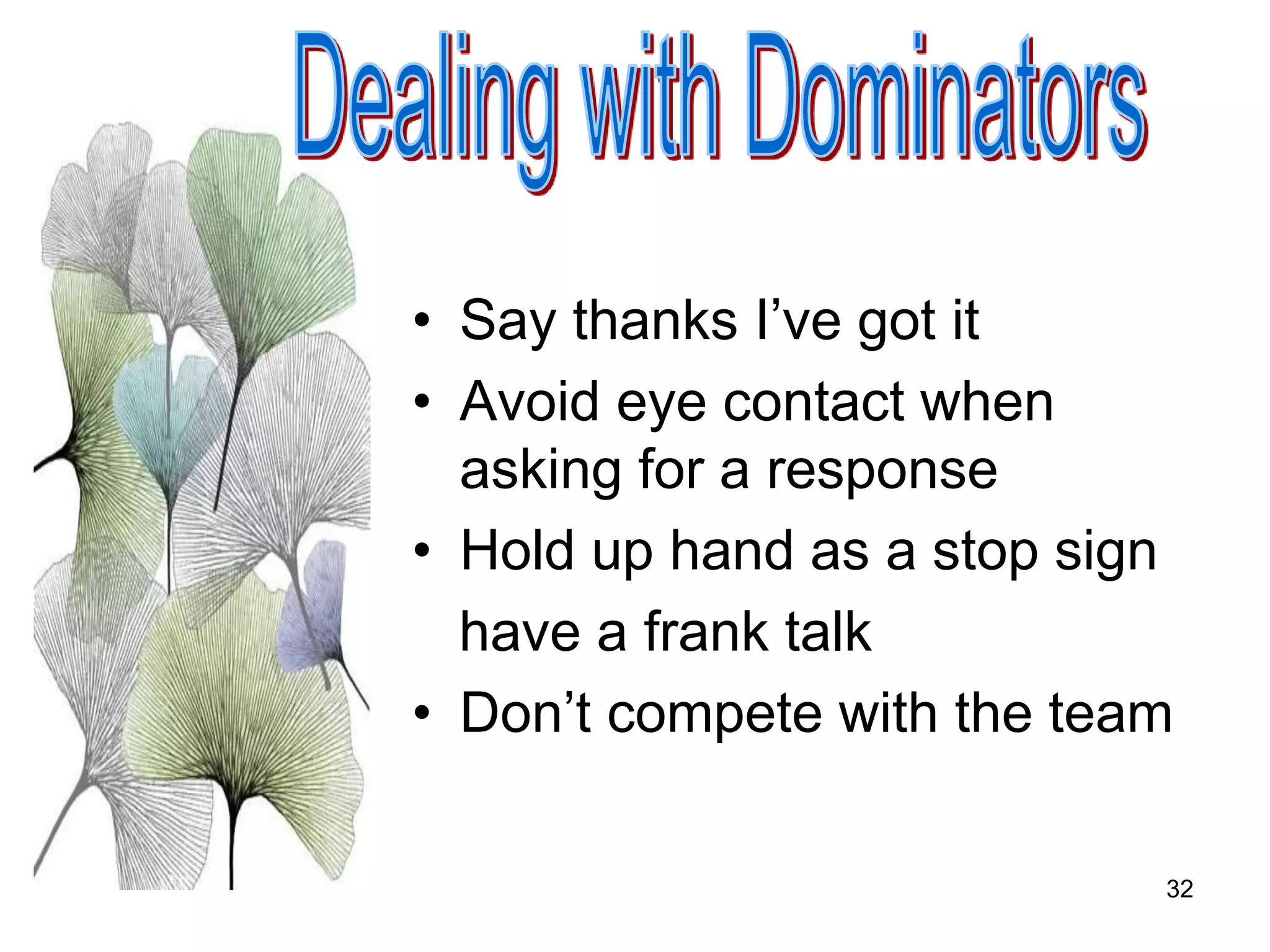
• Say thanks I’ve got it
• Avoid eye contact when
asking for a response
• Hold up hand as a stop sign
have a frank talk
• Don’t compete with the team
33
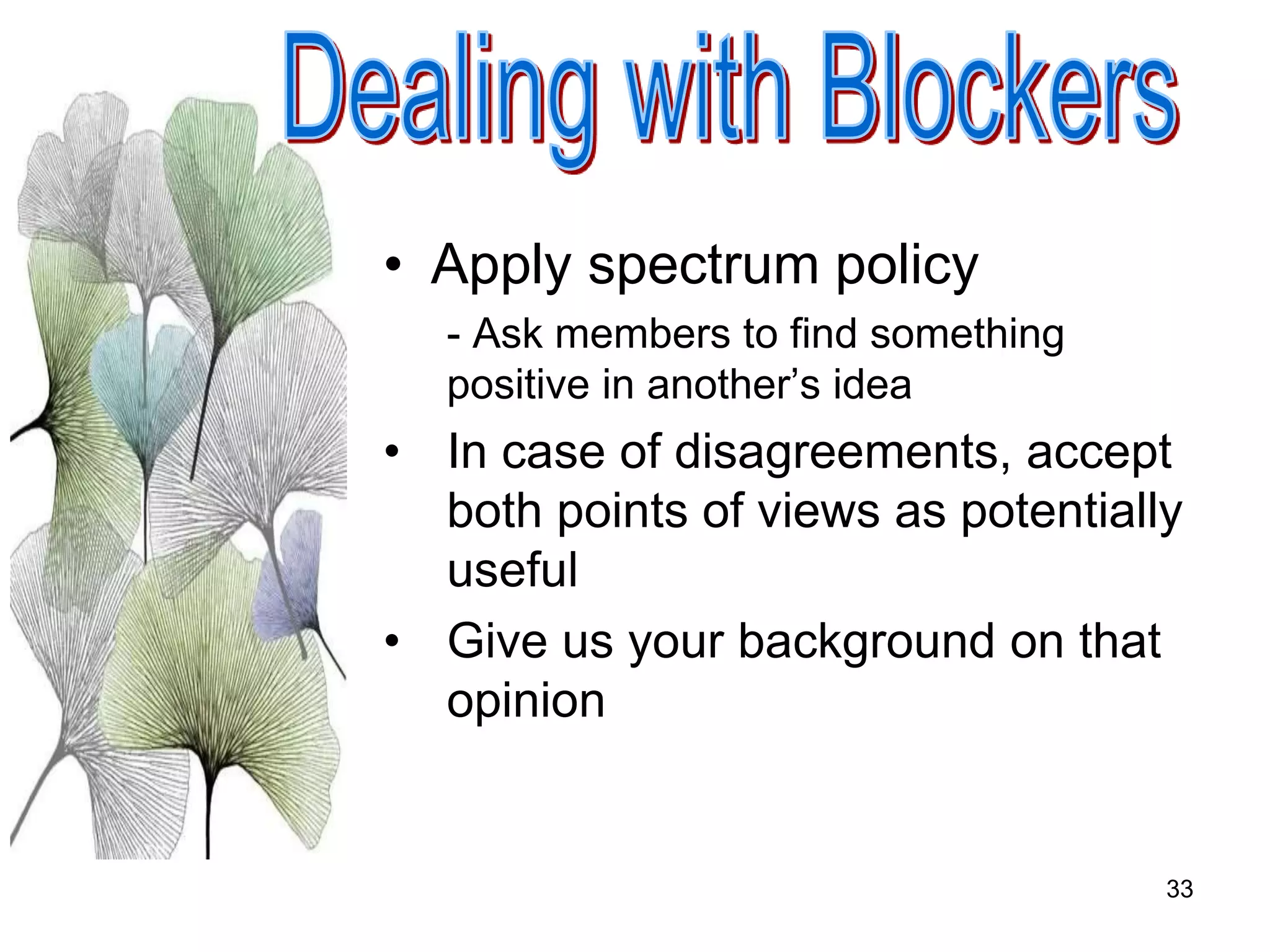
• Apply spectrum policy
- Ask members to find something
positive in another’s idea
• In case of disagreements, accept
both points of views as potentially
useful
• Give us your background on that
opinion
34
• Keep the energy level high
- keep past pace
- Ask difficult questions
- Be intense
- use humor
• Keep eye contact when
asking questions
• Avoid pinning down an
individual
35
• Could we hear more?
• Give us specific
information, please
• Could you look into that
and give us more
information at the next
meeting
• Keep meeting at fast pace
36
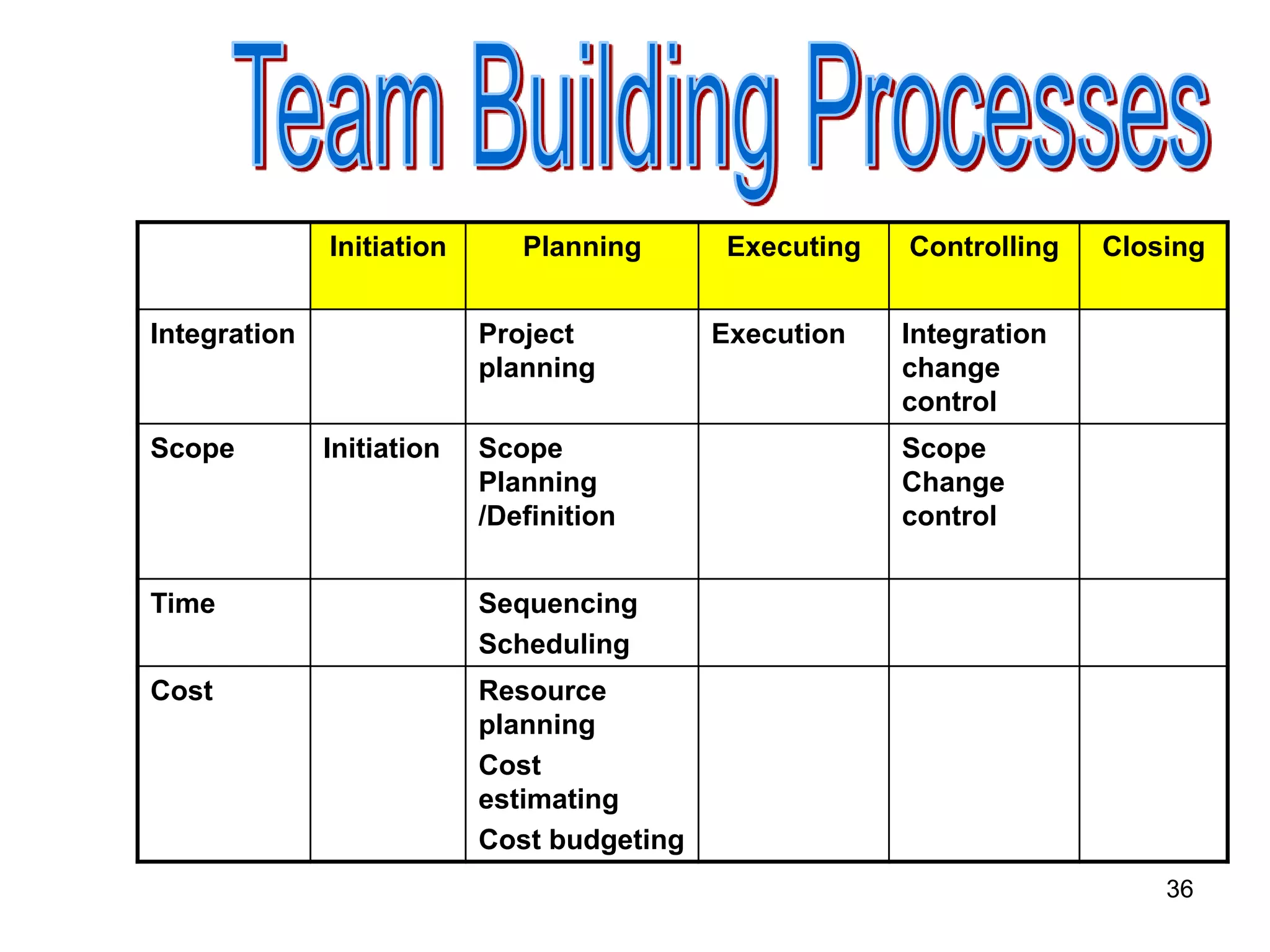
Initiation Planning Executing Controlling Closing
Integration Project
planning
Execution Integration
change
control
Scope Initiation Scope
Planning
/Definition
Scope
Change
control
Time Sequencing
Scheduling
Cost Resource
planning
Cost
estimating
Cost budgeting
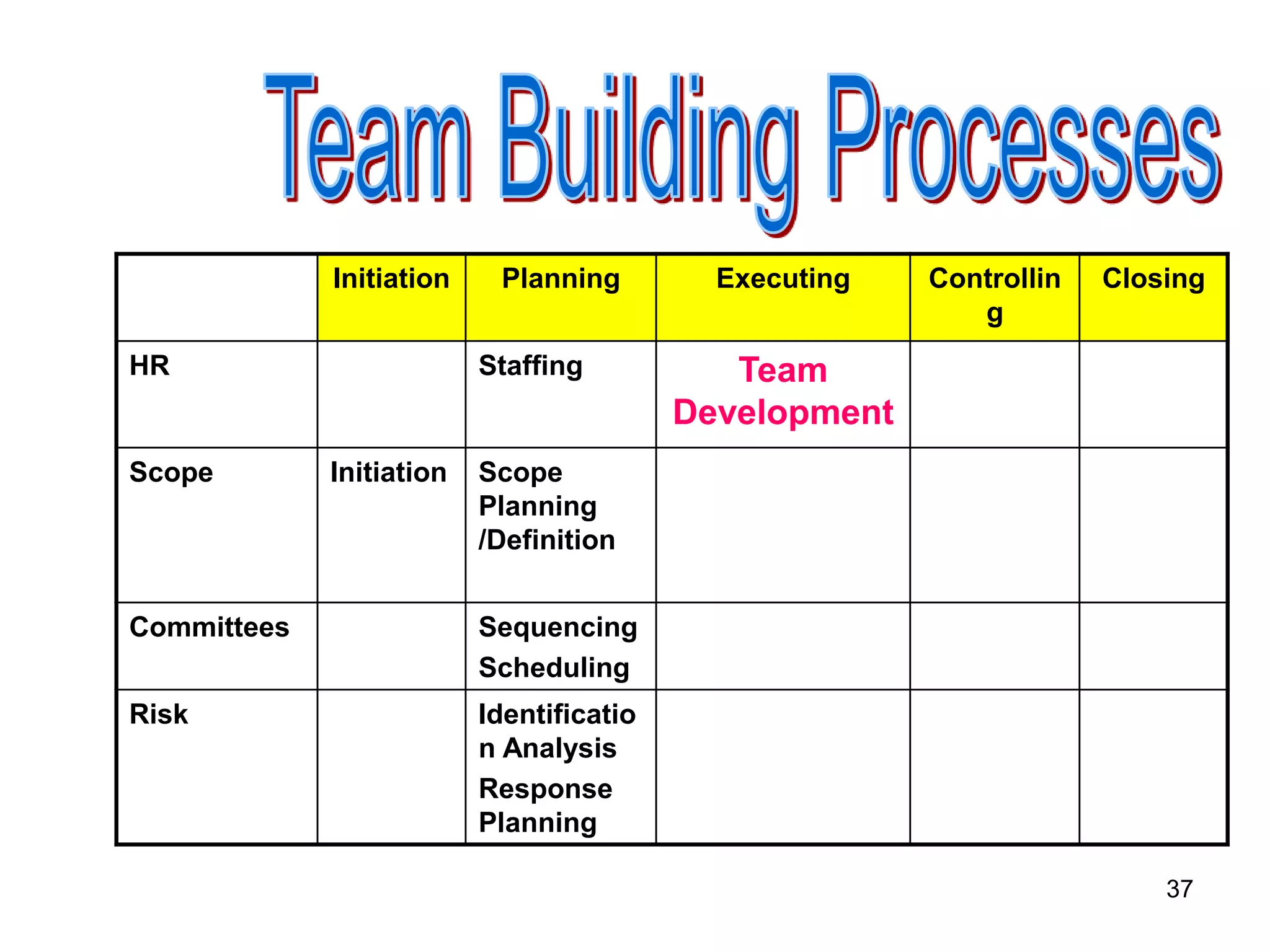
37
Initiation Planning Executing Controllin
g
Closing
HR Staffing Team
Development
Scope Initiation Scope
Planning
/Definition
Committees Sequencing
Scheduling
Risk Identificatio
n Analysis
Response
Planning
38
Teamwork is essential for
competing in today's global
arena, where individual
perfection is not as desirable
as a high level of collective
performance. In our
organization today teams are
the norm rather than the
exception.
39
Teamwork helps organizations in
many ways:
It gives the employees cooperative
spirit. When people work together for a
common goal it gives them a sense of
belonging. It is important for people to
feel like they are a part of something. When
they feel this pride, they will want to put their
best foot forward. They will have enthusiasm
in the workplace and connect with other
employees.
40
Teamwork brings more
efficiency to the workplace.
This is really the most
important thing.
41
When people work together in
close proximity every day, it
makes changes a lot easier.
Fellow employees will have
the chance to teach and
practice the new methods
with others in the cooperative.
This will save the coop’s
money in training and other
implementation costs.
42
Teams should strive to achieve
consensus. Unlike the terms
unanimous and majority, there
is no vote with consensus
43
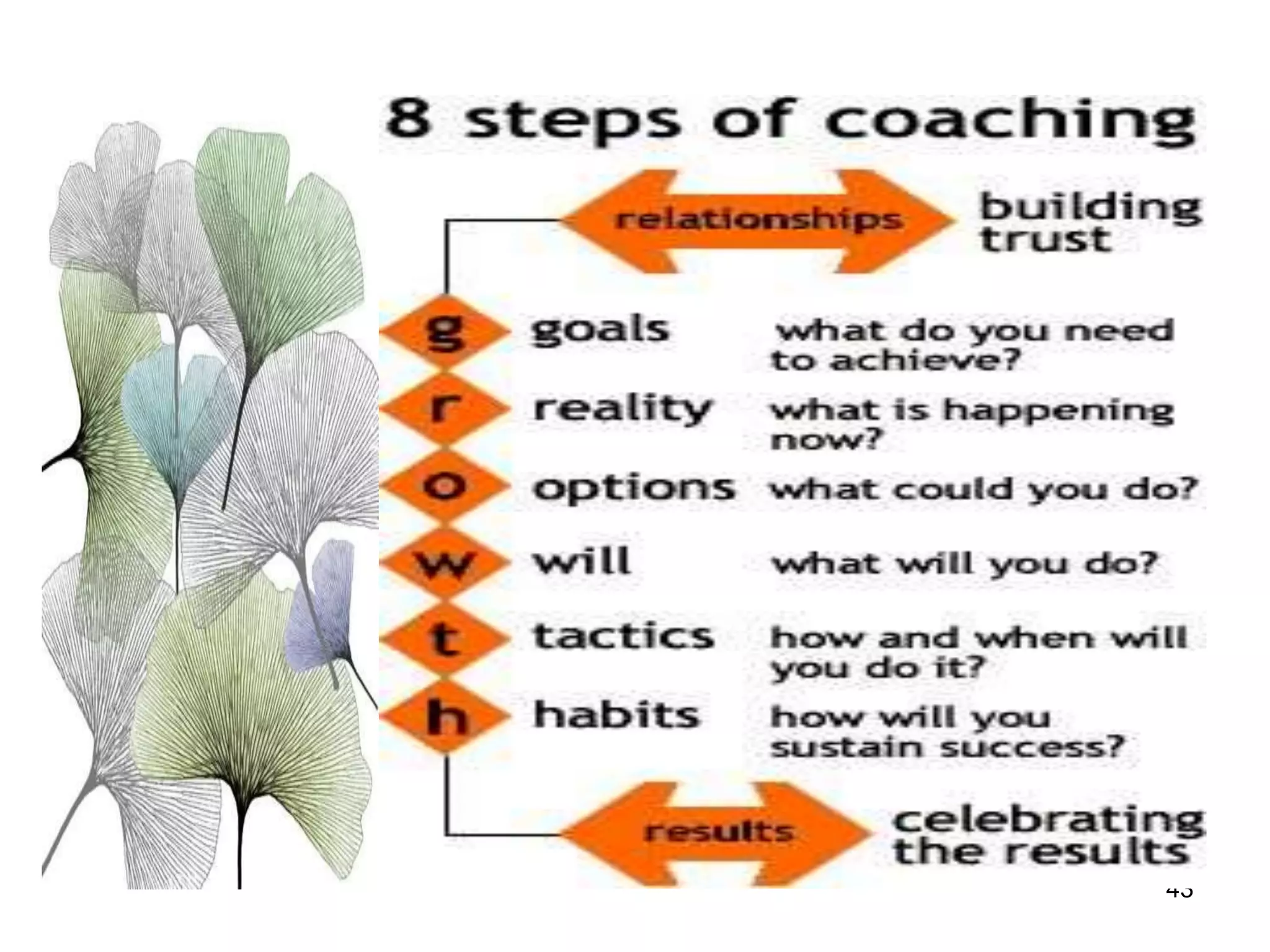
44
A Team Leader should try to get
the best out of every player. So,
he studies each member, to
discover his talents, and to
develop them. He also studies
each member, to discover their
weaknesses, and to strengthen
them
45
Then he trains these
members to play as
a team. He teaches
each one to sacrifice
his own personal
glory for the
common good
46
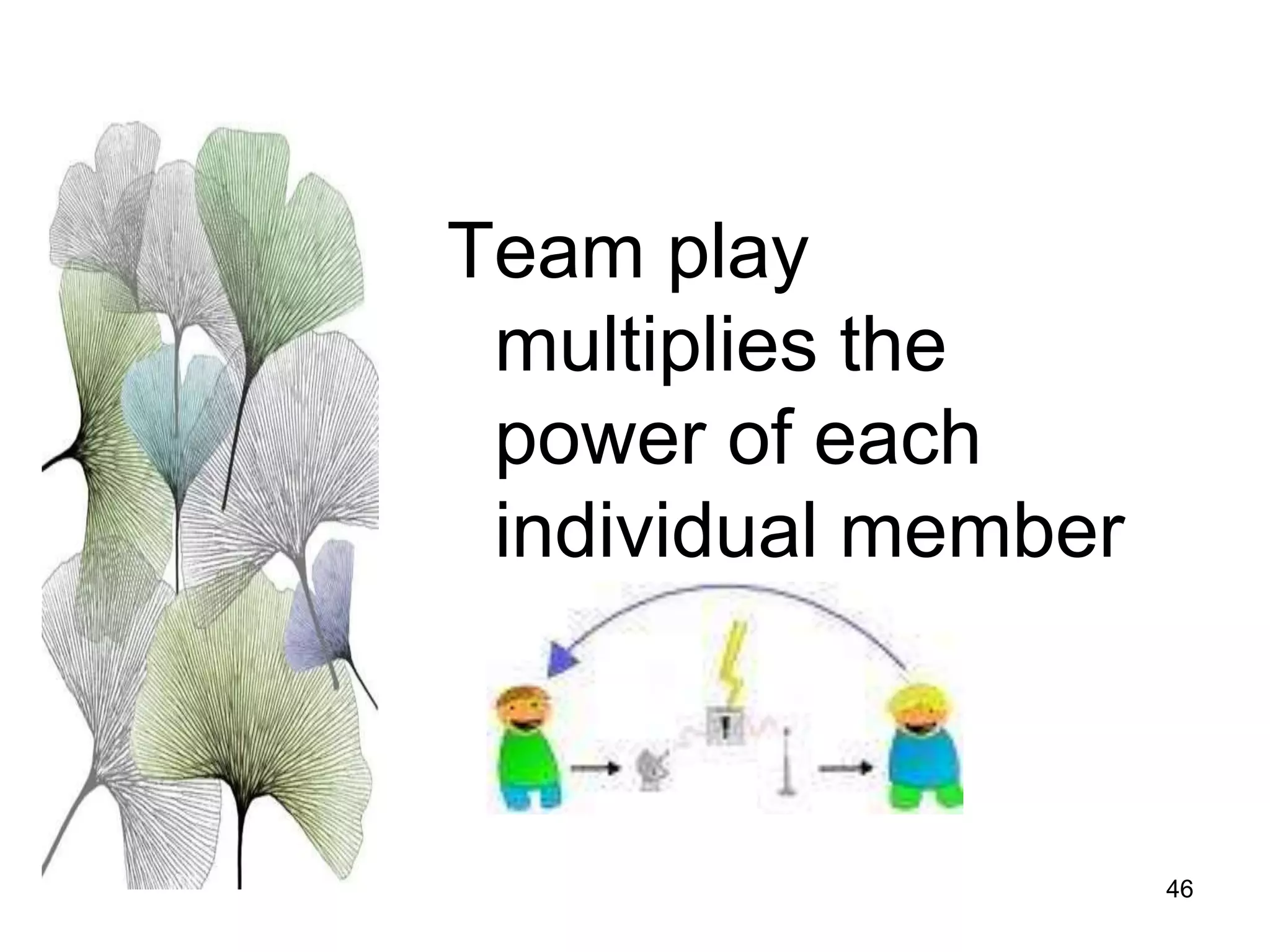
Team play
multiplies the
power of each
individual member
47
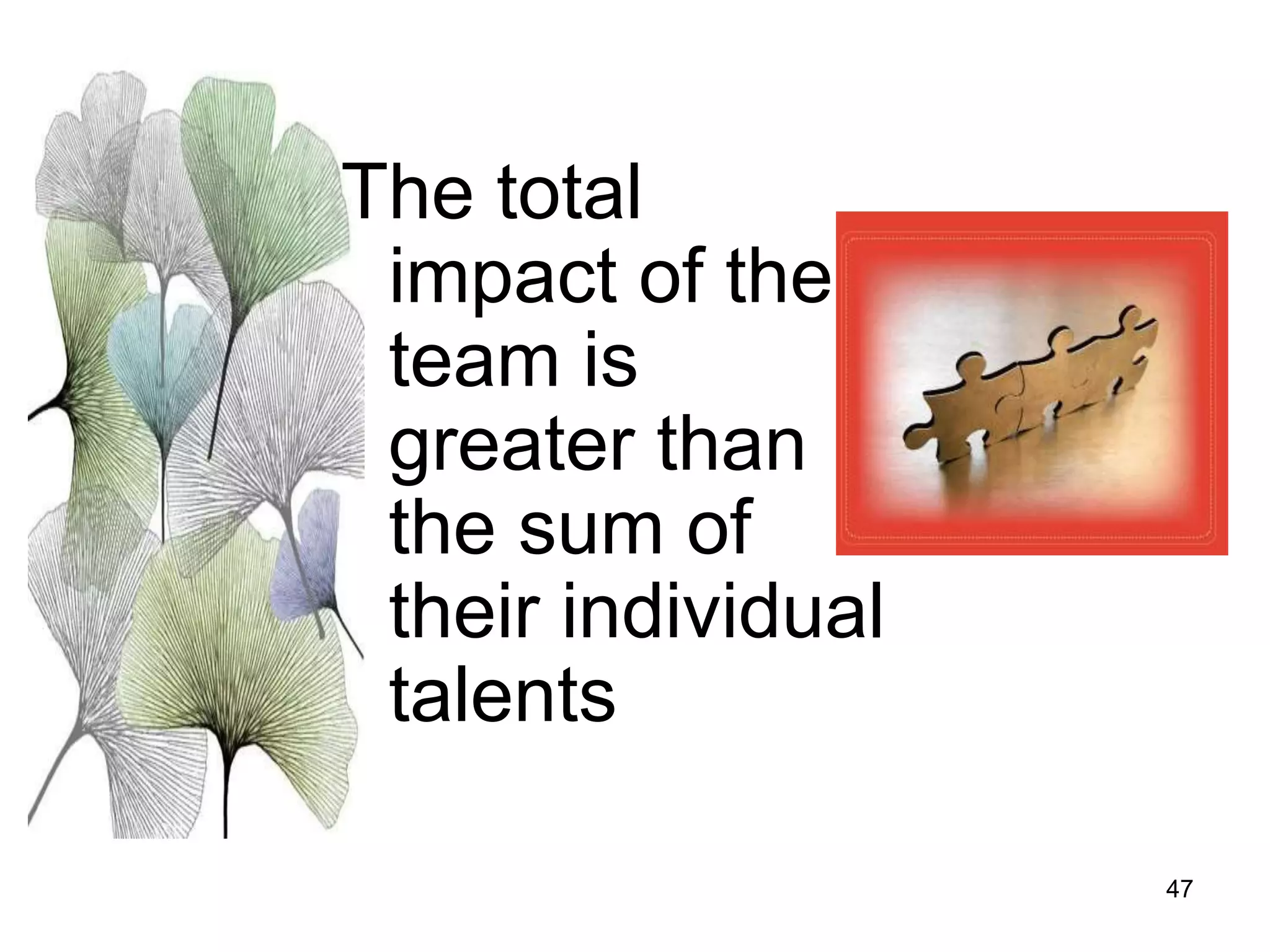
The total
impact of the
team is
greater than
the sum of
their individual
talents
48
• The team performance goals
will be much larger numbers
than an individual's numbers,
and at first it may seem very
difficult to reach.
• That is why management
must break the monthly goals
into daily achievable activity;
then individual and target
numbers seem more attainable
49
• Management must not only give
praise to the individual doing the
exceptional work, but must also
focus on the team results and
praise, correct, or redirect
accordingly.
• During the team building period
(the first 6 months) meeting and
discussions with the group should
spotlight the positive aspects.
50
If there is an
individual who
is not meeting
their goals,
bring them in
for counseling
via a one-on-
one meeting.
51
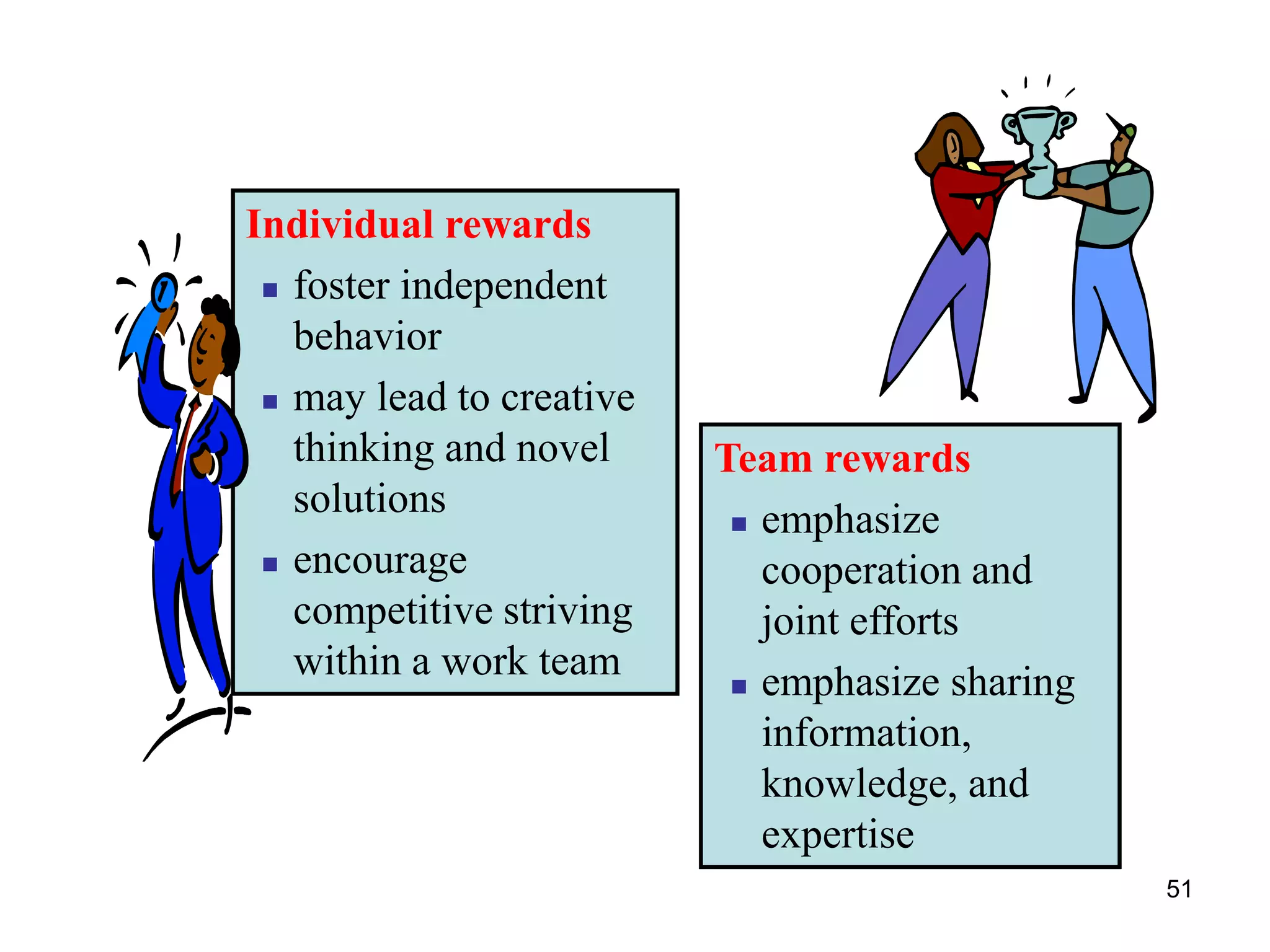
Individual rewards
 foster independent
behavior
 may lead to creative
thinking and novel
solutions
 encourage
competitive striving
within a work team
Team rewards
 emphasize
cooperation and
joint efforts
 emphasize sharing
information,
knowledge, and
expertise
52
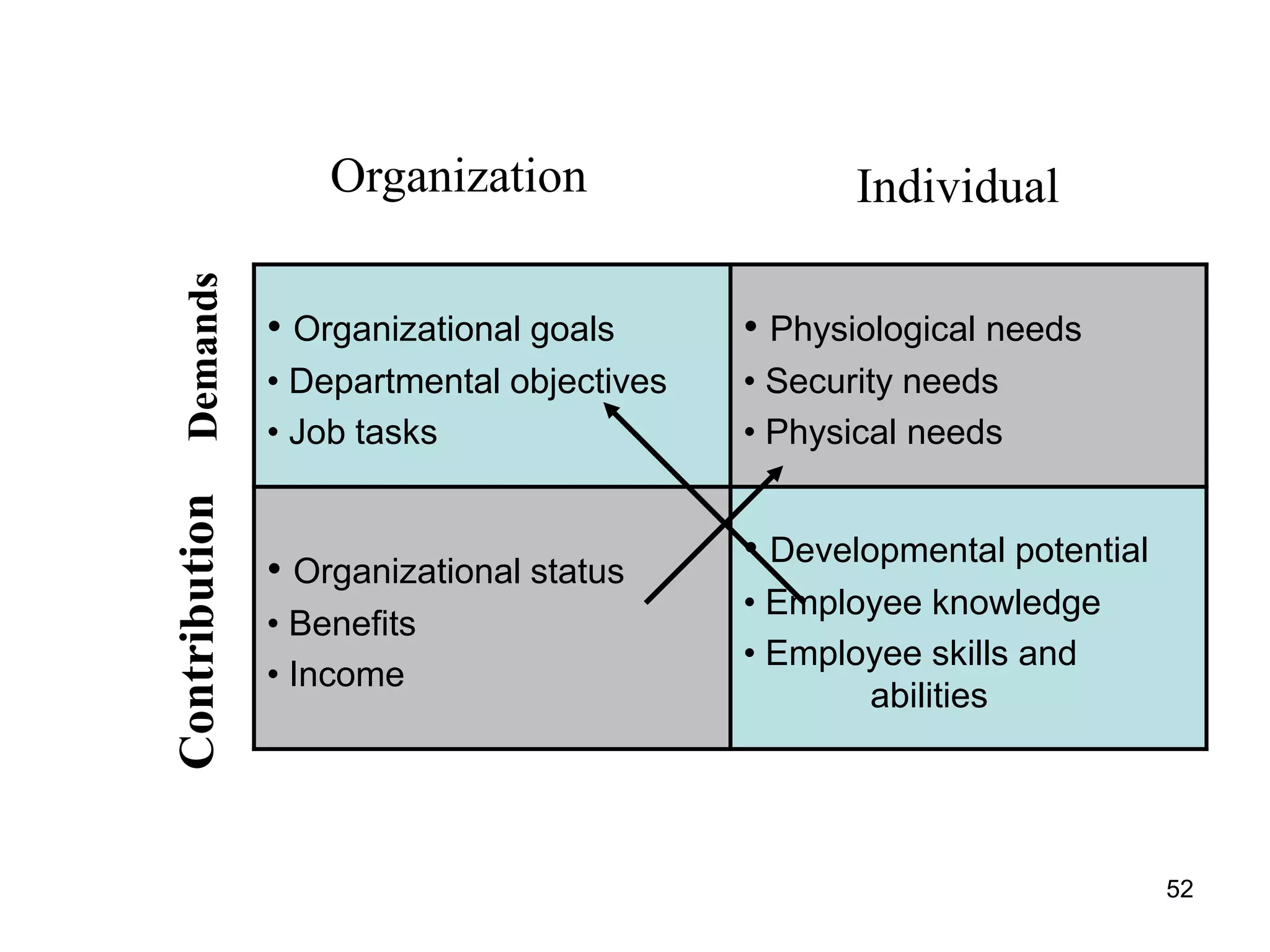
Individual-Organizational Exchange
Relationship
• Organizational goals
• Departmental objectives
• Job tasks
• Physiological needs
• Security needs
• Physical needs
• Organizational status
• Benefits
• Income
• Developmental potential
• Employee knowledge
• Employee skills and
abilities
Individual
Organization
Demands
Contribution
53
A good workplace with happy,
productive employees is
beneficial for the entire
cooperative and its members.
Making an environment that
allows staff to feel good about
their work and how they
contribute has its challenges.
Promoting a Good Workplace
54
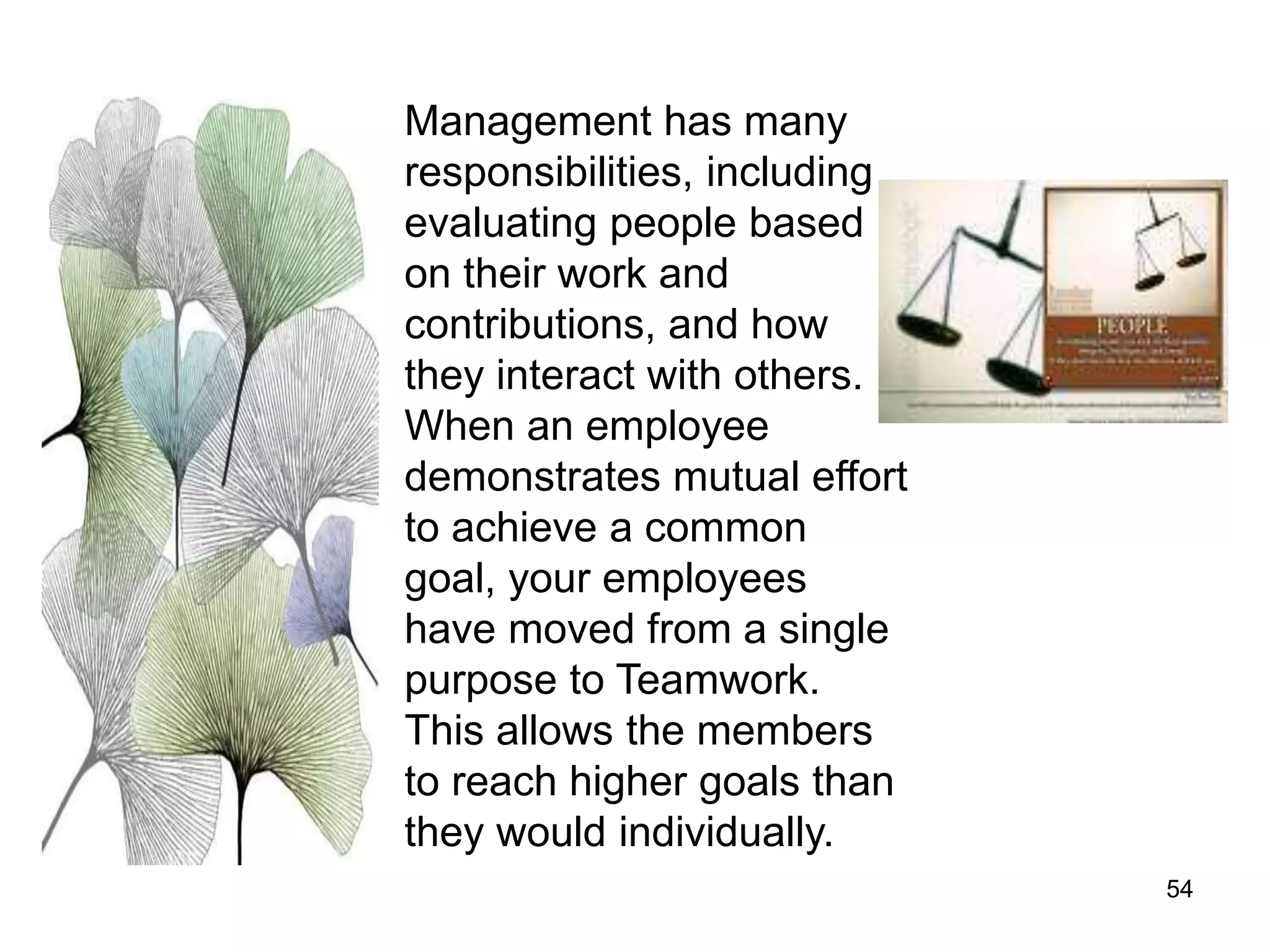
Management has many
responsibilities, including
evaluating people based
on their work and
contributions, and how
they interact with others.
When an employee
demonstrates mutual effort
to achieve a common
goal, your employees
have moved from a single
purpose to Teamwork.
This allows the members
to reach higher goals than
they would individually.
55
Provide incentives for the
group when the goals are
reached. Daily feedback of
results is needed to keep
the assembled team
focusing on the new goal.
This review should move the
focus for training and advice
from management to the
team. Let them share their
ideas and experiences.
56
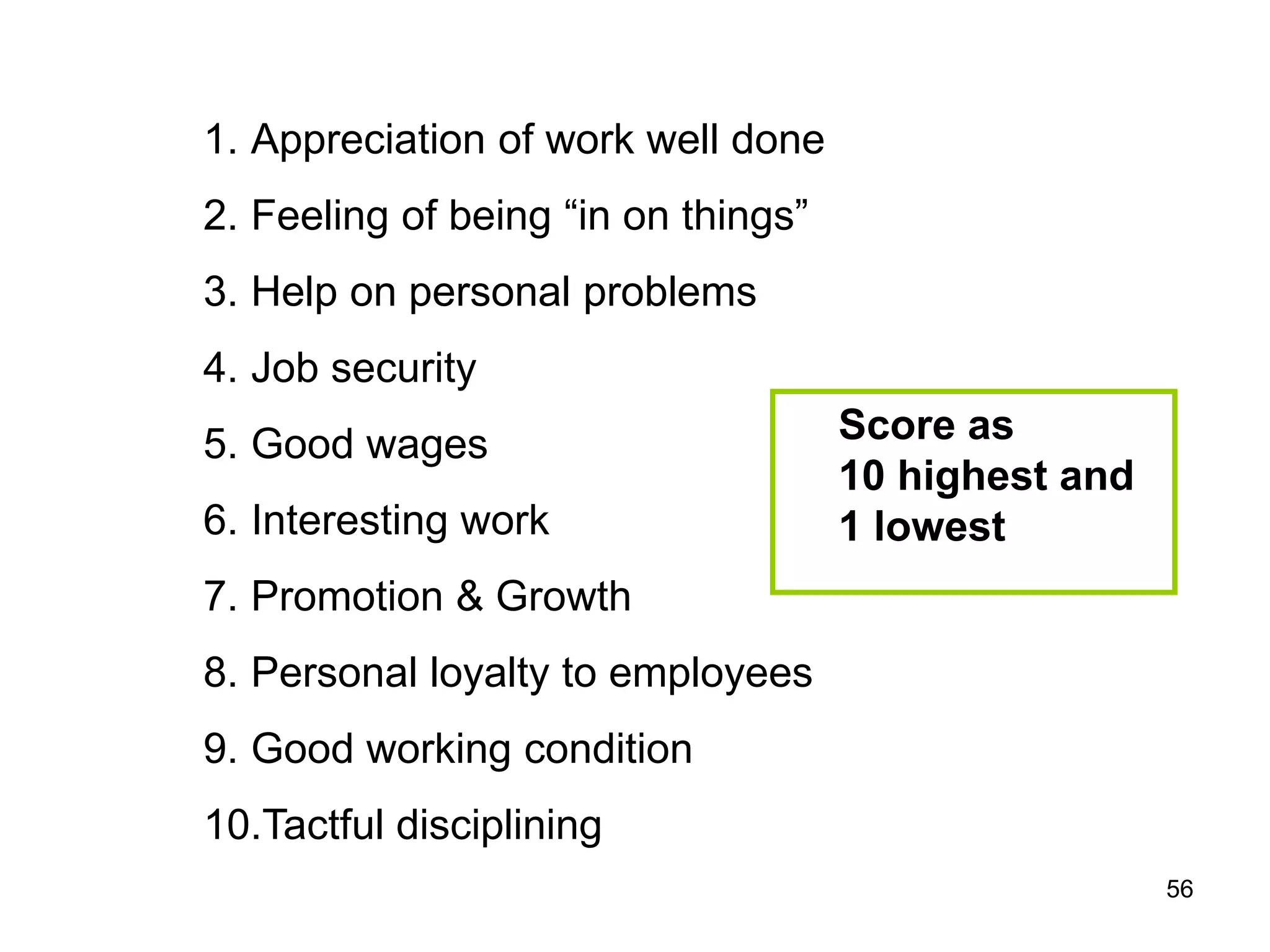
1. Appreciation of work well done
2. Feeling of being “in on things”
3. Help on personal problems
4. Job security
5. Good wages
6. Interesting work
7. Promotion & Growth
8. Personal loyalty to employees
9. Good working condition
10.Tactful disciplining
Score as
10 highest and
1 lowest
57
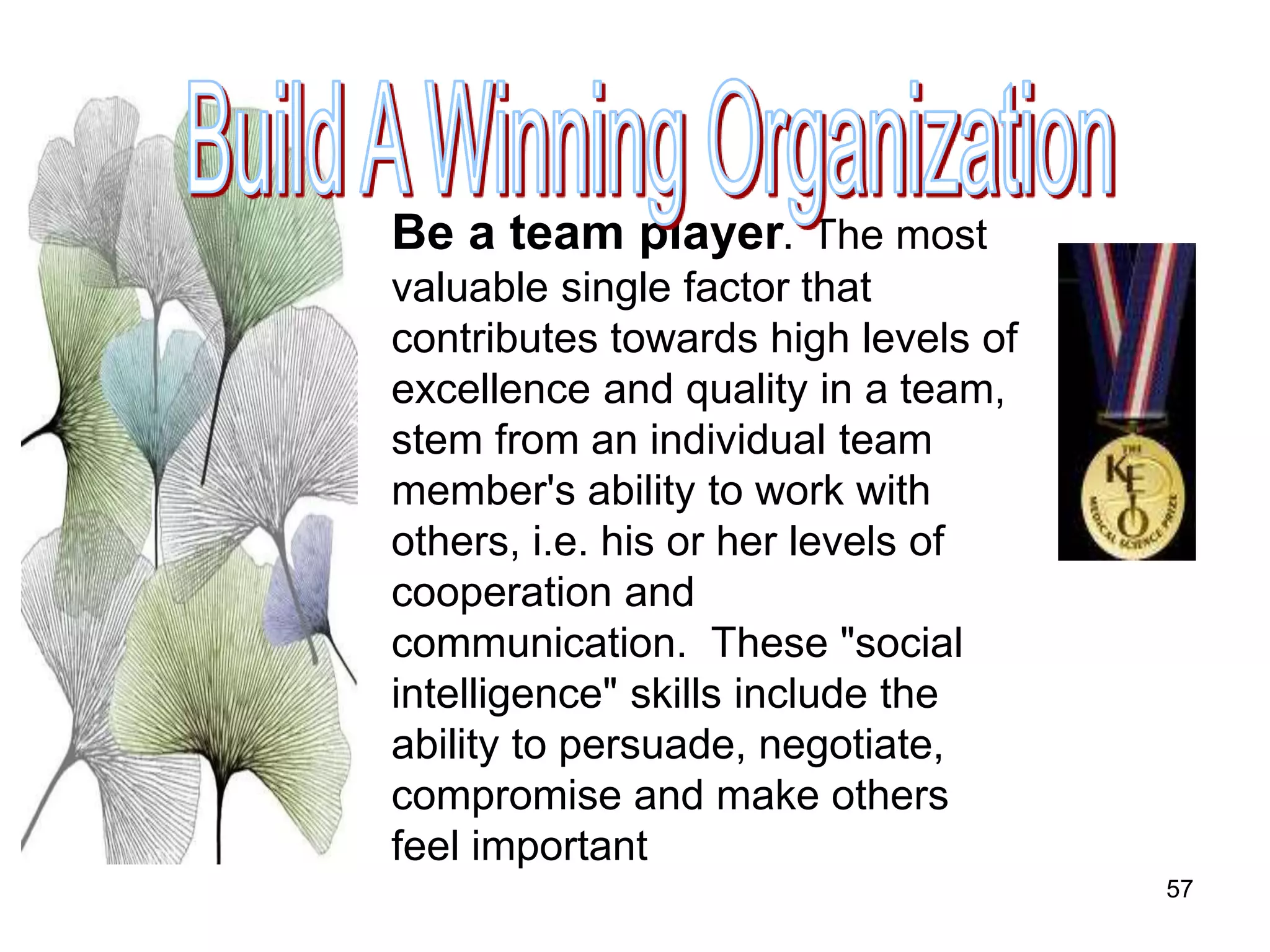
Be a team player. The most
valuable single factor that
contributes towards high levels of
excellence and quality in a team,
stem from an individual team
member's ability to work with
others, i.e. his or her levels of
cooperation and
communication. These "social
intelligence" skills include the
ability to persuade, negotiate,
compromise and make others
feel important
58
The most valuable single factor that
contributes towards high levels of
excellence and quality in a team,
stem from an individual team
member's ability to work with others,
i.e. his or her levels of cooperation
and communication. These "social
intelligence" skills include the ability
to persuade, negotiate, compromise
and make others feel important
59
Winning
organization
or Losing
Organization
Like any journey, many different
routes can be taken
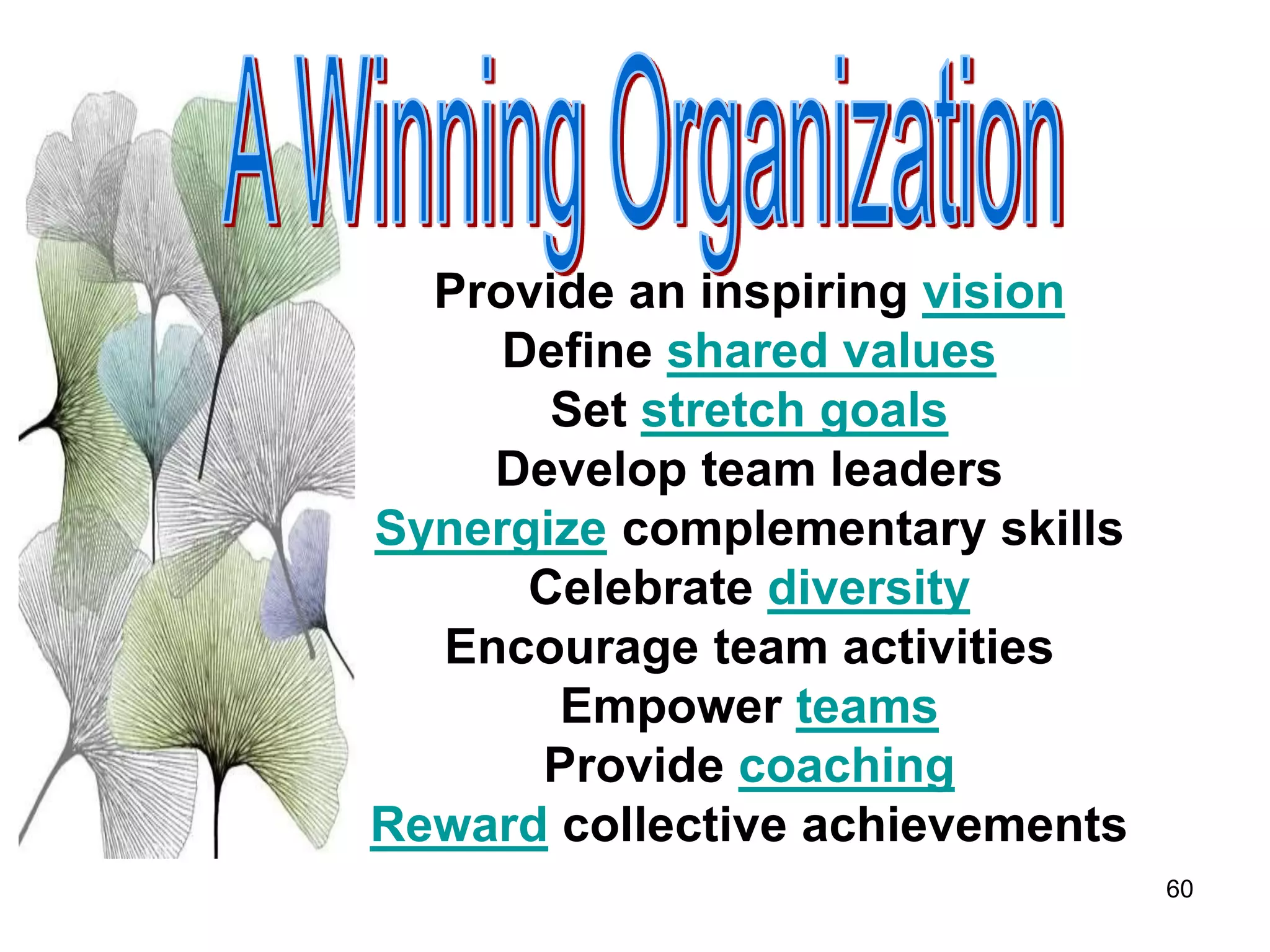
60
Provide an inspiring vision
Define shared values
Set stretch goals
Develop team leaders
Synergize complementary skills
Celebrate diversity
Encourage team activities
Empower teams
Provide coaching
Reward collective achievements
61
62
63
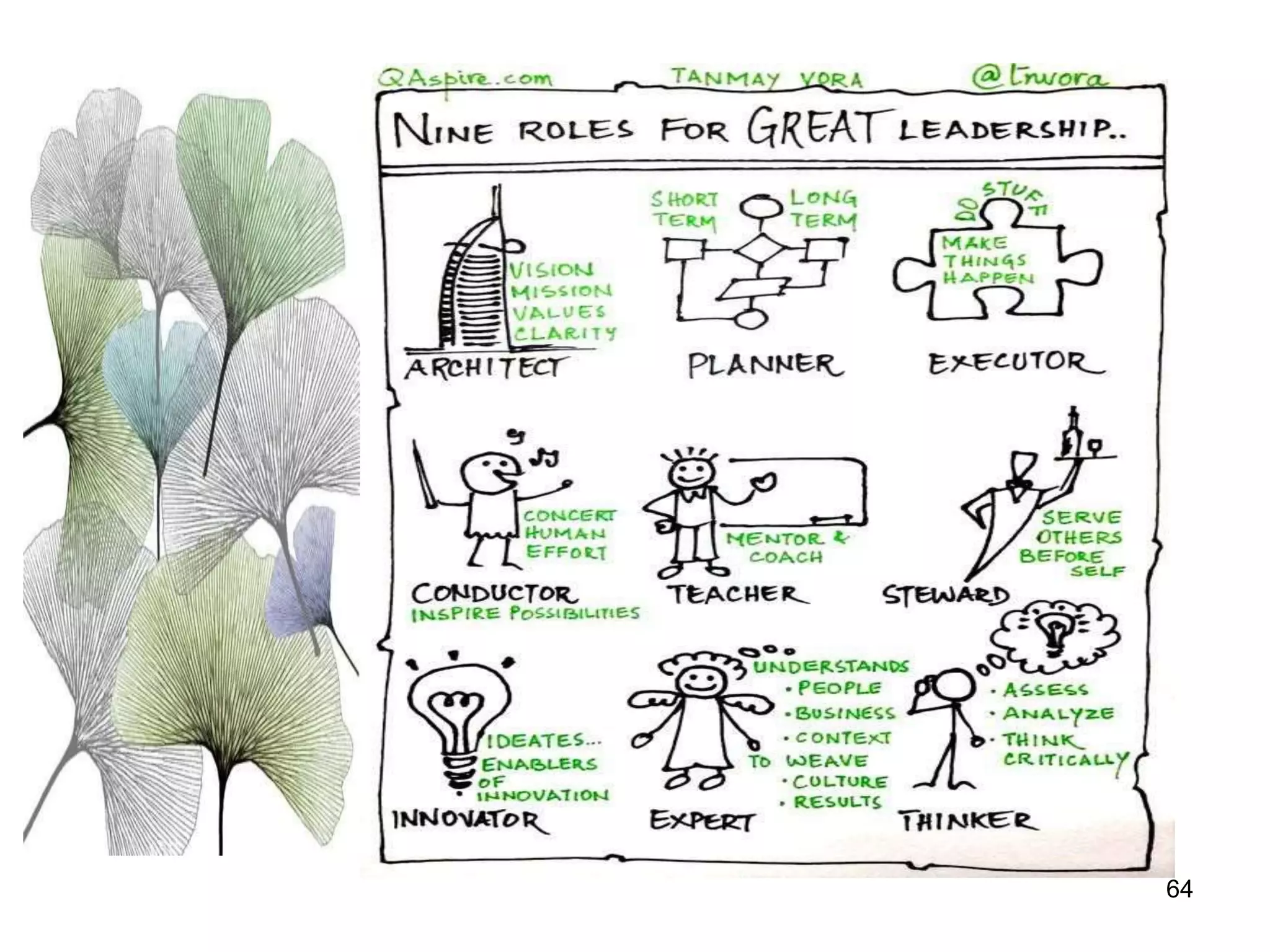
64
65
Reference:
Dr. Peter Muller
Swiss Federal Institute of Technology
Zurich
April, 2005
66

Teambuilding for Staff Development

  • 1.
  • 2.
  • 3.
    3 The goal isto raise productivity while keeping production costs as low as possible. It takes a lot of time to send cooperative memos of every change in procedure. It takes even more time to implement those changes. With teamwork you eliminate a lot of the formalities.
  • 4.
    4 Benefits to Organization Increasedproductivity Increased quality Better morale Better problem solving Increased creativity Better decisions
  • 5.
    5 • Work isless stressful • Responsibility is shared • Rewards and recognition shared • Members can influence each other • All experience a sense of accomplishment
  • 6.
    6 Definition Teams – Asmall number of people with complementary skills who are committed to a common purpose, performance goals and approach for which they hold themselves mutually accountable. Usually 7-25 members
  • 7.
  • 8.
    8 • Feel moderatelyeager with high positive expectations about what the team will accomplish • Feel concerned about how they will fit in and what will be expected of them • Feel anxious about other team members • Are dependent on authority to provide direction
  • 9.
    9 Leader Action Strategies •Establish realistic goals • Set standard for tem interaction • Clarify team tasks and team member roles & relationship • Make decisions and provide directions • Monitor and give feedback on team performance • Demonstrate and teach skills Task Accomplishment • Low to moderate • Focus on defining goals, tasks and strategies Interpersonal Issues: • Inclusion & trust • Willingness to include others in decision making • Extent to which team members feel they can trust the leader
  • 10.
    10 • Experience somediscrepancy between initial hopes and the reality • Become dissatisfied with dependence on authority • Experience frustrations about goals and tasks and may react negatively toward formal leader and other team members • May compete for power and attention
  • 11.
    11 Interpersonal Issues • Control,power and conflict • Extent to which team members want to follow the directions set by others • Who influences the team’s direction Task Accomplishment • Disrupted by negative feelings • Slowly increases as conflicts are addressed Leader Action Strategies • Redefine goals, expectation, roles and relationship • Encourage and support interdependence • Provide skill development • Recognize and accept different opinions • Manage conflicts • Praise constructive behavior
  • 12.
    12 • Become lessdissatisfied as ways of working together become clear • Resolve discrepancies between expectation and reality • Begin to respect each other’s differences and develop feelings of respect, harmony, and trust • Feel pleasure and increase self esteem
  • 13.
    13 Interpersonal Issues affection willingness toexpress friendly feelings shift focus of control from leader to team avoidance of “group think” Task Accomplishment Increases positive feelings Facilitates team results Leader Action Strategies Involve team in decision making and problem solving Support team in setting goals and standards Encourage and acknowledge team progress
  • 14.
    14 • Feel excitedand eager about participating in team activities • Are autonomous (not dependent on a designated leader) • Work collaboratively with whole team • Feel highly confident about team results • Communicate open and freely without fear of rejection or conflict
  • 15.
    15 Interpersonal Issues No majorissues Task Accomplishment Optimal task accomplishment is characterized by team cohesion and pride in team’s results members derive satisfaction are skills, knowledge, and confidence increase Leader Action Strategies • Serve as source for the team • Monitor goals and performance in terms of review process • Interface between team and the larger organization
  • 16.
    16 • Become concernedabout impending dissolution • Feel loss or sadness about ending the project and separating from the team • May deny feelings by joking or expressing dissatisfaction • May have strong positive feelings about what the teams has accomplished
  • 17.
    17 Interpersonal Issues Loss andseparation Feelings of sadness, loss or anger about impending dissolution of the team Tendency to become less productive Task Accomplishment Generally decreases Sometimes work activity increases (deadlines, overcome sense of loss) Leader Action Strategies • Accept own feelings of loss • Acknowledge the feelings of others • Increase directive and supportive behavior as appropriate
  • 18.
  • 19.
    19 Forming Storming NormingPerforming Adjourning Awareness & orientation Tasks needs to be clarified Competition & conflict Leader needs conflict resolution skills Cooperation Team willing to work together and establish procedures Trust & performance Team focused on results & performance Separation & moving on Team focus shifts to “ what will I do next?” DIRECTING COACHING SUPPORTING DELEGATING
  • 20.
    20 • Credibility ofthe project leader • Unclear project objectives • Changing goals & priorities • Lack of team definition & structure • Confusion about roles and responsibilities • Performance appraisals that fail to re recognize teamwork • Excessive team size
  • 21.
  • 22.
  • 23.
    Inputs Tools & Techniques Outputs Projectstaff Project plan Staffing management plan Performance reports Team-building activities Management skills Rewards Collocation Training Performance improvement Performance appraisals
  • 24.
    24 Task oriented behavior -Focus on what a team needs to do to get the job done - Facilitate and coordinate decision –making tasks
  • 25.
    25 Task oriented behavior -Focus on what a team needs to do to get the job done - Facilitate and coordinate decision –making tasks
  • 26.
    26 Relationship – Oriented Behavior -Focus on the social needs of the team - Deal with team tasks, sentiments and viewpoints
  • 27.
    27 Self-oriented behavior - focusonly on the needs of individual team members sometimes at the cost of the team
  • 28.
    28 What is the purposeor function of behavior in a group?
  • 29.
    29 Initiating • making suggestions •proposing group actions Coordinating • Coordinating idea, suggestions, or activities Summarizing • Combining ideas into cohesive statement & drawing conclusions Evaluating • Assess and question how the team is functioning Information seeking • Asking for facts or clarification Information giving • Offering valid and useful information
  • 30.
    30 Gate-keeping - Facilitating theparticipation of other - Inviting less active members to contribute Encouraging - Being open and responsive to others - Recognizing and supporting contributions - Inviting comments Setting standards - Helping the group establish norms and standards related to maintaining relationship Harmonizing - Relieving tension - Helping others explore their disagreements - Seeking appropriate compromise solutions
  • 31.
    31 Dominating - Asserting authoritystatus of superiority - Excessive talking, interrupting or overriding others’ comment Recognition Seeking - Trying to get attention and monopolizing discussion Withdrawal - Refusing to participate in group discussions - Giving off non verbal signs of disapproval Blocking - Arguing too much on a point - Rejecting ideas without considering them
  • 32.
    32 • Say thanksI’ve got it • Avoid eye contact when asking for a response • Hold up hand as a stop sign have a frank talk • Don’t compete with the team
  • 33.
    33 • Apply spectrumpolicy - Ask members to find something positive in another’s idea • In case of disagreements, accept both points of views as potentially useful • Give us your background on that opinion
  • 34.
    34 • Keep theenergy level high - keep past pace - Ask difficult questions - Be intense - use humor • Keep eye contact when asking questions • Avoid pinning down an individual
  • 35.
    35 • Could wehear more? • Give us specific information, please • Could you look into that and give us more information at the next meeting • Keep meeting at fast pace
  • 36.
    36 Initiation Planning ExecutingControlling Closing Integration Project planning Execution Integration change control Scope Initiation Scope Planning /Definition Scope Change control Time Sequencing Scheduling Cost Resource planning Cost estimating Cost budgeting
  • 37.
    37 Initiation Planning ExecutingControllin g Closing HR Staffing Team Development Scope Initiation Scope Planning /Definition Committees Sequencing Scheduling Risk Identificatio n Analysis Response Planning
  • 38.
    38 Teamwork is essentialfor competing in today's global arena, where individual perfection is not as desirable as a high level of collective performance. In our organization today teams are the norm rather than the exception.
  • 39.
    39 Teamwork helps organizationsin many ways: It gives the employees cooperative spirit. When people work together for a common goal it gives them a sense of belonging. It is important for people to feel like they are a part of something. When they feel this pride, they will want to put their best foot forward. They will have enthusiasm in the workplace and connect with other employees.
  • 40.
    40 Teamwork brings more efficiencyto the workplace. This is really the most important thing.
  • 41.
    41 When people worktogether in close proximity every day, it makes changes a lot easier. Fellow employees will have the chance to teach and practice the new methods with others in the cooperative. This will save the coop’s money in training and other implementation costs.
  • 42.
    42 Teams should striveto achieve consensus. Unlike the terms unanimous and majority, there is no vote with consensus
  • 43.
  • 44.
    44 A Team Leadershould try to get the best out of every player. So, he studies each member, to discover his talents, and to develop them. He also studies each member, to discover their weaknesses, and to strengthen them
  • 45.
    45 Then he trainsthese members to play as a team. He teaches each one to sacrifice his own personal glory for the common good
  • 46.
    46 Team play multiplies the powerof each individual member
  • 47.
    47 The total impact ofthe team is greater than the sum of their individual talents
  • 48.
    48 • The teamperformance goals will be much larger numbers than an individual's numbers, and at first it may seem very difficult to reach. • That is why management must break the monthly goals into daily achievable activity; then individual and target numbers seem more attainable
  • 49.
    49 • Management mustnot only give praise to the individual doing the exceptional work, but must also focus on the team results and praise, correct, or redirect accordingly. • During the team building period (the first 6 months) meeting and discussions with the group should spotlight the positive aspects.
  • 50.
    50 If there isan individual who is not meeting their goals, bring them in for counseling via a one-on- one meeting.
  • 51.
    51 Individual rewards  fosterindependent behavior  may lead to creative thinking and novel solutions  encourage competitive striving within a work team Team rewards  emphasize cooperation and joint efforts  emphasize sharing information, knowledge, and expertise
  • 52.
    52 Individual-Organizational Exchange Relationship • Organizationalgoals • Departmental objectives • Job tasks • Physiological needs • Security needs • Physical needs • Organizational status • Benefits • Income • Developmental potential • Employee knowledge • Employee skills and abilities Individual Organization Demands Contribution
  • 53.
    53 A good workplacewith happy, productive employees is beneficial for the entire cooperative and its members. Making an environment that allows staff to feel good about their work and how they contribute has its challenges. Promoting a Good Workplace
  • 54.
    54 Management has many responsibilities,including evaluating people based on their work and contributions, and how they interact with others. When an employee demonstrates mutual effort to achieve a common goal, your employees have moved from a single purpose to Teamwork. This allows the members to reach higher goals than they would individually.
  • 55.
    55 Provide incentives forthe group when the goals are reached. Daily feedback of results is needed to keep the assembled team focusing on the new goal. This review should move the focus for training and advice from management to the team. Let them share their ideas and experiences.
  • 56.
    56 1. Appreciation ofwork well done 2. Feeling of being “in on things” 3. Help on personal problems 4. Job security 5. Good wages 6. Interesting work 7. Promotion & Growth 8. Personal loyalty to employees 9. Good working condition 10.Tactful disciplining Score as 10 highest and 1 lowest
  • 57.
    57 Be a teamplayer. The most valuable single factor that contributes towards high levels of excellence and quality in a team, stem from an individual team member's ability to work with others, i.e. his or her levels of cooperation and communication. These "social intelligence" skills include the ability to persuade, negotiate, compromise and make others feel important
  • 58.
    58 The most valuablesingle factor that contributes towards high levels of excellence and quality in a team, stem from an individual team member's ability to work with others, i.e. his or her levels of cooperation and communication. These "social intelligence" skills include the ability to persuade, negotiate, compromise and make others feel important
  • 59.
    59 Winning organization or Losing Organization Like anyjourney, many different routes can be taken
  • 60.
    60 Provide an inspiringvision Define shared values Set stretch goals Develop team leaders Synergize complementary skills Celebrate diversity Encourage team activities Empower teams Provide coaching Reward collective achievements
  • 61.
  • 62.
  • 63.
  • 64.
  • 65.
    65 Reference: Dr. Peter Muller SwissFederal Institute of Technology Zurich April, 2005
  • 66.