• Different functions of HRM
• Interrelationship with other
process of managing people in
the organization
Part II – Strategic Plan
Future Direction of HR
Josefina B. Bitonio
Associate Professor
Institure of Graduate School and
Professional Studies
STRATEGIC PLAN
FUTURE DIRECTIONS
Does the SP relate
to its plan for staff
acquisition and
development?
Public
expectations
are high,
effective
public
management
can be
difficult
NOT ONLY
UPGRADING
BUT
CLOSELY
Align with
business
strategy and
future
requirements
STRATEGIC : Linking human resource
strategy with organizational mission and
the work of people in the organization
OPERATIONAL : Managing functional
human resource activities and serving an
“employee champion”
ADMINISTRATIVE : Record keeping
process administration and compliance
efforts
Present
VISION: An effective and efficient
regulatory agency working towards the
development of viable, sustainable,
socially responsive and globally
competitive cooperatives.
MISSION -To ensure the safe and sound
operations of cooperatives
Role of HRM
STRATEGIC
OPERATIONAL
ADMINISTRATIVE
Past
Daily, operational
issues and hygiene
factors
Future business of the
company, strategic
differentiator, competitive
advantage, impact
G
O
A
L
S
These processes have to be interrelated with each other through systems. Thus, the
study of HRM involves a network of interrelated processes through systems which
have to be planned, developed, and implemented by all levels of management and
the rank and files. These are directed towards the achievement of organizational
goals and objectives
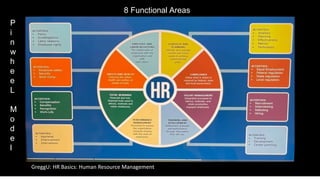
8 Functional Areas
GreggU: HR Basics: Human Resource Management
P
i
n
w
h
e
e
L
M
o
d
e
l
Strategy and Planning
Identifies and manages current and future needs to
achieve organizational goals. The activities are”
CDA Mandate: Promote the viability and growth of cooperatives as instruments of equity, social
justice and economic development in fulfillment of the mandate in section 15, Article XII of the
Constitution.
• Analysis
• Planning
• Effectiveness – Satisfaction of clients, positive
feedbacks
• Metrics
• Technology
Compliance
• Equal employment
• Regulations (DBM. COA,
CSC, NEDA, Congress,
LGUs, MOA, national and
local)
Doing what is asked or required by the
national and local government
Talent Management
Integrated processes to attract. Motivate
and retain productive, engaged
employees. The activities are:
• Recruitment
• Interviewing
• Selecting
• Hiring
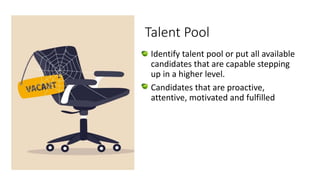
Talent Pool
• Identify talent pool or put all available
candidates that are capable stepping
up in a higher level.
• Candidates that are proactive,
attentive, motivated and fulfilled
gaps as far as key functions
HR
Planning
Talent
Deficient
Development
of talents
Gaps on
key
functions
Value of Talent Management
Capabilities Abilities
Increases organizational
capabilities
Increases personal
abilities
Betterment of people and performance
thru information they will use. The
activities are:
• Training
• Development
• Career planning
o Employees have to be trained and retrained in order to keep up with the
pace of changes. For examples, computers in office work demand a new set
of skills from the employees particularly from the clerical force.
o In fact, computer literacy as now a requirement in hiring new personnel in
many agencies. Other organizations change the nomenclature of position
from clerks to computer operators or data entry machine processors.
Performance Management
Processes to ensure the organization connects
mission with the work of employees. The
activities are:
• Appraisal
• Improvement
• Interventions
Safety and Health
Ensuring the safety, health and welfare of people at
work. The activities are:
• Employee Safety
• Security
• Well being
Employee and Labor Relations
The relationship of employees with organization
and with each other
• Policy
• Investigation
• Grievance
• Employee rights
Total Rewards
Financial and non financial tools
used to attract, motivate and retain
employees. The activities are:
• Compensation
• Benefits
• Recognition
• Work Life Balance
Top Employee Benefits
• Paid overtime
• flexible work arrangements
• retirement benefits
• professional development support
• training opportunities
• incentives
• insurance benefit
• health care assistance
• When a Google employee passes away surviving spouse
or partner of a deceased employee 50% of their salary for
the next 10 years.
• Free gourmet food and never ending snacks!
• 24/7 in-house tech support from their Tech Stop service
Dogs are welcome into the office
• Employee s given 'massage credits’ for a job well done
• The 80/20 rule allows Google employees to dedicate 80%
of their time to their primary job and 20% on passion
projects
• Xoogler alumni support for the rest of their lives
Part III

2-HRM-and-Development.pptx

  • 1.
    • Different functionsof HRM • Interrelationship with other process of managing people in the organization Part II – Strategic Plan Future Direction of HR Josefina B. Bitonio Associate Professor Institure of Graduate School and Professional Studies
  • 2.
    STRATEGIC PLAN FUTURE DIRECTIONS Doesthe SP relate to its plan for staff acquisition and development? Public expectations are high, effective public management can be difficult NOT ONLY UPGRADING BUT CLOSELY Align with business strategy and future requirements
  • 3.
    STRATEGIC : Linkinghuman resource strategy with organizational mission and the work of people in the organization OPERATIONAL : Managing functional human resource activities and serving an “employee champion” ADMINISTRATIVE : Record keeping process administration and compliance efforts Present VISION: An effective and efficient regulatory agency working towards the development of viable, sustainable, socially responsive and globally competitive cooperatives. MISSION -To ensure the safe and sound operations of cooperatives Role of HRM
  • 4.
  • 5.
    Future business ofthe company, strategic differentiator, competitive advantage, impact
  • 7.
    G O A L S These processes haveto be interrelated with each other through systems. Thus, the study of HRM involves a network of interrelated processes through systems which have to be planned, developed, and implemented by all levels of management and the rank and files. These are directed towards the achievement of organizational goals and objectives
  • 9.
    8 Functional Areas GreggU:HR Basics: Human Resource Management P i n w h e e L M o d e l
  • 10.
    Strategy and Planning Identifiesand manages current and future needs to achieve organizational goals. The activities are” CDA Mandate: Promote the viability and growth of cooperatives as instruments of equity, social justice and economic development in fulfillment of the mandate in section 15, Article XII of the Constitution. • Analysis • Planning • Effectiveness – Satisfaction of clients, positive feedbacks • Metrics • Technology
  • 11.
    Compliance • Equal employment •Regulations (DBM. COA, CSC, NEDA, Congress, LGUs, MOA, national and local) Doing what is asked or required by the national and local government
  • 12.
    Talent Management Integrated processesto attract. Motivate and retain productive, engaged employees. The activities are: • Recruitment • Interviewing • Selecting • Hiring
  • 13.
    Talent Pool • Identifytalent pool or put all available candidates that are capable stepping up in a higher level. • Candidates that are proactive, attentive, motivated and fulfilled
  • 14.
    gaps as faras key functions HR Planning Talent Deficient Development of talents Gaps on key functions
  • 17.
    Value of TalentManagement Capabilities Abilities Increases organizational capabilities Increases personal abilities
  • 18.
    Betterment of peopleand performance thru information they will use. The activities are: • Training • Development • Career planning
  • 19.
    o Employees haveto be trained and retrained in order to keep up with the pace of changes. For examples, computers in office work demand a new set of skills from the employees particularly from the clerical force. o In fact, computer literacy as now a requirement in hiring new personnel in many agencies. Other organizations change the nomenclature of position from clerks to computer operators or data entry machine processors.
  • 20.
    Performance Management Processes toensure the organization connects mission with the work of employees. The activities are: • Appraisal • Improvement • Interventions
  • 21.
    Safety and Health Ensuringthe safety, health and welfare of people at work. The activities are: • Employee Safety • Security • Well being
  • 22.
    Employee and LaborRelations The relationship of employees with organization and with each other • Policy • Investigation • Grievance • Employee rights
  • 23.
    Total Rewards Financial andnon financial tools used to attract, motivate and retain employees. The activities are: • Compensation • Benefits • Recognition • Work Life Balance
  • 24.
    Top Employee Benefits •Paid overtime • flexible work arrangements • retirement benefits • professional development support • training opportunities • incentives • insurance benefit • health care assistance • When a Google employee passes away surviving spouse or partner of a deceased employee 50% of their salary for the next 10 years. • Free gourmet food and never ending snacks! • 24/7 in-house tech support from their Tech Stop service Dogs are welcome into the office • Employee s given 'massage credits’ for a job well done • The 80/20 rule allows Google employees to dedicate 80% of their time to their primary job and 20% on passion projects • Xoogler alumni support for the rest of their lives
  • 25.