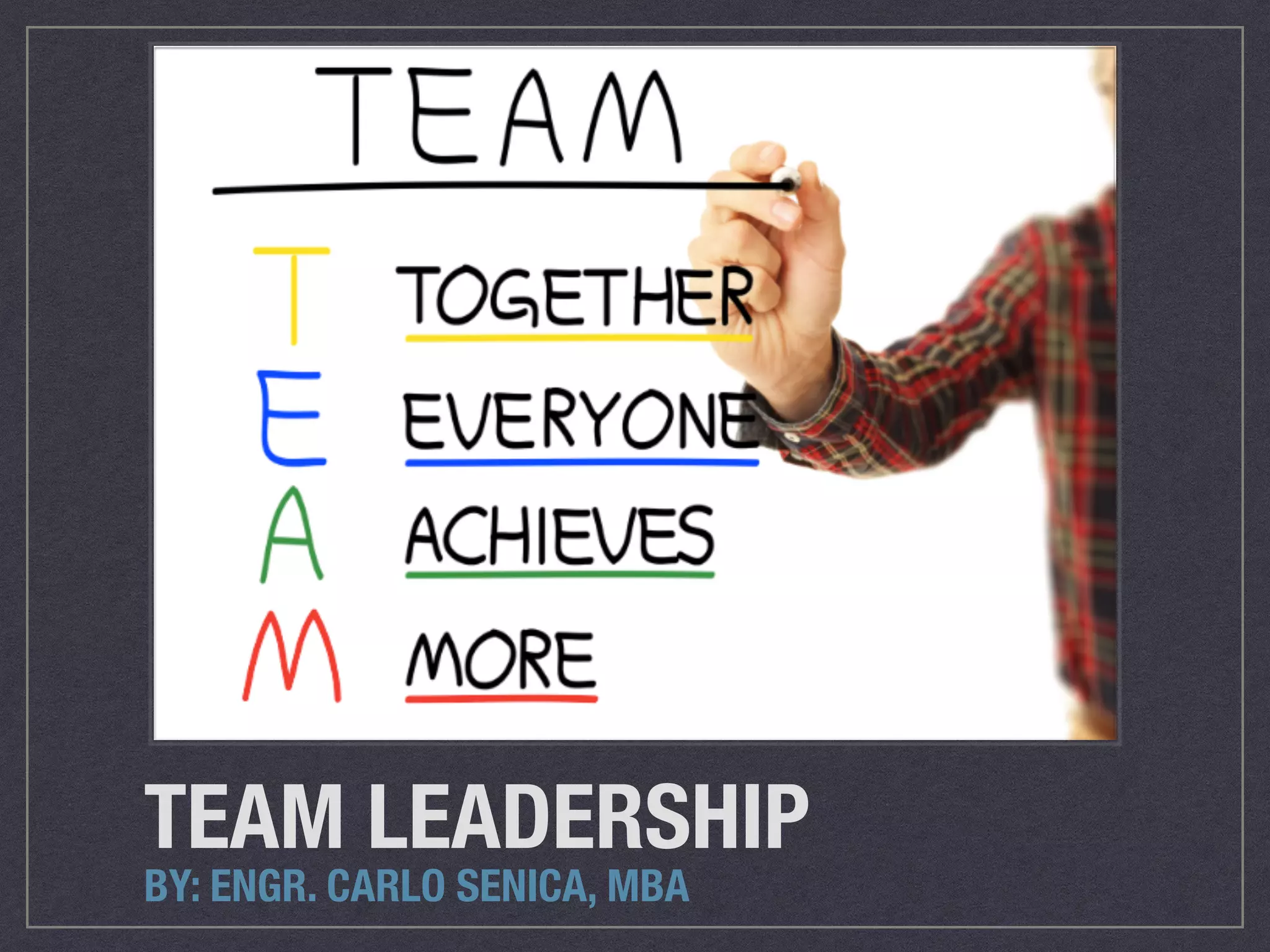
TEAM LEADERSHIP
BY: ENGR. CARLO SENICA, MBA
Teams versus Work Groups
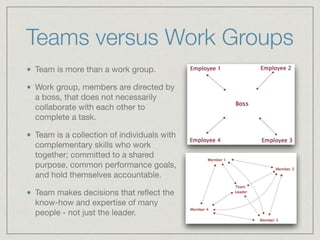
Team is more than a work group.

Work group, members are directed by
a boss, that does not necessarily
collaborate with each other to
complete a task.

Team is a collection of individuals with
complementary skills who work
together; committed to a shared
purpose, common performance goals,
and hold themselves accountable. 

Team makes decisions that reflect the
know-how and expertise of many
people - not just the leader.
Type of Teams
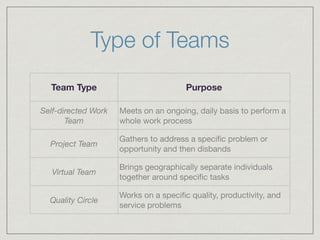
Team Type Purpose
Self-directed Work
Team
Meets on an ongoing, daily basis to perform a
whole work process
Project Team
Gathers to address a specific problem or
opportunity and then disbands
Virtual Team
Brings geographically separate individuals
together around specific tasks
Quality Circle
Works on a specific quality, productivity, and
service problems
Team Sponsor
A manager or executive who
“champions” the project.

It endorses the project’s goals and is
committed to seeing the project
delivered on time, within budget, and at
optimum level of quality.

Has a stake in the outcome and
accountable for the team’s
performance. 

Has the authority to define the scope of
work, provide necessary resources, and
approve or reject team output.
Team Leader
Communicates the status and participates in
project management activities with team
members. 

Keep the vision clear

Provide a framework for the team’s activity

Coordinate activities

Represent the team to others

Negotiate with the team sponsor

Identify needed resources

Set milestones

Mediate conflicts

Keep work on track
Team Leader
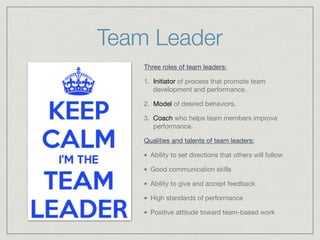
Three roles of team leaders:

1. Initiator of process that promote team
development and performance.

2. Model of desired behaviors.

3. Coach who helps team members improve
performance.

Qualities and talents of team leaders:

Ability to set directions that others will follow

Good communication skills

Ability to give and accept feedback

High standards of performance

Positive attitude toward team-based work
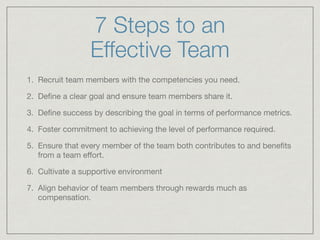
7 Steps to an
Effective Team
1. Recruit team members with the competencies you need.

2. Define a clear goal and ensure team members share it.

3. Define success by describing the goal in terms of performance metrics.

4. Foster commitment to achieving the level of performance required.

5. Ensure that every member of the team both contributes to and benefits
from a team effort.

6. Cultivate a supportive environment 

7. Align behavior of team members through rewards much as
compensation.
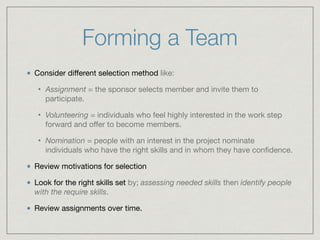
Forming a Team
Consider different selection method like:

• Assignment = the sponsor selects member and invite them to
participate.

• Volunteering = individuals who feel highly interested in the work step
forward and offer to become members.

• Nomination = people with an interest in the project nominate
individuals who have the right skills and in whom they have confidence.

Review motivations for selection

Look for the right skills set by; assessing needed skills then identify people
with the require skills.

Review assignments over time.
Build Team Culture
Host a launch meeting = it allows members, leaders,
sponsors meet face-to-face and know each other on a
personal level.

Select a decision-making method = to help the team agree
on who will make such decisions and how will it unfolds.
Like: Majority rule, Consensus, Small group, or Leader with
input.

Facilitate collaboration

Clarify expectations = will help encourage productive, team-
based behavior, and clarify expectations.
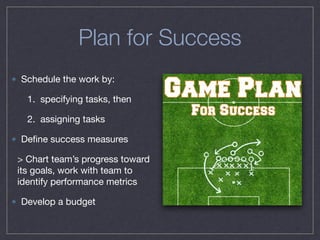
Plan for Success
Schedule the work by:

1. specifying tasks, then

2. assigning tasks

Define success measures

> Chart team’s progress toward
its goals, work with team to
identify performance metrics

Develop a budget

Team leadership

  • 1.
    TEAM LEADERSHIP BY: ENGR.CARLO SENICA, MBA
  • 2.
    Teams versus WorkGroups Team is more than a work group. Work group, members are directed by a boss, that does not necessarily collaborate with each other to complete a task. Team is a collection of individuals with complementary skills who work together; committed to a shared purpose, common performance goals, and hold themselves accountable. Team makes decisions that reflect the know-how and expertise of many people - not just the leader.
  • 3.
    Type of Teams TeamType Purpose Self-directed Work Team Meets on an ongoing, daily basis to perform a whole work process Project Team Gathers to address a specific problem or opportunity and then disbands Virtual Team Brings geographically separate individuals together around specific tasks Quality Circle Works on a specific quality, productivity, and service problems
  • 4.
    Team Sponsor A manageror executive who “champions” the project. It endorses the project’s goals and is committed to seeing the project delivered on time, within budget, and at optimum level of quality. Has a stake in the outcome and accountable for the team’s performance. Has the authority to define the scope of work, provide necessary resources, and approve or reject team output.
  • 5.
    Team Leader Communicates thestatus and participates in project management activities with team members. Keep the vision clear Provide a framework for the team’s activity Coordinate activities Represent the team to others Negotiate with the team sponsor Identify needed resources Set milestones Mediate conflicts Keep work on track
  • 6.
    Team Leader Three rolesof team leaders: 1. Initiator of process that promote team development and performance. 2. Model of desired behaviors. 3. Coach who helps team members improve performance. Qualities and talents of team leaders: Ability to set directions that others will follow Good communication skills Ability to give and accept feedback High standards of performance Positive attitude toward team-based work
  • 7.
    7 Steps toan Effective Team 1. Recruit team members with the competencies you need. 2. Define a clear goal and ensure team members share it. 3. Define success by describing the goal in terms of performance metrics. 4. Foster commitment to achieving the level of performance required. 5. Ensure that every member of the team both contributes to and benefits from a team effort. 6. Cultivate a supportive environment 7. Align behavior of team members through rewards much as compensation.
  • 8.
    Forming a Team Considerdifferent selection method like: • Assignment = the sponsor selects member and invite them to participate. • Volunteering = individuals who feel highly interested in the work step forward and offer to become members. • Nomination = people with an interest in the project nominate individuals who have the right skills and in whom they have confidence. Review motivations for selection Look for the right skills set by; assessing needed skills then identify people with the require skills. Review assignments over time.
  • 9.
    Build Team Culture Hosta launch meeting = it allows members, leaders, sponsors meet face-to-face and know each other on a personal level. Select a decision-making method = to help the team agree on who will make such decisions and how will it unfolds. Like: Majority rule, Consensus, Small group, or Leader with input. Facilitate collaboration Clarify expectations = will help encourage productive, team- based behavior, and clarify expectations.
  • 10.
    Plan for Success Schedulethe work by: 1. specifying tasks, then 2. assigning tasks Define success measures > Chart team’s progress toward its goals, work with team to identify performance metrics Develop a budget