Teaching Apache Spark
Applications to Manage
Their Workers Elastically
Erik Erlandson
Trevor McKay
Red Hat, Inc.
Introduction
Erik Erlandson
Senior SW Engineer; Red Hat, Inc.
Emerging Technologies Group
Internal Data Science
Insightful Applications
Trevor McKay
Principal SW Engineer; Red Hat, Inc.
Emerging Technologies Group
Oshinko Development
Insightful Applications
Outline
• Trevor
– container orchestration
– containerizing spark
• Erik
– spark dynamic allocation
– metrics
– elastic worker daemon
• Demo
Containerizing Spark
• Container 101
– What is a container?
– Docker, Kubernetes and OpenShift
• Why Containerize Spark?
• Oshinko
– features
– components
– cluster creation example
What is a container?
• A process running in a namespace on a
container host
– separate process table, file system, and routing table
– base operating system elements
– application-specific code
• Resources can be limited through cgroups
Docker and Kubernetes
• “Docker is the world's leading software
containerization platform” www.docker.com
– Open-source tool to build, store, and run containers
– Images can be stored in shared registries
• “Kubernetes is an open-source platform for automating
deployment, scaling, and operations of application
containers across clusters of hosts” kubernetes.io
OpenShift Origin
• Built around a core of Docker and Kubernetes
• Adds application lifecycle management
functionality and DevOps tooling. www.openshift.org/
– multi-tenancy
– Source-to-Image (S2I)
• Runs on your laptop with “oc cluster up”
Why Containerize Spark?
• Repeatable clusters with no mandatory config
• Normal users can create a cluster
– No special privileges, just an account on a
management platform
Why Containerize Spark?
• Containers allow a cluster-per-app model
– Quick to spin up and spin down
– Isolation == multiple clusters on the same host
– Data can still be shared through common endpoints
– Do I need to share a large dedicated cluster?
Why containerize Spark?
• Ephemeral clusters conserve resources
• Kubernetes makes horizontal scale out simple
– Elastic Worker daemon builds on this foundation
– Elasticity further conserves resources
Deeper on Spark + Containers
Optimizing Spark Deployments for Containers:
Isolation, Safety, and Performance
● William Benton (Red Hat)
● Thursday, February 9
● 11:40 AM – 12:10 PM
● Ballroom A
Oshinko: Simplifying further
• Containers simplify deployment but still lots to do ...
– Create the master and worker containers
– Handle spark configuration
– Wire the cluster together
– Allow access to http endpoints
– Tear it all down when you’re done
• Oshinko treats clusters as abstractions and does this
work for us
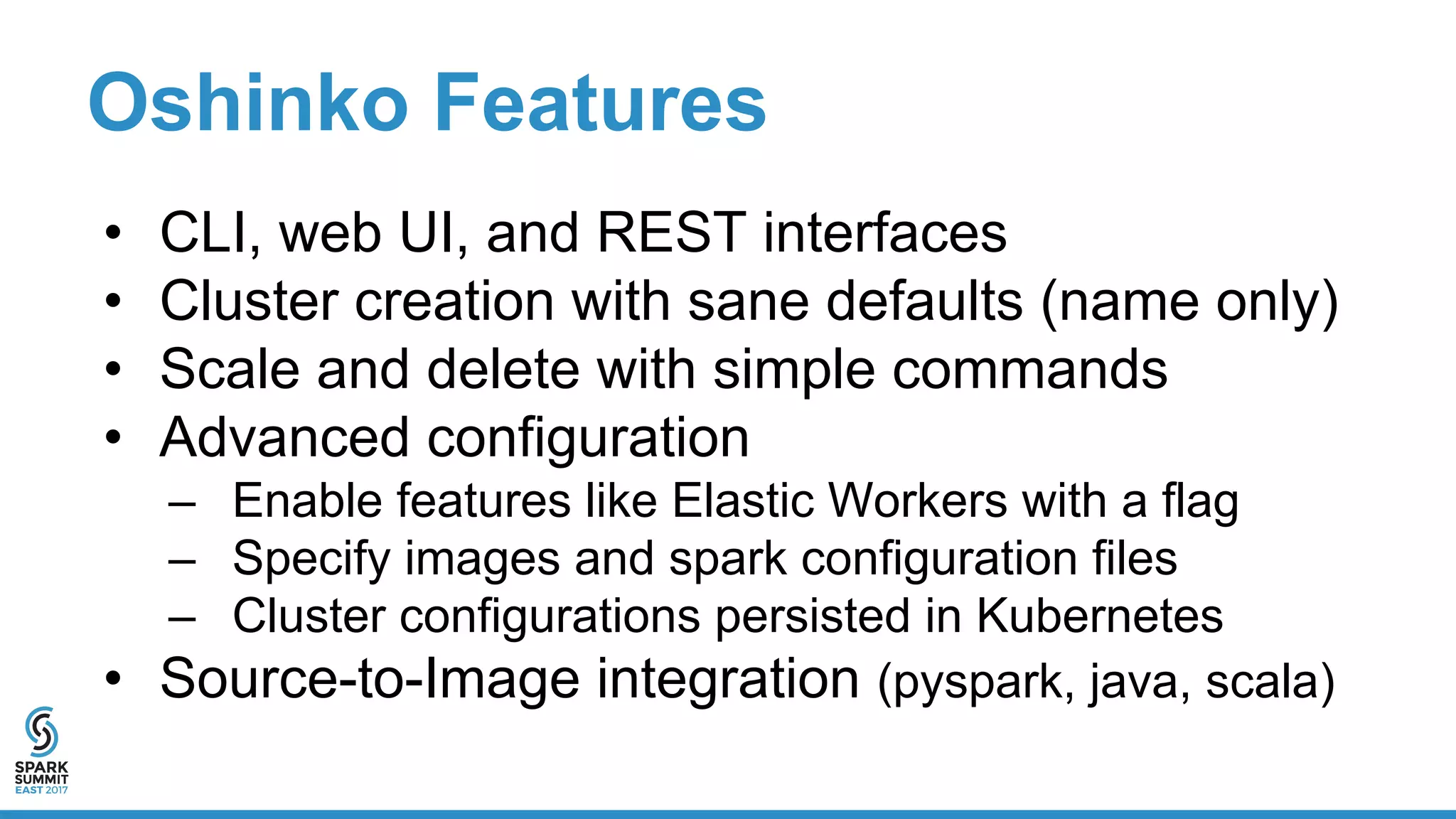
Oshinko Features
• CLI, web UI, and REST interfaces
• Cluster creation with sane defaults (name only)
• Scale and delete with simple commands
• Advanced configuration
– Enable features like Elastic Workers with a flag
– Specify images and spark configuration files
– Cluster configurations persisted in Kubernetes
• Source-to-Image integration (pyspark, java, scala)
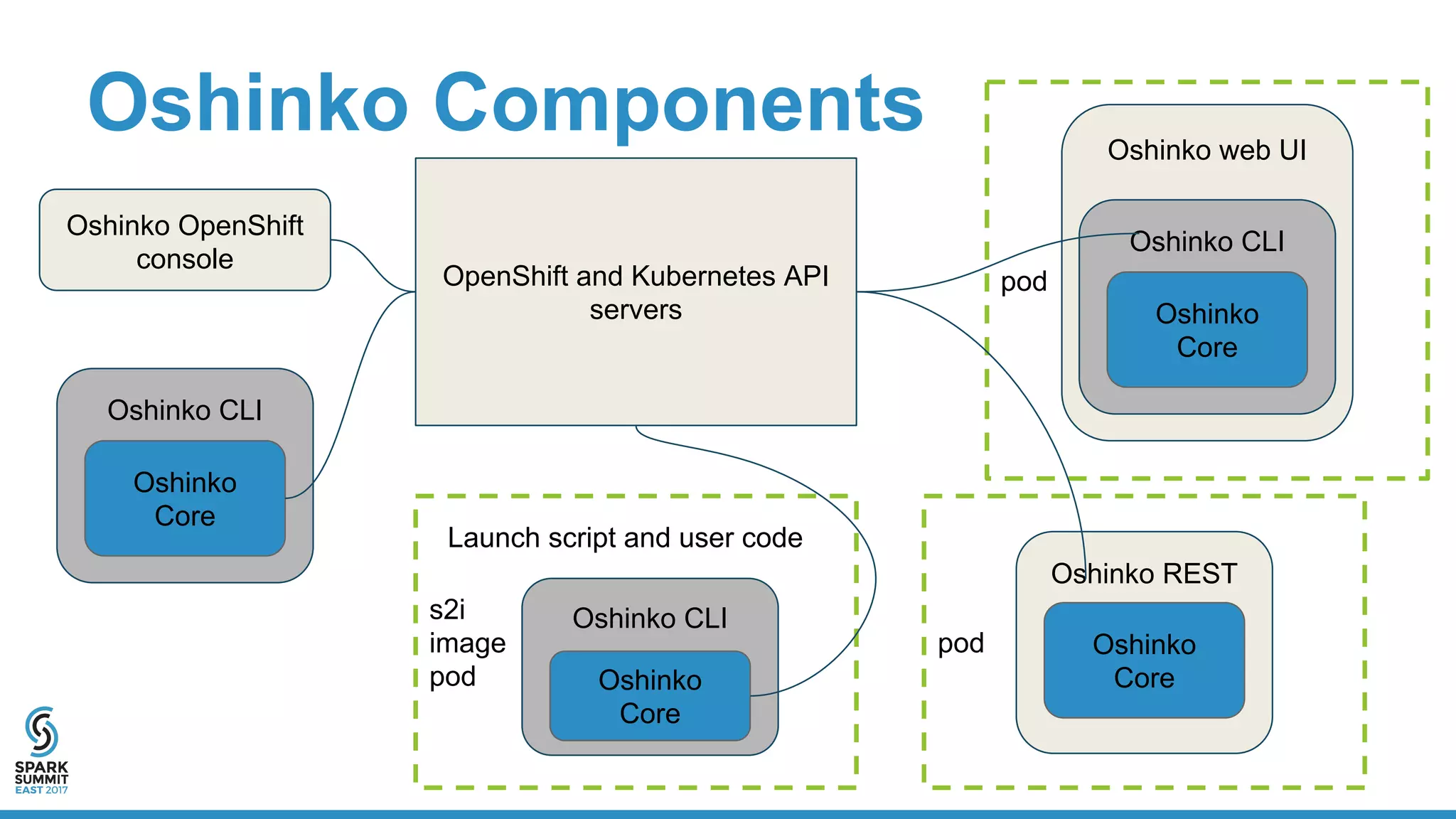
pod
Oshinko Components Oshinko web UI
Oshinko REST
Oshinko
Core
Oshinko CLI
Oshinko
Core
Oshinko OpenShift
console
OpenShift and Kubernetes API
servers
Oshinko CLI
Oshinko
Core
pod
s2i
image
pod
Oshinko CLI
Oshinko
Core
Launch script and user code
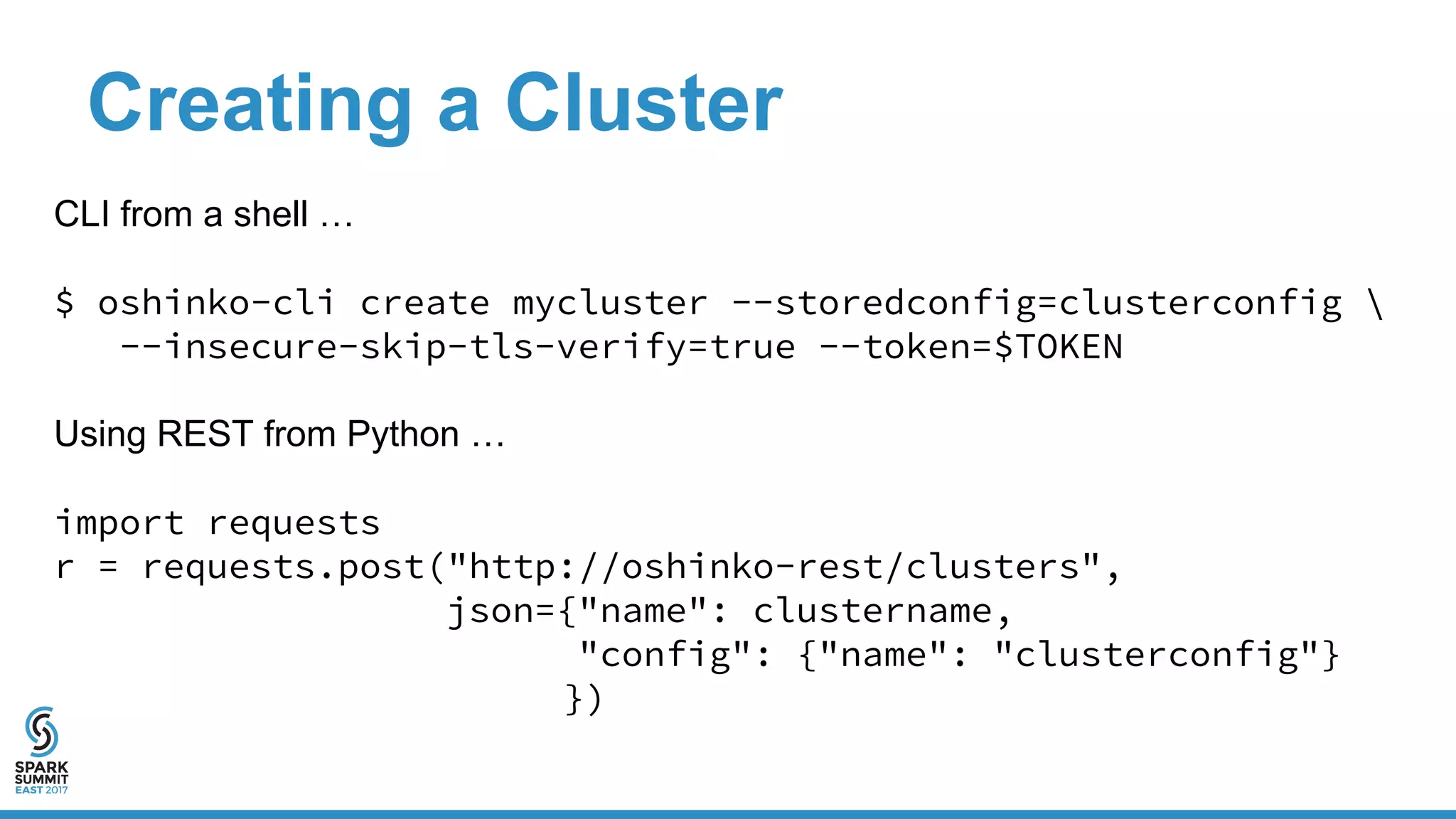
Creating a Cluster
CLI from a shell …
$ oshinko-cli create mycluster --storedconfig=clusterconfig 
--insecure-skip-tls-verify=true --token=$TOKEN
Using REST from Python …
import requests
r = requests.post("http://oshinko-rest/clusters",
json={"name": clustername,
"config": {"name": "clusterconfig"}
})
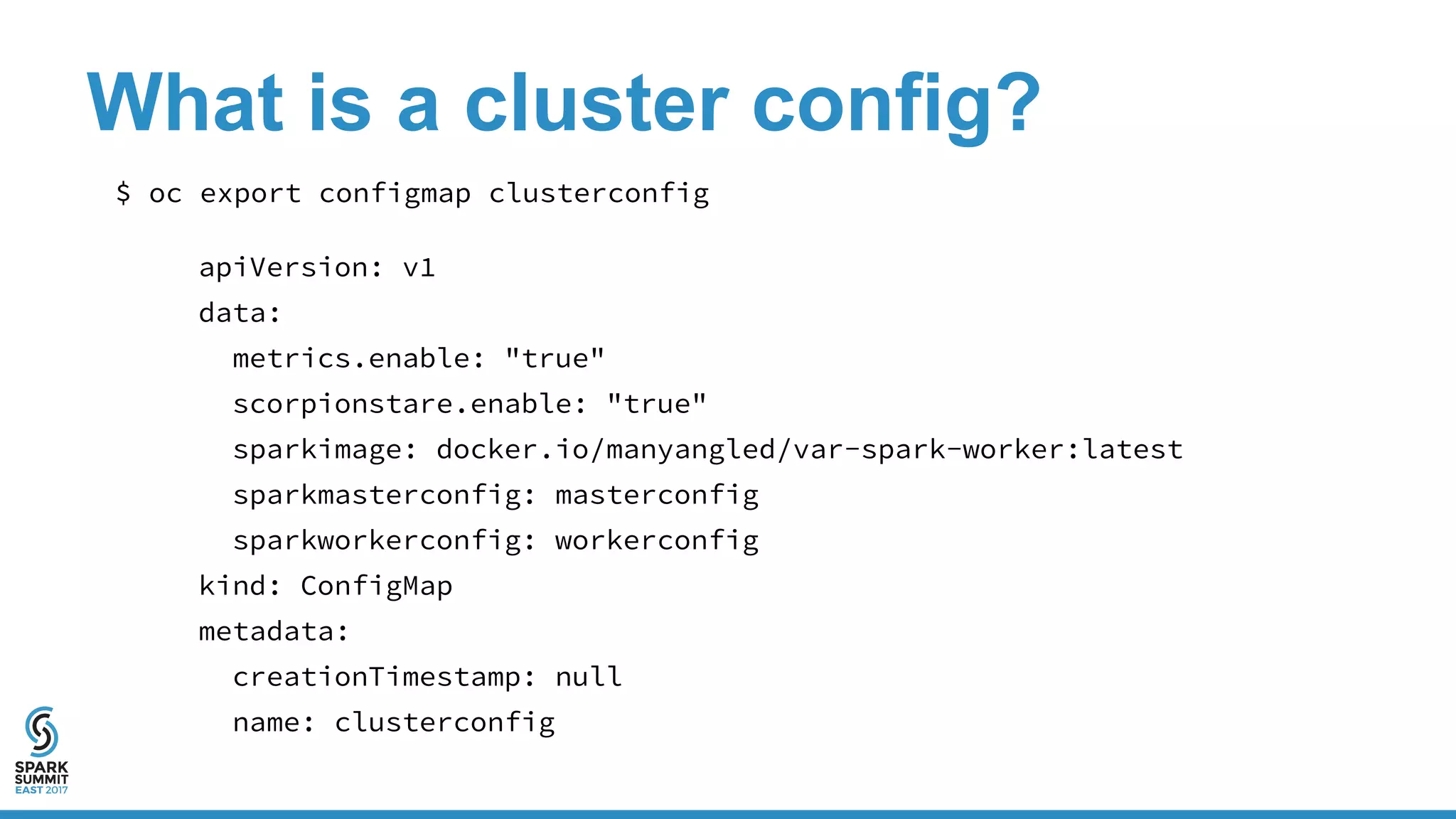
What is a cluster config?
$ oc export configmap clusterconfig
apiVersion: v1
data:
metrics.enable: "true"
scorpionstare.enable: "true"
sparkimage: docker.io/manyangled/var-spark-worker:latest
sparkmasterconfig: masterconfig
sparkworkerconfig: workerconfig
kind: ConfigMap
metadata:
creationTimestamp: null
name: clusterconfig
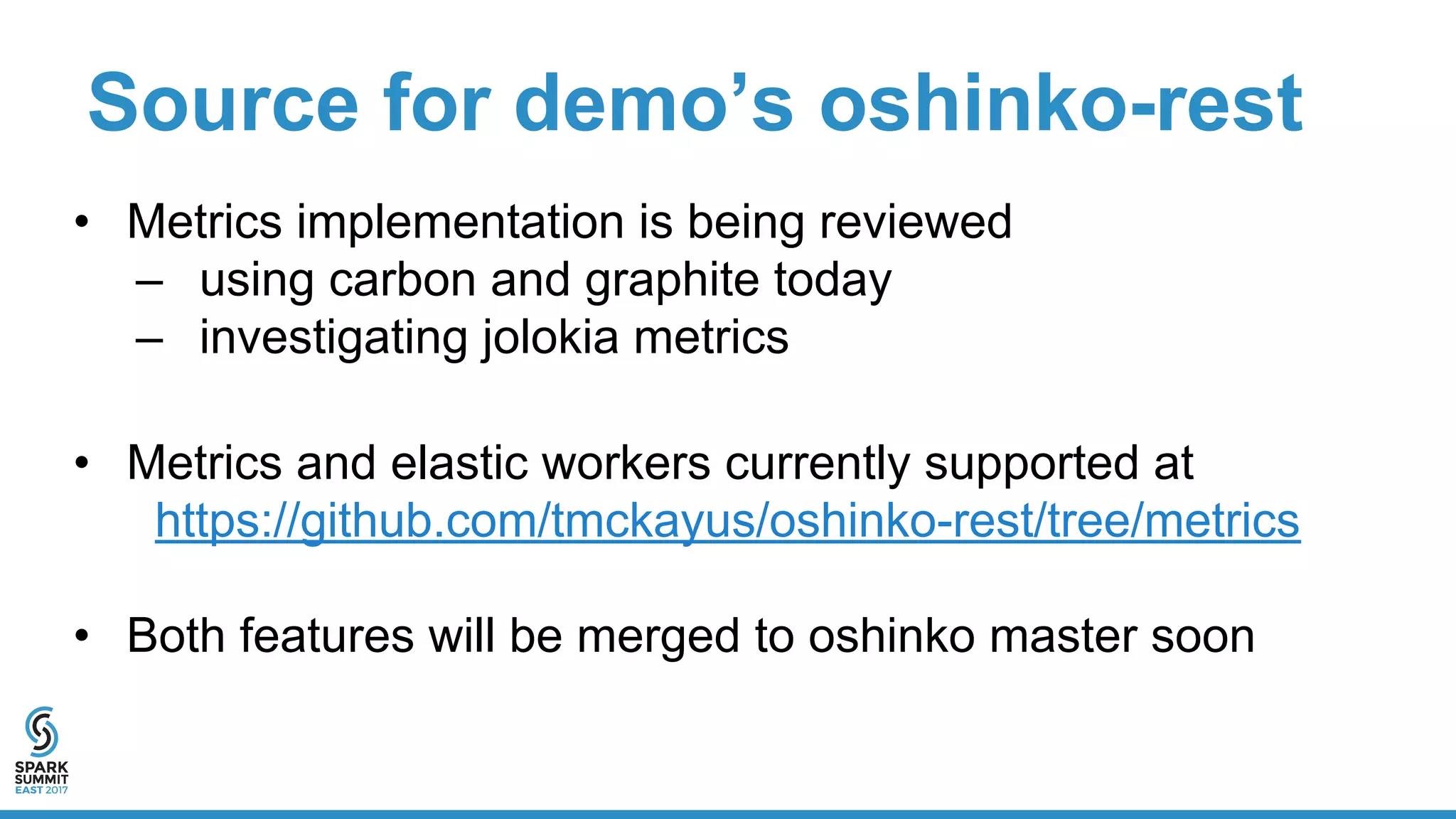
Source for demo’s oshinko-rest
• Metrics implementation is being reviewed
– using carbon and graphite today
– investigating jolokia metrics
• Metrics and elastic workers currently supported at
https://github.com/tmckayus/oshinko-rest/tree/metrics
• Both features will be merged to oshinko master soon
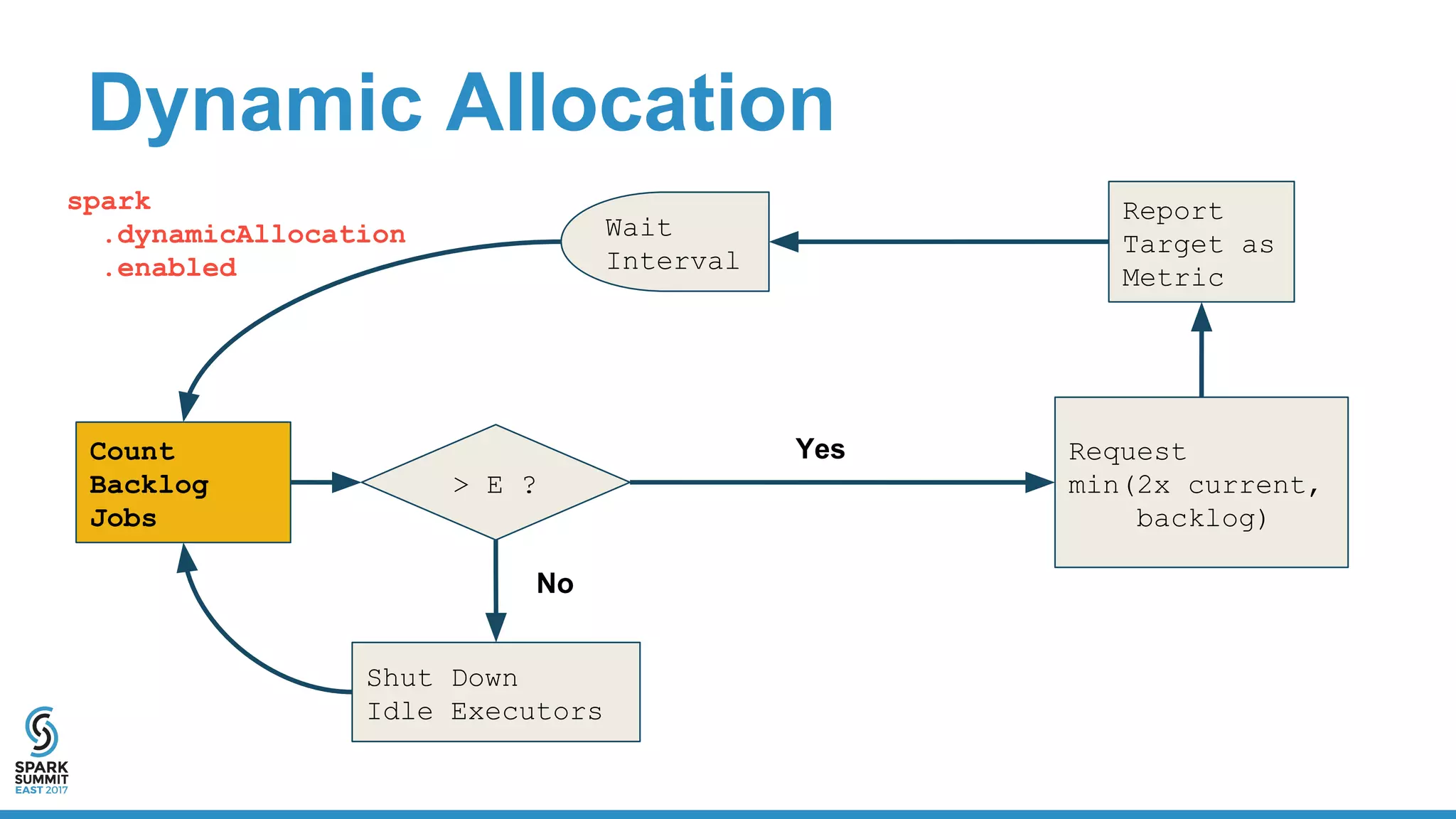
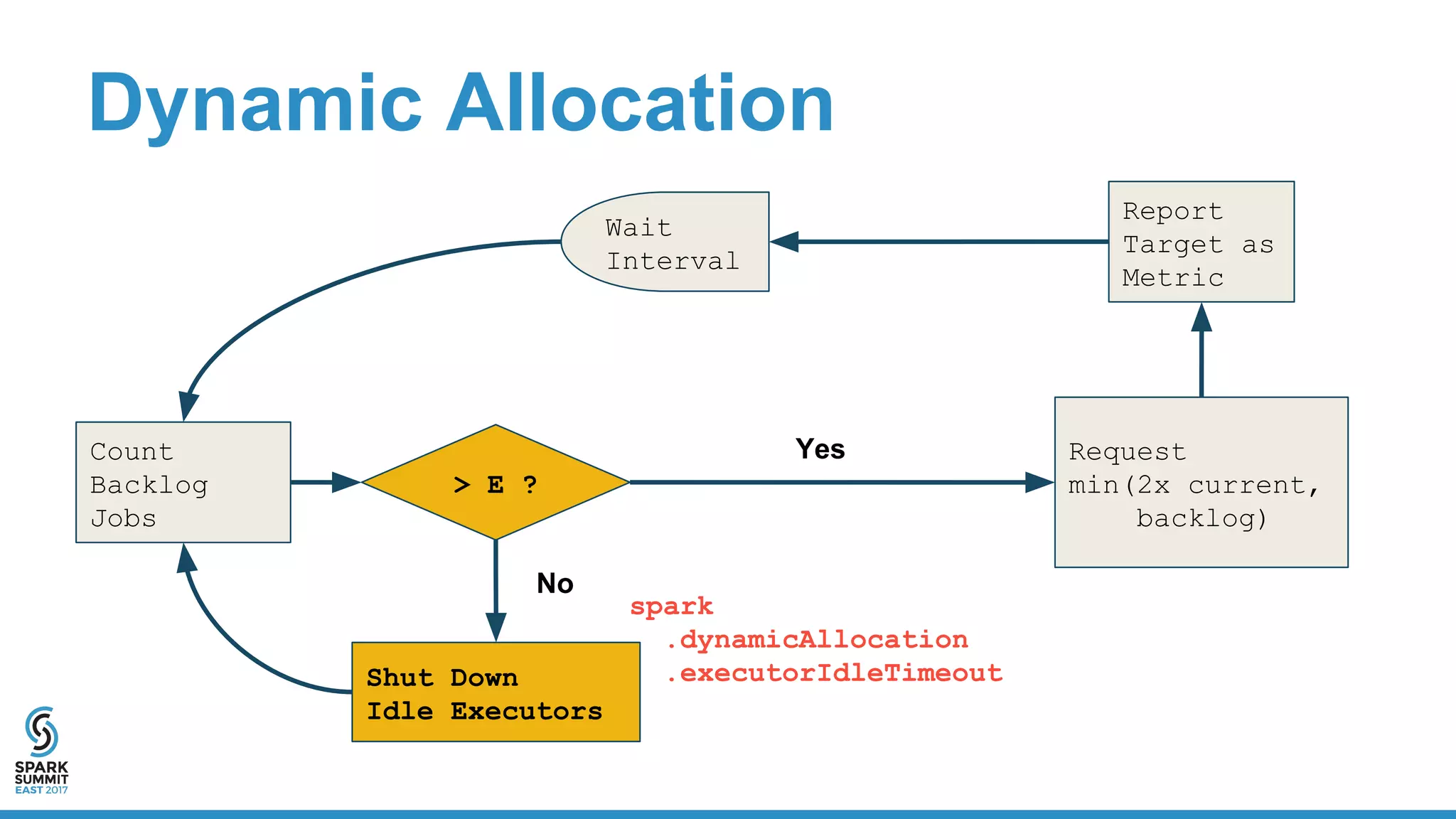
Dynamic Allocation
Count
Backlog
Jobs
> E ?
Request
min(2x current,
backlog)
Wait
Interval
Report
Target as
Metric
Shut Down
Idle Executors
Yes
No
spark
.dynamicAllocation
.enabled
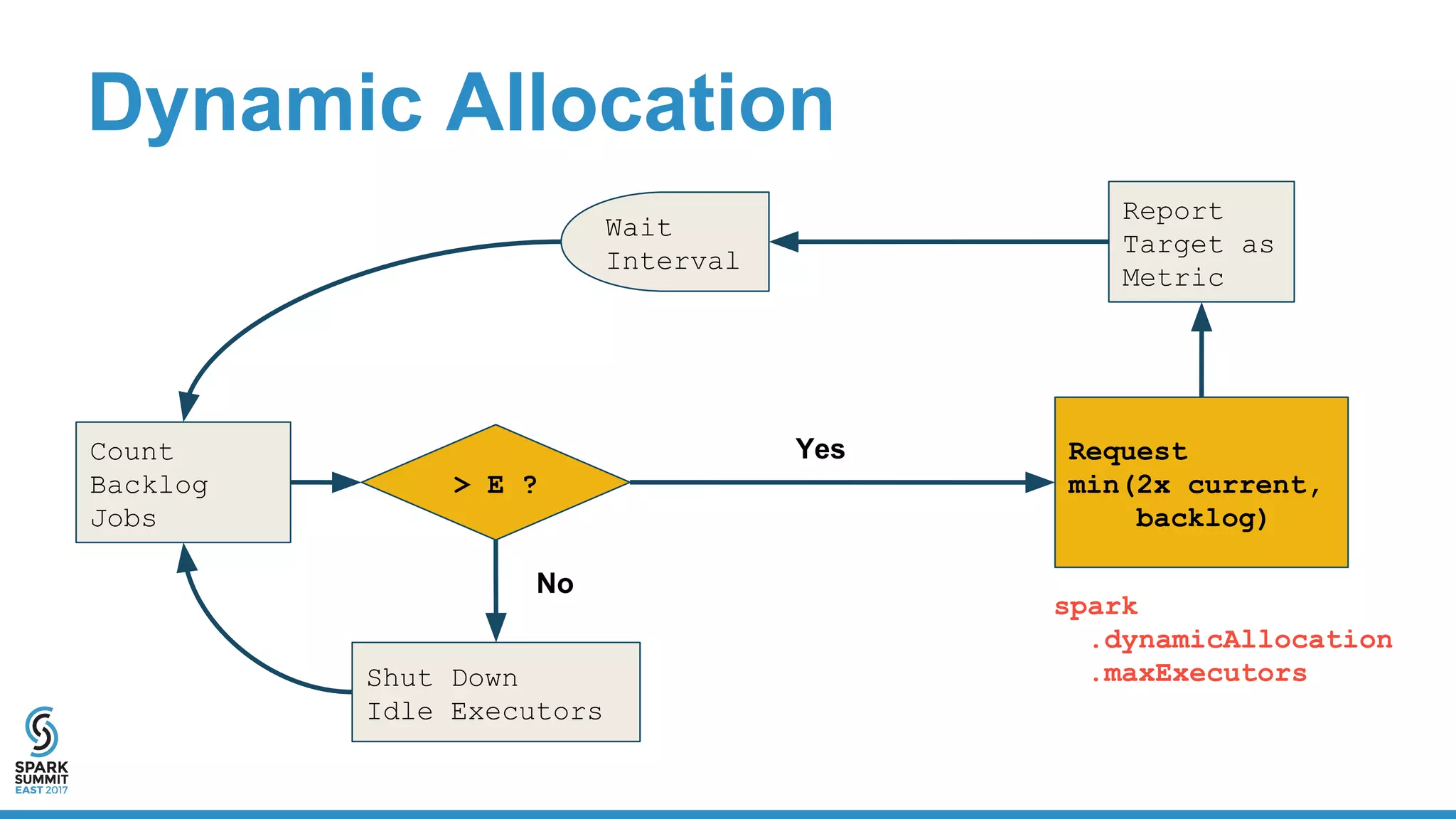
Dynamic Allocation
Count
Backlog
Jobs
> E ?
Request
min(2x current,
backlog)
Wait
Interval
Report
Target as
Metric
Shut Down
Idle Executors
Yes
No
spark
.dynamicAllocation
.maxExecutors
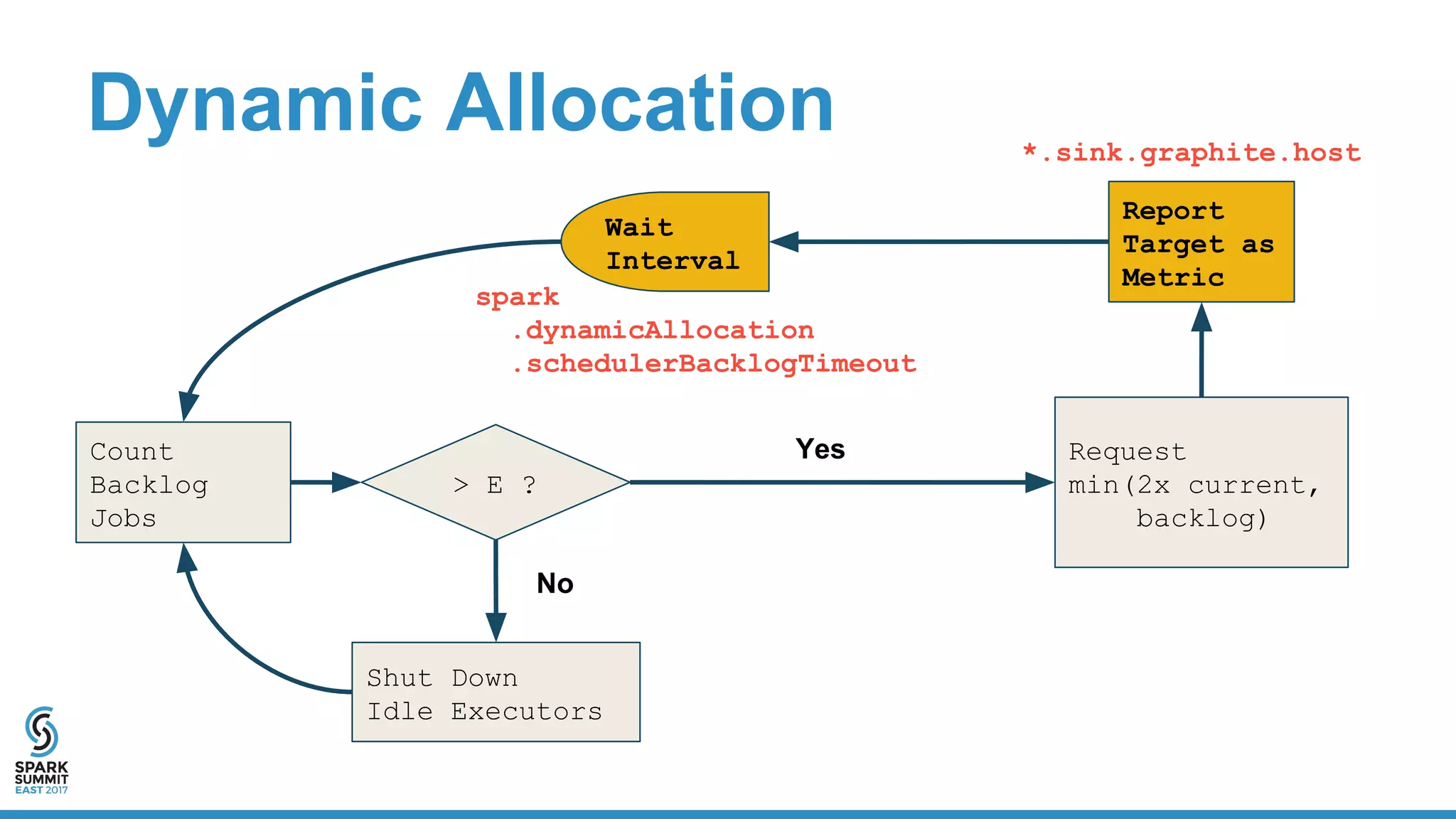
Dynamic Allocation
Count
Backlog
Jobs
> E ?
Request
min(2x current,
backlog)
Wait
Interval
Report
Target as
Metric
Shut Down
Idle Executors
Yes
No
spark
.dynamicAllocation
.schedulerBacklogTimeout
*.sink.graphite.host
Dynamic Allocation
Count
Backlog
Jobs
> E ?
Request
min(2x current,
backlog)
Wait
Interval
Report
Target as
Metric
Shut Down
Idle Executors
Yes
No
spark
.dynamicAllocation
.executorIdleTimeout
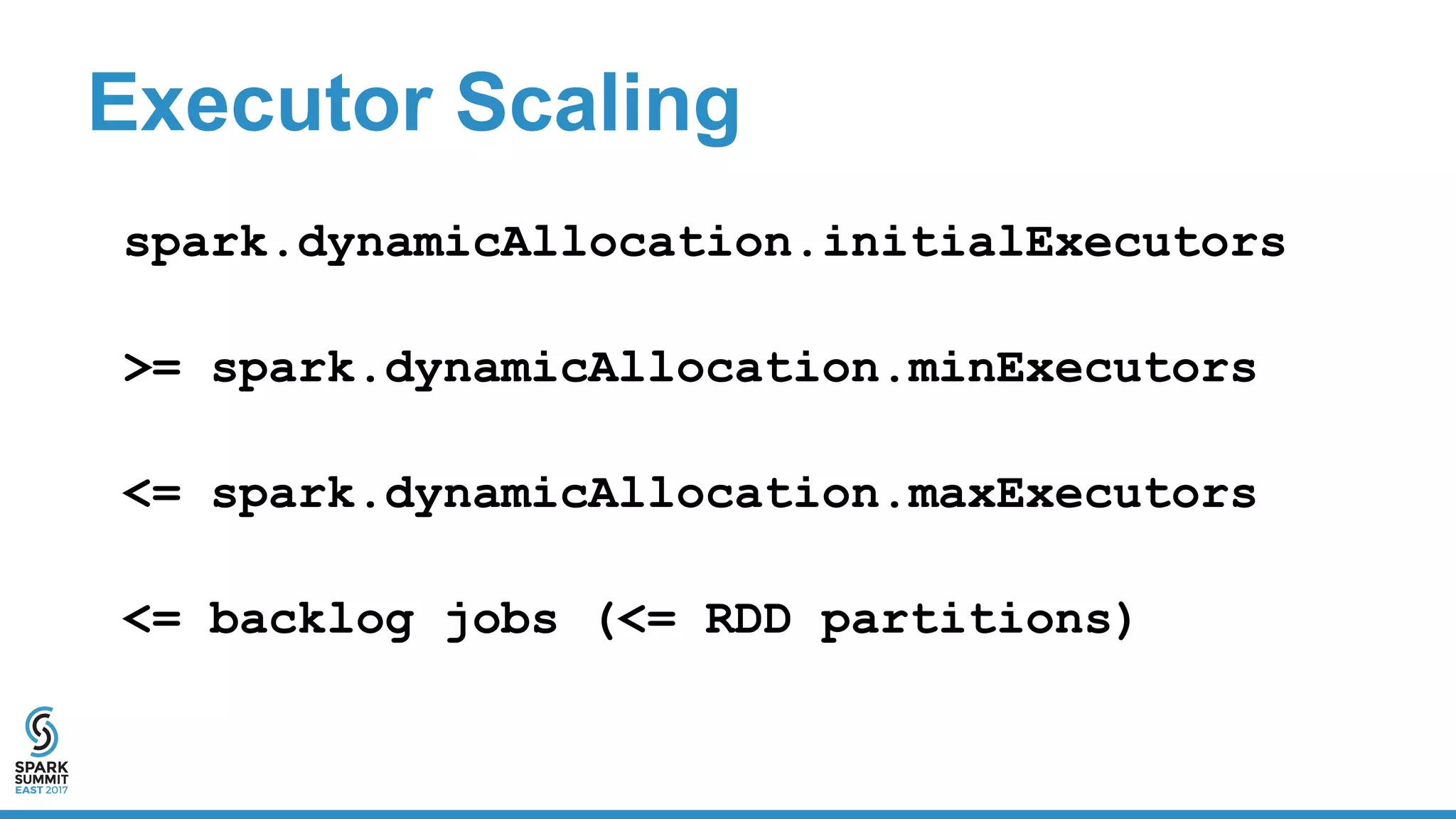
Executor Scaling
spark.dynamicAllocation.initialExecutors
>= spark.dynamicAllocation.minExecutors
<= spark.dynamicAllocation.maxExecutors
<= backlog jobs (<= RDD partitions)
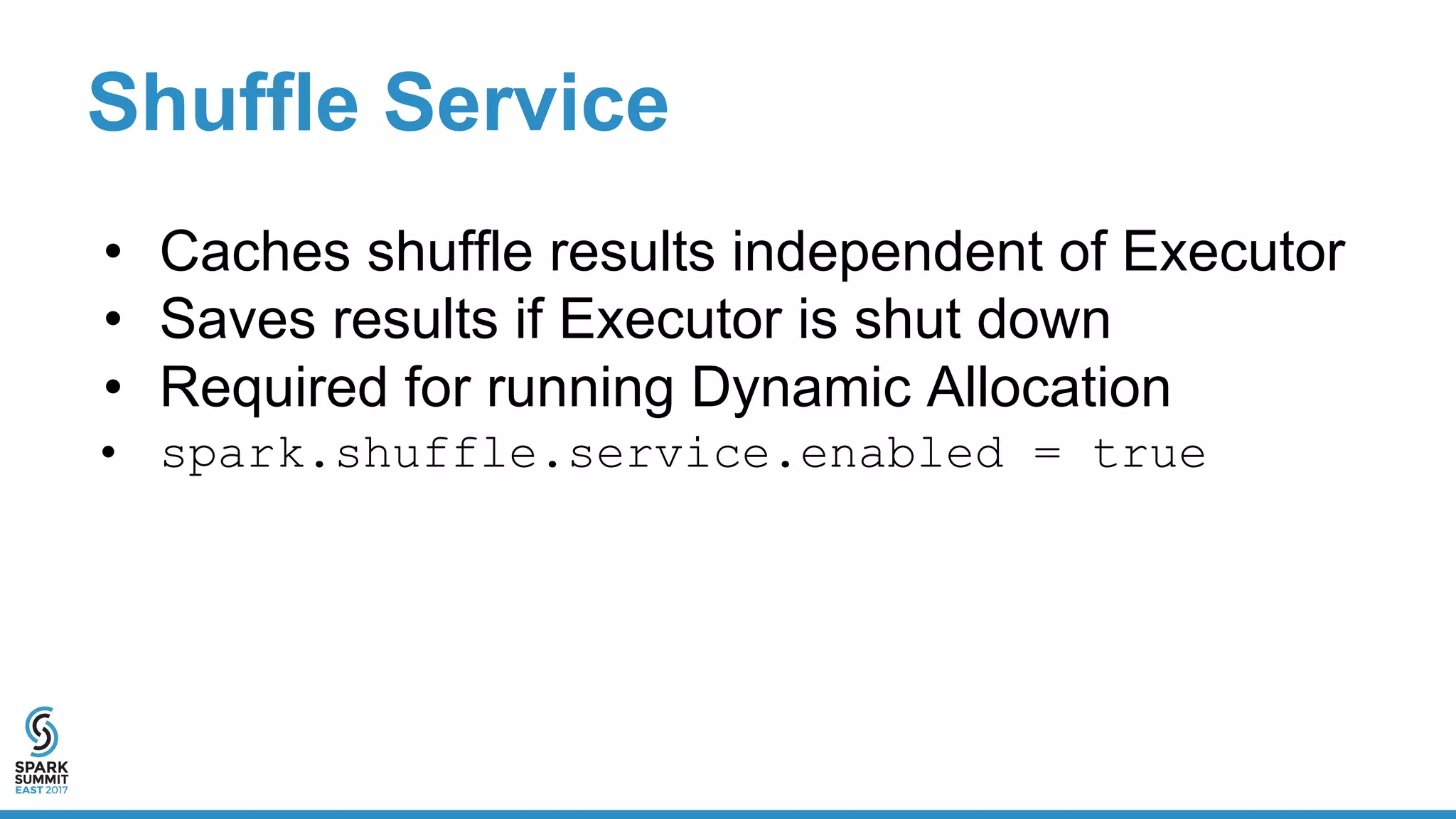
Shuffle Service
• Caches shuffle results independent of Executor
• Saves results if Executor is shut down
• Required for running Dynamic Allocation
• spark.shuffle.service.enabled = true
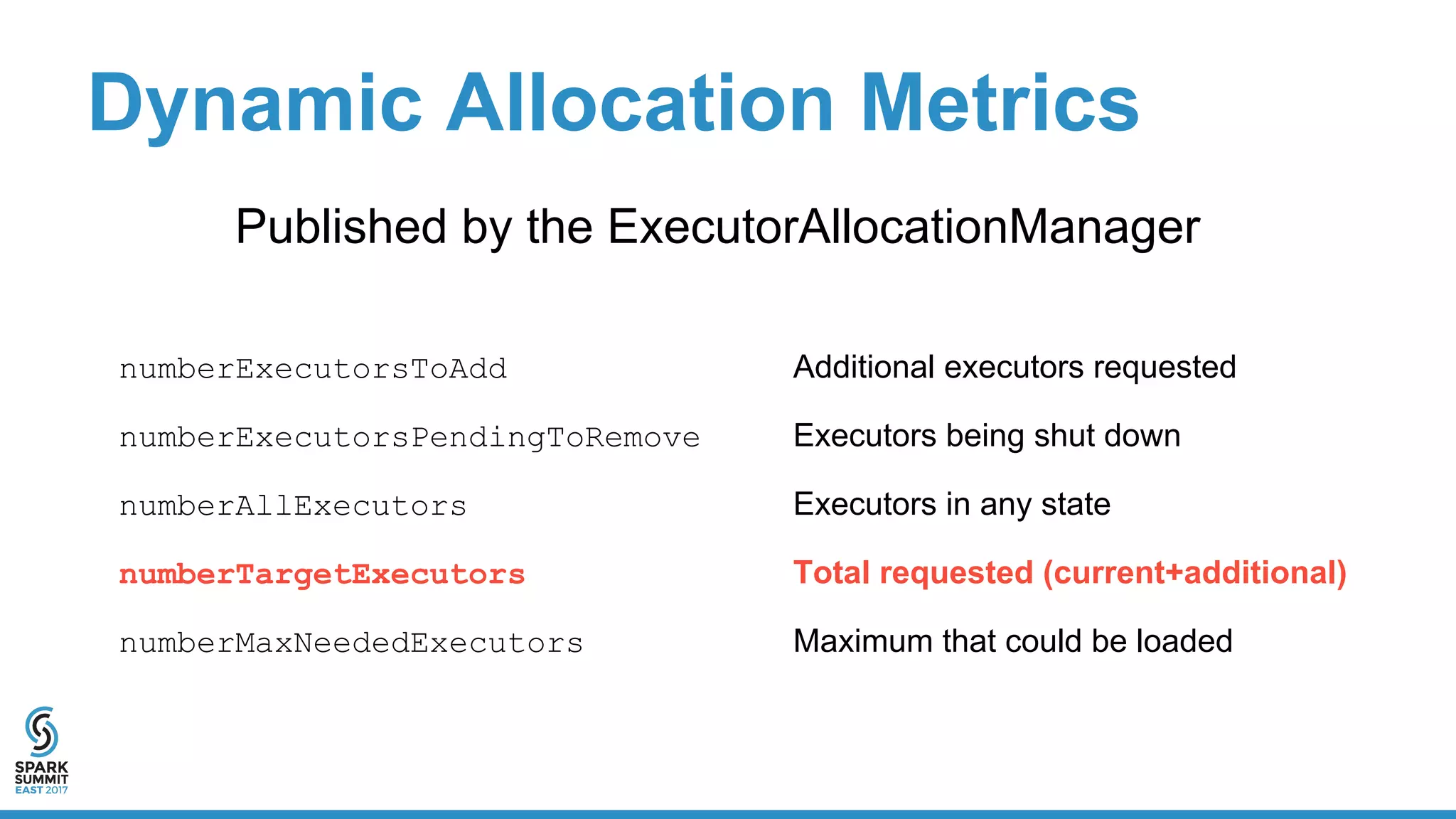
Dynamic Allocation Metrics
Published by the ExecutorAllocationManager
numberExecutorsToAdd Additional executors requested
numberExecutorsPendingToRemove Executors being shut down
numberAllExecutors Executors in any state
numberTargetExecutors Total requested (current+additional)
numberMaxNeededExecutors Maximum that could be loaded
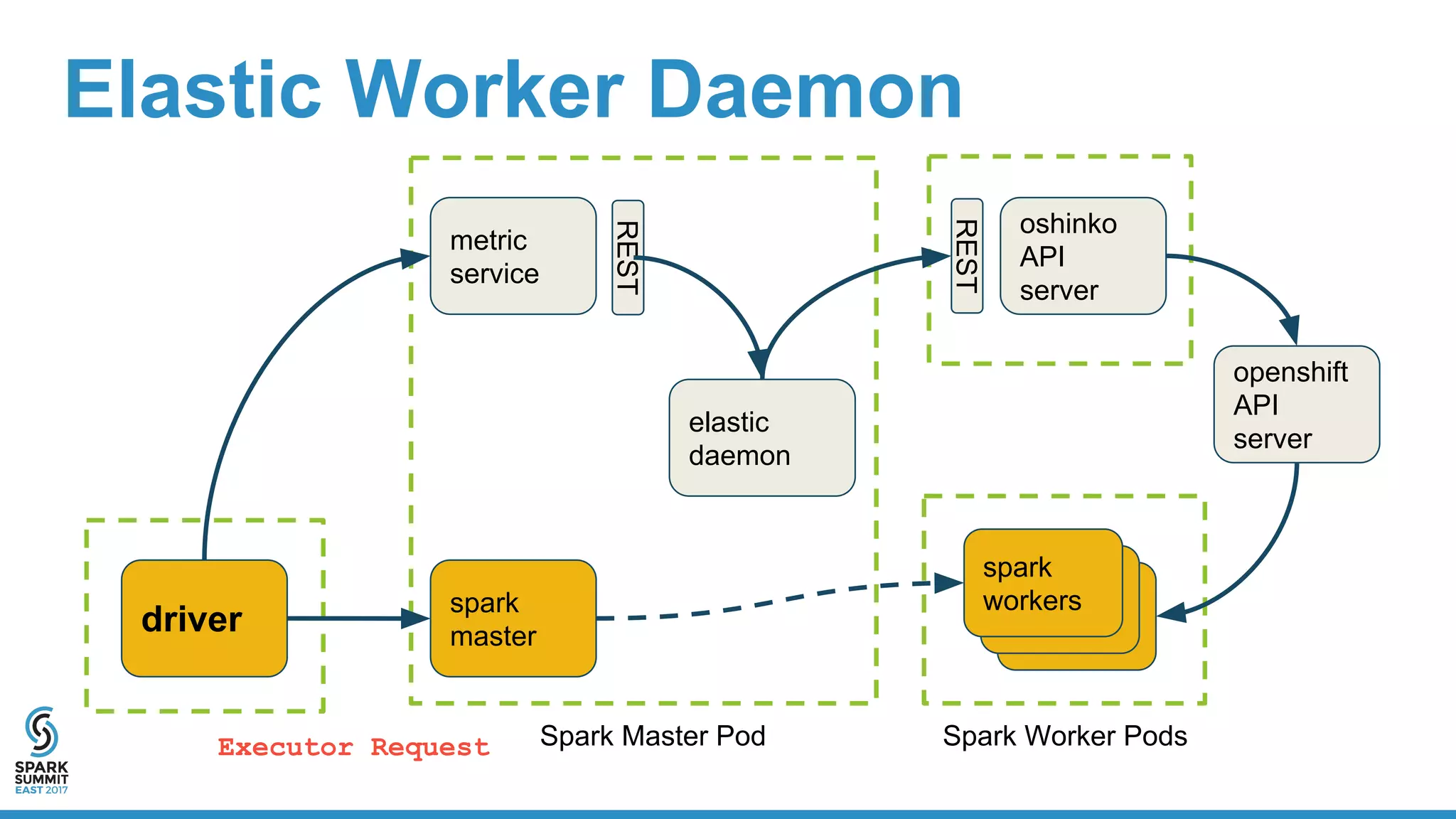
Elastic Worker Daemon
driver
metric
service
elastic
daemon
oshinko
API
server
spark
workers
spark
workers
spark
workersspark
master
REST
REST
openshift
API
server
Spark Master Pod Spark Worker PodsExecutor Request
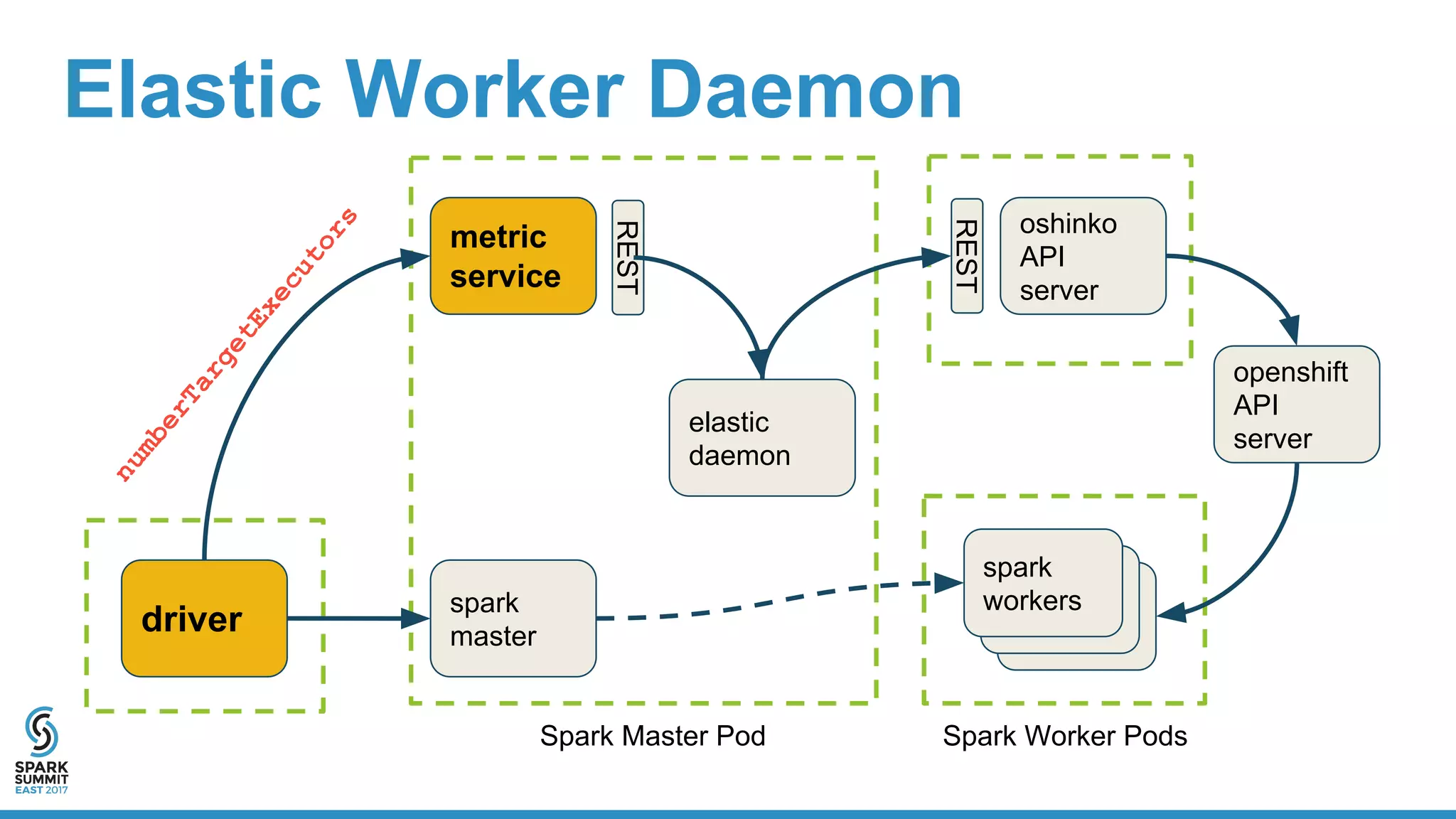
Elastic Worker Daemon
driver
metric
service
elastic
daemon
oshinko
API
server
spark
workers
spark
workers
spark
workersspark
master
REST
REST
openshift
API
server
numberTargetExecutors
Spark Master Pod Spark Worker Pods
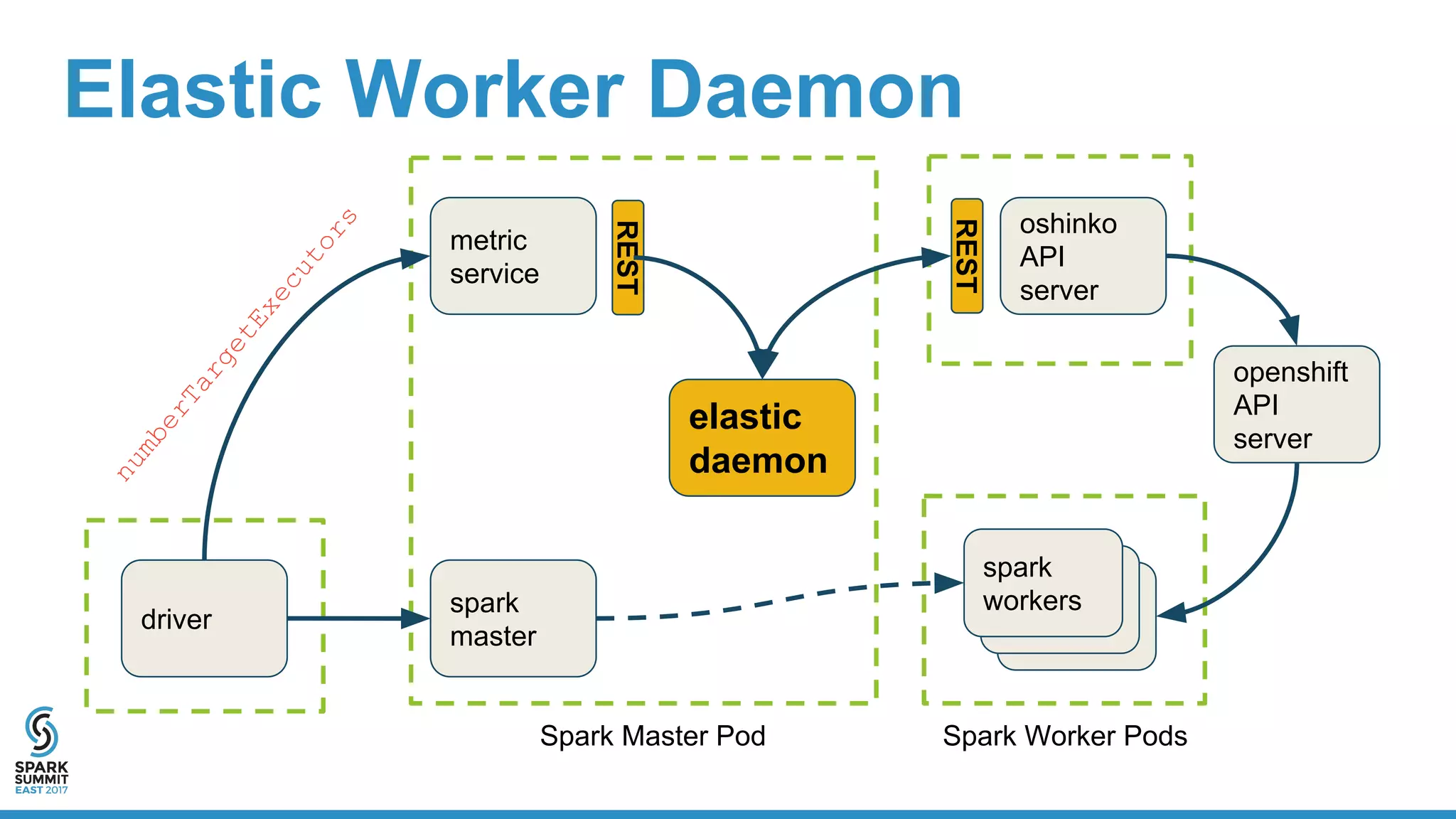
Elastic Worker Daemon
driver
metric
service
elastic
daemon
oshinko
API
server
spark
workers
spark
workers
spark
workersspark
master
REST
REST
openshift
API
server
numberTargetExecutors
Spark Master Pod Spark Worker Pods
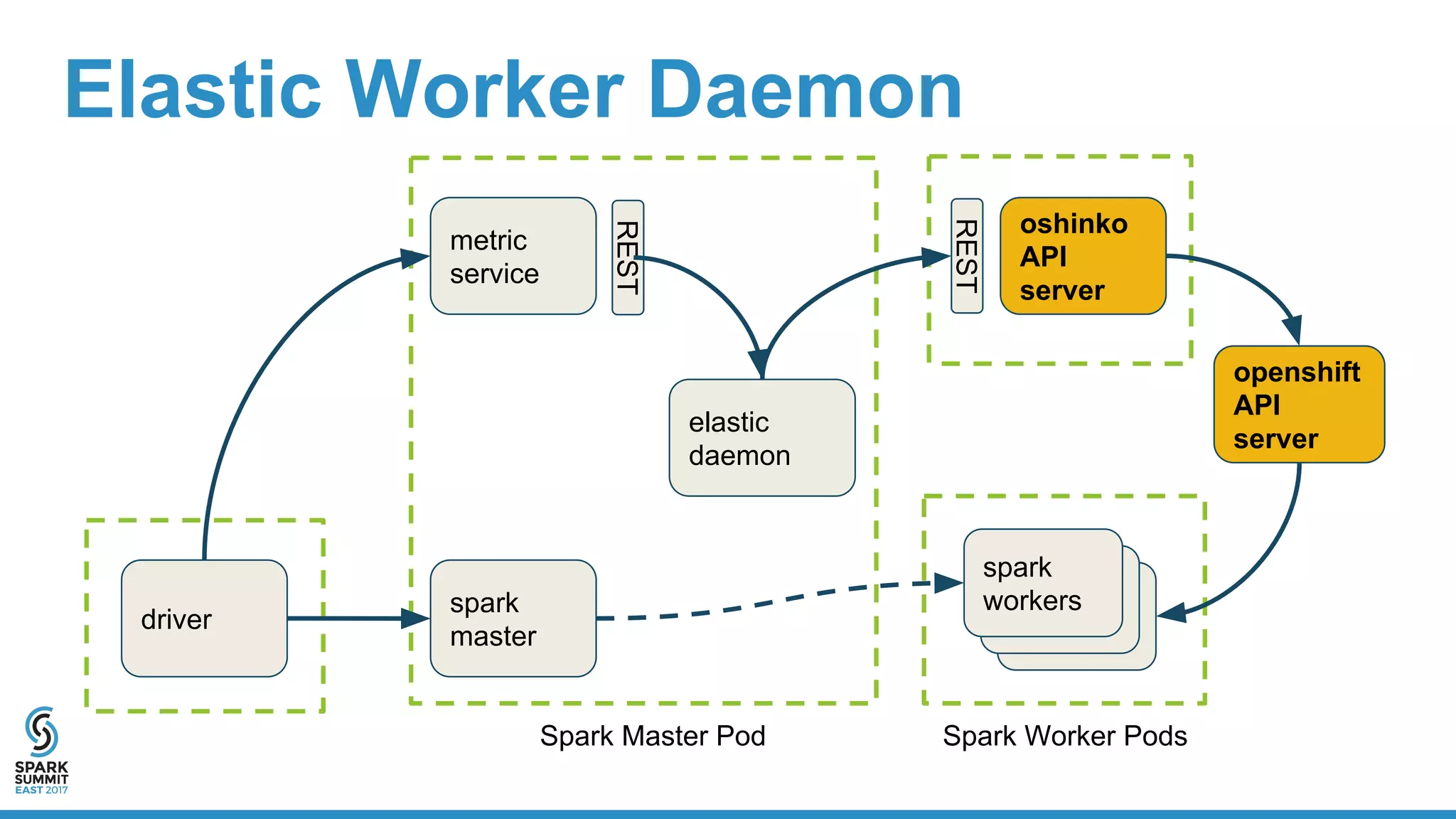
Elastic Worker Daemon
driver
metric
service
elastic
daemon
oshinko
API
server
spark
workers
spark
workers
spark
workersspark
master
REST
REST
openshift
API
server
Spark Master Pod Spark Worker Pods
Elastic Worker Daemon
driver
metric
service
elastic
daemon
oshinko
API
server
spark
workers
spark
workers
spark
workersspark
master
REST
REST
openshift
API
server
Spark Master Pod Spark Worker Pods
Pod
Replication
Demo
Demo
Radanalytics.io
New community landing page at
http://radanalytics.io/
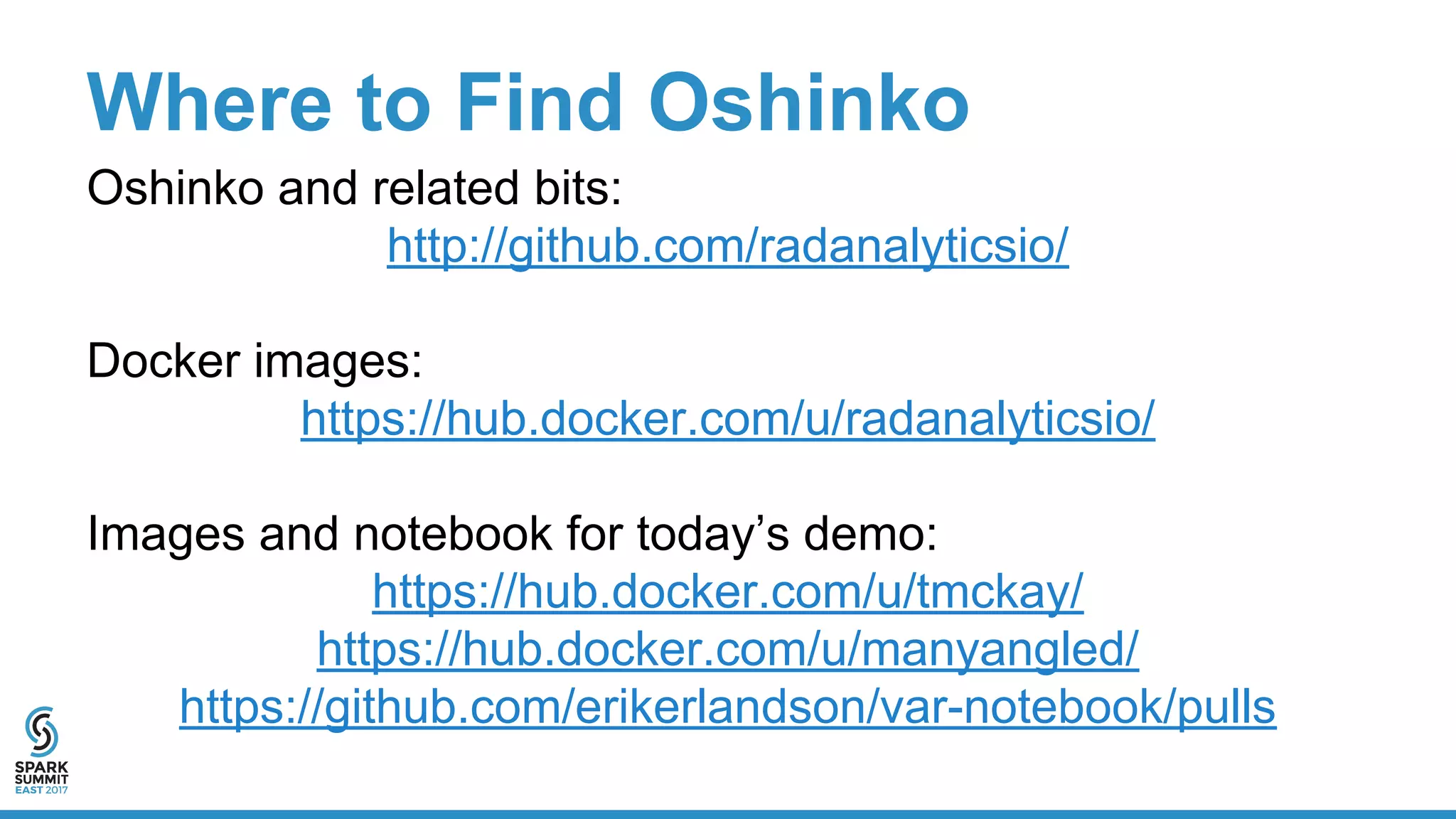
Where to Find Oshinko
Oshinko and related bits:
http://github.com/radanalyticsio/
Docker images:
https://hub.docker.com/u/radanalyticsio/
Images and notebook for today’s demo:
https://hub.docker.com/u/tmckay/
https://hub.docker.com/u/manyangled/
https://github.com/erikerlandson/var-notebook/pulls
Related Effort: Spark on K8s
• Native scheduler backend for Kubernetes
• https://github.com/apache-spark-on-k8s/spark
• Developer Community Collaboration
Thank You.
eje@redhat.com
tmckay@redhat.com

Teaching Apache Spark Clusters to Manage Their Workers Elastically: Spark Summit East talk by Erik Erlandson and Trevor McKay