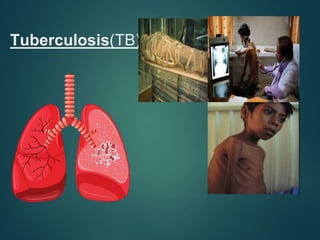
Tuberculosis
Dr Bhavika patel
MBBS,MD Microbiology,DIPC
Assistant Professor
Department of microbiology
GMERS MC, Valsad.
Learning objectives
At the end of the session, the students will be able to understand:
▰ Classification of mycobacteria.
▰ Antigenic structure, pathogenesis, clinical manifestations, lab
diagnosis, treatment, drug resistance and prophylaxis of TB.
Tuberculosis(TB)
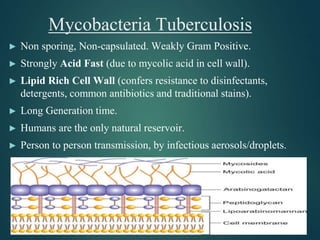
Mycobacteria Tuberculosis
► Non sporing, Non-capsulated. Weakly Gram Positive.
► Strongly Acid Fast (due to mycolic acid in cell wall).
► Lipid Rich Cell Wall (confers resistance to disinfectants,
detergents, common antibiotics and traditional stains).
► Long Generation time.
► Humans are the only natural reservoir.
► Person to person transmission, by infectious aerosols/droplets.
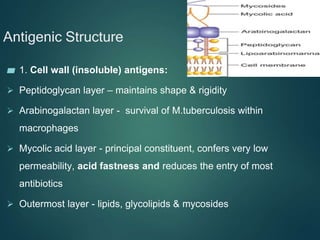
Antigenic Structure
▰ 1. Cell wall (insoluble) antigens:
 Peptidoglycan layer – maintains shape & rigidity
 Arabinogalactan layer - survival of M.tuberculosis within
macrophages
 Mycolic acid layer - principal constituent, confers very low
permeability, acid fastness and reduces the entry of most
antibiotics
 Outermost layer - lipids, glycolipids & mycosides
Antigenic Structure (Cont..)
▰ 1. Cell wall (insoluble) antigens (Cont..):
 Proteins (e.g. porins, transport proteins) - found throughout various
layers
 Plasma membrane - helps in attachment to host cell and is also a
target antigen used for diagnosis
Antigenic Structure (Cont..)
▰ 2. Cytoplasmic (soluble) antigens:
 These include antigen 5, antigen 6, antigen 60
 Used in serodiagnosis of tuberculosis.
Lin P et al. J Immunol 2010
Clearance
Pulmonary TB
Low grade TB
“percolating
“
Dormant infection
Septic TB
Miliary TB
Extrapulmonary TB
Spectrum of M. tuberculosis infection
Tuberculosis or TB (short for
tubercle bacillus)
► Is a common and often deadly infectious disease caused by
mycobacterium usually mycobacterium tuberculosis.
► M.tuberculosis complex includes:
1.M.tuberculosis
2. M.bovis
3.Other member: M.africanum, M. microti , M. caprae, M. pinnipedii, M.
canetti , M. suricattae, M. orygis , M.mungi
Pathogenesis
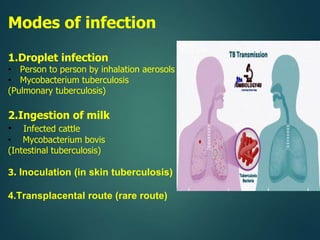
Modes of infection
1.Droplet infection
• Person to person by inhalation aerosols
• Mycobacterium tuberculosis
(Pulmonary tuberculosis)
2.Ingestion of milk
• Infected cattle
• Mycobacterium bovis
(Intestinal tuberculosis)
3. Inoculation (in skin tuberculosis)
4.Transplacental route (rare route)
Pathogenesis - Risk Factors
▰ Sputum positive patients with Bacillary load at least 104 bacilli/mL
▰ Cavitary lesions in lung - more bacillary load
▰ Overcrowding in poorly ventilated rooms
▰ Low cell-mediated immunity – HIV
▰ Other comorbid conditions - Post-silicosis, postransplantation,
hemodialysis, diabetes, IV drug abuse, smoking, etc.
▰ Age: Late adolescence and early adulthood
▰ Sex: women at 25–34 years, men in older ages
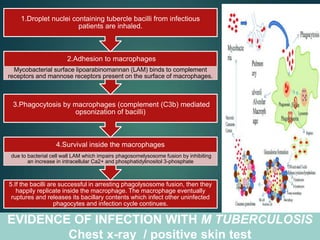
5.If the bacilli are successful in arresting phagolysosome fusion, then they
happily replicate inside the macrophage. The macrophage eventually
ruptures and releases its bacillary contents which infect other uninfected
phagocytes and infection cycle continues.
4.Survival inside the macrophages
due to bacterial cell wall LAM which impairs phagosomelysosome fusion by inhibiting
an increase in intracellular Ca2+ and phosphatidylinositol 3-phosphate
3.Phagocytosis by macrophages (complement (C3b) mediated
opsonization of bacilli)
2.Adhesion to macrophages
Mycobacterial surface lipoarabinomannan (LAM) binds to complement
receptors and mannose receptors present on the surface of macrophages.
1.Droplet nuclei containing tubercle bacilli from infectious
patients are inhaled.
EVIDENCE OF INFECTION WITH M TUBERCULOSIS
Chest x-ray / positive skin test
Host Immune Response - Cell-mediated Immune
Response
▰ Macrophages present the mycobacterial antigens to TH (T helper)
cells - TH1and TH2 subsets.
▰ TH1 cells release - IL-2 and IFN-γ - activate monocytes and
macrophages
▰ Activation of TH1 cells - development of two host responses:
 1. A macrophage-activating response
 2. Tissue-damaging response.
Host Immune Response - Cell-mediated
Immune Response (Cont..)
▰ 1. A macrophage-activating response:
▰ IFN γ activates macrophages
▰ Tubercles: a favorable sign
 Hard tubercles: initially hard - central zone containing activated
macrophages (epithelioid and giant cells) and a peripheral zone of
lymphocytes and fibroblasts.
 Soft tubercles - central part undergoes caseous necrosis - Bacilli
inhibited within this necrotic environment because of low oxygen
tension and low pH - lesion heals and calcifies.
Host Immune Response - Cell-mediated
Immune Response (Cont..)
▰ 2. Tissue-damaging response:
▰ Minority of cases, associated with risk factors -macrophage-
activating response is weak & bacilli more virulent
▰ Mycobacterial growth inhibited only by an intensified delayed
hypersensitivity reaction - lung tissue destruction
Host Immune Response - Cell-mediated
Immune Response (Cont..)
▰ Spread of caseous necrosis
1. Direct draining into the airways - discharged with cough
2. Lymphatic spread - reseeding into same or opposite lung →
disseminate to other organs.
3. Hematogenous spread to various organs
Host Immune Response - Cell-mediated
Immune Response (Cont..)
▰ Humoral Immune Response:
▰ TH2 release - IL-4, IL-5 - activate B-cells - antibodies.
 M. tuberculosis being obligate intracellular organism, humoral
immunity plays a minor role
 Anti-LAM antibodies play a role in preventing dissemination of
tuberculosis in children.
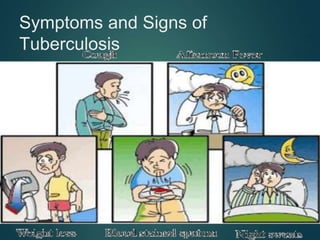
Symptoms and Signs of
Tuberculosis
Clinical Manifestations
▰ Tuberculosis (TB) is classified as:
 Pulmonary TB and
 Extrapulmonary TB
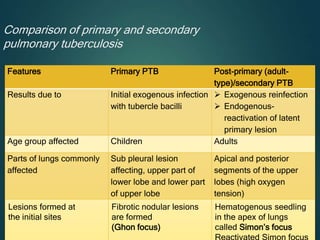
Comparison of primary and secondary
pulmonary tuberculosis
Features Primary PTB Post-primary (adult-
type)/secondary PTB
Results due to Initial exogenous infection
with tubercle bacilli
 Exogenous reinfection
 Endogenous-
reactivation of latent
primary lesion
Age group affected Children Adults
Parts of lungs commonly
affected
Sub pleural lesion
affecting, upper part of
lower lobe and lower part
of upper lobe
Apical and posterior
segments of the upper
lobes (high oxygen
tension)
Lesions formed at
the initial sites
Fibrotic nodular lesions
are formed
(Ghon focus)
Hematogenous seedling
in the apex of lungs
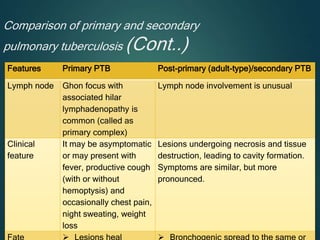
called Simon’s focus
Comparison of primary and secondary
pulmonary tuberculosis (Cont..)
Features Primary PTB Post-primary (adult-type)/secondary PTB
Lymph node Ghon focus with
associated hilar
lymphadenopathy is
common (called as
primary complex)
Lymph node involvement is unusual
Clinical
feature
It may be asymptomatic
or may present with
fever, productive cough
(with or without
hemoptysis) and
occasionally chest pain,
night sweating, weight
loss
Lesions undergoing necrosis and tissue
destruction, leading to cavity formation.
Symptoms are similar, but more
pronounced.
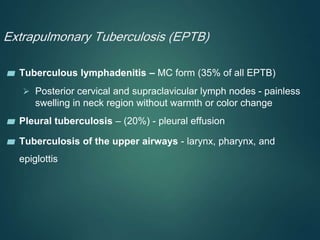
Extrapulmonary Tuberculosis (EPTB)
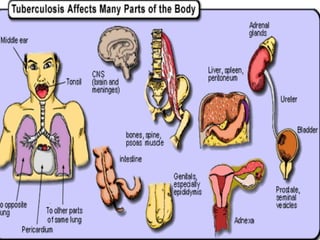
▰ Tuberculous lymphadenitis – MC form (35% of all EPTB)
 Posterior cervical and supraclavicular lymph nodes - painless
swelling in neck region without warmth or color change
▰ Pleural tuberculosis – (20%) - pleural effusion
▰ Tuberculosis of the upper airways - larynx, pharynx, and
epiglottis
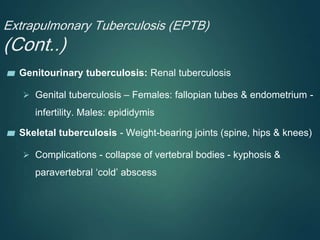
Extrapulmonary Tuberculosis (EPTB)
(Cont..)
▰ Genitourinary tuberculosis: Renal tuberculosis
 Genital tuberculosis – Females: fallopian tubes & endometrium -
infertility. Males: epididymis
▰ Skeletal tuberculosis - Weight-bearing joints (spine, hips & knees)
 Complications - collapse of vertebral bodies - kyphosis &
paravertebral ‘cold’ abscess
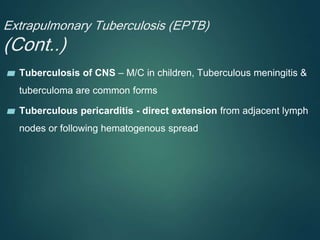
Extrapulmonary Tuberculosis (EPTB)
(Cont..)
▰ Tuberculosis of CNS – M/C in children, Tuberculous meningitis &
tuberculoma are common forms
▰ Tuberculous pericarditis - direct extension from adjacent lymph
nodes or following hematogenous spread
Extrapulmonary Tuberculosis (EPTB)
(Cont..)
▰ Gastrointestinal tuberculosis - Terminal ileum and caecum
 Due to swallowing of sputum with direct seeding, hematogenous
spread, or ingestion of cow’s milk contaminated with M. bovis
▰ Tuberculous skin lesions:
 Scrofuloderma – skin involvement by direct extension from
underlying tuberculous lymphadenitis
 Lupus vulgaris: Apple jelly nodules are formed over face
Extrapulmonary Tuberculosis (EPTB)
(Cont..)
▰ Miliary or disseminated tuberculosis: Hematogenous spread -
yellowish 1–2 mm size granulomatous lesions resembling millet
seeds in various organs.
▰ Post-TB aspergillosis: Chronic pulmonary aspergillosis - due to
colonization of Aspergillus fumigatus in the residual TB cavities
Epidemiology
▰ Quarter of the current world population is infected asymptomatically
with M. tuberculosis, of which 5–10% develop the clinical disease.
▰ World: 10 million new cases of TB occurred in 2018.
▰ Deaths due to TB - 12 Lakh in HIV-negative and 2.5 Lakh in HIV-
coinfected people in 2018.
Epidemiology (Cont..)
▰ WHO regions: South-East Asia (44%), followed by Africa (24%)
and the Western Pacific (18%)
▰ Countries: Eight countries accounted for two-third of the total TB
burden, with India having the largest share.
▰ India: In 2018 - 27 Lakh cases occurred India - highest burden from
Uttar Pradesh
Epidemiology (Cont..)
▰ WHO regions: South-East Asia (44%), followed by Africa (24%)
and the Western Pacific (18%)
▰ Countries: Eight countries accounted for two-third of the total TB
burden, with India having the largest share.
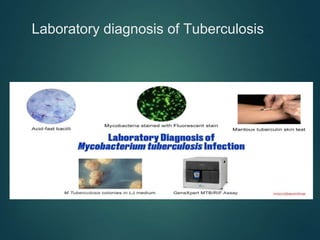
Laboratory diagnosis of Tuberculosis
● Specimen collection
⮚ In pulmonary TB: Sputum (2 specimens—spot and
early morning), gastric aspirate (in children)
⮚ In EPTB: Specimens vary depending on the site
involved
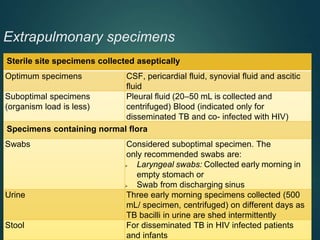
Extrapulmonary specimens
Sterile site specimens collected aseptically
Optimum specimens CSF, pericardial fluid, synovial fluid and ascitic
fluid
Suboptimal specimens
(organism load is less)
Pleural fluid (20–50 mL is collected and
centrifuged) Blood (indicated only for
disseminated TB and co- infected with HIV)
Specimens containing normal flora
Swabs Considered suboptimal specimen. The
only recommended swabs are:
 Laryngeal swabs: Collected early morning in
empty stomach or
 Swab from discharging sinus
Urine Three early morning specimens collected (500
mL/ specimen, centrifuged) on different days as
TB bacilli in urine are shed intermittently
Stool For disseminated TB in HIV infected patients
and infants
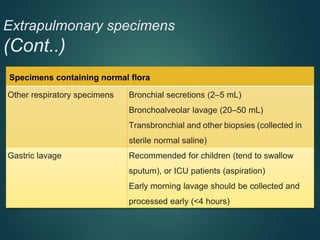
Extrapulmonary specimens
(Cont..)
Specimens containing normal flora
Other respiratory specimens Bronchial secretions (2–5 mL)
Bronchoalveolar lavage (20–50 mL)
Transbronchial and other biopsies (collected in
sterile normal saline)
Gastric lavage Recommended for children (tend to swallow
sputum), or ICU patients (aspiration)
Early morning lavage should be collected and
processed early (<4 hours)
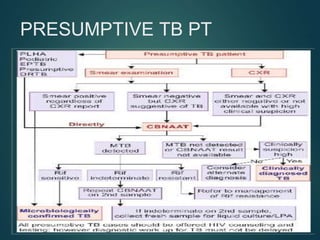
PRESUMPTIVE TB PT
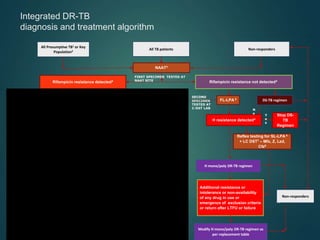
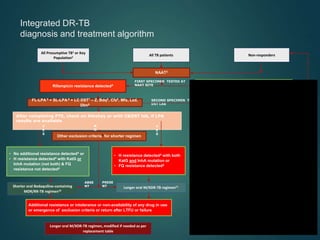
Integrated DR-TB
diagnosis and treatment algorithm
40
Rifampicin resistance detected4
All TB patients
All Presumptive TB1 or Key
Population2
Non-responders
Rifampicin resistance not detected4
DS-TB regimen
NAAT3
FL-LPA 5 + SL-LPA 6 + LC DST7 – Z, Bdq8, Cfz8, Mfx, Lzd,
Dlm8
• No additional resistance detected4 or
• H resistance detected4 with KatG or
InhA mutation (not both) & FQ
resistance not detected4
• H resistance detected4 with both
KatG and InhA mutation or
• FQ resistance detected4
Shorter oral Bedaquiline-containing
MDR/RR-TB regimen10
Longer oral M/XDR-TB regimen11
FL-LPA 5
Additional resistance or
intolerance or non-availability
of any drug in use or
emergence of exclusion criteria
or return after LTFU or failure
H mono/poly DR-TB regimen
Modify H mono/poly DR-TB regimen as
per replacement table
H resistance detected4
Non-responders
Additional resistance or intolerance or non-availability of any drug in use
or emergence of exclusion criteria or return after LTFU or failure
Longer oral M/XDR-TB regimen, modified if needed as per
replacement table
Reflex testing for SL-LPA 6
+ LC DST7 – Mfx, Z, Lzd,
Cfz8
Other exclusion criteria9 for shorter regimen
PRESE
NT
ABSE
NT
After completing PTE, check on Nikshay or with C&DST lab, if LPA
results are available
N
O
Y
E
S
Y
E
S
Stop DS-
TB
Regimen
FIRST SPECIMEN TESTED AT
NAAT SITE
SECOND
SPECIMEN
TESTED AT
C-DST LAB
Y
e
s
N
o
Integrated DR-TB
diagnosis and treatment algorithm
41
Rifampicin resistance detected4
All TB patients
All Presumptive TB1 or Key
Population2
Non-responders
Rifampicin resistance not detected4
DS-TB regimen
NAAT3
FL-LPA 5 + SL-LPA 6 + LC DST7 – Z, Bdq8, Cfz8, Mfx, Lzd,
Dlm8
• No additional resistance detected4 or
• H resistance detected4 with KatG or
InhA mutation (not both) & FQ
resistance not detected4
• H resistance detected4 with both
KatG and InhA mutation or
• FQ resistance detected4
Shorter oral Bedaquiline-containing
MDR/RR-TB regimen10
Longer oral M/XDR-TB regimen11
FL-LPA 5
Additional resistance or
intolerance or non-availability
of any drug in use or
emergence of exclusion criteria
or return after LTFU or failure
H mono/poly DR-TB regimen
Modify H mono/poly DR-TB regimen as
per replacement table
H resistance detected4
Non-responders
Additional resistance or intolerance or non-availability of any drug in use
or emergence of exclusion criteria or return after LTFU or failure
Longer oral M/XDR-TB regimen, modified if needed as per
replacement table
Reflex testing for SL-LPA 6
+ LC DST7 – Mfx, Z, Lzd,
Cfz8
Other exclusion criteria9 for shorter regimen
PRESE
NT
ABSE
NT
After completing PTE, check on Nikshay or with C&DST lab, if LPA
results are available
N
O
Y
E
S
Y
E
S
Stop DS-
TB
Regimen
FIRST SPECIMEN TESTED AT
NAAT SITE
SECOND SPECIMEN TESTED AT C-
DST LAB
Y
e
s
N
o
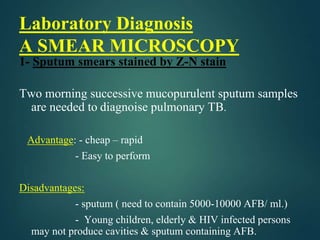
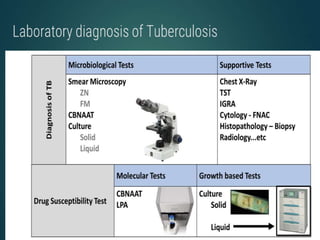
Laboratory Diagnosis
A SMEAR MICROSCOPY
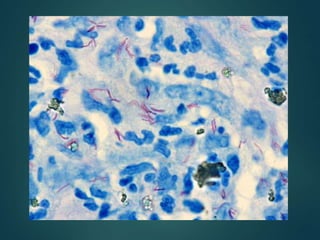
1- Sputum smears stained by Z-N stain
Two morning successive mucopurulent sputum samples
are needed to diagnoise pulmonary TB.
Advantage: - cheap – rapid
- Easy to perform
Disadvantages:
- sputum ( need to contain 5000-10000 AFB/ ml.)
- Young children, elderly & HIV infected persons
may not produce cavities & sputum containing AFB.
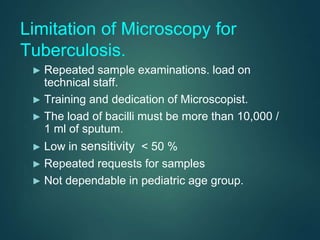
Limitation of Microscopy for
Tuberculosis.
► Repeated sample examinations. load on
technical staff.
► Training and dedication of Microscopist.
► The load of bacilli must be more than 10,000 /
1 ml of sputum.
► Low in sensitivity < 50 %
► Repeated requests for samples
► Not dependable in pediatric age group.
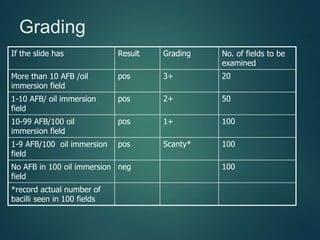
Grading
If the slide has Result Grading No. of fields to be
examined
More than 10 AFB /oil
immersion field
pos 3+ 20
1-10 AFB/ oil immersion
field
pos 2+ 50
10-99 AFB/100 oil
immersion field
pos 1+ 100
1-9 AFB/100 oil immersion
field
pos Scanty* 100
No AFB in 100 oil immersion
field
neg 100
*record actual number of
bacilli seen in 100 fields
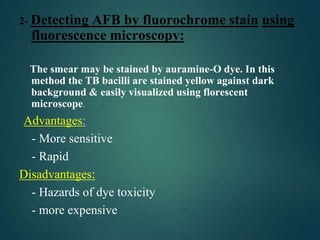
2- Detecting AFB by fluorochrome stain using
fluorescence microscopy:
The smear may be stained by auramine-O dye. In this
method the TB bacilli are stained yellow against dark
background & easily visualized using florescent
microscope.
Advantages:
- More sensitive
- Rapid
Disadvantages:
- Hazards of dye toxicity
- more expensive
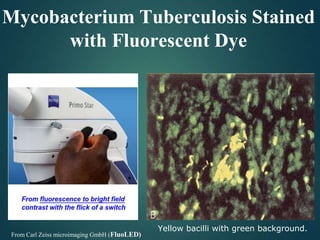
Mycobacterium Tuberculosis Stained
with Fluorescent Dye
From Carl Zeiss microimaging GmbH (FluoLED)
Yellow bacilli with green background.
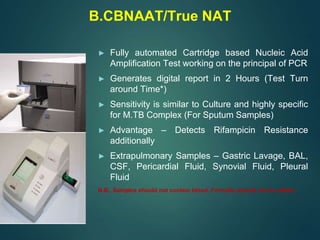
B.CBNAAT/True NAT
► Fully automated Cartridge based Nucleic Acid
Amplification Test working on the principal of PCR
► Generates digital report in 2 Hours (Test Turn
around Time*)
► Sensitivity is similar to Culture and highly specific
for M.TB Complex (For Sputum Samples)
► Advantage – Detects Rifampicin Resistance
additionally
► Extrapulmonary Samples – Gastric Lavage, BAL,
CSF, Pericardial Fluid, Synovial Fluid, Pleural
Fluid
N.B., Samples should not contain blood, Formalin should not be added
C.Mycobacterial Culture
Reasons to request mycobacterial culture:
• Patient previously on anti-TB treatment (Relapse,
Defaulter)
• Still smear-positive after intensive phase of treatment
or after finishing treatment
• Symptomatic and at high-risk of MDR-TB
• To test fluids potentially infected with M.
tuberculosis
• Investigation of patients who develop active PTB
during or after IPT.
• TB in health workers
50
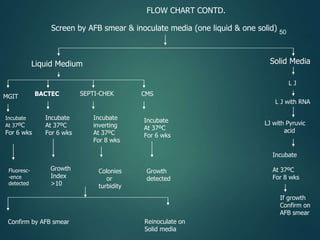
FLOW CHART CONTD.
Screen by AFB smear & inoculate media (one liquid & one solid)
Liquid Medium Solid Media
MGIT BACTEC SEPTI-CHEK CMS
Incubate
At 37ºC
For 6 wks
Incubate
At 37ºC
For 6 wks
Incubate
inverting
At 37ºC
For 8 wks
Incubate
At 37ºC
For 6 wks
Fluoresc-
-ence
detected
Growth
Index
>10
Colonies
or
turbidity
Growth
detected
Confirm by AFB smear Reinoculate on
Solid media
L J
L J with RNA
LJ with Pyruvic
acid
Incubate
At 37ºC
For 8 wks
If growth
Confirm on
AFB smear
Solid media
► Cultures incubated at 35°c in the dark in an
atmosphere of 5% to 10% co2 and high humidity
► Cultures are examined weekly for growth
► Most isolates appear between 3 and 6 weeks a
few isolates appear after 7 or 8 weeks
► After 8 wks of incubation negative cultures are
reported
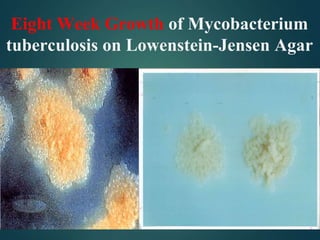
Eight Week Growth of Mycobacterium
tuberculosis on Lowenstein-Jensen Agar
Commonly used liquid media systems to
culture and detect the growth of
mycobacterium
► BACTEC 460
► Mycobacteria growth indicator tube (MGIT)
► BACTEC MGIT 960 ( continuous growth monitoring
systems)
Liquid media
► Use of liquid media system reduces the turn-
around time for isolation of acid-fast bacilli to
approximately 10 days compared with 17 days
or longer in conventional methods
► Once growth is detected in the liquid media ,
an acid fast stain is performed to confirm the
presence of acid-fast bacilli
Laboratory diagnosis of Tuberculosis
(Cont..)
55
● Culture identification
⮚ Automated identification—by MALDI-TOF
⮚ MPT 64 antigen detection—by ICT
⮚ Different biochemical test – ex Nitrate reduction and niacin
production are definitive for M.tb
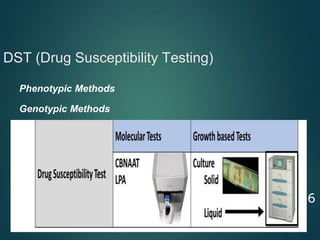
DST (Drug Susceptibility Testing)
56
● Phenotypic Methods
● Genotypic Methods
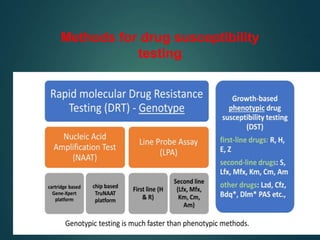
Methods for drug susceptibility
testing
Genotypic testing is much faster than phenotypic methods.
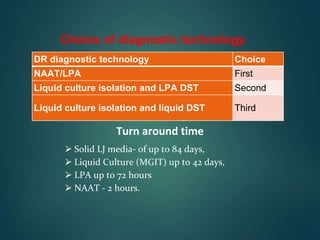
Choice of diagnostic technology
DR diagnostic technology Choice
NAAT/LPA First
Liquid culture isolation and LPA DST Second
Liquid culture isolation and liquid DST Third
⮚ Solid LJ media- of up to 84 days,
⮚ Liquid Culture (MGIT) up to 42 days,
⮚ LPA up to 72 hours
⮚ NAAT - 2 hours.
Turn around time
Laboratory diagnosis of Tuberculosis
(Cont..)
● Diagnosis of latent tuberculosis
⮚ Tuberculin skin test (e.g. Mantoux test)
⮚ Interferon gamma release assay (IGRA).
Laboratory diagnosis of Tuberculosis
(Cont..)
60
● Diagnosis of latent tuberculosis
⮚ Tuberculin skin test (e.g. Mantoux test)
⮚ Interferon gamma release assay (IGRA).
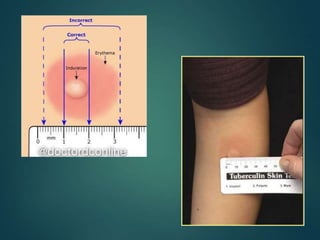
Mantoux Tuberculin Skin Test (TST)
► 0.1 ml of tuberculin purified protein derivative (-
PPD) into inner surface of forearm intradermally.
Read between 48-72 hrs.
► A positive tuberculin skin test result is supportive
evidence in the diagnosis of TB in areas of low
prevalence (or no vaccination); however, a negative
tuberculin skin test result may occur in
approximately one third of patients.
Cytokine Assays
T- cell Interferon-Gamma Release Assay (IGRA)
►INF- y produced by T-lymphocytes, is capable of
activating macrophages, increasing their bactericidal
capacity against M tuberculosis and is involved in
granuloma formation.
►Elevated concentrations of INF-y in TB is related to
increased production at the disease site by effectors T
cells.
►The sensitivity of an elevated level varies from 78 to
100% and specificity from 95 to 100%
❖ IGRA is useful in targeted strategy for latent TB
infection(LTBI) detection in low TB incidence
settings
❖ More specific than Tuberculin Skin Test
❖ Can’t distinguish active from treated TB or
LTBI.
❖ False positive results in-
Hematologic malignancies
Empyema.
Methods for detection of IFN-y
Two new blood tests
1. T-SPOT.TB [Oxford Immunec] – directly count the no of
IFN-y secreting T cells.
2. QuantiFERON-TB Gold [Cellestis Limited] –
measures the concentration of IFNy secretion.
Both tests based on detection of IFN-y in blood have been found to be more accurate than
the tuberculin skin test in the diagnosis of latent TB infection. Future research should focus
on the potential efficacy of quantification of specifically activated lymphocytes in body
fluid and blood using IFN-Y release assay in the diagnosis of TB.
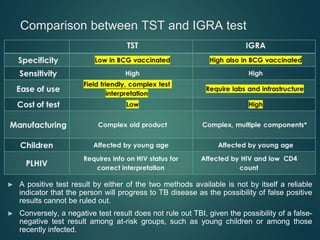
Comparison between TST and IGRA test
► A positive test result by either of the two methods available is not by itself a reliable
indicator that the person will progress to TB disease as the possibility of false positive
results cannot be ruled out.
► Conversely, a negative test result does not rule out TBI, given the possibility of a false-
negative test result among at-risk groups, such as young children or among those
recently infected.
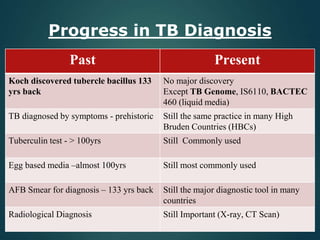
Progress in TB Diagnosis
Past Present
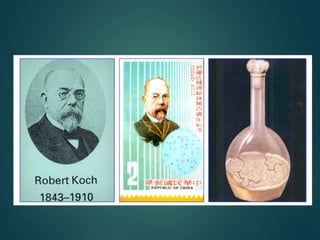
Koch discovered tubercle bacillus 133
yrs back
No major discovery
Except TB Genome, IS6110, BACTEC
460 (liquid media)
TB diagnosed by symptoms - prehistoric Still the same practice in many High
Bruden Countries (HBCs)
Tuberculin test - > 100yrs Still Commonly used
Egg based media –almost 100yrs Still most commonly used
AFB Smear for diagnosis – 133 yrs back Still the major diagnostic tool in many
countries
Radiological Diagnosis Still Important (X-ray, CT Scan)
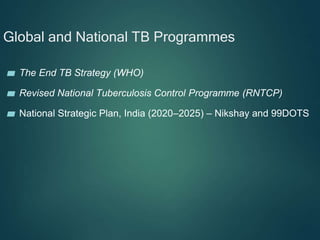
Global and National TB Programmes
▰ The End TB Strategy (WHO)
▰ Revised National Tuberculosis Control Programme (RNTCP)
▰ National Strategic Plan, India (2020–2025) – Nikshay and 99DOTS
Vaccine Prophylaxis Against Tuberculosis -
Bacillus Calmette-Guérin Vaccine (BCG)
▰ BCG strain: In India, WHO recommended Danish 1331 strain of
BCG is used.
▰ Reconstitution of BCG: Available in lyophilized form, should be
reconstituted before administration.
▰ Administration of BCG: 0.1 mL (0.1 mg TU) of BCG vaccine -
administered above the insertion of left deltoid by intradermal route
Vaccine Prophylaxis Against Tuberculosis -
Bacillus Calmette-Guérin Vaccine (BCG)
(Cont..)
Protection:
▰ Efficacy: Variable efficacy of 0–80%
▰ Duration of immunity - 15–20 years
▰ Protection to infants and young children against the development of
complications - tuberculous meningitis and disseminated
tuberculosis.
Vaccine Prophylaxis Against Tuberculosis -
Bacillus Calmette-Guérin Vaccine (BCG)
(Cont..)
Complications following BCG:
▰ Most common complications - ulceration at the vaccination site and
regional lymphadenitis
▰ Rarely - keloid or lupus lesion, osteomyelitis, non-fatal meningitis,
progressivetuberculosis and disseminated BCG infection
(“BCGitis”).
Vaccine Prophylaxis Against Tuberculosis -
Bacillus Calmette-Guérin Vaccine (BCG)
(Cont..)
Indications of BCG
▰ Direct BCG: BCG is directly given to the newborn soon after birth.
▰ Indirect BCG: BCG is given after performing tuberculin skin test.
Vaccine Prophylaxis Against Tuberculosis -
Bacillus Calmette-Guérin Vaccine (BCG)
(Cont..)
Contraindications to BCG include:
▰ HIV-positive child
▰ Child born to AFB positive mother
▰ Child with low immunity
▰ Generalized eczema
▰ Pregnancy.
Chemoprophylaxis
▰ Treatment of selected high-risk tuberculin reactors (i.e. people with
latent tuberculosis) aims at preventing active disease.
▰ Isoniazid or ethambutol for six months - tried.
▰ Chemoprophylaxis has several shortcomings such as—
▰ (1) it is expensive, (2) risk of developing tuberculosis is minimal in
tuberculin reactors, and (3) side effects of the drugs.
Chemoprophylaxis (Cont..)
▰ INH preventive therapy (IPT) - restricted to limited indications:
 Adults with HIV - unlikely to have active TB
 Children with HIV - no TB symptoms and unlikely to have active
TB
 All children with HIV - successfully completed treatment for TB.
tb pathogenesis and laboratory diagnosis .pptx

tb pathogenesis and laboratory diagnosis .pptx

  • 1.
    Tuberculosis Dr Bhavika patel MBBS,MDMicrobiology,DIPC Assistant Professor Department of microbiology GMERS MC, Valsad.
  • 2.
    Learning objectives At theend of the session, the students will be able to understand: ▰ Classification of mycobacteria. ▰ Antigenic structure, pathogenesis, clinical manifestations, lab diagnosis, treatment, drug resistance and prophylaxis of TB.
  • 4.
  • 6.
    Mycobacteria Tuberculosis ► Nonsporing, Non-capsulated. Weakly Gram Positive. ► Strongly Acid Fast (due to mycolic acid in cell wall). ► Lipid Rich Cell Wall (confers resistance to disinfectants, detergents, common antibiotics and traditional stains). ► Long Generation time. ► Humans are the only natural reservoir. ► Person to person transmission, by infectious aerosols/droplets.
  • 7.
    Antigenic Structure ▰ 1.Cell wall (insoluble) antigens:  Peptidoglycan layer – maintains shape & rigidity  Arabinogalactan layer - survival of M.tuberculosis within macrophages  Mycolic acid layer - principal constituent, confers very low permeability, acid fastness and reduces the entry of most antibiotics  Outermost layer - lipids, glycolipids & mycosides
  • 8.
    Antigenic Structure (Cont..) ▰1. Cell wall (insoluble) antigens (Cont..):  Proteins (e.g. porins, transport proteins) - found throughout various layers  Plasma membrane - helps in attachment to host cell and is also a target antigen used for diagnosis
  • 9.
    Antigenic Structure (Cont..) ▰2. Cytoplasmic (soluble) antigens:  These include antigen 5, antigen 6, antigen 60  Used in serodiagnosis of tuberculosis.
  • 10.
    Lin P etal. J Immunol 2010 Clearance Pulmonary TB Low grade TB “percolating “ Dormant infection Septic TB Miliary TB Extrapulmonary TB Spectrum of M. tuberculosis infection
  • 11.
    Tuberculosis or TB(short for tubercle bacillus) ► Is a common and often deadly infectious disease caused by mycobacterium usually mycobacterium tuberculosis. ► M.tuberculosis complex includes: 1.M.tuberculosis 2. M.bovis 3.Other member: M.africanum, M. microti , M. caprae, M. pinnipedii, M. canetti , M. suricattae, M. orygis , M.mungi
  • 12.
  • 13.
    Modes of infection 1.Dropletinfection • Person to person by inhalation aerosols • Mycobacterium tuberculosis (Pulmonary tuberculosis) 2.Ingestion of milk • Infected cattle • Mycobacterium bovis (Intestinal tuberculosis) 3. Inoculation (in skin tuberculosis) 4.Transplacental route (rare route)
  • 14.
    Pathogenesis - RiskFactors ▰ Sputum positive patients with Bacillary load at least 104 bacilli/mL ▰ Cavitary lesions in lung - more bacillary load ▰ Overcrowding in poorly ventilated rooms ▰ Low cell-mediated immunity – HIV ▰ Other comorbid conditions - Post-silicosis, postransplantation, hemodialysis, diabetes, IV drug abuse, smoking, etc. ▰ Age: Late adolescence and early adulthood ▰ Sex: women at 25–34 years, men in older ages
  • 15.
    5.If the bacilliare successful in arresting phagolysosome fusion, then they happily replicate inside the macrophage. The macrophage eventually ruptures and releases its bacillary contents which infect other uninfected phagocytes and infection cycle continues. 4.Survival inside the macrophages due to bacterial cell wall LAM which impairs phagosomelysosome fusion by inhibiting an increase in intracellular Ca2+ and phosphatidylinositol 3-phosphate 3.Phagocytosis by macrophages (complement (C3b) mediated opsonization of bacilli) 2.Adhesion to macrophages Mycobacterial surface lipoarabinomannan (LAM) binds to complement receptors and mannose receptors present on the surface of macrophages. 1.Droplet nuclei containing tubercle bacilli from infectious patients are inhaled. EVIDENCE OF INFECTION WITH M TUBERCULOSIS Chest x-ray / positive skin test
  • 16.
    Host Immune Response- Cell-mediated Immune Response ▰ Macrophages present the mycobacterial antigens to TH (T helper) cells - TH1and TH2 subsets. ▰ TH1 cells release - IL-2 and IFN-γ - activate monocytes and macrophages ▰ Activation of TH1 cells - development of two host responses:  1. A macrophage-activating response  2. Tissue-damaging response.
  • 17.
    Host Immune Response- Cell-mediated Immune Response (Cont..) ▰ 1. A macrophage-activating response: ▰ IFN γ activates macrophages ▰ Tubercles: a favorable sign  Hard tubercles: initially hard - central zone containing activated macrophages (epithelioid and giant cells) and a peripheral zone of lymphocytes and fibroblasts.  Soft tubercles - central part undergoes caseous necrosis - Bacilli inhibited within this necrotic environment because of low oxygen tension and low pH - lesion heals and calcifies.
  • 18.
    Host Immune Response- Cell-mediated Immune Response (Cont..) ▰ 2. Tissue-damaging response: ▰ Minority of cases, associated with risk factors -macrophage- activating response is weak & bacilli more virulent ▰ Mycobacterial growth inhibited only by an intensified delayed hypersensitivity reaction - lung tissue destruction
  • 19.
    Host Immune Response- Cell-mediated Immune Response (Cont..) ▰ Spread of caseous necrosis 1. Direct draining into the airways - discharged with cough 2. Lymphatic spread - reseeding into same or opposite lung → disseminate to other organs. 3. Hematogenous spread to various organs
  • 20.
    Host Immune Response- Cell-mediated Immune Response (Cont..) ▰ Humoral Immune Response: ▰ TH2 release - IL-4, IL-5 - activate B-cells - antibodies.  M. tuberculosis being obligate intracellular organism, humoral immunity plays a minor role  Anti-LAM antibodies play a role in preventing dissemination of tuberculosis in children.
  • 22.
    Symptoms and Signsof Tuberculosis
  • 23.
    Clinical Manifestations ▰ Tuberculosis(TB) is classified as:  Pulmonary TB and  Extrapulmonary TB
  • 24.
    Comparison of primaryand secondary pulmonary tuberculosis Features Primary PTB Post-primary (adult- type)/secondary PTB Results due to Initial exogenous infection with tubercle bacilli  Exogenous reinfection  Endogenous- reactivation of latent primary lesion Age group affected Children Adults Parts of lungs commonly affected Sub pleural lesion affecting, upper part of lower lobe and lower part of upper lobe Apical and posterior segments of the upper lobes (high oxygen tension) Lesions formed at the initial sites Fibrotic nodular lesions are formed (Ghon focus) Hematogenous seedling in the apex of lungs called Simon’s focus
  • 25.
    Comparison of primaryand secondary pulmonary tuberculosis (Cont..) Features Primary PTB Post-primary (adult-type)/secondary PTB Lymph node Ghon focus with associated hilar lymphadenopathy is common (called as primary complex) Lymph node involvement is unusual Clinical feature It may be asymptomatic or may present with fever, productive cough (with or without hemoptysis) and occasionally chest pain, night sweating, weight loss Lesions undergoing necrosis and tissue destruction, leading to cavity formation. Symptoms are similar, but more pronounced.
  • 26.
    Extrapulmonary Tuberculosis (EPTB) ▰Tuberculous lymphadenitis – MC form (35% of all EPTB)  Posterior cervical and supraclavicular lymph nodes - painless swelling in neck region without warmth or color change ▰ Pleural tuberculosis – (20%) - pleural effusion ▰ Tuberculosis of the upper airways - larynx, pharynx, and epiglottis
  • 27.
    Extrapulmonary Tuberculosis (EPTB) (Cont..) ▰Genitourinary tuberculosis: Renal tuberculosis  Genital tuberculosis – Females: fallopian tubes & endometrium - infertility. Males: epididymis ▰ Skeletal tuberculosis - Weight-bearing joints (spine, hips & knees)  Complications - collapse of vertebral bodies - kyphosis & paravertebral ‘cold’ abscess
  • 28.
    Extrapulmonary Tuberculosis (EPTB) (Cont..) ▰Tuberculosis of CNS – M/C in children, Tuberculous meningitis & tuberculoma are common forms ▰ Tuberculous pericarditis - direct extension from adjacent lymph nodes or following hematogenous spread
  • 29.
    Extrapulmonary Tuberculosis (EPTB) (Cont..) ▰Gastrointestinal tuberculosis - Terminal ileum and caecum  Due to swallowing of sputum with direct seeding, hematogenous spread, or ingestion of cow’s milk contaminated with M. bovis ▰ Tuberculous skin lesions:  Scrofuloderma – skin involvement by direct extension from underlying tuberculous lymphadenitis  Lupus vulgaris: Apple jelly nodules are formed over face
  • 30.
    Extrapulmonary Tuberculosis (EPTB) (Cont..) ▰Miliary or disseminated tuberculosis: Hematogenous spread - yellowish 1–2 mm size granulomatous lesions resembling millet seeds in various organs. ▰ Post-TB aspergillosis: Chronic pulmonary aspergillosis - due to colonization of Aspergillus fumigatus in the residual TB cavities
  • 31.
    Epidemiology ▰ Quarter ofthe current world population is infected asymptomatically with M. tuberculosis, of which 5–10% develop the clinical disease. ▰ World: 10 million new cases of TB occurred in 2018. ▰ Deaths due to TB - 12 Lakh in HIV-negative and 2.5 Lakh in HIV- coinfected people in 2018.
  • 32.
    Epidemiology (Cont..) ▰ WHOregions: South-East Asia (44%), followed by Africa (24%) and the Western Pacific (18%) ▰ Countries: Eight countries accounted for two-third of the total TB burden, with India having the largest share. ▰ India: In 2018 - 27 Lakh cases occurred India - highest burden from Uttar Pradesh
  • 33.
    Epidemiology (Cont..) ▰ WHOregions: South-East Asia (44%), followed by Africa (24%) and the Western Pacific (18%) ▰ Countries: Eight countries accounted for two-third of the total TB burden, with India having the largest share.
  • 34.
  • 35.
    Laboratory diagnosis ofTuberculosis ● Specimen collection ⮚ In pulmonary TB: Sputum (2 specimens—spot and early morning), gastric aspirate (in children) ⮚ In EPTB: Specimens vary depending on the site involved
  • 36.
    Extrapulmonary specimens Sterile sitespecimens collected aseptically Optimum specimens CSF, pericardial fluid, synovial fluid and ascitic fluid Suboptimal specimens (organism load is less) Pleural fluid (20–50 mL is collected and centrifuged) Blood (indicated only for disseminated TB and co- infected with HIV) Specimens containing normal flora Swabs Considered suboptimal specimen. The only recommended swabs are:  Laryngeal swabs: Collected early morning in empty stomach or  Swab from discharging sinus Urine Three early morning specimens collected (500 mL/ specimen, centrifuged) on different days as TB bacilli in urine are shed intermittently Stool For disseminated TB in HIV infected patients and infants
  • 37.
    Extrapulmonary specimens (Cont..) Specimens containingnormal flora Other respiratory specimens Bronchial secretions (2–5 mL) Bronchoalveolar lavage (20–50 mL) Transbronchial and other biopsies (collected in sterile normal saline) Gastric lavage Recommended for children (tend to swallow sputum), or ICU patients (aspiration) Early morning lavage should be collected and processed early (<4 hours)
  • 39.
  • 40.
    Integrated DR-TB diagnosis andtreatment algorithm 40 Rifampicin resistance detected4 All TB patients All Presumptive TB1 or Key Population2 Non-responders Rifampicin resistance not detected4 DS-TB regimen NAAT3 FL-LPA 5 + SL-LPA 6 + LC DST7 – Z, Bdq8, Cfz8, Mfx, Lzd, Dlm8 • No additional resistance detected4 or • H resistance detected4 with KatG or InhA mutation (not both) & FQ resistance not detected4 • H resistance detected4 with both KatG and InhA mutation or • FQ resistance detected4 Shorter oral Bedaquiline-containing MDR/RR-TB regimen10 Longer oral M/XDR-TB regimen11 FL-LPA 5 Additional resistance or intolerance or non-availability of any drug in use or emergence of exclusion criteria or return after LTFU or failure H mono/poly DR-TB regimen Modify H mono/poly DR-TB regimen as per replacement table H resistance detected4 Non-responders Additional resistance or intolerance or non-availability of any drug in use or emergence of exclusion criteria or return after LTFU or failure Longer oral M/XDR-TB regimen, modified if needed as per replacement table Reflex testing for SL-LPA 6 + LC DST7 – Mfx, Z, Lzd, Cfz8 Other exclusion criteria9 for shorter regimen PRESE NT ABSE NT After completing PTE, check on Nikshay or with C&DST lab, if LPA results are available N O Y E S Y E S Stop DS- TB Regimen FIRST SPECIMEN TESTED AT NAAT SITE SECOND SPECIMEN TESTED AT C-DST LAB Y e s N o
  • 41.
    Integrated DR-TB diagnosis andtreatment algorithm 41 Rifampicin resistance detected4 All TB patients All Presumptive TB1 or Key Population2 Non-responders Rifampicin resistance not detected4 DS-TB regimen NAAT3 FL-LPA 5 + SL-LPA 6 + LC DST7 – Z, Bdq8, Cfz8, Mfx, Lzd, Dlm8 • No additional resistance detected4 or • H resistance detected4 with KatG or InhA mutation (not both) & FQ resistance not detected4 • H resistance detected4 with both KatG and InhA mutation or • FQ resistance detected4 Shorter oral Bedaquiline-containing MDR/RR-TB regimen10 Longer oral M/XDR-TB regimen11 FL-LPA 5 Additional resistance or intolerance or non-availability of any drug in use or emergence of exclusion criteria or return after LTFU or failure H mono/poly DR-TB regimen Modify H mono/poly DR-TB regimen as per replacement table H resistance detected4 Non-responders Additional resistance or intolerance or non-availability of any drug in use or emergence of exclusion criteria or return after LTFU or failure Longer oral M/XDR-TB regimen, modified if needed as per replacement table Reflex testing for SL-LPA 6 + LC DST7 – Mfx, Z, Lzd, Cfz8 Other exclusion criteria9 for shorter regimen PRESE NT ABSE NT After completing PTE, check on Nikshay or with C&DST lab, if LPA results are available N O Y E S Y E S Stop DS- TB Regimen FIRST SPECIMEN TESTED AT NAAT SITE SECOND SPECIMEN TESTED AT C- DST LAB Y e s N o
  • 42.
    Laboratory Diagnosis A SMEARMICROSCOPY 1- Sputum smears stained by Z-N stain Two morning successive mucopurulent sputum samples are needed to diagnoise pulmonary TB. Advantage: - cheap – rapid - Easy to perform Disadvantages: - sputum ( need to contain 5000-10000 AFB/ ml.) - Young children, elderly & HIV infected persons may not produce cavities & sputum containing AFB.
  • 44.
    Limitation of Microscopyfor Tuberculosis. ► Repeated sample examinations. load on technical staff. ► Training and dedication of Microscopist. ► The load of bacilli must be more than 10,000 / 1 ml of sputum. ► Low in sensitivity < 50 % ► Repeated requests for samples ► Not dependable in pediatric age group.
  • 45.
    Grading If the slidehas Result Grading No. of fields to be examined More than 10 AFB /oil immersion field pos 3+ 20 1-10 AFB/ oil immersion field pos 2+ 50 10-99 AFB/100 oil immersion field pos 1+ 100 1-9 AFB/100 oil immersion field pos Scanty* 100 No AFB in 100 oil immersion field neg 100 *record actual number of bacilli seen in 100 fields
  • 46.
    2- Detecting AFBby fluorochrome stain using fluorescence microscopy: The smear may be stained by auramine-O dye. In this method the TB bacilli are stained yellow against dark background & easily visualized using florescent microscope. Advantages: - More sensitive - Rapid Disadvantages: - Hazards of dye toxicity - more expensive
  • 47.
    Mycobacterium Tuberculosis Stained withFluorescent Dye From Carl Zeiss microimaging GmbH (FluoLED) Yellow bacilli with green background.
  • 48.
    B.CBNAAT/True NAT ► Fullyautomated Cartridge based Nucleic Acid Amplification Test working on the principal of PCR ► Generates digital report in 2 Hours (Test Turn around Time*) ► Sensitivity is similar to Culture and highly specific for M.TB Complex (For Sputum Samples) ► Advantage – Detects Rifampicin Resistance additionally ► Extrapulmonary Samples – Gastric Lavage, BAL, CSF, Pericardial Fluid, Synovial Fluid, Pleural Fluid N.B., Samples should not contain blood, Formalin should not be added
  • 49.
    C.Mycobacterial Culture Reasons torequest mycobacterial culture: • Patient previously on anti-TB treatment (Relapse, Defaulter) • Still smear-positive after intensive phase of treatment or after finishing treatment • Symptomatic and at high-risk of MDR-TB • To test fluids potentially infected with M. tuberculosis • Investigation of patients who develop active PTB during or after IPT. • TB in health workers
  • 50.
    50 FLOW CHART CONTD. Screenby AFB smear & inoculate media (one liquid & one solid) Liquid Medium Solid Media MGIT BACTEC SEPTI-CHEK CMS Incubate At 37ºC For 6 wks Incubate At 37ºC For 6 wks Incubate inverting At 37ºC For 8 wks Incubate At 37ºC For 6 wks Fluoresc- -ence detected Growth Index >10 Colonies or turbidity Growth detected Confirm by AFB smear Reinoculate on Solid media L J L J with RNA LJ with Pyruvic acid Incubate At 37ºC For 8 wks If growth Confirm on AFB smear
  • 51.
    Solid media ► Culturesincubated at 35°c in the dark in an atmosphere of 5% to 10% co2 and high humidity ► Cultures are examined weekly for growth ► Most isolates appear between 3 and 6 weeks a few isolates appear after 7 or 8 weeks ► After 8 wks of incubation negative cultures are reported
  • 52.
    Eight Week Growthof Mycobacterium tuberculosis on Lowenstein-Jensen Agar
  • 53.
    Commonly used liquidmedia systems to culture and detect the growth of mycobacterium ► BACTEC 460 ► Mycobacteria growth indicator tube (MGIT) ► BACTEC MGIT 960 ( continuous growth monitoring systems)
  • 54.
    Liquid media ► Useof liquid media system reduces the turn- around time for isolation of acid-fast bacilli to approximately 10 days compared with 17 days or longer in conventional methods ► Once growth is detected in the liquid media , an acid fast stain is performed to confirm the presence of acid-fast bacilli
  • 55.
    Laboratory diagnosis ofTuberculosis (Cont..) 55 ● Culture identification ⮚ Automated identification—by MALDI-TOF ⮚ MPT 64 antigen detection—by ICT ⮚ Different biochemical test – ex Nitrate reduction and niacin production are definitive for M.tb
  • 56.
    DST (Drug SusceptibilityTesting) 56 ● Phenotypic Methods ● Genotypic Methods
  • 57.
    Methods for drugsusceptibility testing Genotypic testing is much faster than phenotypic methods.
  • 58.
    Choice of diagnostictechnology DR diagnostic technology Choice NAAT/LPA First Liquid culture isolation and LPA DST Second Liquid culture isolation and liquid DST Third ⮚ Solid LJ media- of up to 84 days, ⮚ Liquid Culture (MGIT) up to 42 days, ⮚ LPA up to 72 hours ⮚ NAAT - 2 hours. Turn around time
  • 59.
    Laboratory diagnosis ofTuberculosis (Cont..) ● Diagnosis of latent tuberculosis ⮚ Tuberculin skin test (e.g. Mantoux test) ⮚ Interferon gamma release assay (IGRA).
  • 60.
    Laboratory diagnosis ofTuberculosis (Cont..) 60 ● Diagnosis of latent tuberculosis ⮚ Tuberculin skin test (e.g. Mantoux test) ⮚ Interferon gamma release assay (IGRA).
  • 61.
    Mantoux Tuberculin SkinTest (TST) ► 0.1 ml of tuberculin purified protein derivative (- PPD) into inner surface of forearm intradermally. Read between 48-72 hrs. ► A positive tuberculin skin test result is supportive evidence in the diagnosis of TB in areas of low prevalence (or no vaccination); however, a negative tuberculin skin test result may occur in approximately one third of patients.
  • 63.
    Cytokine Assays T- cellInterferon-Gamma Release Assay (IGRA) ►INF- y produced by T-lymphocytes, is capable of activating macrophages, increasing their bactericidal capacity against M tuberculosis and is involved in granuloma formation. ►Elevated concentrations of INF-y in TB is related to increased production at the disease site by effectors T cells. ►The sensitivity of an elevated level varies from 78 to 100% and specificity from 95 to 100%
  • 64.
    ❖ IGRA isuseful in targeted strategy for latent TB infection(LTBI) detection in low TB incidence settings ❖ More specific than Tuberculin Skin Test ❖ Can’t distinguish active from treated TB or LTBI. ❖ False positive results in- Hematologic malignancies Empyema.
  • 65.
    Methods for detectionof IFN-y Two new blood tests 1. T-SPOT.TB [Oxford Immunec] – directly count the no of IFN-y secreting T cells. 2. QuantiFERON-TB Gold [Cellestis Limited] – measures the concentration of IFNy secretion. Both tests based on detection of IFN-y in blood have been found to be more accurate than the tuberculin skin test in the diagnosis of latent TB infection. Future research should focus on the potential efficacy of quantification of specifically activated lymphocytes in body fluid and blood using IFN-Y release assay in the diagnosis of TB.
  • 66.
    Comparison between TSTand IGRA test ► A positive test result by either of the two methods available is not by itself a reliable indicator that the person will progress to TB disease as the possibility of false positive results cannot be ruled out. ► Conversely, a negative test result does not rule out TBI, given the possibility of a false- negative test result among at-risk groups, such as young children or among those recently infected.
  • 68.
    Progress in TBDiagnosis Past Present Koch discovered tubercle bacillus 133 yrs back No major discovery Except TB Genome, IS6110, BACTEC 460 (liquid media) TB diagnosed by symptoms - prehistoric Still the same practice in many High Bruden Countries (HBCs) Tuberculin test - > 100yrs Still Commonly used Egg based media –almost 100yrs Still most commonly used AFB Smear for diagnosis – 133 yrs back Still the major diagnostic tool in many countries Radiological Diagnosis Still Important (X-ray, CT Scan)
  • 69.
    Global and NationalTB Programmes ▰ The End TB Strategy (WHO) ▰ Revised National Tuberculosis Control Programme (RNTCP) ▰ National Strategic Plan, India (2020–2025) – Nikshay and 99DOTS
  • 70.
    Vaccine Prophylaxis AgainstTuberculosis - Bacillus Calmette-Guérin Vaccine (BCG) ▰ BCG strain: In India, WHO recommended Danish 1331 strain of BCG is used. ▰ Reconstitution of BCG: Available in lyophilized form, should be reconstituted before administration. ▰ Administration of BCG: 0.1 mL (0.1 mg TU) of BCG vaccine - administered above the insertion of left deltoid by intradermal route
  • 71.
    Vaccine Prophylaxis AgainstTuberculosis - Bacillus Calmette-Guérin Vaccine (BCG) (Cont..) Protection: ▰ Efficacy: Variable efficacy of 0–80% ▰ Duration of immunity - 15–20 years ▰ Protection to infants and young children against the development of complications - tuberculous meningitis and disseminated tuberculosis.
  • 72.
    Vaccine Prophylaxis AgainstTuberculosis - Bacillus Calmette-Guérin Vaccine (BCG) (Cont..) Complications following BCG: ▰ Most common complications - ulceration at the vaccination site and regional lymphadenitis ▰ Rarely - keloid or lupus lesion, osteomyelitis, non-fatal meningitis, progressivetuberculosis and disseminated BCG infection (“BCGitis”).
  • 73.
    Vaccine Prophylaxis AgainstTuberculosis - Bacillus Calmette-Guérin Vaccine (BCG) (Cont..) Indications of BCG ▰ Direct BCG: BCG is directly given to the newborn soon after birth. ▰ Indirect BCG: BCG is given after performing tuberculin skin test.
  • 74.
    Vaccine Prophylaxis AgainstTuberculosis - Bacillus Calmette-Guérin Vaccine (BCG) (Cont..) Contraindications to BCG include: ▰ HIV-positive child ▰ Child born to AFB positive mother ▰ Child with low immunity ▰ Generalized eczema ▰ Pregnancy.
  • 75.
    Chemoprophylaxis ▰ Treatment ofselected high-risk tuberculin reactors (i.e. people with latent tuberculosis) aims at preventing active disease. ▰ Isoniazid or ethambutol for six months - tried. ▰ Chemoprophylaxis has several shortcomings such as— ▰ (1) it is expensive, (2) risk of developing tuberculosis is minimal in tuberculin reactors, and (3) side effects of the drugs.
  • 76.
    Chemoprophylaxis (Cont..) ▰ INHpreventive therapy (IPT) - restricted to limited indications:  Adults with HIV - unlikely to have active TB  Children with HIV - no TB symptoms and unlikely to have active TB  All children with HIV - successfully completed treatment for TB.