Target Audience 
LO: To define 
the target 
audience of 
my Media 
Studies 
production. 
Key Words: 
Age 
Gender 
Class 
Codes 
Conventions
Audience Basics 
All media texts are made with an audience in mind; a 
group of people who will receive it and make some sort 
of sense out of it. 
Using questionnaires, focus groups and comparisons to 
existing media texts, media producers will spend a 
great deal of time and money ascertaining if there is 
anyone out there who might be interested in their idea. 
Media producers want to know the income 
bracket/status, age, gender, race and location of their 
potential audience. This method of categorising is 
known as demographics.
Audience Basics 
• A target audience or target group is the primary group of people 
that a product is aimed at. 
• A target audience can be defined by age group, gender, marital 
status etc. Examples of such audiences would be teenagers, 
females, single people etc. 
• Combinations of factors are often used to create target audiences 
for example, males aged 16-24. Other groups, although not the 
main focus, may also be interested. 
• Discovering the appropriate target market for a product is one of 
the most important stages involved with market research. Without 
knowing the target audience selling a product can become difficult 
and very expensive.
Audience Basics 
• Demographic profiles are the characteristics of a population as used in government, marketing or opinion 
research, or the demographic profiles used in such research. 
• Marketers typically combine several variables to define a demographic profile. A demographic profile or 
demographic provides enough information about the typical members of this group to create a picture of the 
group. 
• A marketer might speak of the single, female, middle-class, age 18 to 24, university educated demographic. 
• Marketing researchers typically have two objectives in this regard: first to determine what segments or subgroups 
exist in the overall population; and secondly to create a clear and complete picture of the characteristics of a 
typical member of each of these segments. 
• Once these profiles are constructed, they can be used to develop a marketing strategy and marketing plan. 
• The five types of demographics in marketing are age, gender, income/class, race and 
• ethnicity.
Demographics 
In your PowerPoint you will highlight specific 
demographics creating a slide explaining how each 
category is targeted. 
As a starting point you will discuss… 
• Age 
• Gender 
• Class 
• Race and Ethnicity 
Example response… 
http://www.slideshare.net/mattmosey1/my-target-audience
Audience Expectations 
In your PowerPoint you will also have 
to specify what codes and 
conventions your target audience 
expects to see in your film. 
How will you achieve them? 
Have you challenged the expectation 
at all?
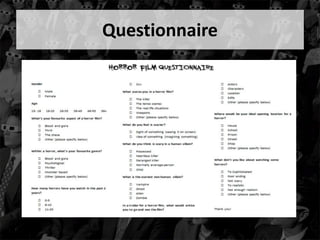
Homework: Questionnaire 
For your homework you need to create 
a rough questionnaire based on the 
expectations of the genre of your film. 
You must write 10 questions (some 
may have multiple choice answers).
Questionnaire

Target Audience (Evaluation)

  • 1.
    Target Audience LO:To define the target audience of my Media Studies production. Key Words: Age Gender Class Codes Conventions
  • 2.
    Audience Basics Allmedia texts are made with an audience in mind; a group of people who will receive it and make some sort of sense out of it. Using questionnaires, focus groups and comparisons to existing media texts, media producers will spend a great deal of time and money ascertaining if there is anyone out there who might be interested in their idea. Media producers want to know the income bracket/status, age, gender, race and location of their potential audience. This method of categorising is known as demographics.
  • 3.
    Audience Basics •A target audience or target group is the primary group of people that a product is aimed at. • A target audience can be defined by age group, gender, marital status etc. Examples of such audiences would be teenagers, females, single people etc. • Combinations of factors are often used to create target audiences for example, males aged 16-24. Other groups, although not the main focus, may also be interested. • Discovering the appropriate target market for a product is one of the most important stages involved with market research. Without knowing the target audience selling a product can become difficult and very expensive.
  • 4.
    Audience Basics •Demographic profiles are the characteristics of a population as used in government, marketing or opinion research, or the demographic profiles used in such research. • Marketers typically combine several variables to define a demographic profile. A demographic profile or demographic provides enough information about the typical members of this group to create a picture of the group. • A marketer might speak of the single, female, middle-class, age 18 to 24, university educated demographic. • Marketing researchers typically have two objectives in this regard: first to determine what segments or subgroups exist in the overall population; and secondly to create a clear and complete picture of the characteristics of a typical member of each of these segments. • Once these profiles are constructed, they can be used to develop a marketing strategy and marketing plan. • The five types of demographics in marketing are age, gender, income/class, race and • ethnicity.
  • 5.
    Demographics In yourPowerPoint you will highlight specific demographics creating a slide explaining how each category is targeted. As a starting point you will discuss… • Age • Gender • Class • Race and Ethnicity Example response… http://www.slideshare.net/mattmosey1/my-target-audience
  • 6.
    Audience Expectations Inyour PowerPoint you will also have to specify what codes and conventions your target audience expects to see in your film. How will you achieve them? Have you challenged the expectation at all?
  • 7.
    Homework: Questionnaire Foryour homework you need to create a rough questionnaire based on the expectations of the genre of your film. You must write 10 questions (some may have multiple choice answers).
  • 8.