REPRESENTATION IN
STRANGER THINGS
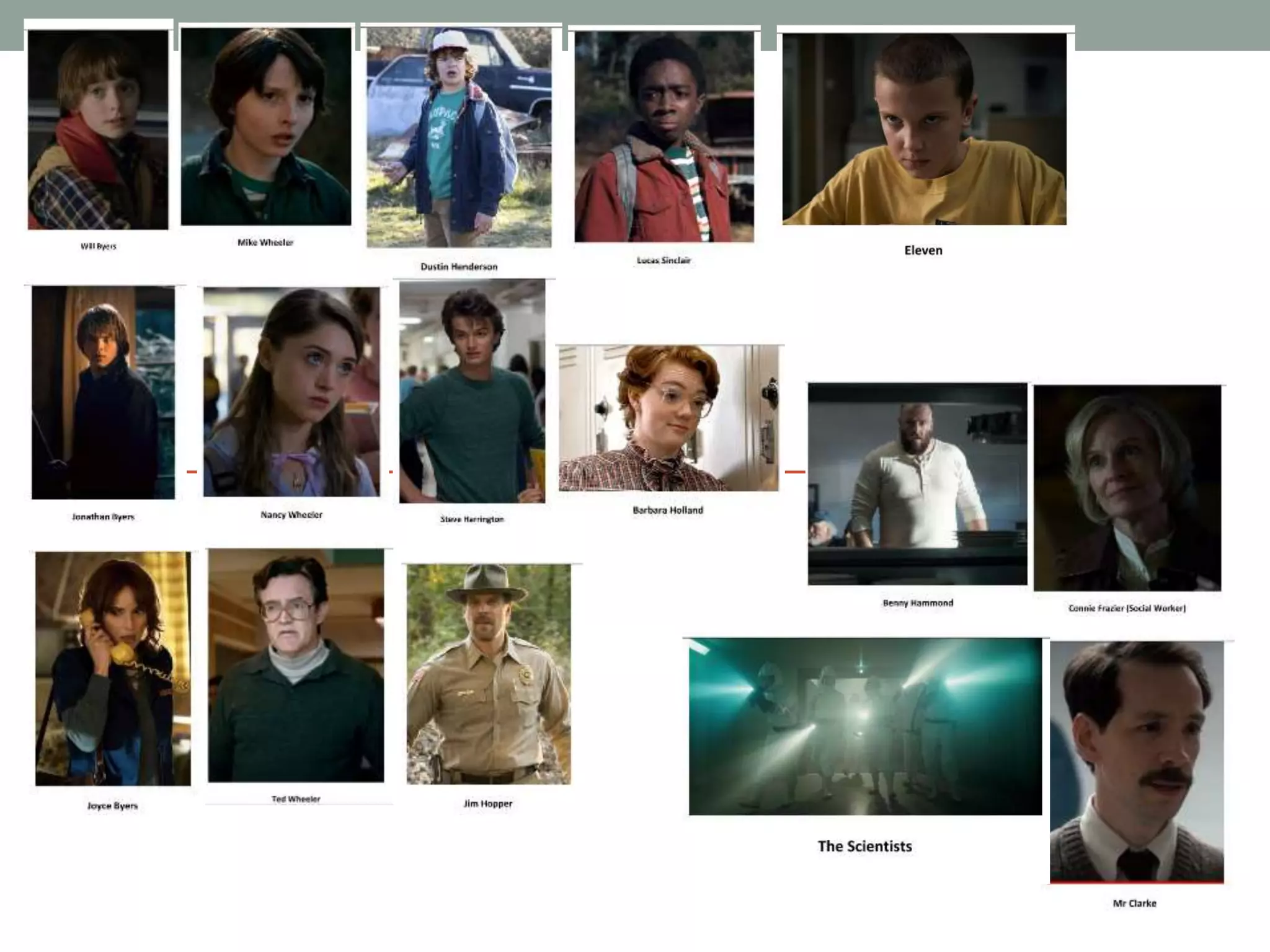
LO: To define representation and highlight the key areas
of representation in Stranger Things.
Representation Key Points to Identify
• how and why stereotypes can be used positively and negatively
• how and why particular social groups, in a national and global
context, may be under-represented or misrepresented
• how media representations convey values, attitudes and beliefs about
the world and how these may be systematically reinforced across a
wide range of media representations
• how audiences respond to and interpret media representations l the
way in which representations make claims about realism
• the impact of industry contexts on the choices media producers make
about how to represent events, issues, individuals and social groups
• the effect of historical context on representations
• how representations may invoke discourses and ideologies and
position audiences
• how audience responses to and interpretations of media
representations reflect social, cultural and historical circumstances.
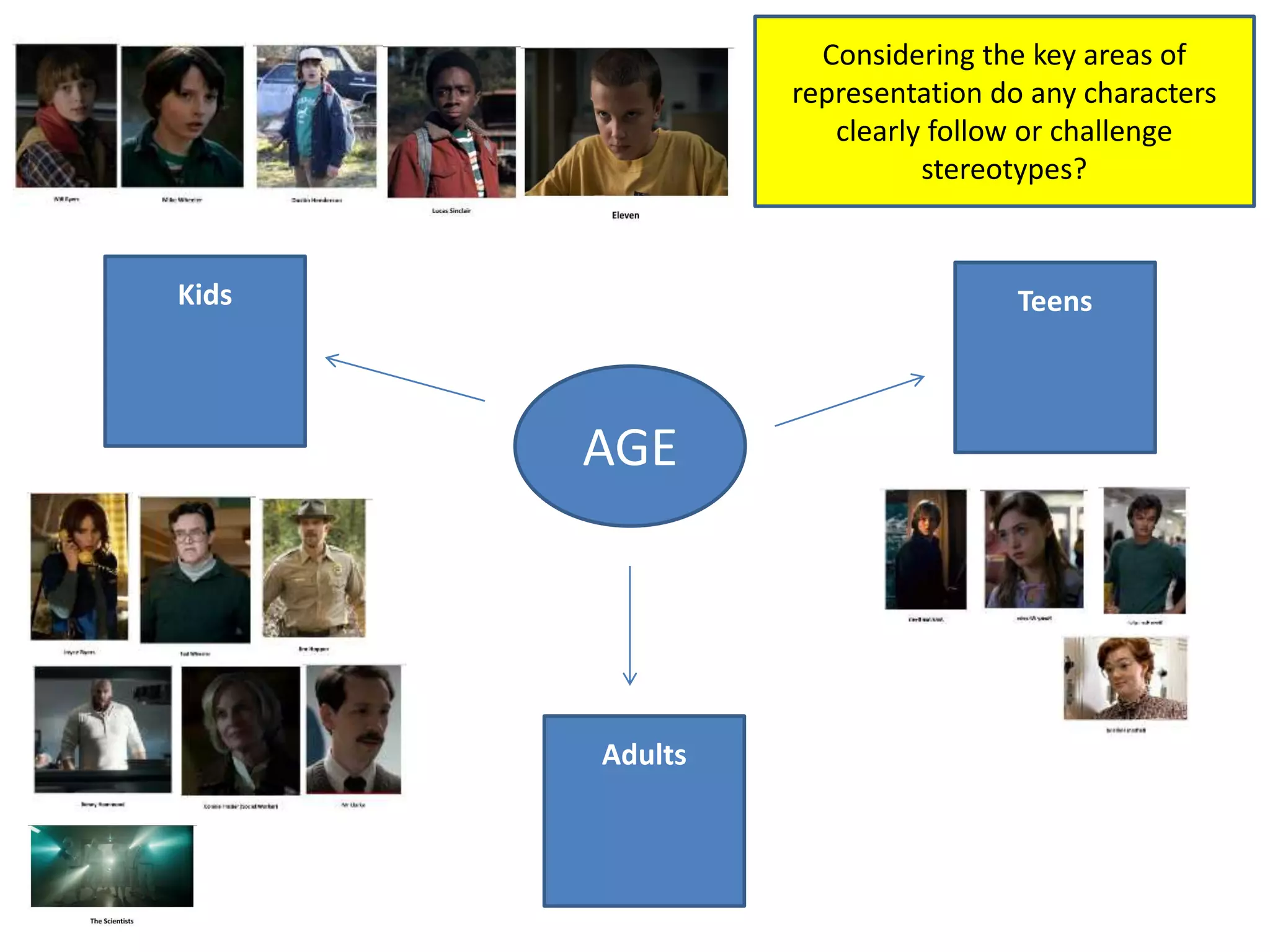
Considering the
key areas of
representation do
any characters
clearly follow or
challenge
stereotypes?
Age Representation in Stranger Things
AGE
Following
Stereotypes
Challenging
Stereotypes
Gender Representation in Stranger
Things
Gender
Following
Stereotypes
Challenging
Stereotypes
Class Representation in Stranger Things
Class
Following
Stereotypes
Challenging
Stereotypes
Disability Representation in Stranger
Things
Disability
Following
Stereotypes
Challenging
Stereotypes
Race and Ethnicity Representation in
Stranger Things
Race and
Ethnicity
Following
Stereotypes
Challenging
Stereotypes
Region Representation in Stranger Things
Region
Following
Stereotypes
Challenging
Stereotypes
Sexuality Representation in Stranger
Things
Sexuality
Following
Stereotypes
Challenging
Stereotypes
Considering the key areas of
representation do any characters
clearly follow or challenge
stereotypes?
AGE
Kids Teens
Adults
Considering the key areas of
representation do any characters
clearly follow or challenge
stereotypes?
Gender
Male
Female
Considering the key areas of
representation do any characters
clearly follow or challenge
stereotypes?
Class
Considering the key areas of
representation do any characters
clearly follow or challenge
stereotypes?
Ability /
Disability
Able
Disabled
Considering the key areas of
representation do any characters
clearly follow or challenge
stereotypes?
Ethnicity
Race
Considering the key areas of
representation do any characters
clearly follow or challenge
stereotypes?
Region
Considering the key areas of
representation do any characters
clearly follow or challenge
stereotypes?
Sexuality
Other Areas
Social
Groups
Events Issues
Individuals
Theories of Representation
• Theories of representation to include Stuart Hall
• Theories of identity including David Gauntlett
• Feminist theories including Bell Hooks and Van Zoonen
• Theories of gender performativity including Butler
• Theories around ethnicity and postcolonial theory
including Gilroy
Stuart Hall
https://www.slideshare.net/ellesullivan310/l
esson-10-3-approaches
Stuart Hall
Representation is not about whether the media reflects or
distorts reality, as this implies that there can be one ‘true’
meaning, but the many meanings a representation can
generate. Meaning is constituted by representation, by
what is present, what is absent, and what is different. Thus,
meaning can be contested.
A representation implicates the audience in creating its
meaning. Power – through ideology or by stereotyping –
tries to fix the meaning of a representation in a ‘preferred
meaning’. To create deliberate anti-stereotypes is still to
attempt to fix the meaning (albeit in a different way). A more
effective strategy is to go inside the stereotype and open it
up from within, to deconstruct the work of representation.
Gauntlett
David Gauntlett
The media have an important but complex relationship with identities.
In the modern world, it is now an expectation that individuals make
choices about their identity and lifestyle. Even in the traditional media,
there are many diverse and contradictory media messages that
individuals can use to think through their identities and ways of
expressing themselves. For example, the success of ‘popular feminism’
and increasing representation of different sexualities created a world
where the meaning of gender, sexuality and identity is increasingly
open.
The online media offer people a route to self-expression, and therefore
a stronger sense of self and participating in the world by making and
exchanging. These media are places of conversation, exchange and
transformation: ‘a fantastically messy set of networks filled with millions
of sparks – some igniting new meanings, ideas and passions and some
just fading away.’ People still build identities, but through everyday,
creative practice. However, this practice would be improved by better
platforms for creativity.
https://www.slideshare.net/leannacatherina
/media-representation-presentation
Intertextuality Quiz
Theory Question
How does the
episode of Stranger
Things link to
Intertextuality?
Structure
Explain the theory
Link to Stranger Things
(refer to the student essay
on the media site)

Stranger Things Essay

  • 1.
    REPRESENTATION IN STRANGER THINGS LO:To define representation and highlight the key areas of representation in Stranger Things.
  • 2.
    Representation Key Pointsto Identify • how and why stereotypes can be used positively and negatively • how and why particular social groups, in a national and global context, may be under-represented or misrepresented • how media representations convey values, attitudes and beliefs about the world and how these may be systematically reinforced across a wide range of media representations • how audiences respond to and interpret media representations l the way in which representations make claims about realism • the impact of industry contexts on the choices media producers make about how to represent events, issues, individuals and social groups • the effect of historical context on representations • how representations may invoke discourses and ideologies and position audiences • how audience responses to and interpretations of media representations reflect social, cultural and historical circumstances.
  • 4.
    Considering the key areasof representation do any characters clearly follow or challenge stereotypes?
  • 6.
    Age Representation inStranger Things AGE Following Stereotypes Challenging Stereotypes
  • 7.
    Gender Representation inStranger Things Gender Following Stereotypes Challenging Stereotypes
  • 8.
    Class Representation inStranger Things Class Following Stereotypes Challenging Stereotypes
  • 9.
    Disability Representation inStranger Things Disability Following Stereotypes Challenging Stereotypes
  • 10.
    Race and EthnicityRepresentation in Stranger Things Race and Ethnicity Following Stereotypes Challenging Stereotypes
  • 11.
    Region Representation inStranger Things Region Following Stereotypes Challenging Stereotypes
  • 12.
    Sexuality Representation inStranger Things Sexuality Following Stereotypes Challenging Stereotypes
  • 14.
    Considering the keyareas of representation do any characters clearly follow or challenge stereotypes? AGE Kids Teens Adults
  • 15.
    Considering the keyareas of representation do any characters clearly follow or challenge stereotypes? Gender Male Female
  • 16.
    Considering the keyareas of representation do any characters clearly follow or challenge stereotypes? Class
  • 17.
    Considering the keyareas of representation do any characters clearly follow or challenge stereotypes? Ability / Disability Able Disabled
  • 18.
    Considering the keyareas of representation do any characters clearly follow or challenge stereotypes? Ethnicity Race
  • 20.
    Considering the keyareas of representation do any characters clearly follow or challenge stereotypes? Region
  • 21.
    Considering the keyareas of representation do any characters clearly follow or challenge stereotypes? Sexuality
  • 22.
  • 23.
    Theories of Representation •Theories of representation to include Stuart Hall • Theories of identity including David Gauntlett • Feminist theories including Bell Hooks and Van Zoonen • Theories of gender performativity including Butler • Theories around ethnicity and postcolonial theory including Gilroy
  • 24.
  • 25.
    Stuart Hall Representation isnot about whether the media reflects or distorts reality, as this implies that there can be one ‘true’ meaning, but the many meanings a representation can generate. Meaning is constituted by representation, by what is present, what is absent, and what is different. Thus, meaning can be contested. A representation implicates the audience in creating its meaning. Power – through ideology or by stereotyping – tries to fix the meaning of a representation in a ‘preferred meaning’. To create deliberate anti-stereotypes is still to attempt to fix the meaning (albeit in a different way). A more effective strategy is to go inside the stereotype and open it up from within, to deconstruct the work of representation.
  • 26.
  • 27.
    David Gauntlett The mediahave an important but complex relationship with identities. In the modern world, it is now an expectation that individuals make choices about their identity and lifestyle. Even in the traditional media, there are many diverse and contradictory media messages that individuals can use to think through their identities and ways of expressing themselves. For example, the success of ‘popular feminism’ and increasing representation of different sexualities created a world where the meaning of gender, sexuality and identity is increasingly open. The online media offer people a route to self-expression, and therefore a stronger sense of self and participating in the world by making and exchanging. These media are places of conversation, exchange and transformation: ‘a fantastically messy set of networks filled with millions of sparks – some igniting new meanings, ideas and passions and some just fading away.’ People still build identities, but through everyday, creative practice. However, this practice would be improved by better platforms for creativity.
  • 29.
  • 30.
  • 31.
  • 32.
    Theory Question How doesthe episode of Stranger Things link to Intertextuality? Structure Explain the theory Link to Stranger Things (refer to the student essay on the media site)