UNIT 1
THEORY OVERVIEW
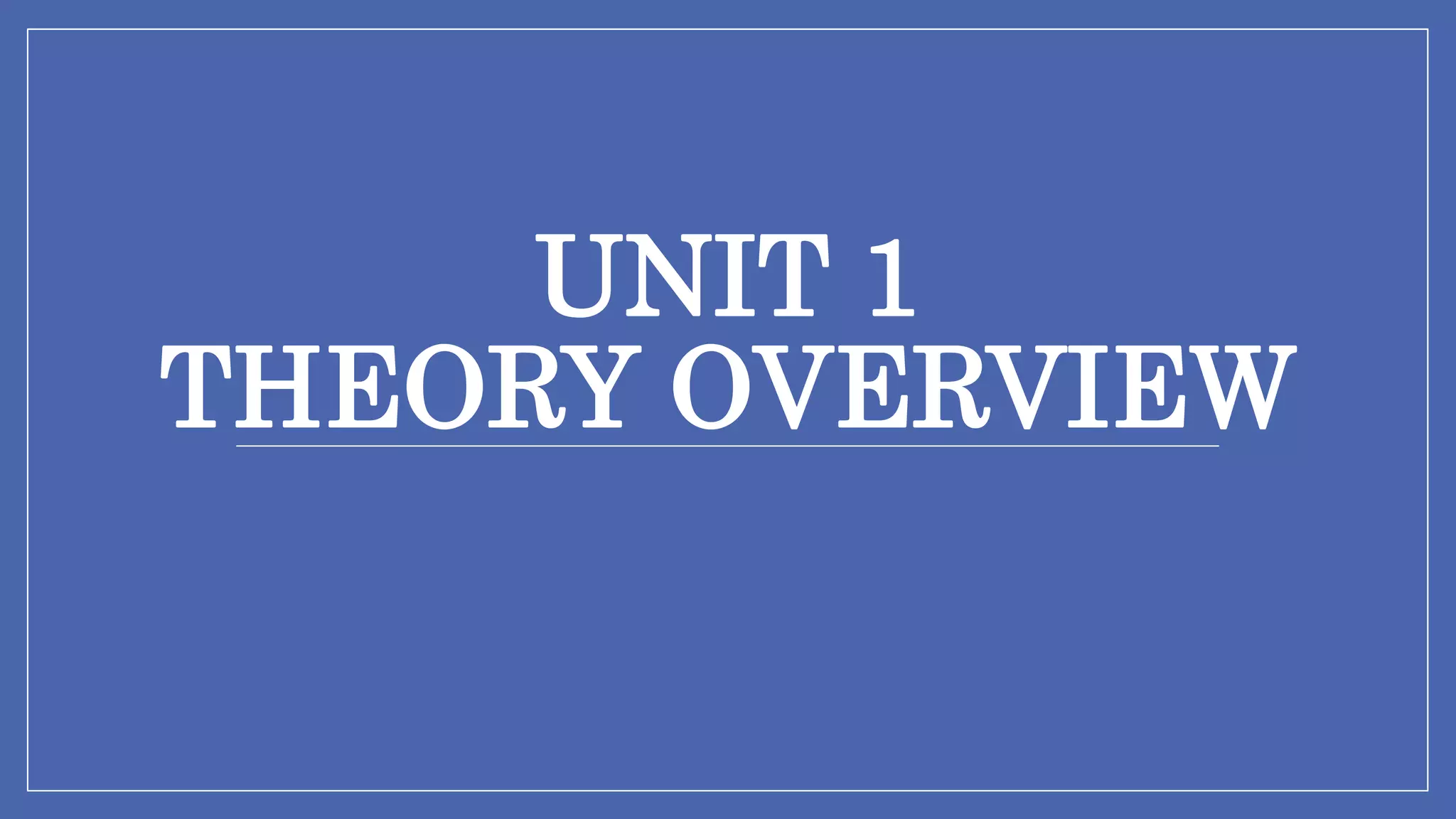
EXAM PRACTICE 1
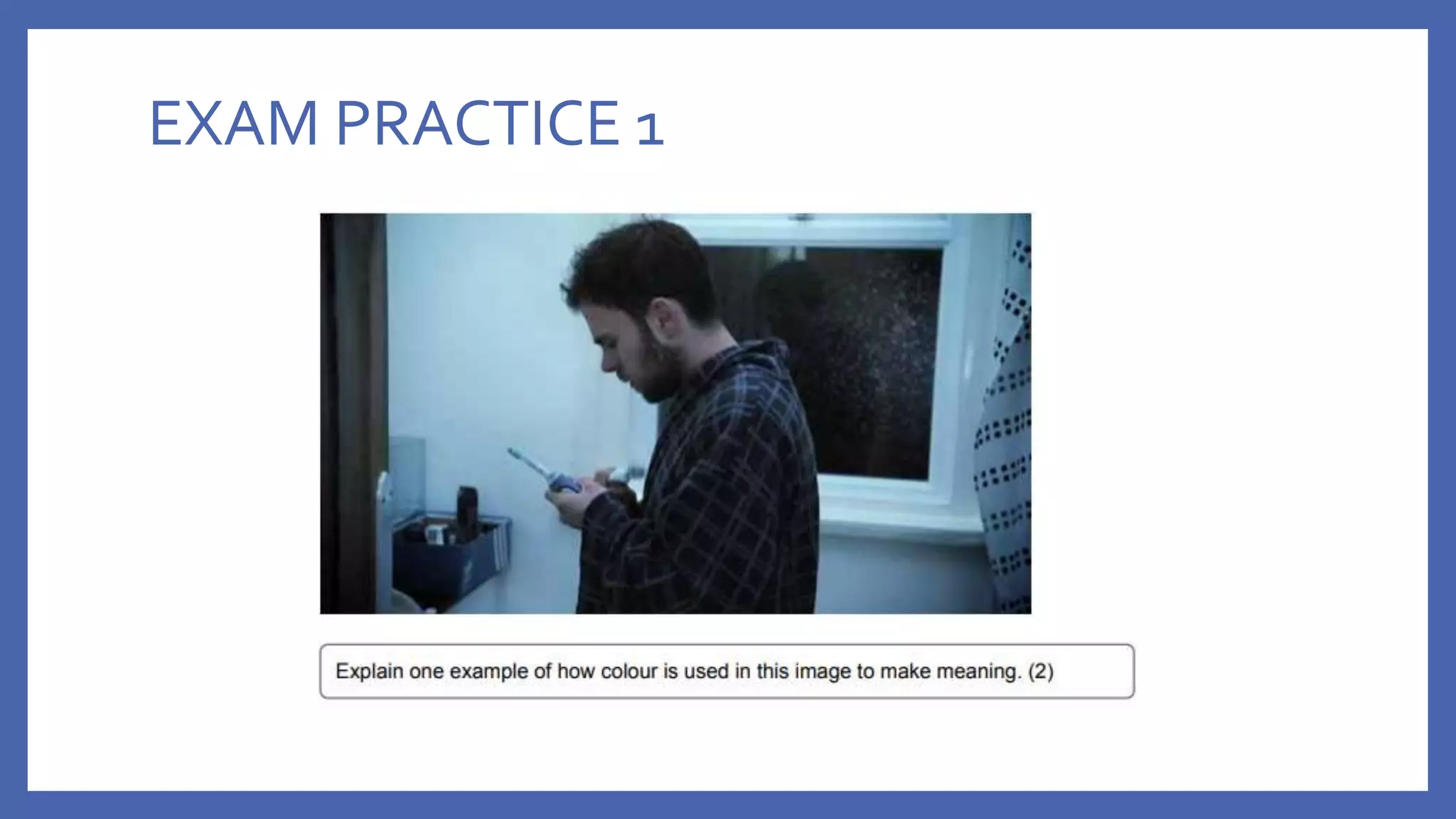
EXAM PRACTICE 2
The Big Issue is a magazine that raises money for people who
are homeless.
Analyse how the character has been represented on the 24
cover of the Big Issue. (10)
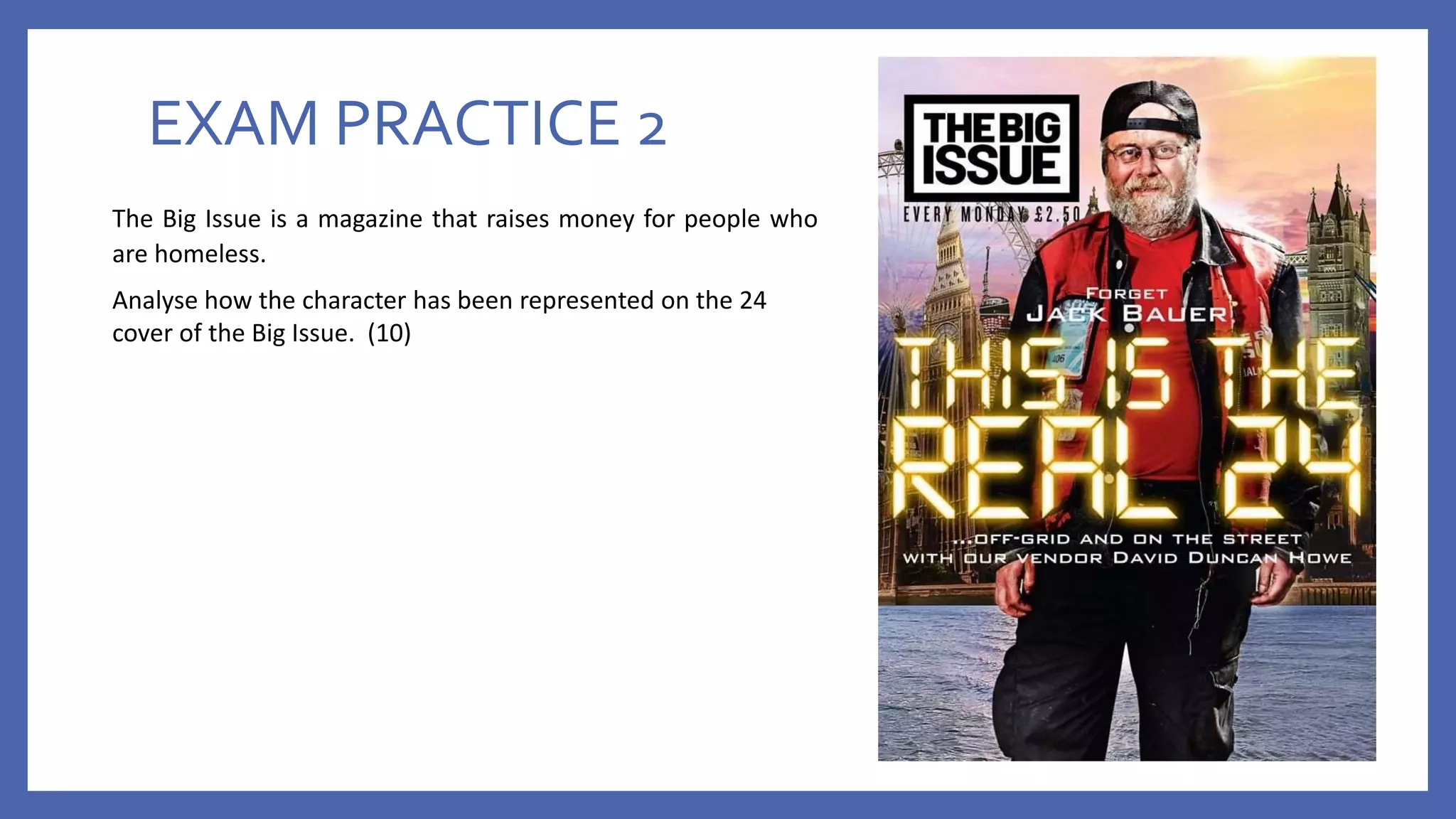
EXAM PRACTICE 3
Analyse how masculinity is represented in any media text that you have studied. You may
choose to refer to the Luther DVD front and back cover as part of your response. (10)
EXAM PRACTICE 4
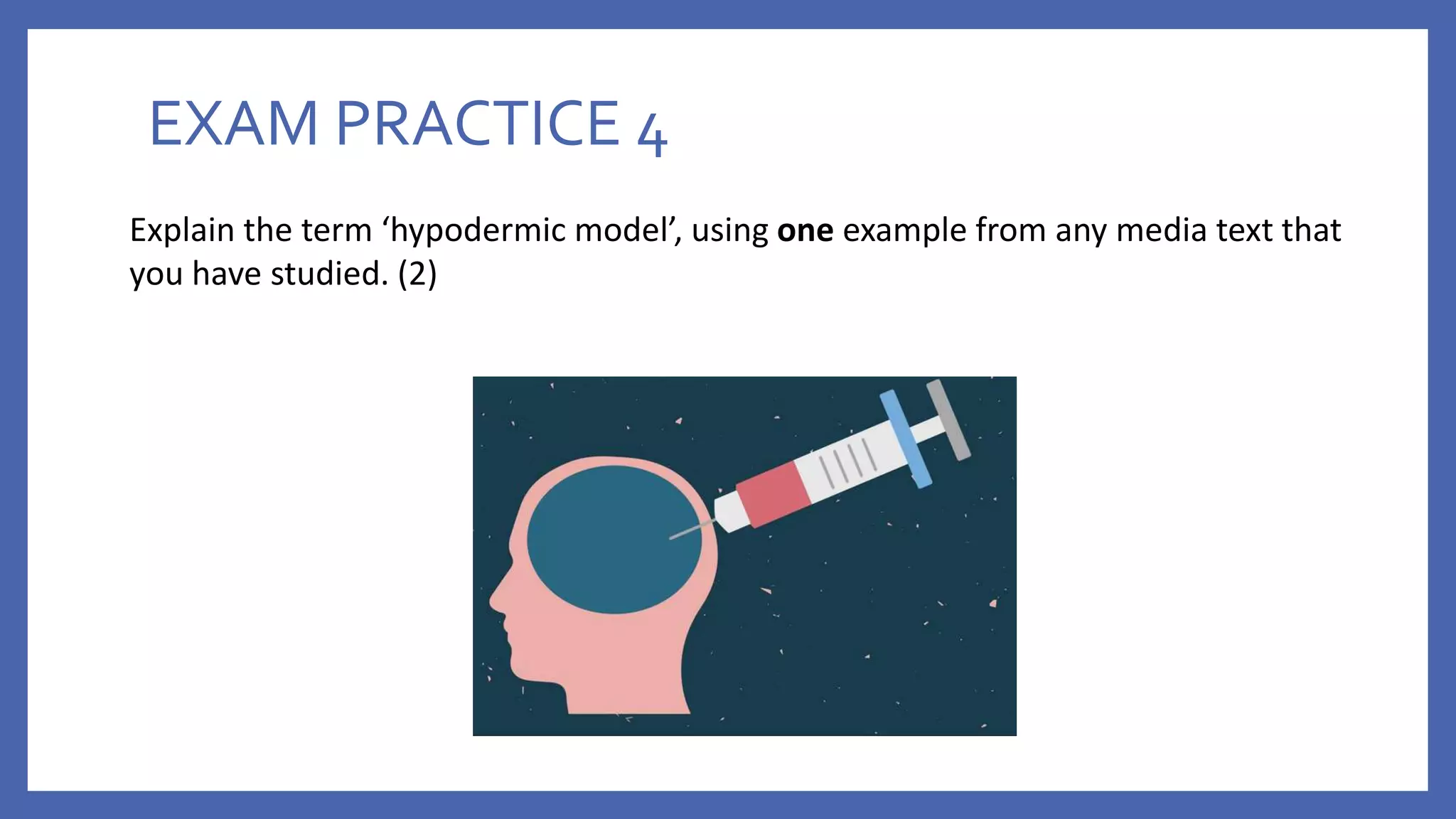
Explain the term ‘hypodermic model’, using one example from any media text that
you have studied. (2)
EXAM PRACTICE 5
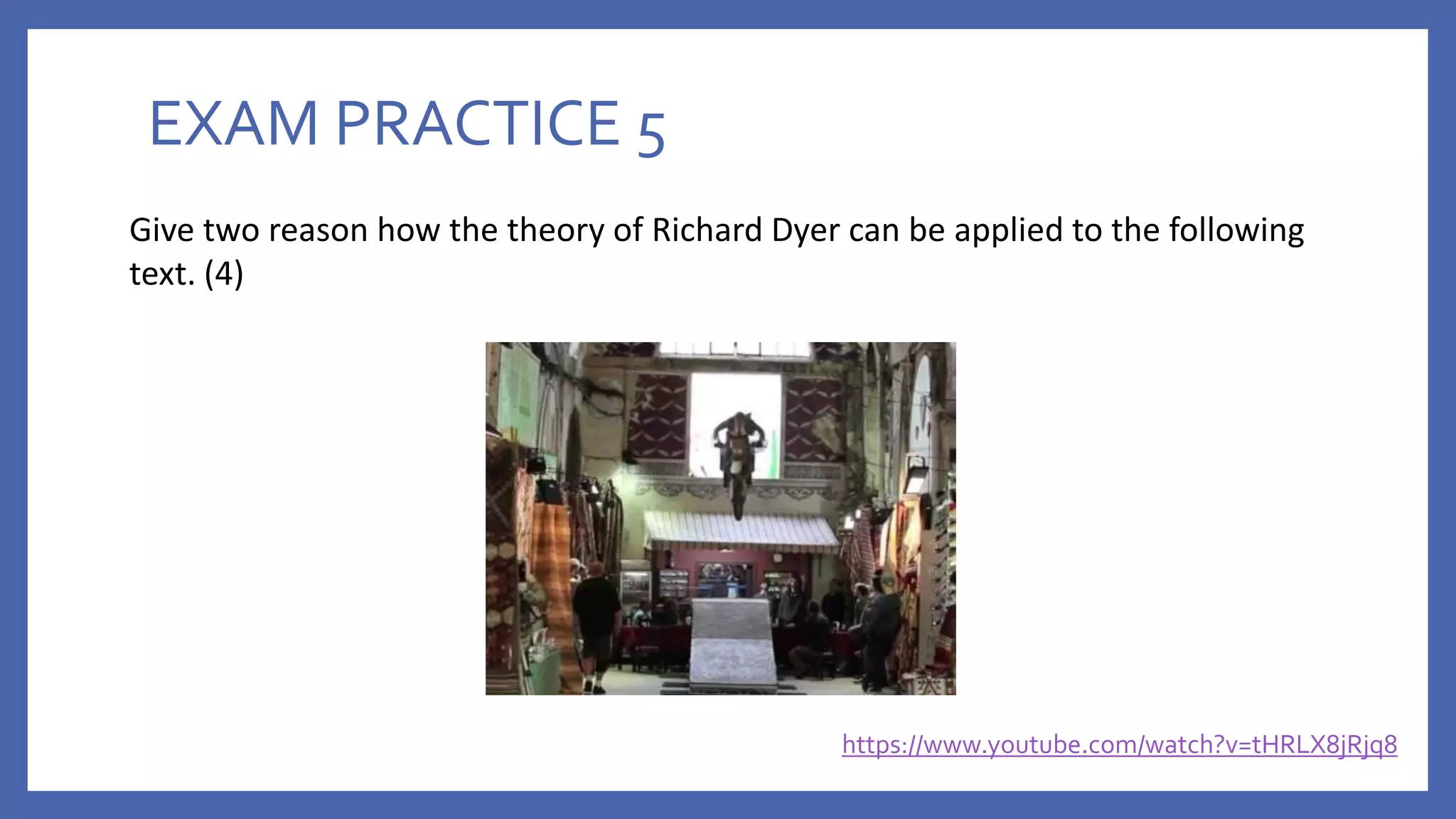
https://www.youtube.com/watch?v=tHRLX8jRjq8
Give two reason how the theory of Richard Dyer can be applied to the following
text. (4)
WHAT IS REPRESENTATION?
RE-PRESENTATION
It is the re-presentation of society,
people, places etc… It reflects the
ideology (values, beliefs and ideas)
of the producer and society.
How does this effect us?
Media is constructed
It is a ‘false’ re-creation’ of
society.
The audience see what the
producer intends
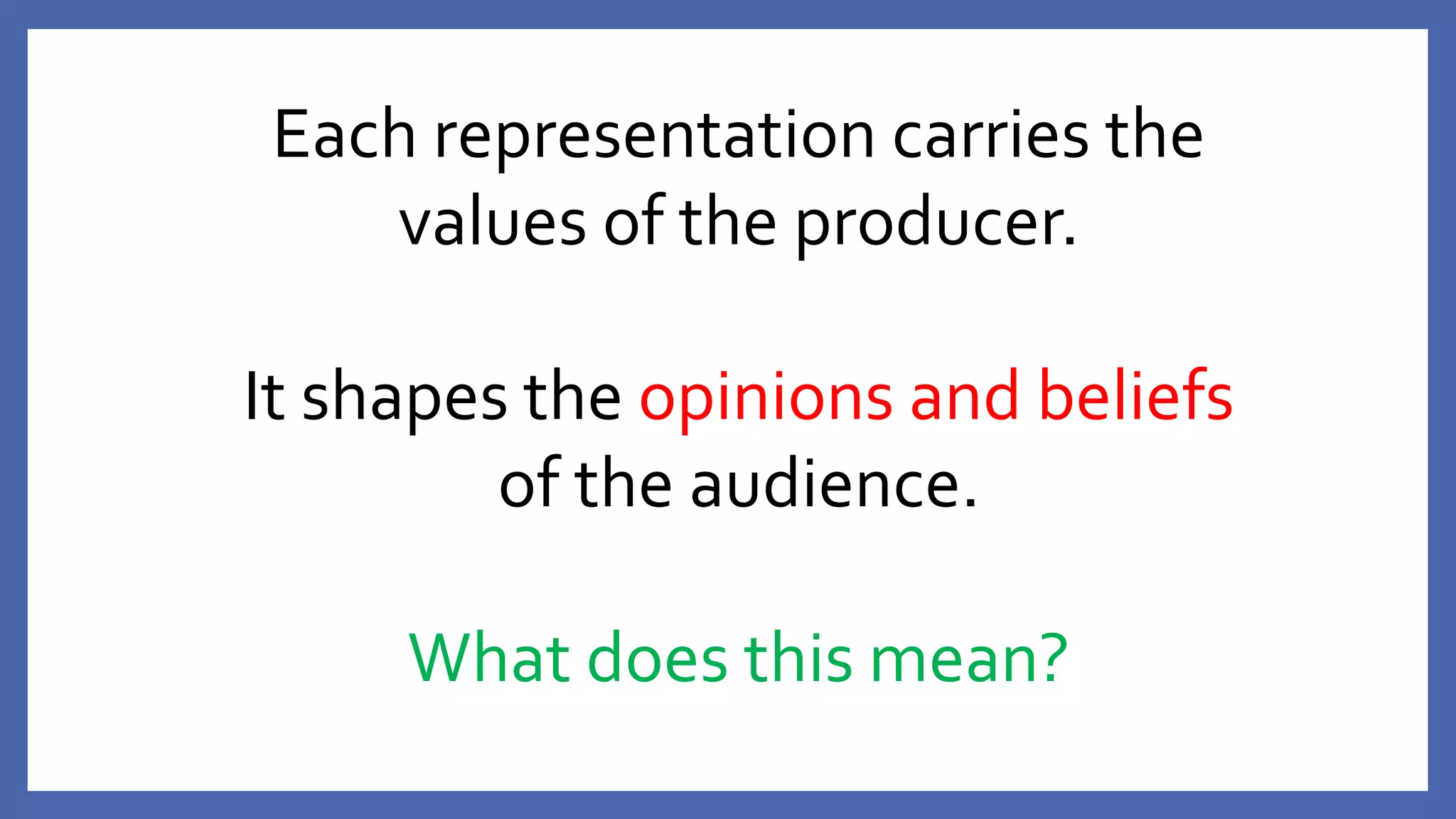
Each representation carries the
values of the producer.
It shapes the opinions and beliefs
of the audience.
What does this mean?
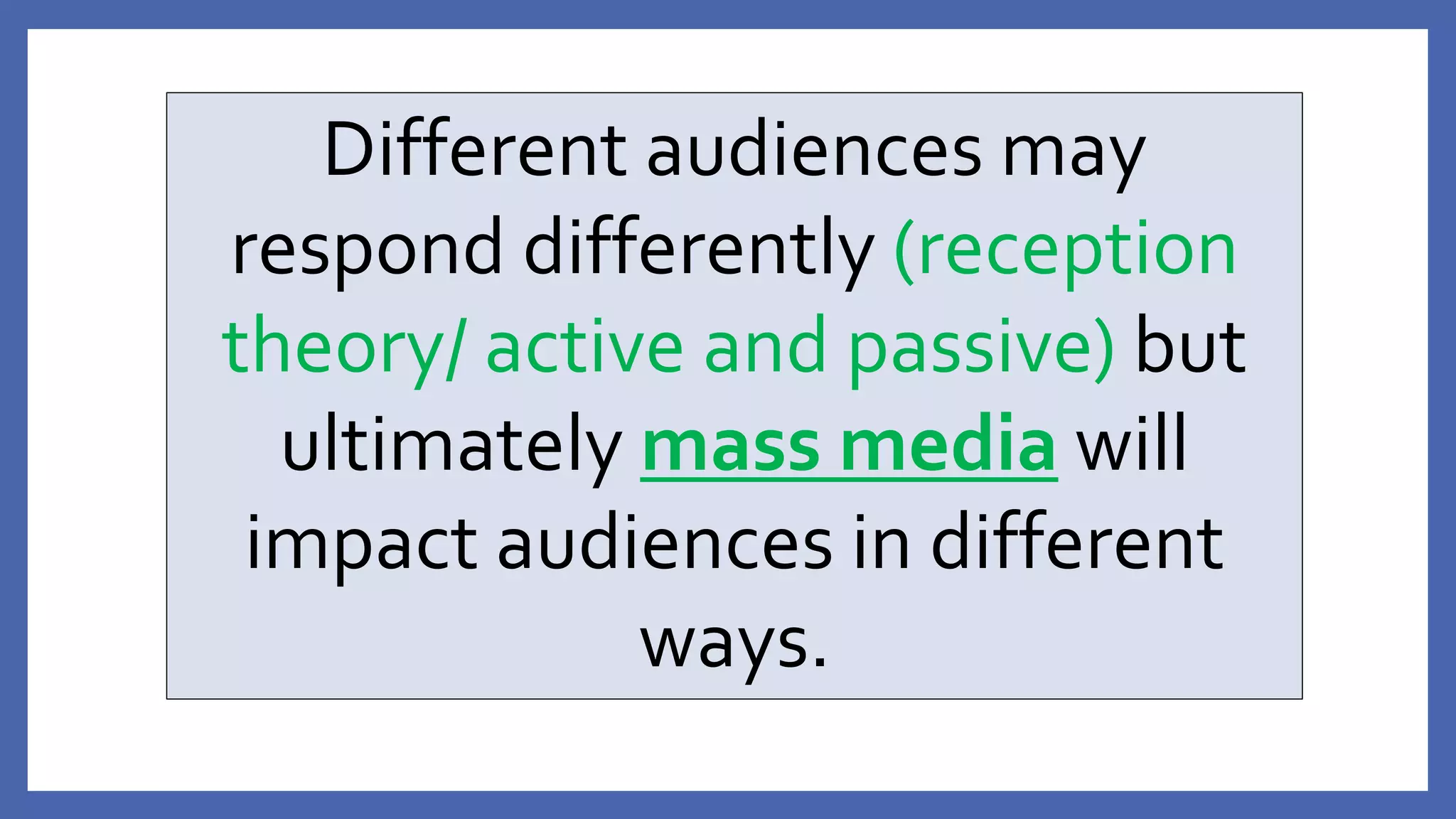
Different audiences may
respond differently (reception
theory/ active and passive) but
ultimately mass media will
impact audiences in different
ways.
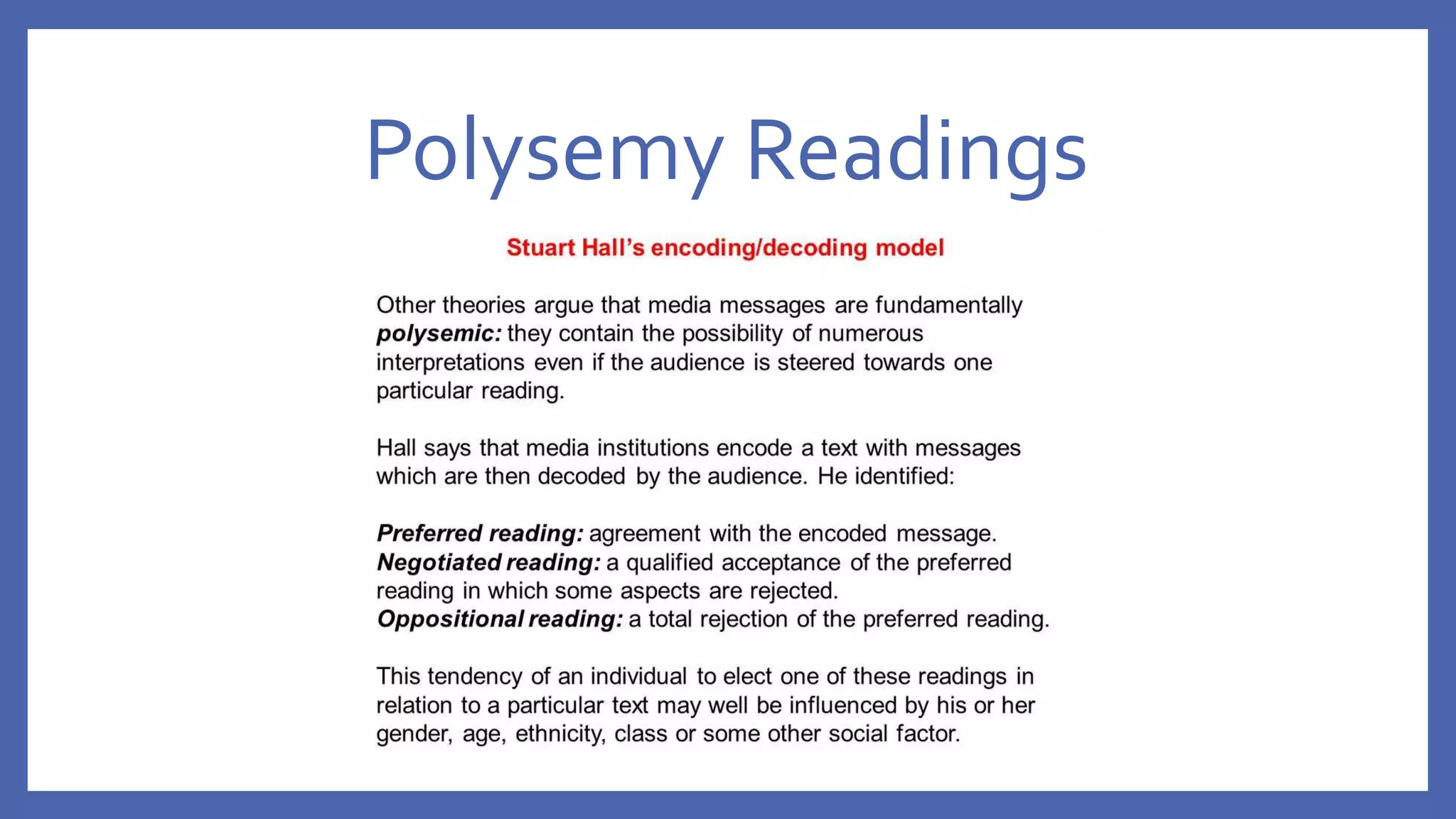
Polysemy Readings
https://www.slideshare.net/hughes82/audience-theory-for-q-
1b
Other points to
consider?
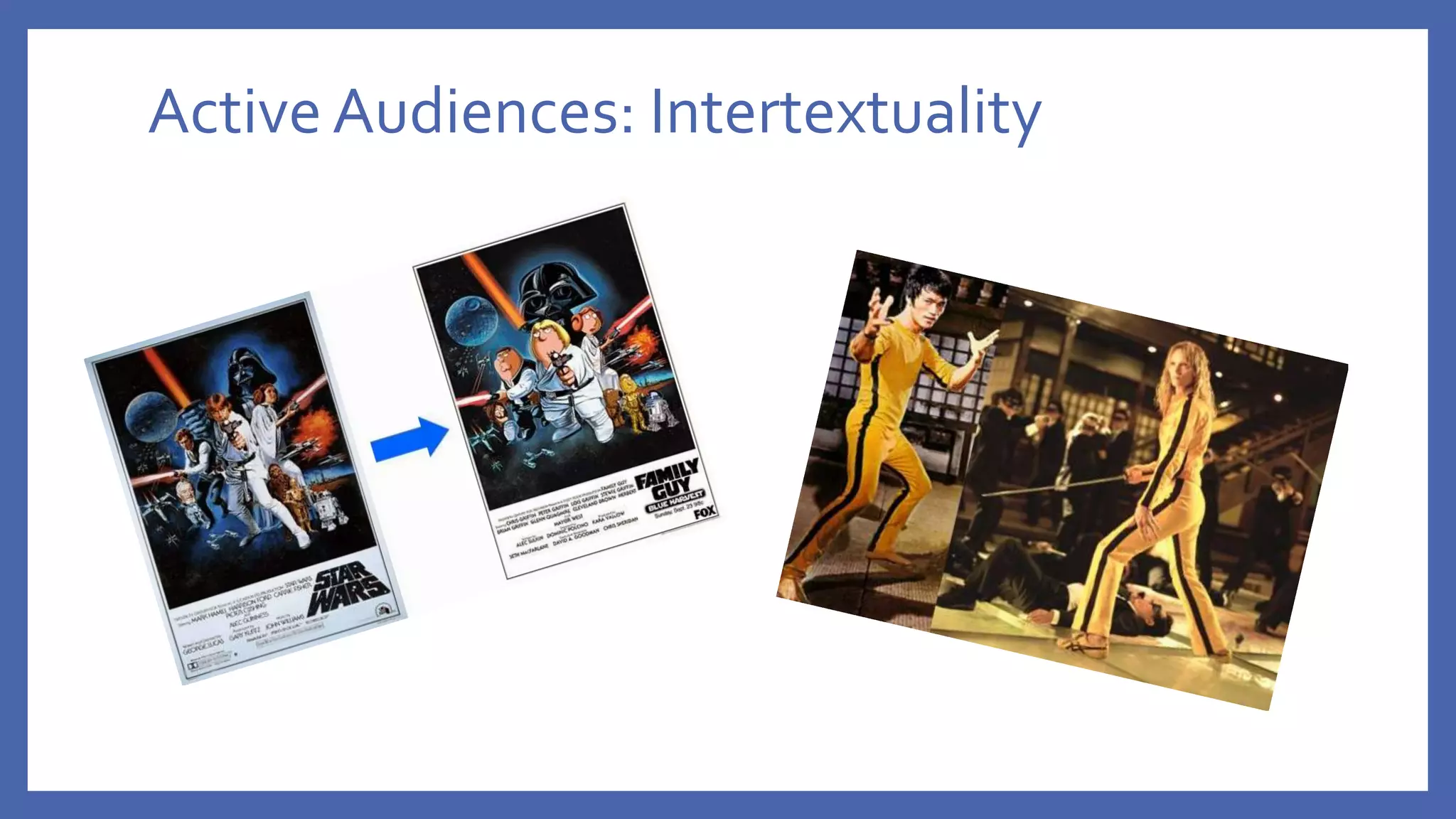
Active Audiences: Intertextuality
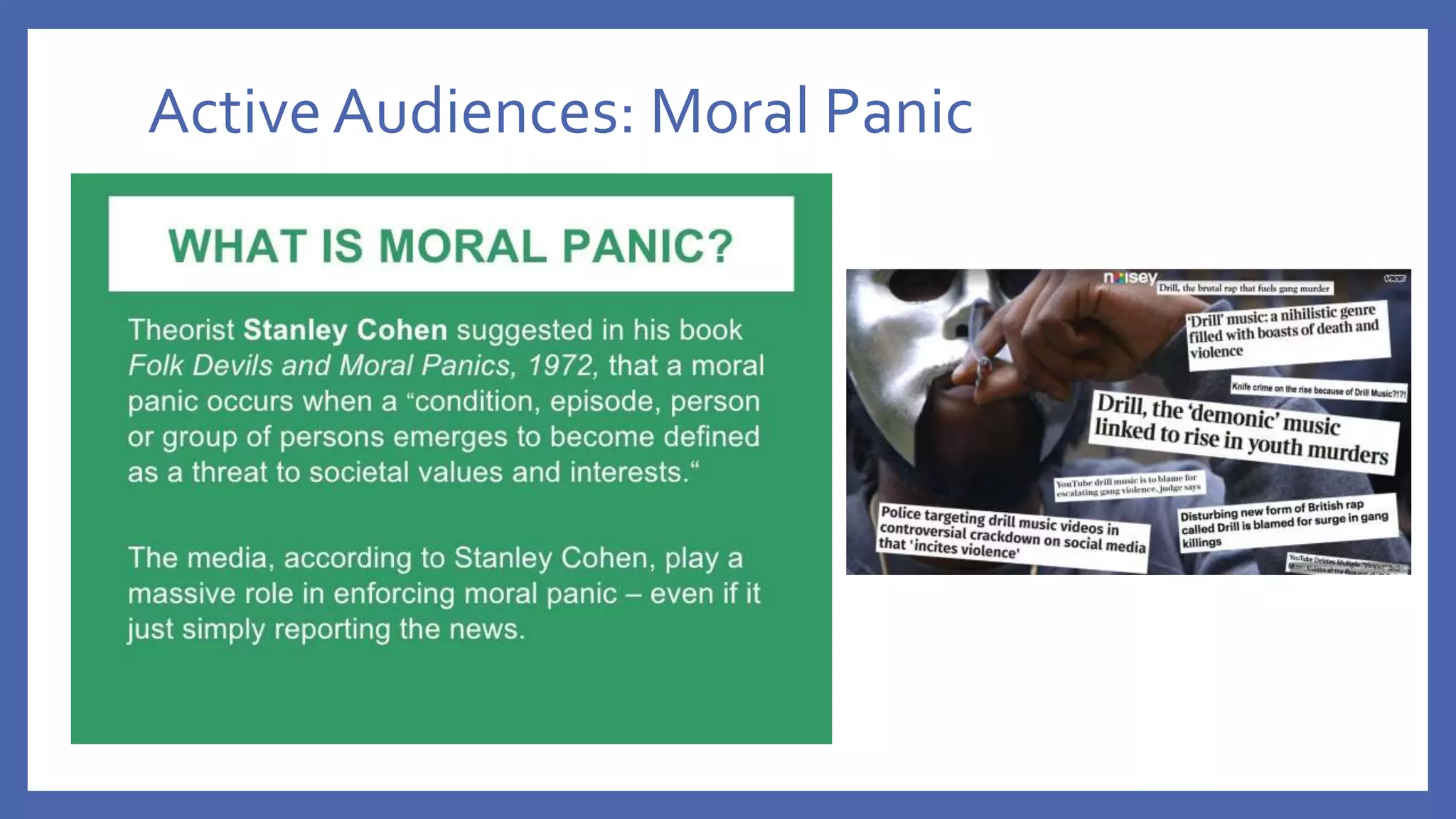
Active Audiences: Moral Panic
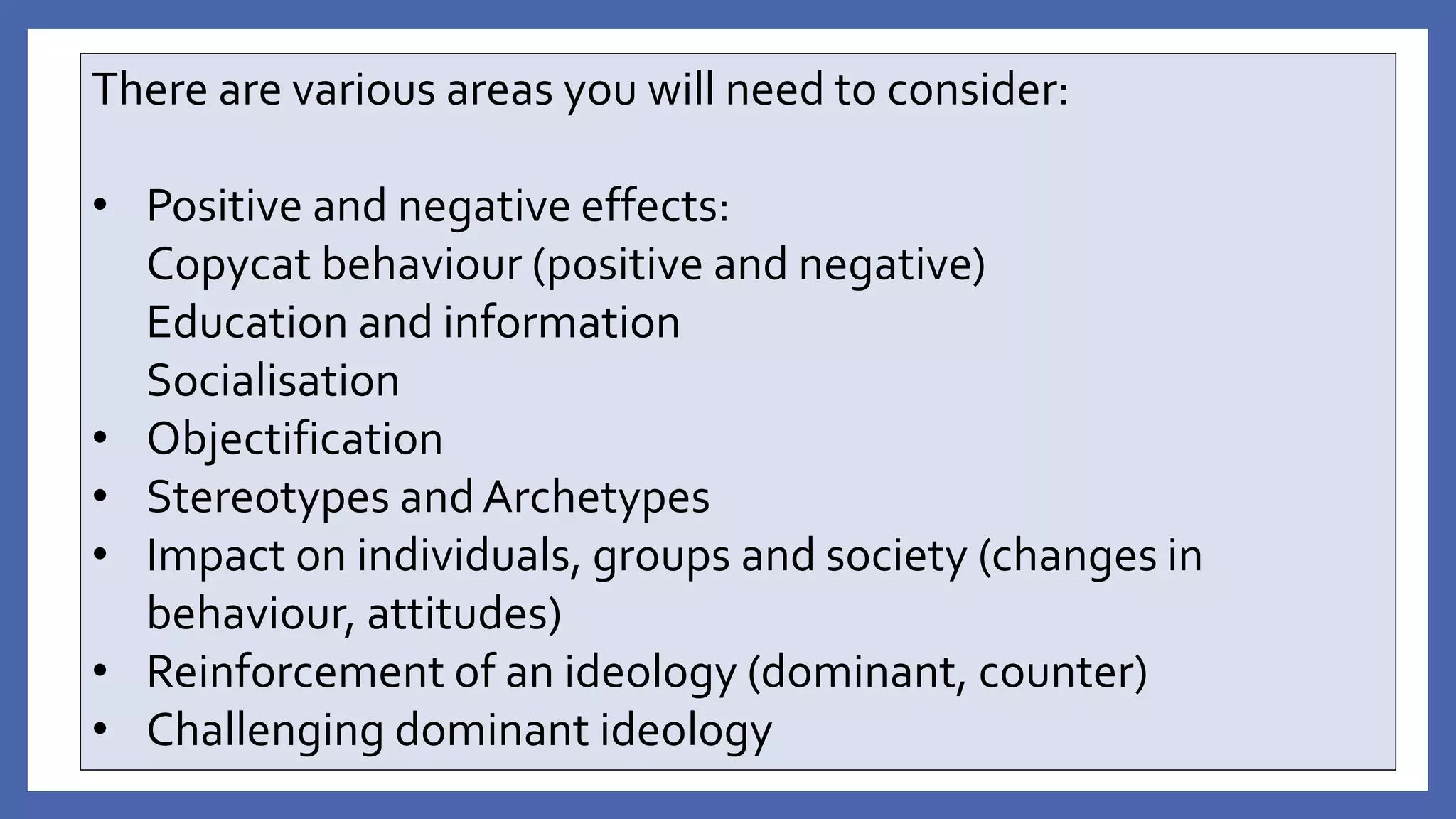
There are various areas you will need to consider:
• Positive and negative effects:
Copycat behaviour (positive and negative)
Education and information
Socialisation
• Objectification
• Stereotypes and Archetypes
• Impact on individuals, groups and society (changes in
behaviour, attitudes)
• Reinforcement of an ideology (dominant, counter)
• Challenging dominant ideology
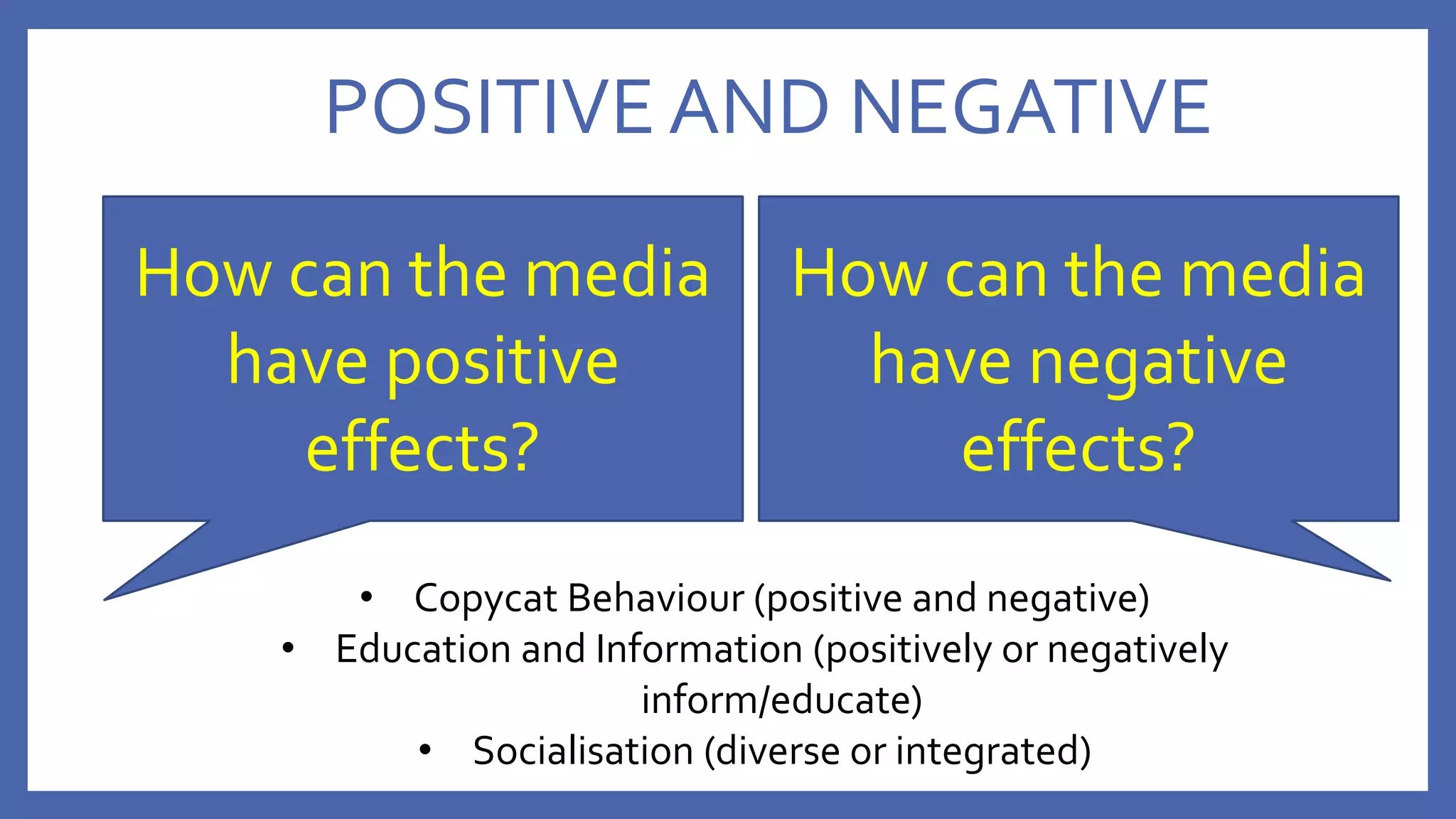
POSITIVE AND NEGATIVE
How can the media
have positive
effects?
How can the media
have negative
effects?
• Copycat Behaviour (positive and negative)
• Education and Information (positively or negatively
inform/educate)
• Socialisation (diverse or integrated)
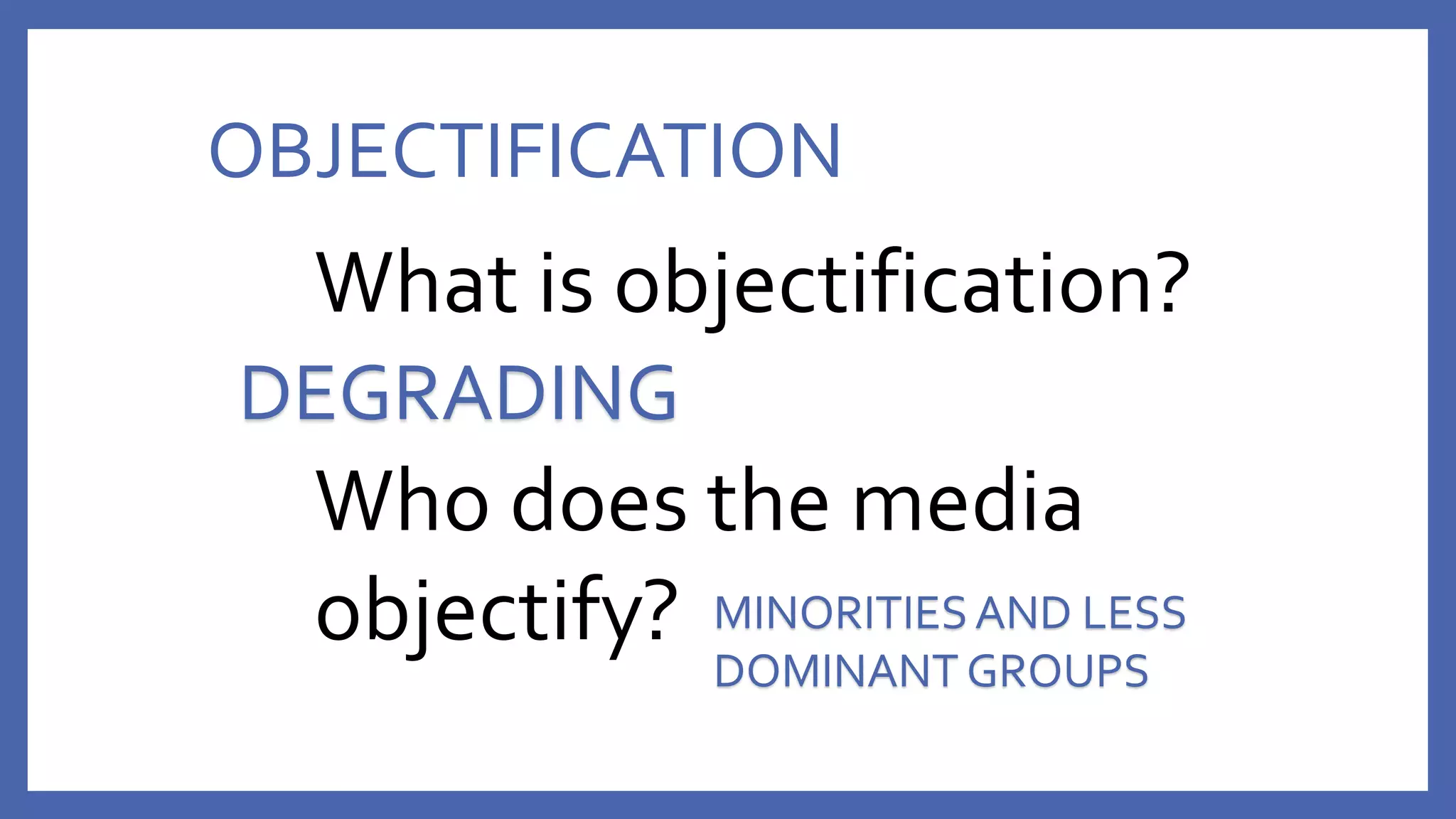
OBJECTIFICATION
What is objectification?
Who does the media
objectify?
DEGRADING
MINORITIESAND LESS
DOMINANT GROUPS
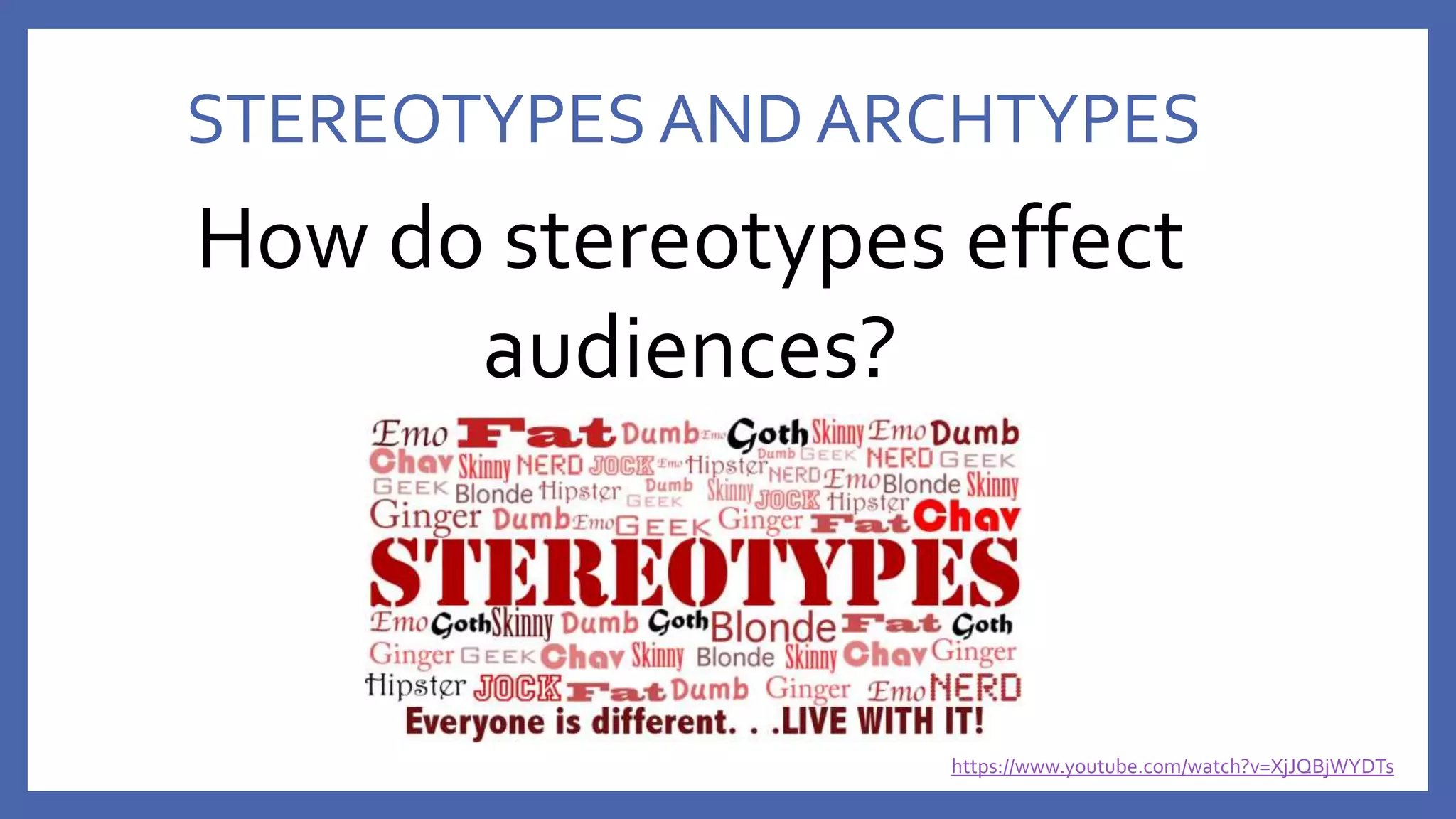
STEREOTYPES AND ARCHTYPES
How do stereotypes effect
audiences?
https://www.youtube.com/watch?v=XjJQBjWYDTs
IDEOLOGY
Ideology in media are the values,
ideas, attitudes and beliefs
presented to audiences in the media.
The media can both reinforce or
challenge ideology.
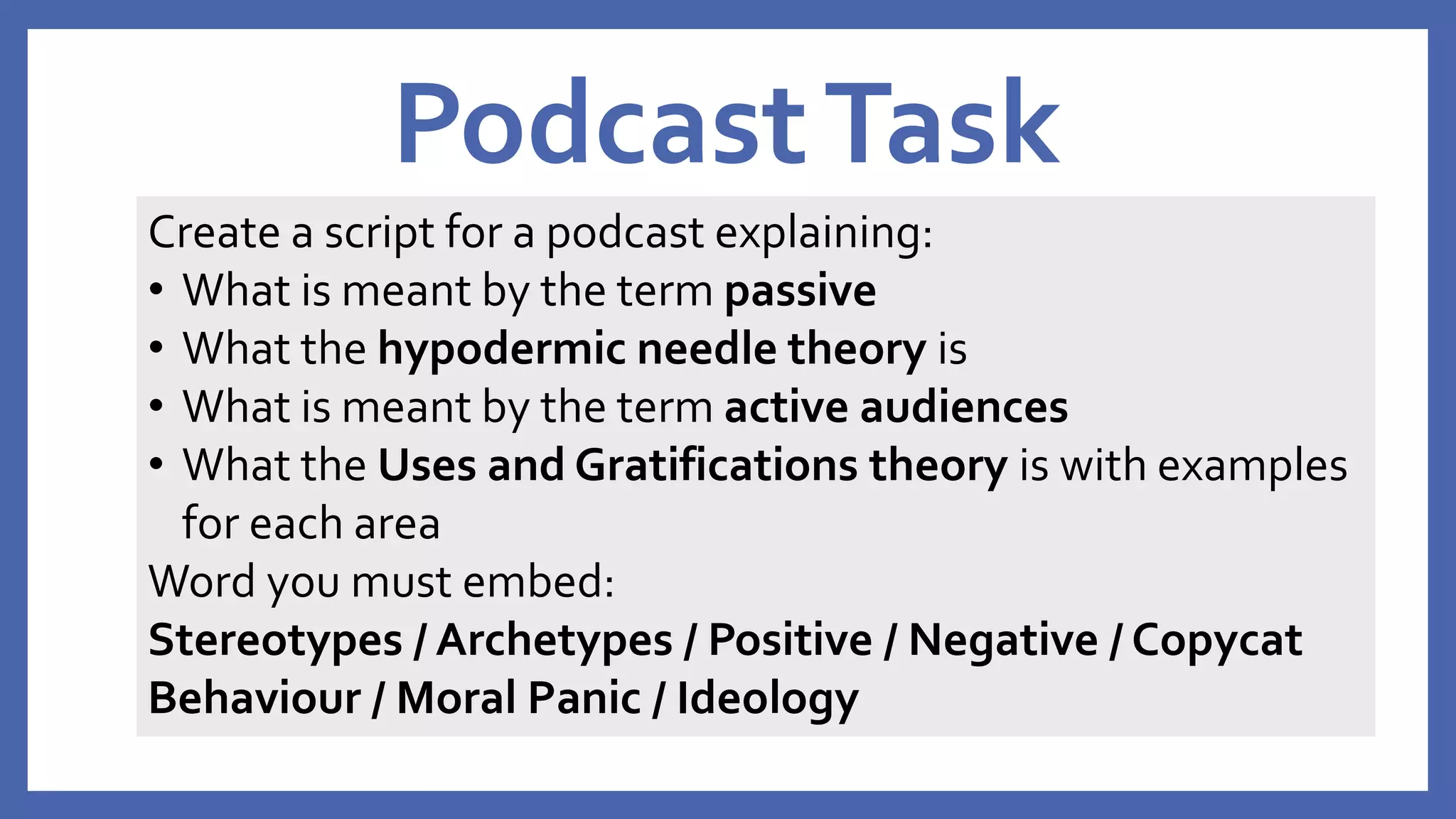
PodcastTask
Create a script for a podcast explaining:
• What is meant by the term passive
• What the hypodermic needle theory is
• What is meant by the term active audiences
• What the Uses and Gratifications theory is with examples
for each area
Word you must embed:
Stereotypes / Archetypes / Positive / Negative / Copycat
Behaviour / Moral Panic / Ideology
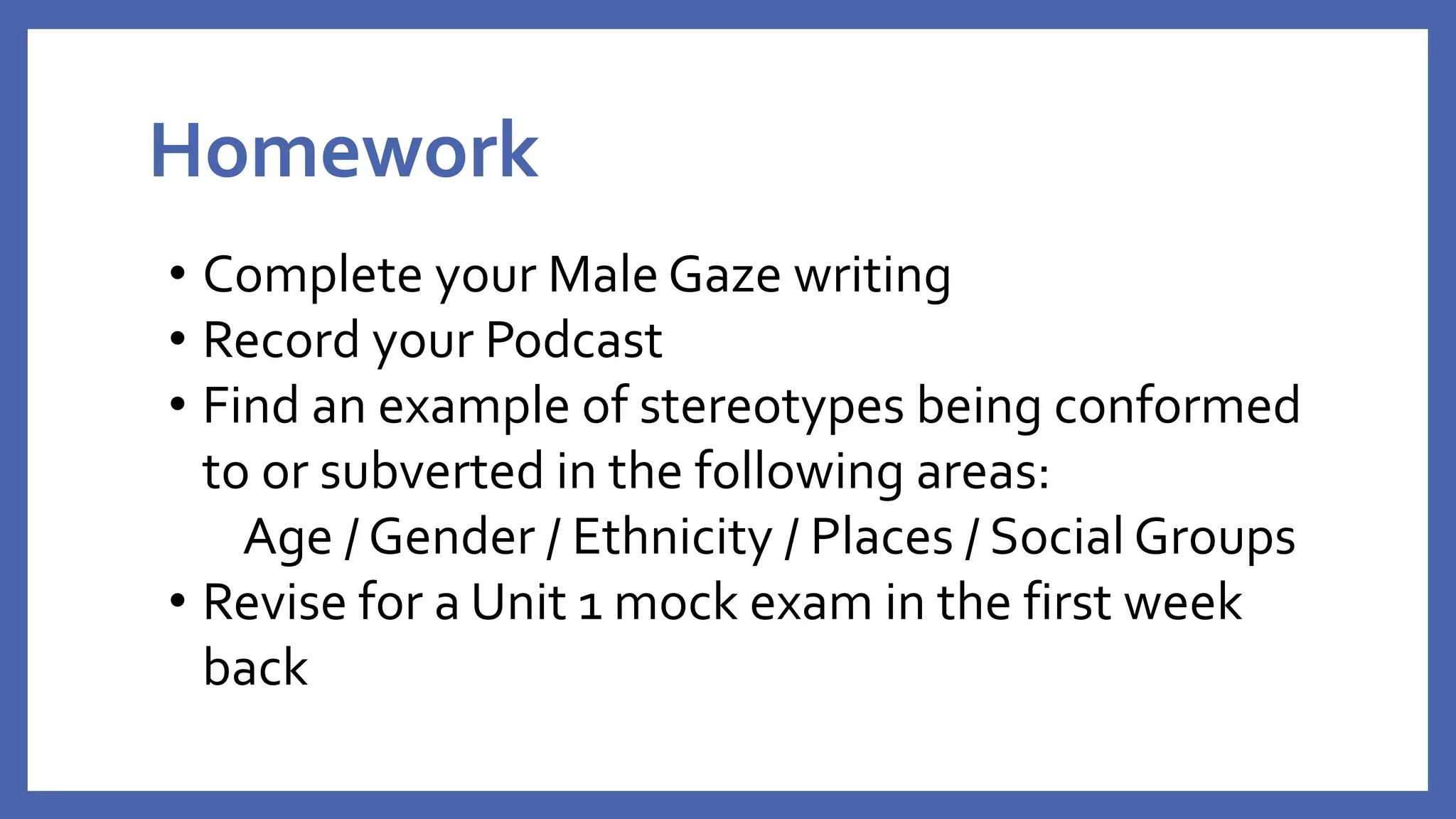
Homework
• Complete your Male Gaze writing
• Record your Podcast
• Find an example of stereotypes being conformed
to or subverted in the following areas:
Age / Gender / Ethnicity / Places / Social Groups
• Revise for a Unit 1 mock exam in the first week
back
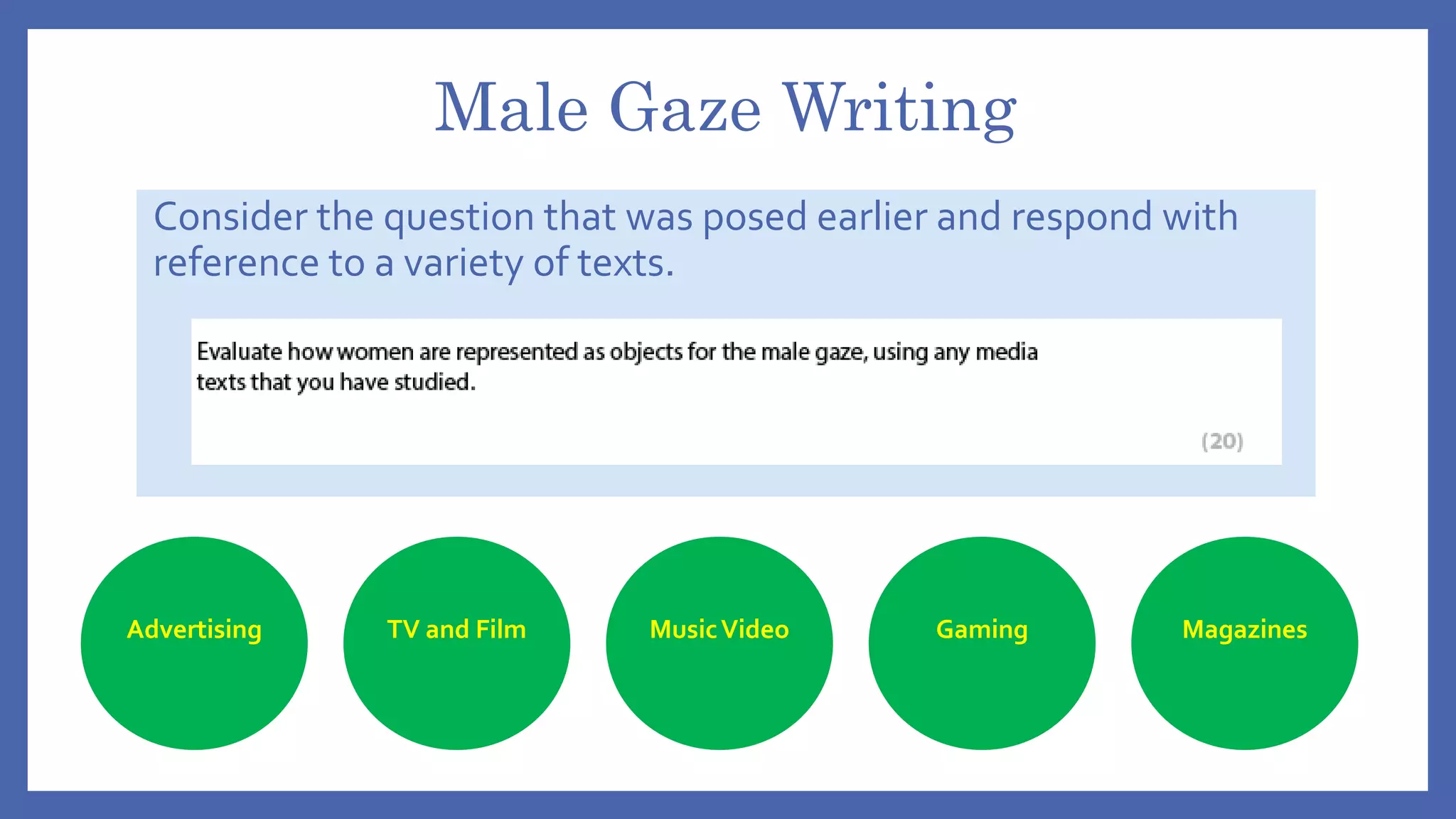
Male Gaze Writing
Consider the question that was posed earlier and respond with
reference to a variety of texts.
Advertising TV and Film MusicVideo Gaming Magazines
Representation Areas
Gender
• Male
• Female
• Trans
• Other?
Age
• Child
• Teen
• Young Adult
• Adult
• Middle Aged
• Pensioner
Social Groups
• Class
• Interest based
such as fathers,
unemployed,
cyclists
Ethnicity
White British
Black British
Asian
Other>
Places
Countries
Cities
A home
A war zone
A street
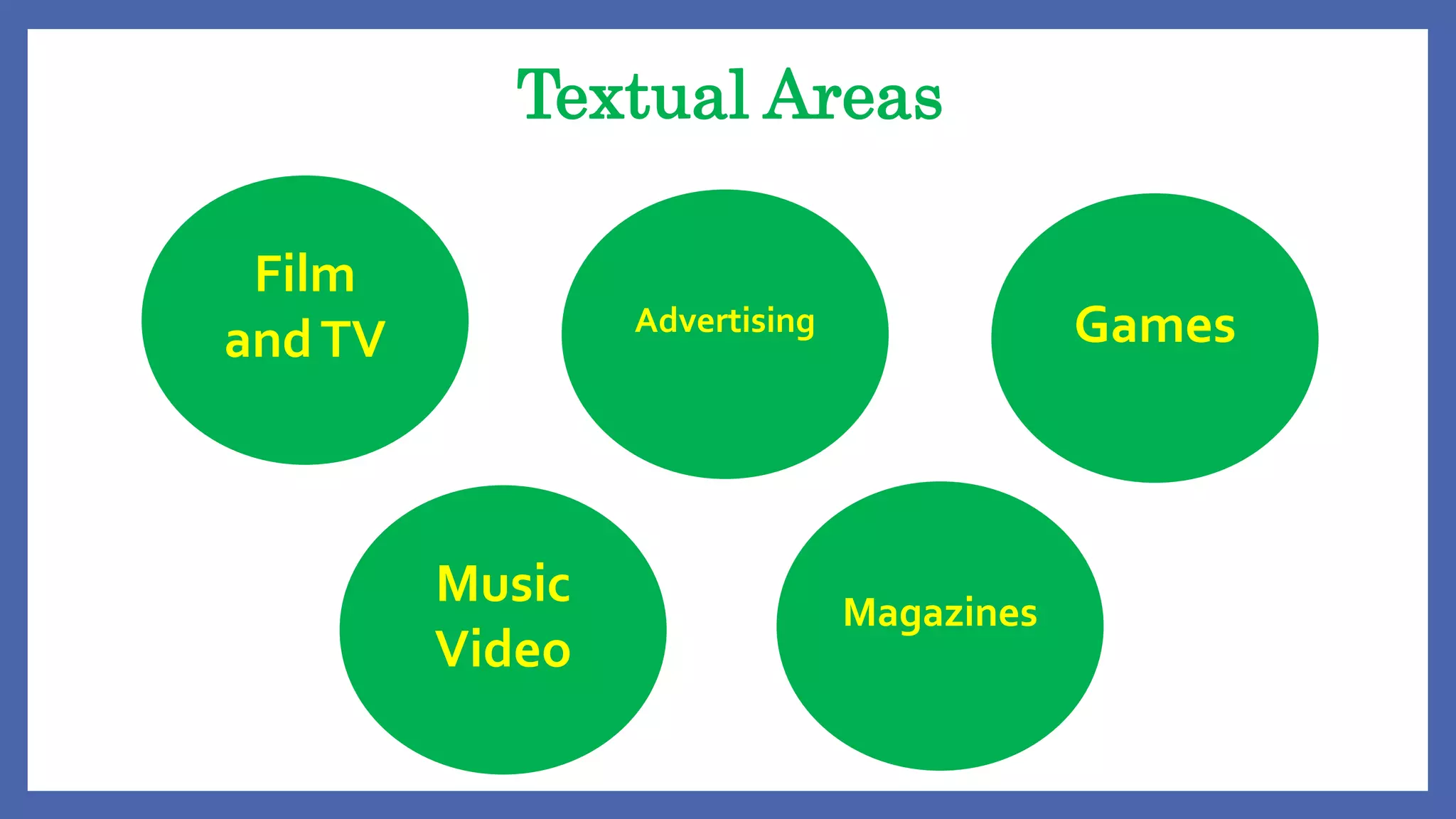
Film
andTV Advertising Games
Music
Video
Magazines
Textual Areas
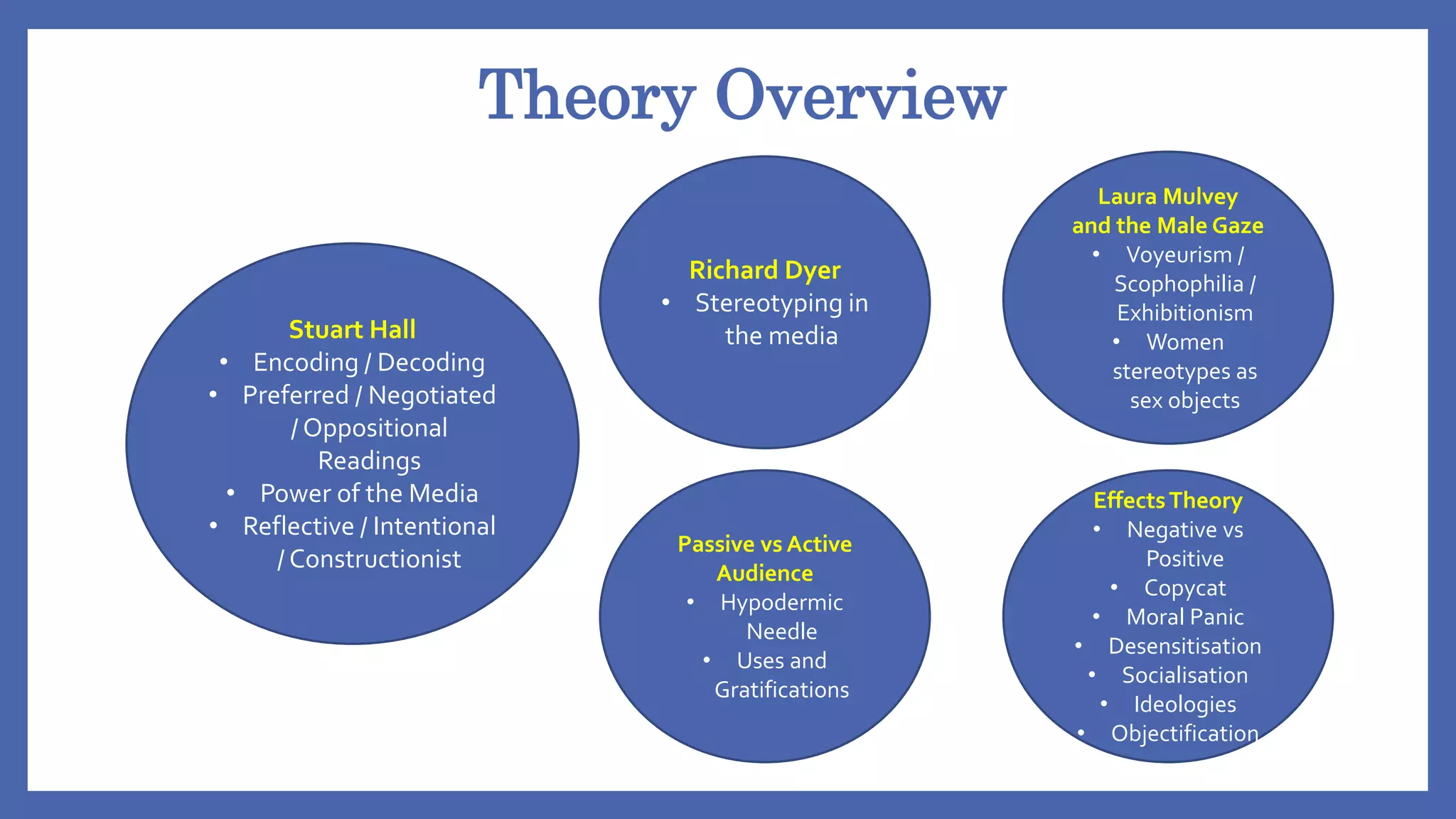
Theory Overview
Stuart Hall
• Encoding / Decoding
• Preferred / Negotiated
/ Oppositional
Readings
• Power of the Media
• Reflective / Intentional
/ Constructionist
Richard Dyer
• Stereotyping in
the media
Laura Mulvey
and the Male Gaze
• Voyeurism /
Scophophilia /
Exhibitionism
• Women
stereotypes as
sex objects
Passive vs Active
Audience
• Hypodermic
Needle
• Uses and
Gratifications
EffectsTheory
• Negative vs
Positive
• Copycat
• Moral Panic
• Desensitisation
• Socialisation
• Ideologies
• Objectification
Language and Technical Elements
Media Language
Denotation – Connotation
Signifier – Signified
Icons / Index / Symbols
Technical Language: Film
andTV
Camera
Sound
Edit
Mise en Scene
Technical Language:
Advertising
Can vary between moving
image and print / online
Technical Language:
Gaming
Camera
Sound
Edit
Mise en Scene
Technical Language:
Magazines
Layout
Camera
Text
Mise en Scene
Technical Language:
MusicVideo
Camera
Sound
Edit
Mise en Scene

Theory Continued

  • 1.
  • 2.
  • 3.
    EXAM PRACTICE 2 TheBig Issue is a magazine that raises money for people who are homeless. Analyse how the character has been represented on the 24 cover of the Big Issue. (10)
  • 4.
    EXAM PRACTICE 3 Analysehow masculinity is represented in any media text that you have studied. You may choose to refer to the Luther DVD front and back cover as part of your response. (10)
  • 5.
    EXAM PRACTICE 4 Explainthe term ‘hypodermic model’, using one example from any media text that you have studied. (2)
  • 6.
    EXAM PRACTICE 5 https://www.youtube.com/watch?v=tHRLX8jRjq8 Givetwo reason how the theory of Richard Dyer can be applied to the following text. (4)
  • 7.
    WHAT IS REPRESENTATION? RE-PRESENTATION Itis the re-presentation of society, people, places etc… It reflects the ideology (values, beliefs and ideas) of the producer and society.
  • 8.
    How does thiseffect us? Media is constructed It is a ‘false’ re-creation’ of society. The audience see what the producer intends
  • 9.
    Each representation carriesthe values of the producer. It shapes the opinions and beliefs of the audience. What does this mean?
  • 10.
    Different audiences may responddifferently (reception theory/ active and passive) but ultimately mass media will impact audiences in different ways.
  • 11.
  • 12.
  • 13.
  • 14.
  • 15.
  • 16.
    There are variousareas you will need to consider: • Positive and negative effects: Copycat behaviour (positive and negative) Education and information Socialisation • Objectification • Stereotypes and Archetypes • Impact on individuals, groups and society (changes in behaviour, attitudes) • Reinforcement of an ideology (dominant, counter) • Challenging dominant ideology
  • 17.
    POSITIVE AND NEGATIVE Howcan the media have positive effects? How can the media have negative effects? • Copycat Behaviour (positive and negative) • Education and Information (positively or negatively inform/educate) • Socialisation (diverse or integrated)
  • 18.
    OBJECTIFICATION What is objectification? Whodoes the media objectify? DEGRADING MINORITIESAND LESS DOMINANT GROUPS
  • 19.
    STEREOTYPES AND ARCHTYPES Howdo stereotypes effect audiences? https://www.youtube.com/watch?v=XjJQBjWYDTs
  • 20.
    IDEOLOGY Ideology in mediaare the values, ideas, attitudes and beliefs presented to audiences in the media. The media can both reinforce or challenge ideology.
  • 21.
    PodcastTask Create a scriptfor a podcast explaining: • What is meant by the term passive • What the hypodermic needle theory is • What is meant by the term active audiences • What the Uses and Gratifications theory is with examples for each area Word you must embed: Stereotypes / Archetypes / Positive / Negative / Copycat Behaviour / Moral Panic / Ideology
  • 22.
    Homework • Complete yourMale Gaze writing • Record your Podcast • Find an example of stereotypes being conformed to or subverted in the following areas: Age / Gender / Ethnicity / Places / Social Groups • Revise for a Unit 1 mock exam in the first week back
  • 24.
    Male Gaze Writing Considerthe question that was posed earlier and respond with reference to a variety of texts. Advertising TV and Film MusicVideo Gaming Magazines
  • 25.
    Representation Areas Gender • Male •Female • Trans • Other? Age • Child • Teen • Young Adult • Adult • Middle Aged • Pensioner Social Groups • Class • Interest based such as fathers, unemployed, cyclists Ethnicity White British Black British Asian Other> Places Countries Cities A home A war zone A street
  • 26.
  • 27.
    Theory Overview Stuart Hall •Encoding / Decoding • Preferred / Negotiated / Oppositional Readings • Power of the Media • Reflective / Intentional / Constructionist Richard Dyer • Stereotyping in the media Laura Mulvey and the Male Gaze • Voyeurism / Scophophilia / Exhibitionism • Women stereotypes as sex objects Passive vs Active Audience • Hypodermic Needle • Uses and Gratifications EffectsTheory • Negative vs Positive • Copycat • Moral Panic • Desensitisation • Socialisation • Ideologies • Objectification
  • 28.
    Language and TechnicalElements Media Language Denotation – Connotation Signifier – Signified Icons / Index / Symbols Technical Language: Film andTV Camera Sound Edit Mise en Scene Technical Language: Advertising Can vary between moving image and print / online Technical Language: Gaming Camera Sound Edit Mise en Scene Technical Language: Magazines Layout Camera Text Mise en Scene Technical Language: MusicVideo Camera Sound Edit Mise en Scene

Editor's Notes

  • #2 Are your classroom colors different than what you see in this template? That’s OK! Click on Design -> Variants (the down arrow) -> Pick the color scheme that works for you! Feel free to change any “You will…” and “I will…” statements to ensure they align with your classroom procedures and rules!