SECTION A
REVISION
LO: To highlight the texts that Section A will be based on
and relate them to possible questions.
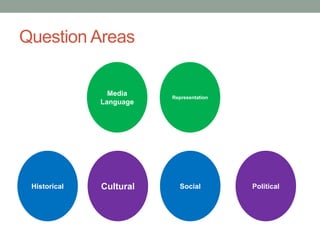
Question Areas
Media
Language
Representation
CulturalHistorical PoliticalSocial
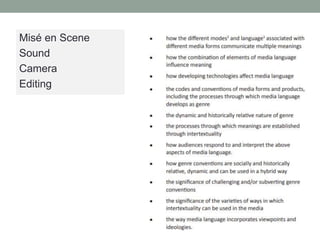
Media
Language
Misé en Scene
Sound
Camera
Editing
Representation
Stereotypes followed or
subverted.
Consider:
• People
• Places
• Ideologies
CulturalHistorical
Social
CulturalHistorical
Social
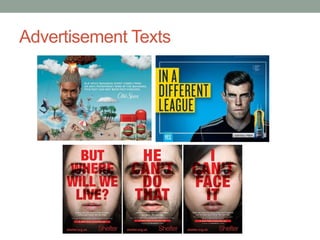
Advertisement Texts
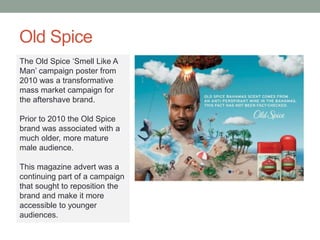
Old Spice
The Old Spice ‘Smell Like A
Man’ campaign poster from
2010 was a transformative
mass market campaign for
the aftershave brand.
Prior to 2010 the Old Spice
brand was associated with a
much older, more mature
male audience.
This magazine advert was a
continuing part of a campaign
that sought to reposition the
brand and make it more
accessible to younger
audiences.
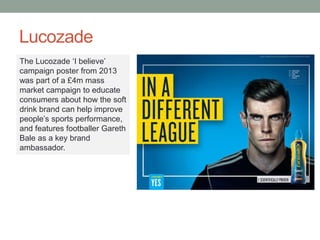
Lucozade
The Lucozade ‘I believe’
campaign poster from 2013
was part of a £4m mass
market campaign to educate
consumers about how the soft
drink brand can help improve
people’s sports performance,
and features footballer Gareth
Bale as a key brand
ambassador.
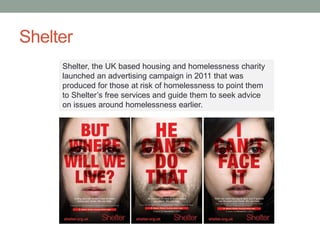
Shelter
Shelter, the UK based housing and homelessness charity
launched an advertising campaign in 2011 that was
produced for those at risk of homelessness to point them
to Shelter’s free services and guide them to seek advice
on issues around homelessness earlier.
Advertisements: What to Revise
• History of the brand/company
• The brand’s/company’s identity and how it has
changed over time
• The representations (place, places, ideologies)
offered and how they link to the brand/company
• When analysing the texts consider how they link to:
Social Issues
Cultural Issues
Historical Issues
Political Issues
• How media language is used to communicate to
audience
Video Texts
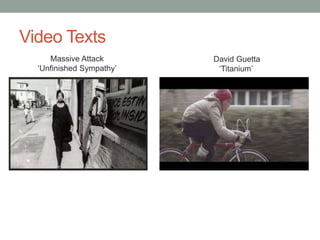
Massive Attack
‘Unfinished Sympathy’
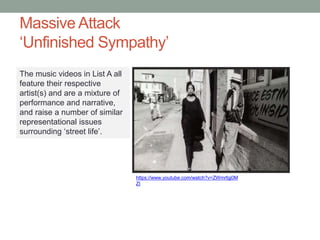
David Guetta
‘Titanium’
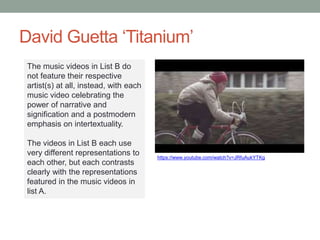
Massive Attack
‘Unfinished Sympathy’
https://www.youtube.com/watch?v=ZWmrfgj0M
ZI
The music videos in List A all
feature their respective
artist(s) and are a mixture of
performance and narrative,
and raise a number of similar
representational issues
surrounding ‘street life’.
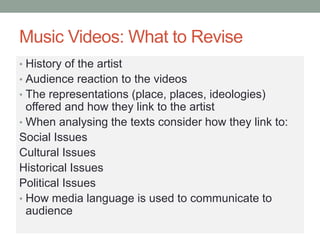
David Guetta ‘Titanium’
https://www.youtube.com/watch?v=JRfuAukYTKg
The music videos in List B do
not feature their respective
artist(s) at all, instead, with each
music video celebrating the
power of narrative and
signification and a postmodern
emphasis on intertextuality.
The videos in List B each use
very different representations to
each other, but each contrasts
clearly with the representations
featured in the music videos in
list A.
Music Videos: What to Revise
• History of the artist
• Audience reaction to the videos
• The representations (place, places, ideologies)
offered and how they link to the artist
• When analysing the texts consider how they link to:
Social Issues
Cultural Issues
Historical Issues
Political Issues
• How media language is used to communicate to
audience
Mark Scheme Points
How producers may choose to include different representations in music videos to
promote the artist(s), for example:
• producers of music videos may construct representations of the artist(s) that
emphasise key aspects of their image, such as their performance prowess, which
depending on the genre of music video could be high paced, coordinated dance
routines, or performance highlighting the artist’s (or artists’) musical prowess and
artistry, or narrative performance highlighting the
artist’s (or artists’) image. Music videos may focus on one element of those
highlighted above in depth but producers are
more likely to select a combination of these elements to strongly emphasise key
aspects of the artist’s (or artists’) mediated
image.
• producers of music videos may construct representations of the target audience
for the artist(s), for example the storyline of
narrative elements of a music video may feature representations (or idealised
representations) of fans (the target audience)
interacting with the artist(s) in order to elicit within fans a feeling of belonging and
loyalty with regard to the mediated image
and/or music of the artist’s (or artists’).
Mark Scheme Points
• producers of music videos may promote the artist(s) to their fan-base (target audience) through elicit value-
transference to
the artist(s) through representations other than those of the artist(s), for example:
o through artistic excellence and high production values, e.g. a highly cinematic in style narrative music video;
or
through more abstract, ‘high art’ expressionist videos (that may be live action, animated or feature digital CGI;
or
feature a combination of these elements) that appeal to the artist’s (or artists’) fan-base (target audience)
o through the use of glamour, for example, featuring representations artist(s) through the use of performers
(which may
be real, digital or animated) in ‘glamorous’ and / or highly aspirational situations
o music videos may also elicit value
-transference through the use of performance and high fashion using highly skilled H409/01 Mark Scheme
June 20XX
17
and elaborately costumed dance artists completing complex routines in sync with the beat of the artist’s (or
artists’)
track
o music videos may also elicit value-transference through constructed narrative representations that
demonstrate an
‘opposition to the status quo’ in-order to elicit a feeling within the artist’s (or artists’) fan-base (target audience)
of
loyalty to the artist(s) and of being part of a larger movement .
Mark Scheme Points
Presentation of examples of use of representations in music videos, for example:
• List A videos using social realist representation of ‘street life’ to represent the authenticity and cultural currency of the artists
• the single shot naturalism and use of non-actors, for example in the Massive Attack video to emphasise the realism of the
representation to add to the ‘cutting edge’ image of the artists
• the celebration of the transcendence of poverty and inequality, for example in Emeli Sandé or Corinne Bailey Rae videos,
aiming to transfer that value of transcendence to the artist
• the use of intertextual, postmodern representations in List B videos to transfer the quality of the video itself to the image of
the artists, e.g. the interweaving of referencing of The Wicker Man and Trumpton with contemporary issues of xenophobia in
the Radiohead video, the anarchic comedy of the Fatboy Slim video using a bricolage including representations of the
Caribbean and redneck America, the cinéphiliac recreation of Spielbergian 80s suburban America in the David Guetta video
• the use of messages and viewpoints in videos that aim to bolster the image of the artist and chime with those of the
positioned audience, e.g. the representation of a dark undercurrent beneath the apparent cohesion of a tight-knit community
contributes to the image of Radiohead and their fans as politically committed, knowing and pessimistic, the comedic
representation of the anarchic power of music contributes to Fatboy Slim’s ‘goofy and ironic’ image and reflects the culture of
dance music, the very filmic representation of teenage alienation in Guetta’s video creates an ambiguous message that adds
to the sophistication of Guetta’s image and fits the large-scale nature of the song.
Big Issue
Political

Section A Revision: Media Messages

  • 1.
    SECTION A REVISION LO: Tohighlight the texts that Section A will be based on and relate them to possible questions.
  • 2.
  • 3.
  • 4.
  • 5.
  • 6.
    Stereotypes followed or subverted. Consider: •People • Places • Ideologies
  • 7.
  • 8.
  • 9.
  • 10.
    Old Spice The OldSpice ‘Smell Like A Man’ campaign poster from 2010 was a transformative mass market campaign for the aftershave brand. Prior to 2010 the Old Spice brand was associated with a much older, more mature male audience. This magazine advert was a continuing part of a campaign that sought to reposition the brand and make it more accessible to younger audiences.
  • 11.
    Lucozade The Lucozade ‘Ibelieve’ campaign poster from 2013 was part of a £4m mass market campaign to educate consumers about how the soft drink brand can help improve people’s sports performance, and features footballer Gareth Bale as a key brand ambassador.
  • 12.
    Shelter Shelter, the UKbased housing and homelessness charity launched an advertising campaign in 2011 that was produced for those at risk of homelessness to point them to Shelter’s free services and guide them to seek advice on issues around homelessness earlier.
  • 13.
    Advertisements: What toRevise • History of the brand/company • The brand’s/company’s identity and how it has changed over time • The representations (place, places, ideologies) offered and how they link to the brand/company • When analysing the texts consider how they link to: Social Issues Cultural Issues Historical Issues Political Issues • How media language is used to communicate to audience
  • 14.
    Video Texts Massive Attack ‘UnfinishedSympathy’ David Guetta ‘Titanium’
  • 15.
    Massive Attack ‘Unfinished Sympathy’ https://www.youtube.com/watch?v=ZWmrfgj0M ZI Themusic videos in List A all feature their respective artist(s) and are a mixture of performance and narrative, and raise a number of similar representational issues surrounding ‘street life’.
  • 16.
    David Guetta ‘Titanium’ https://www.youtube.com/watch?v=JRfuAukYTKg Themusic videos in List B do not feature their respective artist(s) at all, instead, with each music video celebrating the power of narrative and signification and a postmodern emphasis on intertextuality. The videos in List B each use very different representations to each other, but each contrasts clearly with the representations featured in the music videos in list A.
  • 17.
    Music Videos: Whatto Revise • History of the artist • Audience reaction to the videos • The representations (place, places, ideologies) offered and how they link to the artist • When analysing the texts consider how they link to: Social Issues Cultural Issues Historical Issues Political Issues • How media language is used to communicate to audience
  • 18.
    Mark Scheme Points Howproducers may choose to include different representations in music videos to promote the artist(s), for example: • producers of music videos may construct representations of the artist(s) that emphasise key aspects of their image, such as their performance prowess, which depending on the genre of music video could be high paced, coordinated dance routines, or performance highlighting the artist’s (or artists’) musical prowess and artistry, or narrative performance highlighting the artist’s (or artists’) image. Music videos may focus on one element of those highlighted above in depth but producers are more likely to select a combination of these elements to strongly emphasise key aspects of the artist’s (or artists’) mediated image. • producers of music videos may construct representations of the target audience for the artist(s), for example the storyline of narrative elements of a music video may feature representations (or idealised representations) of fans (the target audience) interacting with the artist(s) in order to elicit within fans a feeling of belonging and loyalty with regard to the mediated image and/or music of the artist’s (or artists’).
  • 19.
    Mark Scheme Points •producers of music videos may promote the artist(s) to their fan-base (target audience) through elicit value- transference to the artist(s) through representations other than those of the artist(s), for example: o through artistic excellence and high production values, e.g. a highly cinematic in style narrative music video; or through more abstract, ‘high art’ expressionist videos (that may be live action, animated or feature digital CGI; or feature a combination of these elements) that appeal to the artist’s (or artists’) fan-base (target audience) o through the use of glamour, for example, featuring representations artist(s) through the use of performers (which may be real, digital or animated) in ‘glamorous’ and / or highly aspirational situations o music videos may also elicit value -transference through the use of performance and high fashion using highly skilled H409/01 Mark Scheme June 20XX 17 and elaborately costumed dance artists completing complex routines in sync with the beat of the artist’s (or artists’) track o music videos may also elicit value-transference through constructed narrative representations that demonstrate an ‘opposition to the status quo’ in-order to elicit a feeling within the artist’s (or artists’) fan-base (target audience) of loyalty to the artist(s) and of being part of a larger movement .
  • 20.
    Mark Scheme Points Presentationof examples of use of representations in music videos, for example: • List A videos using social realist representation of ‘street life’ to represent the authenticity and cultural currency of the artists • the single shot naturalism and use of non-actors, for example in the Massive Attack video to emphasise the realism of the representation to add to the ‘cutting edge’ image of the artists • the celebration of the transcendence of poverty and inequality, for example in Emeli Sandé or Corinne Bailey Rae videos, aiming to transfer that value of transcendence to the artist • the use of intertextual, postmodern representations in List B videos to transfer the quality of the video itself to the image of the artists, e.g. the interweaving of referencing of The Wicker Man and Trumpton with contemporary issues of xenophobia in the Radiohead video, the anarchic comedy of the Fatboy Slim video using a bricolage including representations of the Caribbean and redneck America, the cinéphiliac recreation of Spielbergian 80s suburban America in the David Guetta video • the use of messages and viewpoints in videos that aim to bolster the image of the artist and chime with those of the positioned audience, e.g. the representation of a dark undercurrent beneath the apparent cohesion of a tight-knit community contributes to the image of Radiohead and their fans as politically committed, knowing and pessimistic, the comedic representation of the anarchic power of music contributes to Fatboy Slim’s ‘goofy and ironic’ image and reflects the culture of dance music, the very filmic representation of teenage alienation in Guetta’s video creates an ambiguous message that adds to the sophistication of Guetta’s image and fits the large-scale nature of the song.
  • 21.
  • 22.