Debbie Lahav
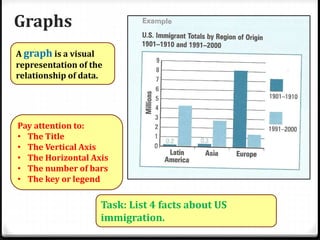
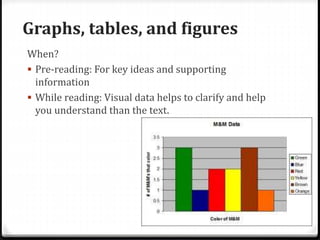
Graphs
A graph is a visual
representation of the
relationship of data.
Pay attention to:
• The Title
• The Vertical Axis
• The Horizontal Axis
• The number of bars
• The key or legend
Task: List 4 facts about US
immigration.
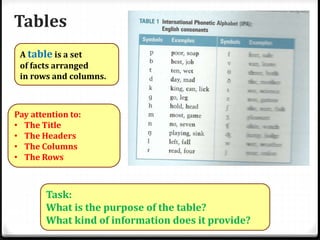
Tables
A table is a set
of facts arranged
in rows and columns.
Pay attention to:
• The Title
• The Headers
• The Columns
• The Rows
Task:
What is the purpose of the table?
What kind of information does it provide?
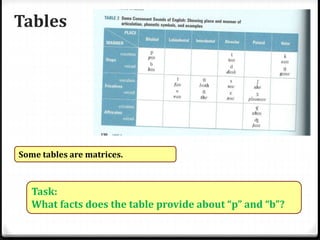
Tables
Some tables are matrices.
Task:
What facts does the table provide about “p” and “b”?
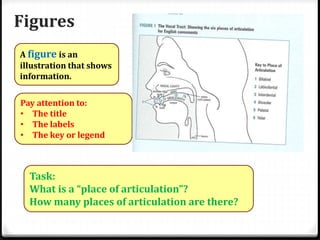
Figures
Pay attention to:
• The title
• The labels
• The key or legend
Task:
What is a “place of articulation”?
How many places of articulation are there?
A figure is an
illustration that shows
information.
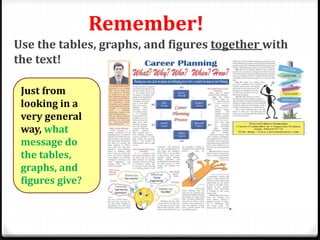
Remember!
Use the tables, graphs, and figures together with
the text!
Just from
looking in a
very general
way, what
message do
the tables,
graphs, and
figures give?
Graphs, tables, and figures
When?
 Pre-reading: For key ideas and supporting
information
 While reading: Visual data helps to clarify and help
you understand than the text.
Time
to

Tables and illustrations (1)

  • 1.
  • 2.
    Graphs A graph isa visual representation of the relationship of data. Pay attention to: • The Title • The Vertical Axis • The Horizontal Axis • The number of bars • The key or legend Task: List 4 facts about US immigration.
  • 3.
    Tables A table isa set of facts arranged in rows and columns. Pay attention to: • The Title • The Headers • The Columns • The Rows Task: What is the purpose of the table? What kind of information does it provide?
  • 4.
    Tables Some tables arematrices. Task: What facts does the table provide about “p” and “b”?
  • 5.
    Figures Pay attention to: •The title • The labels • The key or legend Task: What is a “place of articulation”? How many places of articulation are there? A figure is an illustration that shows information.
  • 6.
    Remember! Use the tables,graphs, and figures together with the text! Just from looking in a very general way, what message do the tables, graphs, and figures give?
  • 7.
    Graphs, tables, andfigures When?  Pre-reading: For key ideas and supporting information  While reading: Visual data helps to clarify and help you understand than the text.
  • 8.