DATA
PRESENTATION
2
PRESENTATION OF DATA
This refers to the organization of data into
tables, graphs, or charts so that logical and
statistical conclusions can be derived from
the collected measurements.
METHODS OF DATA
PRESENTATION
Subtitle
TEXTUAL OR NARRATIVE
PRESENTATION
• the data gathered are presented in
paragraph form
• data are written and read
• it is a combination of texts and figures
Presentation Title 4
EXAMPLE
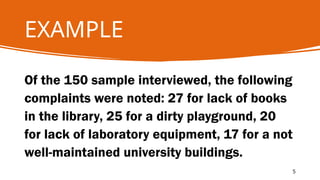
Of the 150 sample interviewed, the following
complaints were noted: 27 for lack of books
in the library, 25 for a dirty playground, 20
for lack of laboratory equipment, 17 for a not
well-maintained university buildings.
5
TABULAR PRESENTATION
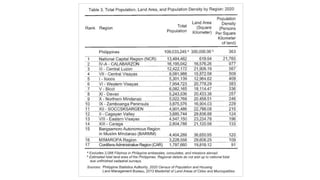
• Numerical values are presented using tables.
• Information are lost in tabular presentation
of data.
• Frequency distribution table is also
applicable for qualitative variables.
Presentation Title 6
7
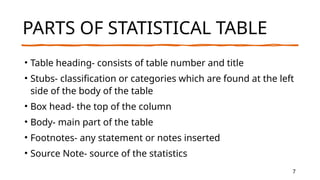
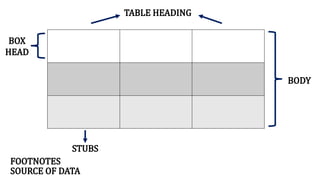
PARTS OF STATISTICAL TABLE
• Table heading- consists of table number and title
• Stubs- classification or categories which are found at the left
side of the body of the table
• Box head- the top of the column
• Body- main part of the table
• Footnotes- any statement or notes inserted
• Source Note- source of the statistics
Presentation Title
TABLE HEADING
BODY
BOX
HEAD
STUBS
FOOTNOTES
SOURCE OF DATA
GRAPHICAL PRESENTATION
• Trends are easily seen in graphs compared to tables.
• It is good to present data using pictures or figures like the
pictograph.
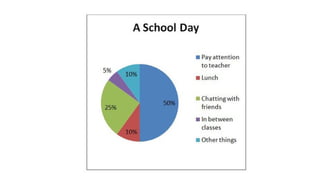
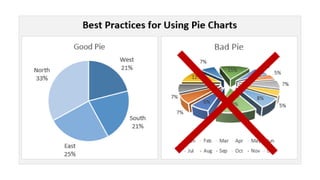
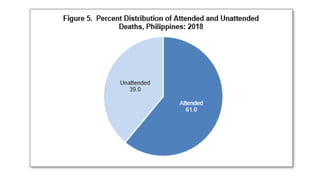
• Pie charts are used to present data as part of one whole.
• Line graphs are for time-series data.
• It is better to present data using graphs than tables as they are
much better to look at.
Presentation Title 10
11
KINDS OF GRAPHS OR DIAGRAMS
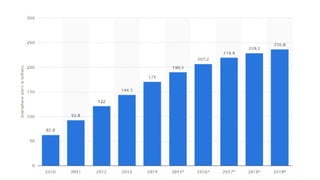
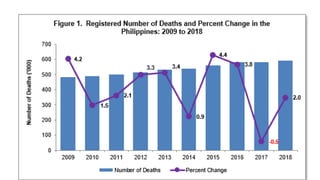
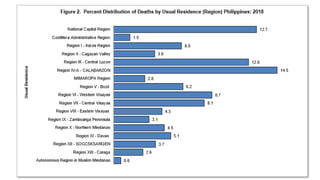
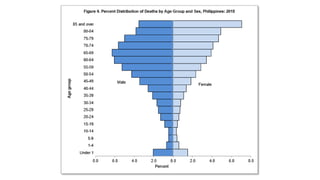
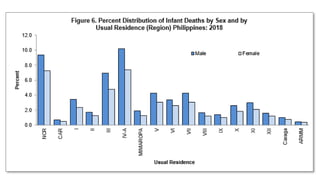
• BAR GRAPH- used to show relationships/comparison between
groups
• PIE OR CIRCLE GRAPH- show percentages effectively
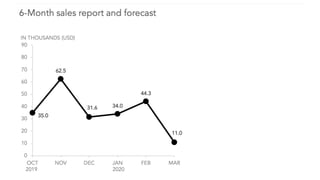
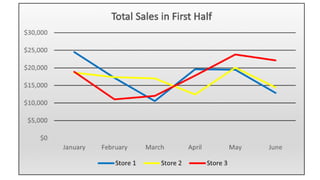
• LINE GRAPH- most useful in displaying data that changes
continuously over time
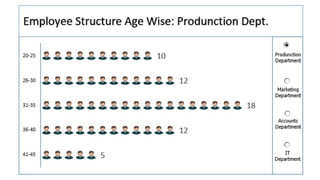
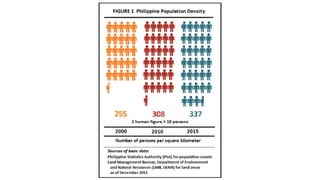
• PICTOGRAPH- or pictogram. It uses small or identical figures
of objects called isotopes in making comparisons. Each picture
represents a definite quantity.
Presentation Title
BAR GRAPH
PIE CHART
LINE GRAPH
Presentation Title 23
9/3/20XX
PICTOGRAPH
STATISTICS AND PROBABILITY-DATA PRESENTATION PPT

STATISTICS AND PROBABILITY-DATA PRESENTATION PPT

  • 1.
  • 2.
    2 PRESENTATION OF DATA Thisrefers to the organization of data into tables, graphs, or charts so that logical and statistical conclusions can be derived from the collected measurements.
  • 3.
  • 4.
    TEXTUAL OR NARRATIVE PRESENTATION •the data gathered are presented in paragraph form • data are written and read • it is a combination of texts and figures Presentation Title 4
  • 5.
    EXAMPLE Of the 150sample interviewed, the following complaints were noted: 27 for lack of books in the library, 25 for a dirty playground, 20 for lack of laboratory equipment, 17 for a not well-maintained university buildings. 5
  • 6.
    TABULAR PRESENTATION • Numericalvalues are presented using tables. • Information are lost in tabular presentation of data. • Frequency distribution table is also applicable for qualitative variables. Presentation Title 6
  • 7.
    7 PARTS OF STATISTICALTABLE • Table heading- consists of table number and title • Stubs- classification or categories which are found at the left side of the body of the table • Box head- the top of the column • Body- main part of the table • Footnotes- any statement or notes inserted • Source Note- source of the statistics Presentation Title
  • 8.
  • 10.
    GRAPHICAL PRESENTATION • Trendsare easily seen in graphs compared to tables. • It is good to present data using pictures or figures like the pictograph. • Pie charts are used to present data as part of one whole. • Line graphs are for time-series data. • It is better to present data using graphs than tables as they are much better to look at. Presentation Title 10
  • 11.
    11 KINDS OF GRAPHSOR DIAGRAMS • BAR GRAPH- used to show relationships/comparison between groups • PIE OR CIRCLE GRAPH- show percentages effectively • LINE GRAPH- most useful in displaying data that changes continuously over time • PICTOGRAPH- or pictogram. It uses small or identical figures of objects called isotopes in making comparisons. Each picture represents a definite quantity. Presentation Title
  • 12.
  • 18.
  • 22.
  • 23.
  • 26.