Presentation by: Sheth Purna
1
 What is an optical switch ?
 The Need for Optical Switching
 Optical Switching
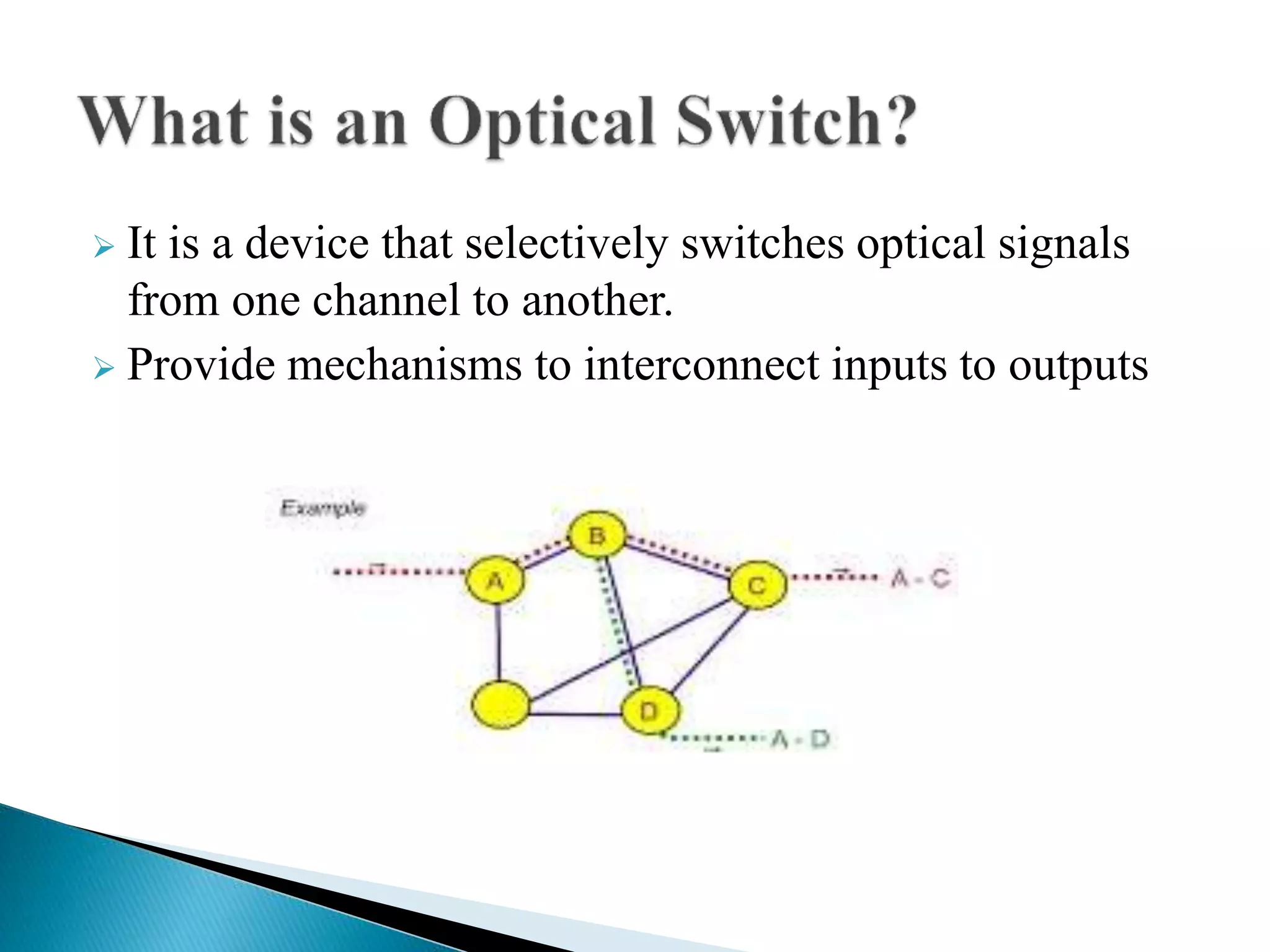
 It is a device that selectively switches optical signals
from one channel to another.
 Provide mechanisms to interconnect inputs to outputs
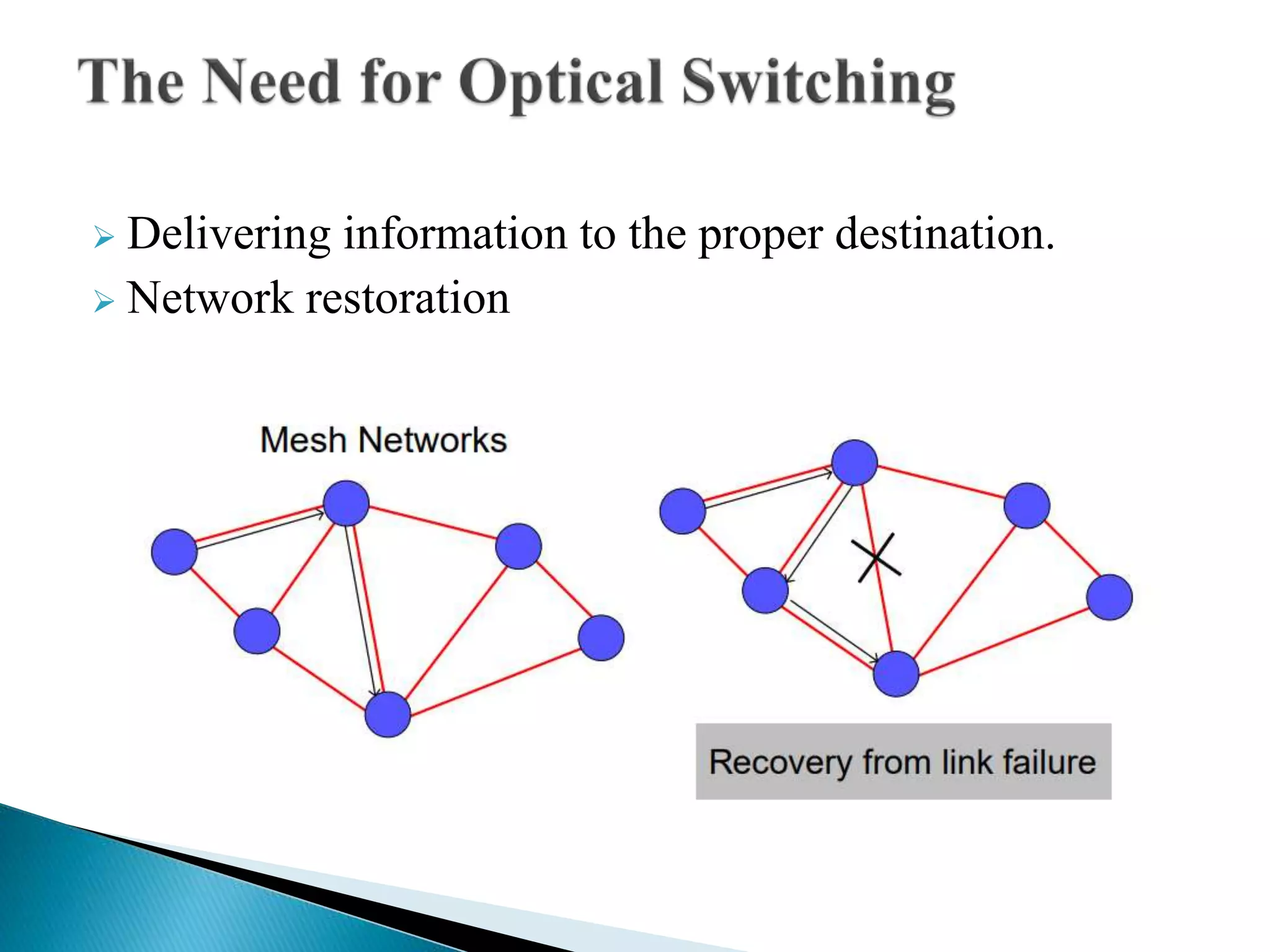
 Delivering information to the proper destination.
 Network restoration
 OPTICAL CIRCUIT SWITCHING
 OPTICAL PACKET SWITCHING
 OPTICAL BURST SWITCHING
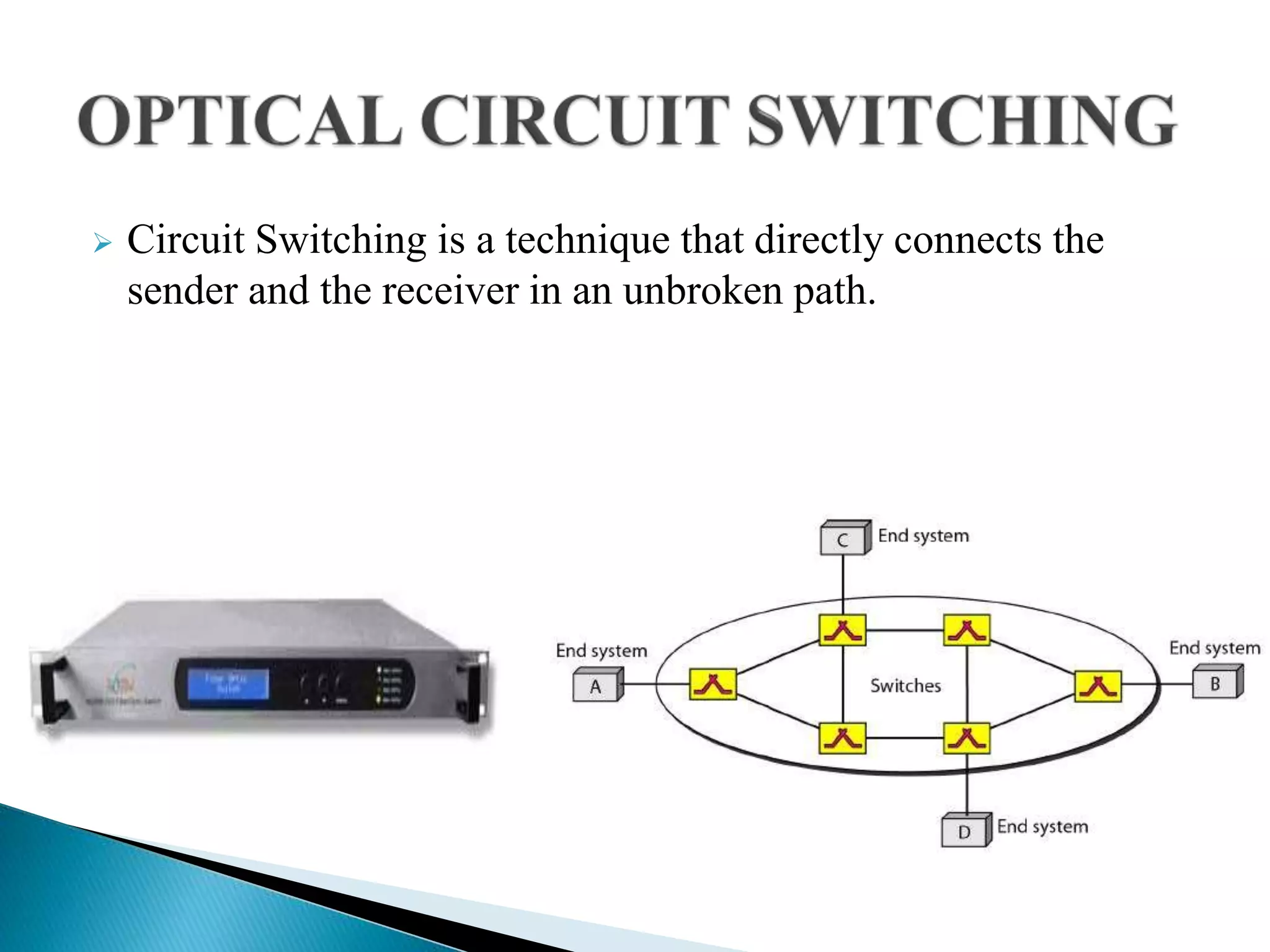
 Circuit Switching is a technique that directly connects the
sender and the receiver in an unbroken path.
 Telephone switching equipment, for example,
establishes a path that connects the caller’s telephone to
the receiver’s telephone by making a physical
connection.
 With this type of switching technique, once a
connection was established, a dedicated path exists
between both ends until the connection is terminated.
 Disadvantages:-
 DATA TRAFFIC
 The circuits require time to set up and to destroy.
 Low flexibility
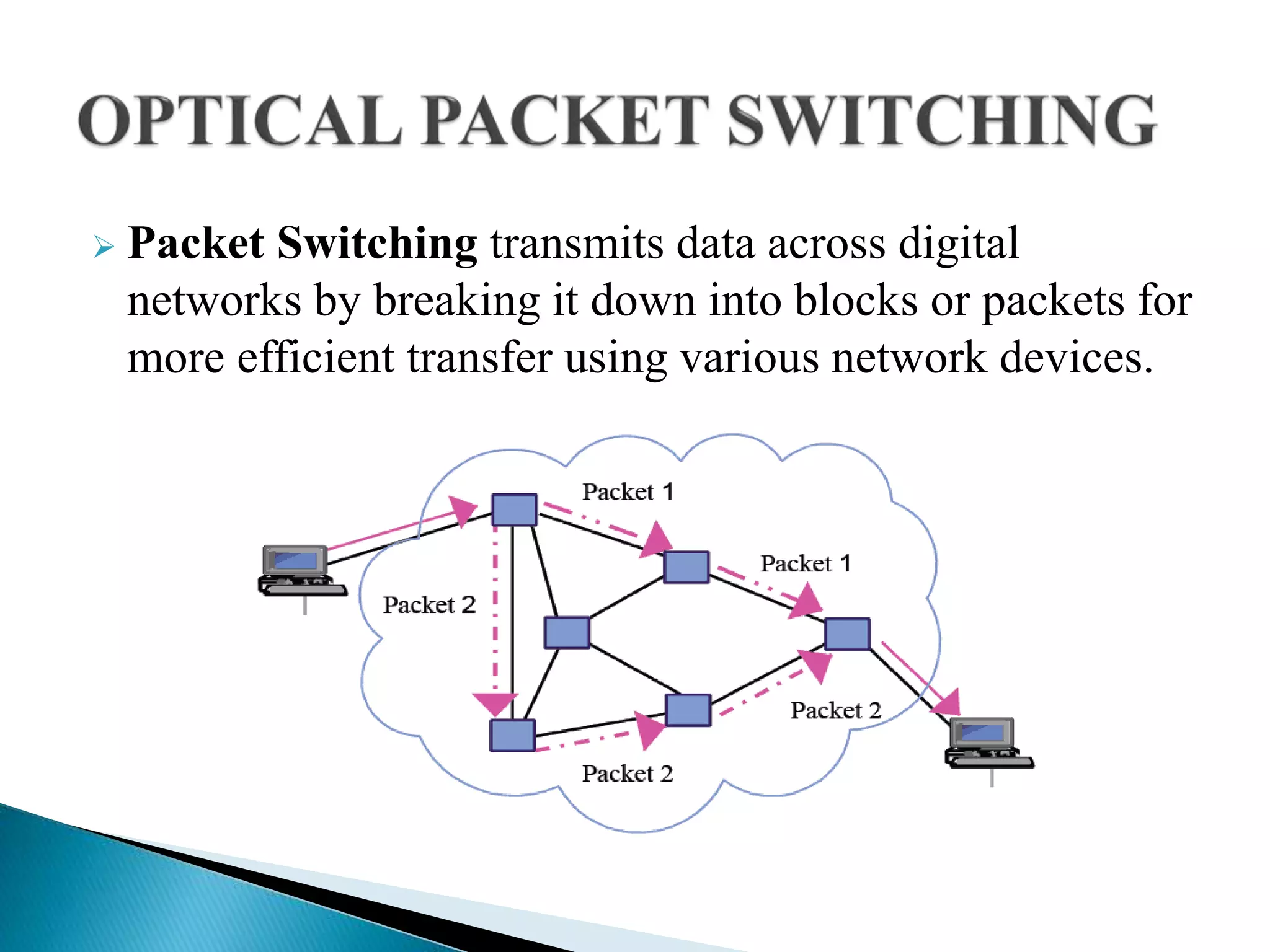
 Packet Switching transmits data across digital
networks by breaking it down into blocks or packets for
more efficient transfer using various network devices.
 Packet switching is the transfer of small pieces of data
across various networks. These data chunks or
“packets” allow for faster, more efficient data transfer.
 Each time one device sends a file to another, it breaks
the file down into packets so that it can determine the
most efficient route for sending the data across the
network at that time.
 The network devices can then route the packets to the
destination where the receiving device reassembles
them for use.
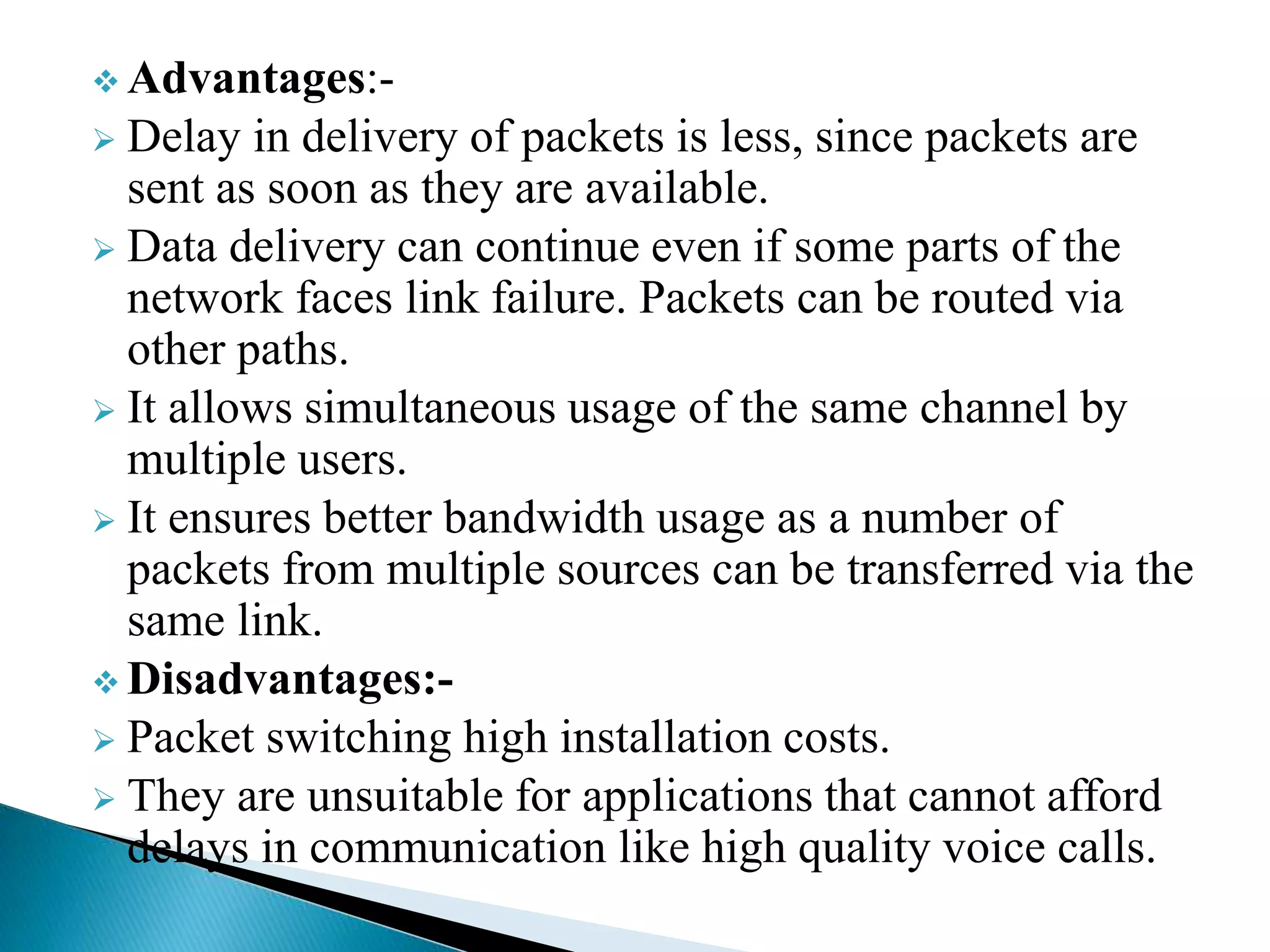
Virtual circuit Datagram
Bandwidth, CPU, Buffer are reserved Not reserved
Same Path May or May not
In order Out of order
Connection Oriented Connection less
Costly Not much costly
S R
S
1
S
2
S
3
M M
S R
S
1
S
2
S
3
S5
S4
M M
 Advantages:-
 Delay in delivery of packets is less, since packets are
sent as soon as they are available.
 Data delivery can continue even if some parts of the
network faces link failure. Packets can be routed via
other paths.
 It allows simultaneous usage of the same channel by
multiple users.
 It ensures better bandwidth usage as a number of
packets from multiple sources can be transferred via the
same link.
 Disadvantages:-
 Packet switching high installation costs.
 They are unsuitable for applications that cannot afford
delays in communication like high quality voice calls.
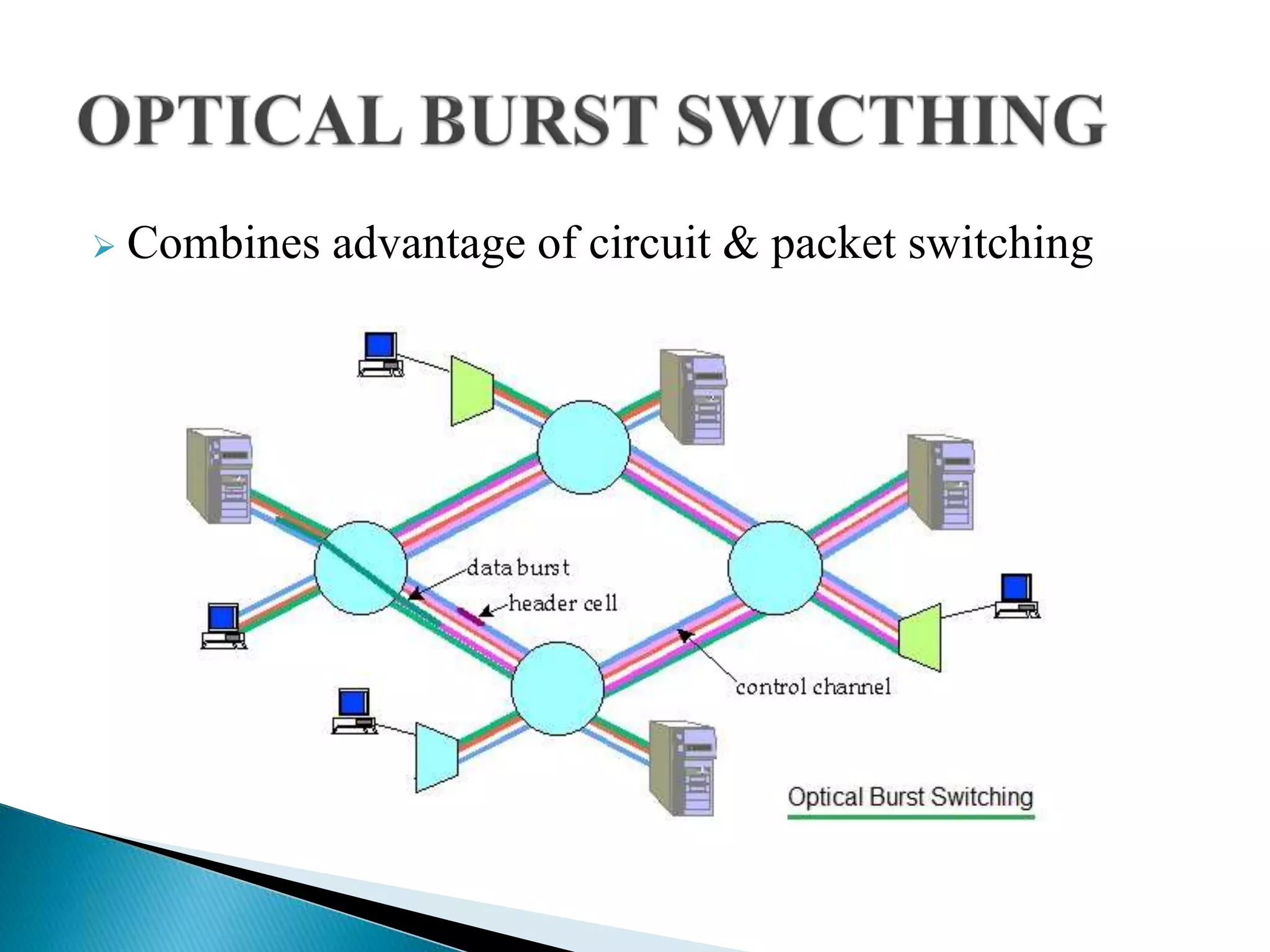
 Combines advantage of circuit & packet switching
 In OBS network, packets are assembled into larger data
bursts(DB).For every burst ,a burst header project(BHP),DB
assembly and BHP generation is created in OBS edge nodes
 Each DB/BHP pair is routed to their destination through the
nodes.
 The burst is transmitted over a data channel and BHP is sent
over a dedicated control channel to the same node.
 While data bursts switch optically, BHPS are converted to the
electrical domain for processing and converted back to optical
domain to transfer to the next node
 Every packet has a header (a few bytes in front of the packet)
which contains information on where it is coming from and
where it us going. The switch reads this info and then
establishes and maintains connection with the destination until
either the packet arrives or the packet gets dropped.
 Advantages:-
 High flexibility
 Efficient utilization of network
 Disadvantages:-
 Effort for traffic aggregation is complex
 Resilience more complex
 control is complex
Switching technique in on

Switching technique in on

  • 1.
  • 2.
     What isan optical switch ?  The Need for Optical Switching  Optical Switching
  • 3.
     It isa device that selectively switches optical signals from one channel to another.  Provide mechanisms to interconnect inputs to outputs
  • 4.
     Delivering informationto the proper destination.  Network restoration
  • 5.
     OPTICAL CIRCUITSWITCHING  OPTICAL PACKET SWITCHING  OPTICAL BURST SWITCHING
  • 6.
     Circuit Switchingis a technique that directly connects the sender and the receiver in an unbroken path.
  • 7.
     Telephone switchingequipment, for example, establishes a path that connects the caller’s telephone to the receiver’s telephone by making a physical connection.  With this type of switching technique, once a connection was established, a dedicated path exists between both ends until the connection is terminated.  Disadvantages:-  DATA TRAFFIC  The circuits require time to set up and to destroy.  Low flexibility
  • 8.
     Packet Switchingtransmits data across digital networks by breaking it down into blocks or packets for more efficient transfer using various network devices.
  • 9.
     Packet switchingis the transfer of small pieces of data across various networks. These data chunks or “packets” allow for faster, more efficient data transfer.  Each time one device sends a file to another, it breaks the file down into packets so that it can determine the most efficient route for sending the data across the network at that time.  The network devices can then route the packets to the destination where the receiving device reassembles them for use.
  • 10.
    Virtual circuit Datagram Bandwidth,CPU, Buffer are reserved Not reserved Same Path May or May not In order Out of order Connection Oriented Connection less Costly Not much costly S R S 1 S 2 S 3 M M S R S 1 S 2 S 3 S5 S4 M M
  • 11.
     Advantages:-  Delayin delivery of packets is less, since packets are sent as soon as they are available.  Data delivery can continue even if some parts of the network faces link failure. Packets can be routed via other paths.  It allows simultaneous usage of the same channel by multiple users.  It ensures better bandwidth usage as a number of packets from multiple sources can be transferred via the same link.  Disadvantages:-  Packet switching high installation costs.  They are unsuitable for applications that cannot afford delays in communication like high quality voice calls.
  • 12.
     Combines advantageof circuit & packet switching
  • 13.
     In OBSnetwork, packets are assembled into larger data bursts(DB).For every burst ,a burst header project(BHP),DB assembly and BHP generation is created in OBS edge nodes  Each DB/BHP pair is routed to their destination through the nodes.  The burst is transmitted over a data channel and BHP is sent over a dedicated control channel to the same node.  While data bursts switch optically, BHPS are converted to the electrical domain for processing and converted back to optical domain to transfer to the next node  Every packet has a header (a few bytes in front of the packet) which contains information on where it is coming from and where it us going. The switch reads this info and then establishes and maintains connection with the destination until either the packet arrives or the packet gets dropped.
  • 14.
     Advantages:-  Highflexibility  Efficient utilization of network  Disadvantages:-  Effort for traffic aggregation is complex  Resilience more complex  control is complex