SKIN GRAFTING
-RIYA SANJAY BAGHELE
NAGPUR
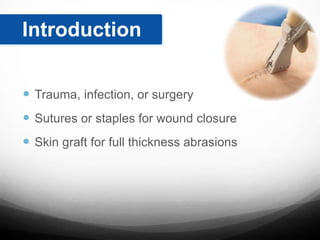
 Trauma, infection, or surgery
 Sutures or staples for wound closure
 Skin graft for full thickness abrasions
Introduction
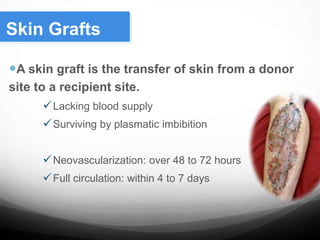
A skin graft is the transfer of skin from a donor
site to a recipient site.
Lacking blood supply
Surviving by plasmatic imbibition
Neovascularization: over 48 to 72 hours
Full circulation: within 4 to 7 days
Skin Grafts
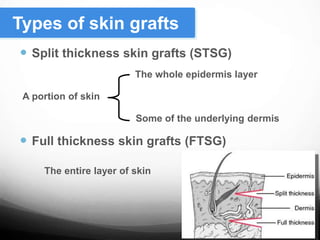
Types of skin grafts
 Split thickness skin grafts (STSG)
 Full thickness skin grafts (FTSG)
Some of the underlying dermis
The whole epidermis layer
A portion of skin
The entire layer of skin
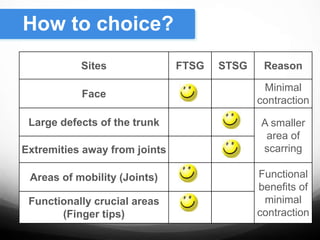
How to choice?
Sites FTSG STSG Reason
Face
Minimal
contraction
Large defects of the trunk A smaller
area of
scarring
Extremities away from joints
Areas of mobility (Joints) Functional
benefits of
minimal
contraction
Functionally crucial areas
(Finger tips)
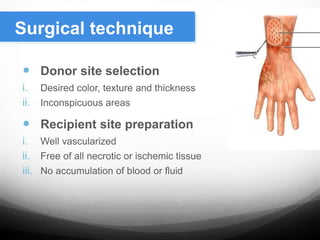
 Donor site selection
i. Desired color, texture and thickness
ii. Inconspicuous areas
 Recipient site preparation
i. Well vascularized
ii. Free of all necrotic or ischemic tissue
iii. No accumulation of blood or fluid
Surgical technique
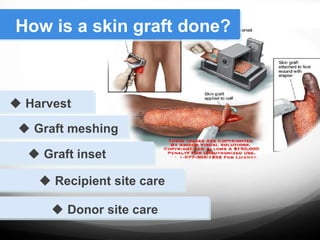
How is a skin graft done?
 Harvest
 Graft meshing
 Graft inset
 Recipient site care
 Donor site care
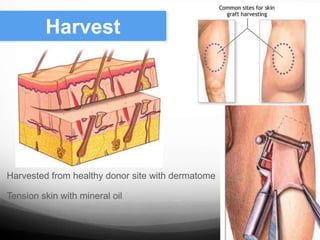
 Harvested from healthy donor site with dermatome
 Tension skin with mineral oil
Harvest
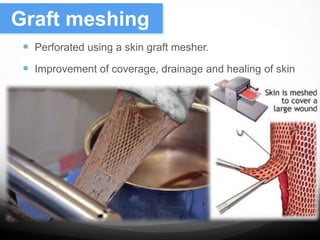
 Perforated using a skin graft mesher.
 Improvement of coverage, drainage and healing of skin
Graft meshing
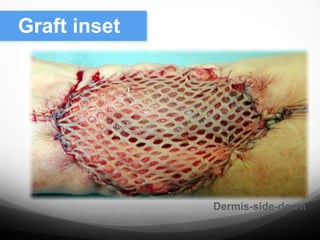
Graft inset
Dermis-side-down
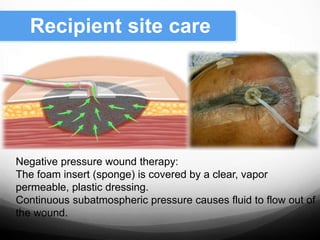
Negative pressure wound therapy:
The foam insert (sponge) is covered by a clear, vapor
permeable, plastic dressing.
Continuous subatmospheric pressure causes fluid to flow out of
the wound.
Recipient site care
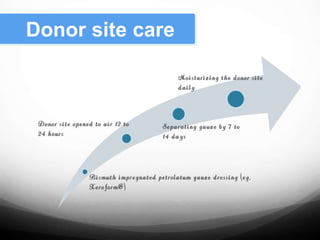
Donor site care
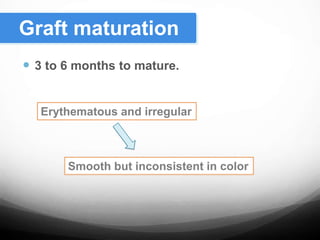
 3 to 6 months to mature.
Graft maturation
Smooth but inconsistent in color
Erythematous and irregular
 Graft movement
 Comorbidities:
diabetes, smoking, protein or vitamin deficiencies.
 Infection:
Methicillin-resistant coagulase-positive
staphylococci (MRSA), β-hemolytic
streptococcus, or pseudomonas
Graft failure
 The routine use of grafts improve outcomes and quality
of life for trauma patients, burn patients, and cancer
patients
 A skin graft is a transfer of skin from the donor site to
the recipient site without the benefit of any blood
supply.
 STSG transfer a portion of the donor site skin layer
including the epidermis and some of the underlying
dermis.
 FTSG harvest the entire layer of skin as the graft.
 Proper preparation of the recipient site is crucial.
Pearls
References
1. Ratner D. Skin grafting. Semin Cutan Med Surg 2003; 22:295.
2. Ogawa R, Hyakusoku H, Ono S. Useful tips for successful skin grafting. J Nippon
Med Sch 2007; 74:386.
3. Harrison CA, MacNeil S. The mechanism of skin graft contraction: an update on
current research and potential future therapies. Burns 2008; 34:153.
4. Dirschl DR, Wilson FC. Topical antibiotic irrigation in the prophylaxis of operative
wound infections in orthopedic surgery. Orthop Clin North Am 1991; 22:419.
5. Ratner D. Skin grafting. From here to there. Dermatol Clin 1998; 16:75.
6. Housewright CD, Lenis A, Butler DF. Oscillating electric dermatome use for
harvesting split-thickness skin grafts. Dermatol Surg 2010; 36:1179.
7. Currie LJ, Sharpe JR, Martin R. The use of fibrin glue in skin grafts and tissue-
engineered skin replacements: a review. Plast Reconstr Surg 2001; 108:1713.
recalcitrant lower extremity ulcers. Dermatol Surg 2010; 36:453.
8. Scherer LA, Shiver S, Chang M, et al. The vacuum assisted closure device: a
method of securing skin grafts and improving graft survival. Arch Surg 2002; 137:930.
The end
Thank you for your attention

Skinn grafting1

  • 1.
  • 2.
     Trauma, infection,or surgery  Sutures or staples for wound closure  Skin graft for full thickness abrasions Introduction
  • 3.
    A skin graftis the transfer of skin from a donor site to a recipient site. Lacking blood supply Surviving by plasmatic imbibition Neovascularization: over 48 to 72 hours Full circulation: within 4 to 7 days Skin Grafts
  • 4.
    Types of skingrafts  Split thickness skin grafts (STSG)  Full thickness skin grafts (FTSG) Some of the underlying dermis The whole epidermis layer A portion of skin The entire layer of skin
  • 5.
    How to choice? SitesFTSG STSG Reason Face Minimal contraction Large defects of the trunk A smaller area of scarring Extremities away from joints Areas of mobility (Joints) Functional benefits of minimal contraction Functionally crucial areas (Finger tips)
  • 6.
     Donor siteselection i. Desired color, texture and thickness ii. Inconspicuous areas  Recipient site preparation i. Well vascularized ii. Free of all necrotic or ischemic tissue iii. No accumulation of blood or fluid Surgical technique
  • 7.
    How is askin graft done?  Harvest  Graft meshing  Graft inset  Recipient site care  Donor site care
  • 8.
     Harvested fromhealthy donor site with dermatome  Tension skin with mineral oil Harvest
  • 9.
     Perforated usinga skin graft mesher.  Improvement of coverage, drainage and healing of skin Graft meshing
  • 10.
  • 11.
    Negative pressure woundtherapy: The foam insert (sponge) is covered by a clear, vapor permeable, plastic dressing. Continuous subatmospheric pressure causes fluid to flow out of the wound. Recipient site care
  • 12.
  • 13.
     3 to6 months to mature. Graft maturation Smooth but inconsistent in color Erythematous and irregular
  • 14.
     Graft movement Comorbidities: diabetes, smoking, protein or vitamin deficiencies.  Infection: Methicillin-resistant coagulase-positive staphylococci (MRSA), β-hemolytic streptococcus, or pseudomonas Graft failure
  • 15.
     The routineuse of grafts improve outcomes and quality of life for trauma patients, burn patients, and cancer patients  A skin graft is a transfer of skin from the donor site to the recipient site without the benefit of any blood supply.  STSG transfer a portion of the donor site skin layer including the epidermis and some of the underlying dermis.  FTSG harvest the entire layer of skin as the graft.  Proper preparation of the recipient site is crucial. Pearls
  • 16.
    References 1. Ratner D.Skin grafting. Semin Cutan Med Surg 2003; 22:295. 2. Ogawa R, Hyakusoku H, Ono S. Useful tips for successful skin grafting. J Nippon Med Sch 2007; 74:386. 3. Harrison CA, MacNeil S. The mechanism of skin graft contraction: an update on current research and potential future therapies. Burns 2008; 34:153. 4. Dirschl DR, Wilson FC. Topical antibiotic irrigation in the prophylaxis of operative wound infections in orthopedic surgery. Orthop Clin North Am 1991; 22:419. 5. Ratner D. Skin grafting. From here to there. Dermatol Clin 1998; 16:75. 6. Housewright CD, Lenis A, Butler DF. Oscillating electric dermatome use for harvesting split-thickness skin grafts. Dermatol Surg 2010; 36:1179. 7. Currie LJ, Sharpe JR, Martin R. The use of fibrin glue in skin grafts and tissue- engineered skin replacements: a review. Plast Reconstr Surg 2001; 108:1713. recalcitrant lower extremity ulcers. Dermatol Surg 2010; 36:453. 8. Scherer LA, Shiver S, Chang M, et al. The vacuum assisted closure device: a method of securing skin grafts and improving graft survival. Arch Surg 2002; 137:930.
  • 17.
    The end Thank youfor your attention