Head elevated positions in surgery
- RIYA SANJAY BAGHELE
- NAGPUR.
HEAD ELEVATED POSITIONS
 In a head elevated position, the patients head is
elevated above the level of the heart to improve
drainage of blood and cerebrospinal fluid away
from the surgical site. Elevating the head
decreases bleeding In the surgical field, reduces
intracranial pressure and facilities visual and
instrumental access for the surgeon.
VARIATIONS AND EXAMPLE OF HEAD
ELEVATED POSITION
 Variations in head elevated position includes the
following:-
1. Sitting position
2. Low sitting position
3. Head elevated prone position
4. Head elevated supine position
LOW SITTING POSITION
 The low sitting position is used for neck dissection or dental
procedures.
 In most version if the low sitting position, the torso is placed
in the midline of the operating table and the back section of
the tabletop I’d elevated only about half the amount needed
for the standard sitting position.
 A variant of the low sitting position, the reclining shoulder
position, is intended for the procedures involving the shoulder
LOW SITTING POSITION
 In this position, the torso I’d moved
laterally until much of the operative
shoulder is off the edge of the table.
 By placing a pad under the shoulder and
back the shoulder is rotated and lifted
off the table surface, exposing much of
its lateral surface fir surgical
preparation and access.
Low sitting position
SITTING POSITION
 The sitting position, is the most frequently used
head- elevated position, is used almost
exclusively by neurosurgeons for posterior
cranienctomies and procedures on the upper
cervical spine.
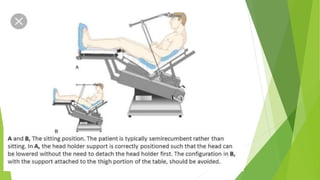
 In the conventional neurosurgical sitting position,
the legs are at approximately the level of thr the
heart and gently flexed on the thighs and the
feet are supported at right angles to the legs.
SITTING POSITION
 Subgluteal padding protects the sciatic nerve.
 The frame of the head holder I’d properly
clamped to the side rails of the back section of
the table.
 In the event of hemodynamically significant air
embolism, the patient’s head can be lowered
simply and rapidly by lowering the back section of
the table.
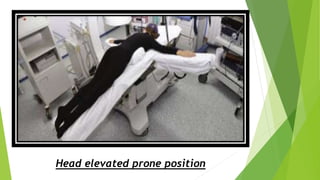
HEAD ELEVATED PRONE
POSITION
 The head elevated prone (concorde) Position is used for
neurosurgical procedures, particularly on the posterior
fossa.
 To aid venous drainage from the surgical site, the head
is usually elevated to some degree above the heart.
 Parallel chest rolls allow better respiratory excursions
and ventilation.
 Supporting the head with a three-pin head holder frees
the face and eyes from pressure.
Head elevated prone position
 Straps at the caudal edge of the buttocks
prevent the patient from sliding toward the foot
of the bed.
 The knees are flexed slightly by placing a pillow
beneath the lower legs.
 Because the head is elevated to a lesser extent
above the heart than in the standard sitting
position, the concorede position has a lower risk
of air embolism.
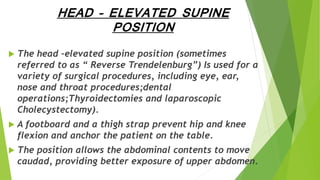
HEAD – ELEVATED SUPINE
POSITION
 The head –elevated supine position (sometimes
referred to as “ Reverse Trendelenburg”) Is used for a
variety of surgical procedures, including eye, ear,
nose and throat procedures;dental
operations;Thyroidectomies and laparoscopic
Cholecystectomy).
 A footboard and a thigh strap prevent hip and knee
flexion and anchor the patient on the table.
 The position allows the abdominal contents to move
caudad, providing better exposure of upper abdomen.
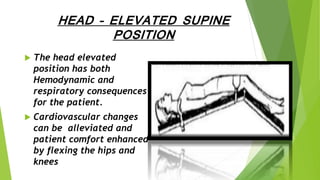
HEAD – ELEVATED SUPINE
POSITION
 The head elevated
position has both
Hemodynamic and
respiratory consequences
for the patient.
 Cardiovascular changes
can be alleviated and
patient comfort enhanced
by flexing the hips and
knees
Head elevated position

Head elevated position

  • 1.
    Head elevated positionsin surgery - RIYA SANJAY BAGHELE - NAGPUR.
  • 2.
    HEAD ELEVATED POSITIONS In a head elevated position, the patients head is elevated above the level of the heart to improve drainage of blood and cerebrospinal fluid away from the surgical site. Elevating the head decreases bleeding In the surgical field, reduces intracranial pressure and facilities visual and instrumental access for the surgeon.
  • 3.
    VARIATIONS AND EXAMPLEOF HEAD ELEVATED POSITION  Variations in head elevated position includes the following:- 1. Sitting position 2. Low sitting position 3. Head elevated prone position 4. Head elevated supine position
  • 4.
    LOW SITTING POSITION The low sitting position is used for neck dissection or dental procedures.  In most version if the low sitting position, the torso is placed in the midline of the operating table and the back section of the tabletop I’d elevated only about half the amount needed for the standard sitting position.  A variant of the low sitting position, the reclining shoulder position, is intended for the procedures involving the shoulder
  • 5.
    LOW SITTING POSITION In this position, the torso I’d moved laterally until much of the operative shoulder is off the edge of the table.  By placing a pad under the shoulder and back the shoulder is rotated and lifted off the table surface, exposing much of its lateral surface fir surgical preparation and access.
  • 6.
  • 7.
    SITTING POSITION  Thesitting position, is the most frequently used head- elevated position, is used almost exclusively by neurosurgeons for posterior cranienctomies and procedures on the upper cervical spine.  In the conventional neurosurgical sitting position, the legs are at approximately the level of thr the heart and gently flexed on the thighs and the feet are supported at right angles to the legs.
  • 8.
    SITTING POSITION  Subglutealpadding protects the sciatic nerve.  The frame of the head holder I’d properly clamped to the side rails of the back section of the table.  In the event of hemodynamically significant air embolism, the patient’s head can be lowered simply and rapidly by lowering the back section of the table.
  • 10.
    HEAD ELEVATED PRONE POSITION The head elevated prone (concorde) Position is used for neurosurgical procedures, particularly on the posterior fossa.  To aid venous drainage from the surgical site, the head is usually elevated to some degree above the heart.  Parallel chest rolls allow better respiratory excursions and ventilation.  Supporting the head with a three-pin head holder frees the face and eyes from pressure.
  • 11.
  • 12.
    Head elevated proneposition  Straps at the caudal edge of the buttocks prevent the patient from sliding toward the foot of the bed.  The knees are flexed slightly by placing a pillow beneath the lower legs.  Because the head is elevated to a lesser extent above the heart than in the standard sitting position, the concorede position has a lower risk of air embolism.
  • 13.
    HEAD – ELEVATEDSUPINE POSITION  The head –elevated supine position (sometimes referred to as “ Reverse Trendelenburg”) Is used for a variety of surgical procedures, including eye, ear, nose and throat procedures;dental operations;Thyroidectomies and laparoscopic Cholecystectomy).  A footboard and a thigh strap prevent hip and knee flexion and anchor the patient on the table.  The position allows the abdominal contents to move caudad, providing better exposure of upper abdomen.
  • 14.
    HEAD – ELEVATEDSUPINE POSITION  The head elevated position has both Hemodynamic and respiratory consequences for the patient.  Cardiovascular changes can be alleviated and patient comfort enhanced by flexing the hips and knees