+
SUNSCREEN
Laura Bishop, M.D.
University of Louisville Pediatrics
July 2013
+
UV Light
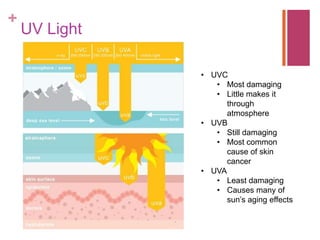
• UVC
• Most damaging
• Little makes it
through
atmosphere
• UVB
• Still damaging
• Most common
cause of skin
cancer
• UVA
• Least damaging
• Causes many of
sun’s aging effects
+
Sun Avoidance
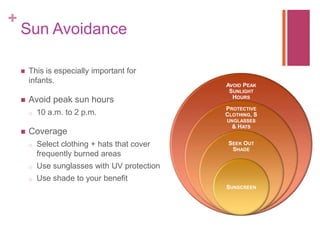
 This is especially important for
infants.
 Avoid peak sun hours
o 10 a.m. to 2 p.m.
 Coverage
o Select clothing + hats that cover
frequently burned areas
o Use sunglasses with UV protection
o Use shade to your benefit
AVOID PEAK
SUNLIGHT
HOURS
PROTECTIVE
CLOTHING, S
UNGLASSES
& HATS
SEEK OUT
SHADE
SUNSCREEN
+
SPF
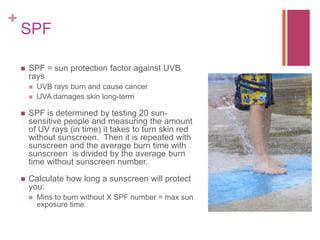
 SPF = sun protection factor against UVB
rays
 UVB rays burn and cause cancer
 UVA damages skin long-term
 SPF is determined by testing 20 sun-
sensitive people and measuring the amount
of UV rays (in time) it takes to turn skin red
without sunscreen. Then it is repeated with
sunscreen and the average burn time with
sunscreen is divided by the average burn
time without sunscreen number.
 Calculate how long a sunscreen will protect
you:
 Mins to burn without X SPF number = max sun
exposure time.
+
Sunscreen
SPF
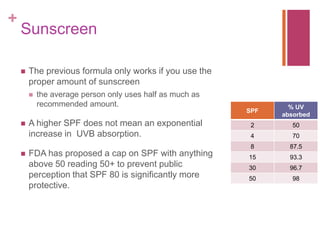
% UV
absorbed
2 50
4 70
8 87.5
15 93.3
30 96.7
50 98
 The previous formula only works if you use the
proper amount of sunscreen
 the average person only uses half as much as
recommended amount.
 A higher SPF does not mean an exponential
increase in UVB absorption.
 FDA has proposed a cap on SPF with anything
above 50 reading 50+ to prevent public
perception that SPF 80 is significantly more
protective.
+
Sunscreen: What to Buy
 Type of Sunscreen
 Physical (inorganic)
 previously called sunblock, often contains zinc
 Newer formulations are invisible
 Chemical – standard sunscreen
 SPF
o At least SPF 15
o But not much benefit over SPF 50
 Broad Spectrum
 Waterproof
o DOES NOT EXIST!
o Water resistant lasts either 40 or 80 minutes
without reapplication.
+
Sunscreen: 2011 FDA Changes
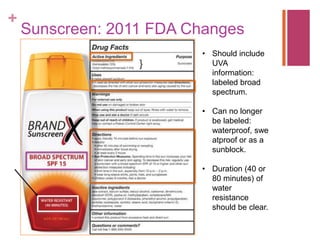
• Should include
UVA
information:
labeled broad
spectrum.
• Can no longer
be labeled:
waterproof, swe
atproof or as a
sunblock.
• Duration (40 or
80 minutes) of
water
resistance
should be clear.
+
Sunscreen: How to apply
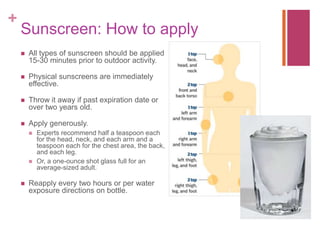
 All types of sunscreen should be applied
15-30 minutes prior to outdoor activity.
 Physical sunscreens are immediately
effective.
 Throw it away if past expiration date or
over two years old.
 Apply generously.
 Experts recommend half a teaspoon each
for the head, neck, and each arm and a
teaspoon each for the chest area, the back,
and each leg.
 Or, a one-ounce shot glass full for an
average-sized adult.
 Reapply every two hours or per water
exposure directions on bottle.
+
Don’t miss a spot!
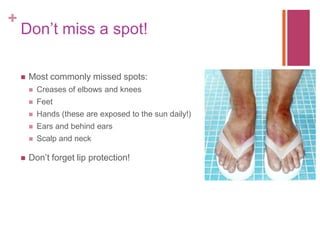
 Most commonly missed spots:
 Creases of elbows and knees
 Feet
 Hands (these are exposed to the sun daily!)
 Ears and behind ears
 Scalp and neck
 Don’t forget lip protection!
+
Resources
 http://health.howstuffworks.com/skin-care/beauty/sun-care/spf.htm
 http://healthguide.howstuffworks.com/melanoma-and-other-skin-
cancers-in-depth5.htm
 FDA, “Understanding Sunscreen.”
http://www.fda.gov/Drugs/ResourcesForYou/Consumers/BuyingUsi
ngMedicineSafely/UnderstandingOver-the-
CounterMedicines/ucm258468.htm
 http://www.aap.org/advocacy/releases/summertips.cfm
http://www.healthychildren.org/English/news/Pages/Summer-Safety-
Tips-Sun-and-Water-Safety.aspx

Sunscreen

  • 1.
    + SUNSCREEN Laura Bishop, M.D. Universityof Louisville Pediatrics July 2013
  • 2.
    + UV Light • UVC •Most damaging • Little makes it through atmosphere • UVB • Still damaging • Most common cause of skin cancer • UVA • Least damaging • Causes many of sun’s aging effects
  • 3.
    + Sun Avoidance  Thisis especially important for infants.  Avoid peak sun hours o 10 a.m. to 2 p.m.  Coverage o Select clothing + hats that cover frequently burned areas o Use sunglasses with UV protection o Use shade to your benefit AVOID PEAK SUNLIGHT HOURS PROTECTIVE CLOTHING, S UNGLASSES & HATS SEEK OUT SHADE SUNSCREEN
  • 4.
    + SPF  SPF =sun protection factor against UVB rays  UVB rays burn and cause cancer  UVA damages skin long-term  SPF is determined by testing 20 sun- sensitive people and measuring the amount of UV rays (in time) it takes to turn skin red without sunscreen. Then it is repeated with sunscreen and the average burn time with sunscreen is divided by the average burn time without sunscreen number.  Calculate how long a sunscreen will protect you:  Mins to burn without X SPF number = max sun exposure time.
  • 5.
    + Sunscreen SPF % UV absorbed 2 50 470 8 87.5 15 93.3 30 96.7 50 98  The previous formula only works if you use the proper amount of sunscreen  the average person only uses half as much as recommended amount.  A higher SPF does not mean an exponential increase in UVB absorption.  FDA has proposed a cap on SPF with anything above 50 reading 50+ to prevent public perception that SPF 80 is significantly more protective.
  • 6.
    + Sunscreen: What toBuy  Type of Sunscreen  Physical (inorganic)  previously called sunblock, often contains zinc  Newer formulations are invisible  Chemical – standard sunscreen  SPF o At least SPF 15 o But not much benefit over SPF 50  Broad Spectrum  Waterproof o DOES NOT EXIST! o Water resistant lasts either 40 or 80 minutes without reapplication.
  • 7.
    + Sunscreen: 2011 FDAChanges • Should include UVA information: labeled broad spectrum. • Can no longer be labeled: waterproof, swe atproof or as a sunblock. • Duration (40 or 80 minutes) of water resistance should be clear.
  • 8.
    + Sunscreen: How toapply  All types of sunscreen should be applied 15-30 minutes prior to outdoor activity.  Physical sunscreens are immediately effective.  Throw it away if past expiration date or over two years old.  Apply generously.  Experts recommend half a teaspoon each for the head, neck, and each arm and a teaspoon each for the chest area, the back, and each leg.  Or, a one-ounce shot glass full for an average-sized adult.  Reapply every two hours or per water exposure directions on bottle.
  • 9.
    + Don’t miss aspot!  Most commonly missed spots:  Creases of elbows and knees  Feet  Hands (these are exposed to the sun daily!)  Ears and behind ears  Scalp and neck  Don’t forget lip protection!
  • 10.
    + Resources  http://health.howstuffworks.com/skin-care/beauty/sun-care/spf.htm  http://healthguide.howstuffworks.com/melanoma-and-other-skin- cancers-in-depth5.htm FDA, “Understanding Sunscreen.” http://www.fda.gov/Drugs/ResourcesForYou/Consumers/BuyingUsi ngMedicineSafely/UnderstandingOver-the- CounterMedicines/ucm258468.htm  http://www.aap.org/advocacy/releases/summertips.cfm http://www.healthychildren.org/English/news/Pages/Summer-Safety- Tips-Sun-and-Water-Safety.aspx

Editor's Notes

  • #3 UVC - Most Damaging,Little makes it through atmosphereUVB -More damaging,Most common cause of skin cancerUVA-Least powerful,Present all year long, penetrates windows
  • #4 Clothes – they make UV protective water wear/ sports shirts. If you don’t have these, dark, tighter weaves offer more protection than a thin white t-shirt. Wet clothes allow more UV lights in. Sunglassess will state that they have UVA/B protection tp to 98-99% - make sure they are large enough to cover your chidl’s eyes.Shade does not protect from UV rays, but it can help. Clear window glass protects from UVB/C rays but not UVA. If you are driving for extended periods of time, consider purchasing a window shade to protect your child.
  • #7 What to look for: There are chemical (most sunscreens) and physical (zinc oxide – white noses) – newer applications are invisible after application. This is best of very pale kids that burn easily or areas like noses and ears that are susceptible to burns.SPF rates the UVB protection based on how long it takes a standard person to burn
  • #10 2008 SEER study in Arch. Derm (Surveillance, Epidemiology and End Results)