GROUP
FORMATION
By
Sunil Sunny
2nd
MBA
• According to Stephen Robbins
“ A group may be defined as two or more individuals,
interacting and interdependent, who have come together to
achieve a particular objective.
GROUP
Characteristics of a Group
• Social Interaction
• Stable Structure
• Common Interest
• Perceive Themselves As Part Of Group
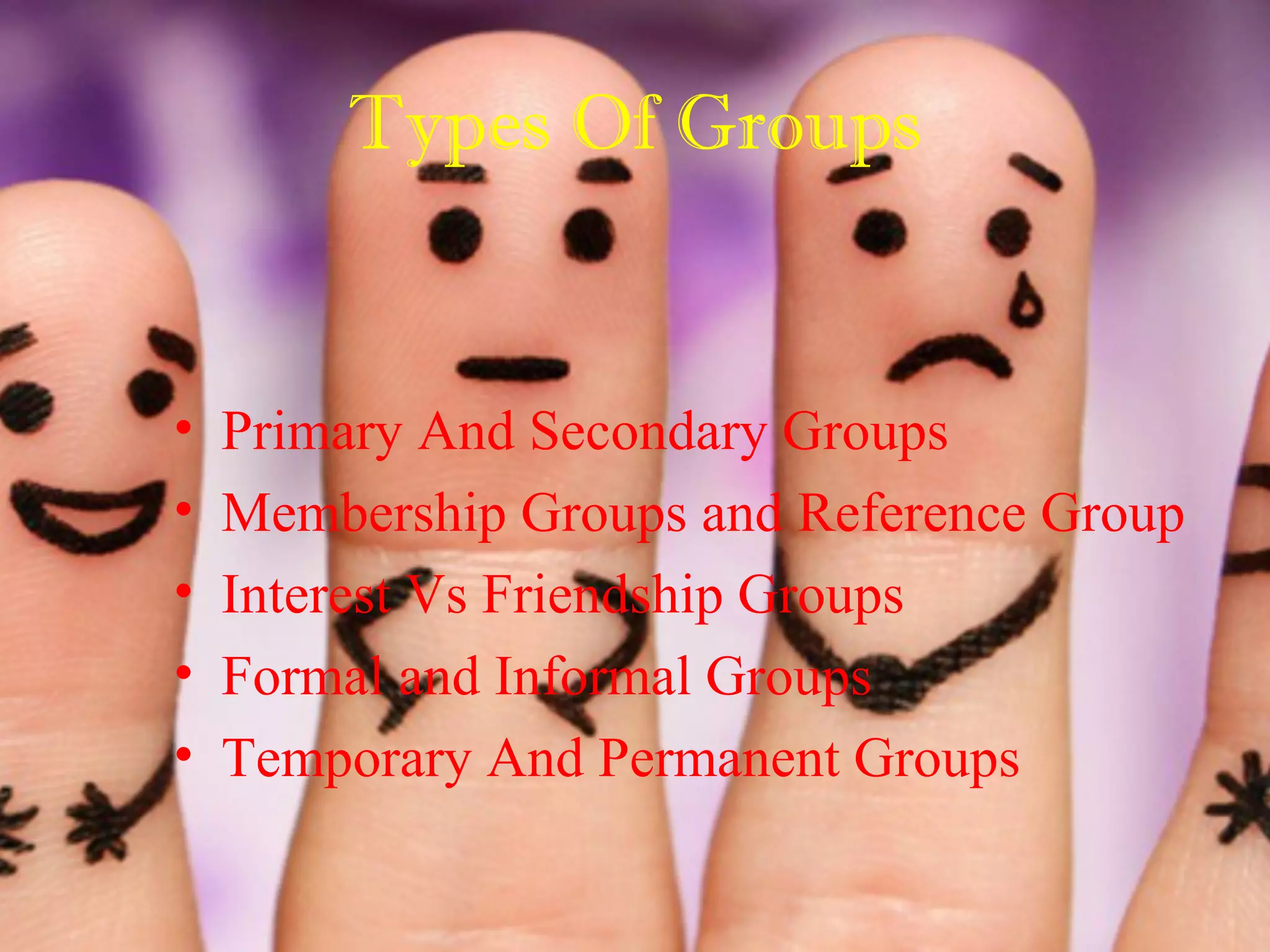
Types Of Groups
• Primary And Secondary Groups
• Membership Groups and Reference Group
• Interest Vs Friendship Groups
• Formal and Informal Groups
• Temporary And Permanent Groups
Stages Of Group Formation
• Forming
• Storming
• Norming
• Performing
• Adjourning
Forming
• Strong dependence on leader
• A great uncertainty
• Simple Ideas
• Avoidance of serious topics
• Minimum feedback
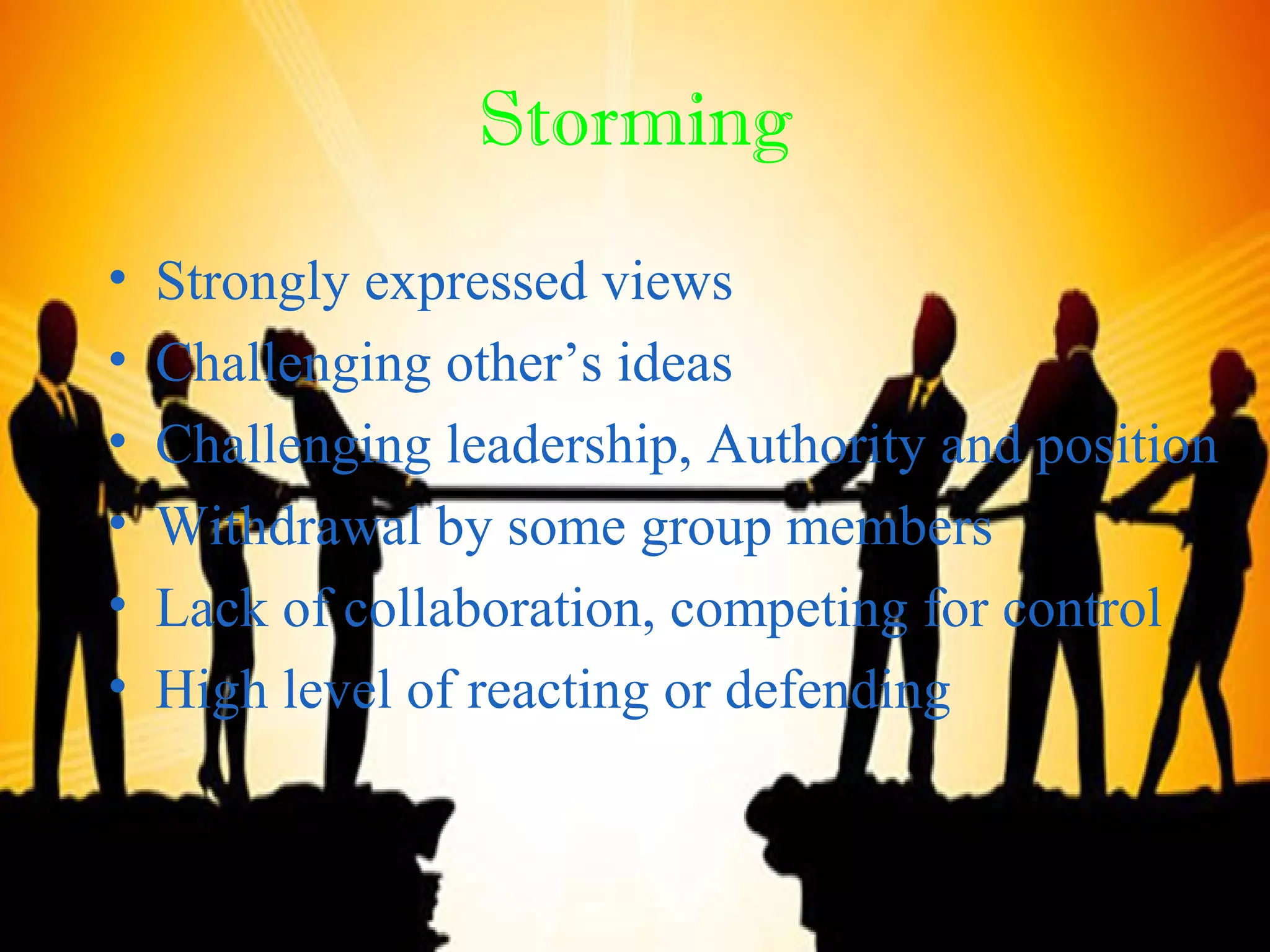
Storming
• Strongly expressed views
• Challenging other’s ideas
• Challenging leadership, Authority and position
• Withdrawal by some group members
• Lack of collaboration, competing for control
• High level of reacting or defending
Norming
• Active listening
• Shared leadership
• Methodical systematic ways of working
• Receptiveness to other’s ideas
• Active participation by all
• Conflict seen as mutual problems
• Open exchange of ideas
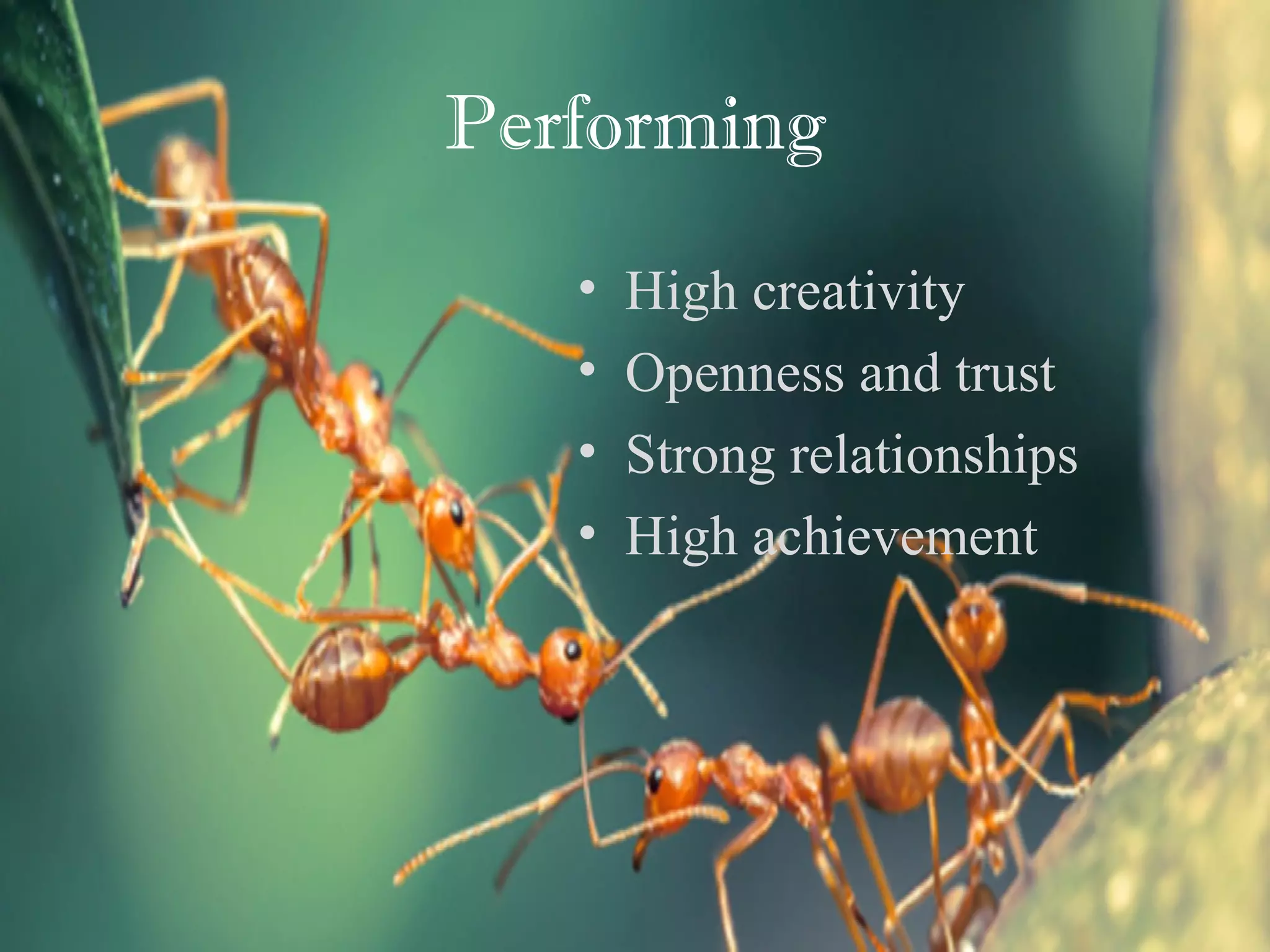
Performing
• High creativity
• Openness and trust
• Strong relationships
• High achievement
Adjourning
• Adjourning, is the break-up of the group,
hopefully when their task is completed
successfully, their purpose full filled
• Recognition of and sensitivity to peoples
vulnerabilities is helpful.
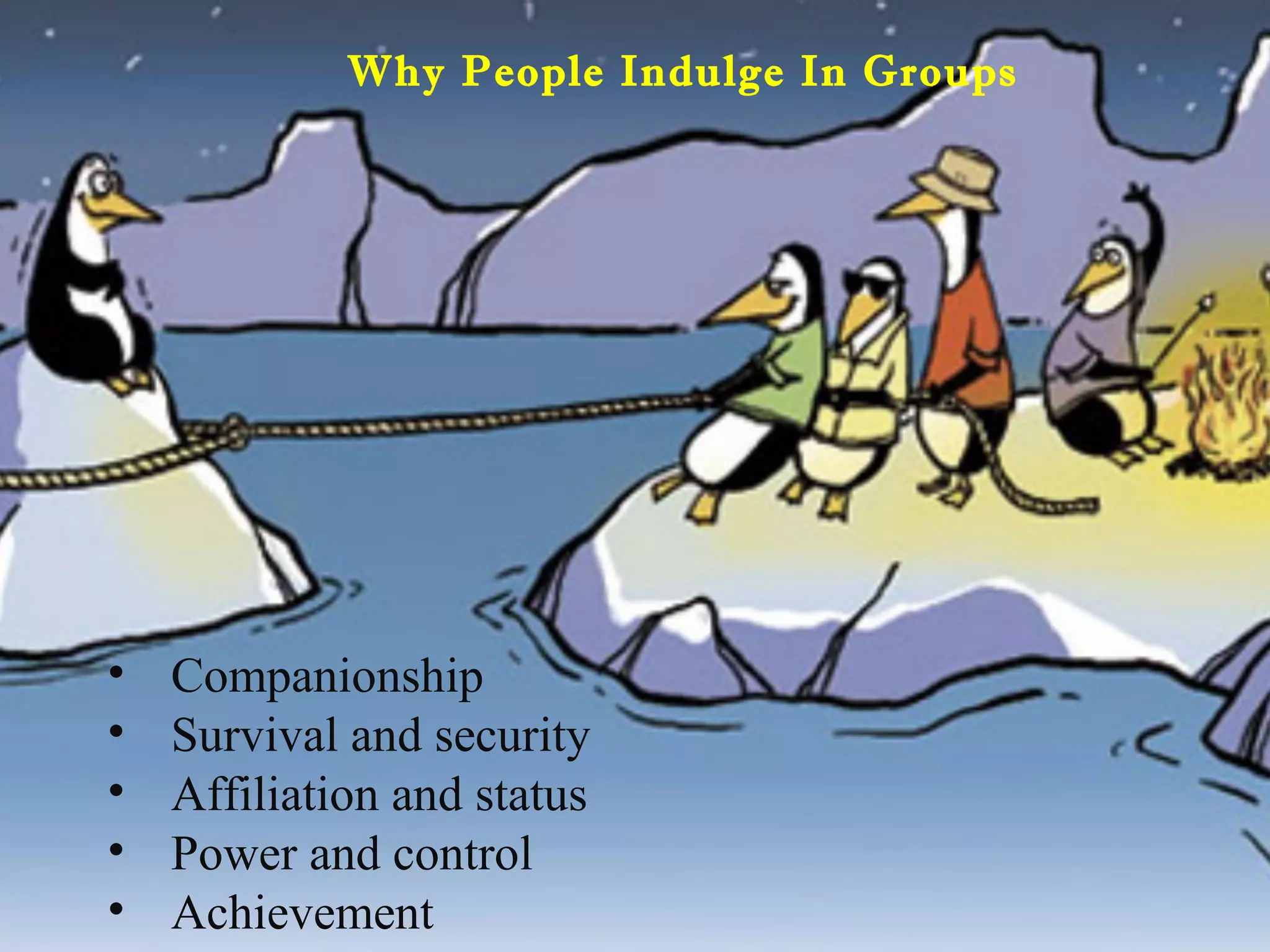
Why People Indulge In Groups
• Companionship
• Survival and security
• Affiliation and status
• Power and control
• Achievement
HS

Group Formation

  • 1.
  • 2.
    • According toStephen Robbins “ A group may be defined as two or more individuals, interacting and interdependent, who have come together to achieve a particular objective. GROUP
  • 3.
    Characteristics of aGroup • Social Interaction • Stable Structure • Common Interest • Perceive Themselves As Part Of Group
  • 4.
    Types Of Groups •Primary And Secondary Groups • Membership Groups and Reference Group • Interest Vs Friendship Groups • Formal and Informal Groups • Temporary And Permanent Groups
  • 5.
    Stages Of GroupFormation • Forming • Storming • Norming • Performing • Adjourning
  • 6.
    Forming • Strong dependenceon leader • A great uncertainty • Simple Ideas • Avoidance of serious topics • Minimum feedback
  • 7.
    Storming • Strongly expressedviews • Challenging other’s ideas • Challenging leadership, Authority and position • Withdrawal by some group members • Lack of collaboration, competing for control • High level of reacting or defending
  • 8.
    Norming • Active listening •Shared leadership • Methodical systematic ways of working • Receptiveness to other’s ideas • Active participation by all • Conflict seen as mutual problems • Open exchange of ideas
  • 9.
    Performing • High creativity •Openness and trust • Strong relationships • High achievement
  • 10.
    Adjourning • Adjourning, isthe break-up of the group, hopefully when their task is completed successfully, their purpose full filled • Recognition of and sensitivity to peoples vulnerabilities is helpful.
  • 11.
    Why People IndulgeIn Groups • Companionship • Survival and security • Affiliation and status • Power and control • Achievement
  • 12.