sultanate architecture
“He who holds Delhi, holds India”
Mamluks
*
Khaljis
*
Tughlaqs
*
Sayyids
*
Lodis

(1191-1290 A.D.)
(1290-1320 A.D.)
(1320-1413 A.D.)
(1414-1451 A.D.)
(1451-1526 A.D.)
Mamluks
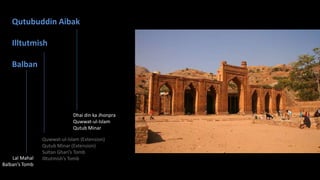
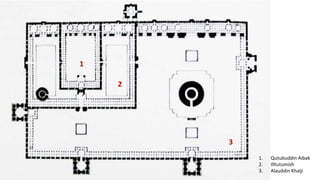
Qutubuddin Aibak

Illtutmish
Balban

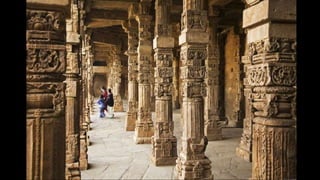
Dhai din ka Jhonpra
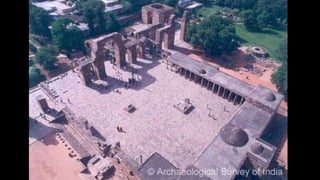
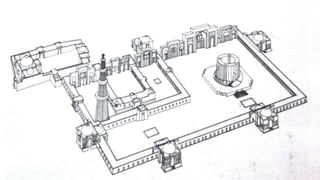
Quwwat-ul-Islam
Qutub Minar

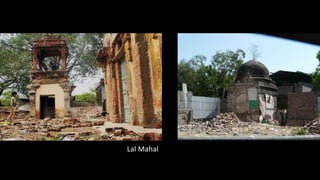
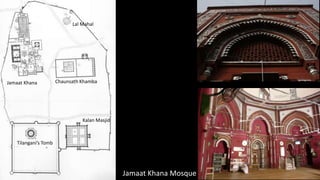
Lal Mahal
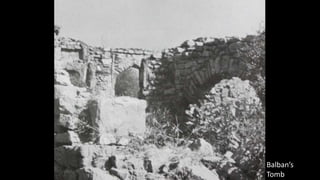
Balban’s Tomb

Quwwat-ul-Islam (Extension)
Qutub Minar (Extension)
Sultan Ghari’s Tomb
Illtutmish’s Tomb
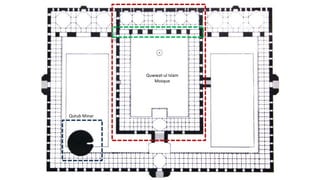
Quwwat-ul Islam
Mosque

Qutub Minar
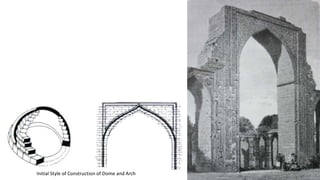
Initial Style of Construction of Dome and Arch
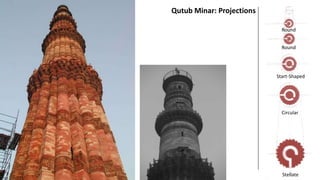
Qutub Minar: Projections
Round
Round

Start-Shaped

Circular

Stellate
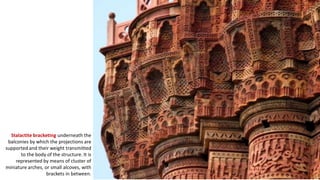
Stalactite bracketing underneath the
balconies by which the projections are
supported and their weight transmitted
to the body of the structure. It is
represented by means of cluster of
miniature arches, or small alcoves, with
brackets in between.
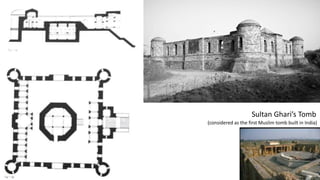
Sultan Ghari’s Tomb
(considered as the first Muslim tomb built in India)
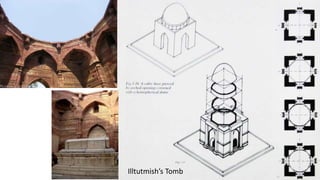
Illtutmish’s Tomb
Lal Mahal
Balban’s
Tomb
Khaljis
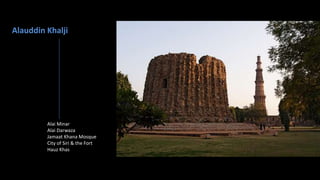
Alauddin Khalji

Alai Minar
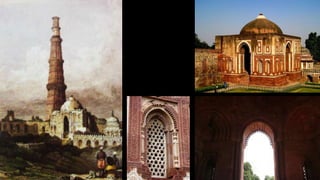
Alai Darwaza
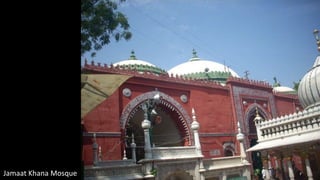
Jamaat Khana Mosque
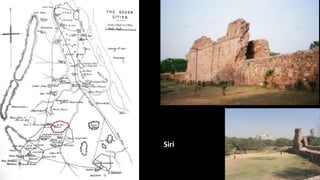
City of Siri & the Fort
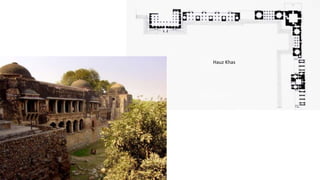
Hauz Khas
1

2

3
1.
2.
3.

Qutubuddin Aibak
Illtutumish
Alauddin Khalji
Jamaat Khana Mosque
Lal Mahal

Jamaat Khana

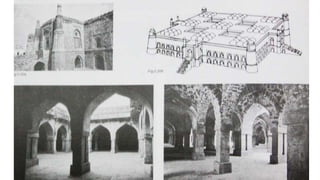
Chaunsath Khamba

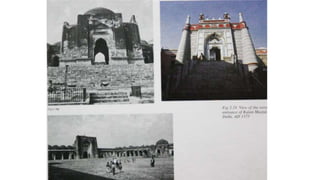
Kalan Masjid

Tilangani’s Tomb

Jamaat Khana Mosque
Siri
Hauz Khas
Tughlaqs
Ghiyasud-din Tughlaq

Mohammed bin
Tughlaq
Firoz
Shah
Tughlaq
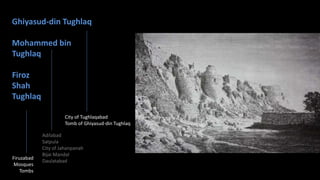
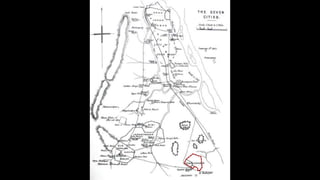
City of Tughlaqabad
Tomb of Ghiyasud-din Tughlaq

Firuzabad
Mosques
Tombs

Adilabad
Satpula
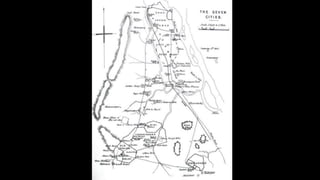
City of Jahanpanah
Bijai Mandal
Daulatabad
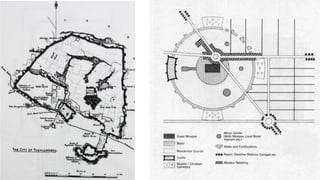
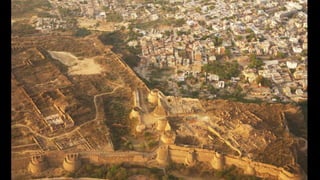
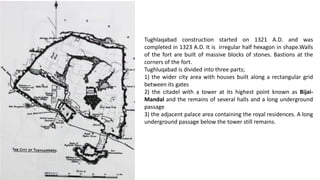
Tughlaqabad construction started on 1321 A.D. and was
completed in 1323 A.D. It is irregular half hexagon in shape.Walls
of the fort are built of massive blocks of stones. Bastions at the
corners of the fort.
Tughluqabad is divided into three parts;
1) the wider city area with houses built along a rectangular grid
between its gates
2) the citadel with a tower at its highest point known as BijaiMandal and the remains of several halls and a long underground
passage
3) the adjacent palace area containing the royal residences. A long
underground passage below the tower still remains.
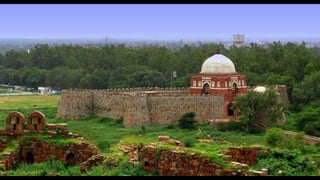
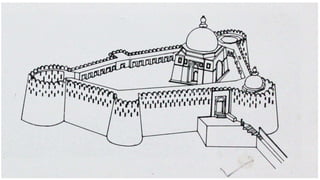
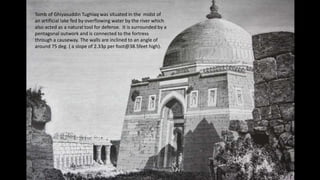
Tomb of Ghiyasuddin Tughlaq was situated in the midst of
an artificial lake fed by overflowing water by the river which
also acted as a natural tool for defense. It is surrounded by a
pentagonal outwork and is connected to the fortress
through a causeway. The walls are inclined to an angle of
around 75 deg. ( a slope of 2.33p per foot@38.5feet high).
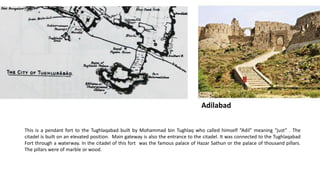
Adilabad
This is a pendant fort to the Tughlaqabad built by Mohammad bin Tughlaq who called himself “Adil” meaning “just” . The
citadel is built on an elevated position. Main gateway is also the entrance to the citadel. It was connected to the Tughlaqabad
Fort through a waterway. In the citadel of this fort was the famous palace of Hazar Sathun or the palace of thousand pillars.
The pillars were of marble or wood.
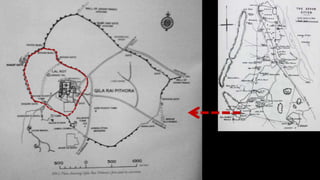
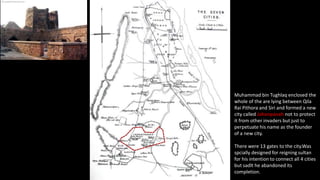
Muhammad bin Tughlaq enclosed the
whole of the are lying between Qila
Rai Pithora and Siri and formed a new
city called Jahanpanah not to protect
it from other invaders but just to
perpetuate his name as the founder
of a new city.

There were 13 gates to the city.Was
spcially designed for reigning sultan
for his intention to connect all 4 cities
but sadlt he abandoned its
completion.
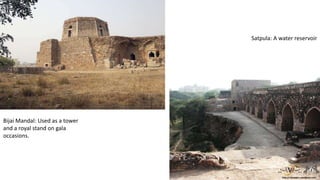
Satpula: A water reservoir

Bijai Mandal: Used as a tower
and a royal stand on gala
occasions.
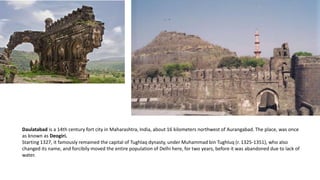
Daulatabad is a 14th century fort city in Maharashtra, India, about 16 kilometers northwest of Aurangabad. The place, was once
as known as Deogiri.
Starting 1327, it famously remained the capital of Tughlaq dynasty, under Muhammad bin Tughluq (r. 1325-1351), who also
changed its name, and forcibily moved the entire population of Delhi here, for two years, before it was abandoned due to lack of
water.
Firuzabad
Firuzabad

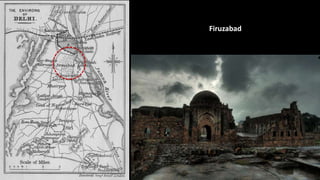
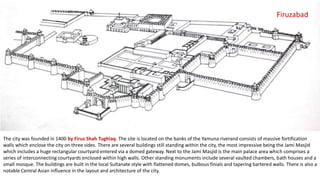
The city was founded in 1400 by Firuz Shah Tughlaq. The site is located on the banks of the Yamuna riverand consists of massive fortification
walls which enclose the city on three sides. There are several buildings still standing within the city, the most impressive being the Jami Masjid
which includes a huge rectangular courtyard entered via a domed gateway. Next to the Jami Masjid is the main palace area which comprises a
series of interconnecting courtyards enclosed within high walls. Other standing monuments include several vaulted chambers, bath houses and a
small mosque. The buildings are built in the local Sultanate style with flattened domes, bulbous finials and tapering bartered walls. There is also a
notable Central Asian influence in the layout and architecture of the city.
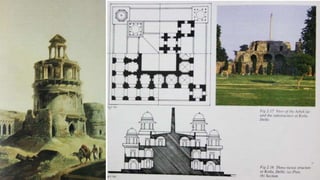
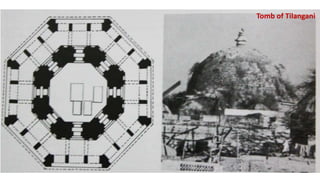
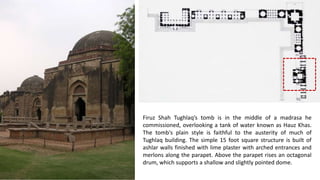
Tomb of Tilangani
Firuz Shah Tughlaq’s tomb is in the middle of a madrasa he
commissioned, overlooking a tank of water known as Hauz Khas.
The tomb's plain style is faithful to the austerity of much of
Tughlaq building. The simple 15 foot square structure is built of
ashlar walls finished with lime plaster with arched entrances and
merlons along the parapet. Above the parapet rises an octagonal
drum, which supports a shallow and slightly pointed dome.

Sultanate

  • 1.
  • 2.
    “He who holdsDelhi, holds India”
  • 3.
  • 6.
  • 7.
    Qutubuddin Aibak Illtutmish Balban Dhai dinka Jhonpra Quwwat-ul-Islam Qutub Minar Lal Mahal Balban’s Tomb Quwwat-ul-Islam (Extension) Qutub Minar (Extension) Sultan Ghari’s Tomb Illtutmish’s Tomb
  • 9.
  • 11.
    Initial Style ofConstruction of Dome and Arch
  • 12.
  • 13.
    Stalactite bracketing underneaththe balconies by which the projections are supported and their weight transmitted to the body of the structure. It is represented by means of cluster of miniature arches, or small alcoves, with brackets in between.
  • 14.
    Sultan Ghari’s Tomb (consideredas the first Muslim tomb built in India)
  • 15.
  • 17.
  • 18.
  • 19.
  • 20.
    Alauddin Khalji Alai Minar AlaiDarwaza Jamaat Khana Mosque City of Siri & the Fort Hauz Khas
  • 22.
  • 24.
  • 25.
    Lal Mahal Jamaat Khana ChaunsathKhamba Kalan Masjid Tilangani’s Tomb Jamaat Khana Mosque
  • 26.
  • 28.
  • 29.
  • 30.
    Ghiyasud-din Tughlaq Mohammed bin Tughlaq Firoz Shah Tughlaq Cityof Tughlaqabad Tomb of Ghiyasud-din Tughlaq Firuzabad Mosques Tombs Adilabad Satpula City of Jahanpanah Bijai Mandal Daulatabad
  • 35.
    Tughlaqabad construction startedon 1321 A.D. and was completed in 1323 A.D. It is irregular half hexagon in shape.Walls of the fort are built of massive blocks of stones. Bastions at the corners of the fort. Tughluqabad is divided into three parts; 1) the wider city area with houses built along a rectangular grid between its gates 2) the citadel with a tower at its highest point known as BijaiMandal and the remains of several halls and a long underground passage 3) the adjacent palace area containing the royal residences. A long underground passage below the tower still remains.
  • 38.
    Tomb of GhiyasuddinTughlaq was situated in the midst of an artificial lake fed by overflowing water by the river which also acted as a natural tool for defense. It is surrounded by a pentagonal outwork and is connected to the fortress through a causeway. The walls are inclined to an angle of around 75 deg. ( a slope of 2.33p per foot@38.5feet high).
  • 39.
    Adilabad This is apendant fort to the Tughlaqabad built by Mohammad bin Tughlaq who called himself “Adil” meaning “just” . The citadel is built on an elevated position. Main gateway is also the entrance to the citadel. It was connected to the Tughlaqabad Fort through a waterway. In the citadel of this fort was the famous palace of Hazar Sathun or the palace of thousand pillars. The pillars were of marble or wood.
  • 40.
    Muhammad bin Tughlaqenclosed the whole of the are lying between Qila Rai Pithora and Siri and formed a new city called Jahanpanah not to protect it from other invaders but just to perpetuate his name as the founder of a new city. There were 13 gates to the city.Was spcially designed for reigning sultan for his intention to connect all 4 cities but sadlt he abandoned its completion.
  • 41.
    Satpula: A waterreservoir Bijai Mandal: Used as a tower and a royal stand on gala occasions.
  • 42.
    Daulatabad is a14th century fort city in Maharashtra, India, about 16 kilometers northwest of Aurangabad. The place, was once as known as Deogiri. Starting 1327, it famously remained the capital of Tughlaq dynasty, under Muhammad bin Tughluq (r. 1325-1351), who also changed its name, and forcibily moved the entire population of Delhi here, for two years, before it was abandoned due to lack of water.
  • 43.
  • 44.
    Firuzabad The city wasfounded in 1400 by Firuz Shah Tughlaq. The site is located on the banks of the Yamuna riverand consists of massive fortification walls which enclose the city on three sides. There are several buildings still standing within the city, the most impressive being the Jami Masjid which includes a huge rectangular courtyard entered via a domed gateway. Next to the Jami Masjid is the main palace area which comprises a series of interconnecting courtyards enclosed within high walls. Other standing monuments include several vaulted chambers, bath houses and a small mosque. The buildings are built in the local Sultanate style with flattened domes, bulbous finials and tapering bartered walls. There is also a notable Central Asian influence in the layout and architecture of the city.
  • 46.
  • 49.
    Firuz Shah Tughlaq’stomb is in the middle of a madrasa he commissioned, overlooking a tank of water known as Hauz Khas. The tomb's plain style is faithful to the austerity of much of Tughlaq building. The simple 15 foot square structure is built of ashlar walls finished with lime plaster with arched entrances and merlons along the parapet. Above the parapet rises an octagonal drum, which supports a shallow and slightly pointed dome.