Biogeochemical
cycle
Sulfur cycle
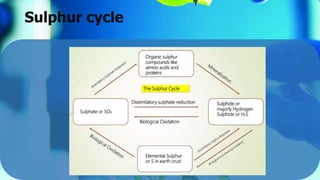
Sulphur cycle
Oxidative sulfur transformation
1. Oxidation of reduced S compounds.
2. Oxidation of elemental S and inorganic S compounds.
3. Oxidation of inorganic S compounds (using nitrate as electron
acceptors).
4. Oxidative production of strong mineral acid.
5. Phototrophic oxidation of H₂S.
Oxidative sulfur transformation
1. Oxidation of reduced S compounds.
In the presence of oxygen,
Reduced sulfur compounds (e.g. H₂S) are capable of
supporting chemolithotrophic microbial metabolism.
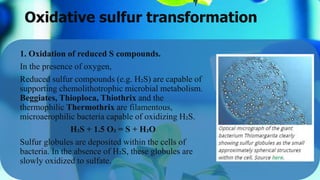
Beggiates, Thioploca, Thiothrix and the
thermophilic Thermothrix are filamentous,
microaerophilic bacteria capable of oxidizing H₂S.
H₂S + 1.5 O₂ = S + H₂O
Sulfur globules are deposited within the cells of
bacteria. In the absence of H₂S, these globules are
slowly oxidized to sulfate.
Oxidative sulfur transformation
2. Oxidation of elemental S and inorganic S compounds.
Some other members of the genus Thiobacillus species produce sulfate
from the oxidation of elemental sulfur and other inorganic sulfur
compounds.
S + 1.5 O2 + H2O = H2SO4
Most Thiobacillus species are obligate aerobes requiring oxygen for the
oxidation of inorganic sulfur compounds.
Oxidative sulfur transformation
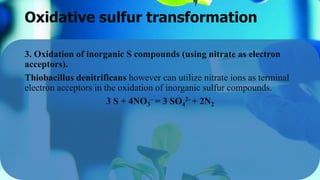
3. Oxidation of inorganic S compounds (using nitrate as electron
acceptors).
Thiobacillus denitrificans however can utilize nitrate ions as terminal
electron acceptors in the oxidation of inorganic sulfur compounds.
3 S + 4NO3
– = 3 SO4
2- + 2N2
Oxidative sulfur transformation
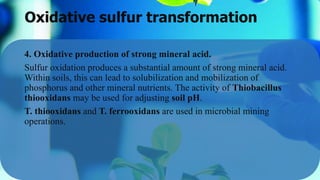
4. Oxidative production of strong mineral acid.
Sulfur oxidation produces a substantial amount of strong mineral acid.
Within soils, this can lead to solubilization and mobilization of
phosphorus and other mineral nutrients. The activity of Thiobacillus
thiooxidans may be used for adjusting soil pH.
T. thiooxidans and T. ferrooxidans are used in microbial mining
operations.
Oxidative sulfur transformation
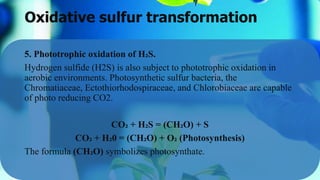
5. Phototrophic oxidation of H₂S.
Hydrogen sulfide (H2S) is also subject to phototrophic oxidation in
aerobic environments. Photosynthetic sulfur bacteria, the
Chromatiaceae, Ectothiorhodospiraceae, and Chlorobiaceae are capable
of photo reducing CO2.
CO₂ + H₂S = (CH₂O) + S
CO₂ + H₂0 = (CH₂O) + O₂ (Photosynthesis)
The formula (CH₂O) symbolizes photosynthate.
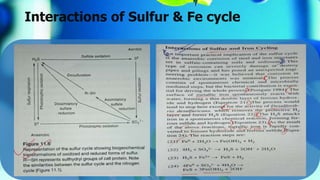
Interactions of Sulfur & Fe cycle
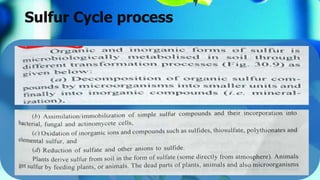
Sulfur Cycle in Book
Sulfur Cycle process
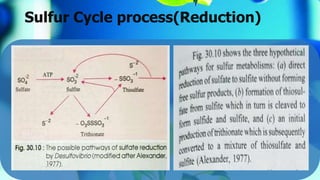
Sulfur Cycle process(Reduction)
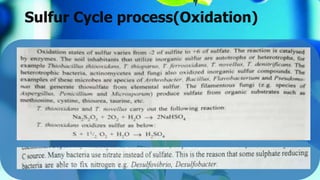
Sulfur Cycle process(Oxidation)

Sulfur Cycle.pptx

  • 1.
  • 2.
  • 3.
    Oxidative sulfur transformation 1.Oxidation of reduced S compounds. 2. Oxidation of elemental S and inorganic S compounds. 3. Oxidation of inorganic S compounds (using nitrate as electron acceptors). 4. Oxidative production of strong mineral acid. 5. Phototrophic oxidation of H₂S.
  • 4.
    Oxidative sulfur transformation 1.Oxidation of reduced S compounds. In the presence of oxygen, Reduced sulfur compounds (e.g. H₂S) are capable of supporting chemolithotrophic microbial metabolism. Beggiates, Thioploca, Thiothrix and the thermophilic Thermothrix are filamentous, microaerophilic bacteria capable of oxidizing H₂S. H₂S + 1.5 O₂ = S + H₂O Sulfur globules are deposited within the cells of bacteria. In the absence of H₂S, these globules are slowly oxidized to sulfate.
  • 5.
    Oxidative sulfur transformation 2.Oxidation of elemental S and inorganic S compounds. Some other members of the genus Thiobacillus species produce sulfate from the oxidation of elemental sulfur and other inorganic sulfur compounds. S + 1.5 O2 + H2O = H2SO4 Most Thiobacillus species are obligate aerobes requiring oxygen for the oxidation of inorganic sulfur compounds.
  • 6.
    Oxidative sulfur transformation 3.Oxidation of inorganic S compounds (using nitrate as electron acceptors). Thiobacillus denitrificans however can utilize nitrate ions as terminal electron acceptors in the oxidation of inorganic sulfur compounds. 3 S + 4NO3 – = 3 SO4 2- + 2N2
  • 7.
    Oxidative sulfur transformation 4.Oxidative production of strong mineral acid. Sulfur oxidation produces a substantial amount of strong mineral acid. Within soils, this can lead to solubilization and mobilization of phosphorus and other mineral nutrients. The activity of Thiobacillus thiooxidans may be used for adjusting soil pH. T. thiooxidans and T. ferrooxidans are used in microbial mining operations.
  • 8.
    Oxidative sulfur transformation 5.Phototrophic oxidation of H₂S. Hydrogen sulfide (H2S) is also subject to phototrophic oxidation in aerobic environments. Photosynthetic sulfur bacteria, the Chromatiaceae, Ectothiorhodospiraceae, and Chlorobiaceae are capable of photo reducing CO2. CO₂ + H₂S = (CH₂O) + S CO₂ + H₂0 = (CH₂O) + O₂ (Photosynthesis) The formula (CH₂O) symbolizes photosynthate.
  • 9.
  • 10.
  • 11.
  • 12.
  • 13.
  • 14.