Sulfur metabolism in Bacteria, with
emphasis on Escherichia
coli and Bacillus subtilis
A g n i e s z k a S e k o w s k a & A n t o i n e
D a n c h i n ©
An earlier presentation of the views proposed here has been published in year 2000 in Hong Kong
and should be used as a reference for work published previous to that year.
Sulfur is an ubiquitous element of the Earth crust where it is mostly present as sulfate salts. Far
from dioxygen it may be present in reduced metal-binding forms, such a pyrite (fool's gold) in rocks.
It is an essential component of life. Most recent scenarios depicting the Origin of Life place sulfur at
a crucial position. In biological processes the role of sulfur is limited to a series of highly specific
objects, in particular involved in electron transfers. The presence of gaseous dioxygen has further
enhanced the versatility of the processes where this atom is involved. This is probably due to the
fact that it is a very reactive atom, and that many chemical reactions involving sulfur consume a
large quantity of energy. It is therefore of prime importance to understand sulfur metabolism in model
organisms and then extend the corresponding knowledge to other ecological niches. The various
inorganic states of sulfur have been well studied, and the corresponding knowledge is fundamental
for understanding mineralogy and soil biology (for a review see Ehrlich, 1996). In contrast, the
organic cycle of sulfur is much less well known, and metabolism of sulfur, in spite of its central
importance (but perhaps because of its difficult chemistry), has been relatively neglected by
investigators. For this reason, many steps in sulfur metabolism have been mistakenly ascribed
wrong functions that still plague genome annotations.
In 2010 was published a surprizing article that proposed arsenic as replacing phosphorus in the
backbone of nucleic acids. A straightforward analysis of the chemical situation, based on reasoning
that is useful to understand the core or sulfur metabolism, would have told scientists and educated
persons that this is certainly not possible. The arsenic nightmare tells us that we should be very
careful to base our knowledge of the previous knowledge accumulated over the years by scientists
all over the world, and not to reinvent a crippled wheel...
A . Gen eral su l fur m etabolism
Three well differentiated processes must be separated in the general metabolism of sulfur: synthesis
of the sulfur-containing amino acids (cysteine and methionine), together with that of the sulfur-
containing coenzymes or prosthetic groups; catabolism and equilibration of the pool of sulfur
containing molecules; and methionine recycling (a topic in itself, be it only because of the role of
methionine as the first residue of all proteins). Several databases devoted to metabolism allow one
to retrieve extant data relevant to sulfur metabolism such as: the Kyoto Encyclopedia of Genes and
Genomes (KEGG), the WIT (What is there?) database of the US Department of Energy at
Argonne, BRENDA and the database of SRI, EcoCyc. Specialized microbial genome
databases, Colibri and SubtiList provide direct information about the genes and genomes of the
model organisms Escherichia coli and Bacillus subtilis. Other databases maintained within
the GenoChore suite allow one to have access to further information on a variety of bacteria.
Anabolism
Sulfur distribution On average, the sulfur concentration at the surface of the Earth is estimated to be
of the order of 520 ppm. It varies in rocks between 270 and 2400 ppm. In fresh water, it is 3.7 ppm
on average. In sea water, it reaches 905 ppm. In temperate regions, it varies between 100 and 1500
ppm in soil (Ehrlich, 1996). However, its concentration in plants is usually low. This element is
present essentially in the form of the amino acids cysteine and methionine, their oxidation products,
as well as molecules of reserve or osmoprotectants, such as S-methylmethionine (Kocsis et al.,
1998) or various types of sulfonates (Cook & Denger, 2001; Kertesz & Wietek, 2001). It is also found
in many derivatives of secondary metabolism (in particular in garlic-related plants, Atmaca, 2004),
where these sulfur-containing metabolites play a very efficient antimicrobial role), and as sulfated
carbohydrates or aminoglycosides (Chai et al. 2004; Nazarenko et al., 2003).
Oxido-reduction and assimilation of sulfur In the presence of oxygen, sulfur metabolism is
particularly energy costly. As sulfate, it must first permeate the cell, usually against the intracellular
electric potential which is usually strongly negative (-70 mV), then change from a highly oxidized
state to a reduced state. This requires a significant consumption of energy, as well as the
maintenance of a very low oxido-reduction potential, a proces that seems difficult to achieve with the
simultaneous presence of oxygen molecules (Table 1- translated from A. Sekowska PhD thesis).
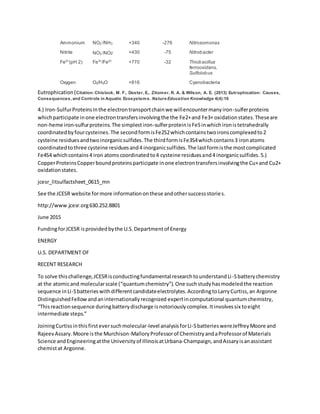
Table 1. Electron transfers in the absence of photosynthesis
Reducing
agent
Redox
couplea
E0' [mV]b DG0' [kJ*mol-
1]c
Organisms
Carbon
monoxide
CO2/CO -540 -261 'Carboxidobacteria'
e.g. Pseudomonas
Hydrogen 2 H+
/H2 -410 -237 'Knallgas'bacteria
Sulfide S0/HS- -260 -207 Thiobacillus,
Beggiatoa,Wolinella
succinogenes
HSO3
-
/HS-
-110 -536 Thiobacillus,
Sulfolobus
Sulfur HSO3
-
/S0 -45 -332 Thiobacillus
Sulfite SO42-
/HSO3
-
-520 -258 Thiobacillus
APS/HSO3
-
-60 -227 Thiobacillus
Ammonium NO2
-
/NH3 +340 -276 Nitrosomonas
Nitrite NO3
-
/NO2- +430 -75 Nitrobacter
Fe2+
(pH 2) Fe3+
/Fe2+
+770 -32 Thiobacillus
ferrooxidans,
Sulfolobus
Oxygen O2/H2O +816 Cyanobacteria
Eutrophication(Citation:Chislock, M. F., Doster, E., Zitomer, R. A. & Wilson, A. E. (2013) Eutrophication: Causes,
Consequences, and Controls in Aquatic Ecosystems. Nature Education Knowledge 4(4):10
4.) Iron-SulfurProteinsInthe electrontransportchainwe willencountermanyiron-sulferproteins
whichparticipate inone electrontransfersinvolvingthe the Fe2+and Fe3+ oxidationstates.Theseare
non-heme iron-sulfurproteins.The simplestiron-sulferproteinisFeSinwhichironistetrahedrally
coordinatedbyfourcysteines.The secondformisFe2S2whichcontainstwoironscomplexedto2
cysteine residuesandtwoinorganicsulfides.The thirdformisFe3S4whichcontains3 ironatoms
coordinatedtothree cysteine residuesand4 inorganicsulfides.The lastformisthe mostcomplicated
Fe4S4 whichcontains4 iron atomscoordinatedto4 cysteine residuesand4 inorganicsulfides.5.)
CopperProteinsCopperboundproteinsparticipate inone electrontransfersinvolvingthe Cu+and Cu2+
oxidationstates.
jcesr_litsulfactsheet_0615_mn
See the JCESR website formore informationonthese andothersuccessstories.
http://www.jcesr.org630.252.8801
June 2015
FundingforJCESR isprovidedbythe U.S.Departmentof Energy
ENERGY
U.S. DEPARTMENT OF
RECENT RESEARCH
To solve thischallenge,JCESRisconductingfundamental researchtounderstandLi-Sbatterychemistry
at the atomicand molecularscale (“quantumchemistry”).One suchstudyhasmodeledthe reaction
sequence inLi-Sbatterieswithdifferentcandidateelectrolytes.AccordingtoLarryCurtiss,an Argonne
DistinguishedFellowandaninternationallyrecognized expertincomputational quantumchemistry,
“Thisreactionsequence duringbatterydischarge isnotoriouslycomplex.Itinvolvessix toeight
intermediate steps.”
JoiningCurtissinthisfirsteversuchmolecular-level analysisforLi-SbatterieswereJeffreyMoore and
RajeevAssary.Moore isthe Murchison-MalloryProfessorof ChemistryandaProfessorof Materials
Science andEngineeringatthe Universityof IllinoisatUrbana-Champaign,andAssaryisanassistant
chemistat Argonne.
Theirquantumchemistrystudyidentifiedthe intermediate productsthatcanbreakdownthe
electrolyte.Thisbreakdownhasthe harmful effectof removingessential materialsfromthe Li-Sbattery
as it isdischarged.
FUTURE DIRECTIONS
By betterunderstandingreactionsequencesatthe atomicand molecularlevel,JCESRwill be much
betterinformedindesigningthe highest-performing,most-stable,andlongest-lastingLi-Sbattery
systems.
JCESR researchersare alsoinvestigatingwaystoreduce the electrolytevolumeinthe Li-Sbattery.
Techno-economicmodeling,whichinvolvessimulatingfullbatterypacksona computer,hadrevealed
that thisfeature isnecessarytoreachJCESR performance andcosttargets.
Critical reactionstepsinLi-Sbatterywithtetraglyme (TEGDME) electrolyte,lithiummetalanode,and
carbon-coatedsulfurcathode.The calculationsof Curtissandcoworkersyieldedadetailed
understandingof the behaviorof the moleculesinthese reactionsteps.
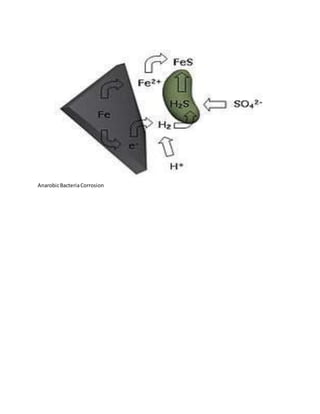
AnarobicBacteriaCorrosion

Sulfur metabolism in bacteria

  • 1.
    Sulfur metabolism inBacteria, with emphasis on Escherichia coli and Bacillus subtilis A g n i e s z k a S e k o w s k a & A n t o i n e D a n c h i n © An earlier presentation of the views proposed here has been published in year 2000 in Hong Kong and should be used as a reference for work published previous to that year. Sulfur is an ubiquitous element of the Earth crust where it is mostly present as sulfate salts. Far from dioxygen it may be present in reduced metal-binding forms, such a pyrite (fool's gold) in rocks. It is an essential component of life. Most recent scenarios depicting the Origin of Life place sulfur at a crucial position. In biological processes the role of sulfur is limited to a series of highly specific objects, in particular involved in electron transfers. The presence of gaseous dioxygen has further enhanced the versatility of the processes where this atom is involved. This is probably due to the fact that it is a very reactive atom, and that many chemical reactions involving sulfur consume a large quantity of energy. It is therefore of prime importance to understand sulfur metabolism in model organisms and then extend the corresponding knowledge to other ecological niches. The various inorganic states of sulfur have been well studied, and the corresponding knowledge is fundamental for understanding mineralogy and soil biology (for a review see Ehrlich, 1996). In contrast, the organic cycle of sulfur is much less well known, and metabolism of sulfur, in spite of its central importance (but perhaps because of its difficult chemistry), has been relatively neglected by investigators. For this reason, many steps in sulfur metabolism have been mistakenly ascribed wrong functions that still plague genome annotations. In 2010 was published a surprizing article that proposed arsenic as replacing phosphorus in the backbone of nucleic acids. A straightforward analysis of the chemical situation, based on reasoning that is useful to understand the core or sulfur metabolism, would have told scientists and educated persons that this is certainly not possible. The arsenic nightmare tells us that we should be very careful to base our knowledge of the previous knowledge accumulated over the years by scientists all over the world, and not to reinvent a crippled wheel... A . Gen eral su l fur m etabolism Three well differentiated processes must be separated in the general metabolism of sulfur: synthesis of the sulfur-containing amino acids (cysteine and methionine), together with that of the sulfur-
  • 2.
    containing coenzymes orprosthetic groups; catabolism and equilibration of the pool of sulfur containing molecules; and methionine recycling (a topic in itself, be it only because of the role of methionine as the first residue of all proteins). Several databases devoted to metabolism allow one to retrieve extant data relevant to sulfur metabolism such as: the Kyoto Encyclopedia of Genes and Genomes (KEGG), the WIT (What is there?) database of the US Department of Energy at Argonne, BRENDA and the database of SRI, EcoCyc. Specialized microbial genome databases, Colibri and SubtiList provide direct information about the genes and genomes of the model organisms Escherichia coli and Bacillus subtilis. Other databases maintained within the GenoChore suite allow one to have access to further information on a variety of bacteria. Anabolism Sulfur distribution On average, the sulfur concentration at the surface of the Earth is estimated to be of the order of 520 ppm. It varies in rocks between 270 and 2400 ppm. In fresh water, it is 3.7 ppm on average. In sea water, it reaches 905 ppm. In temperate regions, it varies between 100 and 1500 ppm in soil (Ehrlich, 1996). However, its concentration in plants is usually low. This element is present essentially in the form of the amino acids cysteine and methionine, their oxidation products, as well as molecules of reserve or osmoprotectants, such as S-methylmethionine (Kocsis et al., 1998) or various types of sulfonates (Cook & Denger, 2001; Kertesz & Wietek, 2001). It is also found in many derivatives of secondary metabolism (in particular in garlic-related plants, Atmaca, 2004), where these sulfur-containing metabolites play a very efficient antimicrobial role), and as sulfated carbohydrates or aminoglycosides (Chai et al. 2004; Nazarenko et al., 2003). Oxido-reduction and assimilation of sulfur In the presence of oxygen, sulfur metabolism is particularly energy costly. As sulfate, it must first permeate the cell, usually against the intracellular electric potential which is usually strongly negative (-70 mV), then change from a highly oxidized state to a reduced state. This requires a significant consumption of energy, as well as the maintenance of a very low oxido-reduction potential, a proces that seems difficult to achieve with the simultaneous presence of oxygen molecules (Table 1- translated from A. Sekowska PhD thesis). Table 1. Electron transfers in the absence of photosynthesis Reducing agent Redox couplea E0' [mV]b DG0' [kJ*mol- 1]c Organisms Carbon monoxide CO2/CO -540 -261 'Carboxidobacteria' e.g. Pseudomonas Hydrogen 2 H+ /H2 -410 -237 'Knallgas'bacteria Sulfide S0/HS- -260 -207 Thiobacillus, Beggiatoa,Wolinella succinogenes HSO3 - /HS- -110 -536 Thiobacillus, Sulfolobus Sulfur HSO3 - /S0 -45 -332 Thiobacillus Sulfite SO42- /HSO3 - -520 -258 Thiobacillus APS/HSO3 - -60 -227 Thiobacillus
  • 3.
    Ammonium NO2 - /NH3 +340-276 Nitrosomonas Nitrite NO3 - /NO2- +430 -75 Nitrobacter Fe2+ (pH 2) Fe3+ /Fe2+ +770 -32 Thiobacillus ferrooxidans, Sulfolobus Oxygen O2/H2O +816 Cyanobacteria Eutrophication(Citation:Chislock, M. F., Doster, E., Zitomer, R. A. & Wilson, A. E. (2013) Eutrophication: Causes, Consequences, and Controls in Aquatic Ecosystems. Nature Education Knowledge 4(4):10 4.) Iron-SulfurProteinsInthe electrontransportchainwe willencountermanyiron-sulferproteins whichparticipate inone electrontransfersinvolvingthe the Fe2+and Fe3+ oxidationstates.Theseare non-heme iron-sulfurproteins.The simplestiron-sulferproteinisFeSinwhichironistetrahedrally coordinatedbyfourcysteines.The secondformisFe2S2whichcontainstwoironscomplexedto2 cysteine residuesandtwoinorganicsulfides.The thirdformisFe3S4whichcontains3 ironatoms coordinatedtothree cysteine residuesand4 inorganicsulfides.The lastformisthe mostcomplicated Fe4S4 whichcontains4 iron atomscoordinatedto4 cysteine residuesand4 inorganicsulfides.5.) CopperProteinsCopperboundproteinsparticipate inone electrontransfersinvolvingthe Cu+and Cu2+ oxidationstates. jcesr_litsulfactsheet_0615_mn See the JCESR website formore informationonthese andothersuccessstories. http://www.jcesr.org630.252.8801 June 2015 FundingforJCESR isprovidedbythe U.S.Departmentof Energy ENERGY U.S. DEPARTMENT OF RECENT RESEARCH To solve thischallenge,JCESRisconductingfundamental researchtounderstandLi-Sbatterychemistry at the atomicand molecularscale (“quantumchemistry”).One suchstudyhasmodeledthe reaction sequence inLi-Sbatterieswithdifferentcandidateelectrolytes.AccordingtoLarryCurtiss,an Argonne DistinguishedFellowandaninternationallyrecognized expertincomputational quantumchemistry, “Thisreactionsequence duringbatterydischarge isnotoriouslycomplex.Itinvolvessix toeight intermediate steps.” JoiningCurtissinthisfirsteversuchmolecular-level analysisforLi-SbatterieswereJeffreyMoore and RajeevAssary.Moore isthe Murchison-MalloryProfessorof ChemistryandaProfessorof Materials Science andEngineeringatthe Universityof IllinoisatUrbana-Champaign,andAssaryisanassistant chemistat Argonne.
  • 4.
    Theirquantumchemistrystudyidentifiedthe intermediate productsthatcanbreakdownthe electrolyte.Thisbreakdownhastheharmful effectof removingessential materialsfromthe Li-Sbattery as it isdischarged. FUTURE DIRECTIONS By betterunderstandingreactionsequencesatthe atomicand molecularlevel,JCESRwill be much betterinformedindesigningthe highest-performing,most-stable,andlongest-lastingLi-Sbattery systems. JCESR researchersare alsoinvestigatingwaystoreduce the electrolytevolumeinthe Li-Sbattery. Techno-economicmodeling,whichinvolvessimulatingfullbatterypacksona computer,hadrevealed that thisfeature isnecessarytoreachJCESR performance andcosttargets. Critical reactionstepsinLi-Sbatterywithtetraglyme (TEGDME) electrolyte,lithiummetalanode,and carbon-coatedsulfurcathode.The calculationsof Curtissandcoworkersyieldedadetailed understandingof the behaviorof the moleculesinthese reactionsteps.
  • 5.