Soil Enzymes, Their importance and Their activity
Soil microbiology(MICRO -504)
Speaker:- Aishwarya Chauhan
MSc. Microbiology 1st Year
(F-2017-27-M)
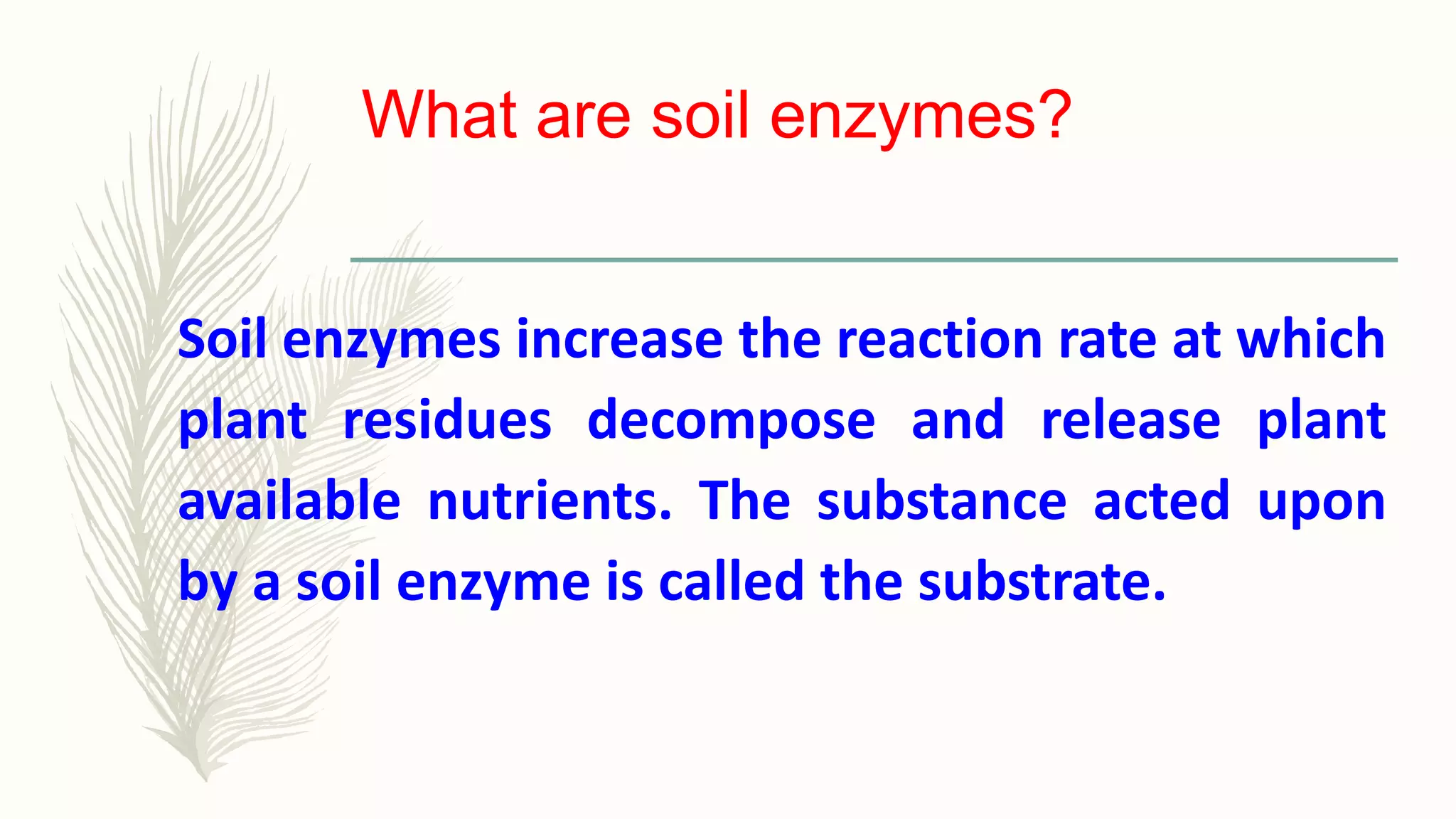
What is soil?
It is the region where most of the physical,
biological, and biochemical reactions
related to decomposition of organic
wheathering of parent rock take place.
What is enzyme?
A substance which is used to
increase the rate of reaction
is known as enzymes.
What are soil enzymes?
Soil enzymes increase the reaction rate at which
plant residues decompose and release plant
available nutrients. The substance acted upon
by a soil enzyme is called the substrate.
For Example
Glucosidase (soil enzyme) cleaves glucose from
glucoside (substrate), a compound common in
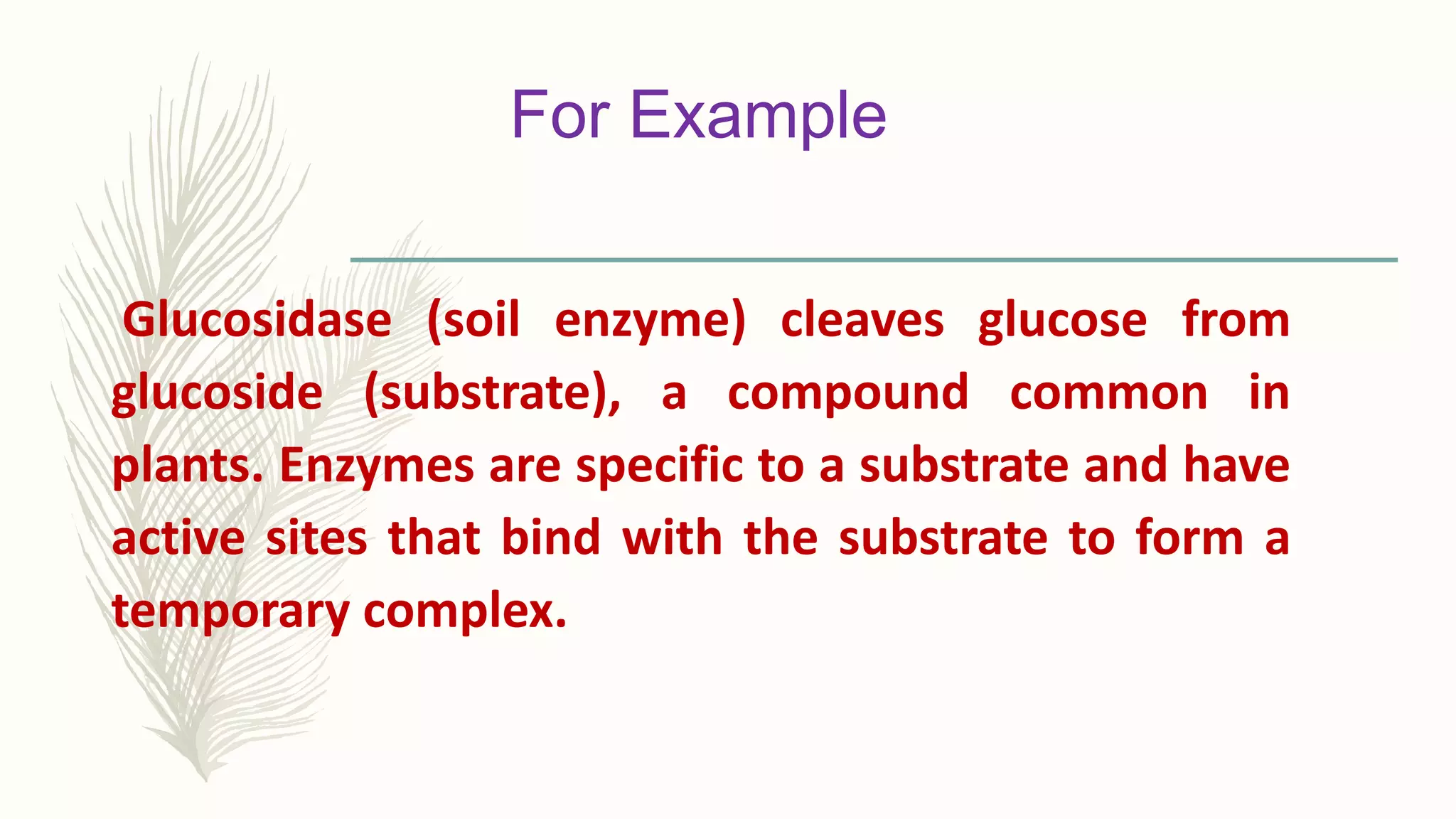
plants. Enzymes are specific to a substrate and have
active sites that bind with the substrate to form a
temporary complex.
Origin of Soil Enzymes
Although the general origins of soil enzymes are:-
(a) microorganisms-living and dead,
(b) plant roots and plant residues and
(c) soil animals
Importances of Soil Enzymes
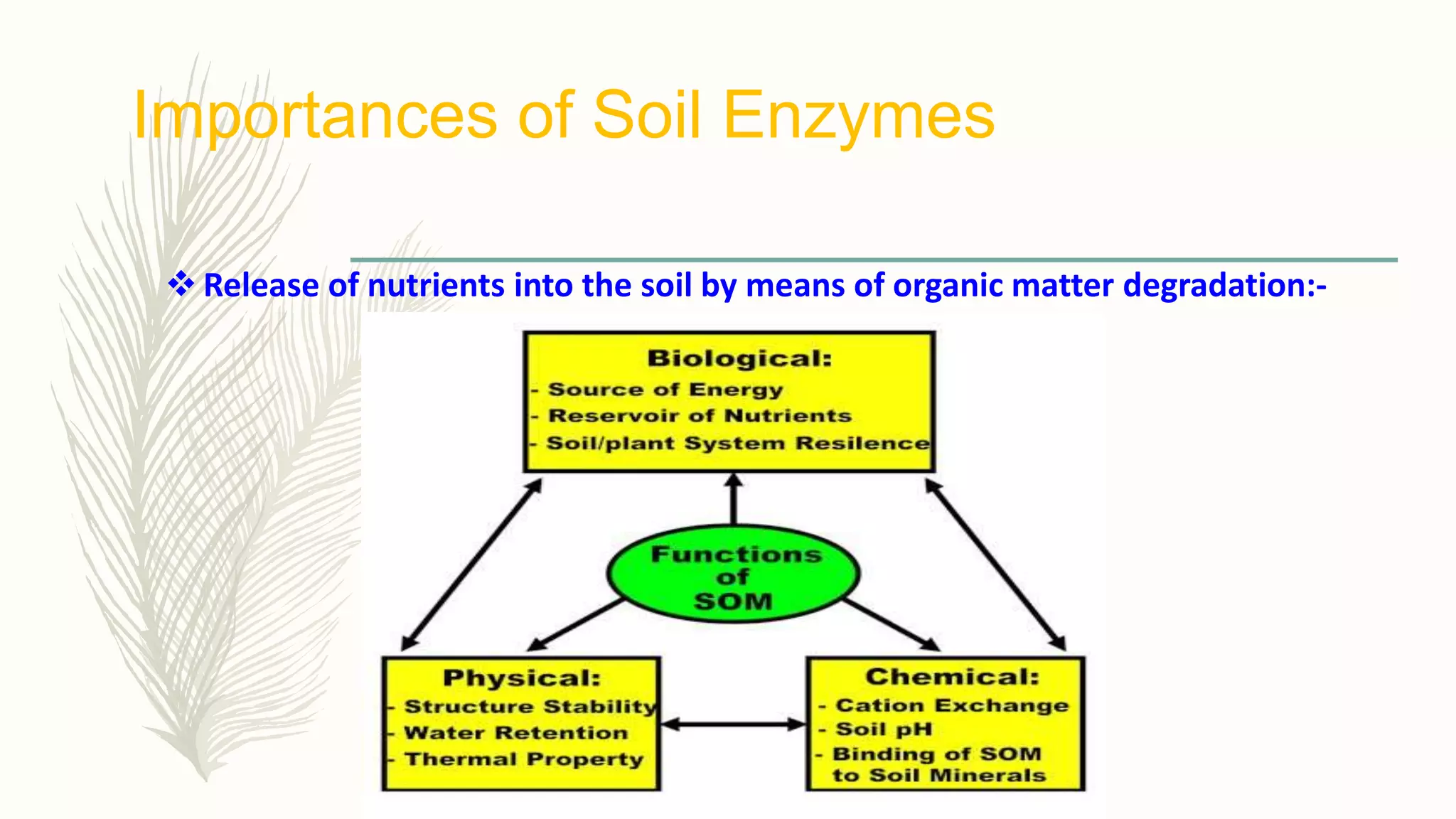
 Release of nutrients into the soil by means of organic matter degradation:-
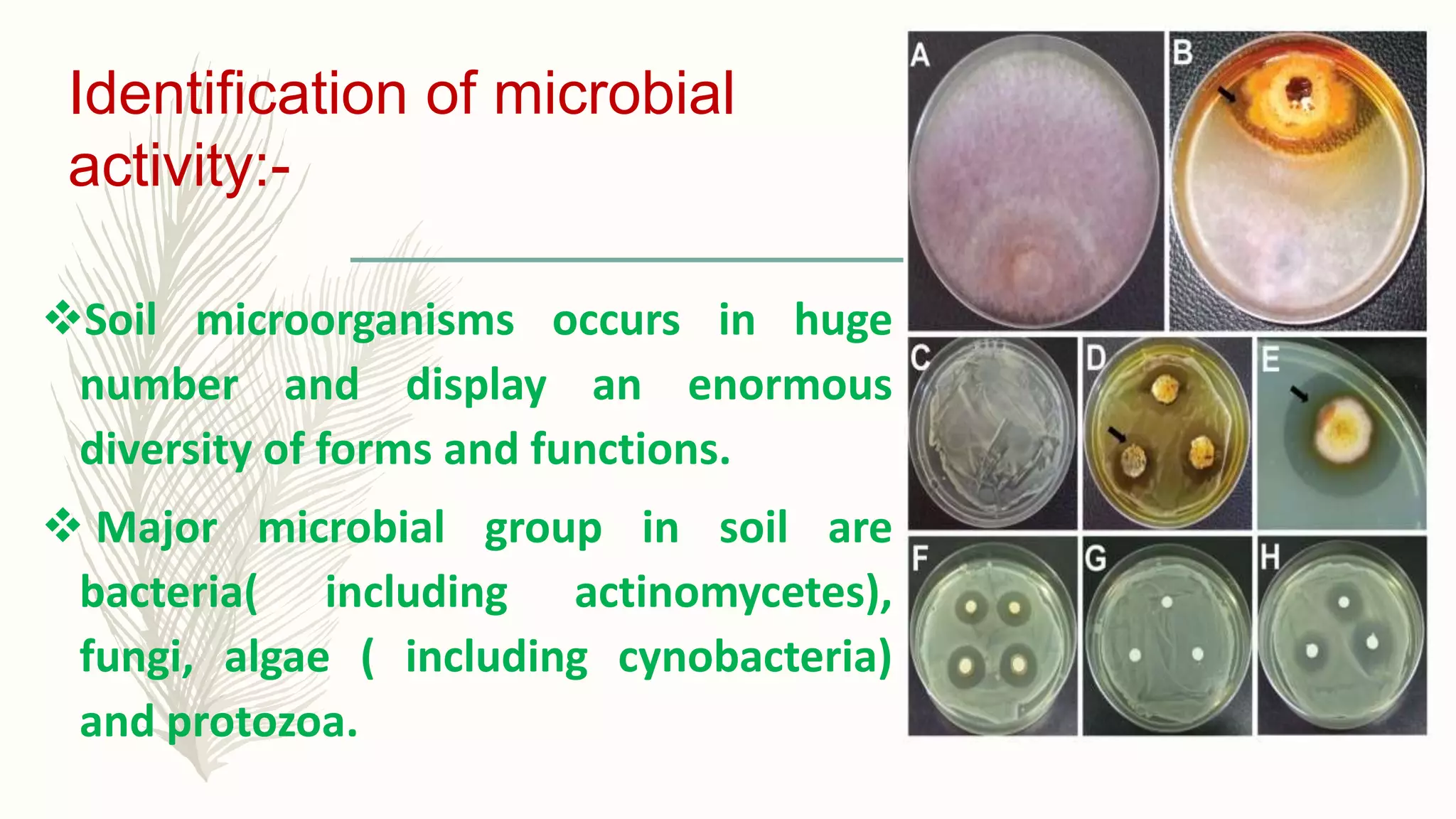
Identification of microbial
activity:-
Soil microorganisms occurs in huge
number and display an enormous
diversity of forms and functions.
 Major microbial group in soil are
bacteria( including actinomycetes),
fungi, algae ( including cynobacteria)
and protozoa.
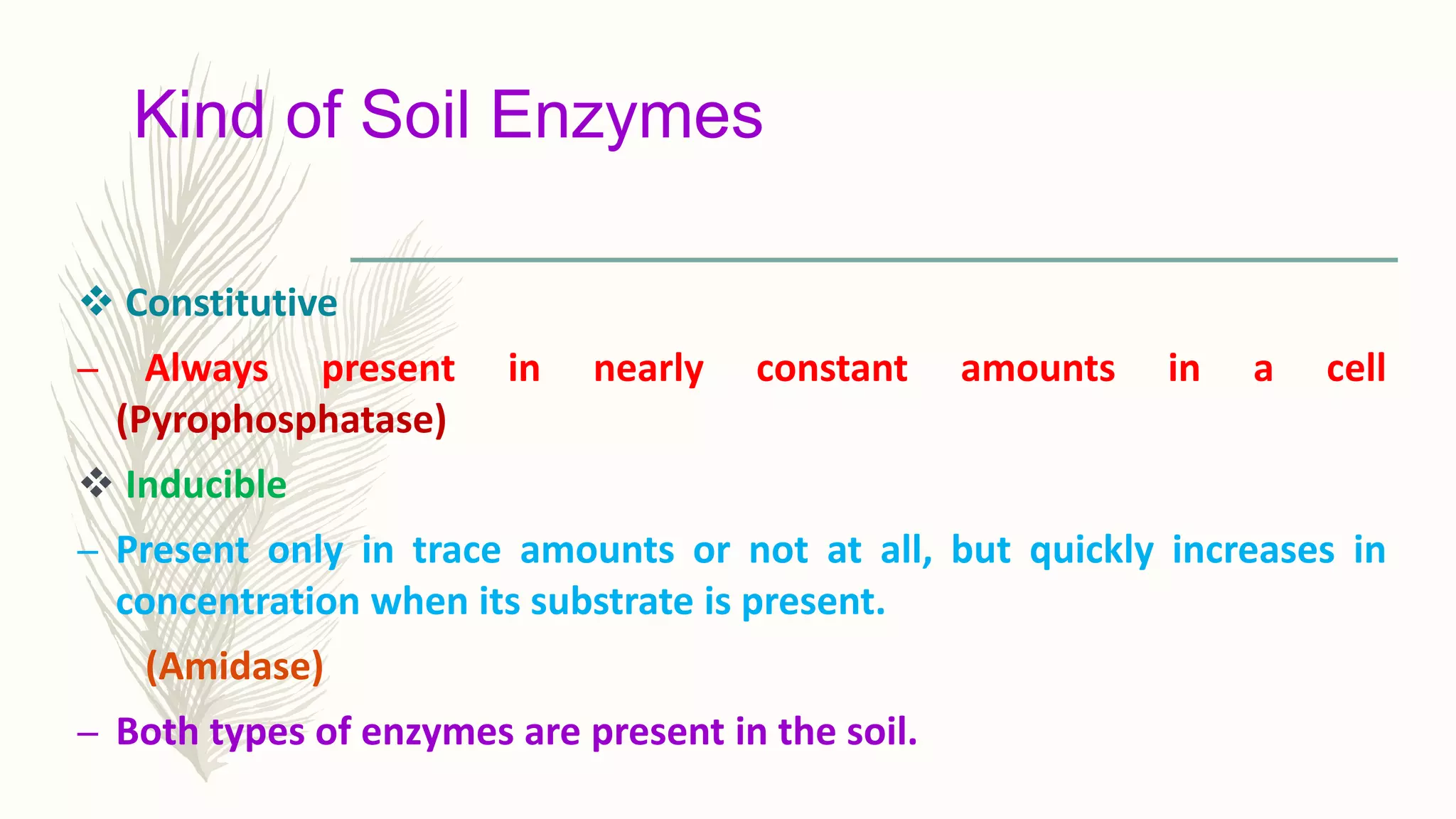
Kind of Soil Enzymes
 Constitutive
– Always present in nearly constant amounts in a cell
(Pyrophosphatase)
 Inducible
– Present only in trace amounts or not at all, but quickly increases in
concentration when its substrate is present.
(Amidase)
– Both types of enzymes are present in the soil.
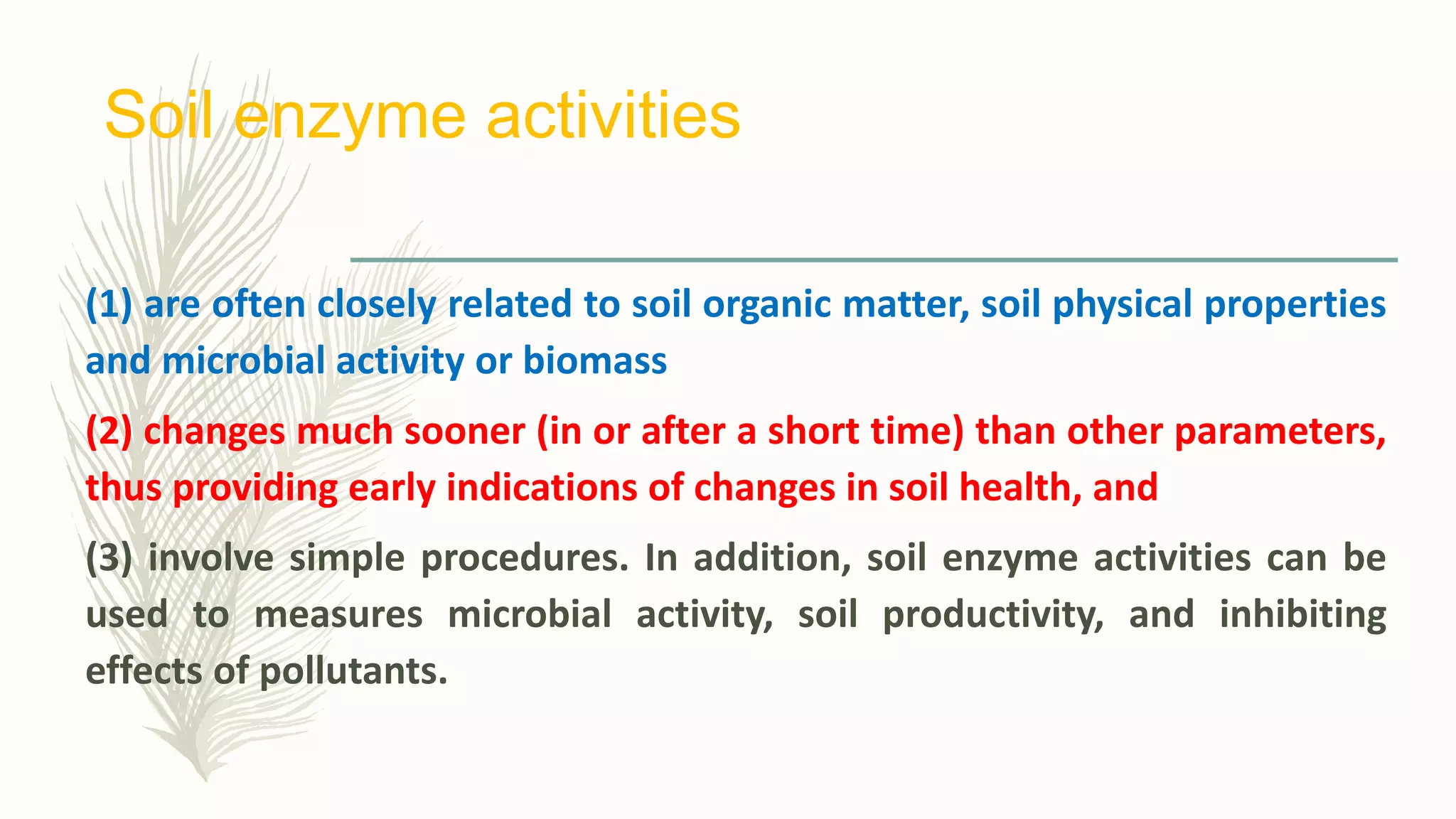
Soil enzyme activities
(1) are often closely related to soil organic matter, soil physical properties
and microbial activity or biomass
(2) changes much sooner (in or after a short time) than other parameters,
thus providing early indications of changes in soil health, and
(3) involve simple procedures. In addition, soil enzyme activities can be
used to measures microbial activity, soil productivity, and inhibiting
effects of pollutants.
Amylase
The starch hydrolyzing enzyme amylase is known to be
constituted by
1. α-amylase and
2. β-amylase
This enzyme is widely distributed in plants and soils so it plays a
significant role in the breakdown of starch, which converts starch
like substrates to glucose and/or oligosaccharides and β-amylase,
which converts starch to maltose.
The α-amylases are synthesized by plants, animals, and
microorganisms.
Mode of Action
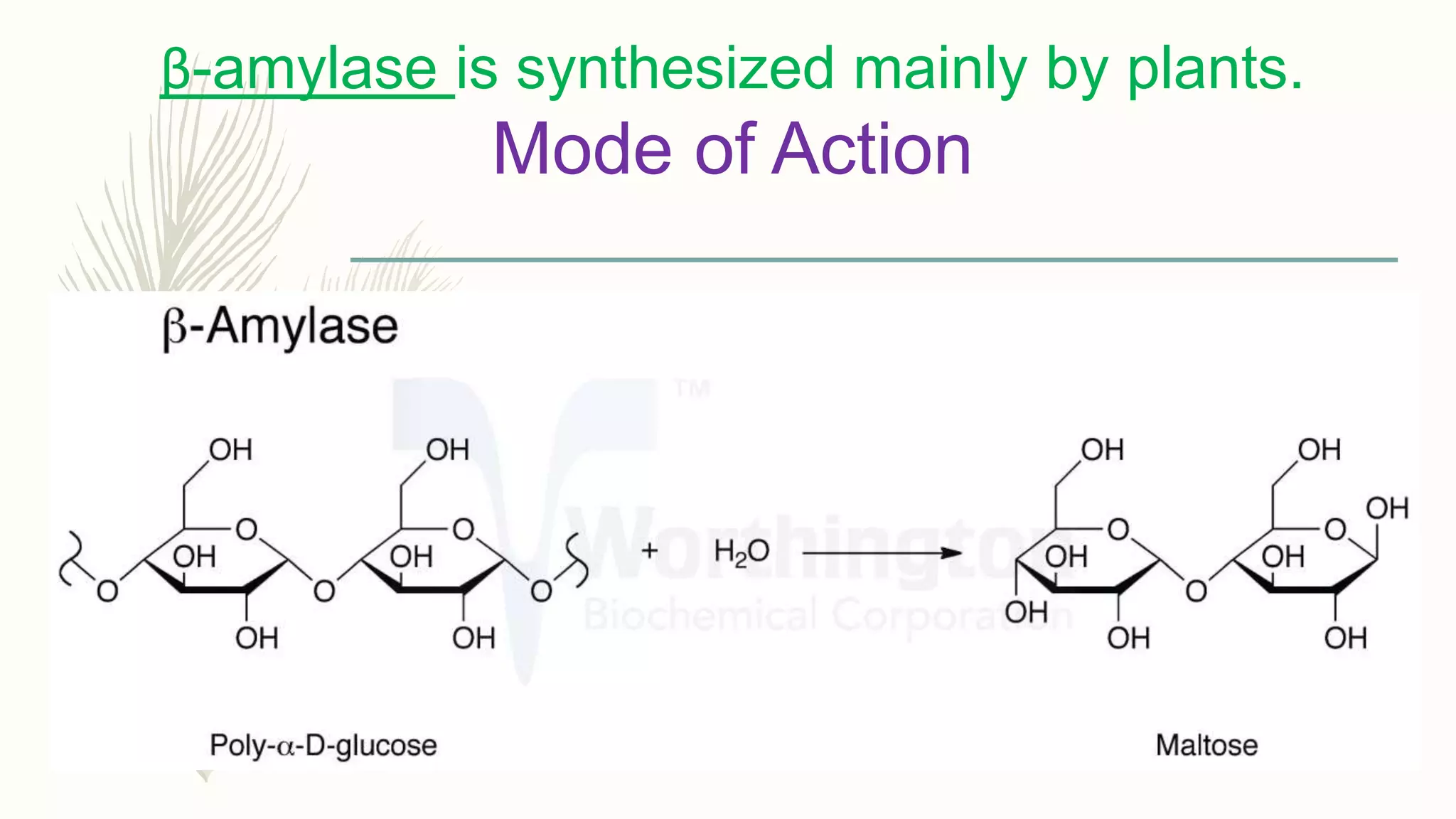
β-amylase is synthesized mainly by plants.
Mode of Action
Amylase Screening Test
Procedure:-
 Prepare the starch agar medium in the flask and autoclave the
medium.
 After autoclaving, allow the mixture to cool down at 42-45˚C temp.
 Pour the starch agar medium in the sterile petriplate and rotate the
plate gently for uniform distribution.
 Allow the mixture to solidify.
 Using sterile technique, make a single streak inoculation of each
organism into the centre of the plates.
 Incubate the plate at 37˚C for 48 hours in inverted position.
 Flood the surface of plates with iodine solution for 30 sec.
 Pour of the excess of iodine solution. Observe the zone formed
around bacteria.
Composition of starch agar medium
Observations
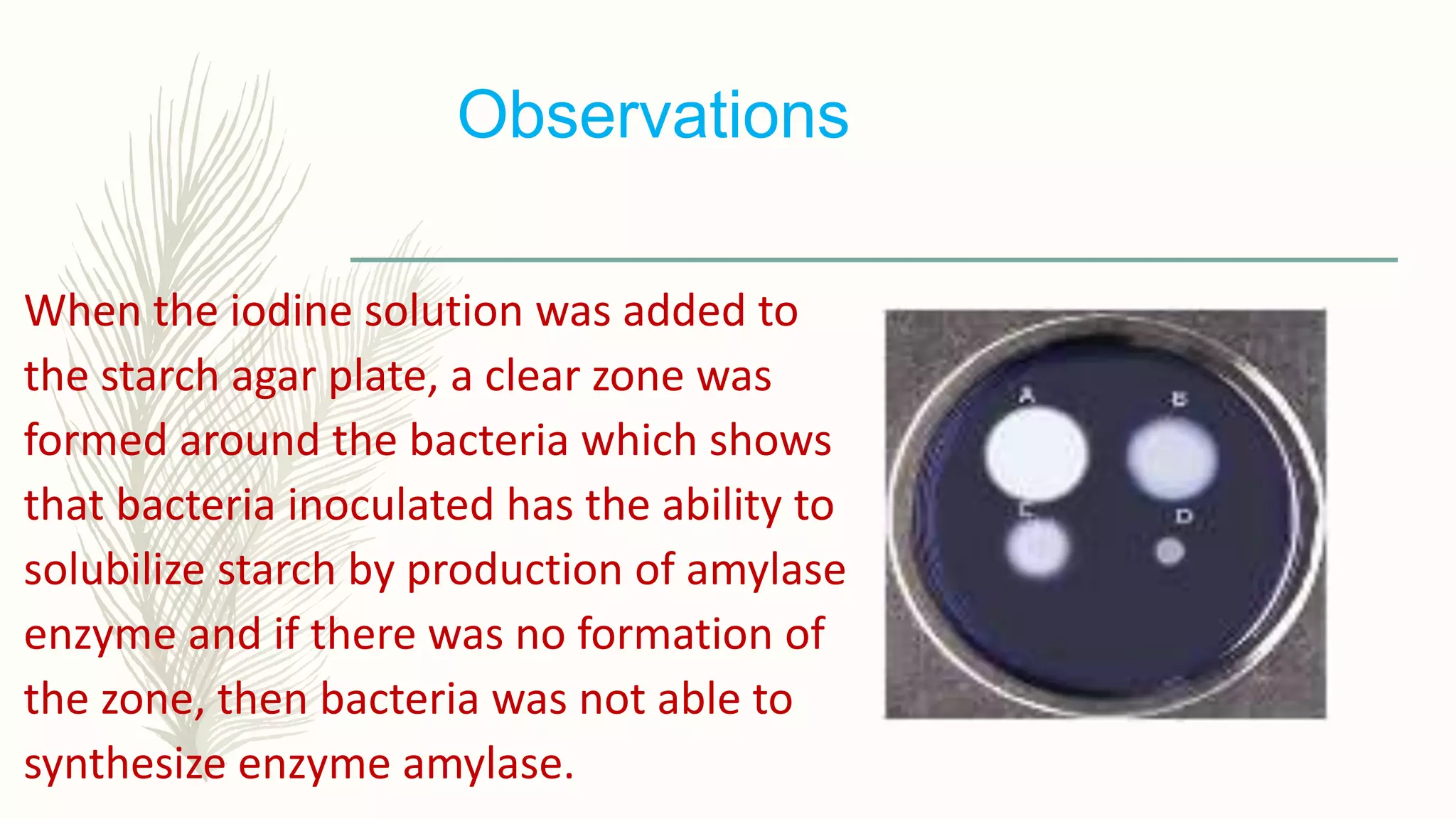
When the iodine solution was added to
the starch agar plate, a clear zone was
formed around the bacteria which shows
that bacteria inoculated has the ability to
solubilize starch by production of amylase
enzyme and if there was no formation of
the zone, then bacteria was not able to
synthesize enzyme amylase.
Catalase
Most of the aerobic bacteria utilize oxygen and produce
hydrogen peroxide, which is toxic to their own enzyme
system.
Their survival in the presence of this antimetabolite is
possible because they produce an enzyme called catalase
which converts the hydrogen peroxide to water and oxygen.
Mode of action
Procedure
1)Take a clean slide and put a drop of
H2O2 on it.
2)Pick up a small amount of culture
from nutrient agar using a clean
sterile platinum loop or a thin glass
rod and add it to the drop of 2H2O2
taken on the slide.
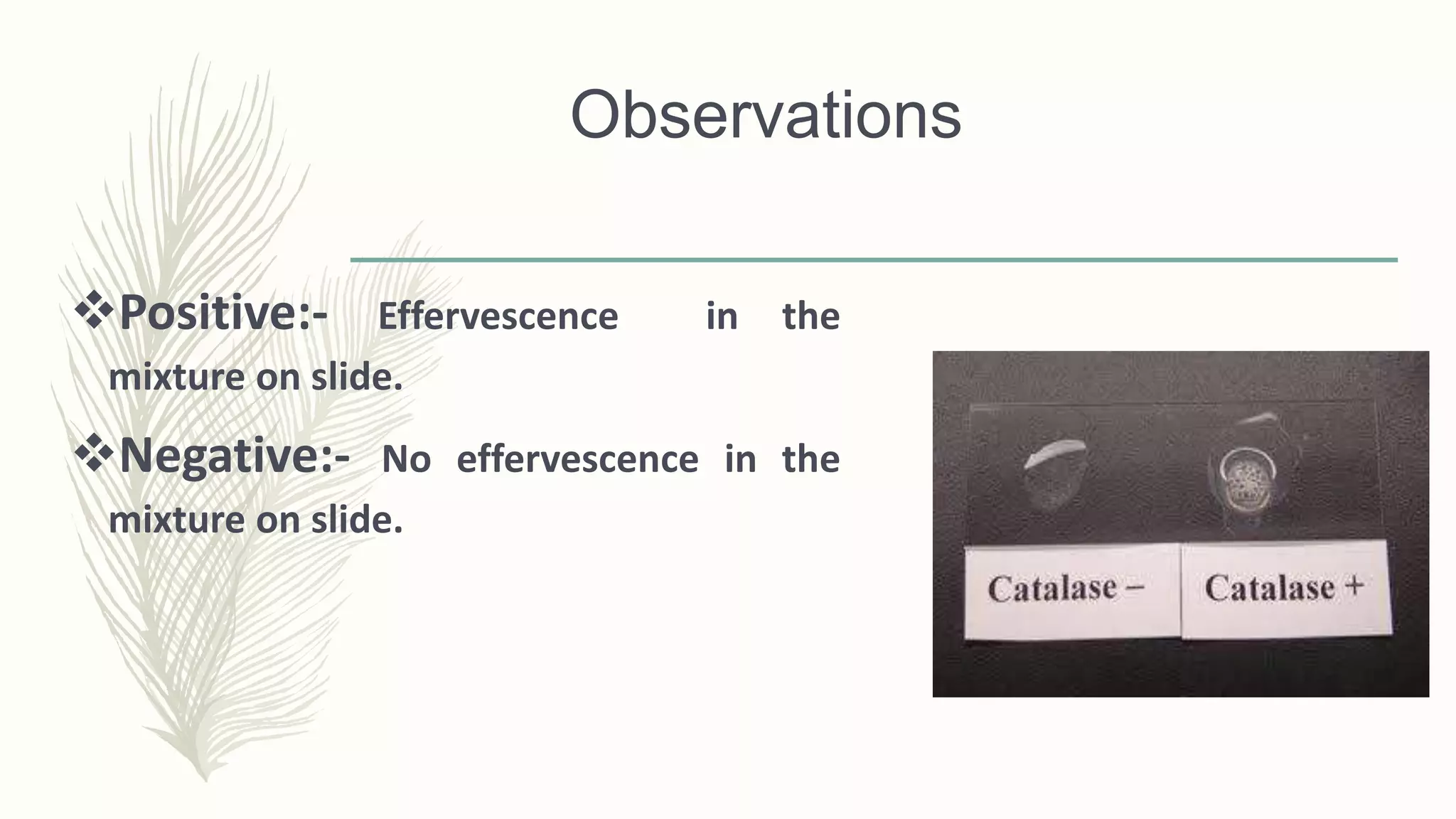
Observations
Positive:- Effervescence in the
mixture on slide.
Negative:- No effervescence in the
mixture on slide.
Proteases
Proteases in the soil play a significant role in N mineralization.
This enzyme in the soil is generally associated with inorganic and organic
colloids.
There is a need to study the properties and factors affecting naturally
occurring enzyme complexes such as those involving protease enzymes in
the soil ecosystem as they may reveal some unknown role in maintaining
soil health and fertility.
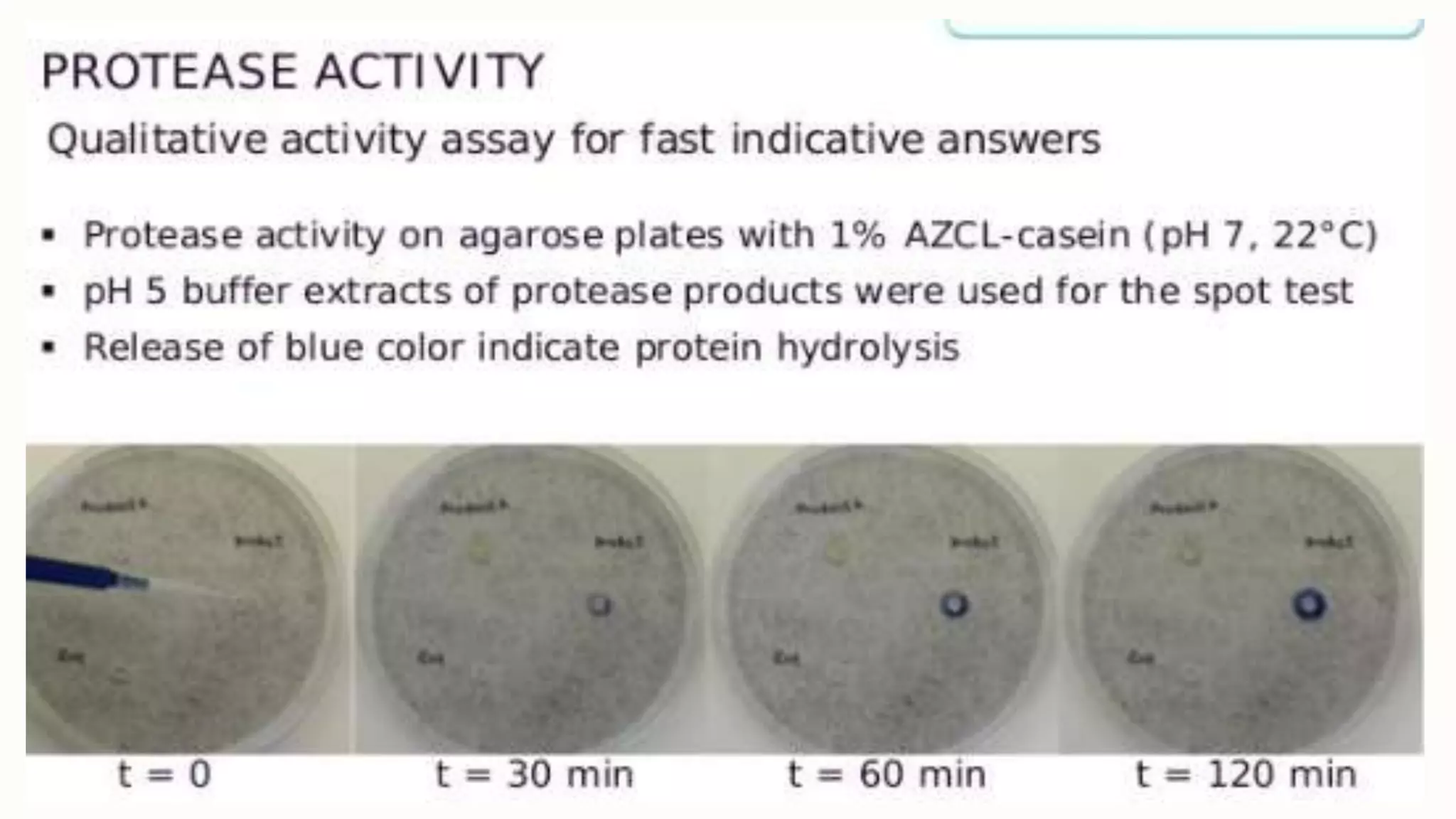
Protease test
– Gelatin agar media was prepared according to the composition.
– It was then autoclaved at 15lbs at 121°C for 15 minutes.
– Sterile Gelatin agar plates were prepared.
– The plates were inoculated with the culture on surface by spot inoculation or
streaking.
– They were incubated for 24 hrs at room temperature.
– 10% HgCl2 was then added to the plates and the clear zone formation around
growing colony was considered as positive.
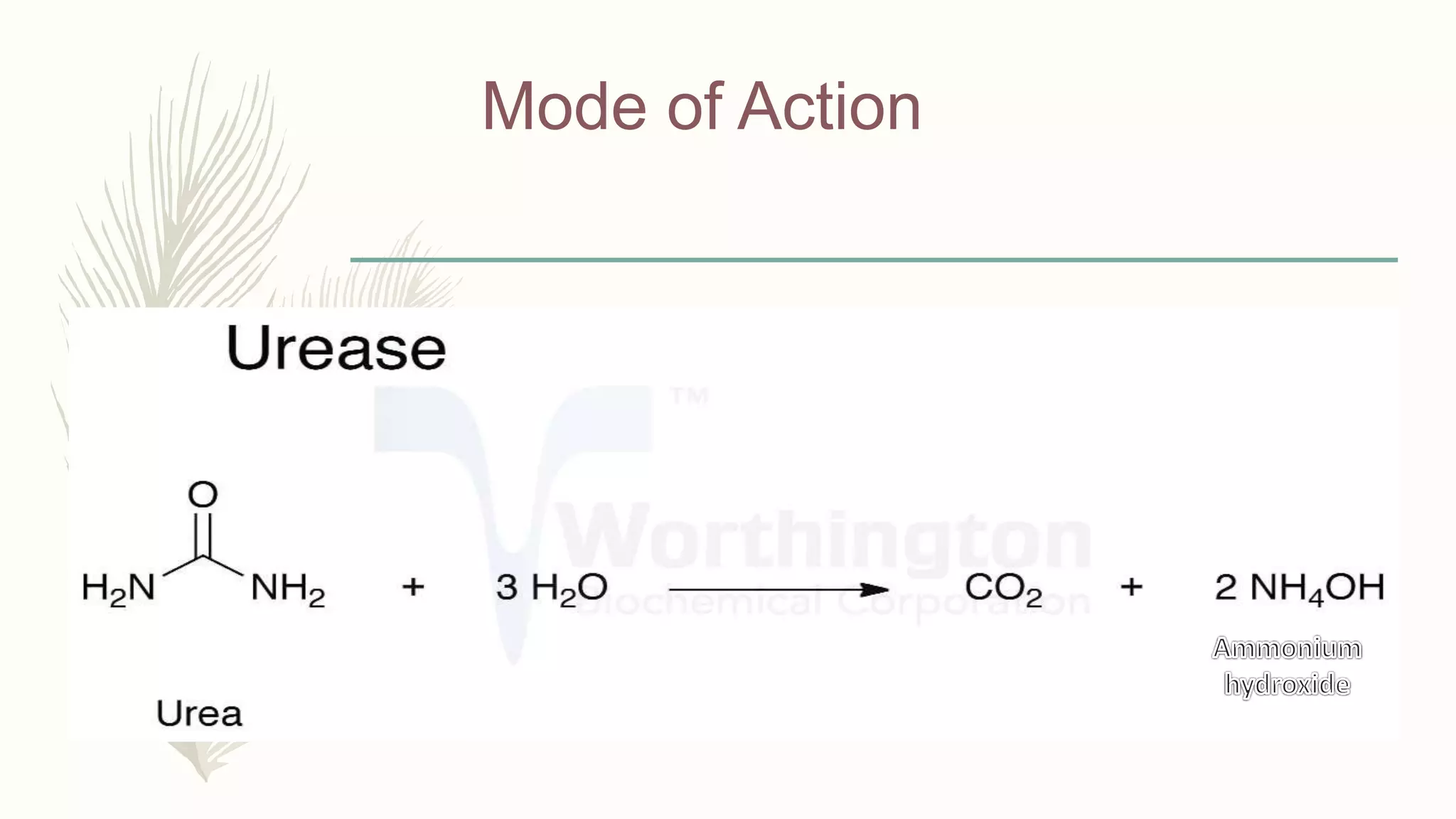
Urease
 Urease enzyme is responsible for the hydrolysis of urea fertilizers applied to the soil
into NH3 and CO2 with the rise in soil pH .
 Soil urease originates mainly from plants and microorganisms found as both intra- and
extra-cellular enzymes .
 On the other hand, urease extracted from plants or microorganisms is rapidly
degraded in soil by proteolytic (breakdown of proteins into smaller polypeptides or
amino acids) enzymes.
 Urease activity in soils is influenced by many factors. These include cropping history,
organic matter content of the soil, soil depth, heavy metals, and environmental factors
such as temperatures.
Mode of Action
Urease Screening Test
Procedure
1. Inoculate the slants with culture to be tested.
2. Incubate the slants at 37˚C.
3. Examine the tubes after 4 hours, one day
(routine test) and 4 days (standard test).
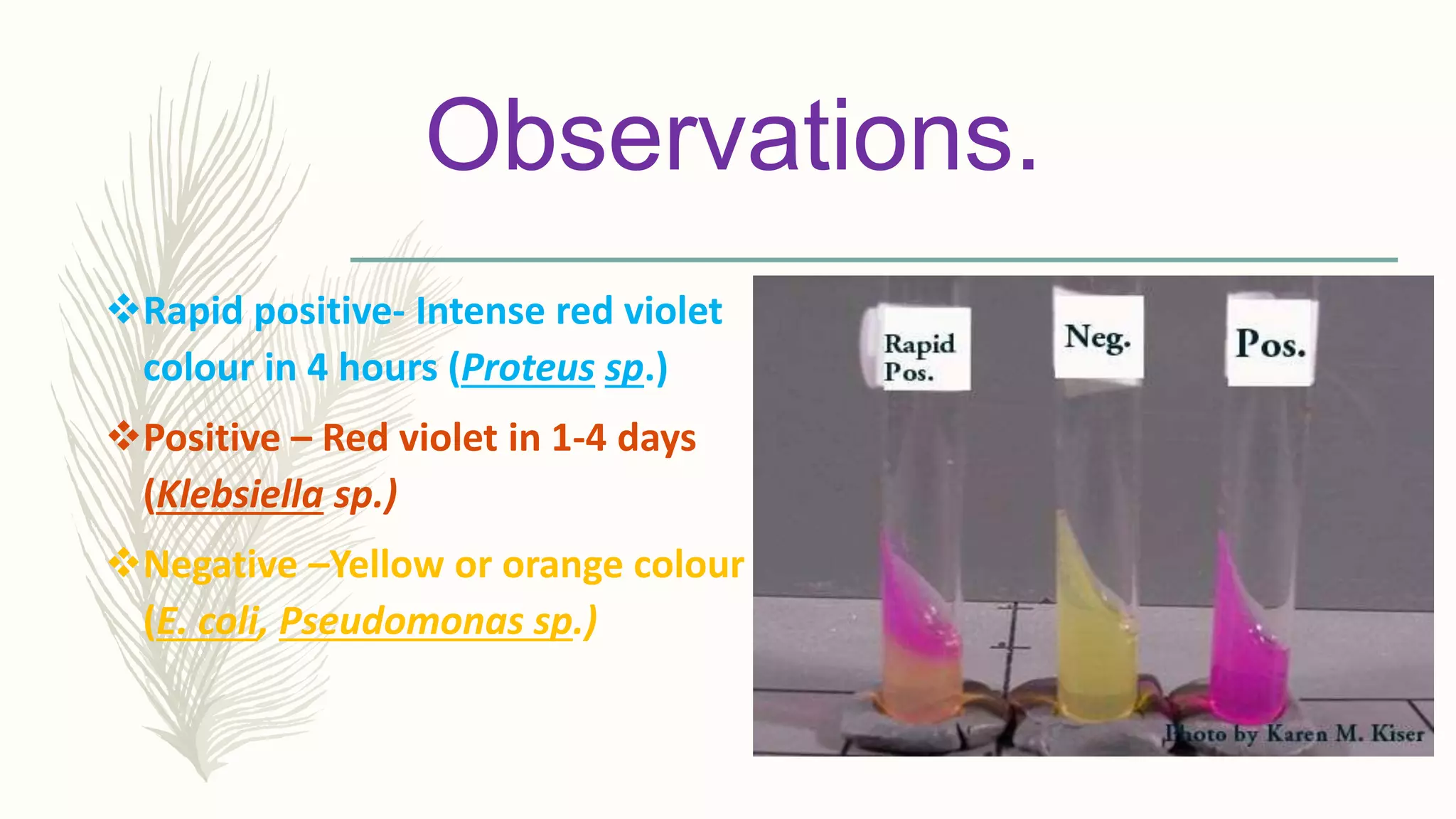
Observations.
Rapid positive- Intense red violet
colour in 4 hours (Proteus sp.)
Positive – Red violet in 1-4 days
(Klebsiella sp.)
Negative –Yellow or orange colour
(E. coli, Pseudomonas sp.)
Application of Soil Enzymes
– Correlation with soil fertility: Difficult to show correlation especially
fertility with enzyme activity.
– Correlation with microbial activity :Used as index of soil microbial
population
– Correlation with biochemical cycling of various elements in soil (C, N,
S):has met with only limited success.
– Forensic purposes: Can determine where soil comes from by looking at
activity, value of sample size.
Conclusions
It is very essential to understand the possible roles of soil
enzymes in order to maintain soil health and its fertility
management in ecosystems.
These enzymes, usually found in the soil, may have
significant effects on soil biology, environmental
management, growth and nutrient uptake in plants growing
in ecosystems.
SOIL ENZYMES AND THEIR ACTIVITY

SOIL ENZYMES AND THEIR ACTIVITY

  • 1.
    Soil Enzymes, Theirimportance and Their activity Soil microbiology(MICRO -504) Speaker:- Aishwarya Chauhan MSc. Microbiology 1st Year (F-2017-27-M)
  • 2.
    What is soil? Itis the region where most of the physical, biological, and biochemical reactions related to decomposition of organic wheathering of parent rock take place. What is enzyme? A substance which is used to increase the rate of reaction is known as enzymes.
  • 3.
    What are soilenzymes? Soil enzymes increase the reaction rate at which plant residues decompose and release plant available nutrients. The substance acted upon by a soil enzyme is called the substrate.
  • 4.
    For Example Glucosidase (soilenzyme) cleaves glucose from glucoside (substrate), a compound common in plants. Enzymes are specific to a substrate and have active sites that bind with the substrate to form a temporary complex.
  • 5.
    Origin of SoilEnzymes Although the general origins of soil enzymes are:- (a) microorganisms-living and dead, (b) plant roots and plant residues and (c) soil animals
  • 6.
    Importances of SoilEnzymes  Release of nutrients into the soil by means of organic matter degradation:-
  • 7.
    Identification of microbial activity:- Soilmicroorganisms occurs in huge number and display an enormous diversity of forms and functions.  Major microbial group in soil are bacteria( including actinomycetes), fungi, algae ( including cynobacteria) and protozoa.
  • 8.
    Kind of SoilEnzymes  Constitutive – Always present in nearly constant amounts in a cell (Pyrophosphatase)  Inducible – Present only in trace amounts or not at all, but quickly increases in concentration when its substrate is present. (Amidase) – Both types of enzymes are present in the soil.
  • 9.
    Soil enzyme activities (1)are often closely related to soil organic matter, soil physical properties and microbial activity or biomass (2) changes much sooner (in or after a short time) than other parameters, thus providing early indications of changes in soil health, and (3) involve simple procedures. In addition, soil enzyme activities can be used to measures microbial activity, soil productivity, and inhibiting effects of pollutants.
  • 10.
    Amylase The starch hydrolyzingenzyme amylase is known to be constituted by 1. α-amylase and 2. β-amylase This enzyme is widely distributed in plants and soils so it plays a significant role in the breakdown of starch, which converts starch like substrates to glucose and/or oligosaccharides and β-amylase, which converts starch to maltose.
  • 11.
    The α-amylases aresynthesized by plants, animals, and microorganisms. Mode of Action
  • 12.
    β-amylase is synthesizedmainly by plants. Mode of Action
  • 13.
    Amylase Screening Test Procedure:- Prepare the starch agar medium in the flask and autoclave the medium.  After autoclaving, allow the mixture to cool down at 42-45˚C temp.  Pour the starch agar medium in the sterile petriplate and rotate the plate gently for uniform distribution.  Allow the mixture to solidify.  Using sterile technique, make a single streak inoculation of each organism into the centre of the plates.  Incubate the plate at 37˚C for 48 hours in inverted position.  Flood the surface of plates with iodine solution for 30 sec.  Pour of the excess of iodine solution. Observe the zone formed around bacteria. Composition of starch agar medium
  • 14.
    Observations When the iodinesolution was added to the starch agar plate, a clear zone was formed around the bacteria which shows that bacteria inoculated has the ability to solubilize starch by production of amylase enzyme and if there was no formation of the zone, then bacteria was not able to synthesize enzyme amylase.
  • 15.
    Catalase Most of theaerobic bacteria utilize oxygen and produce hydrogen peroxide, which is toxic to their own enzyme system. Their survival in the presence of this antimetabolite is possible because they produce an enzyme called catalase which converts the hydrogen peroxide to water and oxygen.
  • 16.
  • 17.
    Procedure 1)Take a cleanslide and put a drop of H2O2 on it. 2)Pick up a small amount of culture from nutrient agar using a clean sterile platinum loop or a thin glass rod and add it to the drop of 2H2O2 taken on the slide.
  • 18.
    Observations Positive:- Effervescence inthe mixture on slide. Negative:- No effervescence in the mixture on slide.
  • 19.
    Proteases Proteases in thesoil play a significant role in N mineralization. This enzyme in the soil is generally associated with inorganic and organic colloids. There is a need to study the properties and factors affecting naturally occurring enzyme complexes such as those involving protease enzymes in the soil ecosystem as they may reveal some unknown role in maintaining soil health and fertility.
  • 20.
    Protease test – Gelatinagar media was prepared according to the composition. – It was then autoclaved at 15lbs at 121°C for 15 minutes. – Sterile Gelatin agar plates were prepared. – The plates were inoculated with the culture on surface by spot inoculation or streaking. – They were incubated for 24 hrs at room temperature. – 10% HgCl2 was then added to the plates and the clear zone formation around growing colony was considered as positive.
  • 22.
    Urease  Urease enzymeis responsible for the hydrolysis of urea fertilizers applied to the soil into NH3 and CO2 with the rise in soil pH .  Soil urease originates mainly from plants and microorganisms found as both intra- and extra-cellular enzymes .  On the other hand, urease extracted from plants or microorganisms is rapidly degraded in soil by proteolytic (breakdown of proteins into smaller polypeptides or amino acids) enzymes.  Urease activity in soils is influenced by many factors. These include cropping history, organic matter content of the soil, soil depth, heavy metals, and environmental factors such as temperatures.
  • 23.
  • 24.
    Urease Screening Test Procedure 1.Inoculate the slants with culture to be tested. 2. Incubate the slants at 37˚C. 3. Examine the tubes after 4 hours, one day (routine test) and 4 days (standard test).
  • 25.
    Observations. Rapid positive- Intensered violet colour in 4 hours (Proteus sp.) Positive – Red violet in 1-4 days (Klebsiella sp.) Negative –Yellow or orange colour (E. coli, Pseudomonas sp.)
  • 26.
    Application of SoilEnzymes – Correlation with soil fertility: Difficult to show correlation especially fertility with enzyme activity. – Correlation with microbial activity :Used as index of soil microbial population – Correlation with biochemical cycling of various elements in soil (C, N, S):has met with only limited success. – Forensic purposes: Can determine where soil comes from by looking at activity, value of sample size.
  • 27.
    Conclusions It is veryessential to understand the possible roles of soil enzymes in order to maintain soil health and its fertility management in ecosystems. These enzymes, usually found in the soil, may have significant effects on soil biology, environmental management, growth and nutrient uptake in plants growing in ecosystems.

Editor's Notes

  • #7 SOM:- Soil Organic matter.