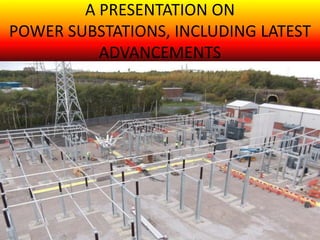
A PRESENTATION ON
POWER SUBSTATIONS, INCLUDING LATEST
ADVANCEMENTS
BY
………………………
JSS ACADEMY OF TECHNICAL EDUCATION ,
NOIDA
SUBMITTED BY-
AMITESH KUMAR RAI
(1309120904)
AMARESH KUMAR SINGH
(1309120903)
CONTENTS
 INTRODUCTION
 HISTORY
 NEED OF SUBSTATIONS
 TYPES OF SUBSTATIONS
 BRIEF DESCRIPTION OF EACH TYPE
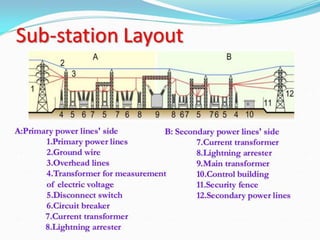
 OVER-VIEW OF A STANDARD SUBSTATION
 BRIEF DETAILS OF EACH EQUPEMENTS
 LATEST ADVANCEMENTS
 CONCLUSION
 REFRENCES
INTRODUCTION
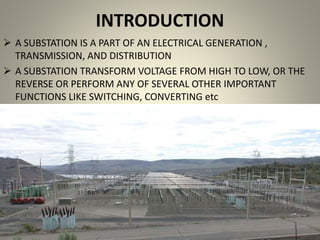
 A SUBSTATION IS A PART OF AN ELECTRICAL GENERATION ,
TRANSMISSION, AND DISTRIBUTION
 A SUBSTATION TRANSFORM VOLTAGE FROM HIGH TO LOW, OR THE
REVERSE OR PERFORM ANY OF SEVERAL OTHER IMPORTANT
FUNCTIONS LIKE SWITCHING, CONVERTING etc
HISTORY
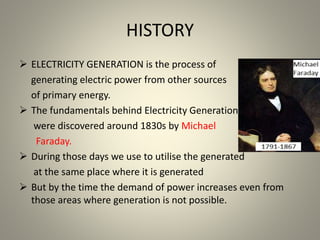
 ELECTRICITY GENERATION is the process of
generating electric power from other sources
of primary energy.
 The fundamentals behind Electricity Generation
were discovered around 1830s by Michael
Faraday.
 During those days we use to utilise the generated
at the same place where it is generated
 But by the time the demand of power increases even from
those areas where generation is not possible.
By the time we tried to implement the
concept of transmitting power from one place
to another place.
In the starting we have to transmit the power
to a very less distance, so we directly transmit
the generated power at the generated voltage
itself.
NEED OF SUBSTATION
PRACTICAL CONSIDERATION
 TO SATISFY LOAD GROWTH
 TO ACC0MMODATE NEW GENERATION
 TO MAINTAIN RELAIBILITY REQUIREMENT
TECHNICAL CONSIDERATION
 TO STEP UP AND STEP DOWN AC VOLTAGE LEVEL
 TO BREAK THE POWER FLOW
 PROVIDE SUPPORT TO THE POWER FLOW
TYPES OF SUBSTATIONS
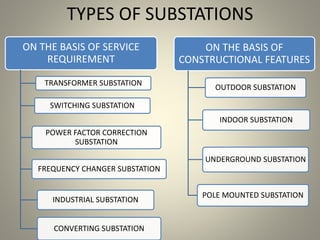
ON THE BASIS OF SERVICE
REQUIREMENT
TRANSFORMER SUBSTATION
SWITCHING SUBSTATION
POWER FACTOR CORRECTION
SUBSTATION
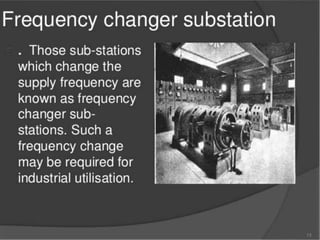
FREQUENCY CHANGER SUBSTATION
CONVERTING SUBSTATION
INDUSTRIAL SUBSTATION
ON THE BASIS OF
CONSTRUCTIONAL FEATURES
OUTDOOR SUBSTATION
INDOOR SUBSTATION
UNDERGROUND SUBSTATION
POLE MOUNTED SUBSTATION
BRIEF DESCRIPTION
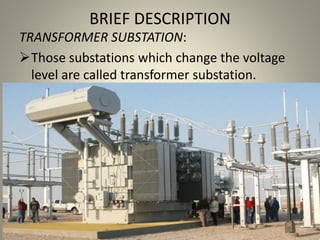
TRANSFORMER SUBSTATION:
Those substations which change the voltage
level are called transformer substation.
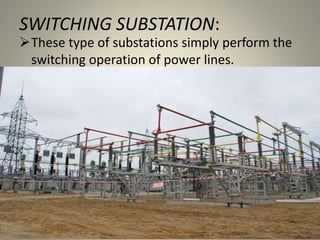
SWITCHING SUBSTATION:
These type of substations simply perform the
switching operation of power lines.
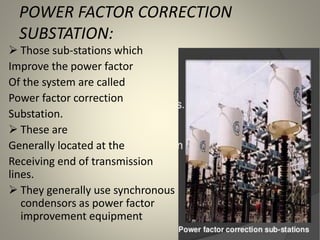
POWER FACTOR CORRECTION
SUBSTATION:
 Those sub-stations which
Improve the power factor
Of the system are called
Power factor correction
Substation.
 These are
Generally located at the
Receiving end of transmission
lines.
 They generally use synchronous
condensors as power factor
improvement equipment
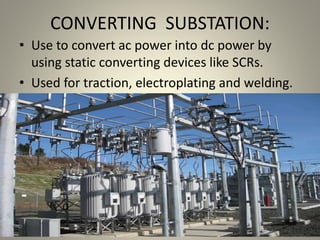
CONVERTING SUBSTATION:
• Use to convert ac power into dc power by
using static converting devices like SCRs.
• Used for traction, electroplating and welding.
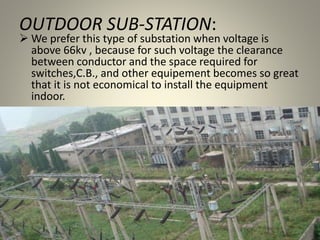
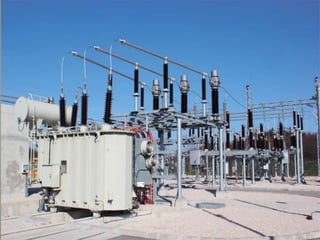
OUTDOOR SUB-STATION:
 We prefer this type of substation when voltage is
above 66kv , because for such voltage the clearance
between conductor and the space required for
switches,C.B., and other equipement becomes so great
that it is not economical to install the equipment
indoor.
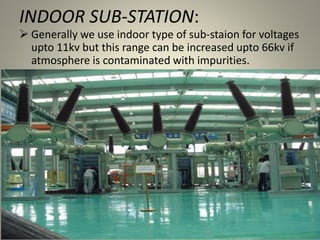
INDOOR SUB-STATION:
 Generally we use indoor type of sub-staion for voltages
upto 11kv but this range can be increased upto 66kv if
atmosphere is contaminated with impurities.
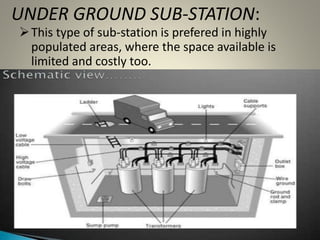
UNDER GROUND SUB-STATION:
This type of sub-station is prefered in highly
populated areas, where the space available is
limited and costly too.
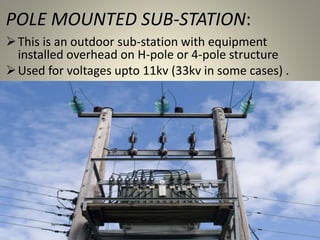
POLE MOUNTED SUB-STATION:
This is an outdoor sub-station with equipment
installed overhead on H-pole or 4-pole structure
Used for voltages upto 11kv (33kv in some cases) .
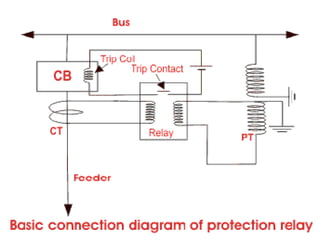
RELAYS
• A relay is automatic device which senses an
abnormal condition of electrical circuit and
closes its contacts. These contacts in turns
close and complete the circuit breaker trip coil
circuit hence make the circuit breaker tripped
for disconnecting the faulty portion of the
electrical circuit from rest of the healthy
circuit.
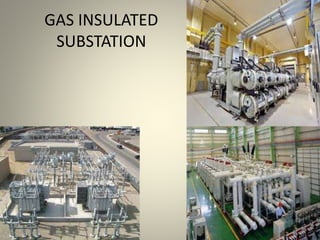
GAS INSULATED
SUBSTATION
**GIS CLIP**
• GIS SUB-STATION
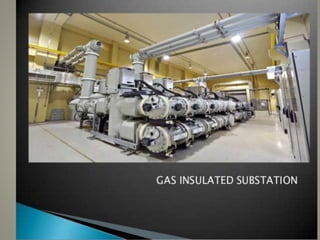
• A gas insulated substation (GIS) is a high voltage
substation in which the major structures are contained
in a sealed environment with sulfur hexafluoride gas as
the insulating medium. GIS technology originated in
Japan, where there was a substantial need to develop
technology to make substations as compact as
possible. The clearance required for phase to phase
and phase to ground for all equipment is much lower
than that required in an air insulated substation; the
total space required for a GIS is 10% of that needed for
a conventional substation.
•
• Gas insulated substations offer other advantages
in addition to the reduced space requirements.
Because the substation is enclosed in a building, a
GIS is less sensitive to pollution, as well as salt,
sand or large amounts of snow. Although the
initial cost of building a GIS is higher than building
an air insulated substation, the operation and
maintenance costs of a GIS are less.
•
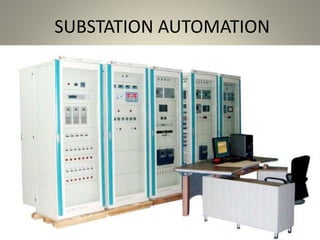
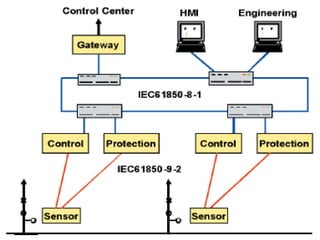
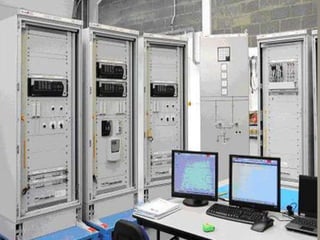
SUBSTATION AUTOMATION
• Newer microprocessor-based relays and other
intelligent devices provide unprecedented
flexibility and rich functionality which, in turn,
provide low cost monitoring analysis and
diagnosis of electrical faults in the power
network.
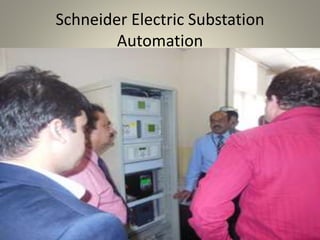
Schneider Electric Substation
Automation
CONCLUSION:
At the end we hope that by this presentation
your understanding regarding various types of
substation , operation of a standard substation
and also about the various equipements used
in power substation would got more clear.
We got the idea about the latest
advancements going on in the field of GIS and
sub-station automation.
SUBSTATION OVERVIEW - A presentation on substation

SUBSTATION OVERVIEW - A presentation on substation

  • 1.
    A PRESENTATION ON POWERSUBSTATIONS, INCLUDING LATEST ADVANCEMENTS BY ………………………
  • 2.
    JSS ACADEMY OFTECHNICAL EDUCATION , NOIDA SUBMITTED BY- AMITESH KUMAR RAI (1309120904) AMARESH KUMAR SINGH (1309120903)
  • 3.
    CONTENTS  INTRODUCTION  HISTORY NEED OF SUBSTATIONS  TYPES OF SUBSTATIONS  BRIEF DESCRIPTION OF EACH TYPE  OVER-VIEW OF A STANDARD SUBSTATION  BRIEF DETAILS OF EACH EQUPEMENTS  LATEST ADVANCEMENTS  CONCLUSION  REFRENCES
  • 4.
    INTRODUCTION  A SUBSTATIONIS A PART OF AN ELECTRICAL GENERATION , TRANSMISSION, AND DISTRIBUTION  A SUBSTATION TRANSFORM VOLTAGE FROM HIGH TO LOW, OR THE REVERSE OR PERFORM ANY OF SEVERAL OTHER IMPORTANT FUNCTIONS LIKE SWITCHING, CONVERTING etc
  • 5.
    HISTORY  ELECTRICITY GENERATIONis the process of generating electric power from other sources of primary energy.  The fundamentals behind Electricity Generation were discovered around 1830s by Michael Faraday.  During those days we use to utilise the generated at the same place where it is generated  But by the time the demand of power increases even from those areas where generation is not possible.
  • 6.
    By the timewe tried to implement the concept of transmitting power from one place to another place. In the starting we have to transmit the power to a very less distance, so we directly transmit the generated power at the generated voltage itself.
  • 7.
    NEED OF SUBSTATION PRACTICALCONSIDERATION  TO SATISFY LOAD GROWTH  TO ACC0MMODATE NEW GENERATION  TO MAINTAIN RELAIBILITY REQUIREMENT TECHNICAL CONSIDERATION  TO STEP UP AND STEP DOWN AC VOLTAGE LEVEL  TO BREAK THE POWER FLOW  PROVIDE SUPPORT TO THE POWER FLOW
  • 8.
    TYPES OF SUBSTATIONS ONTHE BASIS OF SERVICE REQUIREMENT TRANSFORMER SUBSTATION SWITCHING SUBSTATION POWER FACTOR CORRECTION SUBSTATION FREQUENCY CHANGER SUBSTATION CONVERTING SUBSTATION INDUSTRIAL SUBSTATION ON THE BASIS OF CONSTRUCTIONAL FEATURES OUTDOOR SUBSTATION INDOOR SUBSTATION UNDERGROUND SUBSTATION POLE MOUNTED SUBSTATION
  • 9.
    BRIEF DESCRIPTION TRANSFORMER SUBSTATION: Thosesubstations which change the voltage level are called transformer substation.
  • 10.
    SWITCHING SUBSTATION: These typeof substations simply perform the switching operation of power lines.
  • 11.
    POWER FACTOR CORRECTION SUBSTATION: Those sub-stations which Improve the power factor Of the system are called Power factor correction Substation.  These are Generally located at the Receiving end of transmission lines.  They generally use synchronous condensors as power factor improvement equipment
  • 13.
    CONVERTING SUBSTATION: • Useto convert ac power into dc power by using static converting devices like SCRs. • Used for traction, electroplating and welding.
  • 14.
    OUTDOOR SUB-STATION:  Weprefer this type of substation when voltage is above 66kv , because for such voltage the clearance between conductor and the space required for switches,C.B., and other equipement becomes so great that it is not economical to install the equipment indoor.
  • 16.
    INDOOR SUB-STATION:  Generallywe use indoor type of sub-staion for voltages upto 11kv but this range can be increased upto 66kv if atmosphere is contaminated with impurities.
  • 17.
    UNDER GROUND SUB-STATION: Thistype of sub-station is prefered in highly populated areas, where the space available is limited and costly too.
  • 18.
    POLE MOUNTED SUB-STATION: Thisis an outdoor sub-station with equipment installed overhead on H-pole or 4-pole structure Used for voltages upto 11kv (33kv in some cases) .
  • 23.
    RELAYS • A relayis automatic device which senses an abnormal condition of electrical circuit and closes its contacts. These contacts in turns close and complete the circuit breaker trip coil circuit hence make the circuit breaker tripped for disconnecting the faulty portion of the electrical circuit from rest of the healthy circuit.
  • 32.
  • 33.
  • 36.
    • A gasinsulated substation (GIS) is a high voltage substation in which the major structures are contained in a sealed environment with sulfur hexafluoride gas as the insulating medium. GIS technology originated in Japan, where there was a substantial need to develop technology to make substations as compact as possible. The clearance required for phase to phase and phase to ground for all equipment is much lower than that required in an air insulated substation; the total space required for a GIS is 10% of that needed for a conventional substation. •
  • 37.
    • Gas insulatedsubstations offer other advantages in addition to the reduced space requirements. Because the substation is enclosed in a building, a GIS is less sensitive to pollution, as well as salt, sand or large amounts of snow. Although the initial cost of building a GIS is higher than building an air insulated substation, the operation and maintenance costs of a GIS are less. •
  • 38.
  • 39.
    • Newer microprocessor-basedrelays and other intelligent devices provide unprecedented flexibility and rich functionality which, in turn, provide low cost monitoring analysis and diagnosis of electrical faults in the power network.
  • 42.
  • 43.
    CONCLUSION: At the endwe hope that by this presentation your understanding regarding various types of substation , operation of a standard substation and also about the various equipements used in power substation would got more clear. We got the idea about the latest advancements going on in the field of GIS and sub-station automation.
Editor's Notes