Substance Use Disorders
Prepared by:
Orlando A. Pistan, MAEd-GC
Psychology Instructor
Substance Use Disorders
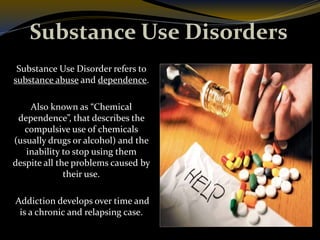
Substance Use Disorder refers to
substance abuse and dependence.
Also known as “Chemical
dependence”, that describes the
compulsive use of chemicals
(usually drugs or alcohol) and the
inability to stop using them
despite all the problems caused by
their use.
Addiction develops over time and
is a chronic and relapsing case.
General Considerations
 Substance abuse.
 Refers to the overuse of both illegal and legal substances. It is an
addictive disorder that leads to significant problems and hazards in
life. Alcohol is the most common legal drug to be abused.
 Substance dependence.
 An addictive disorder that describes continued use of drugs or
alcohol, even when significant problems related to their use have
developed. Signs include an increased tolerance—that is, the need
for increased amounts of the substance to attain the desired effect.
Alcoholism
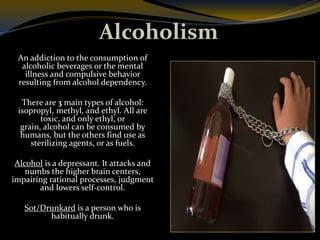
An addiction to the consumption of
alcoholic beverages or the mental
illness and compulsive behavior
resulting from alcohol dependency.
There are 3 main types of alcohol:
isopropyl, methyl, and ethyl. All are
toxic, and only ethyl, or
grain, alcohol can be consumed by
humans, but the others find use as
sterilizing agents, or as fuels.
Alcohol is a depressant. It attacks and
numbs the higher brain centers,
impairing rational processes, judgment
and lowers self-control.
Sot/Drunkard is a person who is
habitually drunk.
Symptoms of Alcoholism
 Being unable to limit the amount of alcohol you drink
 Wanting to cut down on how much you drink or making unsuccessful attempts to
do so
 Spending a lot of time drinking, getting alcohol or recovering from alcohol use
 Strong craving or urge to drink alcohol
 Failing to fulfill major obligations at work, school or home due to repeated alcohol
use
 Continuing to drink alcohol even though you know it's causing physical, social or
interpersonal problems
 Using alcohol in situations where it's not safe, such as when driving or swimming
 Developing a tolerance to alcohol so you need more to feel its effect or you have a
reduced effect from the same amount
 Experiencing withdrawal symptoms — such as nausea, sweating and shaking —
when you don't drink, or drinking to avoid these symptoms
Alcoholism and Psychoses
 Pathological Intoxication – a confusion and disorientation state
caused by alcohol intolerance. This reaction is usually followed by a
deep sleep.
 Delirium Tremens - a psychotic condition typical of withdrawal in
chronic alcoholics, involving tremors, hallucinations about crawling
animals, coated tongue, and disorientation for time and place.
 Acute Hallucinosis – are auditory hallucinations. The individual
claims hearing voices which may cause the intoxicated person to feel
fright, scream and even attempt suicide.
Drug Abuse & Dependence
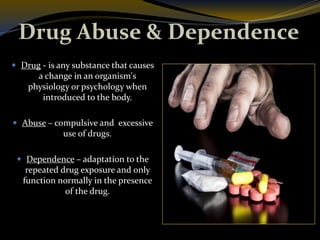
 Drug - is any substance that causes
a change in an organism's
physiology or psychology when
introduced to the body.
 Abuse – compulsive and excessive
use of drugs.
 Dependence – adaptation to the
repeated drug exposure and only
function normally in the presence
of the drug.
Behavioral Symptoms of Drug
Abuse
 Feeling that you have to use the drug regularly — daily or even several times a
day
 Taking larger amounts of the drug over a longer period of time than you
intended
 Making certain that you maintain a supply of the drug
 Spending money on the drug, even though you can't afford it
 Not meeting obligations and work or school responsibilities
 Continuing to use the drug, even though you know it's causing problems in
your life or causing you physical or psychological harm
 Doing things to get the drug that you normally wouldn't do, such as stealing
 Doing risky activities when under the influence of the drug
 Failing in your attempts to stop using the drug
 Experiencing withdrawal symptoms when you attempt to stop taking the drug
Psychoactive Drugs
 Narcotics
 Sedatives
 Stimulants
 Anti-anxiety
 Hallucinogen
Narcotics
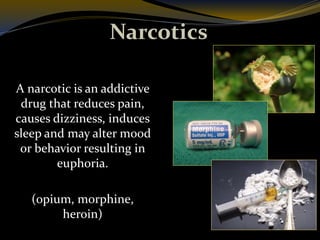
A narcotic is an addictive
drug that reduces pain,
causes dizziness, induces
sleep and may alter mood
or behavior resulting in
euphoria.
(opium, morphine,
heroin)
Sedatives
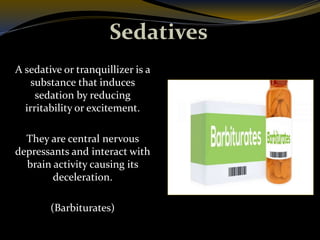
A sedative or tranquillizer is a
substance that induces
sedation by reducing
irritability or excitement.
They are central nervous
depressants and interact with
brain activity causing its
deceleration.
(Barbiturates)
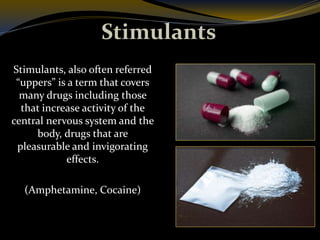
Stimulants
Stimulants, also often referred
“uppers” is a term that covers
many drugs including those
that increase activity of the
central nervous system and the
body, drugs that are
pleasurable and invigorating
effects.
(Amphetamine, Cocaine)
Anti-Anxiety Drugs
These drugs are minor-
tranquillizers. They are used
to reduce tension,
uneasiness and withdrawal
syndrome.
(Librium, Miltown, Valium)
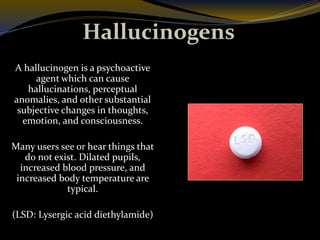
Hallucinogens
A hallucinogen is a psychoactive
agent which can cause
hallucinations, perceptual
anomalies, and other substantial
subjective changes in thoughts,
emotion, and consciousness.
Many users see or hear things that
do not exist. Dilated pupils,
increased blood pressure, and
increased body temperature are
typical.
(LSD: Lysergic acid diethylamide)
Treatment
There's no cure for substance addiction. Treatment options is
case-to-case basis. Long-term follow-up is important to prevent
relapse.
 Counseling – (group and individual) this is a psychological
approach to treating psychological conditions. CBT or
Cognitive-behavioral therapy is most common today.
 Medication - although it can not cure mental disorders, some
medications can improve symptoms by targeting the
biochemicals inside the body.
 Self-help - including lifestyle changes such as reducing
alcohol intake, sleeping more, and eating well.
Substance Use Disorders
Thank you for
paying attention.

Substance Abuse Disorders

  • 1.
    Substance Use Disorders Preparedby: Orlando A. Pistan, MAEd-GC Psychology Instructor
  • 2.
    Substance Use Disorders SubstanceUse Disorder refers to substance abuse and dependence. Also known as “Chemical dependence”, that describes the compulsive use of chemicals (usually drugs or alcohol) and the inability to stop using them despite all the problems caused by their use. Addiction develops over time and is a chronic and relapsing case.
  • 3.
    General Considerations  Substanceabuse.  Refers to the overuse of both illegal and legal substances. It is an addictive disorder that leads to significant problems and hazards in life. Alcohol is the most common legal drug to be abused.  Substance dependence.  An addictive disorder that describes continued use of drugs or alcohol, even when significant problems related to their use have developed. Signs include an increased tolerance—that is, the need for increased amounts of the substance to attain the desired effect.
  • 4.
    Alcoholism An addiction tothe consumption of alcoholic beverages or the mental illness and compulsive behavior resulting from alcohol dependency. There are 3 main types of alcohol: isopropyl, methyl, and ethyl. All are toxic, and only ethyl, or grain, alcohol can be consumed by humans, but the others find use as sterilizing agents, or as fuels. Alcohol is a depressant. It attacks and numbs the higher brain centers, impairing rational processes, judgment and lowers self-control. Sot/Drunkard is a person who is habitually drunk.
  • 5.
    Symptoms of Alcoholism Being unable to limit the amount of alcohol you drink  Wanting to cut down on how much you drink or making unsuccessful attempts to do so  Spending a lot of time drinking, getting alcohol or recovering from alcohol use  Strong craving or urge to drink alcohol  Failing to fulfill major obligations at work, school or home due to repeated alcohol use  Continuing to drink alcohol even though you know it's causing physical, social or interpersonal problems  Using alcohol in situations where it's not safe, such as when driving or swimming  Developing a tolerance to alcohol so you need more to feel its effect or you have a reduced effect from the same amount  Experiencing withdrawal symptoms — such as nausea, sweating and shaking — when you don't drink, or drinking to avoid these symptoms
  • 6.
    Alcoholism and Psychoses Pathological Intoxication – a confusion and disorientation state caused by alcohol intolerance. This reaction is usually followed by a deep sleep.  Delirium Tremens - a psychotic condition typical of withdrawal in chronic alcoholics, involving tremors, hallucinations about crawling animals, coated tongue, and disorientation for time and place.  Acute Hallucinosis – are auditory hallucinations. The individual claims hearing voices which may cause the intoxicated person to feel fright, scream and even attempt suicide.
  • 7.
    Drug Abuse &Dependence  Drug - is any substance that causes a change in an organism's physiology or psychology when introduced to the body.  Abuse – compulsive and excessive use of drugs.  Dependence – adaptation to the repeated drug exposure and only function normally in the presence of the drug.
  • 8.
    Behavioral Symptoms ofDrug Abuse  Feeling that you have to use the drug regularly — daily or even several times a day  Taking larger amounts of the drug over a longer period of time than you intended  Making certain that you maintain a supply of the drug  Spending money on the drug, even though you can't afford it  Not meeting obligations and work or school responsibilities  Continuing to use the drug, even though you know it's causing problems in your life or causing you physical or psychological harm  Doing things to get the drug that you normally wouldn't do, such as stealing  Doing risky activities when under the influence of the drug  Failing in your attempts to stop using the drug  Experiencing withdrawal symptoms when you attempt to stop taking the drug
  • 9.
    Psychoactive Drugs  Narcotics Sedatives  Stimulants  Anti-anxiety  Hallucinogen
  • 10.
    Narcotics A narcotic isan addictive drug that reduces pain, causes dizziness, induces sleep and may alter mood or behavior resulting in euphoria. (opium, morphine, heroin)
  • 11.
    Sedatives A sedative ortranquillizer is a substance that induces sedation by reducing irritability or excitement. They are central nervous depressants and interact with brain activity causing its deceleration. (Barbiturates)
  • 12.
    Stimulants Stimulants, also oftenreferred “uppers” is a term that covers many drugs including those that increase activity of the central nervous system and the body, drugs that are pleasurable and invigorating effects. (Amphetamine, Cocaine)
  • 13.
    Anti-Anxiety Drugs These drugsare minor- tranquillizers. They are used to reduce tension, uneasiness and withdrawal syndrome. (Librium, Miltown, Valium)
  • 14.
    Hallucinogens A hallucinogen isa psychoactive agent which can cause hallucinations, perceptual anomalies, and other substantial subjective changes in thoughts, emotion, and consciousness. Many users see or hear things that do not exist. Dilated pupils, increased blood pressure, and increased body temperature are typical. (LSD: Lysergic acid diethylamide)
  • 15.
    Treatment There's no curefor substance addiction. Treatment options is case-to-case basis. Long-term follow-up is important to prevent relapse.  Counseling – (group and individual) this is a psychological approach to treating psychological conditions. CBT or Cognitive-behavioral therapy is most common today.  Medication - although it can not cure mental disorders, some medications can improve symptoms by targeting the biochemicals inside the body.  Self-help - including lifestyle changes such as reducing alcohol intake, sleeping more, and eating well.
  • 16.
    Substance Use Disorders Thankyou for paying attention.