PARANOID
SCHIZOPHRENIA
DISCLAIMER
 This is a project for a high school AP Psychology course. For any
questions about this project or its content please email the teacher,
Laura Astorian: laura.astorian@cobbk12.org
COMMON MISCONCE PTIONS ABOUT
SCHIZ OPHRE NIA
 Schizophrenia refers to multiple personalities
• People with schizophrenia do not have split personalities.
 Schizophrenia is a rare condition
• Schizophrenia is not rare; the lifetime risk of developing
schizophrenia is widely accepted to be around 1 in 100
COMMON MISCONCE PTIONS ABOUT
SCHIZ OPHRE NIA
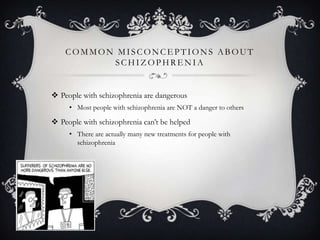
 People with schizophrenia are dangerous
• Most people with schizophrenia are NOT a danger to others
 People with schizophrenia can’t be helped
• There are actually many new treatments for people with
schizophrenia
TY PE S OF SCHIZ OPHRE NIA
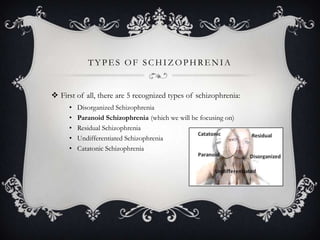
 First of all, there are 5 recognized types of schizophrenia:
• Disorganized Schizophrenia
• Paranoid Schizophrenia (which we will be focusing on)
• Residual Schizophrenia
• Undifferentiated Schizophrenia
• Catatonic Schizophrenia
WHAT E X ACTLY IS PARANOID
SCHIZ OPHRE NIA?
 Paranoid schizophrenia is a psychotic disorder in which one loses
touch with reality
 It affects the way a person acts, thinks, and perceives the world
HOW CAN ONE GE T THIS IL L NE SS?
 It can be due mainly to 3 reasons:
• The Environment
• Abnormal Brain Structure
• Genetics
THE E NVIRONME NT
 Low oxygen levels during birth
 Exposure to a virus during infancy
 Early parental loss or separation
 Physical or sexual abuse during one’s childhood
ABNORMAL BRAIN STRUCTURE
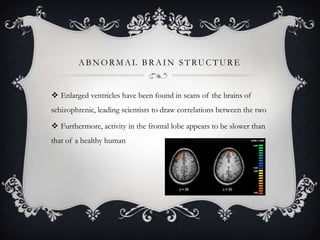
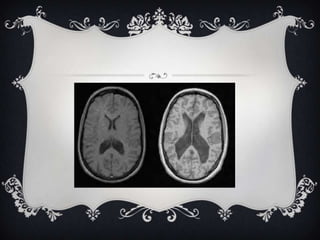
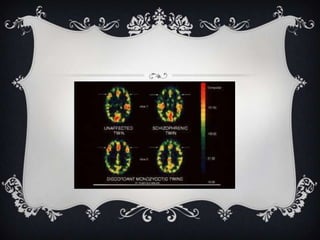
 Enlarged ventricles have been found in scans of the brains of
schizophrenic, leading scientists to draw correlations between the two
 Furthermore, activity in the frontal lobe appears to be slower than
that of a healthy human
GE NE TICS
 Generally, it is passed on genetically; however, one could possibly
develop it due to a traumatic event, or with age
 The odds of one developing schizophrenia when neither of his or
her parents have it is less than 1%
 However, when both parents have schizophrenia, the odds are
greater than 35%
AT W H AT AG E D O E S O N E U S UA L LY B E G I N
T O D E V E L O P PA R A N O I D S C H I Z O P H R E N I A ?
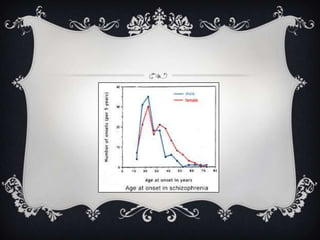
 In nearly 75% of cases, schizophrenia develops in individuals 16-
25 years of age
 In this age group, more cases are found in which men have it
 From age 25-30, more women have it
 From 30 on, cases in which schizophrenia develops are very rare
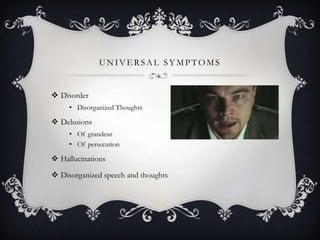
UNIVE RSAL SY MPTOMS
 Disorder
• Disorganized Thoughts
 Delusions
• Of grandeur
• Of persecution
 Hallucinations
 Disorganized speech and thoughts
UNIVE RSAL SY MPTOMS
 Anxiety
 Anger
 Violence
 Argumentativeness
DIAGNOSIS
 To diagnose paranoid schizophrenia, psychologists look for:
• The presence of at least 2 of the following symptoms for at least 30 days:
• Hallucinations
• Delusions
• Disorganized speech
• Disorganized or catatonic behavior
• Negative symptoms (emotional flatness, apathy, lack of speech)
• Significant problems functioning at work or school, relating to other
people, and taking care of oneself.
• Continuous signs of schizophrenia for at least 6 months, with active
symptoms (hallucinations, delusions, etc.) for at least 1 month.
DIAGNOSIS
 Doctors generally use 3 methods for diagnosing schizophrenia:
• Perform psychiatric evaluations
• Search through medical history and exams
• Perform lab tests
E FFE CTS
 Many schizophrenics have relationship problems
 There is also an increased risk of suicide
 Alcohol and drug use is likely to increase, and in many cases
addiction seems to form
TRE ATMENTS
 Various methods are used to treat schizophrenic patients, such as:
• Supportive counseling and therapy
• Antipsychotics
• Hospitalization
HOSPITAL IZ ATION
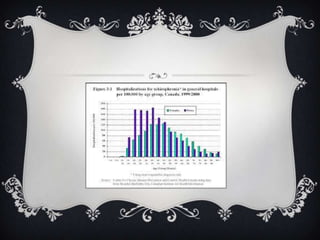
 This is usually what happens to a schizophrenic patient before or
during the time in which he or she is given any real treatment
 This method is very important for the initial safety of the patient
ANTIPSYCHOTICS
 Medication is used along with therapy much of the time because it
is very effective at controlling symptoms and cognitive functioning of
people with schizophrenia
 However, this process is not 100% effective for all patients
THE RAPY
 Therapy is important to the patients because it provides friendship,
encouragement, and practical advice
 Family and friends are also extremely important in the treatment
process, so that the patient will have a support network
W H AT I T ’ S L I K E L I V I N G W I T H PA R A N O I D
S C H I Z O P H R E N I A
 Having this disorder makes it difficult for me to be a functioning
member of society; however, when I have taken the antipsychotics
prescribed to me and attend therapy, I find myself able to function
much more easily
W H AT I T ’ S L I K E L I V I N G W I T H PA R A N O I D
S C H I Z O P H R E N I A
 The hallucinations in combination with the delusions make it hard
to decipher between what is real and what is fake. It is confusing and
frustrating at times, as you might imagine.
WHAT IT’ S L IK E TO E X PE RIE NCE A
PSYCHOTIC E PISODE
 If you are uncomfortable at any time during this clip, you should
alert a supervisor and exit the room
 https://www.youtube.com/watch?v=_oD4QxTjExs
SOURCE S
 http://www.schizophrenia.com/family/schizintro.html
 http://www.helpguide.org/mental/schizophrenia_symptom.htm
 http://www.drugs.com/schizophrenia.html

Paranoid schizophrenia ppt

  • 1.
  • 2.
    DISCLAIMER  This isa project for a high school AP Psychology course. For any questions about this project or its content please email the teacher, Laura Astorian: laura.astorian@cobbk12.org
  • 3.
    COMMON MISCONCE PTIONSABOUT SCHIZ OPHRE NIA  Schizophrenia refers to multiple personalities • People with schizophrenia do not have split personalities.  Schizophrenia is a rare condition • Schizophrenia is not rare; the lifetime risk of developing schizophrenia is widely accepted to be around 1 in 100
  • 4.
    COMMON MISCONCE PTIONSABOUT SCHIZ OPHRE NIA  People with schizophrenia are dangerous • Most people with schizophrenia are NOT a danger to others  People with schizophrenia can’t be helped • There are actually many new treatments for people with schizophrenia
  • 5.
    TY PE SOF SCHIZ OPHRE NIA  First of all, there are 5 recognized types of schizophrenia: • Disorganized Schizophrenia • Paranoid Schizophrenia (which we will be focusing on) • Residual Schizophrenia • Undifferentiated Schizophrenia • Catatonic Schizophrenia
  • 6.
    WHAT E XACTLY IS PARANOID SCHIZ OPHRE NIA?  Paranoid schizophrenia is a psychotic disorder in which one loses touch with reality  It affects the way a person acts, thinks, and perceives the world
  • 7.
    HOW CAN ONEGE T THIS IL L NE SS?  It can be due mainly to 3 reasons: • The Environment • Abnormal Brain Structure • Genetics
  • 8.
    THE E NVIRONMENT  Low oxygen levels during birth  Exposure to a virus during infancy  Early parental loss or separation  Physical or sexual abuse during one’s childhood
  • 9.
    ABNORMAL BRAIN STRUCTURE Enlarged ventricles have been found in scans of the brains of schizophrenic, leading scientists to draw correlations between the two  Furthermore, activity in the frontal lobe appears to be slower than that of a healthy human
  • 12.
    GE NE TICS Generally, it is passed on genetically; however, one could possibly develop it due to a traumatic event, or with age  The odds of one developing schizophrenia when neither of his or her parents have it is less than 1%  However, when both parents have schizophrenia, the odds are greater than 35%
  • 13.
    AT W HAT AG E D O E S O N E U S UA L LY B E G I N T O D E V E L O P PA R A N O I D S C H I Z O P H R E N I A ?  In nearly 75% of cases, schizophrenia develops in individuals 16- 25 years of age  In this age group, more cases are found in which men have it  From age 25-30, more women have it  From 30 on, cases in which schizophrenia develops are very rare
  • 15.
    UNIVE RSAL SYMPTOMS  Disorder • Disorganized Thoughts  Delusions • Of grandeur • Of persecution  Hallucinations  Disorganized speech and thoughts
  • 16.
    UNIVE RSAL SYMPTOMS  Anxiety  Anger  Violence  Argumentativeness
  • 17.
    DIAGNOSIS  To diagnoseparanoid schizophrenia, psychologists look for: • The presence of at least 2 of the following symptoms for at least 30 days: • Hallucinations • Delusions • Disorganized speech • Disorganized or catatonic behavior • Negative symptoms (emotional flatness, apathy, lack of speech) • Significant problems functioning at work or school, relating to other people, and taking care of oneself. • Continuous signs of schizophrenia for at least 6 months, with active symptoms (hallucinations, delusions, etc.) for at least 1 month.
  • 18.
    DIAGNOSIS  Doctors generallyuse 3 methods for diagnosing schizophrenia: • Perform psychiatric evaluations • Search through medical history and exams • Perform lab tests
  • 19.
    E FFE CTS Many schizophrenics have relationship problems  There is also an increased risk of suicide  Alcohol and drug use is likely to increase, and in many cases addiction seems to form
  • 20.
    TRE ATMENTS  Variousmethods are used to treat schizophrenic patients, such as: • Supportive counseling and therapy • Antipsychotics • Hospitalization
  • 21.
    HOSPITAL IZ ATION This is usually what happens to a schizophrenic patient before or during the time in which he or she is given any real treatment  This method is very important for the initial safety of the patient
  • 23.
    ANTIPSYCHOTICS  Medication isused along with therapy much of the time because it is very effective at controlling symptoms and cognitive functioning of people with schizophrenia  However, this process is not 100% effective for all patients
  • 25.
    THE RAPY  Therapyis important to the patients because it provides friendship, encouragement, and practical advice  Family and friends are also extremely important in the treatment process, so that the patient will have a support network
  • 26.
    W H ATI T ’ S L I K E L I V I N G W I T H PA R A N O I D S C H I Z O P H R E N I A  Having this disorder makes it difficult for me to be a functioning member of society; however, when I have taken the antipsychotics prescribed to me and attend therapy, I find myself able to function much more easily
  • 27.
    W H ATI T ’ S L I K E L I V I N G W I T H PA R A N O I D S C H I Z O P H R E N I A  The hallucinations in combination with the delusions make it hard to decipher between what is real and what is fake. It is confusing and frustrating at times, as you might imagine.
  • 28.
    WHAT IT’ SL IK E TO E X PE RIE NCE A PSYCHOTIC E PISODE  If you are uncomfortable at any time during this clip, you should alert a supervisor and exit the room  https://www.youtube.com/watch?v=_oD4QxTjExs
  • 29.
    SOURCE S  http://www.schizophrenia.com/family/schizintro.html http://www.helpguide.org/mental/schizophrenia_symptom.htm  http://www.drugs.com/schizophrenia.html