1
OCCUPATIONAL SAFETY AND HEALTH
       OSHA               ADMINISTRATION

Subpart Q – Concrete and Masonry Construction
        1926.701 General Requirements
 1926.701(a) Construction loads. “No construction loads
 shall be placed on a concrete structure or portion of a
 concrete structure unless the employer determines,
 based on information received from a person who is
 qualified in structural design, that the structure or
 portion of the structure is capable of supporting the
 loads.”


                                                       2
OCCUPATIONAL SAFETY AND HEALTH
       OSHA               ADMINISTRATION

Subpart Q – Concrete and Masonry Construction
        1926.701 General Requirements
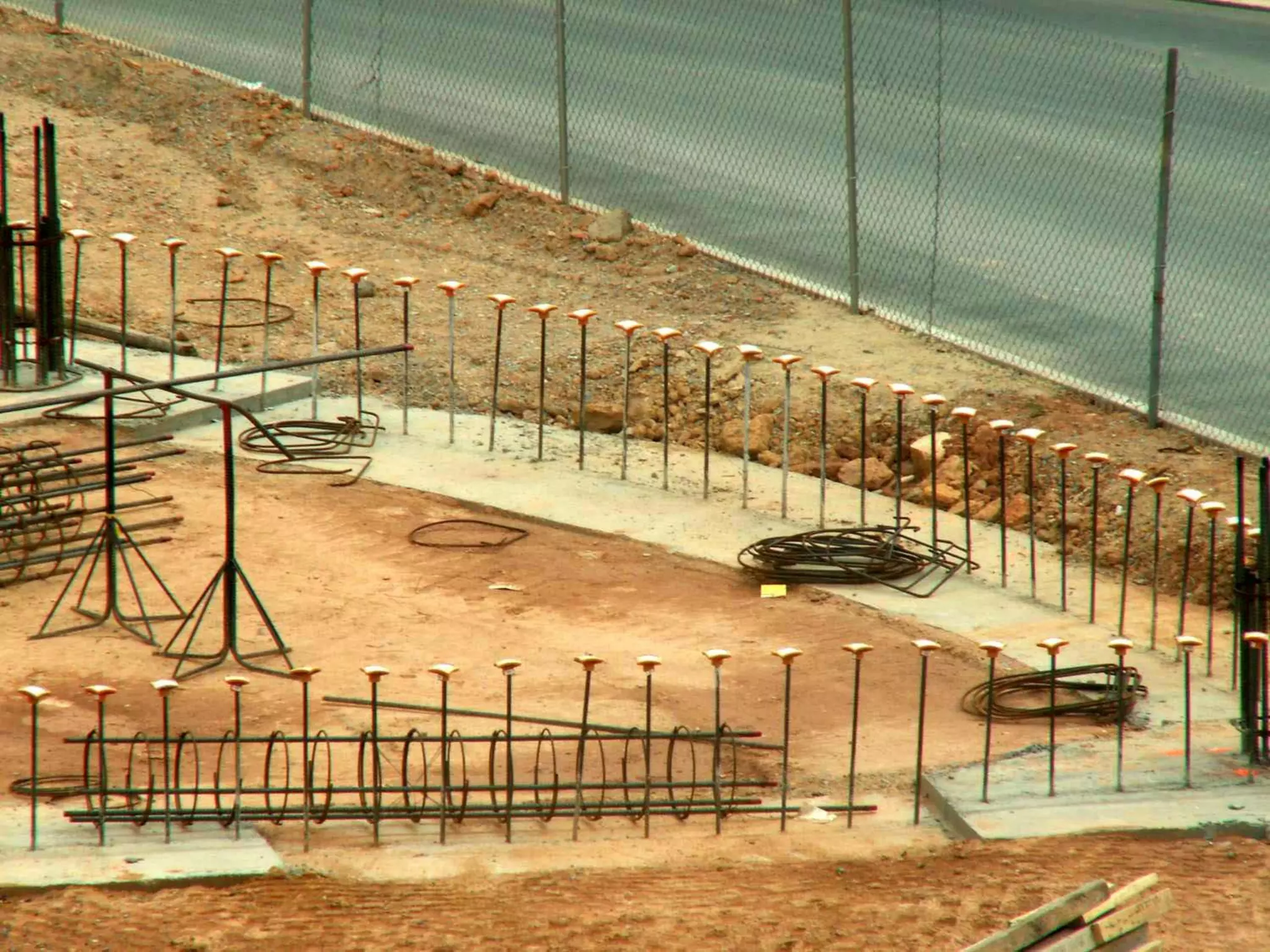
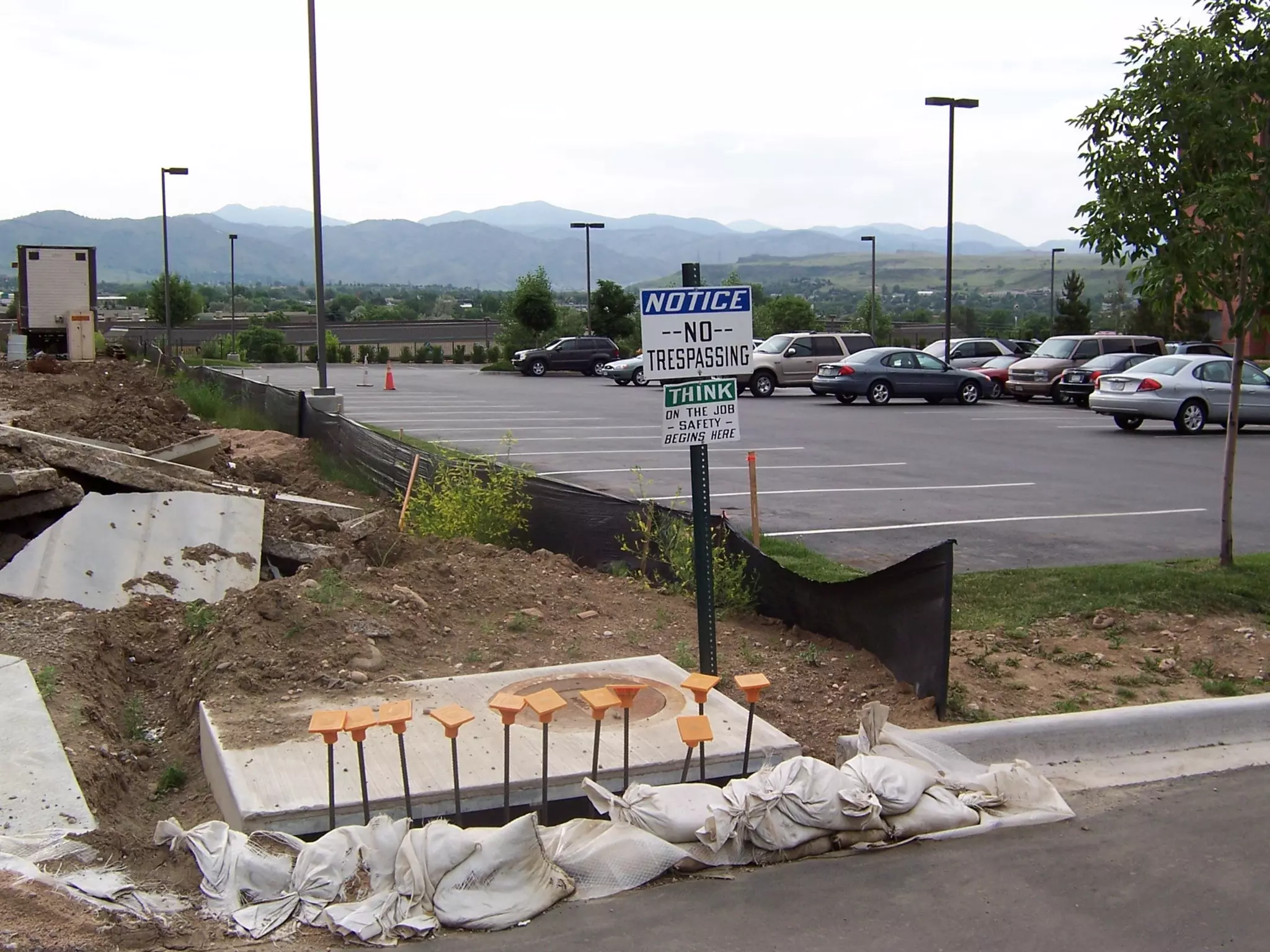
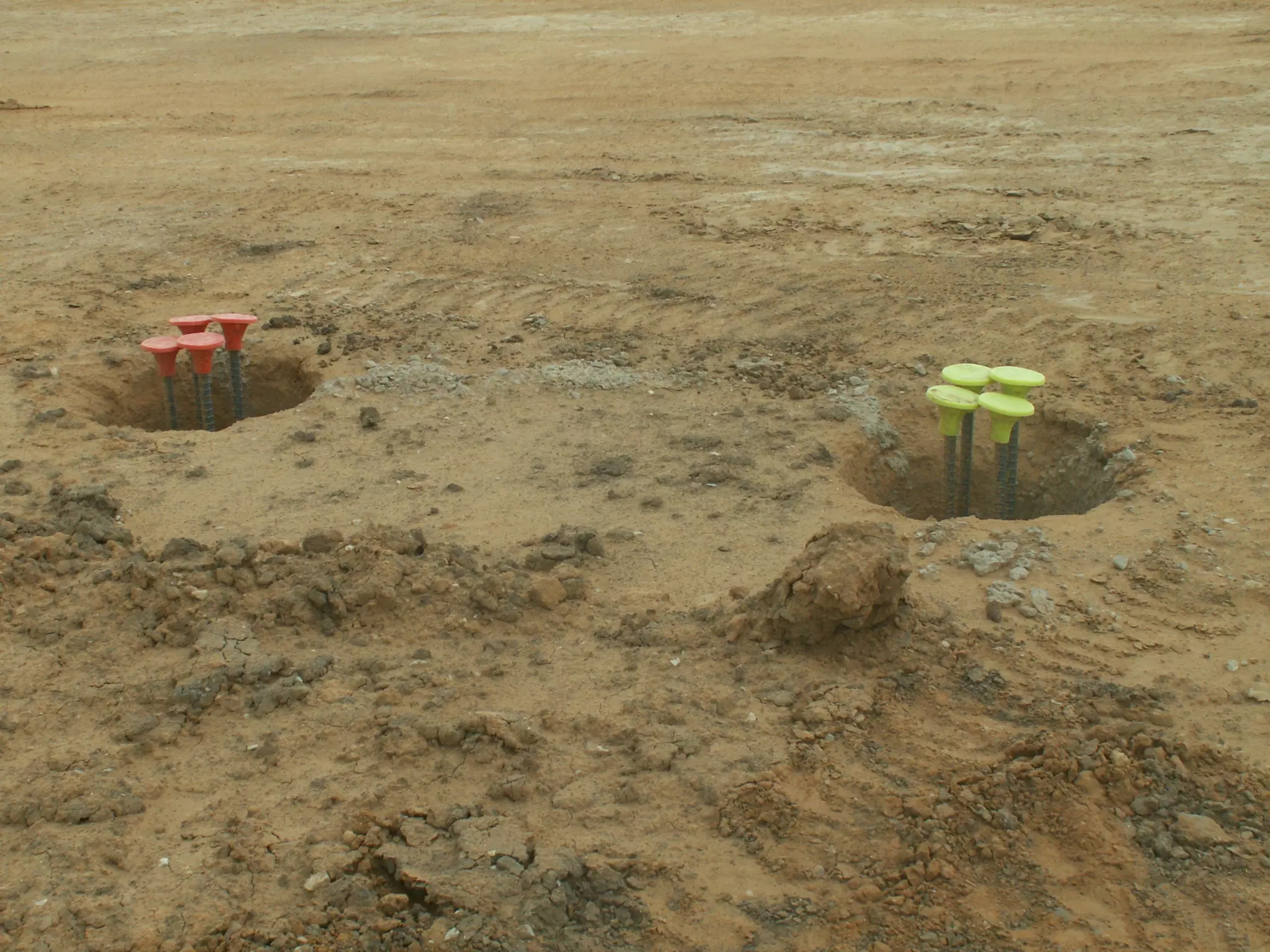
 1926.701(b) Reinforcing steel. “All protruding
 reinforcing steel, onto and into which employees
 could fall shall be guarded to eliminate the hazard of
 impalement.”

 1926.701(d) Riding concrete buckets. “No employee
 shall be permitted to ride concrete buckets.”


                                                          3
5
SLIDE 9 - CONCRETE   COPYRIGHT 1999 - UNIVERSAL SAFETY CONSULTING
OCCUPATIONAL SAFETY AND HEALTH
       OSHA               ADMINISTRATION

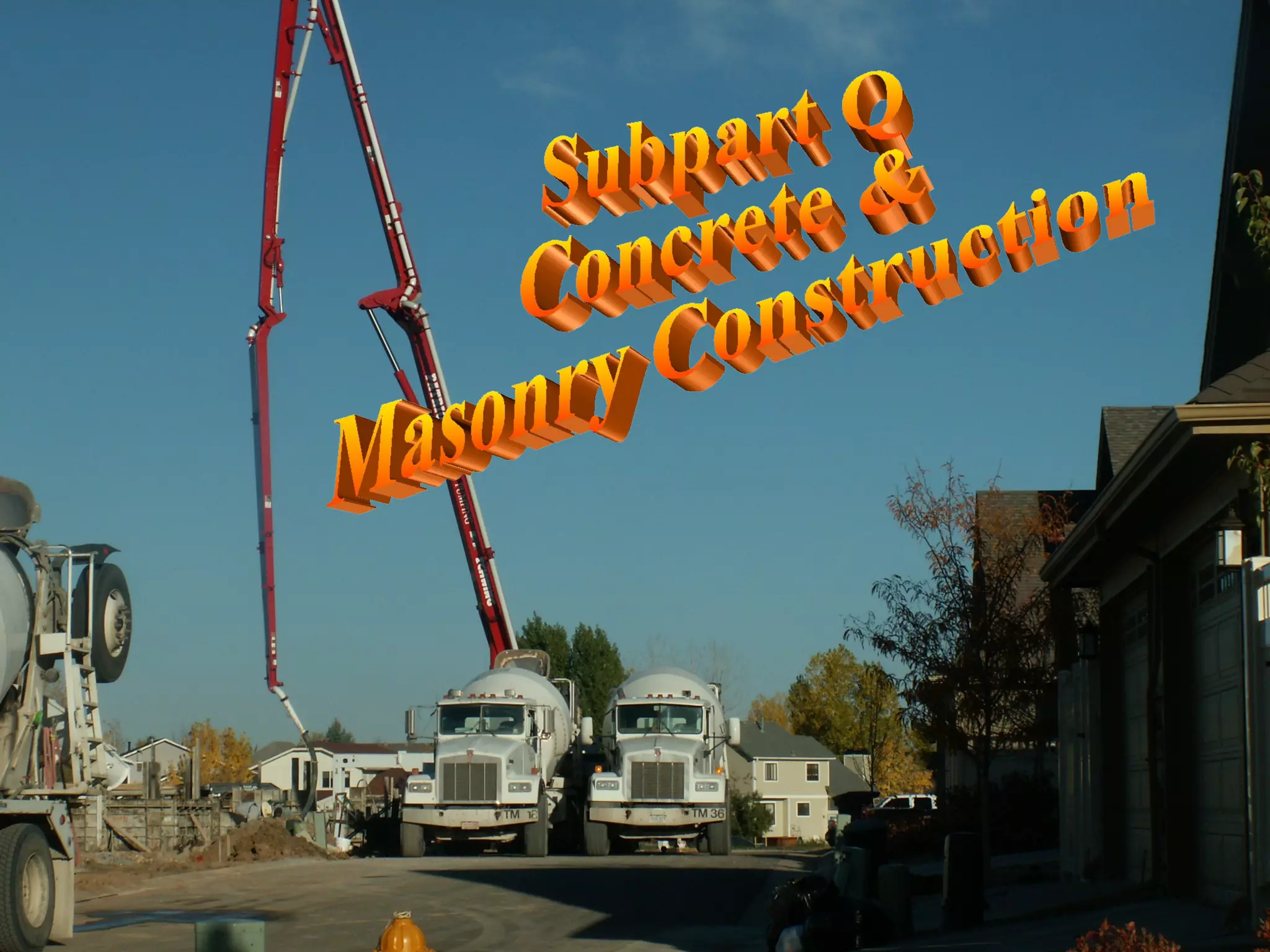
Subpart Q – Concrete and Masonry Construction
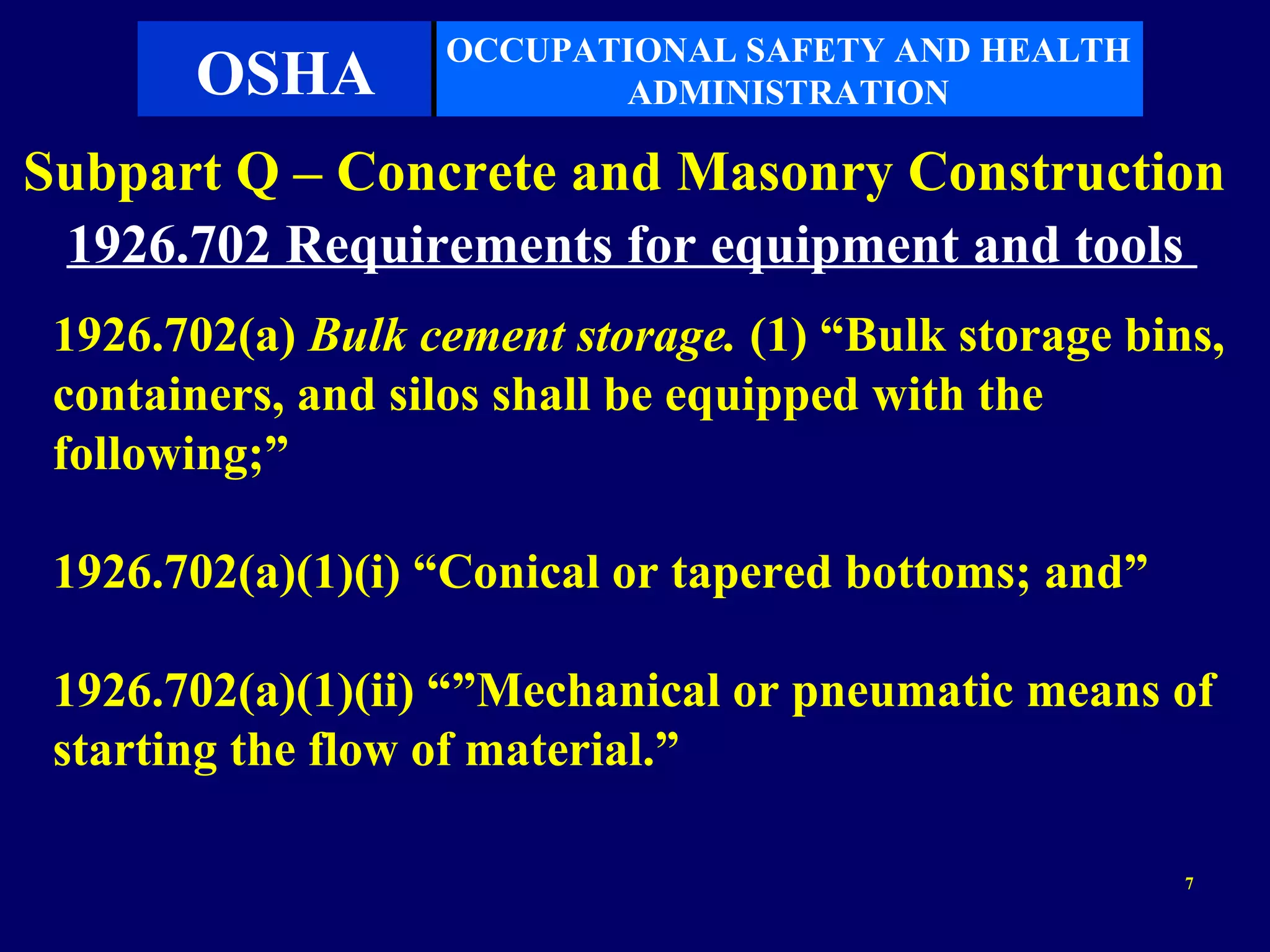
 1926.702 Requirements for equipment and tools
 1926.702(a) Bulk cement storage. (1) “Bulk storage bins,
 containers, and silos shall be equipped with the
 following;”

 1926.702(a)(1)(i) “Conical or tapered bottoms; and”

 1926.702(a)(1)(ii) “”Mechanical or pneumatic means of
 starting the flow of material.”

                                                       7
OCCUPATIONAL SAFETY AND HEALTH
       OSHA               ADMINISTRATION

Subpart Q – Concrete and Masonry Construction
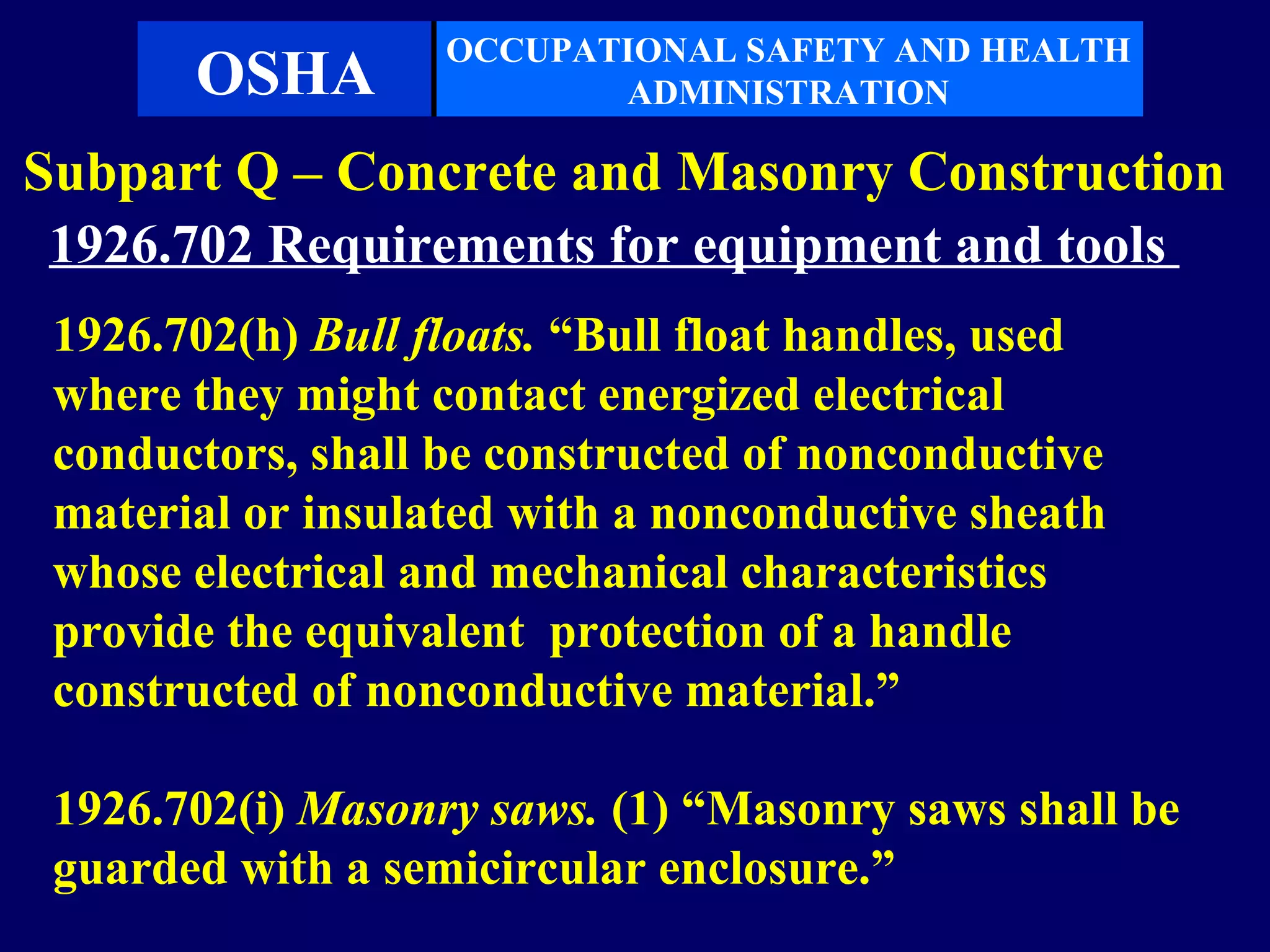
 1926.702 Requirements for equipment and tools
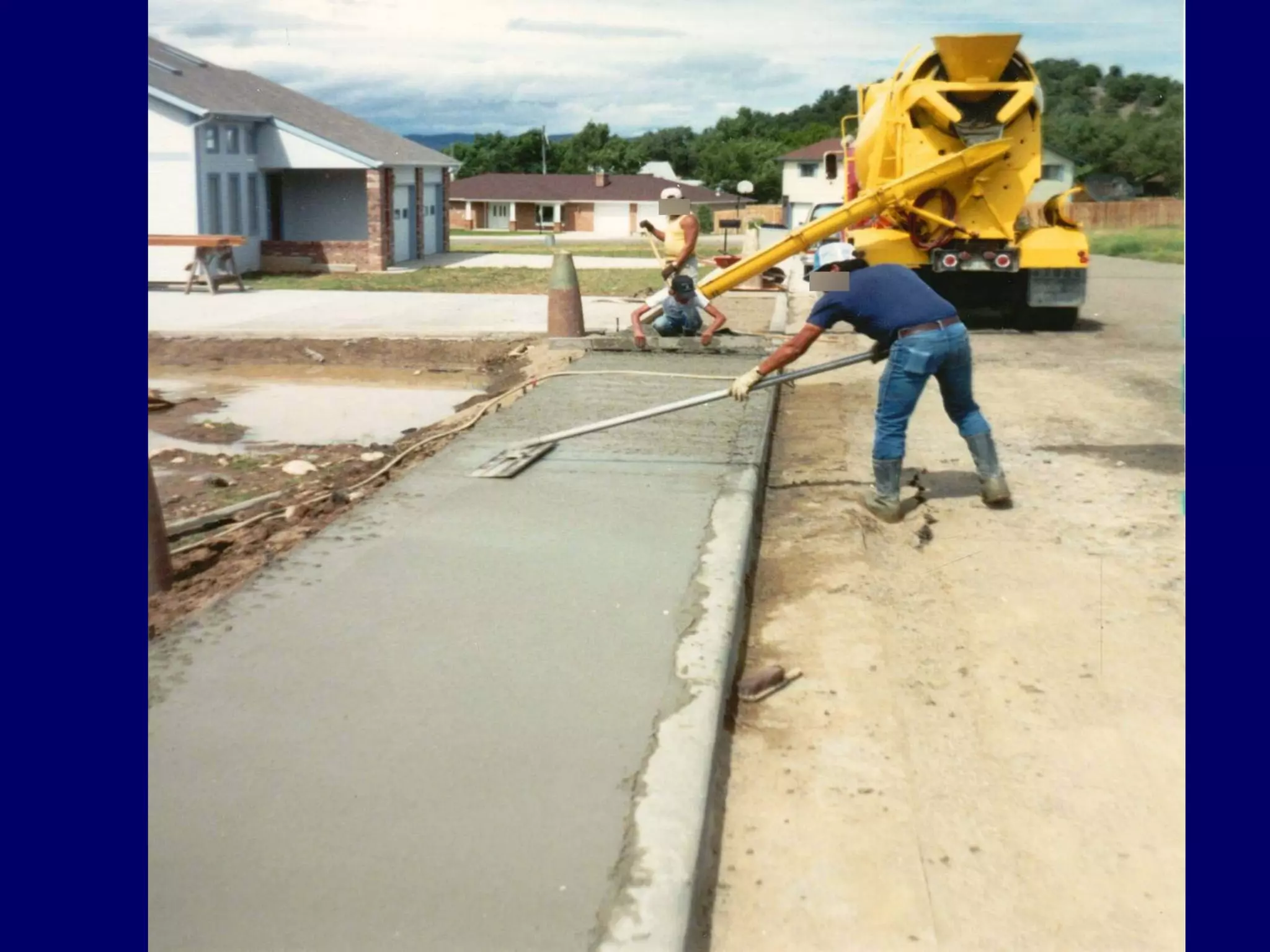
 1926.702(h) Bull floats. “Bull float handles, used
 where they might contact energized electrical
 conductors, shall be constructed of nonconductive
 material or insulated with a nonconductive sheath
 whose electrical and mechanical characteristics
 provide the equivalent protection of a handle
 constructed of nonconductive material.”

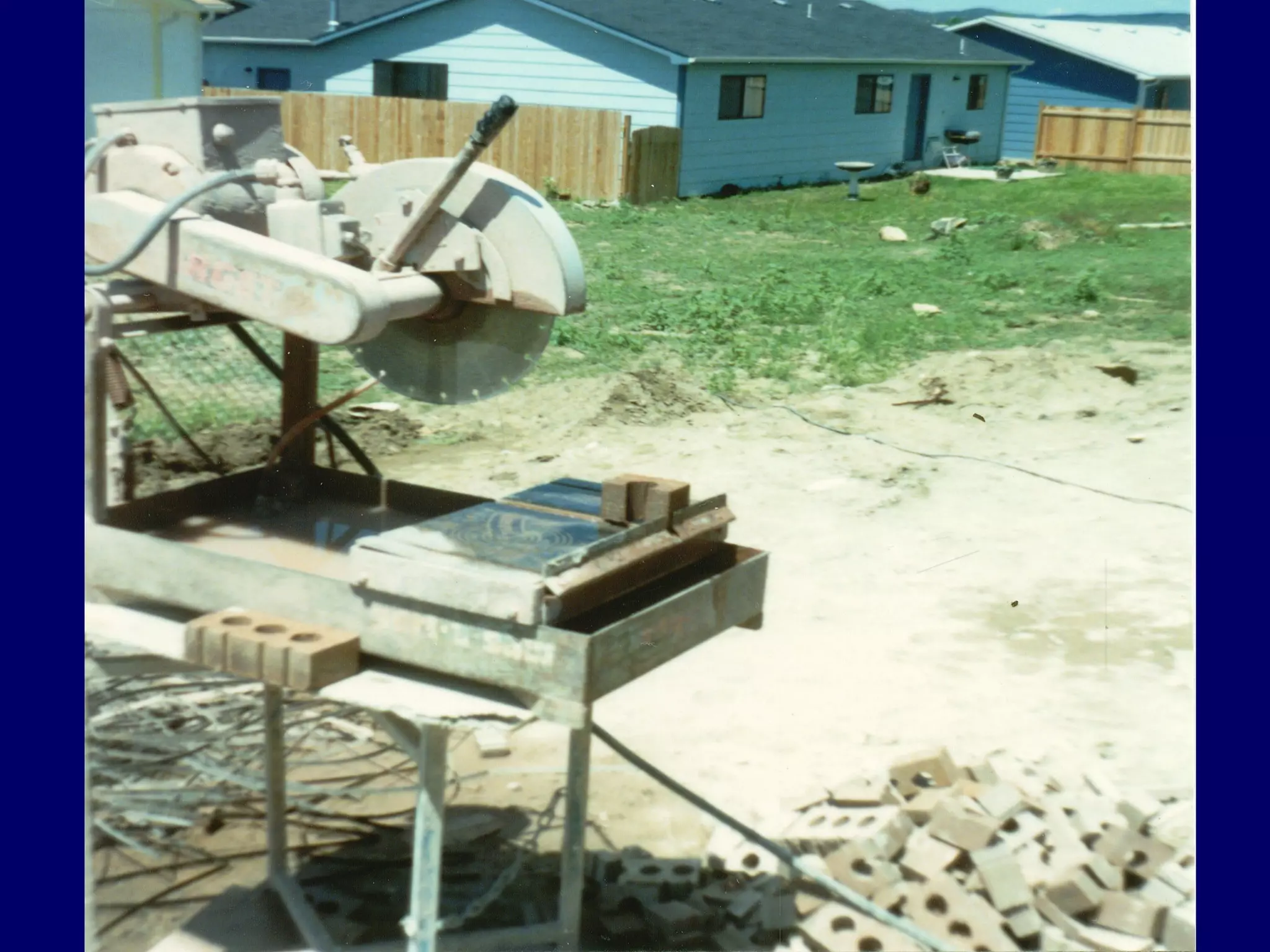
 1926.702(i) Masonry saws. (1) “Masonry saws shall be
 guarded with a semicircular enclosure.”
10
OCCUPATIONAL SAFETY AND HEALTH
       OSHA               ADMINISTRATION

Subpart Q – Concrete and Masonry Construction
 1926.702 Requirements for equipment and tools
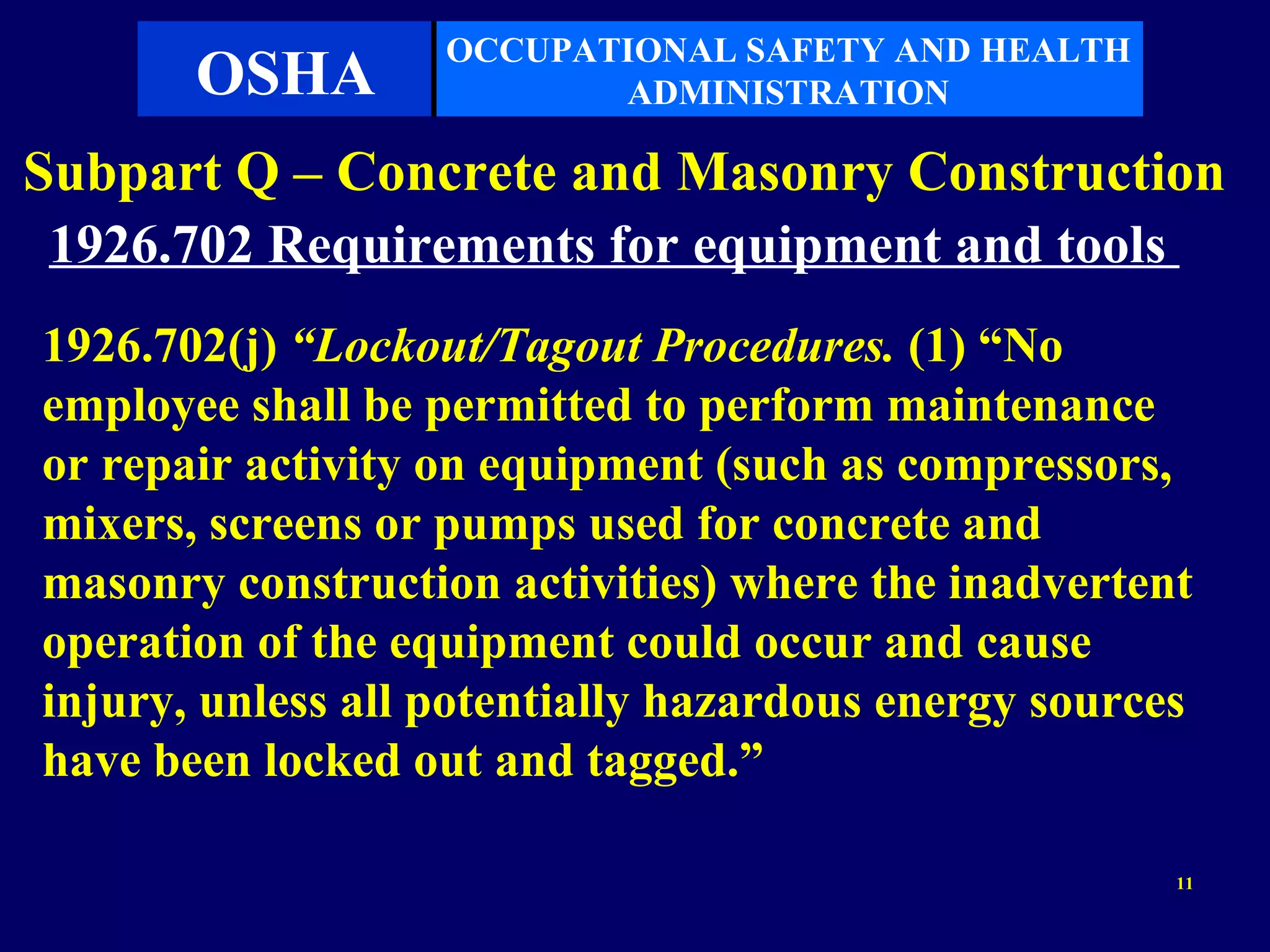
1926.702(j) “Lockout/Tagout Procedures. (1) “No
employee shall be permitted to perform maintenance
or repair activity on equipment (such as compressors,
mixers, screens or pumps used for concrete and
masonry construction activities) where the inadvertent
operation of the equipment could occur and cause
injury, unless all potentially hazardous energy sources
have been locked out and tagged.”

                                                      11
OCCUPATIONAL SAFETY AND HEALTH
       OSHA              ADMINISTRATION

Subpart Q – Concrete and Masonry Construction
    1926.703 Requirements for cast-in-place
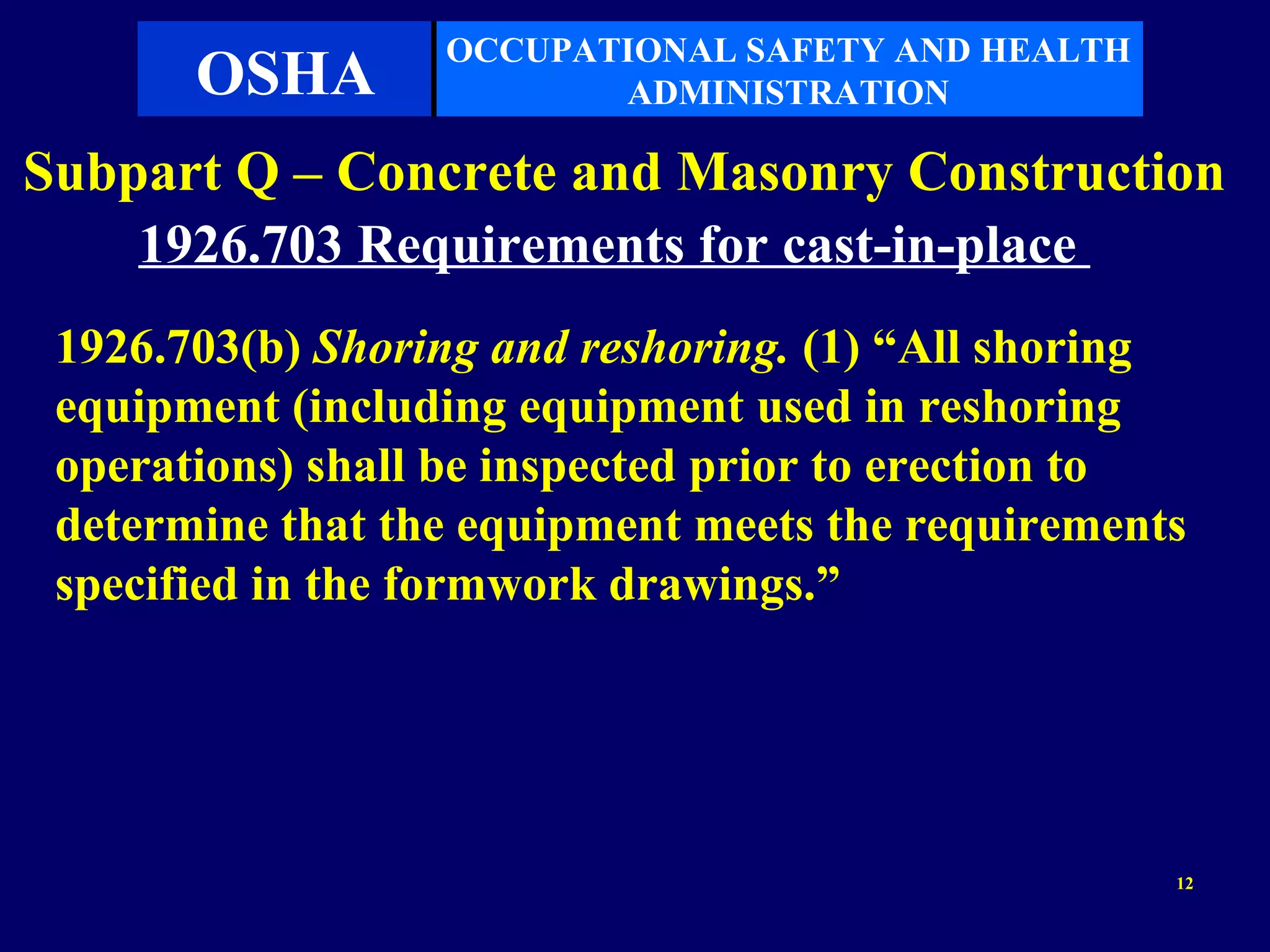
 1926.703(b) Shoring and reshoring. (1) “All shoring
 equipment (including equipment used in reshoring
 operations) shall be inspected prior to erection to
 determine that the equipment meets the requirements
 specified in the formwork drawings.”


                                                   12
OCCUPATIONAL SAFETY AND HEALTH
       OSHA                ADMINISTRATION

Subpart Q – Concrete and Masonry Construction
    1926.703 Requirements for cast-in-place

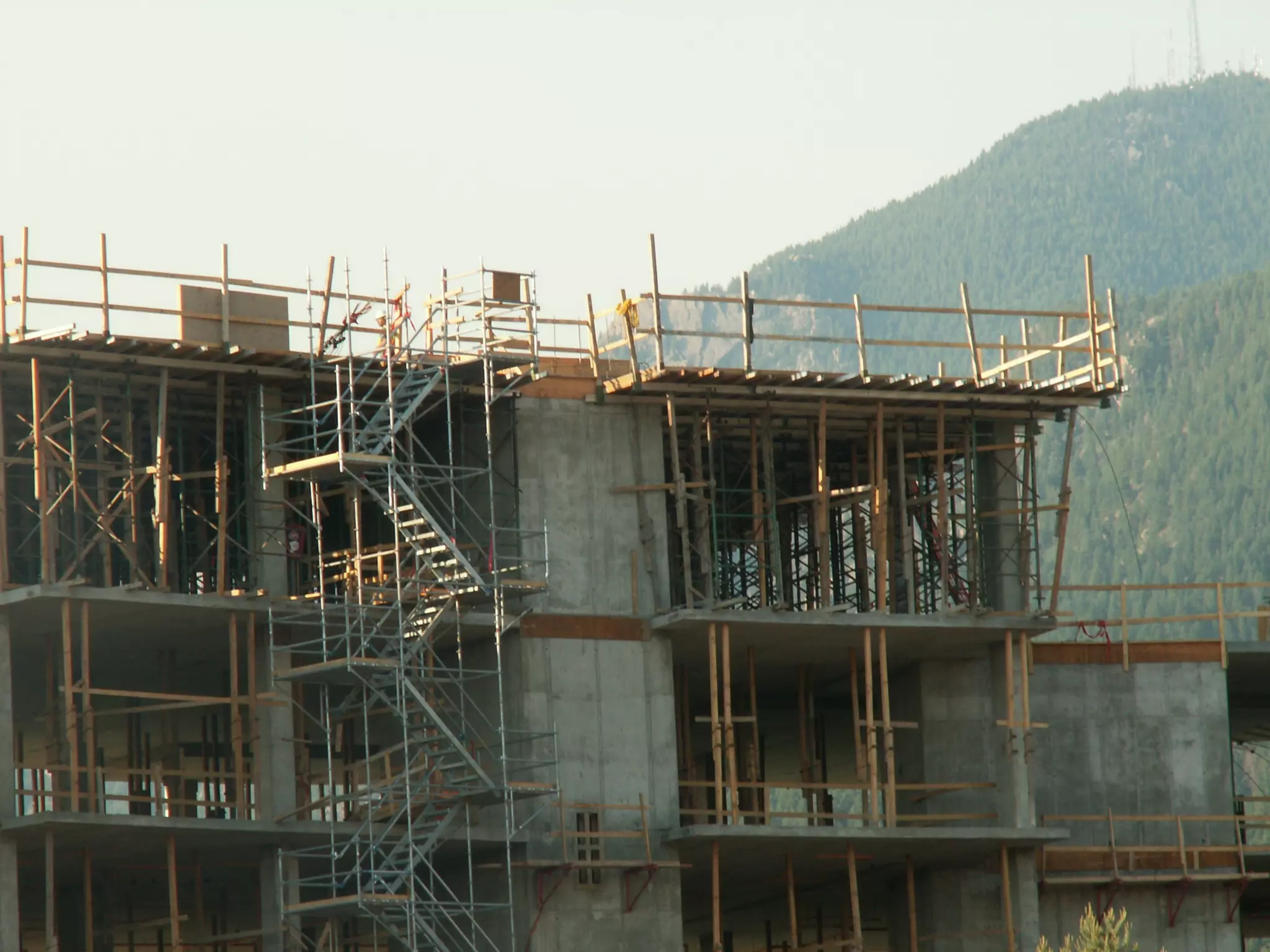
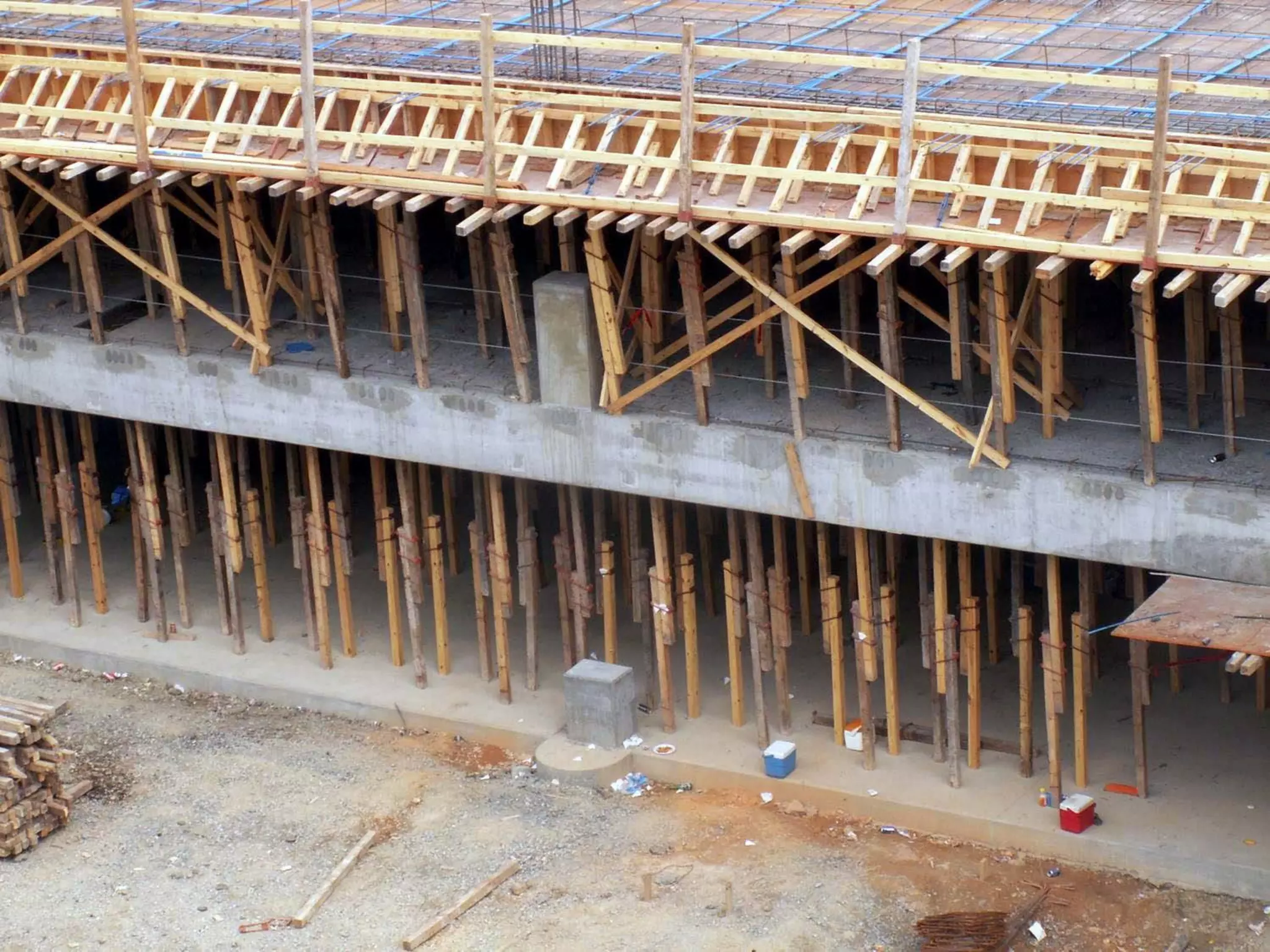
 1926.703(b)(8) “Whenever single posts shores are used
 one on top of another (tiered), the employer shall
 comply with the following specific requirements in
 addition to the general requirements for formwork.”

 1926.703(b)(8)(i) “The design of the shoring shall be
 prepared by a qualified designer and the erected
 shoring shall be inspected by an engineer qualified in
 structural design.”
                                                          13
14
15
OCCUPATIONAL SAFETY AND HEALTH
       OSHA                ADMINISTRATION

Subpart Q – Concrete and Masonry Construction
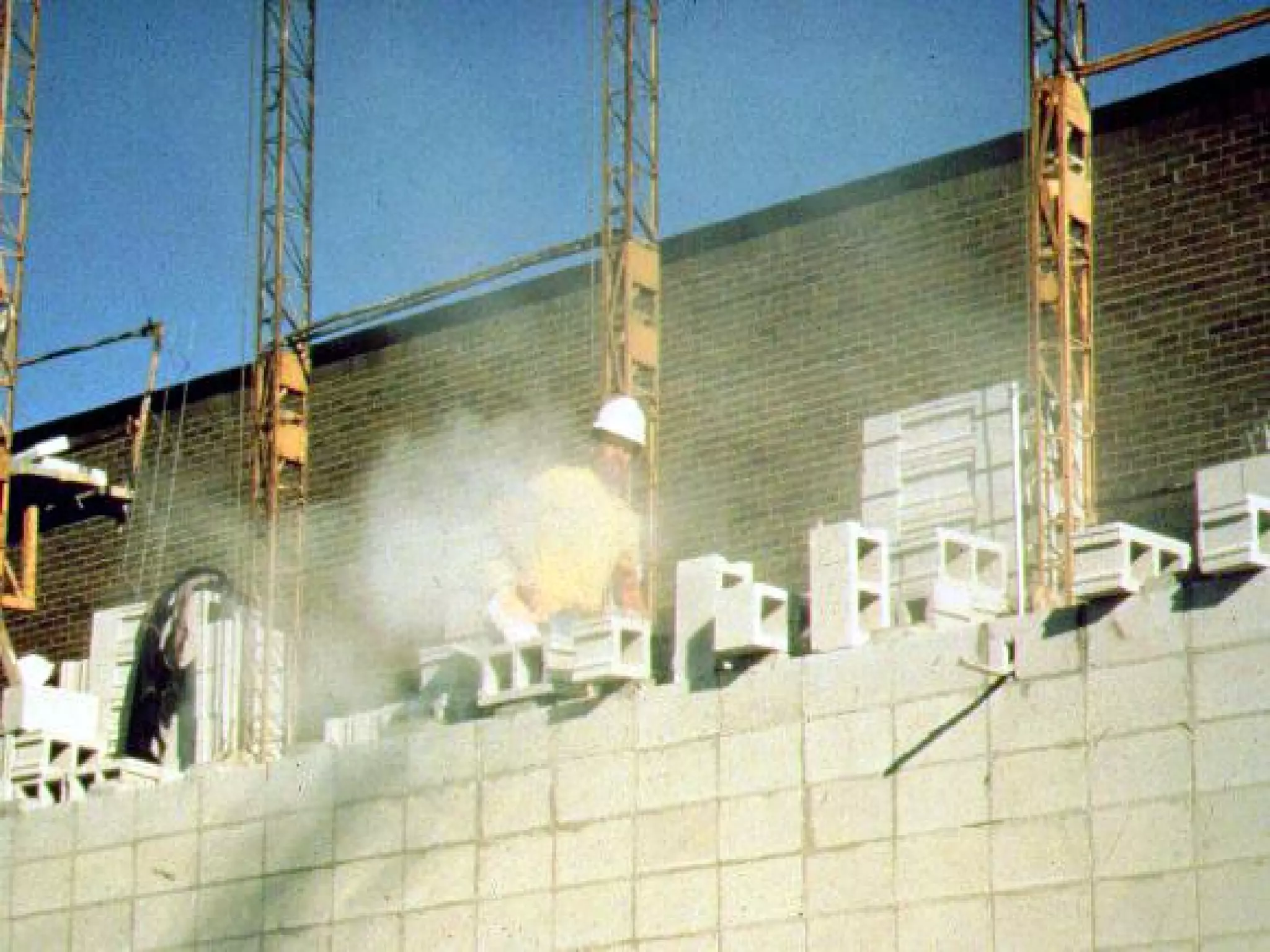
 1926.706 Requirements for masonry construction
1926.706(a) “A limited access zone shall be established
whenever a masonry wall is being constructed. The
limited access zone shall conform to the following.”

1926.706(a)(1) “The limited access zone shall be
established prior to the start of construction of the
wall.”

1926.706(a)(2) “The limited access zone shall be equal
to the height of the wall to be constructed plus four
feet, and shall run the entire length of the wall.”
OCCUPATIONAL SAFETY AND HEALTH
       OSHA               ADMINISTRATION

Subpart Q – Concrete and Masonry Construction
 1926.706 Requirements for masonry construction
1926.706(a)(3) “The limited access zone shall be
established on the side of the wall which will be
unscaffolded.”

1926.706(a)(4) “The limited access zone shall be
restricted to entry by employees actively engaged in
constructing the wall. No other employees shall be
permitted to enter the zone.”

                                                       17
OCCUPATIONAL SAFETY AND HEALTH
       OSHA                ADMINISTRATION

Subpart Q – Concrete and Masonry Construction
 1926.706 Requirements for masonry construction
1926.706(a)(5) “The limited access zone shall remain in
place until the wall is adequately supported to prevent
overturning and to prevent collapse unless the height of
wall is over eight feet, in which case, the limited access
zone shall remain in place until the requirements of
paragraph (b) of this section have been met.”


                                                        18
OCCUPATIONAL SAFETY AND HEALTH
       OSHA                ADMINISTRATION

Subpart Q – Concrete and Masonry Construction
 1926.706 Requirements for masonry construction
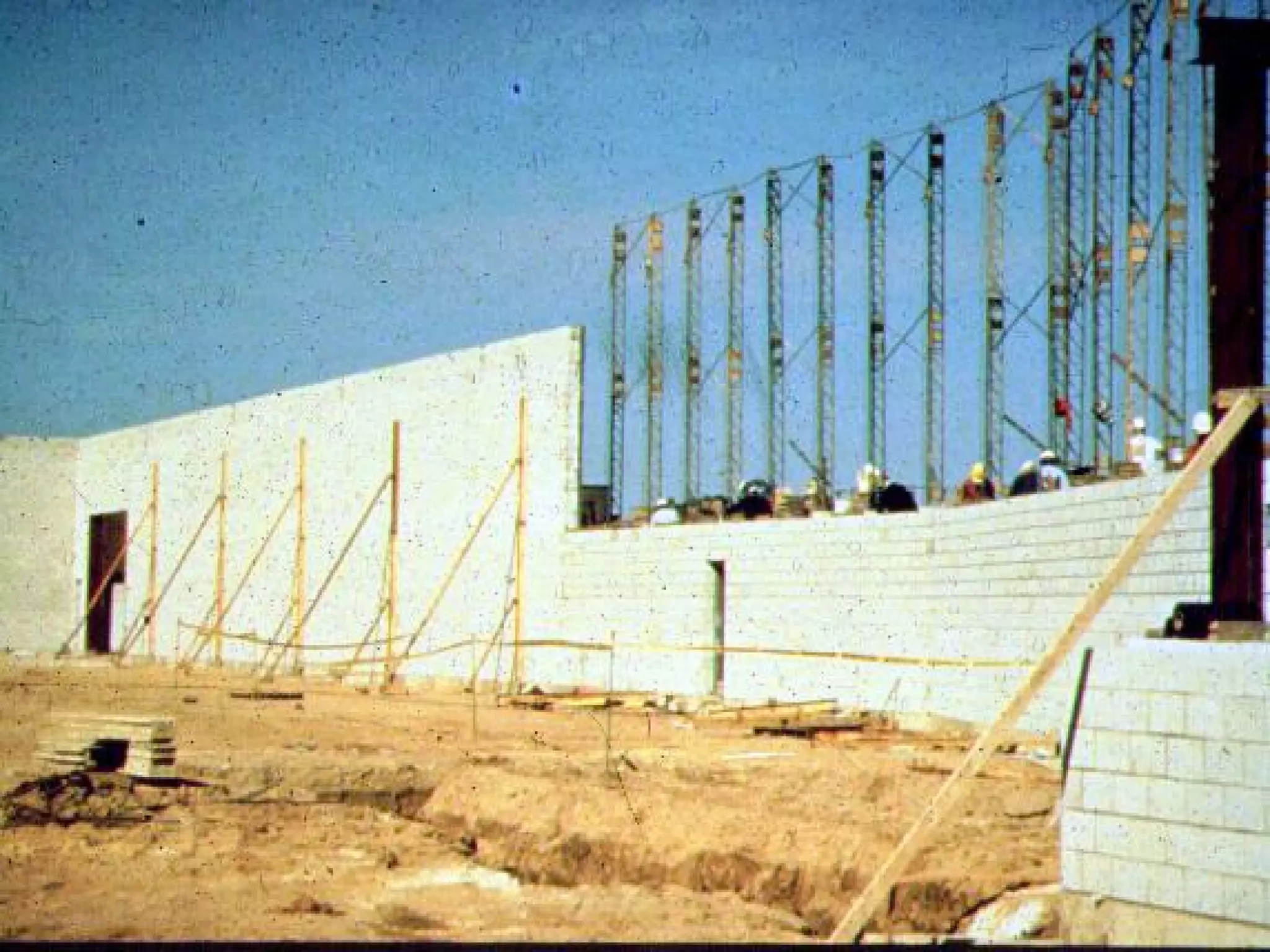
 1926.706(b) “All masonry walls over eight feet in
 height shall be adequately braced to prevent
 overturning and to prevent collapse unless the wall is
 adequately supported so that it will not overturn or
 collapse. The bracing shall remain in place until
 permanent supporting elements of the structure are
 in place.”


                                                          19
20
21
22
23
24
Subpart Q   Concrete   Written

Subpart Q Concrete Written

  • 1.
  • 2.
    OCCUPATIONAL SAFETY ANDHEALTH OSHA ADMINISTRATION Subpart Q – Concrete and Masonry Construction 1926.701 General Requirements 1926.701(a) Construction loads. “No construction loads shall be placed on a concrete structure or portion of a concrete structure unless the employer determines, based on information received from a person who is qualified in structural design, that the structure or portion of the structure is capable of supporting the loads.” 2
  • 3.
    OCCUPATIONAL SAFETY ANDHEALTH OSHA ADMINISTRATION Subpart Q – Concrete and Masonry Construction 1926.701 General Requirements 1926.701(b) Reinforcing steel. “All protruding reinforcing steel, onto and into which employees could fall shall be guarded to eliminate the hazard of impalement.” 1926.701(d) Riding concrete buckets. “No employee shall be permitted to ride concrete buckets.” 3
  • 5.
  • 6.
    SLIDE 9 -CONCRETE COPYRIGHT 1999 - UNIVERSAL SAFETY CONSULTING
  • 7.
    OCCUPATIONAL SAFETY ANDHEALTH OSHA ADMINISTRATION Subpart Q – Concrete and Masonry Construction 1926.702 Requirements for equipment and tools 1926.702(a) Bulk cement storage. (1) “Bulk storage bins, containers, and silos shall be equipped with the following;” 1926.702(a)(1)(i) “Conical or tapered bottoms; and” 1926.702(a)(1)(ii) “”Mechanical or pneumatic means of starting the flow of material.” 7
  • 8.
    OCCUPATIONAL SAFETY ANDHEALTH OSHA ADMINISTRATION Subpart Q – Concrete and Masonry Construction 1926.702 Requirements for equipment and tools 1926.702(h) Bull floats. “Bull float handles, used where they might contact energized electrical conductors, shall be constructed of nonconductive material or insulated with a nonconductive sheath whose electrical and mechanical characteristics provide the equivalent protection of a handle constructed of nonconductive material.” 1926.702(i) Masonry saws. (1) “Masonry saws shall be guarded with a semicircular enclosure.”
  • 10.
  • 11.
    OCCUPATIONAL SAFETY ANDHEALTH OSHA ADMINISTRATION Subpart Q – Concrete and Masonry Construction 1926.702 Requirements for equipment and tools 1926.702(j) “Lockout/Tagout Procedures. (1) “No employee shall be permitted to perform maintenance or repair activity on equipment (such as compressors, mixers, screens or pumps used for concrete and masonry construction activities) where the inadvertent operation of the equipment could occur and cause injury, unless all potentially hazardous energy sources have been locked out and tagged.” 11
  • 12.
    OCCUPATIONAL SAFETY ANDHEALTH OSHA ADMINISTRATION Subpart Q – Concrete and Masonry Construction 1926.703 Requirements for cast-in-place 1926.703(b) Shoring and reshoring. (1) “All shoring equipment (including equipment used in reshoring operations) shall be inspected prior to erection to determine that the equipment meets the requirements specified in the formwork drawings.” 12
  • 13.
    OCCUPATIONAL SAFETY ANDHEALTH OSHA ADMINISTRATION Subpart Q – Concrete and Masonry Construction 1926.703 Requirements for cast-in-place 1926.703(b)(8) “Whenever single posts shores are used one on top of another (tiered), the employer shall comply with the following specific requirements in addition to the general requirements for formwork.” 1926.703(b)(8)(i) “The design of the shoring shall be prepared by a qualified designer and the erected shoring shall be inspected by an engineer qualified in structural design.” 13
  • 14.
  • 15.
  • 16.
    OCCUPATIONAL SAFETY ANDHEALTH OSHA ADMINISTRATION Subpart Q – Concrete and Masonry Construction 1926.706 Requirements for masonry construction 1926.706(a) “A limited access zone shall be established whenever a masonry wall is being constructed. The limited access zone shall conform to the following.” 1926.706(a)(1) “The limited access zone shall be established prior to the start of construction of the wall.” 1926.706(a)(2) “The limited access zone shall be equal to the height of the wall to be constructed plus four feet, and shall run the entire length of the wall.”
  • 17.
    OCCUPATIONAL SAFETY ANDHEALTH OSHA ADMINISTRATION Subpart Q – Concrete and Masonry Construction 1926.706 Requirements for masonry construction 1926.706(a)(3) “The limited access zone shall be established on the side of the wall which will be unscaffolded.” 1926.706(a)(4) “The limited access zone shall be restricted to entry by employees actively engaged in constructing the wall. No other employees shall be permitted to enter the zone.” 17
  • 18.
    OCCUPATIONAL SAFETY ANDHEALTH OSHA ADMINISTRATION Subpart Q – Concrete and Masonry Construction 1926.706 Requirements for masonry construction 1926.706(a)(5) “The limited access zone shall remain in place until the wall is adequately supported to prevent overturning and to prevent collapse unless the height of wall is over eight feet, in which case, the limited access zone shall remain in place until the requirements of paragraph (b) of this section have been met.” 18
  • 19.
    OCCUPATIONAL SAFETY ANDHEALTH OSHA ADMINISTRATION Subpart Q – Concrete and Masonry Construction 1926.706 Requirements for masonry construction 1926.706(b) “All masonry walls over eight feet in height shall be adequately braced to prevent overturning and to prevent collapse unless the wall is adequately supported so that it will not overturn or collapse. The bracing shall remain in place until permanent supporting elements of the structure are in place.” 19
  • 20.
  • 21.
  • 22.
  • 23.
  • 24.