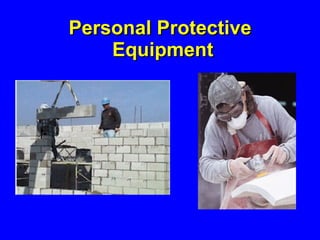
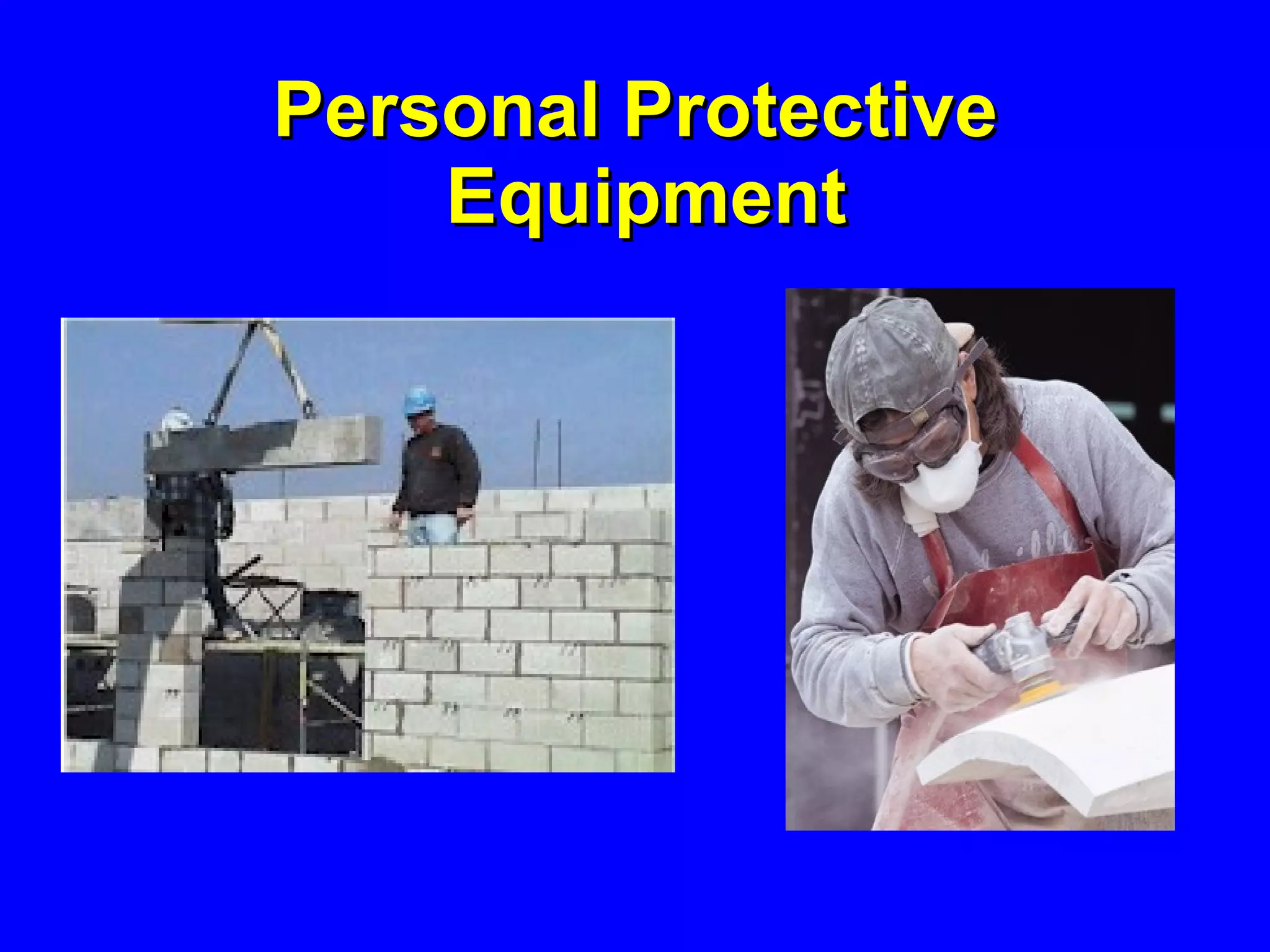
Personal Protective  Equipment
Protecting Employees from Workplace Hazards Employers must protect employees from hazards such as falling objects, harmful substances, and noise exposures that can cause injury Employers must: Use all feasible engineering and work practice controls to eliminate and reduce hazards  Use personal protective equipment (PPE) if the controls don’t eliminate the hazards.  PPE is the  last  level of control!
Engineering Controls If . . . The work environment can be physically changed to prevent employee exposure to the potential hazard, Then . . . The hazard can be eliminated with an engineering control
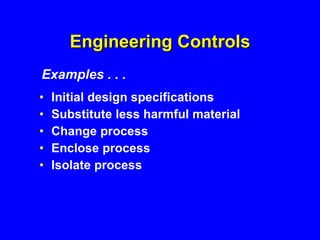
Engineering Controls Initial design specifications Substitute less harmful material Change process Enclose process Isolate process Examples . . .
Work Practice Controls If . . . Employees can change the way they do their jobs and the exposure to the potential hazard is removed,   Then . . . The hazard can be eliminated with a work practice control
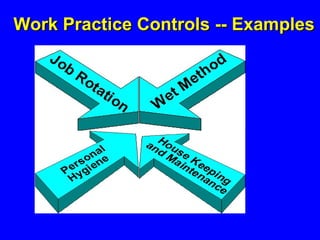
Work Practice Controls -- Examples
Responsibilities Employer Assess workplace for hazards Provide PPE Determine when to use  Provide PPE training for employees and instruction in proper use Employee Use PPE in accordance with training received and other instructions Inspect daily and maintain  in a clean and reliable condition
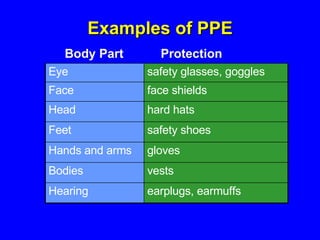
Examples of PPE Body Part Protection earplugs, earmuffs Hearing vests Bodies gloves Hands and arms safety shoes Feet hard hats Head face shields Face safety glasses, goggles Eye
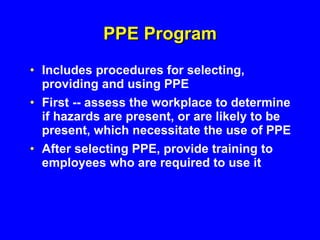
PPE Program Includes procedures for selecting, providing and using PPE  First -- assess the workplace to determine if hazards are present, or are likely to be present, which necessitate the use of PPE After selecting PPE, provide training to employees who are required to use it
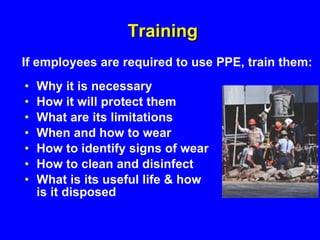
Training Why it is necessary How it will protect them What are its limitations When and how to wear How to identify signs of wear How to clean and disinfect  What is its useful life & how is it disposed If employees are required to use PPE, train them:
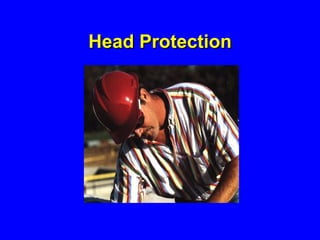
Head Protection
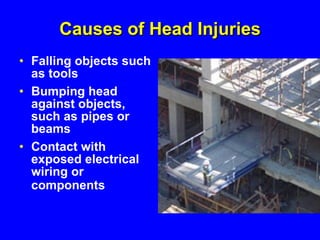
Causes of Head Injuries Falling objects such as tools Bumping head against objects, such as pipes or beams Contact with exposed electrical wiring or components
Selecting the Right Hard Hat Class A General service (building construction, shipbuilding, lumbering) Good impact protection but limited voltage protection Class B Electrical / Utility work Protects against falling objects and high-voltage shock and burns Class C Designed for comfort, offers limited protection Protects against bumps from fixed objects, but does not protect against falling objects or electrical shock
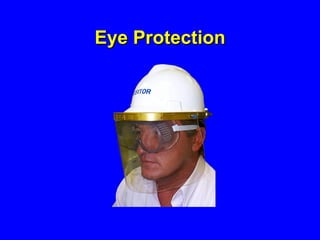
Eye Protection
When must Eye Protection be Provided? When any of these hazards are present: Dust and other flying particles, such as metal shavings or sawdust Corrosive gases, vapors, and liquids Molten metal that may splash Potentially infectious materials such as blood or hazardous liquid chemicals that may splash Intense light from welding and lasers
Eye Protection Criteria for Selection Protects against specific hazard(s)  Comfortable to wear Does not restrict vision or movement Durable and easy to clean and disinfect Does not interfere with the function of other required PPE
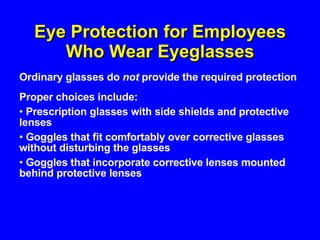
Eye Protection for Employees Who Wear Eyeglasses Ordinary glasses do  not  provide the required protection Proper choices include: Prescription glasses with side shields and protective lenses  Goggles that fit comfortably over corrective glasses without disturbing the glasses Goggles that incorporate corrective lenses mounted behind protective lenses
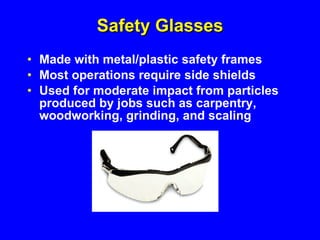
Safety Glasses Made with metal/plastic safety frames Most operations require side shields Used for moderate impact from particles produced by jobs such as carpentry, woodworking, grinding, and scaling
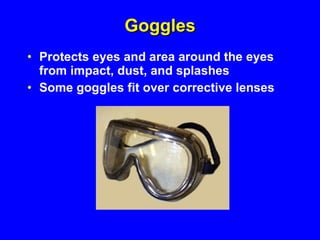
Goggles Protects eyes and area around the eyes from impact, dust, and splashes Some goggles fit over corrective lenses
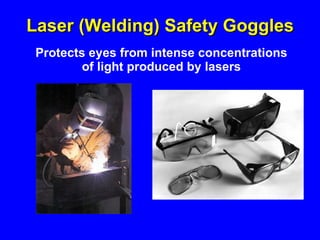
Laser (Welding) Safety Goggles Protects eyes from intense concentrations of light produced by lasers
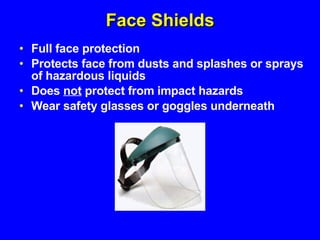
Face Shields Full face protection Protects face from dusts and splashes or sprays of hazardous liquids Does  not  protect from impact hazards Wear safety glasses or goggles underneath
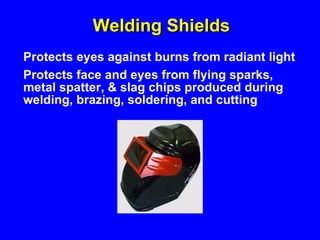
Welding Shields Protects eyes against burns from radiant light Protects face and eyes from flying sparks, metal spatter, & slag chips produced during welding, brazing, soldering, and cutting
Hearing Protection
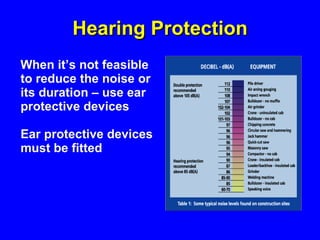
Hearing Protection When it’s not feasible to reduce the noise or its duration – use ear  protective devices Ear protective devices must be fitted
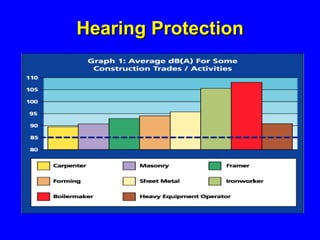
When Must Hearing Protection be Provided? After implementing engineering and work practice controls  When an employee’s noise exposure exceeds an 8-hour time-weighted average (TWA) sound level of 90 dBA
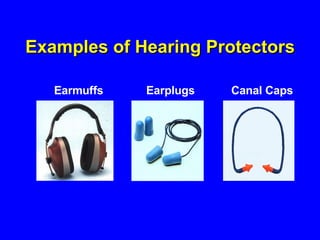
Examples of Hearing Protectors Earmuffs Earplugs Canal Caps
Foot Protection
When Must Foot Protection be Provided? When any of these are present: Heavy objects such as barrels or tools that might roll onto or fall on employees’ feet Sharp objects such as nails or spikes that might pierce ordinary shoes Molten metal that might splash on feet Hot or wet surfaces Slippery surfaces
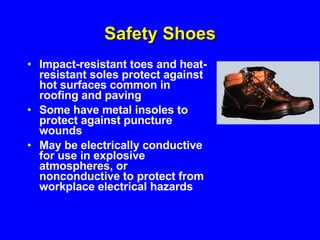
Safety Shoes Impact-resistant toes and heat-resistant soles protect against hot surfaces common in roofing and paving Some have metal insoles to protect against puncture wounds May be electrically conductive for use in explosive atmospheres, or nonconductive to protect from workplace electrical hazards
Hand Protection
When Must Hand Protection be Provided? Burns Bruises Abrasions Cuts Punctures Fractures Amputations Chemical Exposures When any of these are present:
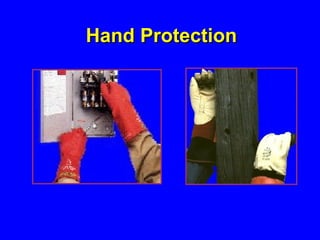
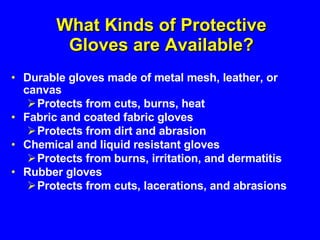
What Kinds of Protective Gloves are Available? Durable gloves made of metal mesh, leather, or canvas Protects from cuts, burns, heat Fabric and coated fabric gloves Protects from dirt and abrasion Chemical and liquid resistant gloves Protects from burns, irritation, and dermatitis Rubber gloves Protects from cuts, lacerations, and abrasions
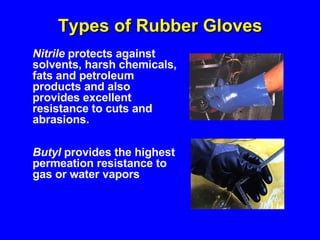
Types of Rubber Gloves Butyl  provides the highest permeation resistance to gas or water vapors Nitrile  protects against solvents, harsh chemicals, fats and petroleum products and also provides excellent resistance to cuts and abrasions.
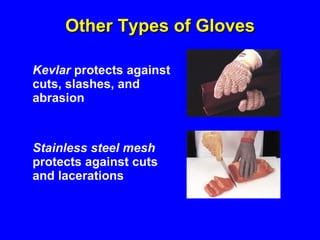
Other Types of Gloves Kevlar  protects against cuts, slashes, and abrasion Stainless steel mesh  protects against cuts and lacerations
Body Protection
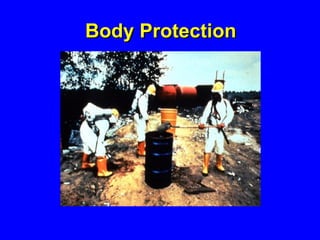
Major Causes of Body Injuries Intense heat Splashes of hot metals and other hot liquids Impacts from tools, machinery, and materials Cuts Hazardous chemicals Radiation
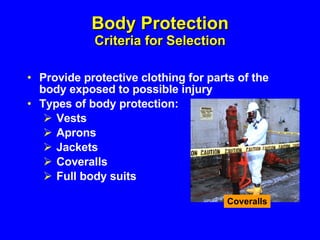
Body Protection Criteria for Selection Provide protective clothing for parts of the body exposed to possible injury Types of body protection: Vests Aprons Jackets Coveralls Full body suits Coveralls
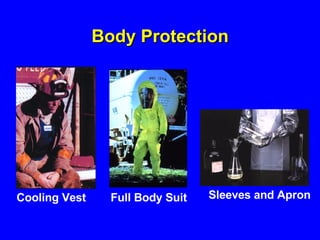
Body Protection Cooling Vest Sleeves and Apron Full Body Suit
Summary Assess the workplace for hazards Use engineering and work practice controls to eliminate or reduce hazards before using PPE Select appropriate PPE to protect employees from hazards that cannot be eliminated  Inform employees why the PPE is necessary, how and when it must be worn Train employees how to use and care for their PPE, including how to recognize deterioration and failure Require employees to wear selected PPE Employers must implement a PPE program where they:

Ppe C

  • 1.
  • 2.
    Protecting Employees fromWorkplace Hazards Employers must protect employees from hazards such as falling objects, harmful substances, and noise exposures that can cause injury Employers must: Use all feasible engineering and work practice controls to eliminate and reduce hazards Use personal protective equipment (PPE) if the controls don’t eliminate the hazards. PPE is the last level of control!
  • 3.
    Engineering Controls If. . . The work environment can be physically changed to prevent employee exposure to the potential hazard, Then . . . The hazard can be eliminated with an engineering control
  • 4.
    Engineering Controls Initialdesign specifications Substitute less harmful material Change process Enclose process Isolate process Examples . . .
  • 5.
    Work Practice ControlsIf . . . Employees can change the way they do their jobs and the exposure to the potential hazard is removed, Then . . . The hazard can be eliminated with a work practice control
  • 6.
  • 7.
    Responsibilities Employer Assessworkplace for hazards Provide PPE Determine when to use Provide PPE training for employees and instruction in proper use Employee Use PPE in accordance with training received and other instructions Inspect daily and maintain in a clean and reliable condition
  • 8.
    Examples of PPEBody Part Protection earplugs, earmuffs Hearing vests Bodies gloves Hands and arms safety shoes Feet hard hats Head face shields Face safety glasses, goggles Eye
  • 9.
    PPE Program Includesprocedures for selecting, providing and using PPE First -- assess the workplace to determine if hazards are present, or are likely to be present, which necessitate the use of PPE After selecting PPE, provide training to employees who are required to use it
  • 10.
    Training Why itis necessary How it will protect them What are its limitations When and how to wear How to identify signs of wear How to clean and disinfect What is its useful life & how is it disposed If employees are required to use PPE, train them:
  • 11.
  • 12.
    Causes of HeadInjuries Falling objects such as tools Bumping head against objects, such as pipes or beams Contact with exposed electrical wiring or components
  • 13.
    Selecting the RightHard Hat Class A General service (building construction, shipbuilding, lumbering) Good impact protection but limited voltage protection Class B Electrical / Utility work Protects against falling objects and high-voltage shock and burns Class C Designed for comfort, offers limited protection Protects against bumps from fixed objects, but does not protect against falling objects or electrical shock
  • 14.
  • 15.
    When must EyeProtection be Provided? When any of these hazards are present: Dust and other flying particles, such as metal shavings or sawdust Corrosive gases, vapors, and liquids Molten metal that may splash Potentially infectious materials such as blood or hazardous liquid chemicals that may splash Intense light from welding and lasers
  • 16.
    Eye Protection Criteriafor Selection Protects against specific hazard(s) Comfortable to wear Does not restrict vision or movement Durable and easy to clean and disinfect Does not interfere with the function of other required PPE
  • 17.
    Eye Protection forEmployees Who Wear Eyeglasses Ordinary glasses do not provide the required protection Proper choices include: Prescription glasses with side shields and protective lenses Goggles that fit comfortably over corrective glasses without disturbing the glasses Goggles that incorporate corrective lenses mounted behind protective lenses
  • 18.
    Safety Glasses Madewith metal/plastic safety frames Most operations require side shields Used for moderate impact from particles produced by jobs such as carpentry, woodworking, grinding, and scaling
  • 19.
    Goggles Protects eyesand area around the eyes from impact, dust, and splashes Some goggles fit over corrective lenses
  • 20.
    Laser (Welding) SafetyGoggles Protects eyes from intense concentrations of light produced by lasers
  • 21.
    Face Shields Fullface protection Protects face from dusts and splashes or sprays of hazardous liquids Does not protect from impact hazards Wear safety glasses or goggles underneath
  • 22.
    Welding Shields Protectseyes against burns from radiant light Protects face and eyes from flying sparks, metal spatter, & slag chips produced during welding, brazing, soldering, and cutting
  • 23.
  • 24.
    Hearing Protection Whenit’s not feasible to reduce the noise or its duration – use ear protective devices Ear protective devices must be fitted
  • 25.
    When Must HearingProtection be Provided? After implementing engineering and work practice controls When an employee’s noise exposure exceeds an 8-hour time-weighted average (TWA) sound level of 90 dBA
  • 26.
    Examples of HearingProtectors Earmuffs Earplugs Canal Caps
  • 27.
  • 28.
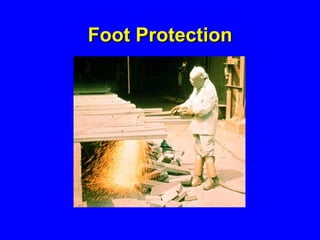
    When Must FootProtection be Provided? When any of these are present: Heavy objects such as barrels or tools that might roll onto or fall on employees’ feet Sharp objects such as nails or spikes that might pierce ordinary shoes Molten metal that might splash on feet Hot or wet surfaces Slippery surfaces
  • 29.
    Safety Shoes Impact-resistanttoes and heat-resistant soles protect against hot surfaces common in roofing and paving Some have metal insoles to protect against puncture wounds May be electrically conductive for use in explosive atmospheres, or nonconductive to protect from workplace electrical hazards
  • 30.
  • 31.
    When Must HandProtection be Provided? Burns Bruises Abrasions Cuts Punctures Fractures Amputations Chemical Exposures When any of these are present:
  • 32.
    What Kinds ofProtective Gloves are Available? Durable gloves made of metal mesh, leather, or canvas Protects from cuts, burns, heat Fabric and coated fabric gloves Protects from dirt and abrasion Chemical and liquid resistant gloves Protects from burns, irritation, and dermatitis Rubber gloves Protects from cuts, lacerations, and abrasions
  • 33.
    Types of RubberGloves Butyl provides the highest permeation resistance to gas or water vapors Nitrile protects against solvents, harsh chemicals, fats and petroleum products and also provides excellent resistance to cuts and abrasions.
  • 34.
    Other Types ofGloves Kevlar protects against cuts, slashes, and abrasion Stainless steel mesh protects against cuts and lacerations
  • 35.
  • 36.
    Major Causes ofBody Injuries Intense heat Splashes of hot metals and other hot liquids Impacts from tools, machinery, and materials Cuts Hazardous chemicals Radiation
  • 37.
    Body Protection Criteriafor Selection Provide protective clothing for parts of the body exposed to possible injury Types of body protection: Vests Aprons Jackets Coveralls Full body suits Coveralls
  • 38.
    Body Protection CoolingVest Sleeves and Apron Full Body Suit
  • 39.
    Summary Assess theworkplace for hazards Use engineering and work practice controls to eliminate or reduce hazards before using PPE Select appropriate PPE to protect employees from hazards that cannot be eliminated Inform employees why the PPE is necessary, how and when it must be worn Train employees how to use and care for their PPE, including how to recognize deterioration and failure Require employees to wear selected PPE Employers must implement a PPE program where they:

Editor's Notes

  • #2 1926 Subpart E – Personal Protective and Lifesaving Equipment This presentation is designed to assist trainers conducting OSHA 10-hour Construction outreach training for workers. Since workers are the target audience, this presentation emphasizes hazard identification, avoidance, and control – not standards. No attempt has been made to treat the topic exhaustively. It is essential that trainers tailor their presentations to the needs and understanding of their audience. This presentation is not a substitute for any of the provisions of the Occupational Safety and Health Act of 1970 or for any standards issued by the U.S. Department of Labor. Mention of trade names, commercial products, or organizations does not imply endorsement by the U.S. Department of Labor.