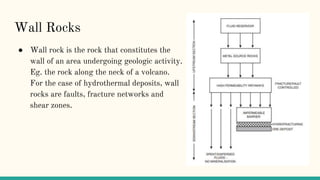
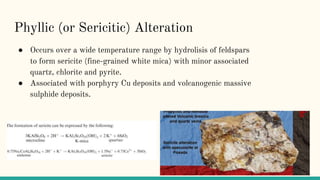
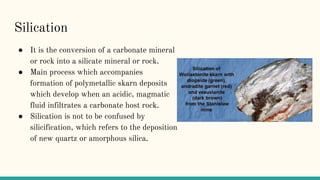
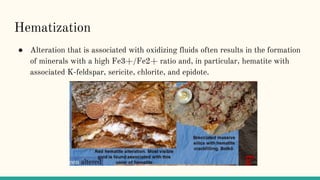
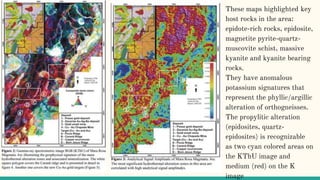
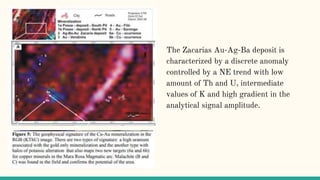
Wall rock alteration involves the transformation of wall rocks through hydrothermal processes, resulting in changes in mineralogy and chemistry due to hot fluid interactions. Various types of alteration include phyllic, silication, hematization, and propylitic, each characterized by distinct mineral assemblages and processes. Geophysical methods can assist in identifying key host rocks and alteration zones, providing valuable insights for mineral exploration.