Stroke
Stroke Ischaemia is inadequate blood flow Stroke occurs when there is ischaemia to a part of the brain that results in death of brain cells
Stroke Functions, such as movement, sensation, or emotions, that were controlled by the affected area of the brain are lost or impaired Severity of the loss of function varies according to the location and extent of the brain involved
Stroke Third on list of top killers of New Zealanders behind heart disease and cancer Approx 1/3 of those who have a stroke die as a result Further 1/3 are left with disabilities Predicted rise in number of strokes attributed to population that is growing & ageing
Risk Factors Most effective way to decrease the burden of stroke is prevention Risk factors can be divided into non-modifiable and modifiable risks
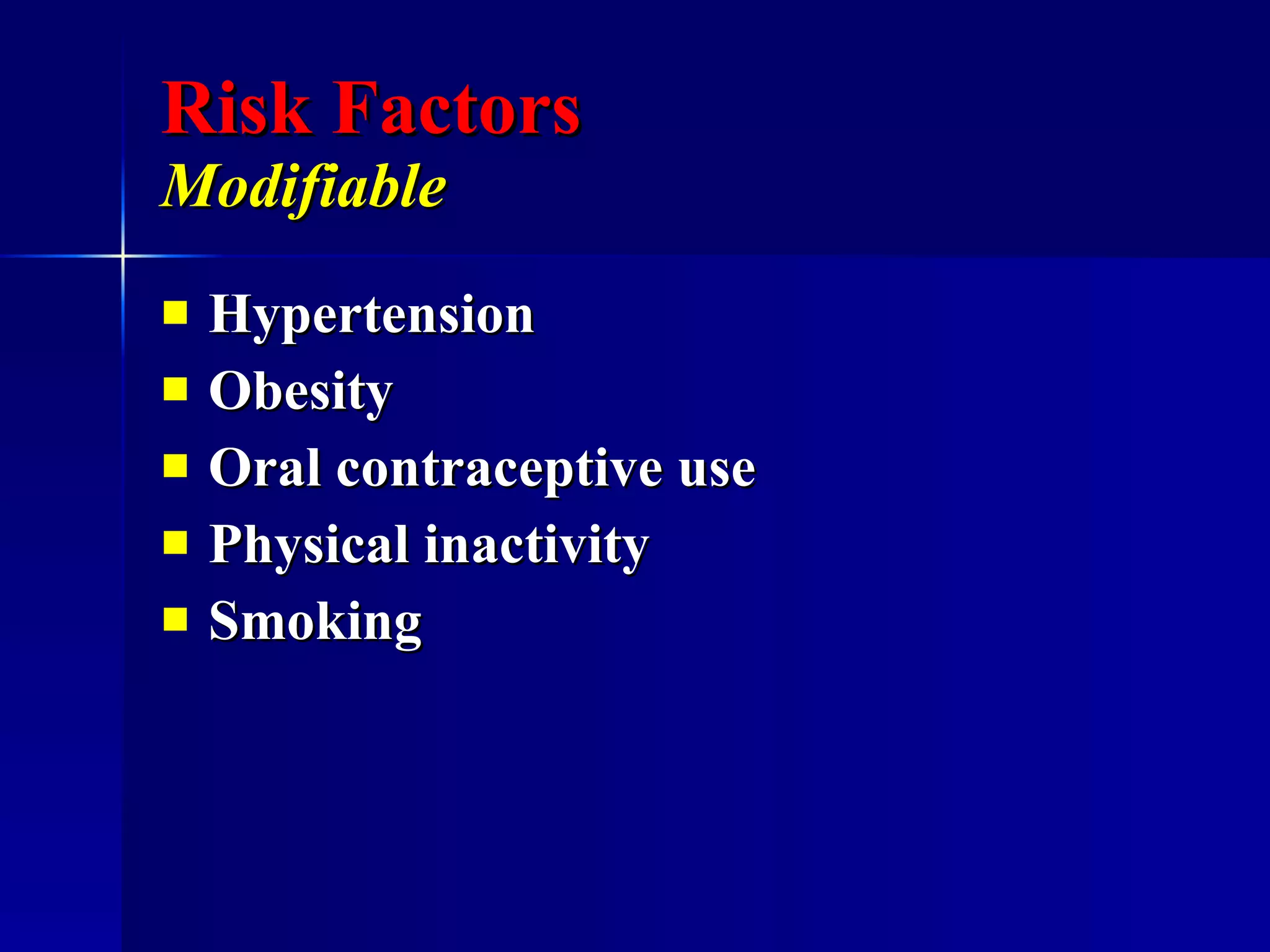
Risk Factors   Modifiable Hypertension Obesity Oral contraceptive use Physical inactivity  Smoking
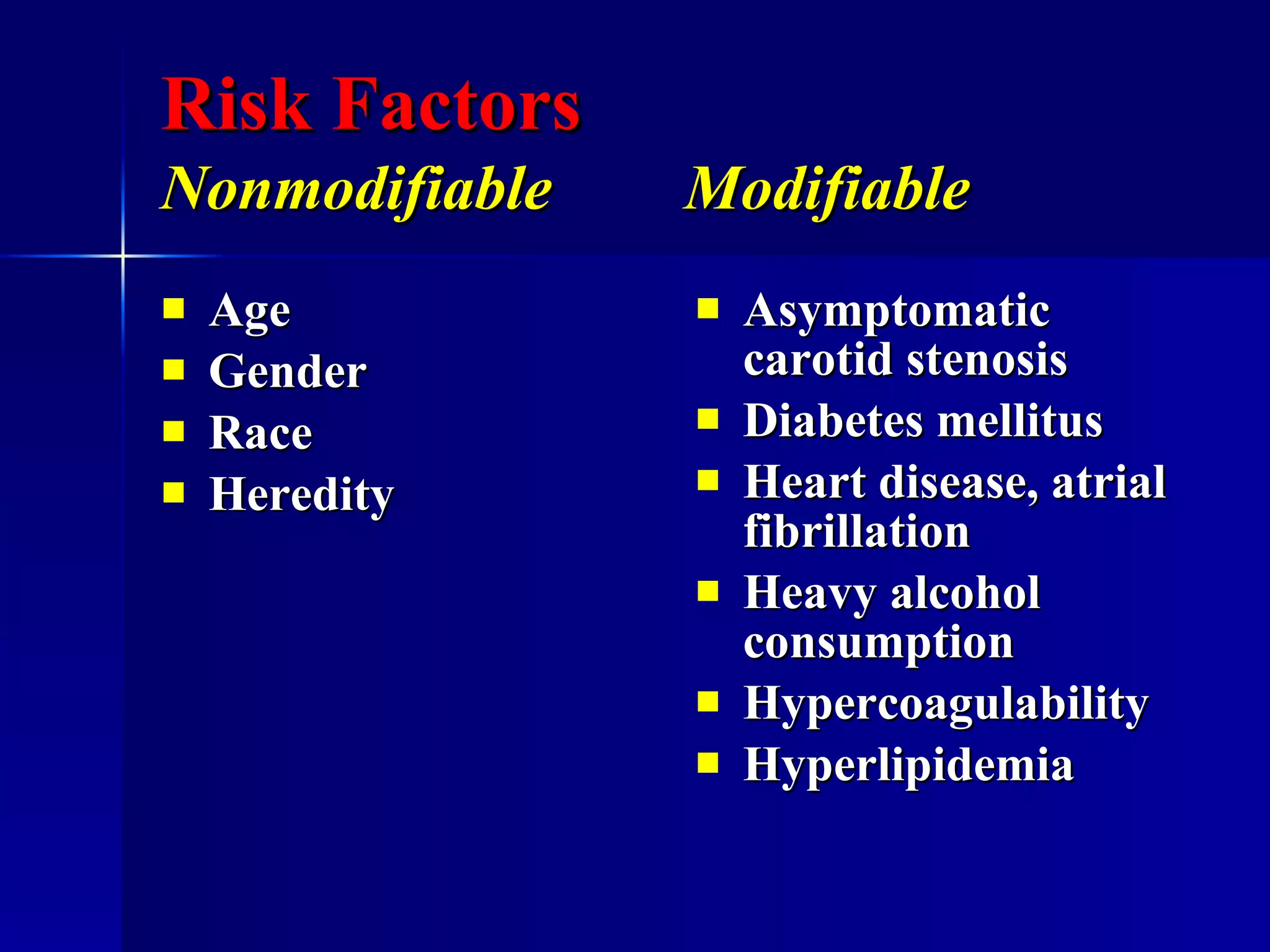
Risk Factors   Nonmodifiable  Modifiable   Age Gender Race Heredity  Asymptomatic carotid stenosis Diabetes mellitus  Heart disease, atrial fibrillation  Heavy alcohol consumption  Hypercoagulability  Hyperlipidemia
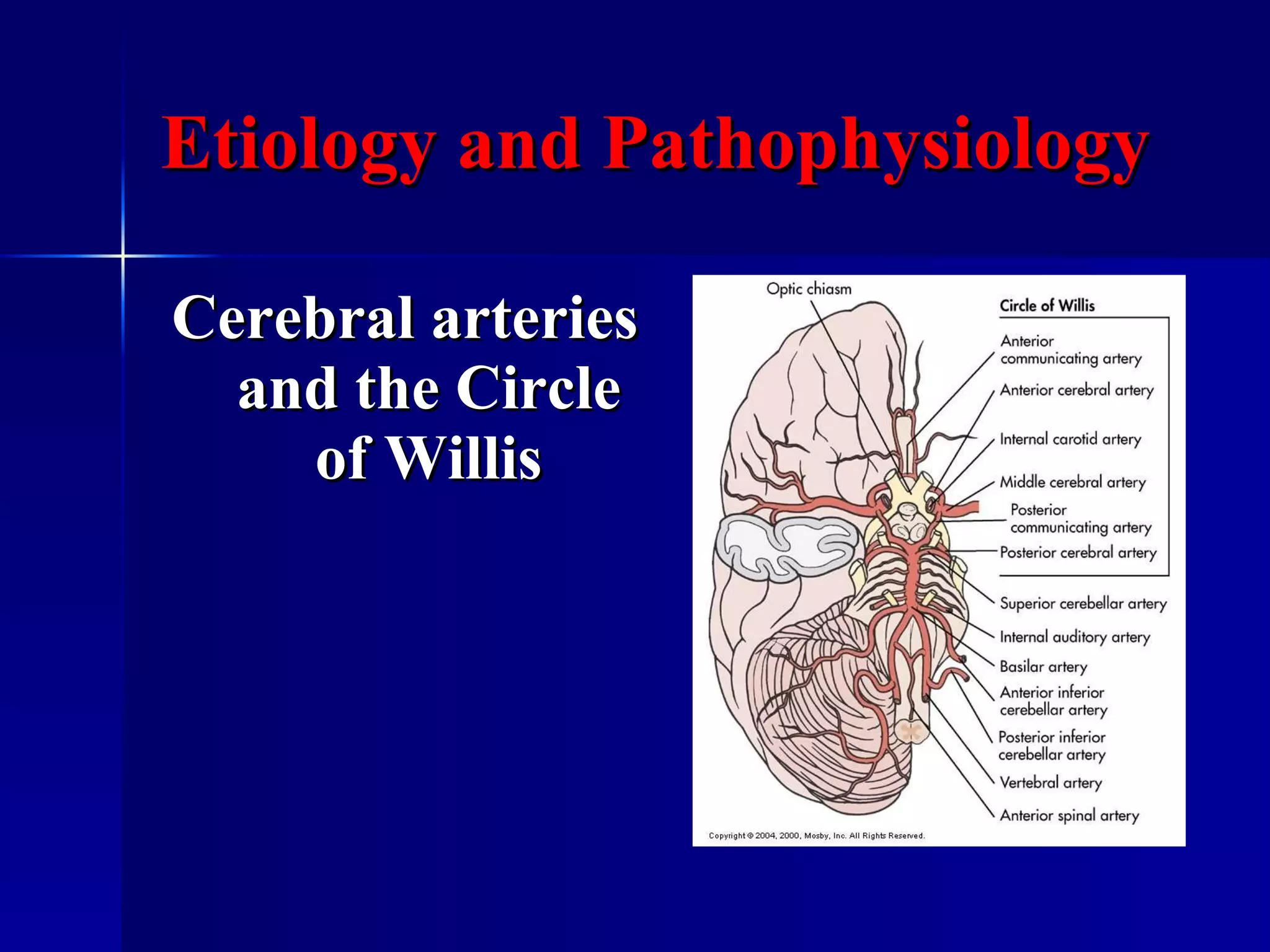
Etiology and Pathophysiology Blood is supplied to the brain by 2 major pairs of arteries  Internal carotid arteries Vertebral arteries
Etiology and Pathophysiology Carotid arteries branch to supply most of the  Frontal, parietal, and temporal lobes Basal ganglia Part of the diencephalon  Thalamus Hypothalamus
Etiology and Pathophysiology Vertebral arteries join to form the basilar artery, which supply the Middle and lower temporal lobes Occipital lobes Cerebellum  Brainstem Part of the diencephalon
Etiology and Pathophysiology Cerebral arteries and the Circle of Willis
Etiology and Pathophysiology Brain requires a continuous supply of blood to provide the oxygen and glucose that neurons need to function  If blood flow to the brain is totally interrupted Neurologic metabolism is altered in 30 seconds Metabolism stops in 2 minutes Cellular death occurs in 5 minutes
Etiology and Pathophysiology Brain is normally well protected from changes in mean systemic arterial blood pressure by a mechanism known as cerebral autoregulation
Etiology and Pathophysiology Cerebral autoregulation involves  Changes in the diameter of cerebral blood vessels in response to changes in pressure so that the blood flow to the brain stays constant
Etiology and Pathophysiology Factors that affect blood flow to the brain Systemic blood pressure Cardiac output Blood viscosity
Etiology and Pathophysiology Collateral circulation may develop to compensate for a decrease in cerebral blood flow An area of the brain can potentially receive blood supply from another blood vessel if its original blood supply is cut off
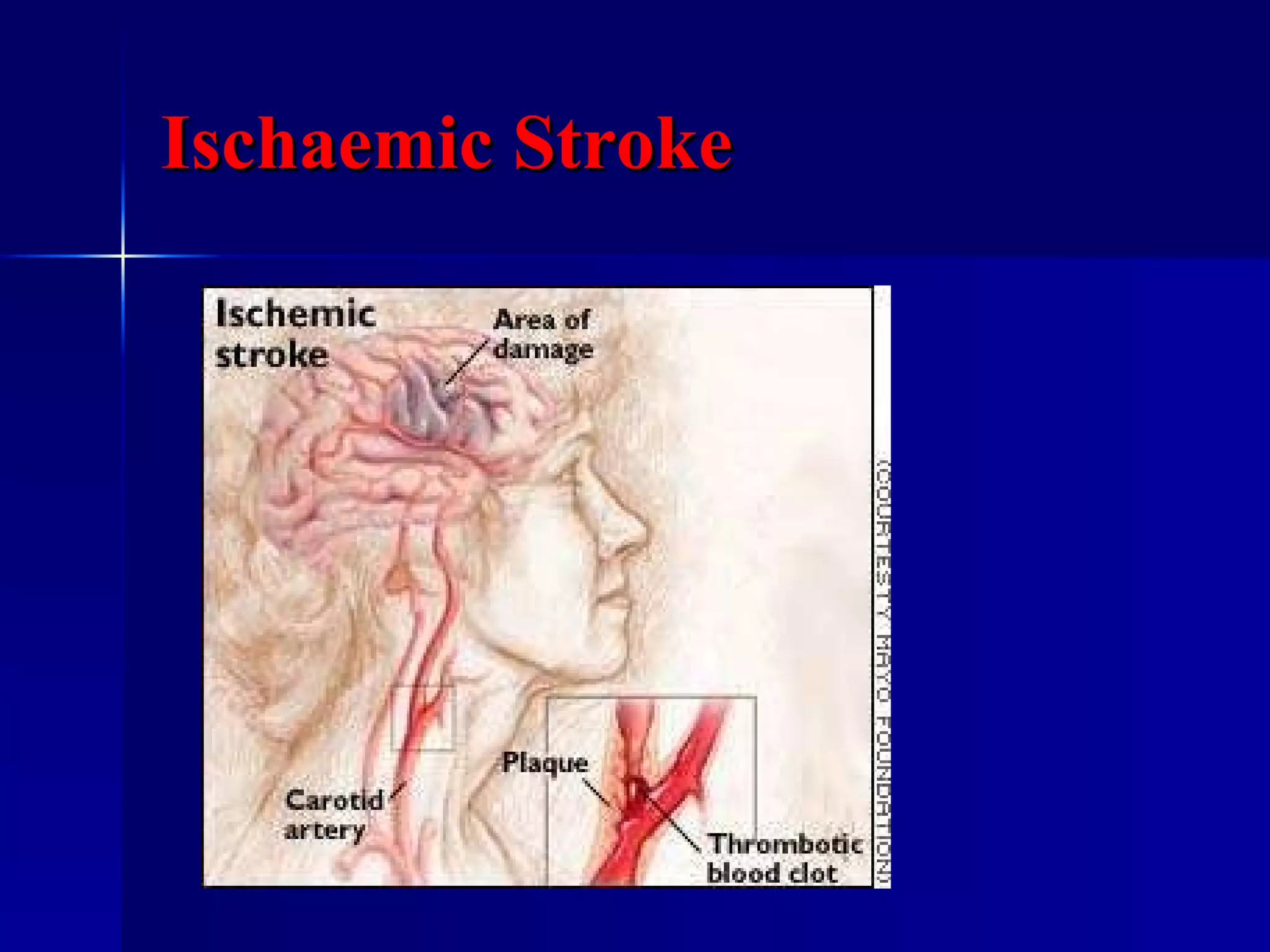
Etiology and Pathophysiology Atherosclerosis is the hardening and thickening of arteries and is a major cause of stroke It can lead to thrombus formation and contribute to emboli
Etiology and Pathophysiology Around the core area of ischemia is a border zone of reduced blood flow where ischemia is potentially reversible
Etiology and Pathophysiology If adequate blood flow can be restored early (<3 hours) and the ischemic cascade can be interrupted,  less brain damage and less neurologic function lost
Etiology and Pathophysiology Transient ischemic attack (TIA) is a temporary focal loss of neurologic function caused by ischemia Most TIAs resolve within 3 hours
Etiology and Pathophysiology TIAs may be due to microemboli that temporarily block the blood flow TIAs are a warning sign of progressive cerebrovascular disease
Types of Stroke Strokes are classified based on the underlying pathophysiologic findings  Ischaemic Haemorrhagic
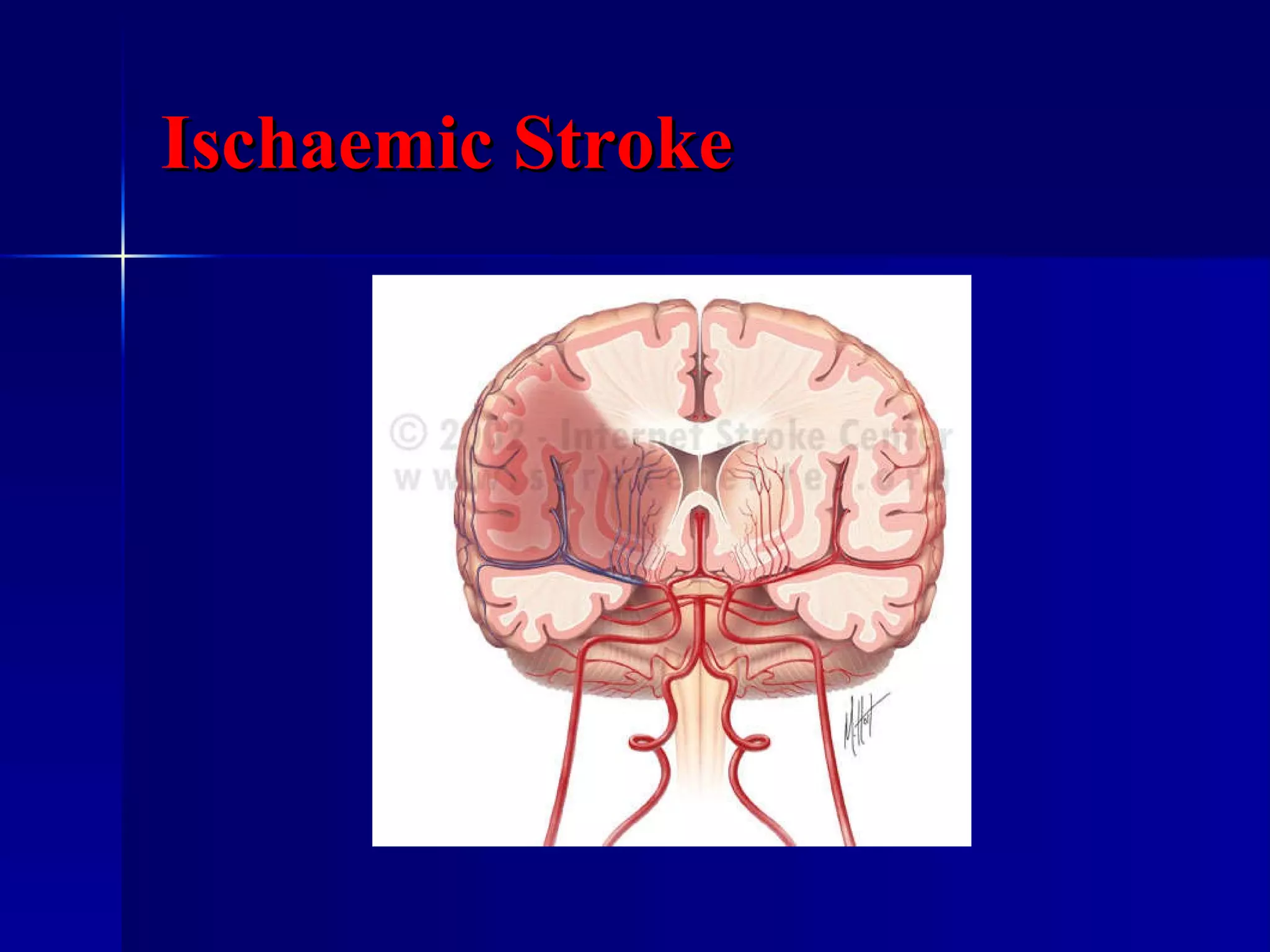
Ischaemic Stroke Ischaemic strokes result from inadequate blood flow to the brain from partial or complete occlusion of an artery 85% of all strokes are ischaemic strokes
Ischemic Stroke Ischaemic strokes can be  Thrombotic  Embolic  Most patients with ischaemic stroke do not have a decreased level of consciousness in the first 24 hours May progress in the first 72 hours
Ischaemic Stroke Thrombotic stroke Thrombosis occurs in relation to injury to a blood vessel wall and formation of a blood clot Result of thrombosis or narrowing of the blood vessel Most common cause of stroke
Ischaemic Stroke
Ischaemic Stroke
Ischaemic Stroke Thrombotic stroke Two-thirds are associated with hypertension and diabetes mellitus Often preceded by a TIA
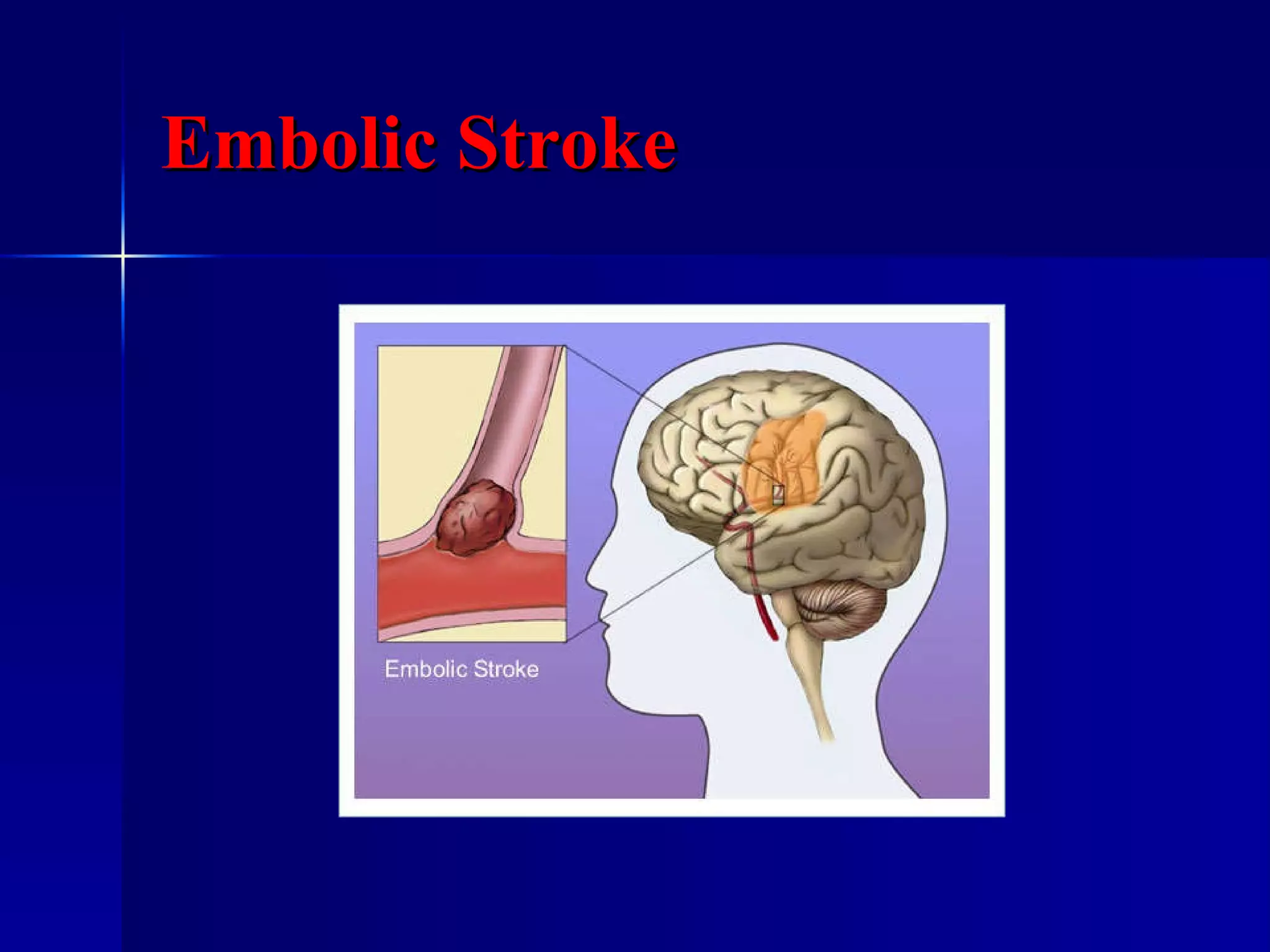
Ischaemic Stroke Embolic stroke Occur when an embolus lodges in and occludes a cerebral artery Results in infarction and oedema of the area supplied by the involved vessel Second most common cause of stroke
Ischaemic Stroke Embolic stroke Majority of emboli originate in the inside layer of the heart, with plaque breaking off from the endocardium and entering the circulation  Patient with an embolic stroke commonly has a rapid occurrence of severe clinical symptoms
Embolic Stroke
Ischaemic Stroke Embolic stroke Onset of an embolic stroke is usually sudden and may or may not be related to activity Patient usually remains conscious although may have a headache
Ischaemic Stroke Embolic stroke Often occurs rapidly Recurrence is common unless the underlying cause is aggressively treated
Hemorrhagic Stroke Account for approximately 15% of all strokes Result from bleeding into the brain tissue itself or into the subarachnoid space or ventricles
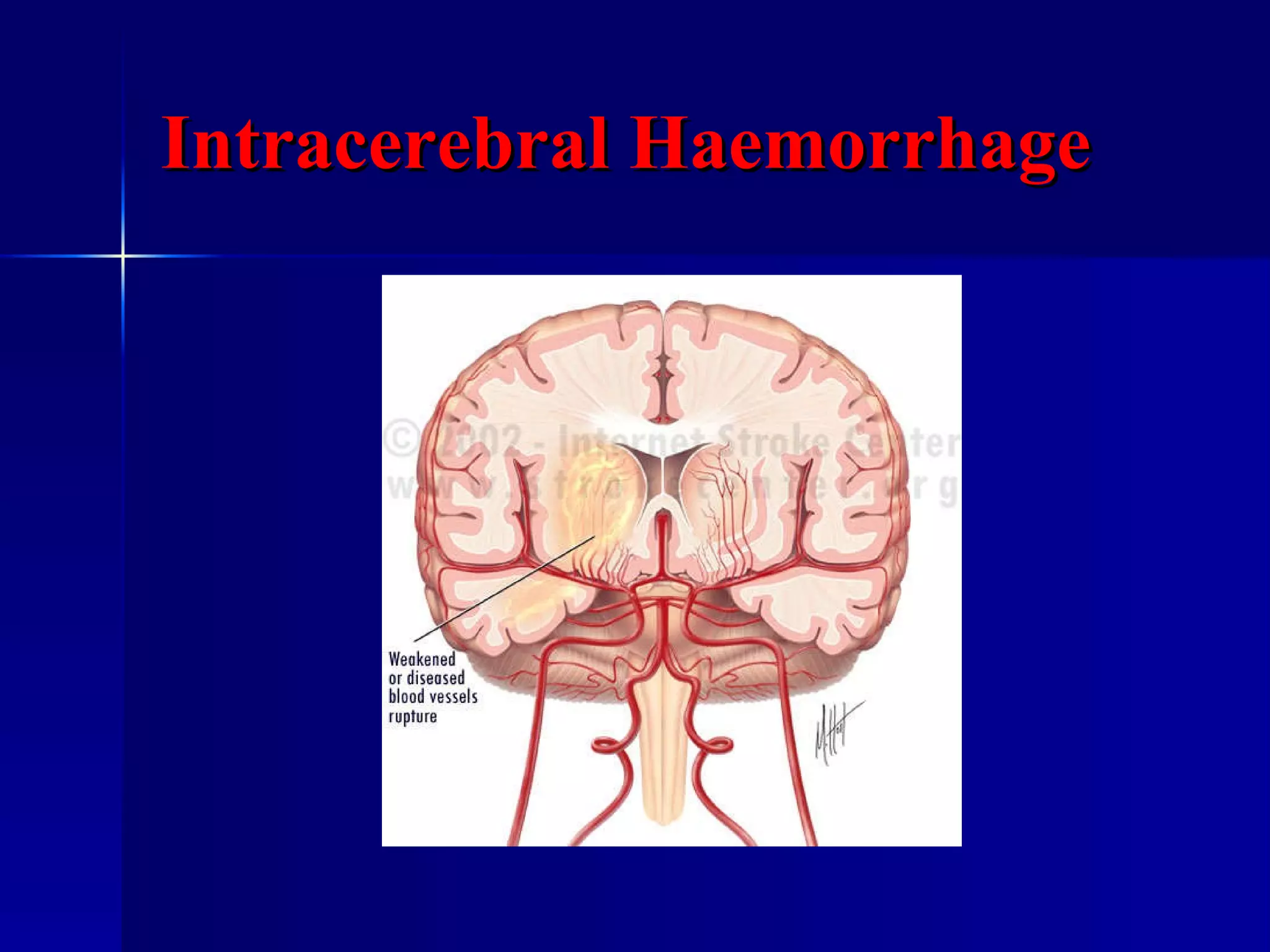
Hemorrhagic Stroke Intracerebral hemorrhage Bleeding within the brain caused by a rupture of a vessel Hypertension is the most important cause Haemorrhage commonly occurs during periods of activity
Intracerebral Haemorrhage
Hemorrhagic Stroke Intracerebral haemorrhage Often a sudden onset of symptoms, with progression over minutes to hours because of ongoing bleeding
Hemorrhagic Stroke Intracerebral haemorrhage Manifestations include neurologic deficits, headache, nausea, vomiting, decreased levels of consciousness, and hypertension
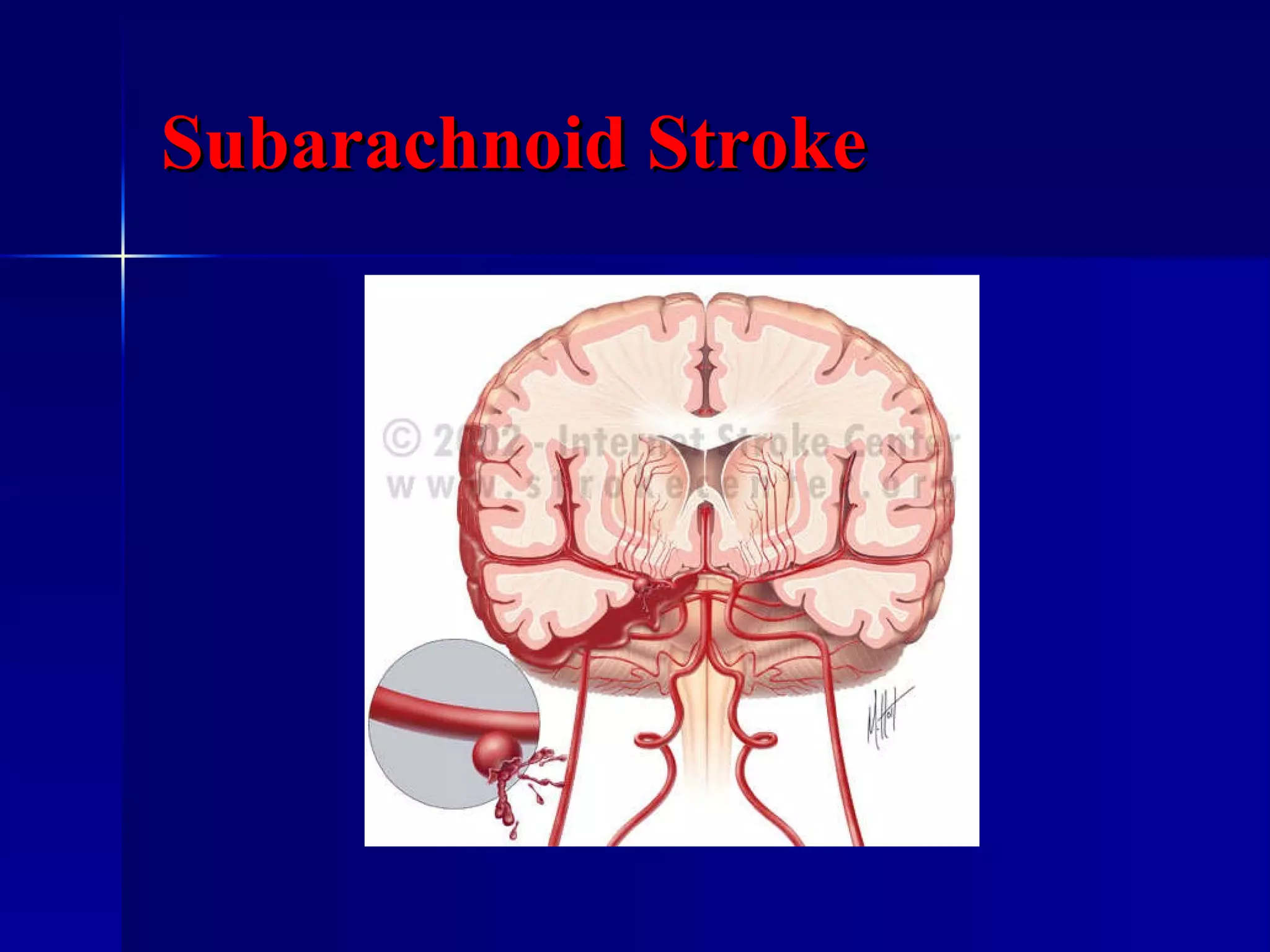
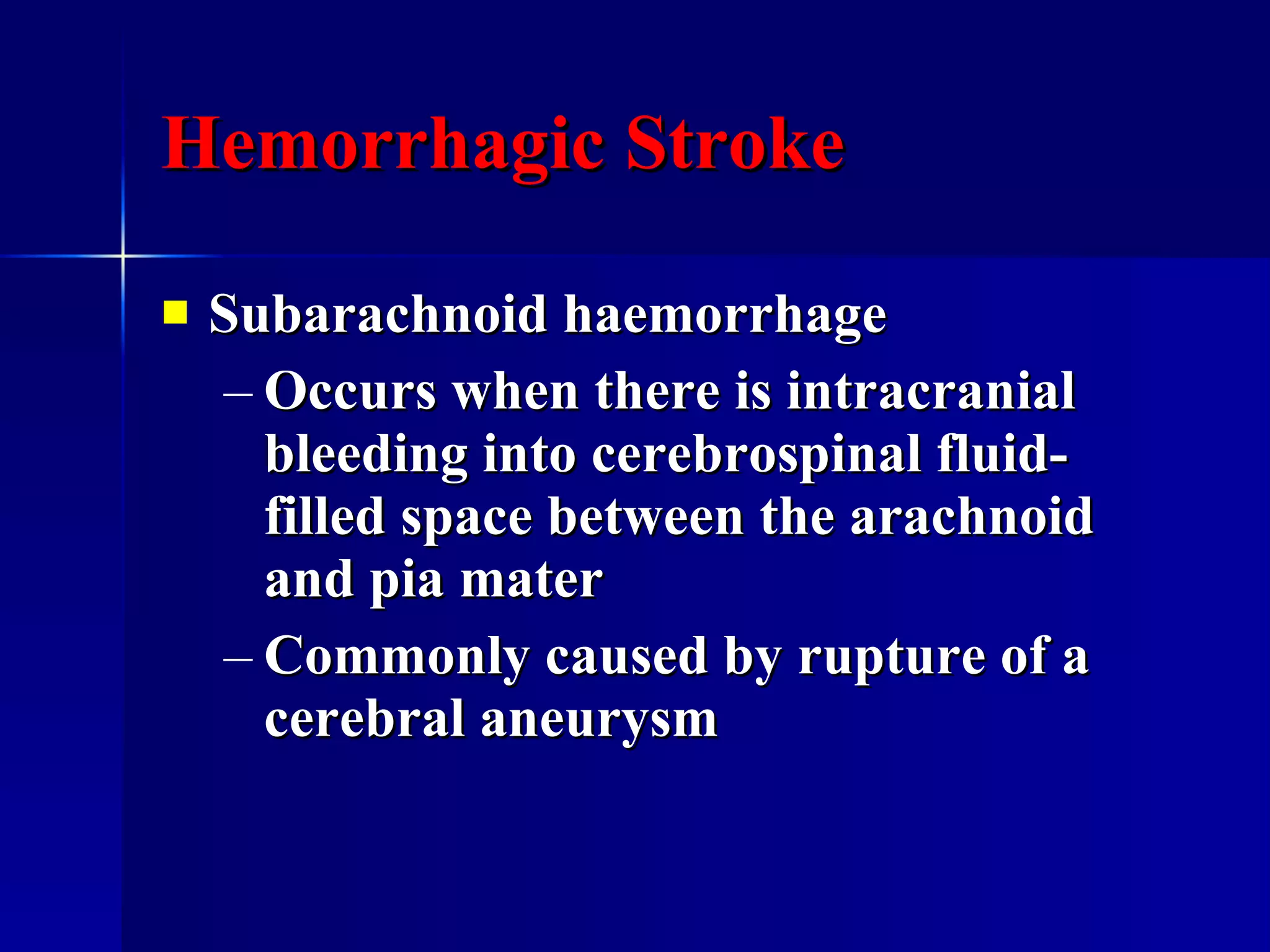
Hemorrhagic Stroke Subarachnoid haemorrhage Occurs when there is intracranial bleeding into cerebrospinal fluid-filled space between the arachnoid and pia mater Commonly caused by rupture of a cerebral aneurysm
Subarachnoid Stroke
Stroke – Part B
Clinical Manifestations   Affects many body functions Motor activity Elimination Intellectual function Spatial-perceptual alterations Personality Affect  Sensation  Communication
Clinical Manifestations Brain attack  Term increasingly being used to describe stroke and communicate  urgency of recognizing stroke symptoms and treating their onset as a medical emergency
Clinical Manifestations Motor Function   Most obvious effect of stroke Include impairment of Mobility  Respiratory function Swallowing and speech Gag reflex Self-care abilities
Clinical Manifestations Motor Function   Characteristic motor deficits Loss of skilled voluntary movement Impairment of integration of movements Alterations in muscle tone Alterations in reflexes
Clinical Manifestations Motor Function   An initial period of flaccidity may last from days to several weeks and is related to nerve damage Spasticity of the muscles follows the flaccid stage and is related to interruption of upper motor neuron influence
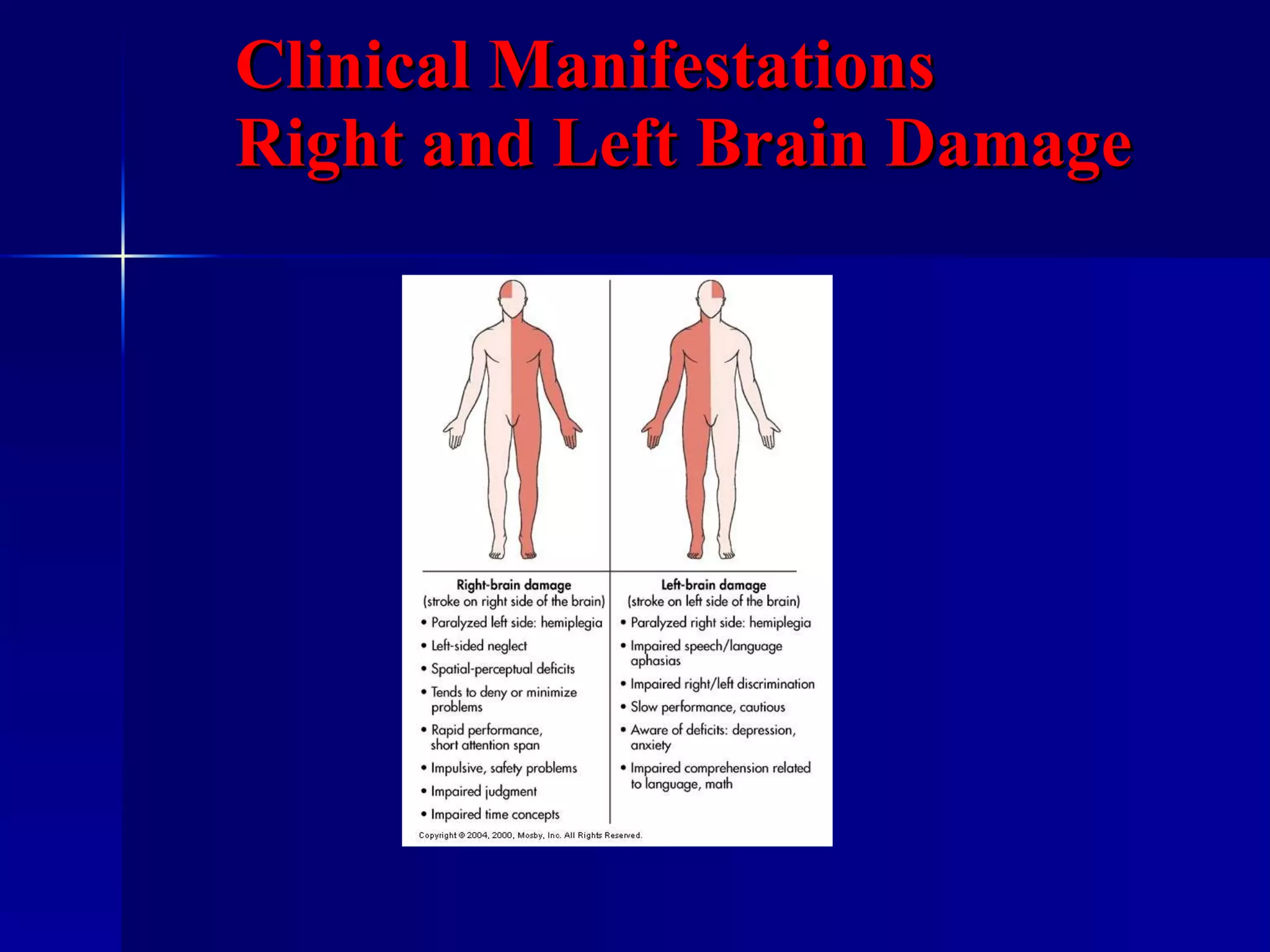
Clinical Manifestations Communication   Patient may experience aphasia when a stroke damages the dominant hemisphere of the brain Aphasia is a total loss of comprehension and use of language
Clinical Manifestations Communication   Dysphasia refers to difficulty related to the comprehension or use of language and is due to partial disruption or loss Dysphasia can be classified as nonfluent or fluent
Clinical Manifestations Communication   Many patients also experience dysarthria  Disturbance in the muscular control of speech Impairments may involve pronunciation, articulation, and phonation
Clinical Manifestations Communication   Dysarthria does not affect the meaning of communication or the comprehension of language It does affect the mechanics of speech
Clinical Manifestations Affect   Patients who suffer a stroke may have difficulty controlling their emotions Emotional responses may be exaggerated or unpredictable
Clinical Manifestations Affect   Depression and feelings associated with changes in body image and loss of function can make this worse Patients may also be frustrated by mobility and communication problems
Clinical Manifestations Intellectual Function   Both memory and judgment may be impaired as a result of stroke A left-brain stroke is more likely to result in memory problems related to language
Clinical Manifestations Spatial-Perceptual Alterations   Stroke on the right side of the brain is more likely to cause problems in spatial-perceptual orientation However,  this may occur with left-brain stroke
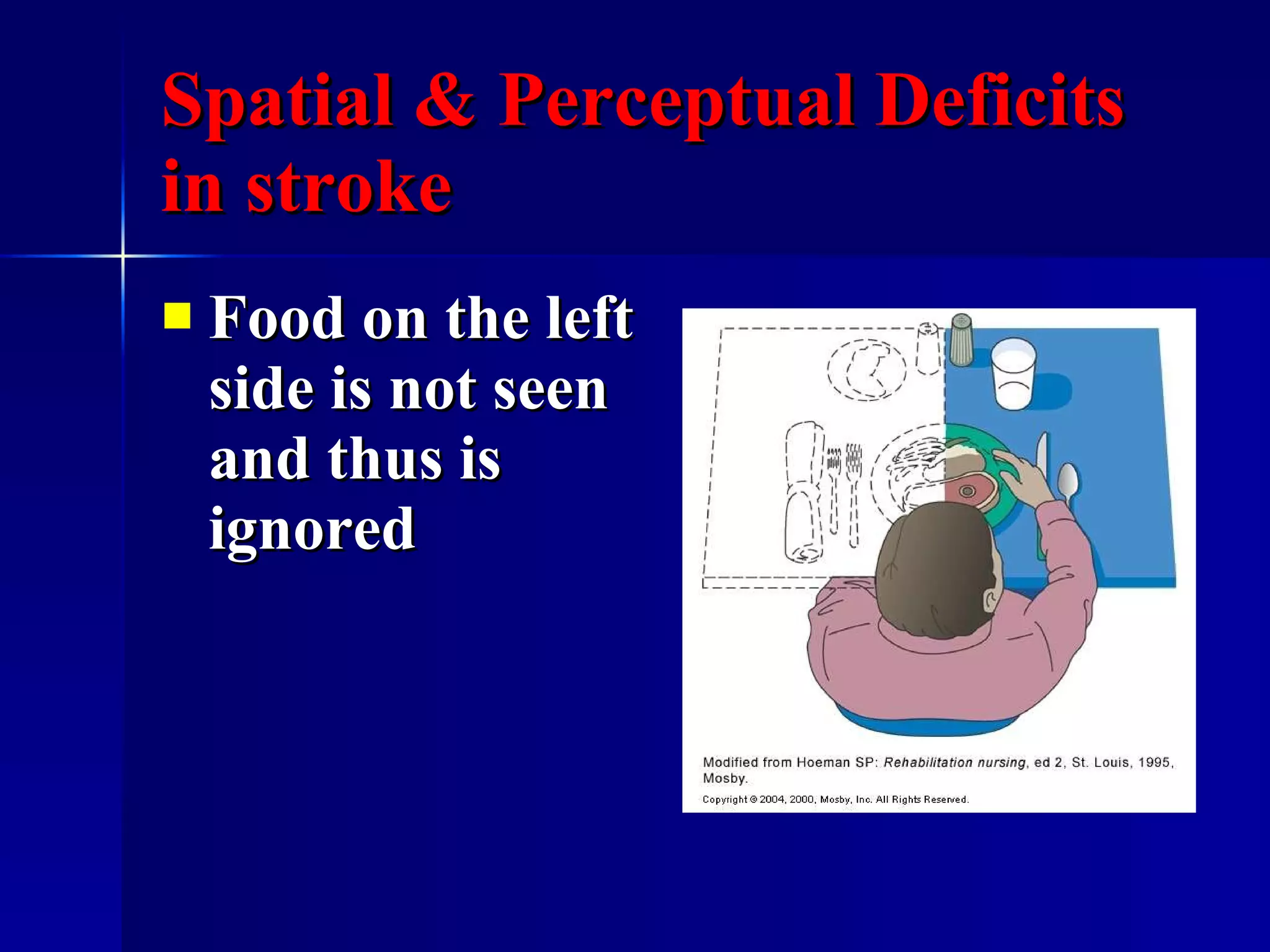
Spatial & Perceptual Deficits in stroke Food on the left side is not seen and thus is ignored
Clinical Manifestations Spatial-Perceptual Alterations   Spatial-perceptual problems may be divided into 4 categories Incorrect perception of self and illness Erroneous perception of self in space Inability to recognize an object by sight, touch, or hearing (agnosia) 4. Inability to carry out learned sequential movements on command (apraxia)
Clinical Manifestations Elimination   Most problems with urinary and bowel elimination occur initially and are temporary When a stroke affects one hemisphere of the brain, the prognosis for normal bladder function is excellent
Clinical Manifestations Right and Left Brain Damage
Aphasia  http://www.strokecenter.org/pat/aphasia.html

Stroke Ppt July 2006

  • 1.
  • 2.
    Stroke Ischaemia isinadequate blood flow Stroke occurs when there is ischaemia to a part of the brain that results in death of brain cells
  • 3.
    Stroke Functions, suchas movement, sensation, or emotions, that were controlled by the affected area of the brain are lost or impaired Severity of the loss of function varies according to the location and extent of the brain involved
  • 4.
    Stroke Third onlist of top killers of New Zealanders behind heart disease and cancer Approx 1/3 of those who have a stroke die as a result Further 1/3 are left with disabilities Predicted rise in number of strokes attributed to population that is growing & ageing
  • 5.
    Risk Factors Mosteffective way to decrease the burden of stroke is prevention Risk factors can be divided into non-modifiable and modifiable risks
  • 6.
    Risk Factors Modifiable Hypertension Obesity Oral contraceptive use Physical inactivity Smoking
  • 7.
    Risk Factors Nonmodifiable Modifiable Age Gender Race Heredity Asymptomatic carotid stenosis Diabetes mellitus Heart disease, atrial fibrillation Heavy alcohol consumption Hypercoagulability Hyperlipidemia
  • 8.
    Etiology and PathophysiologyBlood is supplied to the brain by 2 major pairs of arteries Internal carotid arteries Vertebral arteries
  • 9.
    Etiology and PathophysiologyCarotid arteries branch to supply most of the Frontal, parietal, and temporal lobes Basal ganglia Part of the diencephalon Thalamus Hypothalamus
  • 10.
    Etiology and PathophysiologyVertebral arteries join to form the basilar artery, which supply the Middle and lower temporal lobes Occipital lobes Cerebellum Brainstem Part of the diencephalon
  • 11.
    Etiology and PathophysiologyCerebral arteries and the Circle of Willis
  • 12.
    Etiology and PathophysiologyBrain requires a continuous supply of blood to provide the oxygen and glucose that neurons need to function If blood flow to the brain is totally interrupted Neurologic metabolism is altered in 30 seconds Metabolism stops in 2 minutes Cellular death occurs in 5 minutes
  • 13.
    Etiology and PathophysiologyBrain is normally well protected from changes in mean systemic arterial blood pressure by a mechanism known as cerebral autoregulation
  • 14.
    Etiology and PathophysiologyCerebral autoregulation involves Changes in the diameter of cerebral blood vessels in response to changes in pressure so that the blood flow to the brain stays constant
  • 15.
    Etiology and PathophysiologyFactors that affect blood flow to the brain Systemic blood pressure Cardiac output Blood viscosity
  • 16.
    Etiology and PathophysiologyCollateral circulation may develop to compensate for a decrease in cerebral blood flow An area of the brain can potentially receive blood supply from another blood vessel if its original blood supply is cut off
  • 17.
    Etiology and PathophysiologyAtherosclerosis is the hardening and thickening of arteries and is a major cause of stroke It can lead to thrombus formation and contribute to emboli
  • 18.
    Etiology and PathophysiologyAround the core area of ischemia is a border zone of reduced blood flow where ischemia is potentially reversible
  • 19.
    Etiology and PathophysiologyIf adequate blood flow can be restored early (<3 hours) and the ischemic cascade can be interrupted, less brain damage and less neurologic function lost
  • 20.
    Etiology and PathophysiologyTransient ischemic attack (TIA) is a temporary focal loss of neurologic function caused by ischemia Most TIAs resolve within 3 hours
  • 21.
    Etiology and PathophysiologyTIAs may be due to microemboli that temporarily block the blood flow TIAs are a warning sign of progressive cerebrovascular disease
  • 22.
    Types of StrokeStrokes are classified based on the underlying pathophysiologic findings Ischaemic Haemorrhagic
  • 23.
    Ischaemic Stroke Ischaemicstrokes result from inadequate blood flow to the brain from partial or complete occlusion of an artery 85% of all strokes are ischaemic strokes
  • 24.
    Ischemic Stroke Ischaemicstrokes can be Thrombotic Embolic Most patients with ischaemic stroke do not have a decreased level of consciousness in the first 24 hours May progress in the first 72 hours
  • 25.
    Ischaemic Stroke Thromboticstroke Thrombosis occurs in relation to injury to a blood vessel wall and formation of a blood clot Result of thrombosis or narrowing of the blood vessel Most common cause of stroke
  • 26.
  • 27.
  • 28.
    Ischaemic Stroke Thromboticstroke Two-thirds are associated with hypertension and diabetes mellitus Often preceded by a TIA
  • 29.
    Ischaemic Stroke Embolicstroke Occur when an embolus lodges in and occludes a cerebral artery Results in infarction and oedema of the area supplied by the involved vessel Second most common cause of stroke
  • 30.
    Ischaemic Stroke Embolicstroke Majority of emboli originate in the inside layer of the heart, with plaque breaking off from the endocardium and entering the circulation Patient with an embolic stroke commonly has a rapid occurrence of severe clinical symptoms
  • 31.
  • 32.
    Ischaemic Stroke Embolicstroke Onset of an embolic stroke is usually sudden and may or may not be related to activity Patient usually remains conscious although may have a headache
  • 33.
    Ischaemic Stroke Embolicstroke Often occurs rapidly Recurrence is common unless the underlying cause is aggressively treated
  • 34.
    Hemorrhagic Stroke Accountfor approximately 15% of all strokes Result from bleeding into the brain tissue itself or into the subarachnoid space or ventricles
  • 35.
    Hemorrhagic Stroke Intracerebralhemorrhage Bleeding within the brain caused by a rupture of a vessel Hypertension is the most important cause Haemorrhage commonly occurs during periods of activity
  • 36.
  • 37.
    Hemorrhagic Stroke Intracerebralhaemorrhage Often a sudden onset of symptoms, with progression over minutes to hours because of ongoing bleeding
  • 38.
    Hemorrhagic Stroke Intracerebralhaemorrhage Manifestations include neurologic deficits, headache, nausea, vomiting, decreased levels of consciousness, and hypertension
  • 39.
    Hemorrhagic Stroke Subarachnoidhaemorrhage Occurs when there is intracranial bleeding into cerebrospinal fluid-filled space between the arachnoid and pia mater Commonly caused by rupture of a cerebral aneurysm
  • 40.
  • 41.
  • 42.
    Clinical Manifestations Affects many body functions Motor activity Elimination Intellectual function Spatial-perceptual alterations Personality Affect Sensation Communication
  • 43.
    Clinical Manifestations Brainattack Term increasingly being used to describe stroke and communicate urgency of recognizing stroke symptoms and treating their onset as a medical emergency
  • 44.
    Clinical Manifestations MotorFunction Most obvious effect of stroke Include impairment of Mobility Respiratory function Swallowing and speech Gag reflex Self-care abilities
  • 45.
    Clinical Manifestations MotorFunction Characteristic motor deficits Loss of skilled voluntary movement Impairment of integration of movements Alterations in muscle tone Alterations in reflexes
  • 46.
    Clinical Manifestations MotorFunction An initial period of flaccidity may last from days to several weeks and is related to nerve damage Spasticity of the muscles follows the flaccid stage and is related to interruption of upper motor neuron influence
  • 47.
    Clinical Manifestations Communication Patient may experience aphasia when a stroke damages the dominant hemisphere of the brain Aphasia is a total loss of comprehension and use of language
  • 48.
    Clinical Manifestations Communication Dysphasia refers to difficulty related to the comprehension or use of language and is due to partial disruption or loss Dysphasia can be classified as nonfluent or fluent
  • 49.
    Clinical Manifestations Communication Many patients also experience dysarthria Disturbance in the muscular control of speech Impairments may involve pronunciation, articulation, and phonation
  • 50.
    Clinical Manifestations Communication Dysarthria does not affect the meaning of communication or the comprehension of language It does affect the mechanics of speech
  • 51.
    Clinical Manifestations Affect Patients who suffer a stroke may have difficulty controlling their emotions Emotional responses may be exaggerated or unpredictable
  • 52.
    Clinical Manifestations Affect Depression and feelings associated with changes in body image and loss of function can make this worse Patients may also be frustrated by mobility and communication problems
  • 53.
    Clinical Manifestations IntellectualFunction Both memory and judgment may be impaired as a result of stroke A left-brain stroke is more likely to result in memory problems related to language
  • 54.
    Clinical Manifestations Spatial-PerceptualAlterations Stroke on the right side of the brain is more likely to cause problems in spatial-perceptual orientation However, this may occur with left-brain stroke
  • 55.
    Spatial & PerceptualDeficits in stroke Food on the left side is not seen and thus is ignored
  • 56.
    Clinical Manifestations Spatial-PerceptualAlterations Spatial-perceptual problems may be divided into 4 categories Incorrect perception of self and illness Erroneous perception of self in space Inability to recognize an object by sight, touch, or hearing (agnosia) 4. Inability to carry out learned sequential movements on command (apraxia)
  • 57.
    Clinical Manifestations Elimination Most problems with urinary and bowel elimination occur initially and are temporary When a stroke affects one hemisphere of the brain, the prognosis for normal bladder function is excellent
  • 58.
    Clinical Manifestations Rightand Left Brain Damage
  • 59.