STRESS ADAPTATION
MODEL
M A R U D H A R
N I M S N U R S I N G C O L L E G E
INTRODUCTION
Stuart Stress Adaptation Model is a
model of psychiatric nursing care,
which integrates biological,
psychological, sociocultural,
environmental, and legal-ethical
aspects of patient care into a unified
framework for practice.
ASSUMPTIONS
"Nature is ordered as a social hierarchy from the simplest unit
to the most complex and the individual is a part of family,
group, community, society, and the larger biosphere."
"Nursing care is provided within a biological, psychological,
sociocultural, environmental, and legal-ethical context."
Health/illness and adaptation/maladaptation (nursing world
view) are two distinct continuums.
The model includes the primary, secondary, and tertiary levels
of prevention by describing four discrete stages of
psychiatric treatment: crisis, acute, maintenance, and
health promotion.
Nursing care is based on the use of the nursing process and
the standards of care and professional performance for
psychiatric nurses.
CONCEPTS
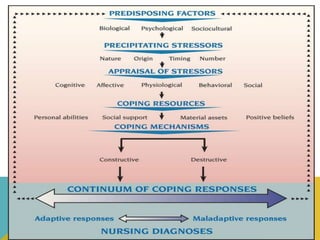
Bio psychosocial approach - a holistic perspective that integrates biological,
psychological, and sociocultural aspects of care.
Predisposing factors -risk factors such as genetic background.
Precipitating stressors - stimuli that the person perceives as challenging such
as life events.
Appraisal of stressor - an evaluation of the significance of a stressor.
Coping resources - options or strategies that help determine what can be
done as well as what is at stake.
Adaptation/maladaptation -
CONT….
Levels of Prevention
Primary
Secondary
Tertiary
Four stages of psychiatric treatment & nursing care
Crisis stage
Acute stage
Maintenance stage
Health promotion stage
Stress adaptation model

Stress adaptation model

  • 1.
    STRESS ADAPTATION MODEL M AR U D H A R N I M S N U R S I N G C O L L E G E
  • 2.
    INTRODUCTION Stuart Stress AdaptationModel is a model of psychiatric nursing care, which integrates biological, psychological, sociocultural, environmental, and legal-ethical aspects of patient care into a unified framework for practice.
  • 3.
    ASSUMPTIONS "Nature is orderedas a social hierarchy from the simplest unit to the most complex and the individual is a part of family, group, community, society, and the larger biosphere." "Nursing care is provided within a biological, psychological, sociocultural, environmental, and legal-ethical context." Health/illness and adaptation/maladaptation (nursing world view) are two distinct continuums. The model includes the primary, secondary, and tertiary levels of prevention by describing four discrete stages of psychiatric treatment: crisis, acute, maintenance, and health promotion. Nursing care is based on the use of the nursing process and the standards of care and professional performance for psychiatric nurses.
  • 4.
    CONCEPTS Bio psychosocial approach- a holistic perspective that integrates biological, psychological, and sociocultural aspects of care. Predisposing factors -risk factors such as genetic background. Precipitating stressors - stimuli that the person perceives as challenging such as life events. Appraisal of stressor - an evaluation of the significance of a stressor. Coping resources - options or strategies that help determine what can be done as well as what is at stake. Adaptation/maladaptation -
  • 5.
    CONT…. Levels of Prevention Primary Secondary Tertiary Fourstages of psychiatric treatment & nursing care Crisis stage Acute stage Maintenance stage Health promotion stage