PRINCIPLES OF THERAPEUTIC COMMUNICATION
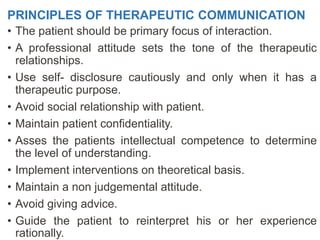
• The patient should be primary focus of interaction.
• A professional attitude sets the tone of the therapeutic
relationships.
• Use self- disclosure cautiously and only when it has a
therapeutic purpose.
• Avoid social relationship with patient.
• Maintain patient confidentiality.
• Asses the patients intellectual competence to determine

the level of understanding.
• Implement interventions on theoretical basis.
• Maintain a non judgemental attitude.
• Avoid giving advice.
• Guide the patient to reinterpret his or her experience
rationally.
CHARACTERISTICS OF RELATIONSHIP
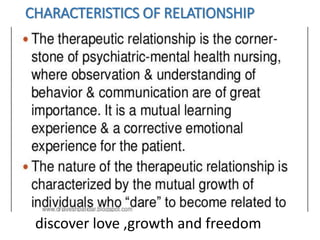
discover love ,growth and freedom
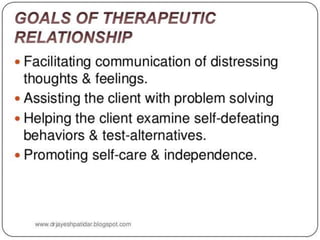
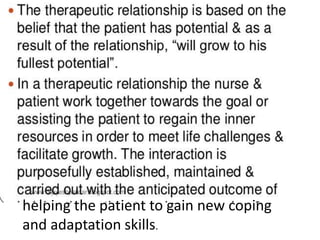
helping the patient to gain new coping
and adaptation skills.
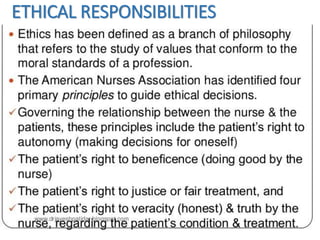
ETHICAL RESPONSIBILITIES
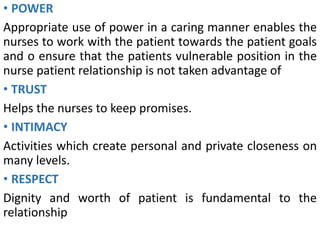
• POWER
Appropriate use of power in a caring manner enables the
nurses to work with the patient towards the patient goals
and o ensure that the patients vulnerable position in the
nurse patient relationship is not taken advantage of
• TRUST
Helps the nurses to keep promises.
• INTIMACY
Activities which create personal and private closeness on
many levels.
• RESPECT
Dignity and worth of patient is fundamental to the
relationship
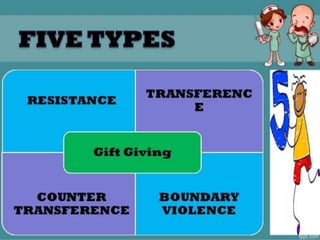
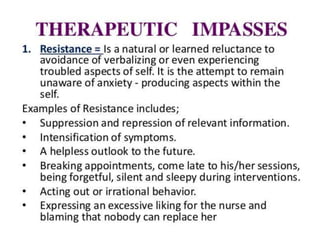
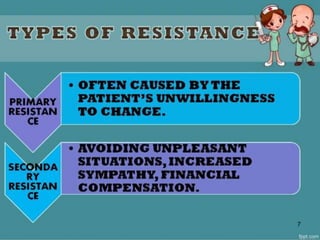
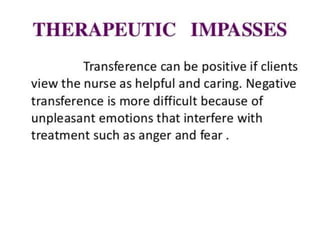
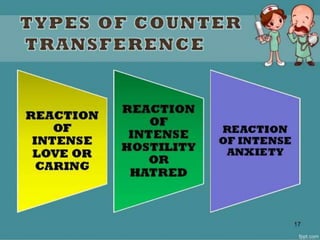
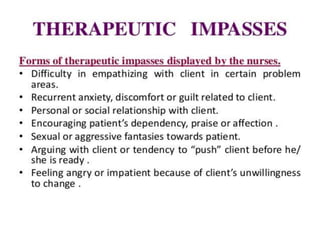
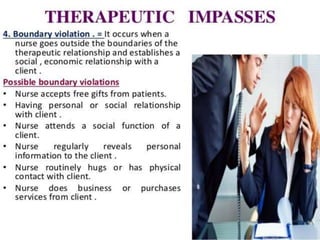
THERAPEUTIC IMPASSES
• Types
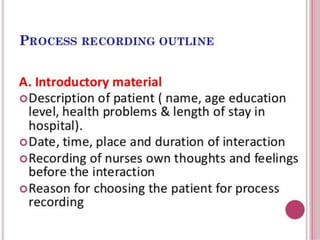
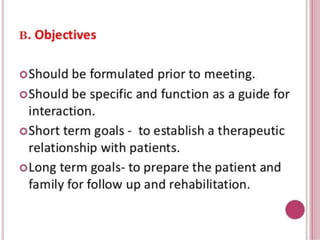
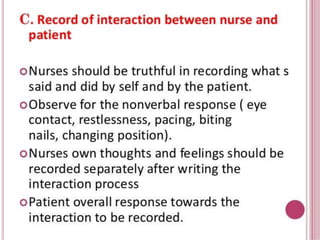
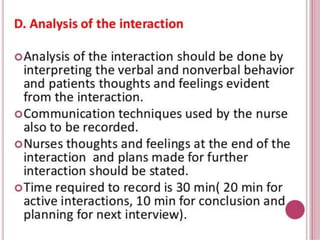
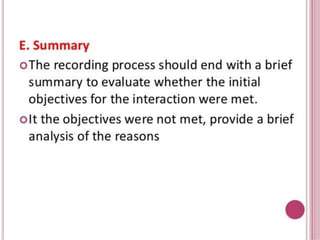
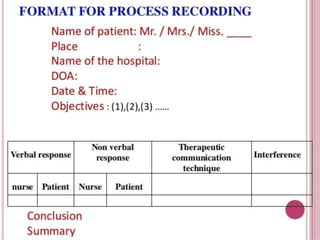
PROCESS RECORDING
Therapeutic communication

Therapeutic communication

  • 6.
    PRINCIPLES OF THERAPEUTICCOMMUNICATION • The patient should be primary focus of interaction. • A professional attitude sets the tone of the therapeutic relationships. • Use self- disclosure cautiously and only when it has a therapeutic purpose. • Avoid social relationship with patient. • Maintain patient confidentiality. • Asses the patients intellectual competence to determine the level of understanding. • Implement interventions on theoretical basis. • Maintain a non judgemental attitude. • Avoid giving advice. • Guide the patient to reinterpret his or her experience rationally.
  • 29.
  • 30.
    helping the patientto gain new coping and adaptation skills.
  • 31.
  • 49.
    • POWER Appropriate useof power in a caring manner enables the nurses to work with the patient towards the patient goals and o ensure that the patients vulnerable position in the nurse patient relationship is not taken advantage of • TRUST Helps the nurses to keep promises. • INTIMACY Activities which create personal and private closeness on many levels. • RESPECT Dignity and worth of patient is fundamental to the relationship
  • 69.
  • 74.
  • 81.