Street Design Guidelines
Creating safe, accessible, high quality
streets for Pune
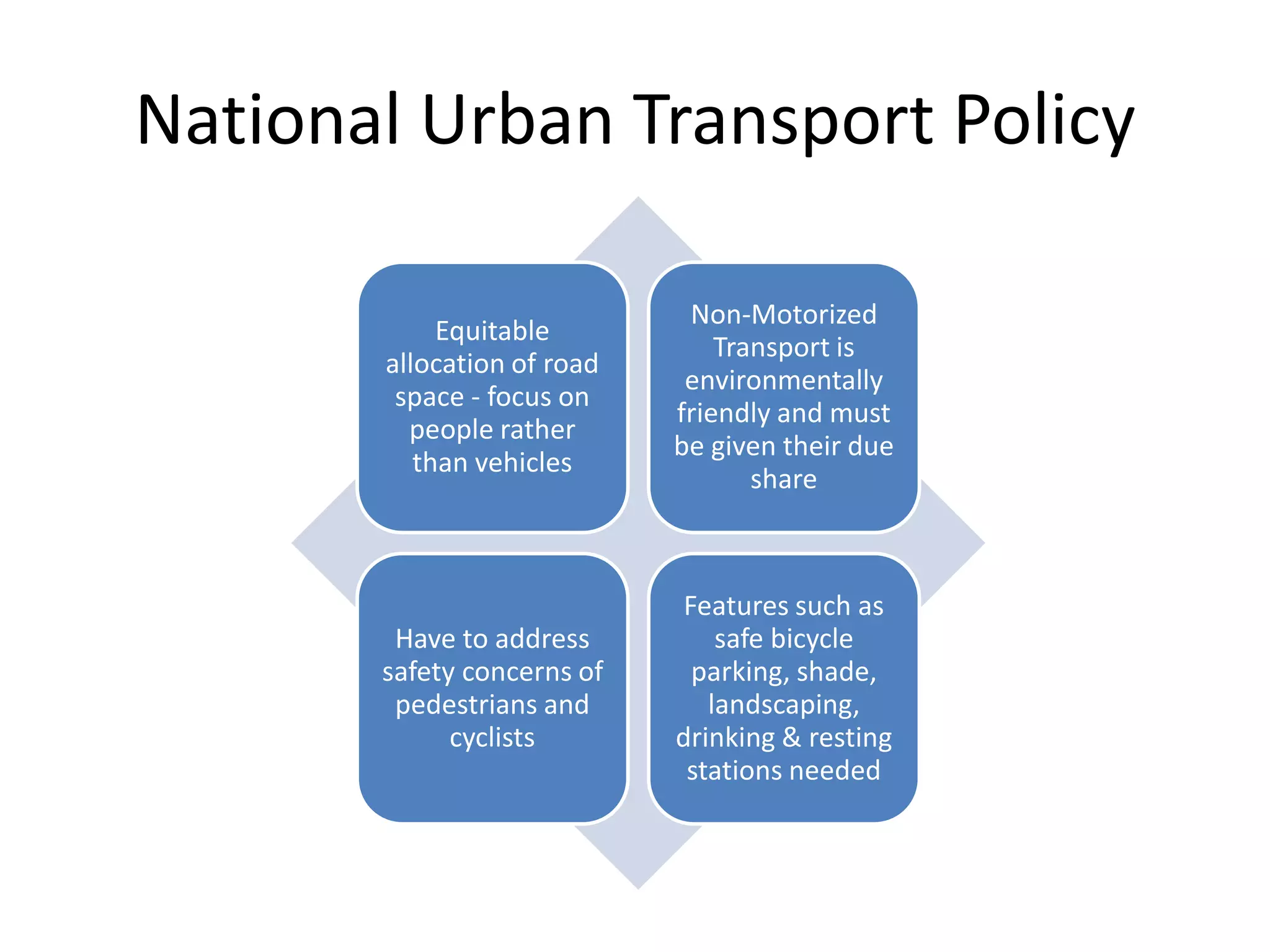
National Urban Transport Policy
Equitable
allocation of road
space - focus on
people rather
than vehicles
Non-Motorized
Transport is
environmentally
friendly and must
be given their due
share
Have to address
safety concerns of
pedestrians and
cyclists
Features such as
safe bicycle
parking, shade,
landscaping,
drinking & resting
stations needed
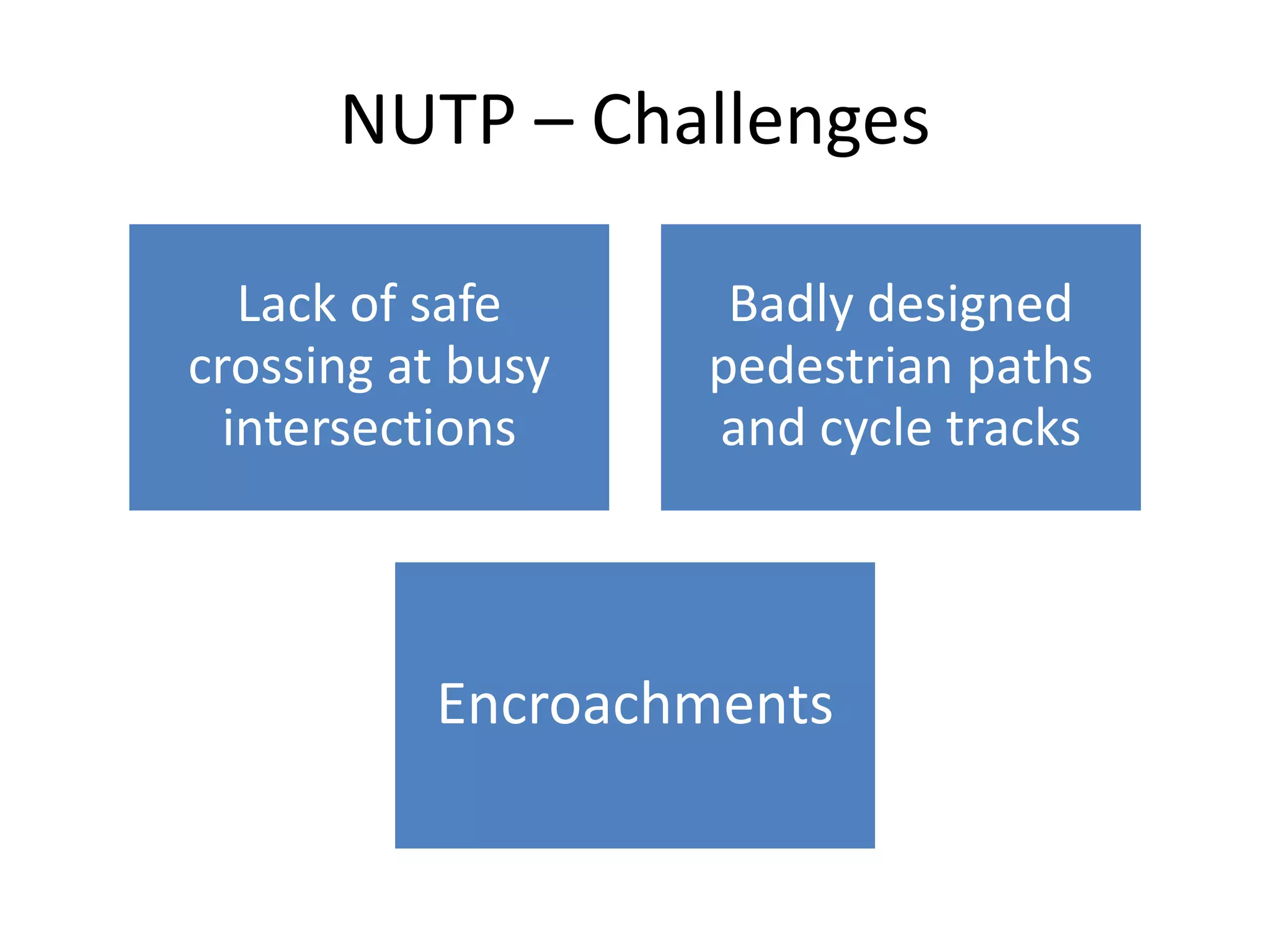
NUTP – Challenges
Lack of safe
crossing at busy
intersections
Badly designed
pedestrian paths
and cycle tracks
Encroachments
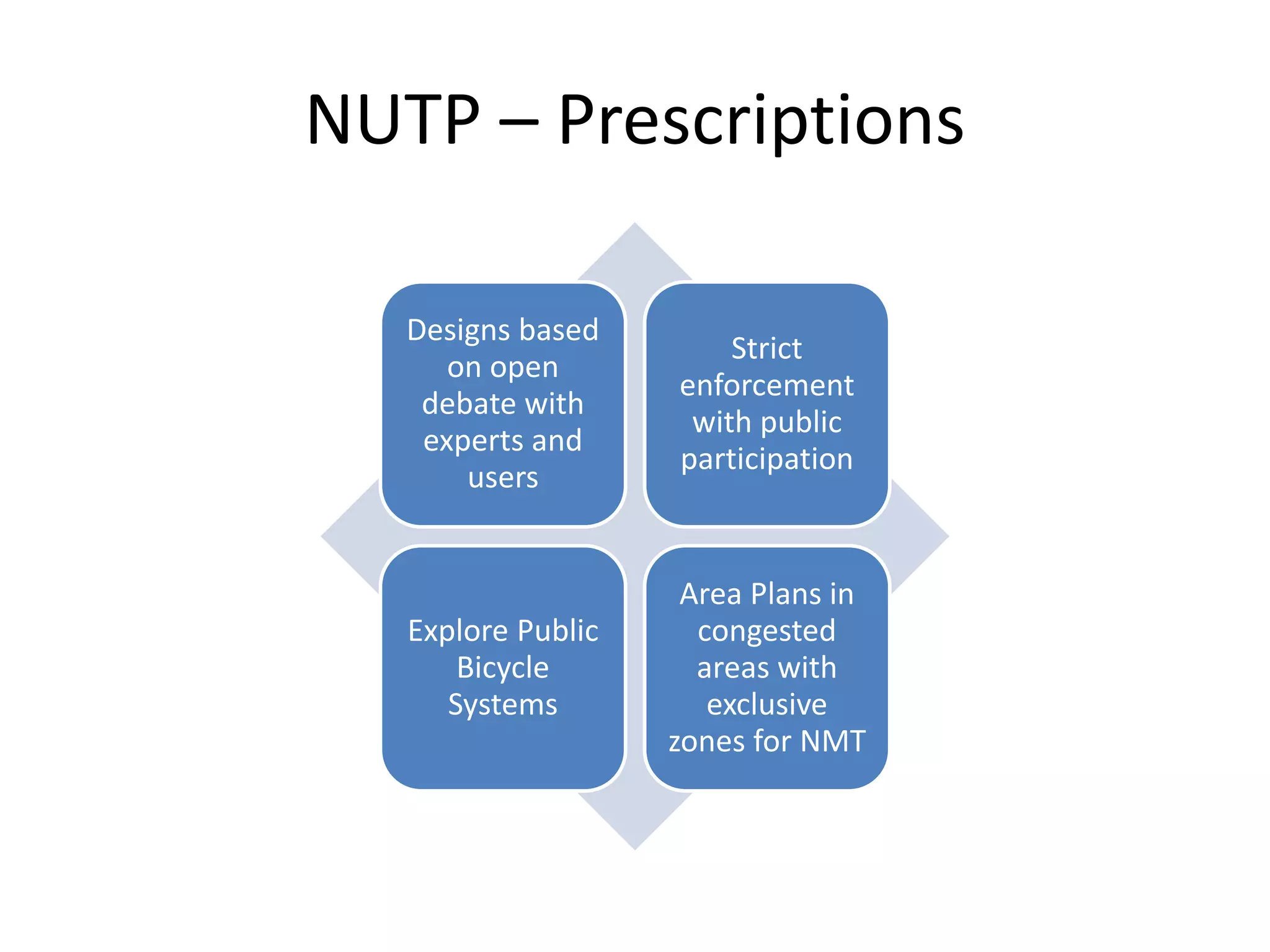
NUTP – Prescriptions
Designs based
on open
debate with
experts and
users
Strict
enforcement
with public
participation
Explore Public
Bicycle
Systems
Area Plans in
congested
areas with
exclusive
zones for NMT
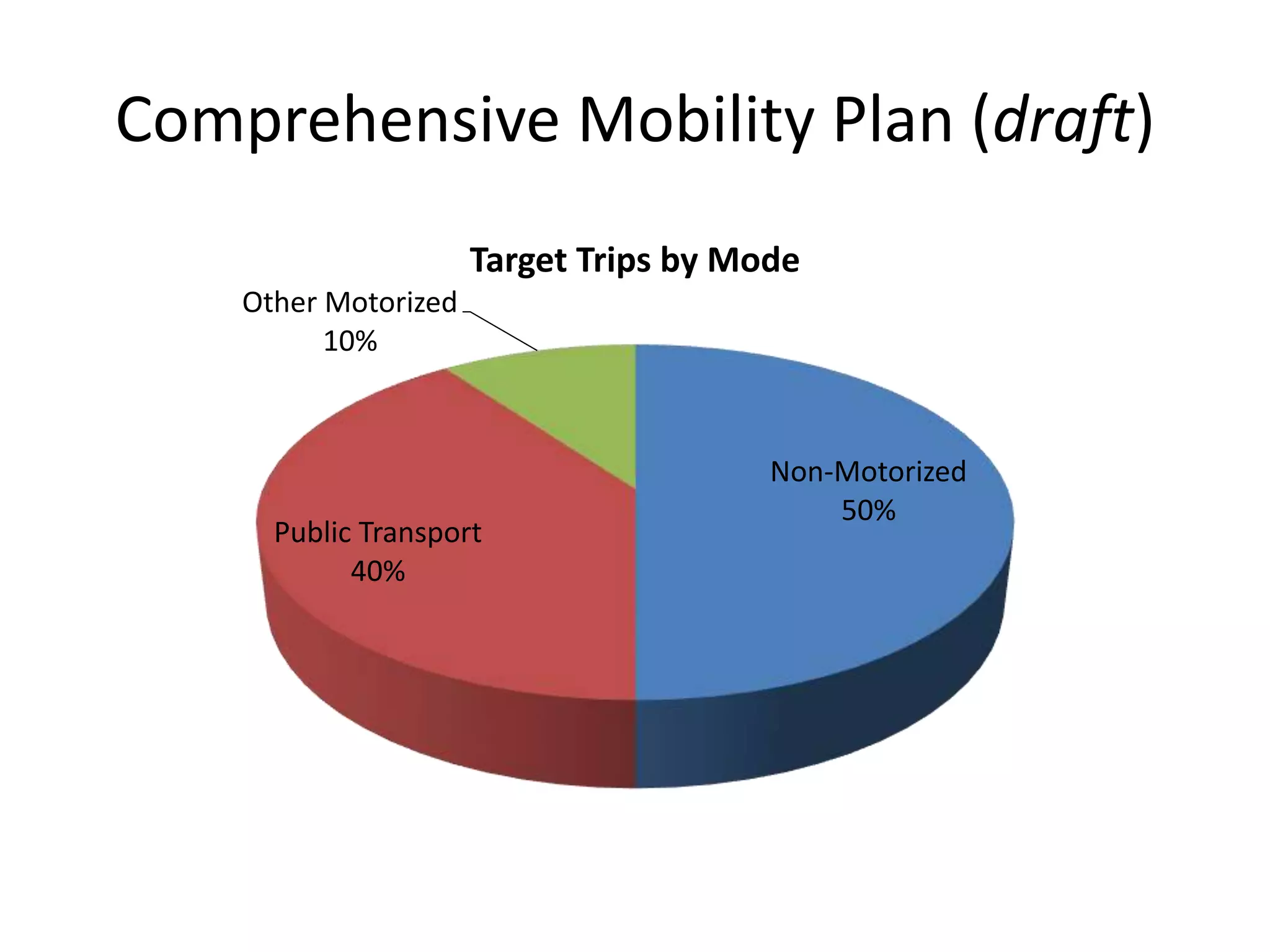
Comprehensive Mobility Plan (draft)
Non-Motorized
50%
Public Transport
40%
Other Motorized
10%
Target Trips by Mode
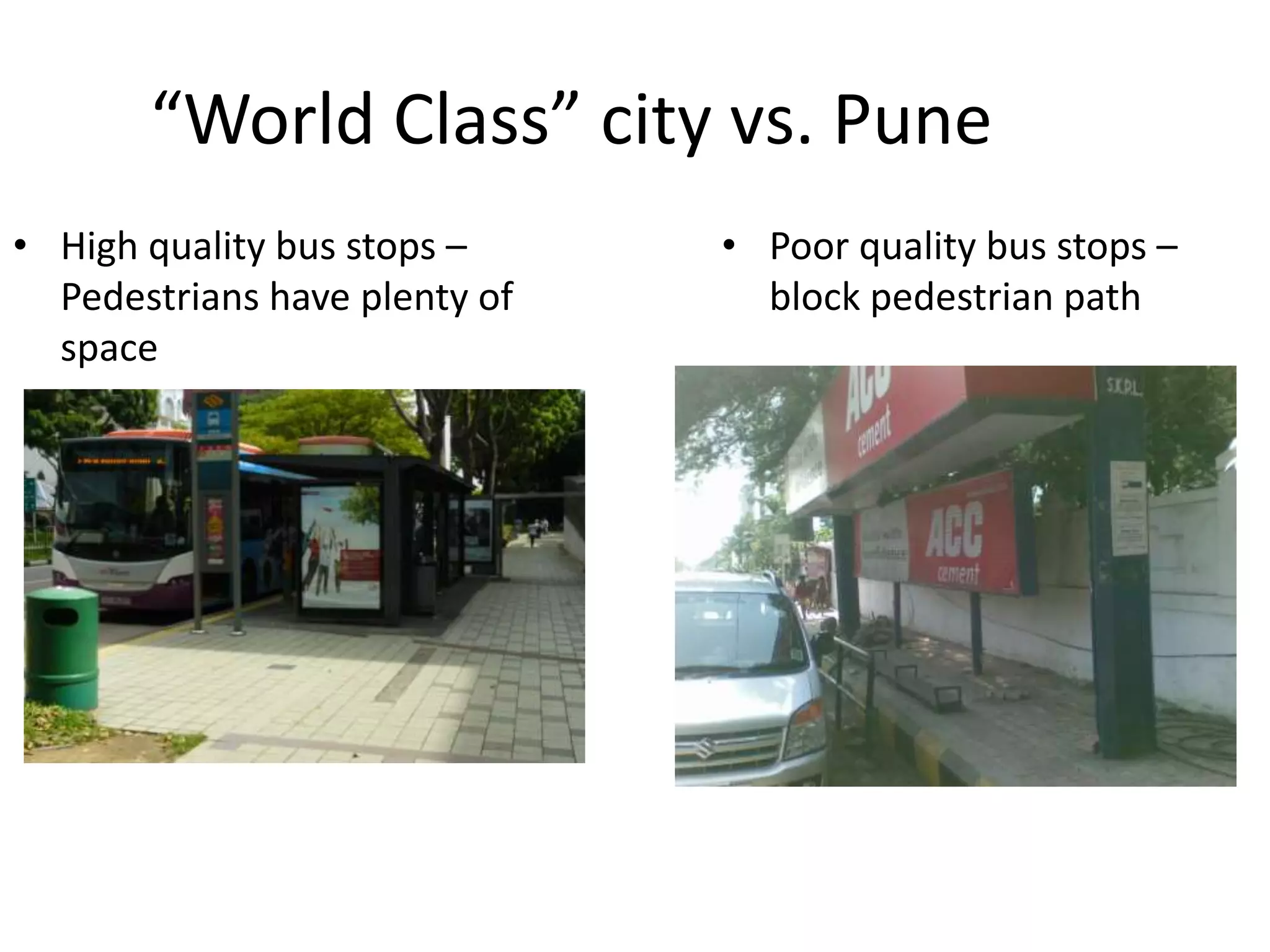
“World Class” city vs. Pune
• High quality bus stops –
Pedestrians have plenty of
space
• Poor quality bus stops –
block pedestrian path
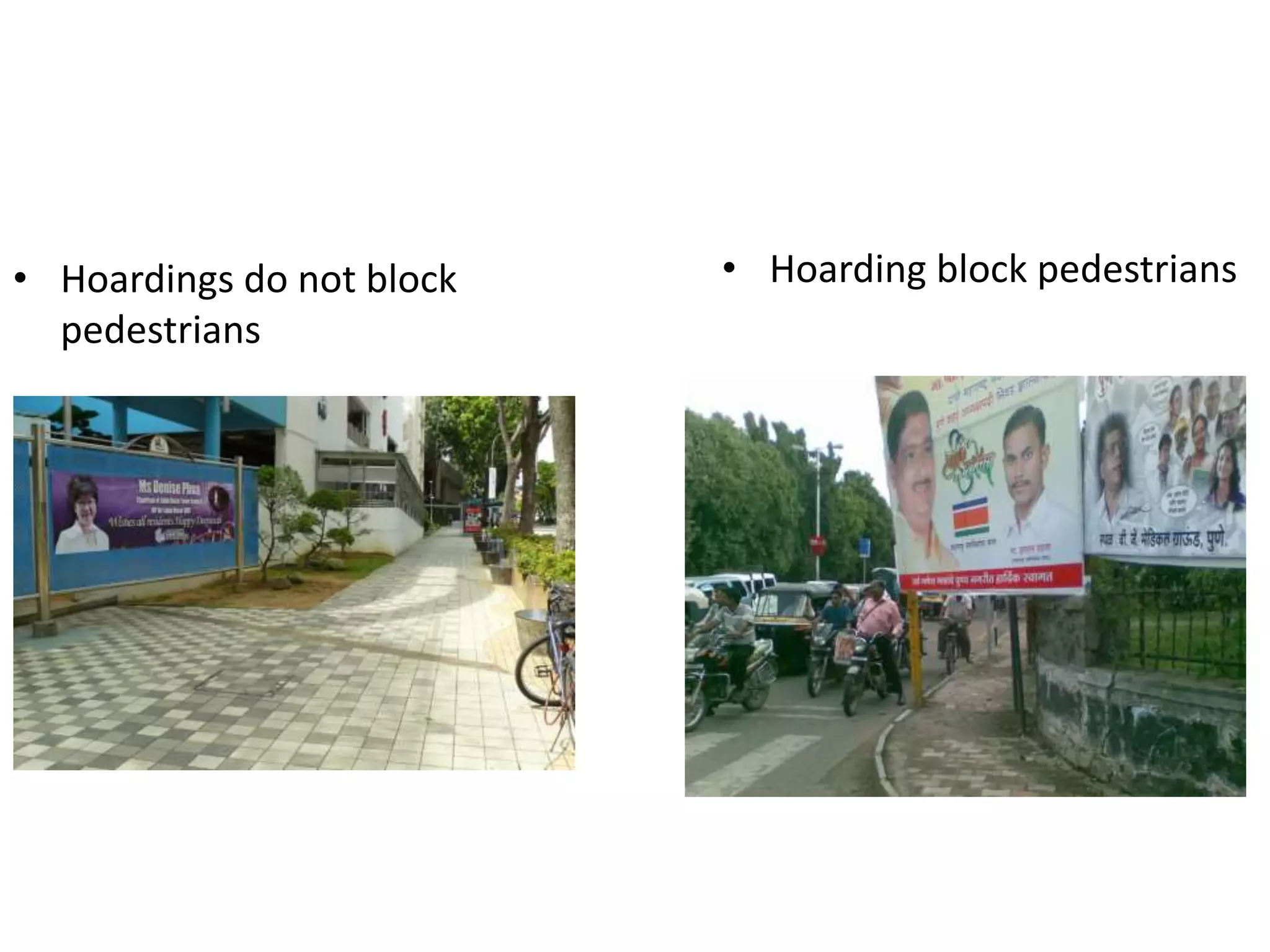
• Hoarding block pedestrians• Hoardings do not block
pedestrians
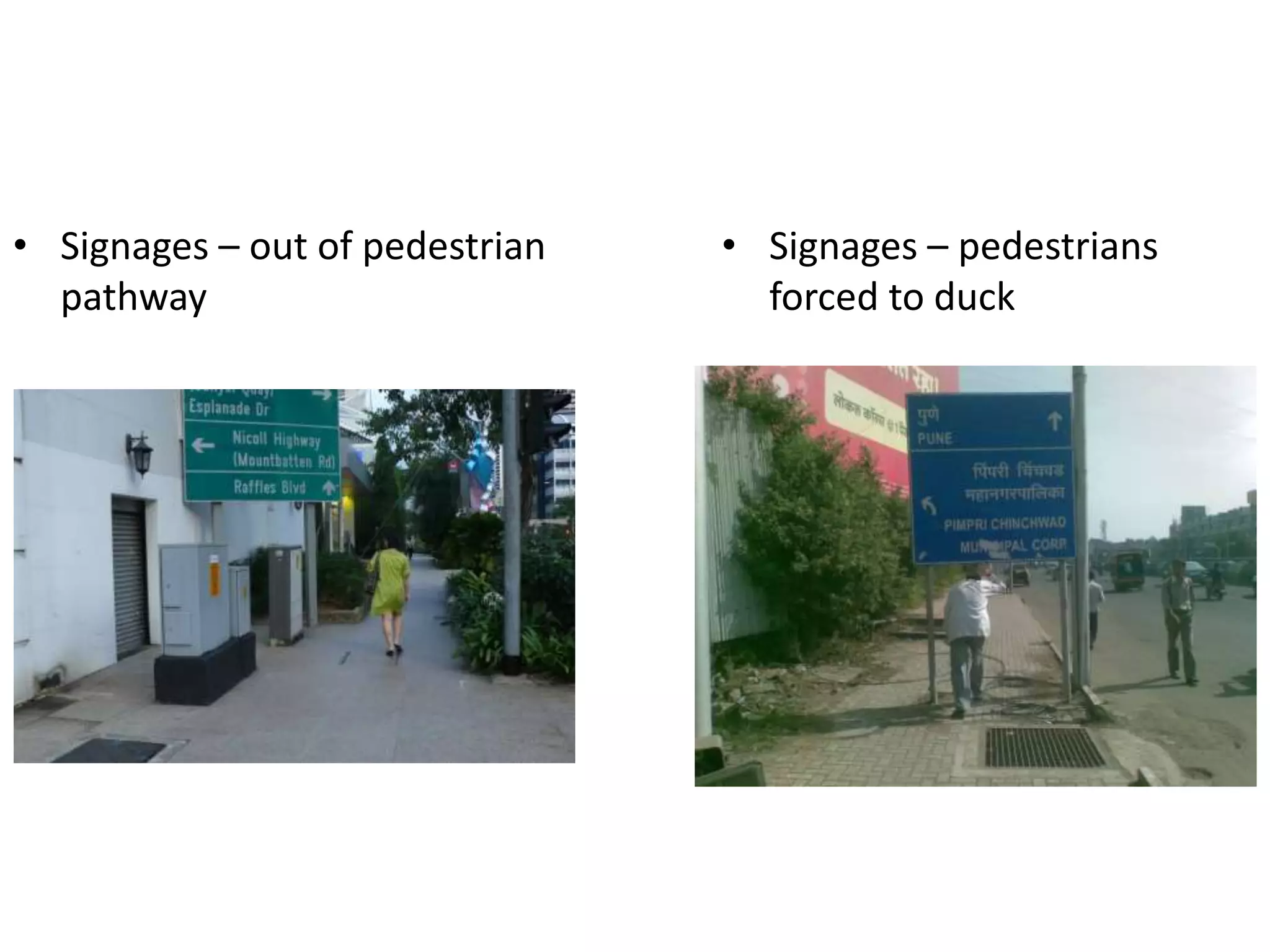
• Signages – out of pedestrian
pathway
• Signages – pedestrians
forced to duck
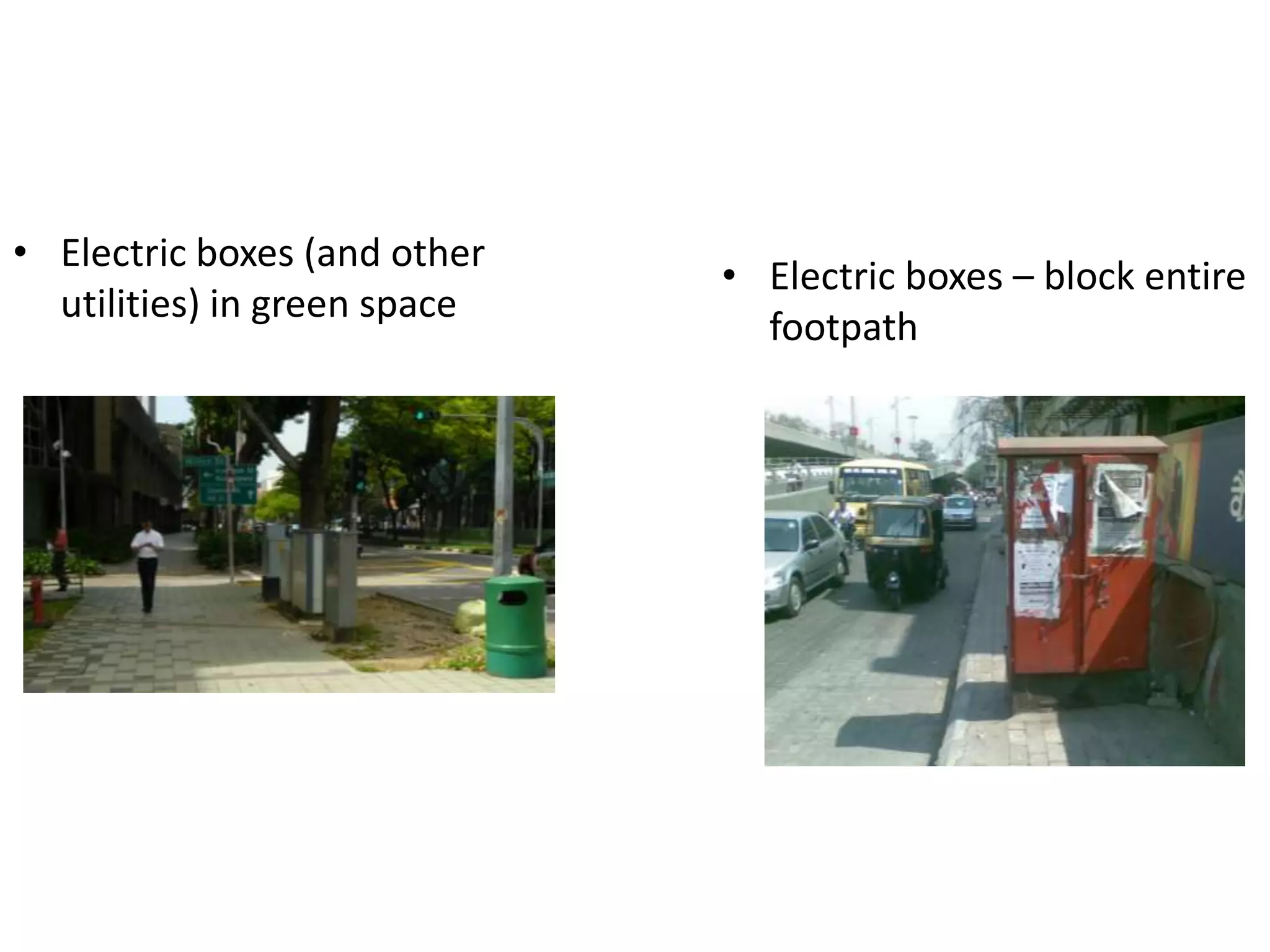
• Electric boxes – block entire
footpath
• Electric boxes (and other
utilities) in green space
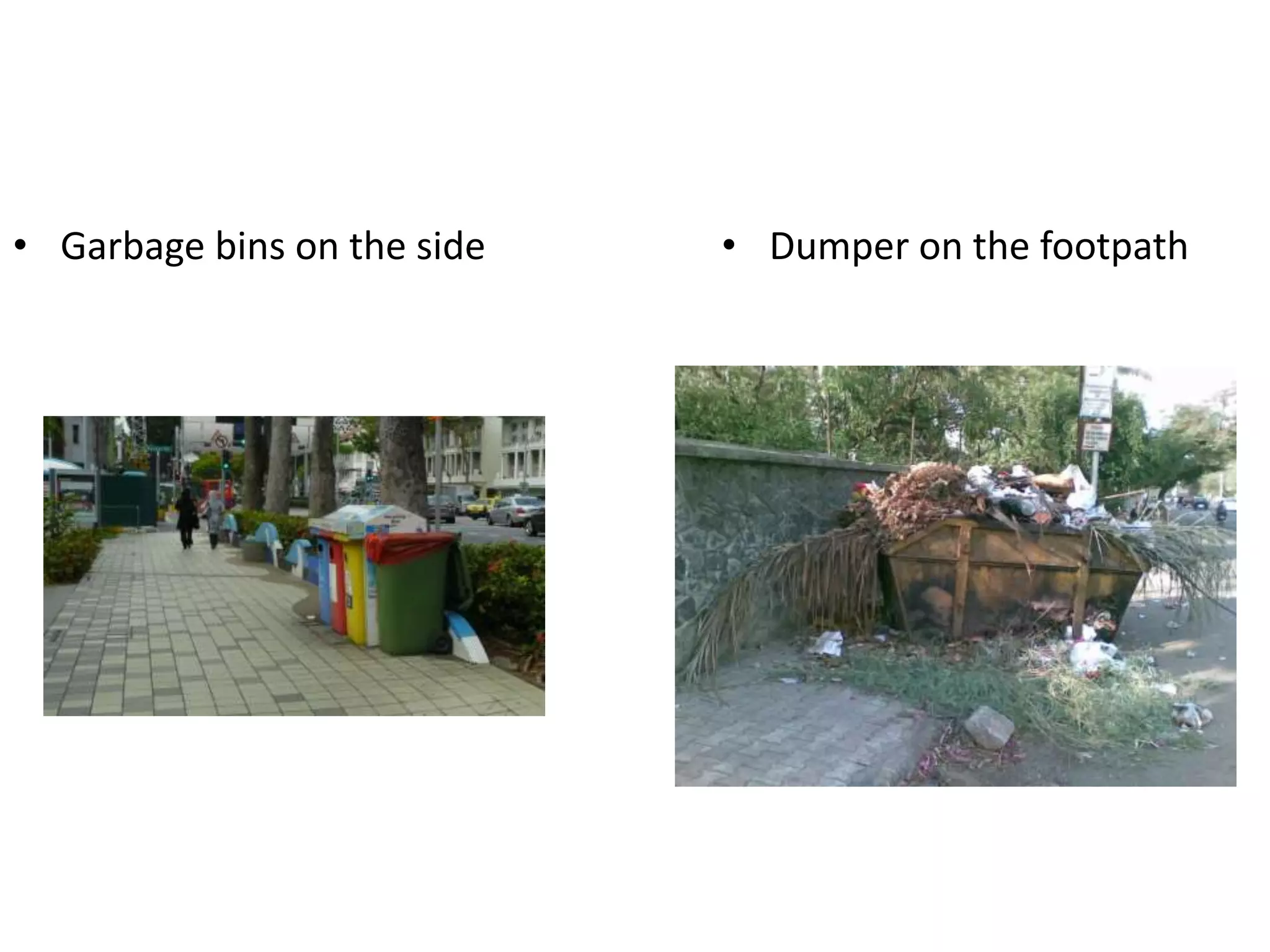
• Garbage bins on the side • Dumper on the footpath
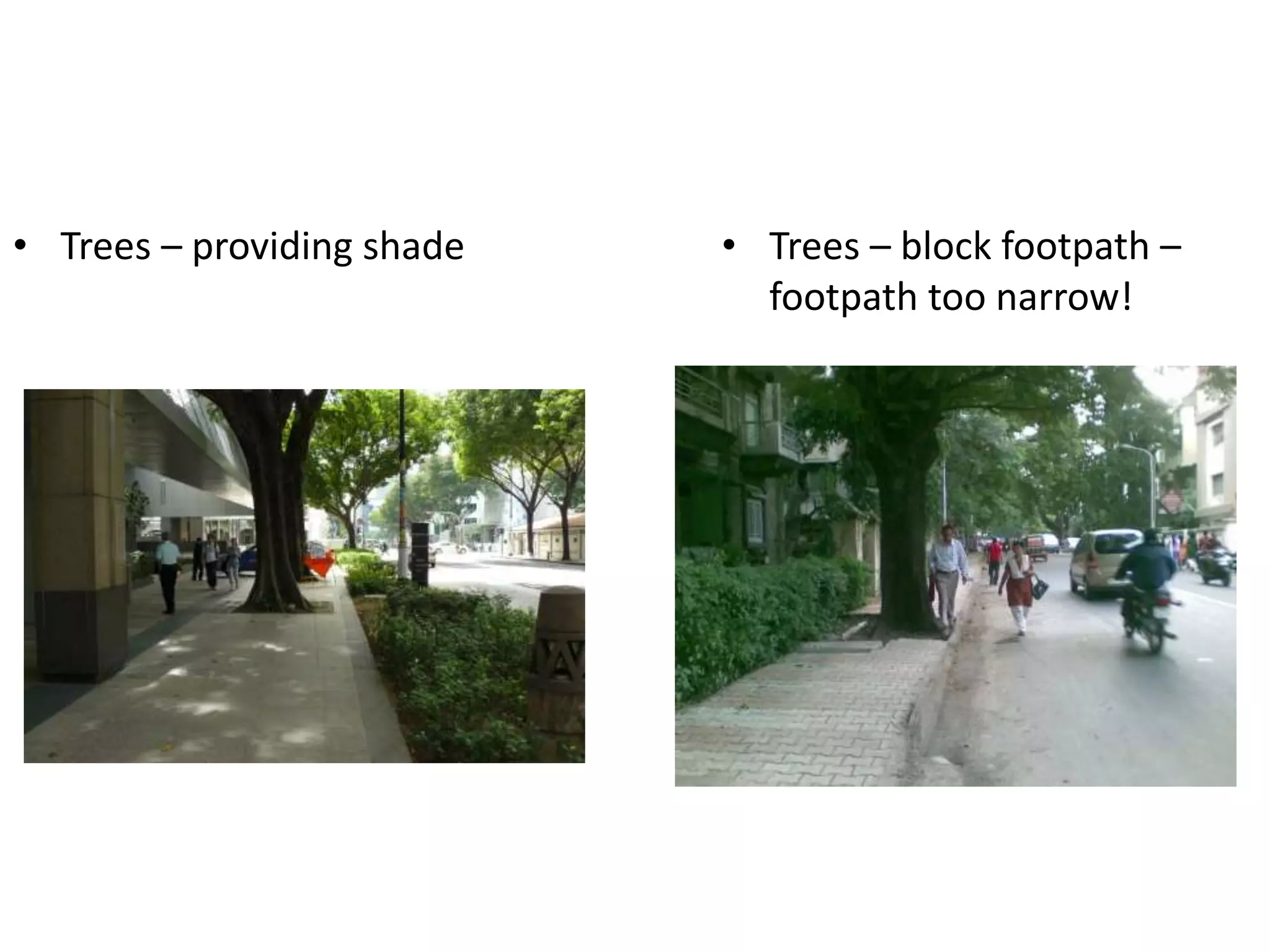
• Trees – providing shade • Trees – block footpath –
footpath too narrow!
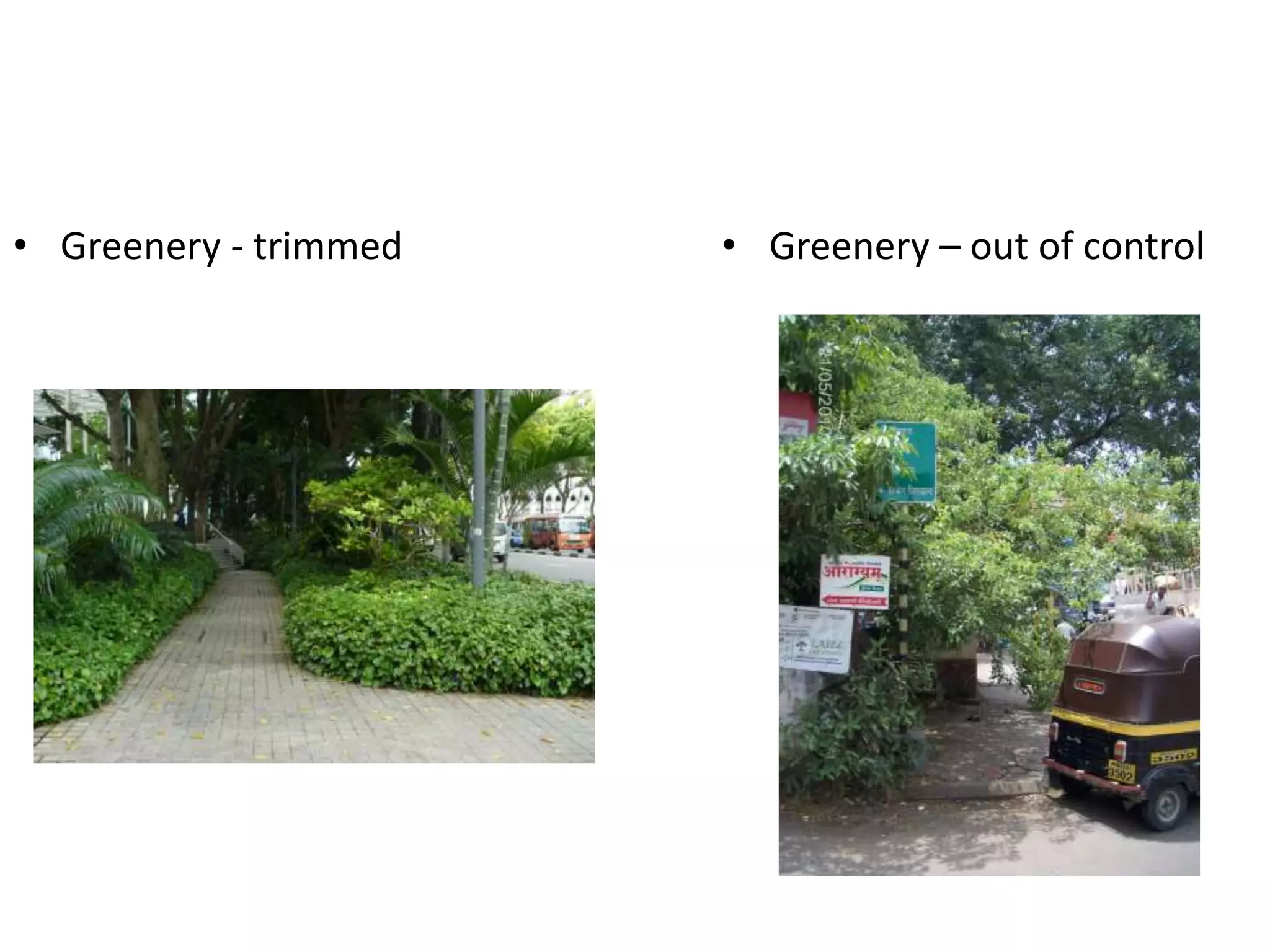
• Greenery - trimmed • Greenery – out of control
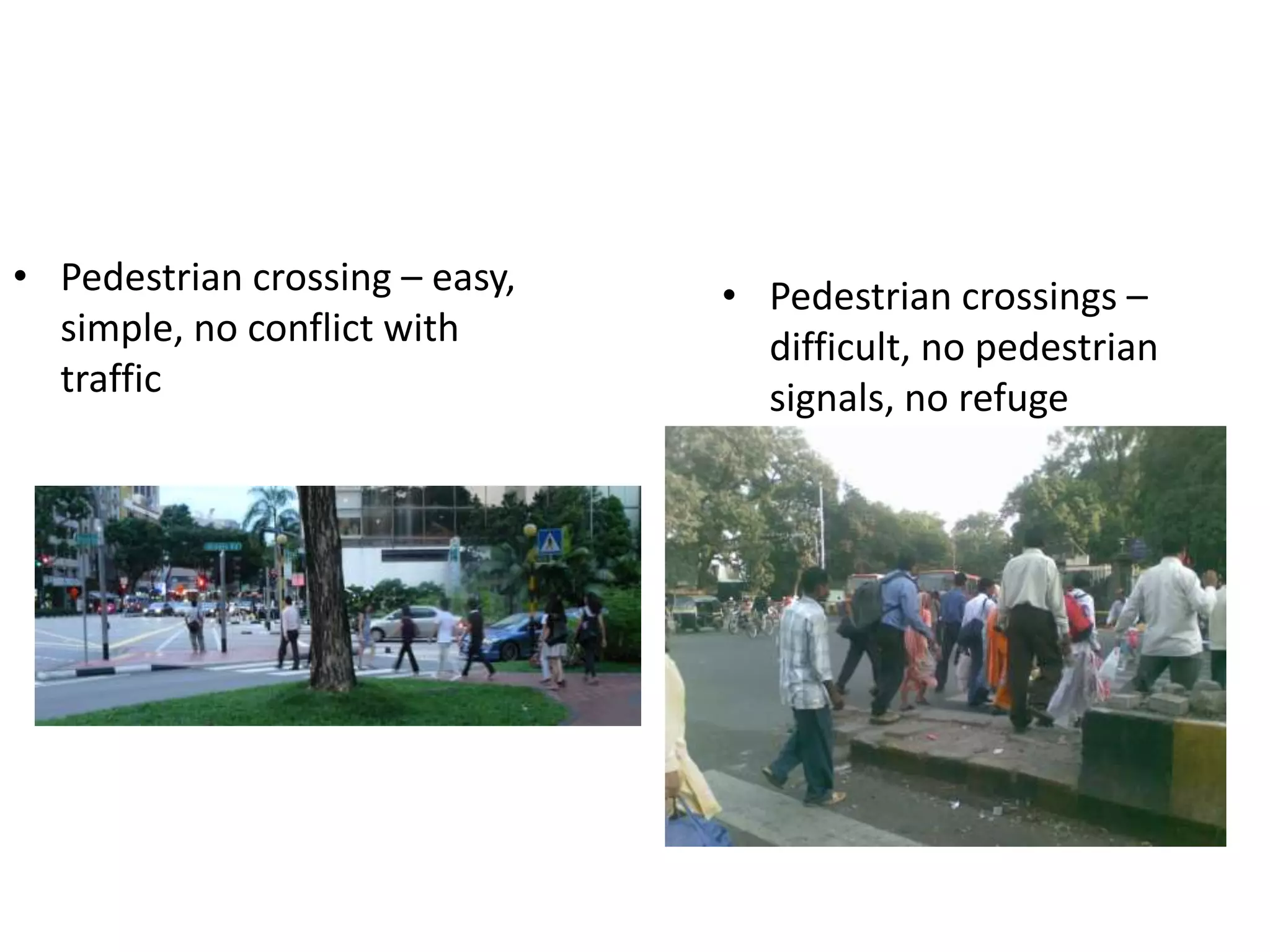
• Pedestrian crossings –
difficult, no pedestrian
signals, no refuge
• Pedestrian crossing – easy,
simple, no conflict with
traffic
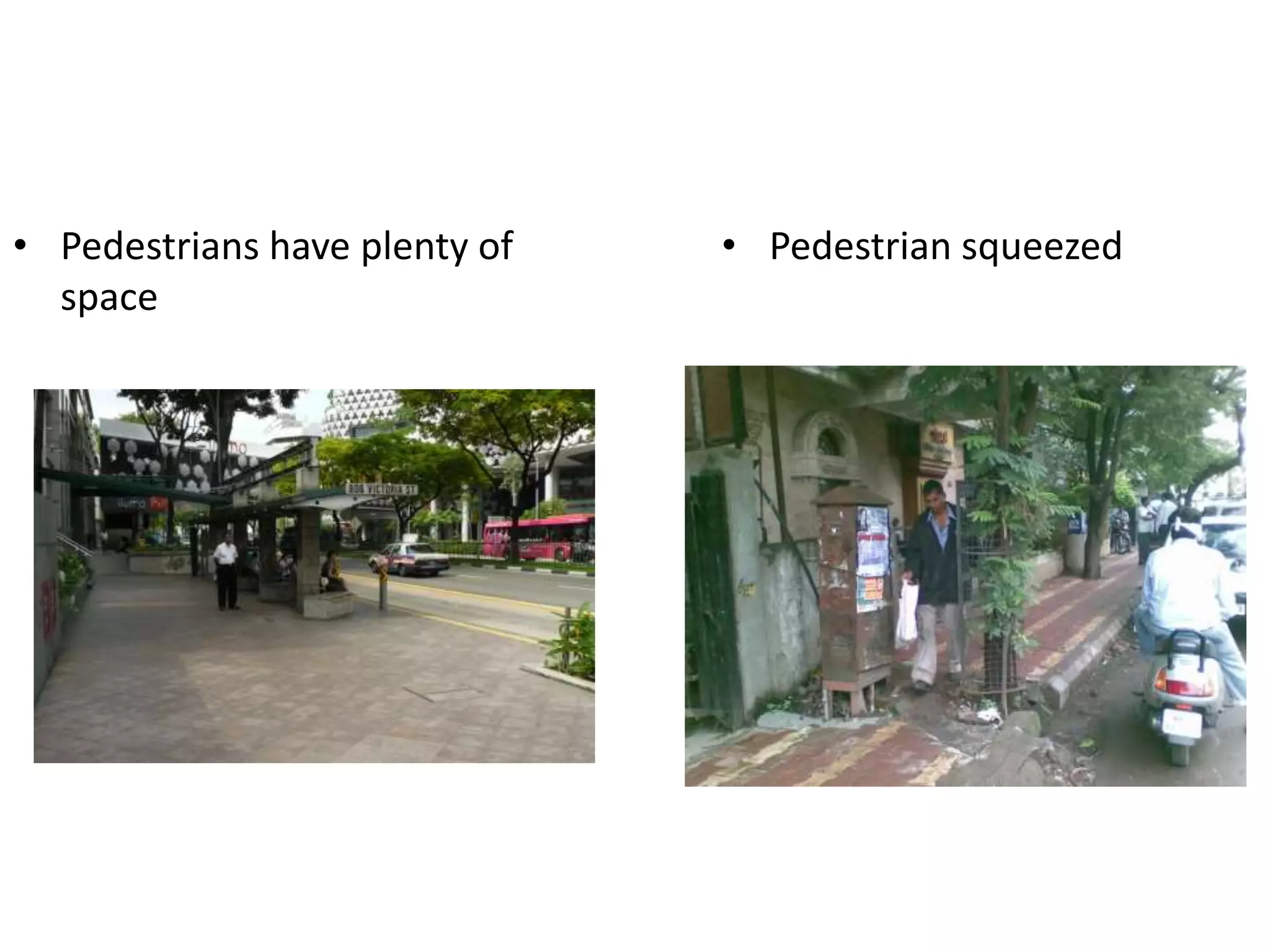
• Pedestrians have plenty of
space
• Pedestrian squeezed
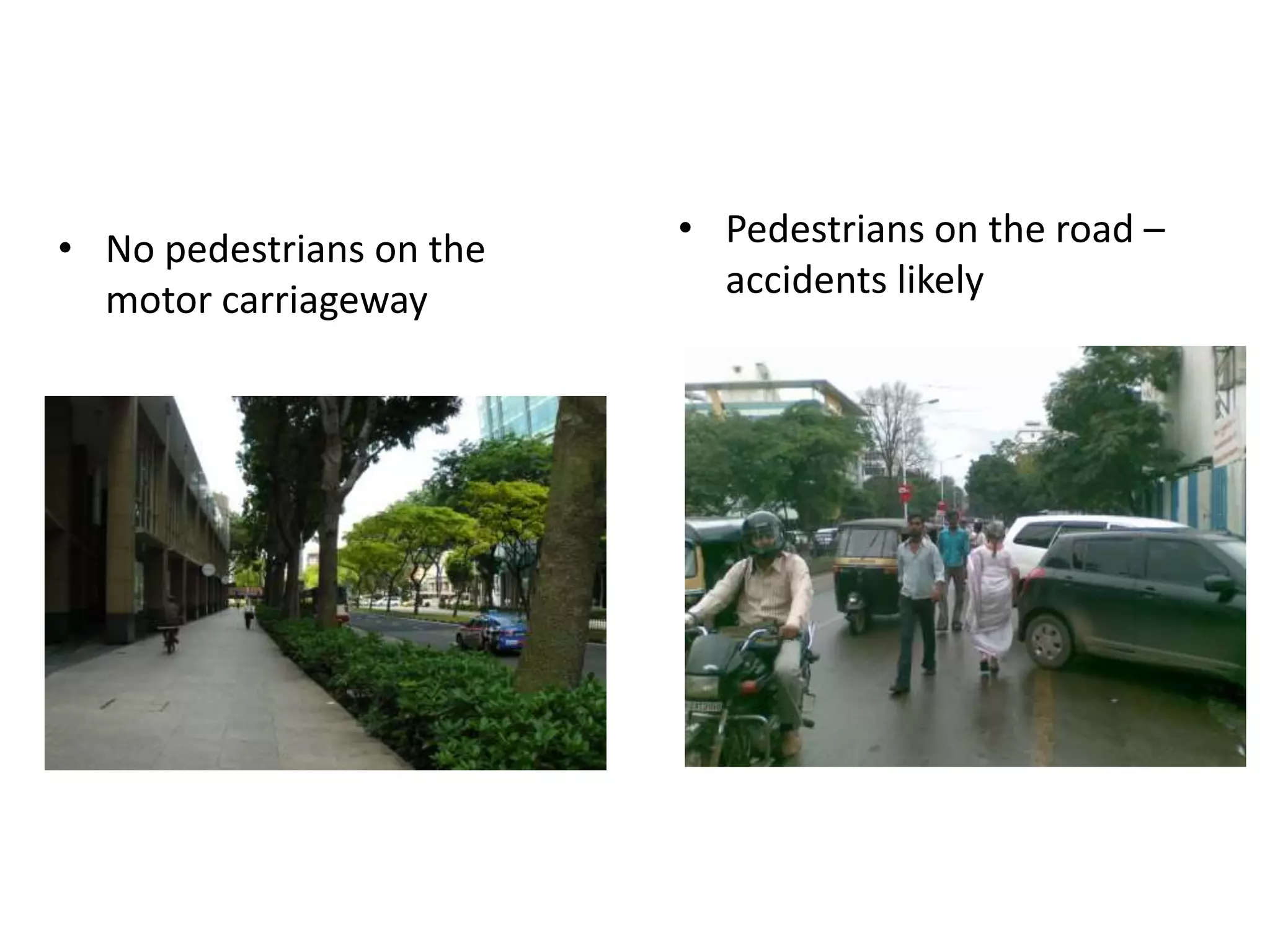
• Pedestrians on the road –
accidents likely
• No pedestrians on the
motor carriageway
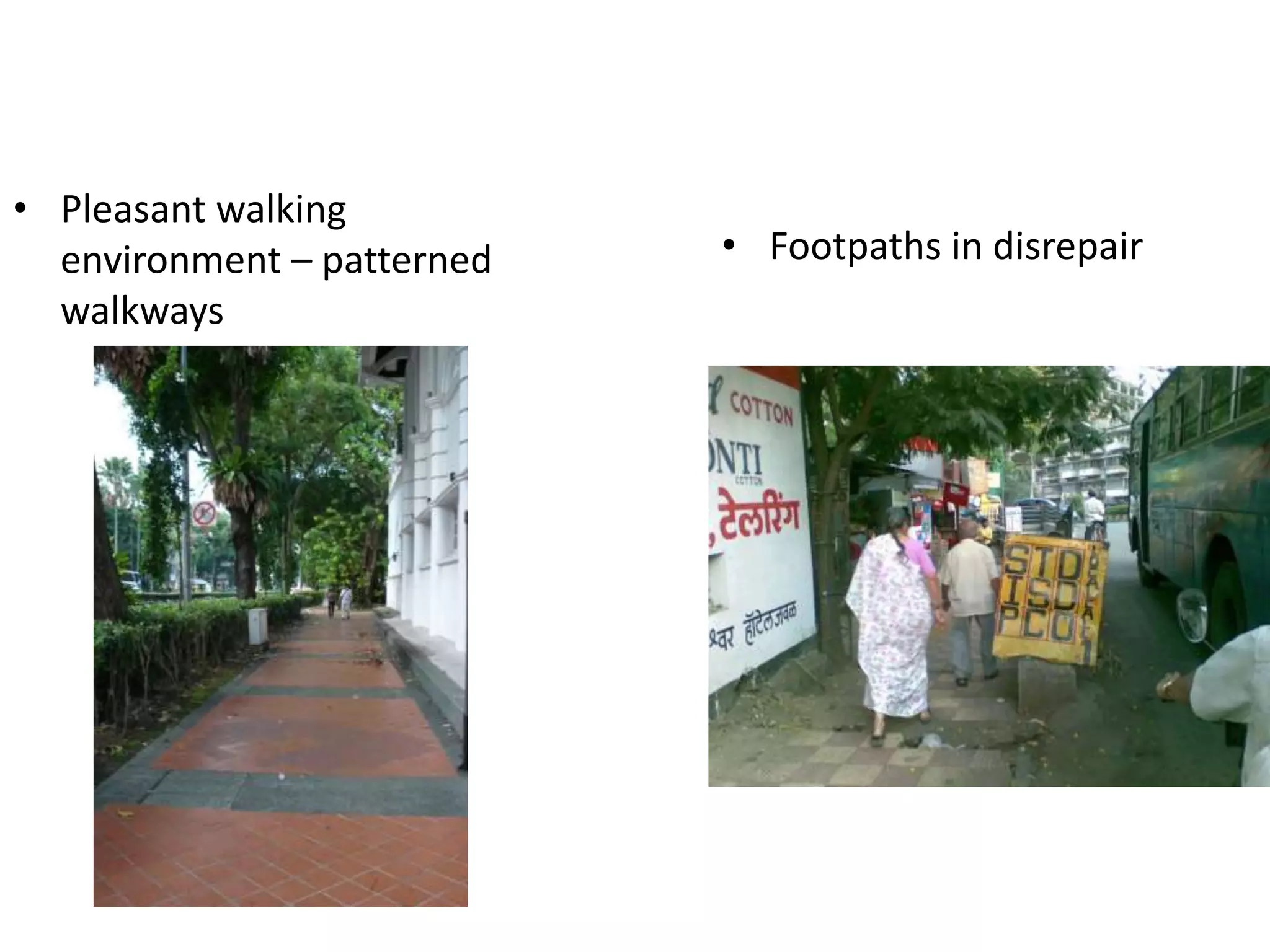
• Pleasant walking
environment – patterned
walkways
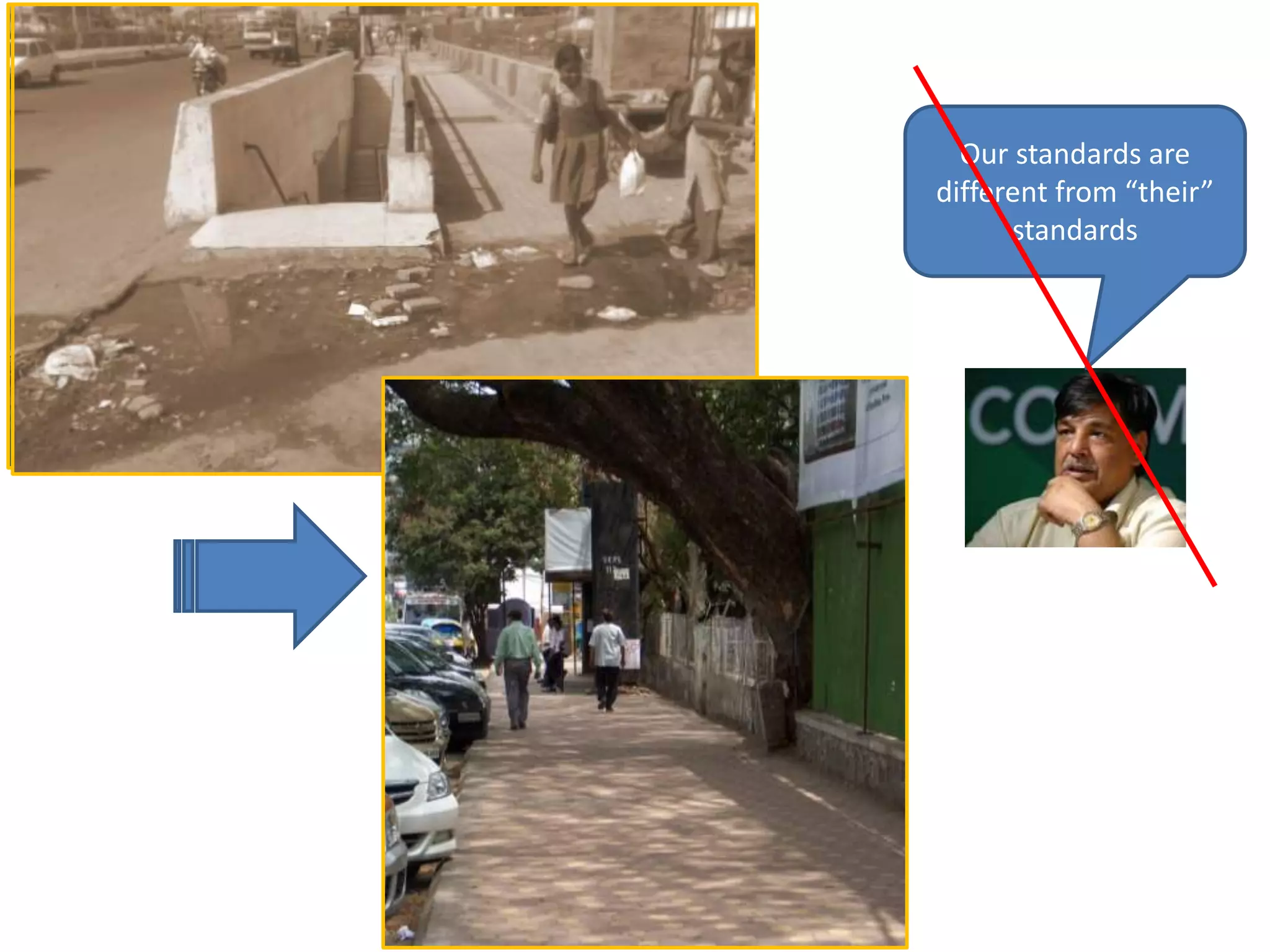
• Footpaths in disrepair
Our standards are
different from “their”
standards
Street Design Guidelines – Worldwide
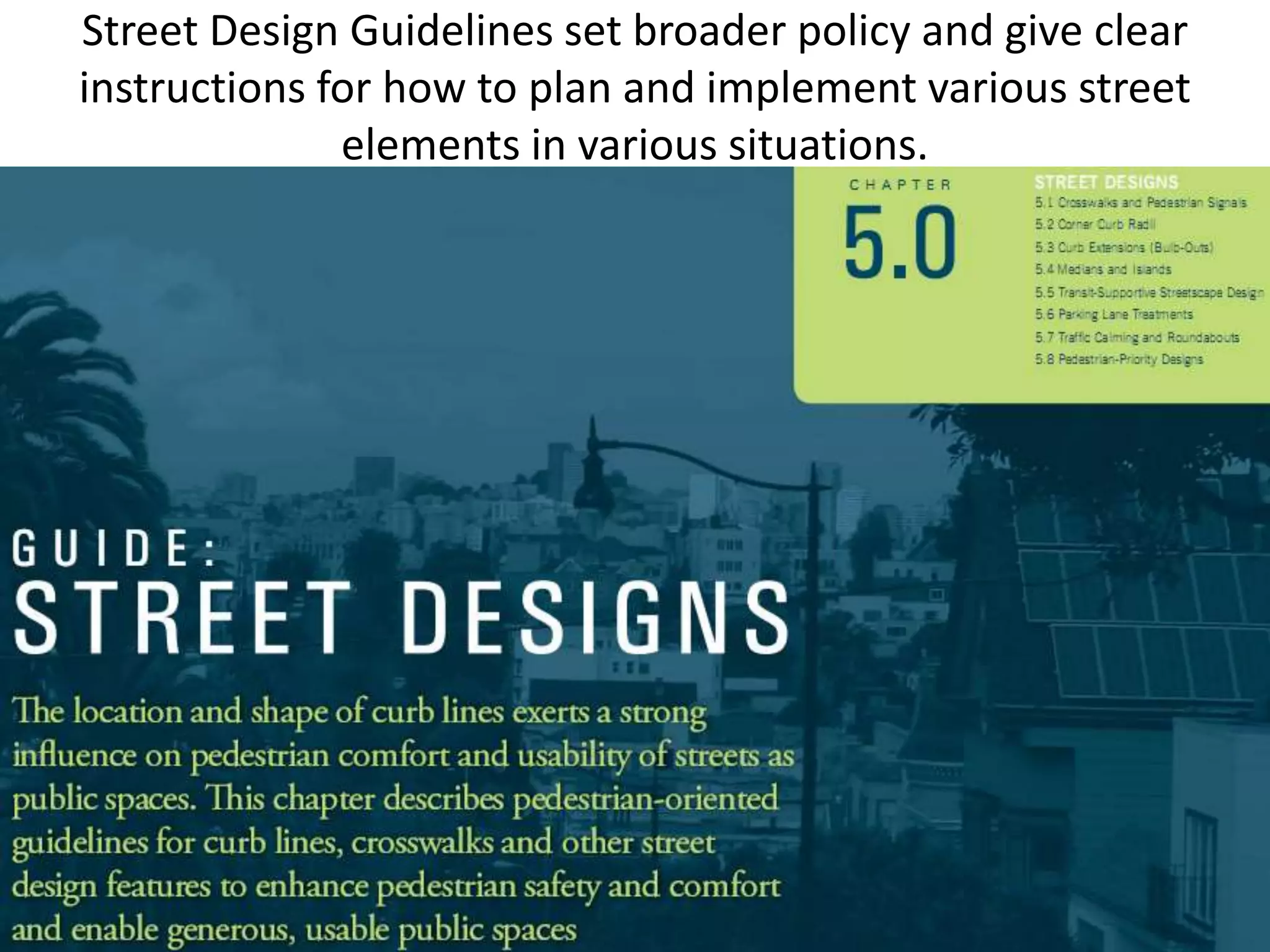
Street Design Guidelines set broader policy and give clear
instructions for how to plan and implement various street
elements in various situations.
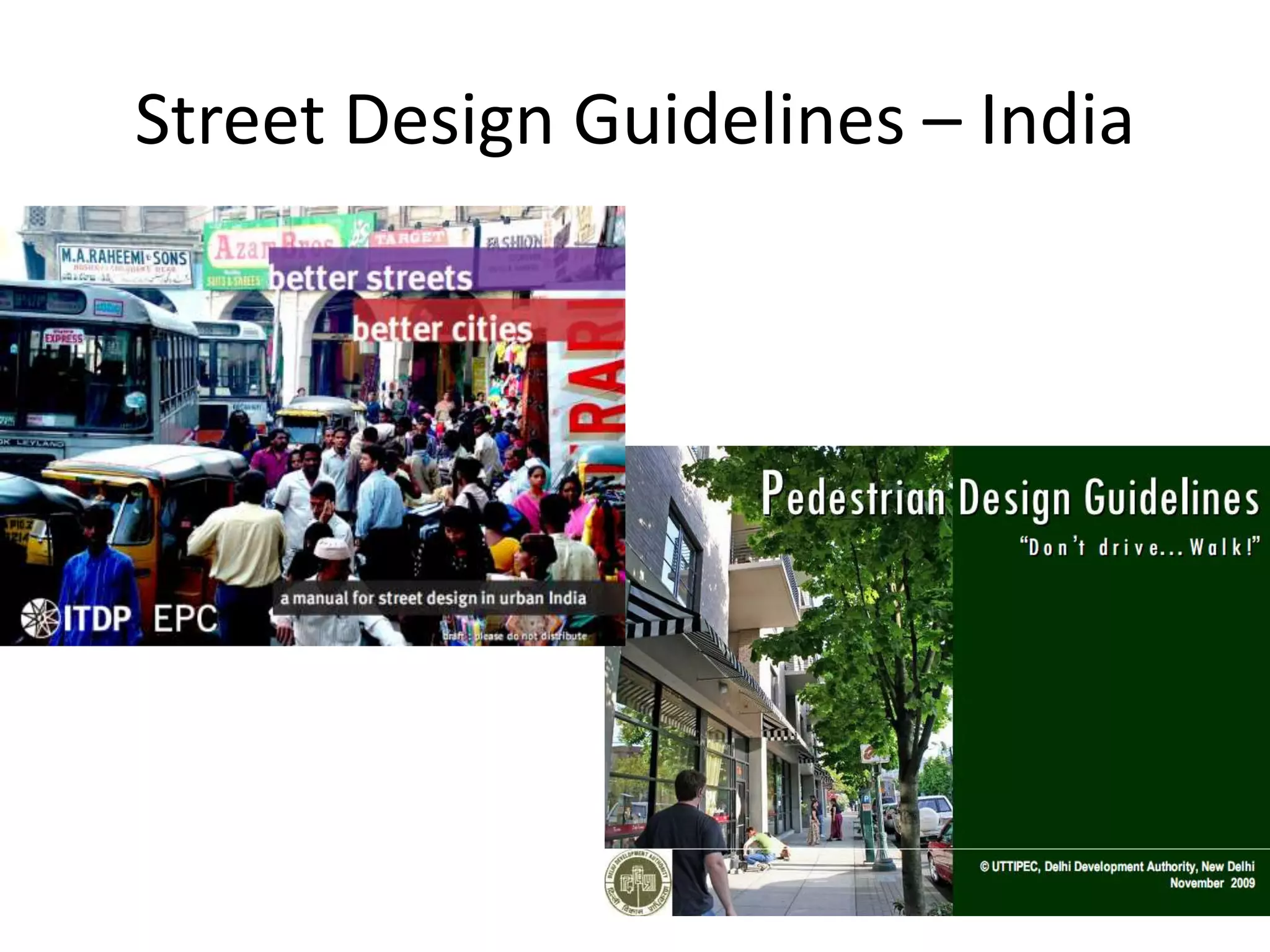
Street Design Guidelines – India
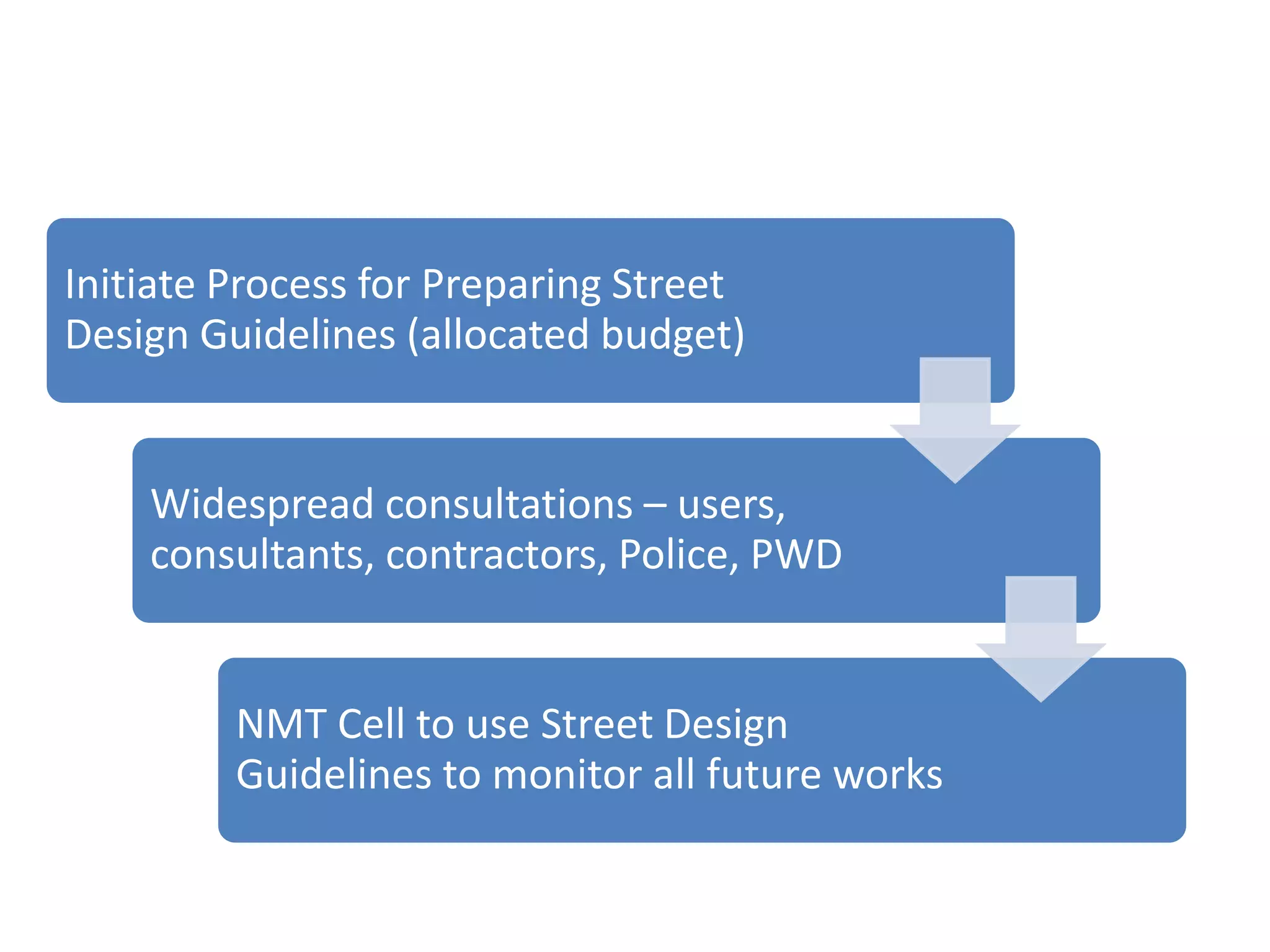
Initiate Process for Preparing Street
Design Guidelines (allocated budget)
Widespread consultations – users,
consultants, contractors, Police, PWD
NMT Cell to use Street Design
Guidelines to monitor all future works

Street Design Guidelines

  • 1.
    Street Design Guidelines Creatingsafe, accessible, high quality streets for Pune
  • 2.
    National Urban TransportPolicy Equitable allocation of road space - focus on people rather than vehicles Non-Motorized Transport is environmentally friendly and must be given their due share Have to address safety concerns of pedestrians and cyclists Features such as safe bicycle parking, shade, landscaping, drinking & resting stations needed
  • 3.
    NUTP – Challenges Lackof safe crossing at busy intersections Badly designed pedestrian paths and cycle tracks Encroachments
  • 4.
    NUTP – Prescriptions Designsbased on open debate with experts and users Strict enforcement with public participation Explore Public Bicycle Systems Area Plans in congested areas with exclusive zones for NMT
  • 5.
    Comprehensive Mobility Plan(draft) Non-Motorized 50% Public Transport 40% Other Motorized 10% Target Trips by Mode
  • 6.
    “World Class” cityvs. Pune • High quality bus stops – Pedestrians have plenty of space • Poor quality bus stops – block pedestrian path
  • 7.
    • Hoarding blockpedestrians• Hoardings do not block pedestrians
  • 8.
    • Signages –out of pedestrian pathway • Signages – pedestrians forced to duck
  • 9.
    • Electric boxes– block entire footpath • Electric boxes (and other utilities) in green space
  • 10.
    • Garbage binson the side • Dumper on the footpath
  • 11.
    • Trees –providing shade • Trees – block footpath – footpath too narrow!
  • 12.
    • Greenery -trimmed • Greenery – out of control
  • 13.
    • Pedestrian crossings– difficult, no pedestrian signals, no refuge • Pedestrian crossing – easy, simple, no conflict with traffic
  • 14.
    • Pedestrians haveplenty of space • Pedestrian squeezed
  • 15.
    • Pedestrians onthe road – accidents likely • No pedestrians on the motor carriageway
  • 16.
    • Pleasant walking environment– patterned walkways • Footpaths in disrepair
  • 17.
    Our standards are differentfrom “their” standards
  • 18.
  • 19.
    Street Design Guidelinesset broader policy and give clear instructions for how to plan and implement various street elements in various situations.
  • 21.
  • 22.
    Initiate Process forPreparing Street Design Guidelines (allocated budget) Widespread consultations – users, consultants, contractors, Police, PWD NMT Cell to use Street Design Guidelines to monitor all future works