PRESENTED BY
NICOLA KANE & DANNY CRUMP
A MOVEMENT FOR
EQUITABLE STREETS
COMPETITION
The most liveable places will attract
best talent, investment, resources.
They will become the place to be...
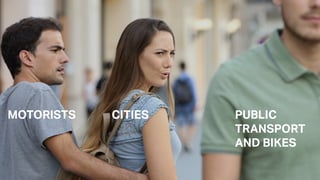
MOTORISTS CITIES PUBLIC
TRANSPORT
AND BIKES
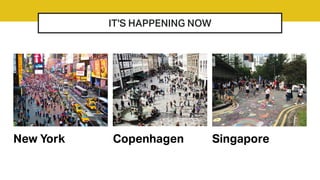
IT'S HAPPENING NOW
New York Copenhagen Singapore
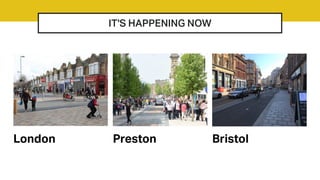
IT'S HAPPENING NOW
London Preston Bristol
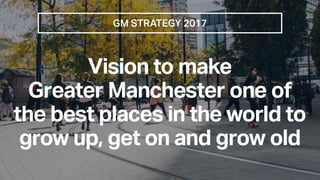
GM STRATEGY 2017
Vision to make
Greater Manchester one of
the best places in the world to
grow up, get on and grow old
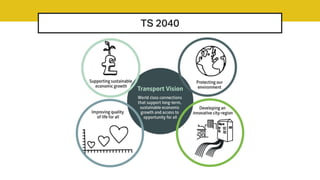
TS2040GMSF
TS 2040
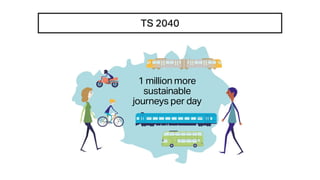
TS 2040
1 million more
sustainable
journeys per day
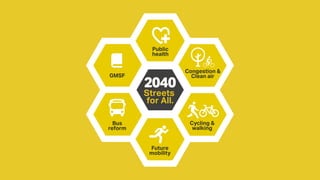
2040
Future
mobility
Bus
reform
GMSF
Public
health
Congestion &
Clean air
Cycling &
walking
Streets
for All.
“To create streets that
balance the movement
of people and goods
with the creation
of more people-
friendly places’’
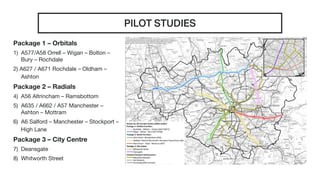
PILOT STUDIES
Package 1 – Orbitals
1) A577/A58 Orrell – Wigan – Bolton –
Bury – Rochdale
2) A627 / A671 Rochdale – Oldham –
Ashton
Package 2 – Radials
4) A56 Altrincham – Ramsbottom
5) A635 / A662 / A57 Manchester –
Ashton – Mottram
6) A6 Salford – Manchester – Stockport –
High Lane
Package 3 – City Centre
7) Deansgate
8) Whitworth Street
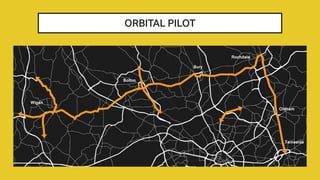
ORBITAL PILOT
Wigan
Bolton
Bury
Rochdale
Oldham
Tameside
APPROACH
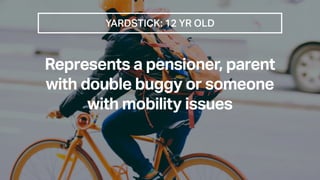
YARDSTICK: 12 YR OLD
Represents a pensioner, parent
with double buggy or someone
with mobility issues
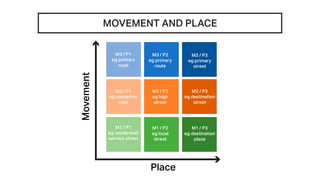
MOVEMENT AND PLACE
M3 / P1
eg primary
road
M3 / P2
eg primary
route
M3 / P3
eg primary
street
M2 / P1
eg connector
road
M2 / P2
eg high
street
M2 / P3
eg destination
street
M1 / P2
eg local
street
M1 / P1
eg residential/
service street
M1 / P3
eg destination
place
Movement
Place
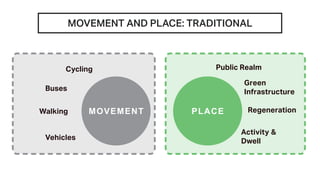
MOVEMENT AND PLACE: TRADITIONAL
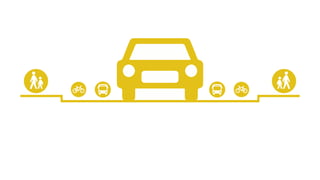
Cycling
MOVEMENT PLACE
Buses
Walking
Vehicles
Green
Infrastructure
Regeneration
Activity &
Dwell
Public Realm
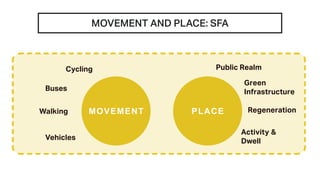
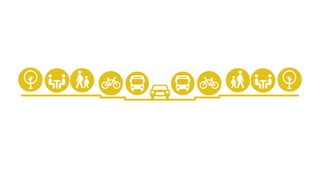
MOVEMENT AND PLACE: SFA
MOVEMENT PLACE
Cycling
Buses
Walking
Vehicles
Green
Infrastructure
Regeneration
Activity &
Dwell
Public Realm
'If we plan cities and regions for
only cars, they fail for everyone,
including drivers. When we plan
for all modes, it works better for
everyone, including drivers''
Brent Toderian - Former Chief Planner, Vancouver
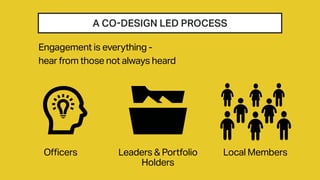
A CO-DESIGN LED PROCESS
Leaders & Portfolio
Holders
Officers Local Members
Engagement is everything -
hear from those not always heard
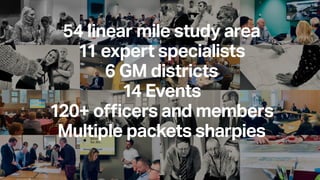
54 linear mile study area
11 expert specialists
6 GM districts
14 Events
120+ officers and members
Multiple packets sharpies
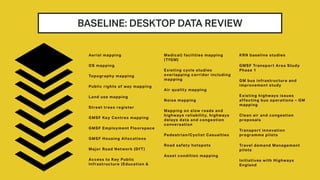
BASELINE: DESKTOP DATA REVIEW
Medical) facilities mapping
(TfGM)
Existing cycle studies
overlapping corridor including
mapping
Air quality mapping
Noise mapping
Mapping on slow roads and
highways reliability, highways
delays data and congestion
conversation
Pedestrian/Cyclist Casualties
Road safety hotspots
Asset condition mapping
KRN baseline studies
GMSF Transport Area Study
Phase 1
GM bus infrastructure and
improvement study
Existing highways issues
affecting bus operations – GM
mapping
Clean air and congestion
proposals
Transport innovation
programme pilots
Travel demand Management
pilots
Initiatives with Highways
England
Aerial mapping
OS mapping
Topography mapping
Public rights of way mapping
Land use mapping
Street trees register
GMSF Key Centres mapping
GMSF Employment Floorspace
GMSF Housing Allocations
Major Road Network (DfT)
Access to Key Public
Infrastructure (Education &
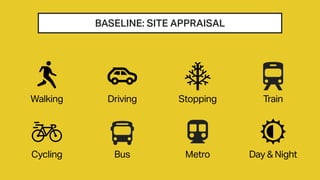
BASELINE: SITE APPRAISAL
Walking
Cycling
Driving
Bus
Stopping
Metro
Train
Day & Night
FINDINGS
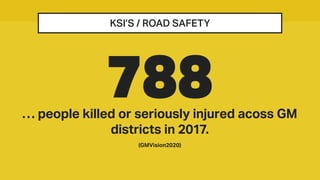
KSI’S / ROAD SAFETY
788… people killed or seriously injured acoss GM
districts in 2017.
(GMVision2020)
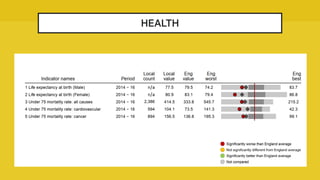
HEALTH
Streets for All – Tameside
Health Profile (2017)
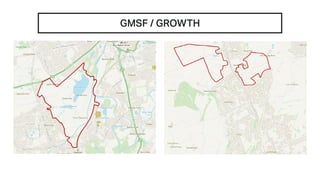
GMSF / GROWTH
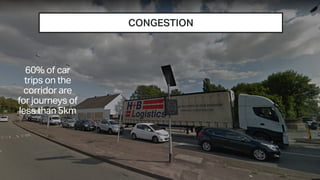
CONGESTION
60% of car
trips on the
corridor are
for journeys of
less than 5km
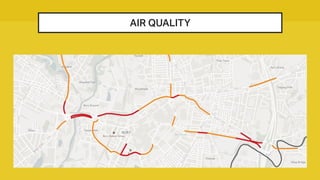
AIR QUALITY
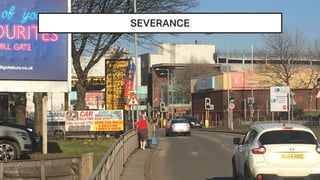
SEVERANCE
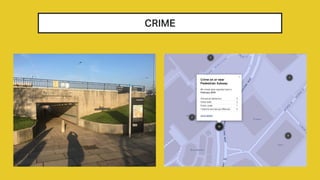
CRIME
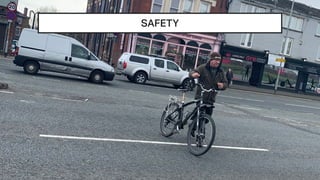
SAFETY
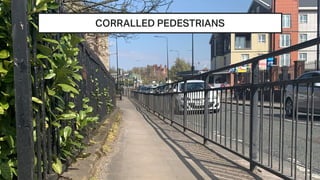
CORRALLED PEDESTRIANS
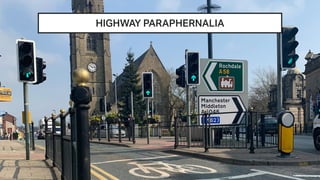
HIGHWAY PARAPHERNALIA
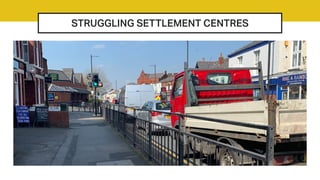
STRUGGLING SETTLEMENT CENTRES
TOP 5 ISSUES
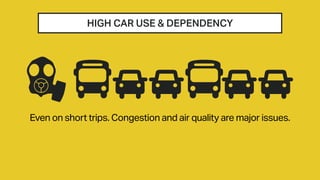
HIGH CAR USE & DEPENDENCY
Even on short trips. Congestion and air quality are major issues.
SPACE IS LIMITED
Limited scope to continue ‘building out of
congestion’ - a new approach needed.
ALTERNATIVES ARE UNATTRACTIVE
Limited cycle infrastructure at present.
Bus travel underperforming.
Walking given less attention as a ‘mode’
PLACE AS AN AFTERTHOUGHT
Highly engineered character, with a ‘cars-first’ approach to design.
Struggling local centres.
HOSTILE PEDESTRIAN ENVIRONMENTS
Metropolis wide severance.
Multiple ped/cycle collision hotspots.
Guardrail a default response.
TOP 5 OPPORTUNITIES
REBALANCE THE STREET
Reconsider design priorities.
Promote proposals that encourage modal
shift and seamless interchange.
DE-ENGINEER CHARACTER
Public Realm considered on a scale:
Opportunities from basic decluttering through
to transformational schemes.
HEALTHY, INCLUSIVE & ACCESSIBLE
Think active travel and social interaction -
citizen well-being should be central.
SHORT TRIPS ARE KEY
Around 60% trips less than 5km - potential for modal shift.
STAKEHOLDERS AS CO-DESIGNERS
Local insight.
Project momentum & alignment.
A key part of the journey.
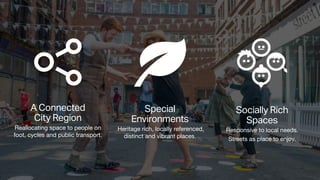
A Connected
City Region
Reallocating space to people on
foot, cycles and public transport.
Special
Environments
Heritage rich, locally referenced,
distinct and vibrant places.
Socially Rich
Spaces
Responsive to local needs.
Streets as place to enjoy.
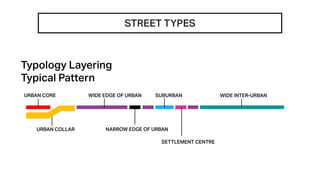
STREET TYPES
Typology Layering
Typical Pattern
URBAN CORE
URBAN COLLAR
WIDE EDGE OF URBAN SUBURBAN WIDE INTER-URBAN
SETTLEMENT CENTRE
NARROW EDGE OF URBAN
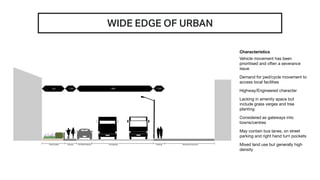
WIDE EDGE OF URBAN
Characteristics
Vehicle movement has been
prioritised and often a severance
issue
Demand for ped/cycle movement to
access local facilities
Highway/Engineered character
Lacking in amenity space but
include grass verges and tree
planting
Considered as gateways into
towns/centres
May contain bus lanes, on street
parking and right hand turn pockets
Mixed land use but generally high
density
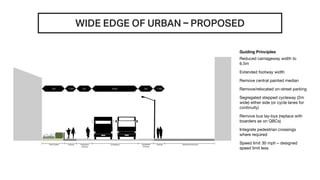
WIDE EDGE OF URBAN – PROPOSED
Guiding Principles
Reduced carriageway width to
6.5m
Extended footway width
Remove central painted median
Remove/relocated on-street parking
Segregated stepped cycleway (2m
wide) either side (or cycle lanes for
continuity)
Remove bus lay-bys (replace with
boarders as on QBCs)
Integrate pedestrian crossings
where required
Speed limit 30 mph – designed
speed limit less
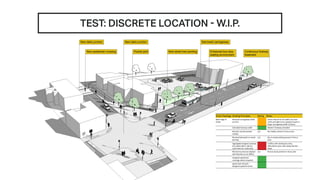
Enhanced bus stop
waiting environment
Narrowed carriageway
Continuous footway
treatment
New street tree planting
New table junctionNew table junction
Pocket parkNew pedestrian crossing
Street Typology Guiding Principles Rating Notes
Wide Edge of
Urban
Reduced carriageway width
to 6.5m
Lanes reduced to 3m width, bus lane
north and right turns retained results in
larger carriageway width (3 lanes)
Extended footway width Western footway extended
Remove central painted
median
n/a No median present in focus area
Remove/relocated on-street
parking
n/a No on-street parking present in focus
area
Segregated stepped cycleway
(2m wide) either side (or
cycle lanes for continuity)
Conflict with existing bus lane;
Alternative cycle route along Taunton
Road
Remove bus lay-bys (replace
with boarders as on QBCs)
n/a No bus lay-by present in focus area
Integrate pedestrian
crossings where required
Speed limit 30 mph –
designed speed limit less
TEST: DISCRETE LOCATION - W.I.P.
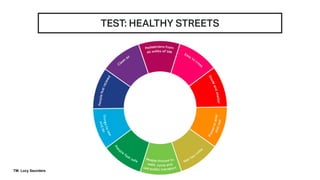
TEST: HEALTHY STREETS
TM: Lucy Saunders
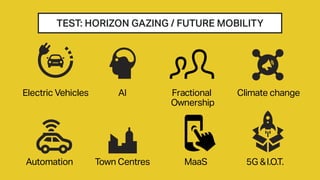
TEST: HORIZON GAZING / FUTURE MOBILITY
Electric Vehicles
Automation
AI
Town Centres
Fractional
Ownership
MaaS
Climate change
5G &I.O.T.
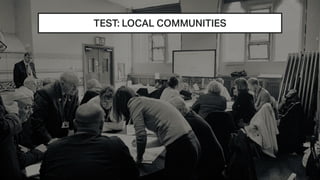
TEST: LOCAL COMMUNITIES
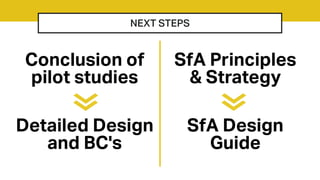
NEXT STEPS
Conclusion of
pilot studies
Detailed Design
and BC's
SfA Principles
& Strategy
SfA Design
Guide
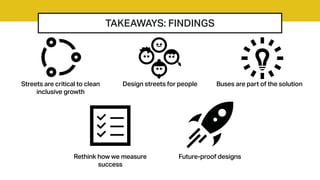
TAKEAWAYS: FINDINGS
Streets are critical to clean
inclusive growth
Design streets for people
Rethink how we measure
success
Buses are part of the solution
Future-proof designs
TAKEAWAYS: PROCESS
Understand identity &
distinctiveness
Find local champions
Stakeholder knowledge key
Engage early & often
Avoid Tribalisation
Agree a vision & measures of
success
Be bold!
Northern Transport Summit: Danny Crump, Broadway Malyan & Nicola Kane, TfGM

Northern Transport Summit: Danny Crump, Broadway Malyan & Nicola Kane, TfGM

  • 1.
  • 2.
  • 3.
    COMPETITION The most liveableplaces will attract best talent, investment, resources. They will become the place to be...
  • 4.
  • 5.
    IT'S HAPPENING NOW NewYork Copenhagen Singapore
  • 6.
  • 7.
    GM STRATEGY 2017 Visionto make Greater Manchester one of the best places in the world to grow up, get on and grow old
  • 8.
  • 9.
  • 10.
    TS 2040 1 millionmore sustainable journeys per day
  • 11.
  • 12.
    “To create streetsthat balance the movement of people and goods with the creation of more people- friendly places’’
  • 13.
    PILOT STUDIES Package 1– Orbitals 1) A577/A58 Orrell – Wigan – Bolton – Bury – Rochdale 2) A627 / A671 Rochdale – Oldham – Ashton Package 2 – Radials 4) A56 Altrincham – Ramsbottom 5) A635 / A662 / A57 Manchester – Ashton – Mottram 6) A6 Salford – Manchester – Stockport – High Lane Package 3 – City Centre 7) Deansgate 8) Whitworth Street
  • 14.
  • 15.
  • 16.
    YARDSTICK: 12 YROLD Represents a pensioner, parent with double buggy or someone with mobility issues
  • 17.
    MOVEMENT AND PLACE M3/ P1 eg primary road M3 / P2 eg primary route M3 / P3 eg primary street M2 / P1 eg connector road M2 / P2 eg high street M2 / P3 eg destination street M1 / P2 eg local street M1 / P1 eg residential/ service street M1 / P3 eg destination place Movement Place
  • 18.
    MOVEMENT AND PLACE:TRADITIONAL Cycling MOVEMENT PLACE Buses Walking Vehicles Green Infrastructure Regeneration Activity & Dwell Public Realm
  • 19.
    MOVEMENT AND PLACE:SFA MOVEMENT PLACE Cycling Buses Walking Vehicles Green Infrastructure Regeneration Activity & Dwell Public Realm
  • 22.
    'If we plancities and regions for only cars, they fail for everyone, including drivers. When we plan for all modes, it works better for everyone, including drivers'' Brent Toderian - Former Chief Planner, Vancouver
  • 23.
    A CO-DESIGN LEDPROCESS Leaders & Portfolio Holders Officers Local Members Engagement is everything - hear from those not always heard
  • 24.
    54 linear milestudy area 11 expert specialists 6 GM districts 14 Events 120+ officers and members Multiple packets sharpies
  • 25.
    BASELINE: DESKTOP DATAREVIEW Medical) facilities mapping (TfGM) Existing cycle studies overlapping corridor including mapping Air quality mapping Noise mapping Mapping on slow roads and highways reliability, highways delays data and congestion conversation Pedestrian/Cyclist Casualties Road safety hotspots Asset condition mapping KRN baseline studies GMSF Transport Area Study Phase 1 GM bus infrastructure and improvement study Existing highways issues affecting bus operations – GM mapping Clean air and congestion proposals Transport innovation programme pilots Travel demand Management pilots Initiatives with Highways England Aerial mapping OS mapping Topography mapping Public rights of way mapping Land use mapping Street trees register GMSF Key Centres mapping GMSF Employment Floorspace GMSF Housing Allocations Major Road Network (DfT) Access to Key Public Infrastructure (Education &
  • 26.
  • 27.
  • 28.
    KSI’S / ROADSAFETY 788… people killed or seriously injured acoss GM districts in 2017. (GMVision2020)
  • 29.
    HEALTH Streets for All– Tameside Health Profile (2017)
  • 30.
  • 31.
    CONGESTION 60% of car tripson the corridor are for journeys of less than 5km
  • 32.
  • 33.
  • 34.
  • 35.
  • 36.
  • 37.
  • 38.
  • 39.
  • 40.
    HIGH CAR USE& DEPENDENCY Even on short trips. Congestion and air quality are major issues.
  • 41.
    SPACE IS LIMITED Limitedscope to continue ‘building out of congestion’ - a new approach needed.
  • 42.
    ALTERNATIVES ARE UNATTRACTIVE Limitedcycle infrastructure at present. Bus travel underperforming. Walking given less attention as a ‘mode’
  • 43.
    PLACE AS ANAFTERTHOUGHT Highly engineered character, with a ‘cars-first’ approach to design. Struggling local centres.
  • 44.
    HOSTILE PEDESTRIAN ENVIRONMENTS Metropoliswide severance. Multiple ped/cycle collision hotspots. Guardrail a default response.
  • 45.
  • 46.
    REBALANCE THE STREET Reconsiderdesign priorities. Promote proposals that encourage modal shift and seamless interchange.
  • 47.
    DE-ENGINEER CHARACTER Public Realmconsidered on a scale: Opportunities from basic decluttering through to transformational schemes.
  • 48.
    HEALTHY, INCLUSIVE &ACCESSIBLE Think active travel and social interaction - citizen well-being should be central.
  • 49.
    SHORT TRIPS AREKEY Around 60% trips less than 5km - potential for modal shift.
  • 50.
    STAKEHOLDERS AS CO-DESIGNERS Localinsight. Project momentum & alignment. A key part of the journey.
  • 51.
    A Connected City Region Reallocatingspace to people on foot, cycles and public transport. Special Environments Heritage rich, locally referenced, distinct and vibrant places. Socially Rich Spaces Responsive to local needs. Streets as place to enjoy.
  • 52.
    STREET TYPES Typology Layering TypicalPattern URBAN CORE URBAN COLLAR WIDE EDGE OF URBAN SUBURBAN WIDE INTER-URBAN SETTLEMENT CENTRE NARROW EDGE OF URBAN
  • 53.
    WIDE EDGE OFURBAN Characteristics Vehicle movement has been prioritised and often a severance issue Demand for ped/cycle movement to access local facilities Highway/Engineered character Lacking in amenity space but include grass verges and tree planting Considered as gateways into towns/centres May contain bus lanes, on street parking and right hand turn pockets Mixed land use but generally high density
  • 54.
    WIDE EDGE OFURBAN – PROPOSED Guiding Principles Reduced carriageway width to 6.5m Extended footway width Remove central painted median Remove/relocated on-street parking Segregated stepped cycleway (2m wide) either side (or cycle lanes for continuity) Remove bus lay-bys (replace with boarders as on QBCs) Integrate pedestrian crossings where required Speed limit 30 mph – designed speed limit less
  • 55.
    Enhanced bus stop waitingenvironment Narrowed carriageway Continuous footway treatment New street tree planting New table junctionNew table junction Pocket parkNew pedestrian crossing Street Typology Guiding Principles Rating Notes Wide Edge of Urban Reduced carriageway width to 6.5m Lanes reduced to 3m width, bus lane north and right turns retained results in larger carriageway width (3 lanes) Extended footway width Western footway extended Remove central painted median n/a No median present in focus area Remove/relocated on-street parking n/a No on-street parking present in focus area Segregated stepped cycleway (2m wide) either side (or cycle lanes for continuity) Conflict with existing bus lane; Alternative cycle route along Taunton Road Remove bus lay-bys (replace with boarders as on QBCs) n/a No bus lay-by present in focus area Integrate pedestrian crossings where required Speed limit 30 mph – designed speed limit less TEST: DISCRETE LOCATION - W.I.P.
  • 56.
  • 57.
    TEST: HORIZON GAZING/ FUTURE MOBILITY Electric Vehicles Automation AI Town Centres Fractional Ownership MaaS Climate change 5G &I.O.T.
  • 58.
  • 59.
    NEXT STEPS Conclusion of pilotstudies Detailed Design and BC's SfA Principles & Strategy SfA Design Guide
  • 60.
    TAKEAWAYS: FINDINGS Streets arecritical to clean inclusive growth Design streets for people Rethink how we measure success Buses are part of the solution Future-proof designs
  • 61.
    TAKEAWAYS: PROCESS Understand identity& distinctiveness Find local champions Stakeholder knowledge key Engage early & often Avoid Tribalisation Agree a vision & measures of success Be bold!